Poll: Roy Moore Zooms to Commanding Lead in Alabama’s Senate Race

In the special election for Alabama’s U.S. Senate seat, Judge Roy Moore is the clear front-runner.

Moore holds a commanding 10-point lead over incumbent Senator Luther Strange, according to a poll conducted by potential primary challenger Rep. Mo Brooks, R-Ala. Roy Moore leads the race with 30 percent, followed by Strange at 20 percent, and Rep. Brooks in “the low double-digits.”

Strange was appointed to Attorney General Jeff Sessions’ former Senate seat by disgraced former Gov. Robert Bentley before he resigned last month. Many see the appointment as a corrupt deal struck between a governor, Bentley, mired in scandal and the state attorney general, Strange, prosecuting him.

Gov. Kay Ivey, Bentley’s successor, called for an early special primary election on Aug. 18 followed by a runoff on September 26 and a general election on December 12.

Moore’s candidacy in Alabama is strong. Many Alabamians see Moore – the former chief justice of the Alabama Supreme Court – as a martyr for the social conservative cause after he was removed from office for directing state probate judges not to issue marriage licenses to homosexual couples.

“I have done my duty under the laws of this state to stand for the undeniable truth that God ordained marriage as the union of one man and one woman,” Moore said during the press conference in front of the state capitol after the Alabama Supreme Court upheld the decision to remove Moore from the court.

The Washington establishment is backing Senator Strange for reelection. McConnell allies in the National Republican Senatorial Committee are threatening potential primary challengers to Strange to dissuade them from running.

“We have made it very clear from the beginning that Sen. Luther Strange would be treated as an incumbent,” NRSC spokeswoman Katie Martin reportedly told Politico. “It has also been a clear policy that we will not use vendors who work against our incumbents.”

Despite the NRSC’s threats, the polling shows that there is a race in Alabama, and the conservative challenger has a clear shot at winning. (For more from the author of “Poll: Roy Moore Zooms to Commanding Lead in Alabama’s Senate Race” please click HERE)

Follow Joe Miller on Twitter HERE and Facebook HERE.

Republicans Help Promote Obamacare, but Hey … Tax Cuts!

It turns out Republicans fully support government-run health care, despite the collapse of the entire system. They just didn’t like the tax increases funding Obamacare, because Republicans are for servicing socialism through debt, whereas Democrats do it by raising taxes.

The group Americans for Tax Reform is already bragging about the GOP bill’s $1 trillion tax cut. That’s really nice. We can address that with tax policy. But what about our destroyed health care system, which costs the average family thousands per year in premiums and deductibles and drives up the actual cost of the supply side of health care? Health care is the single biggest driver of the deficit, dependency, and economic stagnation, and government-run and regulated health care and insurance is the single biggest reason health care is unaffordable for too many people. What are we going to do about that?

I’m a strong supply-sider and would love tax cuts, but unshackling the most important sector of our economy will do more to grow the economy than any tax cut. One reason why Europe has stagnated for decades is because of socialized medicine. It’s no coincidence that since government-run health care in America has reached a tipping point, we have never reached three percent growth and struggle for even one or two percent.

Republicans have a habit of playing chase the squirrel. Whenever the tab comes due to fulfill a promise on one issue, they immediately discuss another issue. When the time comes to defund Planned Parenthood, they talk about other random provisions in the budget, but when the time comes to restore a free market in health care, they talk about taxes and Planned Parenthood.

The taxes have nothing to do with destroying health care. Most of the revenue in the Obamacare tax increases comes from the increased payroll tax on the wealthy and the 3.8 percent surtax on investment income. The main tax that dealt with health insurance – the tax on “Cadillac plans” – was never actually implemented. Tax increases are never good for the economy, but they had nothing to do with destroying the health care system. It is government-run health care, through regulations, subsidies, and Medicaid expansion that has destroyed health care. Republicans love all those elements.

As such, Republicans have no right to complain about tax hikes needed to fund programs they themselves deem indispensable.

As I’ve questioned before, how can liberal Republicans rail against the taxes and mandates if they fully support, laud, defend, and fight for the key elements of Obamacare? Once you agree that we need the actuarily insolvent regulations, every economist – from right to left – will tell you that we need an individual and employer mandate so that younger and healthier people pay into the system and don’t game it out. And once you are funding the cost-crushing subsidies and Medicaid expansion, which they love so dearly, where is the money going to come from? Taxes, of course. As such, Democrats were right to raise taxes primarily on the very wealthy.

What exactly is their complaint?

The coming humiliation in the Senate that will make Obamacare popular

Meanwhile, Republicans are already preemptively destroying our messaging on health care. The problem with the bill that passed the House is not just the details and structure, although it is a terrible bill, which was made only slightly better by the Freedom Caucus. The problem is the messaging and principles espoused that led to this point and that will only deteriorate in the Senate. This deal was forged to merely get “something passed” as if it were a kidney stone, as Rep. Tom Massie quipped, not a soothing medicine needed to heal an ailment. The real problem is that Republicans have already adopted all of the premises and messaging of the other side. As Mark Levin said earlier this week, “Rather than confront the Left at the base of their arguments, Republican officials by and large live in fear of principles they proclaim at election time but reject at governing time.”

To use an MMA analogy, Republicans have managed to take their winning issue, with Democrats lying unconscious on the mat, and reverse the roles by placing themselves into the losing side of a ground-and-pound.

Where are the Republicans pounding the lectern and speaking to the morality of the issue: how thanks to Obamacare, nobody will have any health care or health insurance; how Iowa might be added to the list of states without insurers thanks to the very mandates these clowns support; how Maryland insurers will experience up to a 150 percent increase in premiums after some Marylanders already saw premiums triple and double; how eastern Tennessee cancer patients can’t get insurance and how premiums in Alaska cost up to $50,000; how Obamacare has created an immoral government-sponsored monopoly for the few insurers that remain?

Instead, Republicans in the Senate will merely focus on Democrat talking points about coverage and pre-existing conditions and just make this bill more liberal. Because the House kept the subsidies, Medicaid expansion, and critical regulations, the door is open for the Senate GOP to take that baseline and focus further on the need to retain or even add more on all three levels rather than address the actual problem.

Without actually driving down prices by healing the free market, Republicans have placed themselves on the hook for further subsidization. They have kept the market-distorting and price-hiking regulations and subsidies – exacerbated by the elimination of the individual and employer mandates. This will place them on defense to raise Medicaid spending even more and dump more money into the high-risk pools. Their $15 billion over nine years is a joke. Instead, Republicans should have completely repealed the regulations and subsidies to drive down prices for almost everyone (especially because Medicaid expansion is already responsible for 80 percent of those who obtained coverage, which is being retained in this bill) and then dumped $250 billion into the high-risk pools as the full replacement. Hence full repeal and full replace instead of 20 percent insolvent repeal and half-assed replace.

House Whip Rep. Steve Scalise is already talking about how “everyone with pre-existing conditions will have affordable coverage” – a utopian goal that implicitly exonerates Democrats and government-run health care from creating the pre-existing condition problem in the first place.

President Trump is praising Australia’s single-payer system.

Rather than pound the lectern and demand our right to free market health care, speak about the immoral government intervention that tethered health insurance to employment, and actually educate the public on the difference between insurance and health care, Senator Bill Cassidy, RINO-La., one of the top Senate Republicans leading the health care debate, is echoing Bernie Sanders on health care being a right. He’s preemptively ascribing blame for losing coverage on the Republican “repeal” effort rather than on Obamacare itself and the daily news stories! If Republicans would simply shut their mouths, the news cycle on Obamacare would speak for itself. Yet they are sabotaging the repeal effort by saddling free market health care with the vices that are inherent in Obamacare every time they speak.

But fear not. When we become Greece and have single-payer health care with 0.3 percent GDP growth every year, Republicans will lower your taxes. (For more from the author of “Republicans Help Promote Obamacare, but Hey … Tax Cuts!” please click HERE)

Follow Joe Miller on Twitter HERE and Facebook HERE.

Top 10 Critical Items You Must Have to Survive the Apocalypse

When it comes to survival, there is a fundamental fact that you need to know in order to be fully prepared.

It all comes down to the simple truth that the average human can live up to 3 hours in bad weather, 3 days without water, and 3 weeks without food.

Once you understand this, you can easily develop survival strategies and pick the right gear that will serve you well if the time ever comes where you find yourself stuck in nature with no help in sight.

In this article, we are going to go over the top 10 most critical pieces of gear that you must have in order to survive in natural disasters or in situations where the world as you know it has ended.

A Word About Survival Kits

Before we jump right into the gear, it’s important to get our bearings on the different types of survival kits that are popular today.

The first type is something called a Bug Out Bag, or BOB for short. This type of kit is intended to last you 72 hours, so that you can make it to a pre-designated bug out location, or BOL. A BOB is usually preloaded with a little drinking water and other necessities to get you through 3 days of a possibly long hike.

For example, my personal bug out bag, which can be found at Trek Warrior, is a backpack with gear that weighs 31.6 pounds, and includes 3 liters of water as well as 3600 quick energy calories of food. I have plenty of gear and backup gear that will take care of all of my survival needs for over 3 days. I give the entire list for my BOB in that article.

There are also kits called I’m Never Coming Home, or INCH for short. The INCH bag is set up a little differently, and focuses more on long-term survival in many different environments. It will also focus more on specialized tools for shelter building, as well as a means to hunt and fish for meat.

A third kit that is very popular is called a Get Home Bag, or GHB. This is a bag that you put together so that you can keep it at work, school, or your vehicle with enough gear to help you get home if disaster should ever strike. Items like a change of clothes, better walking shoes, and basic camping equipment are great choices in case you had to get home from where you are at on foot.

With those three kits in mind, there are actually some fundamental pieces of gear that you will find in all of them. Combined with the right survival skills, you will be set for almost anything.

At the heart of each kit is the gear that you need to meet the core rule of survival that we discussed at the beginning of this article.

The gear addresses the needs of shelter, water, and food in their order of importance. Let’s jump right into the most critical items.

Survival Knife

If you could have just one item in nature, it would have to be a great survival knife. With a knife, you can make shelter, prepare fuel for a fire, defend yourself, and prepare food. It is the work horse of survival.

It turns out that you don’t want a knife that is too small or too big. The reason is that if it’s too small, you won’t be able to manipulate bigger branches for shelter, or even defend yourself against threats.

And if your knife is too big, you can’t use it for precision tasks like making proper tinder and kindling for your fire, or skinning an animal.

What is the proper size? An overall knife length of around 10 inches is ideal. Other features that you want in a survival knife are that it’s a fixed blade with a full tang, it has a tip point, the blade has a single sharp edge, and the bottom of the knife is flat for crushing objects.

If you get a knife with these features, then you are guaranteed to be able to use it for all of the different types of tasks you might need in nature.

Some great examples include the Ontario Black Bird SK-5, KA-BAR Becker BK2, and the Buck 119 Special.

Fire Kit

You will definitely need the ability to make a fire in order to warm your body, purify water if needed, or even cook food.

There are many ways to create fire from a gear standpoint. The easiest way, believe or not, is with a cheap plastic lighter. The technology built into a basic lighter has made creating fire trivial.

Another method is by using waterproof matches. Regular matches are not a good option here, because most likely you won’t find yourself in a nice dry environment when you need a fire.

A sure-proof way to make fire when you know what you are doing is with a ferro rod and striker. This tool is the type where you take a piece of metal and strike it on a rod, which generates hot sparks. You must practice proper fire building skills here in order for this to work well.

A great fire kit will have all three of these items in it: plastic lighter, waterproof matches, and a ferro rod with a striker.

As for knowing how to make a fire under all conditions that you might find yourself in, remember that it’s a simple rule of three: tinder, kindling, and fuel.

Tinder is a very fine material that will catch a spark easily and help it ignite. Kindling is a little bit bigger strips of material that can help the fire burn longer. Fuel is the final burning material for the fire that will burn a long time.

The best type of material for tinder includes cotton balls, fine wood flakes, and dryer lint. If you can’t find any in your environment, you can always shave off some of your cotton clothes in an emergency. Otherwise, grab some of that old dryer lint after you do your laundry and put it in a zip lock bag to keep it handy with your fire kit.

Kindling is made easily by shaving off strips of wood for your fire. You simply use your survival knife and branches to make it. Your main fuel should usually include wood from trees, furniture, or any other source you can find.

You can build a simple pyramid type structure where you light or throw sparks onto the tinder, which is surrounded by kindling, which is surrounded by fuel. Blow on the sparks to provide fresh oxygen until you get the fire roaring. It takes practice, so it’s a good idea to go camping to test out your skills.

Some great examples here include a BIC lighter, UCO Stormproof matches, and the Gerber Bear Grylls Fire Starter.

Poncho

A poncho is something that most of us are already familiar with. It’s simply a plastic covering that will keep you dry when it’s raining.

However, all ponchos are not created equal. The really cheap ones that you often see are intended for a one-time use and easily fall apart.

It’s much better to invest in a good one that has thicker material and is big enough to cover you properly. A military poncho is a popular choice for these reasons, and it also has reinforced grommets in the corners. This will let you use it as a tarp if you need to.

Paracord

With the luxuries of the modern world and civilization, many of us have never learned how to tie knots for making shelter while camping.

It turns out that our ancestors used cordage back in the day extensively for almost everything, from shelter to ships.

Modern technology has produced some much better materials, which makes even better cordage that we have access to compared to those that came before us.

Paracord is the type that you want for survival situations. It gets its name because it is similar to the type of cordage used for parachutes. The typical high-quality stuff can handle 550 pounds of stress, which makes it plenty strong for survival needs.

Getting a good 100-200 feet of it should give you plenty to do what you need to do in a bad situation. Just make sure that it is 550 rated or better.

Tarp/Tent

Being able to put up a shelter to get out of the elements is critical so that you can avoid hypothermia, which is where your body temperature gets too low.

Depending on how big your carry space is for your items, two popular choices here are tarps and tents. There are some lightweight one-person tents out there that are extremely compact.

A great feature about getting a military poncho like we discussed earlier is that it also doubles as a great tarp that you can use to make a shelter if you use it with paracord.

Ideally, you can get a tent here, and use your poncho as a fallback shelter if something goes wrong.

Bivvy

Getting out of the wind and the rain is the first step in stabilizing your body temperature. However, you will also need something that you can wrap yourself in that will help you warm up if you need to.

There are many emergency blankets out there that you can wrap yourself with that will reflect a lot of your body heat back onto you, warming you up.

An even better option is something called a bivvy. It is like an emergency blanket, but usually thicker and more durable, and it also has a zipper so that it resembles a thin sleeping bag.

With a bivvy, you can get much better coverage around your body so that it won’t let too much reflected heat escape. This warms you up better. Plus, it’s waterproof.

A proper sleeping bag works here, too, but is much more bulky than a bivvy, so it can be harder to fit into a kit.

A great example here is the SOL Escape Bivvy.

Water Purifier

Water is something you have to have in order to live. You will definitely need the ability to purify water so that you can avoid some nasty critters that often inhabit drinkable water sources.

Our ancestors fell victim to bugs in drinking water, which often can lead to death. Modern technology gives us some great options for purifying water, though.

If you had to get just one item, it should be a drinkable straw filter. There are a couple of brands out there that do a fantastic job including Survival Straw and Survivor Filter.

Another option is water purification tablets. They usually come in small bottles of tablets that you can throw into a container of water and wait for several minutes to get water clean of bugs.

Finally, a more primitive solution is simply boiling water. It’s best to have a metal container for your water so that this is easy, which we will discuss next.

Some great examples here are the Survival Straw and Potable Aqua tablets.

Canteen

You will need a container to carry your drinking water. They come in different materials and many different shapes and sizes.

In order to give yourself the best options for purification, it makes sense to get a good metal canteen so that you can actually boil water if you need to.

A one-liter container is a common size. If you must have a hard plastic container, then make sure and get a metal cup that fits over the bottom of it so that you have something to boil water in.

ou can also go for collapsible plastic containers as spares to be able to store even more water. Just try to get at least 1 metal container so that you can boil water. There are many great options out there, so you shouldn’t have any trouble finding them.

Food

As for food, typically quick energy snacks are the best way to go for your kit.

If you want to be able to cook, you will have to not only carry cooking gear and eating utensils, but you will also need to bring actual food and more water to cook with.

Unless you are a great hunter and gatherer in your own right, you need to consider that it might be harder to cook food in nature than you are aware of.

An option that I like is ready to eat emergency rations. This is food that is ready to eat right out of the package and will give you quick energy.

The SOS Emergency Food Rations is the perfect choice here. It gives you 9 bars that are individually packaged and are 400 calories each. The package has a 5-year shelf life.

Multi-tool

Last, but not least is a proper multi-tool. There is a wide array of these tools out there that you can choose from.

You want to select one that gives you a few core tools like regular and Philips head screw driver, small scissors, and a file.

Depending on what you might be up against in an emergency, you can pick other features for your multi-tool that will serve you well.

The Leatherman Wingman is one of the most popular items, with over 14 tools included to give you the best options. The Schrade ST1NB is a cheaper option, but works well.

Conclusion

To wrap it up, we looked briefly at the three most popular types of emergency kits out there right now. They include a bug out bag, a I’m never coming home bag, and a get home bag.

At the heart of these type of kits are certain pieces of gear that support your fundamental requirements that you need to survive.

Again, you can live up to 3 hours in bad weather, 3 days without water, and 3 weeks without food for the average human.

We then looked at the 10 most critical pieces of gear that you must have in order to meet these needs for survival.

It’s wise to go gather up this gear into one place now when you have the time, so that it’s there if catastrophe strikes. That way, you are prepared to survive. (For more from the author of “Top 10 Critical Items You Must Have to Survive the Apocalypse” please click HERE)

Follow Joe Miller on Twitter HERE and Facebook HERE.

Mark Green Withdraws His Nomination for Army Secretary

President Donald Trump’s choice for Army secretary announced Friday that he is withdrawing his name from consideration.

“It is with deep regret today I am withdrawing my nomination to be the Secretary of the Army,” Mark Green said in a statement . . .

Green explained his decision to pull out from a military leadership position in the wake of this controversy.

“To meet these challenges, there should be no distractions. And unfortunately due to false and misleading attacks against me, this nomination has become a distraction,” he said in his statement. (Read more from “Mark Green Withdraws His Nomination for Army Secretary” HERE)

Follow Joe Miller on Twitter HERE and Facebook HERE.
US Military Member Killed in Somalia, 1st Death Since 1993

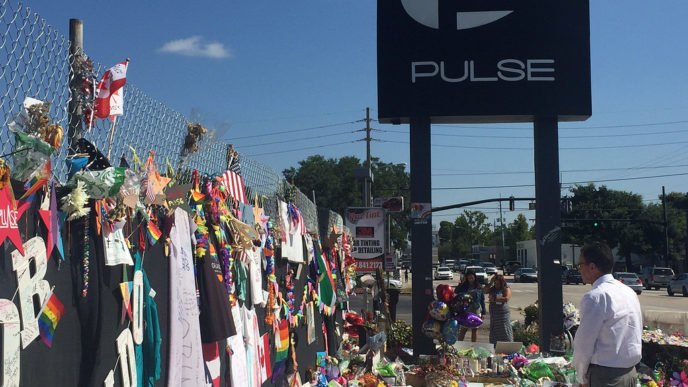
A U.S. service member has been killed in Somalia during an operation against the extremist group al-Shabab — the first U.S. combat death there in more than two decades — as the United States steps up its fight against the al-Qaida-linked organization in a country that remains largely chaos.

“We do not believe there has been a case where a U.S. service member has been killed in combat action in Somalia since the incident there in 1993,” U.S. Africa Command spokesman Patrick Barnes said Friday. The United States pulled out of Somalia after that incident in which two helicopters were shot down in the capital, Mogadishu, and bodies of Americans were dragged through the streets.

In a statement, the U.S. Africa Command said the service member was killed Thursday during the operation near Barii, about 40 miles (64 kilometers) west of Mogadishu. The Pentagon said two other service members were wounded. (Read more from “US Military Member Killed in Somalia, 1st Death Since 1993” HERE)

Follow Joe Miller on Twitter HERE and Facebook HERE.

North Korea Accuses US, south Korea of Assassination Attempt

North Korea on Friday accused the U.S. and South Korean spy agencies of an unsuccessful assassination attempt on leader Kim Jong Un involving biochemical weapons.

In a statement carried on state media, North Korea’s Ministry of State Security said it will “ferret out and mercilessly destroy” the “terrorists” in the CIA and South Korean intelligence agency responsible for targeting its supreme leadership.

North Korea frequently lambasts the United States and South Korea, but its accusation Friday was unusual in its detail. (Read more from “North Korea Accuses US, south Korea of Assassination Attempt” HERE)

Follow Joe Miller on Twitter HERE and Facebook HERE.
Trump’s First International Trip Shows Middle East a Priority

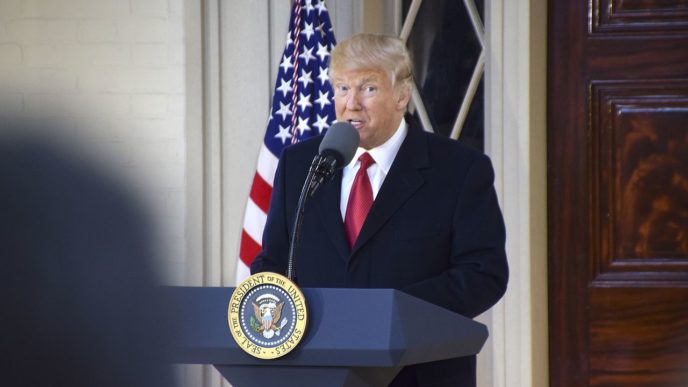
President Donald Trump could be indicating his highest international priority in traveling to the Middle East ahead of European summits later this month, experts say, while also honoring three of the world’s major religions.

Trump will travel to Saudi Arabia, then to Israel, and finally to Italy to visit the Vatican in Rome. This will be his first international trip as president.

The president announced the travel to centers of three major religions–Islam, Judaism, and Christianity–during a National Day of Prayer event Thursday in the Rose Garden of the White House.

The trip comes ahead news came ahead of already-scheduled travel to Brussels for the NATO summit May 25 and a Group of Seven, or G7, gathering May 27 in Sicily.

Trump’s travel plans are a good sign to American allies following President Barack Obama’s two terms, said Mike Makovsky, a former Pentagon official who is now the president of the Jewish Institute for National Security of America.

“President Trump has had this image of a great disruptor, but this shows he is a great restorer of our ties with our traditional allies,” Makovsky told The Daily Signal. “This is an important message after eight years of Obama. It reverberates globally by reassuring our traditional allies, who realize this is a good signal.”

Even with other problems abroad such as North Korea, the Trump administration is focusing much attention on the Middle East with challenges including the Islamic State terrorist army, the civil war in Syria, an emboldened Iran, and unstable countries such as Iraq and Libya.

“The Middle East is a big problem and he wants to do something to address it,” said Richard Benedetto, an adjunct professor in American University’s government department, adding:

It’s significant that Saudi Arabia is the first stop. They have been our second-closest ally [after Israel] in the Middle East and our closest Arab ally. Each president–Bill Clinton, George W. Bush, Barack Obama–has worked closely with the Saudis.

While in Saudi Arabia, Trump is scheduled to meet with leaders of the five other countries of the Gulf Cooperation Council, a political and economic alliance of Arab nations. They are Bahrain, Kuwait, Oman, Qatar, and the United Arab Emirates.

“He recognizes the importance of bringing all of our partners together, and certainly looking for ways that we can combat some of the greatest threats to all of the world,” White House spokeswoman Sarah Huckabee Sanders said of the president at a press briefing Thursday. “And that’s going to take some buy-in and some of the people in the Middle East taking a larger stake in that process, and I think that’s a big part of what we’re going to see on that trip.”

America needs the participation of four key countries for a coalition to help stabilize the Middle East and combat the Islamic State—Egypt, Israel, Jordan, and Saudi Arabia—said James Carafano, vice president for national security and foreign policy studies at The Heritage Foundation.

Trump already has visited with the leaders of Egypt, Israel, and Jordan at the White House. He is going to Saudi Arabia. He will handle the Middle East differently than his immediate predecessors, Obama and Bush, Carafano said.

“This trip will have a specific operational component, it’s not just for balance or checking off boxes,” Carafano told The Daily Signal, adding:

He wants to re-engage with the Middle East, not as Bush did in a muscular way, and obviously not in a lead-from-behind Obama way. Unlike Europe, with the Middle East, everything is bilateral. Relationships are important.

Trump met earlier in the past week with Palestinian Authority President Mahmoud Abbas, and frequently has talked about the Middle East peace process. However, showing commitment to a peace deal is as much strategy as it is a goal, Carafano said, explaining that it’s an important way to get Arab allies on board for other U.S. national security priorities.

The third destination, a visit with Pope Francis at the Vatican, might be a harmonious way to check a box after going to the holy cities of Islam and Judaism, Carafano said.

Still, considering the rhetorical clash the pope and Trump had during the 2016 campaign over immigration, Benedetto said, their meeting will have symbolic importance.

“Americans have always seen the pope as a world spiritual leader,” Benedetto said. “Trump’s executive order seemed to be a way of showing he cares for people of faith, and this meeting could show that moral leadership is important to him.”

Trump signed an executive order on religious freedom Thursday that directed the Internal Revenue Service not to target political speech by leaders of churches and other houses of worship. It also eased Obamacare-related regulatory burdens on religious organizations.

Bridging the gap could be worthwhile, said Craig Shirley, a presidential historian whose most recent book is “Reagan Rising: The Decisive Years, 1976 to 1980.”

President Ronald Reagan’s relationship with Pope John Paul II was “world altering” in ending the Cold War, Shirley said.

“I don’t know if we could see that here without a strategic alignment against Islamic terrorism, as there was against Soviet communism,” Shirley told The Daily Signal. “Being from Poland, Pope John Paul II saw Soviet communism first hand. Pope Francis hasn’t directly experienced Islamic terrorism.” (For more from the author of “Trump’s First International Trip Shows Middle East a Priority” please click HERE)

Follow Joe Miller on Twitter HERE and Facebook HERE.

Encouraging April Jobs Report Shows Need for More Pro-Growth Reforms

The April jobs report is in, and the Trump administration is taking a victory lap.

That’s because the Bureau of Labor Statistics reported an increase of 211,000 jobs (up from an unimpressive 79,000 in March) and a drop in the unemployment rate from 4.5 percent to 4.4 percent—the lowest rate since May 2007.

In addition, the number of people who were employed part time for economic reasons—or working part time but want to work full time—fell by 281,000, continuing a positive trend.

The primary gains in jobs came from leisure and hospitality (55,000 jobs), health care and social assistance (37,000 jobs), financial activities and insurance carries (33,000 jobs), and mining/support for mining—which includes the oil and coal industries (15,000 jobs).

Since President Donald Trump was elected, nearly 50,000 jobs have been added in the mining/support for mining sector. This is important, because Trump campaigned on the promise to bring back jobs like these that were lost because of President Barack Obama’s regulations.

But as with most job reports in recent history, the good and not-so-good go hand in hand.

This month, the labor force participation rate fell a 10th of a point to 62.9 percent, continuing the trend of people dropping out of the labor force, or just giving up looking for a job. Last month, 162,000 people joined this discouraged group.

The labor force participation rate is arguably one of our most important economic and social indicators. Currently, the United States has 254,588,000 people that are able to work, and only 160,213,000 are currently participating in the labor force.

With entitlement spending at levels that threaten national solvency, it is important to understand why so many Americans that could be working don’t do so.

There is much work to be done to convince the 94.4 million people currently not working that reentering the workforce is worth it. The best way to achieve this is by creating more jobs through more economic growth.

The slow rate of growth over the last eight years is likely both a symptom and a cause of declining participation in the labor force. Over the last year, we have averaged growth at or below two percent, which is well below the historic average of 3.3 percent.

If growth is the goal, the formula is pretty simple: Obamacare must be repealed, tax cuts and tax reform must be signed into law, and we must move beyond executive orders to substantive legislative reform.

We must continue to cut regulation of all shapes and sizes that get in the way of growth.

It is not enough just to announce an intention to do these things. They must be pushed across the finish line.

When Trump took office on Jan. 20 of this year, he spelled out several goals for his administration.

At the top of that list was to create 25 million jobs over the next 10 years. This would require the economy to create 208,000 jobs each month over the next 10 years.

Some experts have declared that we have reached our peak economic growth. But that is defeatist thinking. If Washington simply gives Americans the economic freedom to innovate, they will find a way to adapt to any circumstance.

Economic growth can also come in unanticipated ways. Just look at the fracking boom. Ten years ago, we were waving the white flag on domestic fossil fuel production and felt totally reliant on foreign energy sources. Now, we are a world leader.

If the Trump administration can translate its policy directives into action, we have the potential to see job growth like never before. Until then, we will continue to see good and bad jobs reports.

Let’s hope the good continues to outweigh the bad. (For more from the author of “Encouraging April Jobs Report Shows Need for More Pro-Growth Reforms” please click HERE)

Follow Joe Miller on Twitter HERE and Facebook HERE.
New Strategy Needed to Confront Islamist Threats in War of Ideas

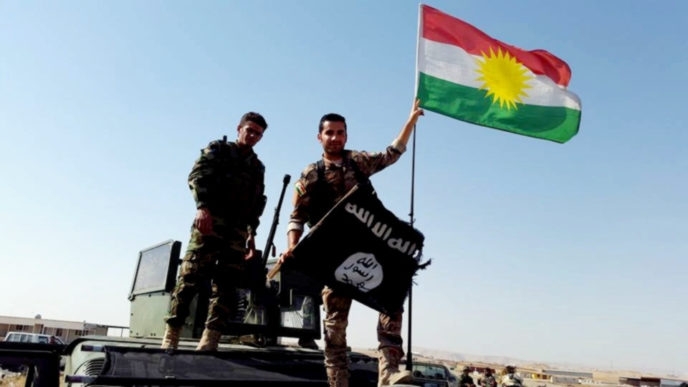
Coming into office, President Donald Trump declared defeating and destroying ISIS to be his foreign policy top priority.

In contrast with the Obama administration, he had no hesitation defining precisely the root of the threat: Islamist terrorism—not vaguely phrased “violent extremism,” “workplace violence,” or “manmade contingencies.”

This definition of the threat also needs to come with a far more concise strategy to combat it. The shorthand for the Obama strategy was “CVE,” or “Countering Violent Extremism.”

Like the evasive title, this program failed. The United States continues to face terror attacks from radicalized individuals, such as last year’s Orlando nightclub massacre.

In a recent article for The National Interest, “Top 10 Ways to Make the War on the ‘War of Ideas,’” The Heritage Foundation’s James Carafano writes that “the new team in Washington needs to right-size the effort, making it complimentary with effective counterterrorism measures and U.S. strategy overseas.”

Carafano’s 10 points are:

1. Helping Americans understand the changing nature of the war. This could potentially occur through the creation of a 9/11-style commission to define the threat for this new era.

2. Do not allow efforts to be captured by ulterior motives. This happens when the perpetrators of violence are excused as victims, and therefore not to blame.

3. Focus on Islamist threats. The Islamist threat is a very specific and anti-democratic threat that cannot be countered with a generic counterterrorism approach.

4. Limit domestic programs and keep them modest in character. Overly broad programs to counter radicalization have failed in the past. For instance, one FBI anti-terror program in 2012 identified the real terror threat as right-wing terrorism, not Islamism.

5. Focus domestic programs on counterterrorism. Identify and hone in on individuals that pose potential threats, and prevent those individuals from successfully striking. Most domestic terrorists have been on law enforcement’s radar screen prior to attacking.

6. Make domestic programs bottom-up. Equip local communities and law enforcement to confront terrorism, instead of hoping that the federal government can handle the terror threat all by itself.

7. Emphasize support to the field in overseas programs. Again, local officials and political leaders will be far better equipped than central authorities to deal with radicalization on the ground in trouble spots.

8. End handouts that don’t deliver. No more government-funded conferences and meetings for ineffective NGOs, such as George Soros’ Open Society Foundations.

9. Avoid obsessing over social media. Social media is not itself the root cause of terror attacks. Social media is a contributing factor in radicalization that is most effective where there is already a local network to carry out attacks.

10. Drop the label. The Obama administration’s “Countering Violent Extremism” label is too vague. Islamist extremism represents a well-defined threat that we need to fight in the name of all that human decency and liberal democracy stand for.

An 11th point that should be added is the importance of information and communication in defeating the enemy.

For that, the United States government has powerful tools—in particular, the civilian entities of U.S. International Broadcasting under the Broadcasting Board of Governors.

These broadcasters are legitimate and important tools of U.S. foreign policy, and have been ever since they were created in World War II.

The U.S. government has devoted millions of dollars over the last 15 years toward expanding these broadcast services to the Middle East and Afghanistan, with varying degrees of success.

Networks that came from these efforts include the Middle East Broadcasting Network (which consists of Radio Sawa and Al Hurra Television), Voice of America’s Persian News Network, Radio Free Afghanistan, and Radio Farda (for Iran) produced by Radio Liberty in Munich.

The Trump team must now create a comprehensive broadcasting strategy to reach and inform audiences who are trapped behind enemy lines, often by autocratic Islamist regimes. This should become part of a clear, focused, and revitalized counterterrorism strategy. (For more from the author of “New Strategy Needed to Confront Islamist Threats in War of Ideas” please click HERE)

Follow Joe Miller on Twitter HERE and Facebook HERE.
How Court Reviewing Challenge to Trump’s Travel Ban Swung Left Under Obama

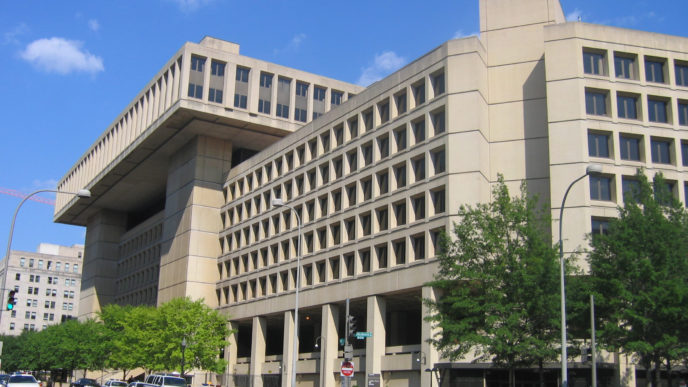
The federal appeals court deciding the constitutionality of President Donald Trump’s travel ban was once reliably conservative. But it underwent a transformation during the Obama administration, and Democratic appointees now outnumber Republican appointees 2 to 1.

A New York Times Magazine article in March 2003 vividly described the Richmond, Virginia-based U.S. Court of Appeals for the 4th Circuit as the “shrewdest, most aggressively conservative federal appeals court in the nation.”

“It is confident enough to strike down acts of Congress when it finds them stretching the limits of the federal government’s power and hard-headed enough to rule against nearly every death-row defendant who comes before it,” the Times wrote.

But today, the 4th Circuit has a higher percentage of Democratic appointees than even the San Francisco-based 9th Circuit, a court with a liberal reputation that Trump frequently has spoken out against.

Democrats appointed 10 of the 4th Circuit’s 15 judges. When President Barack Obama took office on Inauguration Day 2009, only five of the 4th Circuit’s 15 judgeships were filled by Democratic appointees.

“There has been a transformation of this court without much notice and without much difficulty,” said Kevin Walsh, a University of Richmond law professor who clerked for Paul V. Niemeyer, a current 4th Circuit judge who was appointed by President George H.W. Bush.

“The conventional wisdom is stuck in the late 1990s and early 2000s,” Walsh told The Daily Signal in an interview. “The conventional wisdom is that the 4th Circuit is a very conservative federal appellate court. That is just not true.”

Court Moves Left

The 4th Circuit has left its mark on some important recent cases.

Within the past year, the appeals court overturned North Carolina’s voter identification law and sided with a transgender teenager over a battle to use a boys’ restroom.

In a 2014 case, a three-judge panel of the 4th Circuit — consisting of two judges appointed by a Democrat and another nominated by President Bill Clinton, then renominated by President George W. Bush — upheld the legality of tax subsidies provided to Americans to pay for health insurance under Obamacare.

The Supreme Court later confirmed the 4th Circuit’s ruling in the case, King v. Burwell.

The 4th Circuit’s transformation will be tested when the court’s full roster of judges hears oral arguments Monday about Trump’s revised travel ban.

In March, after a federal judge halted the first version of his executive order, the president issued a new one to bar entry, for 90 days, to those from six terrorism-plagued, Muslim-majority countries who never before have come to America.

Federal judges in Maryland and Hawaii quickly blocked major sections of the president’s revised order, again preventing the administration from implementing it.

The Trump administration appealed both those district court rulings. The 4th Circuit reviews appeals of decisions from federal judges or juries in Virginia, West Virginia, Maryland, North Carolina, and South Carolina.

So while the 4th Circuit is taking the Maryland case, the 9th Circuit will hear the appeal from the Hawaii district court May 15.

Signifying the importance of the case, the 4th Circuit decided to bypass the traditional three-judge panel — the construct that usually hears federal appeals court cases — in favor of a so-called en banc hearing, which includes all the court’s judges.

‘The Last Word’

While legal experts expect the case ultimately to be decided by the Supreme Court, appeals courts have the final say in most matters of federal law.

The Supreme Court reviews roughly 75 cases a year, compared to more than 55,000 cases that the nation’s 13 circuit courts (or federal courts of appeals) heard last year.

This disparity exists because the Supreme Court accepts only 1 percent of the cases submitted to it.

“This is something that people don’t appreciate,” said Walsh, who also clerked for the late Supreme Court Justice Antonin Scalia. “There are only so many cases that go up to Supreme Court each year. For all other cases, the last word in the federal system comes from these courts of appeals. So the 4th Circuit is a very important court.”

Walsh and other legal experts say they doubt Obama deliberately reshaped the 4th Circuit as a matter of strategy. They say he was simply taking advantage of an opportunity.

In 2009, Obama inherited 54 openings in the lower federal courts — district and circuit. That included four vacancies in the 4th Circuit, more than any other appeals court.

Today, nine of the 13 circuit courts have a majority of justices appointed by a Democrat, compared to only one when Obama took office.

“The fact the 4th Circuit has taken a liberal turn is not surprising considering how many judges President Obama got to put on that court,” said Elizabeth Slattery, a legal fellow at The Heritage Foundation. “I don’t have a sense the 4th Circuit was a high priority for Obama. It was just there was a large number of vacancies, and he took advantage of that.”

‘Reputation for Collegiality’

Trump has an opportunity to put his stamp on the lower federal courts, which currently have 121 vacancies. Trump has submitted one nominee for those openings so far.

But unless things change, the makeup of the 4th Circuit won’t shift under Trump because the court has no vacancies.

Russell Wheeler, an expert on judicial nominations at the Brookings Institution, says that a court’s balance of Democratic and Republican appointees is not necessarily an indicator of how a court rules on cases.

He notes that Republican-appointed district judges already have voted against Trump’s travel order in previous rulings.

“The party-of-appointing president is hardly a sure-fire predictor of decisions, certainly of any one judge’s decision in any single case,” Wheeler told The Daily Signal, adding:

In the aggregate, though, there are some fairly consistent if small differences. The reasons the differences aren’t greater is because judges by and large take their role seriously. When the law is clear, the outcome is equally clear, and that’s most of the cases. When the statute and precedents are more ambiguous and allow of more than one reasonable interpretation, judges tend to some degree to fall back on their own notions of sound public policy.

Allison Orr Larsen, a law professor at the College of William and Mary, clerked for one of the 4th Circuit’s leading conservative voices, J. Harvie Wilkinson III, who remains on the court. Though the court isn’t the conservative staple it once was, Larsen said, it still maintains a serious, collegial reputation.

Indeed, one feature of the court has not changed, she said. As a matter of tradition, its judges rise from the bench to shake lawyers’ hands after oral arguments.

“Gone are the days when it was safe to call the 4th Circuit a reliably conservative court,” Larsen told The Daily Signal. “But what remains consistent is that the 4th Circuit still prides itself on its reputation for collegiality, and I know this [travel ban] case will be thoughtfully deliberated by all the judges, regardless of who appointed them to the bench.” (For more from the author of “How Court Reviewing Challenge to Trump’s Travel Ban Swung Left Under Obama” please click HERE)

Follow Joe Miller on Twitter HERE and Facebook HERE.