Gay Seattle Mayor Facing Sexual Abuse Allegations

Ed Murray led a long campaign to legalize same-sex marriage in Washington state, toiled for nearly two decades as a state lawmaker and won his biggest personal political victory in 2013 when he unseated Seattle’s incumbent mayor by promising the ultra-liberal city to raise the minimum hourly wage to $15.

Just as he took on a role as a high-profile critic of President Donald Trump and prepared to launch a re-election campaign, Murray was hit Thursday with a political bombshell — accusations from three men that Murray sexually abused them in the 1980s.

On Friday, Murray held a brief news conference to deny allegations in a lawsuit by one man, saying “they were very painful for me. It was painful for my husband.” Through a spokesman he has also denied the allegations by the other men. (Read more from “Gay Seattle Mayor Facing Sexual Abuse Allegations” HERE)

Follow Joe Miller on Twitter HERE and Facebook HERE.

Weak March Jobs Report Shows Need for More Reforms in Washington

Friday’s jobs report announced that businesses created 98,000 jobs, underperforming expert predictions, and showing the weakest gains in almost a year.

It appears that the “Trump bump,” based on confidence from President Donald Trump’s election, has subsided as job creators await Washington’s next concrete steps on taxes or trade.

On the positive side, the jobs report shows that the unemployment rate dropped to 4.5 percent (the lowest since 2007) from 4.7 percent last month, the number of people who were working part time but preferred full-time jobs fell by 151,000 to 5.6 million, and wages rose 2.7 percent from last year.

Of more concern is the labor force participation rate, which factors in people who have given up looking for work, and which remained unchanged at a low 63 percent. This suggests that tens of millions of Americans are still having a hard time connecting with the workforce.

Long-term unemployment—which accounts for those who are jobless for 27 weeks or more—is also still a problem, accounting for 23.3 percent of those currently unemployed. This number, however, is trending downward over the last few months.

Though the payroll survey found only a small increase (due to weather conditions) in construction job hiring, it also found that retail trade (-30,000 jobs) and general merchandise stores (-35,000 jobs) continue to cut jobs, most likely from the increase in online competition.

Taking a broader look at the economy, while this report did not fully meet expert predictions on jobs numbers, various reports do show that business—especially small business—has the highest optimism in decades. This is no doubt due to the change in tone from the White House.

To continue instilling economic confidence, it is imperative that words are backed up with action.

The Trump administration and Congress have made a good start on rolling back excessive regulation, and need to follow up with tax reform that lowers rates on both small and large businesses and allows for immediate expensing for new job-creating investments.

This will bolster confidence for years to come. There are several reasons why the jobs report didn’t meet expectations. But one thing is certain: Employers hire and grow when they have a predictable, friendly business climate.

If conservatives band together and act on the regulatory and tax reforms they campaigned on, the “Trump bump” can become the new “business as usual” in Washington. (For more from the author of “Weak March Jobs Report Shows Need for More Reforms in Washington” please click HERE)

Follow Joe Miller on Twitter HERE and Facebook HERE.

Trump’s Response to Syria a Bold First Step in Rebuilding US Credibility

On Thursday, President Donald Trump ordered the launch of 59 Tomahawk cruise missiles against an airfield in Syria.

The strike came in response to Tuesday’s chemical weapons attack ordered by Bashar Assad against the rebel-held town of Khan Sheikhoun in northwestern Syria.

Trump immediately condemned that attack, which reportedly killed 80 people, including men, woman, and infant children. The target he selected for last night’s strike was the airfield used to launch that very attack.

The strategic impact of this tactical move is hard to overstate.

The deterrent effect of this attack for Assad’s use of chemical weapons is clear, but the bigger message is global. This was Trump’s first big step in re-establishing the meaning of American presence, America’s word, and the general respect for American power in the eyes of nations, friend and foe.

Many here in the United States are worried about the escalation in tensions this attack might bring about in the world. But whether you are confronting a playground bully or a rogue nation, you have to be willing to accept risk to protect the things you hold dear.

Bullies may fight back when they are confronted because they won’t willingly give up their power. But refusing to stand up to them simply means you are choosing to live under their rules.

It doesn’t matter what your name is, or whether you have a powerfully protective family or network of friends that will shield you from such confrontations. You have to be willing to step into the breech and accept the associated risk if you want to chart your own destiny.

Elect to run, and you’ll be running for the rest of your life. Choose to hold your ground, and you’ll establish a level of confidence and strength that will make even the worst of actors think twice about challenging the lines you draw in the sand.

Trump’s decision last night drew a line in the sand. It changed the atmosphere across the entire globe and affected the conversations taking place right now in cities like Pyongyang, Moscow, and Beijing—and of course, at Mar-a-Lago.

It put the world on notice that the repercussions for challenging the word or the wherewithal of the United States is no longer limited to stern rhetoric, and that a debilitating, kinetic response can come swiftly and often without warning. (For more from the author of “Trump’s Response to Syria a Bold First Step in Rebuilding US Credibility” please click HERE)

Follow Joe Miller on Twitter HERE and Facebook HERE.

Trump’s First Big Foreign Policy Move a Departure From Stump Speeches

In what will almost certainly be the defining foreign policy decision of President Donald Trump’s first 100 days seems to be a significant shift from his noninterventionist rhetoric on the campaign trail in facing down Syrian dictator Bashar Assad.

Republican Sens. John McCain of Arizona and Lindsey Graham of South Carolina, longtime critics of the president, praised Trump’s decision to launch 59 Tomahawk missiles at the Syrian government’s Shayrat airfield, where a chemical weapons attack was launched that killed more than 70 Syrian civilians, including children.

Conversely, Republican Sens. Rand Paul of Kentucky and Mike Lee of Utah stressed that Trump should have sought congressional approval before the strikes. Meanwhile, conservative talk radio host Laura Ingraham noted the major policy shift.

While some Trump supporters on the pundit side might have been surprised by the strikes, it’s not likely to hurt the president with his supporters throughout the country, said Richard Benedetto, an adjunct professor of government at American University.

“Some Trump folks will be disappointed,” Benedetto told The Daily Signal. “Many of the so-called blue-collar Trump supporters backed him because they did not like to see America get pushed around.”

As a candidate, Trump heavily criticized George W. Bush, a former president of his own party, for launching the Iraq War, while in 2013, he tweeted that President Barack Obama shouldn’t intervene in Syria.

This doesn’t necessarily mean Trump has shifted away from a cautious attitude toward foreign entanglements, said Benedetto, a former White House correspondent for USA Today.

“He could still be a noninterventionist compared to Bush, but at the same time, wants to make it clear he is not Obama,” Benedetto said. “It doesn’t mean he will be an interventionist in other things. But this means he takes chemical weapons seriously and he believes he had to do something.”

During a Rose Garden press conference Wednesday, the president telegraphed a shift before the strike, stating he is flexible.

I don’t have to have one specific way, and if the world changes, I go the same way … I do change and I am flexible and I’m proud of that flexibility, and I will tell you that attack on children yesterday had a big impact on me, big impact. That was a horrible, horrible thing and I’ve been watching it and seeing it, and it doesn’t get any worse than that. And I have that flexibility and it’s very, very possible, and I will tell you it’s already happened that my attitude toward Syria and Assad has changed very much.

The New York Times ran a story with the headline “Trump’s Far-Right Supporters Turn on Him Over Syria Strike.” However, the story focused mostly on more extreme elements rather than the general Trump supporter or conservatives.

The expectations of Trump as a “restrictionist, realist, or isolationist” during the presidential campaign were miscalculated from the beginning, said Emma Ashford, a research fellow for defense and foreign policy at the libertarian Cato Institute.

“He talked in the campaign about staying out of stupid Middle East wars, but he also talked about Iraq and how we should have taken their oil, and how he would bomb the hell out of ISIS,” Ashford told The Daily Signal. “People tend to focus on whether he is a neocon or like Ron or Rand Paul. They ignore the third way, which is being a restrictionist on humanitarian matters but interventionist in other areas.”

Ashford noted that military presence in the Middle East has increased since Trump became president.

Ashford said that Obama’s decision not to strike Syria in 2013 was sound.

“It worked in that Assad did not use chemical weapons again while Obama was president,” Ashford said.

The change between campaign rhetoric and international affairs isn’t unusual for presidents. Woodrow Wilson campaigned on staying out of World War I. Franklin Roosevelt campaigned on staying out of World War II. Richard Nixon campaigned on exiting the Vietnam War, and George W. Bush shunned nation building, experts said.

“Campaign rhetoric is just designed to get votes,” James Carafano, a national security expert at The Heritage Foundation, told The Daily Signal. “Look at John McCain and Barack Obama in 2008, and they sounded almost identical. There was no way anyone could have predicted Barack Obama’s foreign policy over the next eight years.”

He continued that this is what one should expect from Trump as a businessman.

“This is who Trump is. He deals with what he is dealt,” Carafano said. “If profits are down, he doesn’t hold a press conference to pretend they are not. He deals with it.” (For more from the author of “Trump’s First Big Foreign Policy Move a Departure From Stump Speeches” please click HERE)

Follow Joe Miller on Twitter HERE and Facebook HERE.

Russian Naval Activity in Europe Exceeds Cold War Levels

Recent Russian naval activity in Europe exceeds levels seen during the Cold War, a top U.S. and NATO military officer said, voicing concern that the distributed nature of the deployments could end up “splitting and distracting” the transatlantic alliance.

Navy Admiral Michelle Howard, who heads NATO’s Allied Joint Force Command in Naples and commands U.S. naval forces in Europe and Africa, said Russia had clearly stepped up its naval actions in recent years although the size of its navy was smaller now than during the Cold War era.

“We’re seeing activity that we didn’t even see when it was the Soviet Union. It’s precedential activity,” Howard told Reuters in an interview late on Saturday during a missile defense conference.

Howard cited a wide range of activities, including Russia’s deployment of its Admiral Kuznetsov aircraft carrier to the Mediterranean, increased patrols in the north Atlantic and Arctic region, significant out-of-area submarine deployments, and submarine movement in the Black Sea.

“They’re a global navy, I understand that. But the activity in this theater has substantially moved up in the last couple of years,” Howard said. (Read more from “Russian Naval Activity in Europe Exceeds Cold War Levels” HERE)

Follow Joe Miller on Twitter HERE and Facebook HERE.
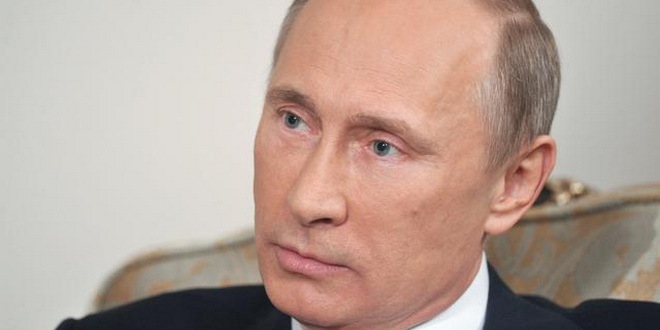
‘Extreme Vetting’ Also Threatens Privacy of Americans

The “extreme vetting” proposals floated this week by Homeland Security Secretary John Kelly include the idea of making visitors to the U.S. open their phones and disclose their contacts, passwords and social media handles to immigration authorities. This might potentially be constitutional, because visitors outside the U.S. don’t necessarily have privacy protection. But it’s a serious threat to Americans’ constitutional rights anyway. The intrusion into core privacy of visa applicants through the fiction of consent can easily be extended to U.S. citizens in a wide range of situations.

There’s a theoretical legal basis for the vetting proposals: because there’s no inherent legal or constitutional right for foreigners (other than lawful permanent residents) to visit the U.S., there’s nothing wrong with conditioning entry on disclosure of private information.

I’m not sure this argument holds water. It’s true that non-Americans outside the U.S. don’t always have constitutional rights. But it doesn’t necessarily follow that the government could impose every conceivable condition on their entry, without constitutional limits.

For example, could the government tell foreigners seeking visas that if they enter the U.S., they must agree to discriminate on the basis of race while here? Surely not — because the government would itself be discriminating through that condition. (Read more from “‘Extreme Vetting’ Also Threatens Privacy of Americans” HERE)

Follow Joe Miller on Twitter HERE and Facebook HERE.

Russia Warns of War; Assad Still Using Airstrip Supposedly Destroyed by US Missiles

By George Sandeman. Russia and Iran have said they will respond to further American military actions following the air strike in Syria last week.

In a joint statement, the command center for the two countries and allied groups said “we will respond to any aggression”.

The statement read: “What America waged in an aggression on Syria is a crossing of red lines. From now on we will respond with force to any aggressor or any breach of red lines from whoever it is and America knows our ability to respond well.”

The warning comes on the same day that:

*A Russian politician warned the North Koreans could strike at any time
*A seven-year-old Syrian girl tweeted her support for Trump’s missile strike
*The President blasted claims his 59-missile strike on Syrian airfield missed targets

(Read more from “Russia Warns of War; Assad Still Using Airstrip Supposedly Destroyed by US Missiles” HERE)

___________________________________________

Russia, Allies Promise to Respond With Force to Future US Attacks

By Steve Hawkes. Russia, Iran and other allies of the Assad regime accused the US of “crossing red lines” over airstrikes in response to a chemical attack on a rebel-held village.

In a joint statement they said: “We will respond with force to any aggressor.”

And the Russian Embassy in London raised the prospect of war in a series of provocative tweets that described [Great Britain’s] Johnson as Trump’s “lieutenant”.

In one it suggested “conventional war” could be an outcome if G7 delivers an ultimatum this week. . .

[O]ne senator said Assad was saying ‘F*** y**’ to the US by continuing to fly jets from the airfield bombed by the US on Friday morning. (Read more from “Russia, Allies Promise to Respond With Force to Future US Attacks” HERE)

Follow Joe Miller on Twitter HERE and Facebook HERE.

Dems Will Win Fight on Border Wall Unless Trump Starts Hammering RINO Collaborators

. . .Despite President Trump’s request for more than $1 billion to fund the Mexican border wall this year, GOP leaders are expected to exclude the money in the spending bill being prepared to keep the government open beyond April 28.

Speaker Paul Ryan (R-Wis.) says the choice is pragmatic and the money will come later.

But the issue has become a political thorn in the side of GOP leaders who are facing pushback from Republicans voicing concerns over the diplomatic fallout, the disruption to local communities and the enormous cost of the project, estimated to be anywhere from $22 billion to $40 billion.

With Democrats united against new wall funding, it’s unlikely the Republicans have the votes to get it through and prevent a government shutdown.

Among the loudest GOP skeptics are those representing border districts. Reps. Will Hurd (R-Texas) and Martha McSally (R-Ariz.), for instance, hail from districts that span a combined 880 miles of the U.S.-Mexico border. They’re pressing the administration to justify the huge costs. (Read more from “Dems Will Win Fight on Border Wall Unless Trump Starts Hammering RINO Collaborators” HERE)

Follow Joe Miller on Twitter HERE and Facebook HERE.

Trump’s Presidency Could Be the Shortest in U.S. History

President Trump seems to be adopting the standard Republican response to criticism from the left-wing media, that is, to act more like a Democrat.

That both justifies and fulfills the media agenda at the expense of the Trump agenda, at least what we thought it was.

That also explains the rise in influence of Jared Kushner, a Democrat, and his Goldman-Sachs globalist team at the expense of Stephen Bannon, a nationalist, whose views reflect those of the people who actually elected Trump.

The President should heed the admonition of English poet John Dryden, “Beware the fury of a patient man.”

That “patient man” is Trump’s base of support, which is now growing impatient. And without that base, the President has no support. None.

The Trump Presidency is at risk because he seems to be operating under a false assumption.

Forgive me for being blunt, Mr. President, but you were elected because of what you promised to do, not for who you are, but largely for who you claimed not to be.

You said it best yourself, Mr. President, in “The Art of the Deal” (1987):

You can’t con people, at least not for long. You can create excitement, you can do wonderful promotion and get all kinds of press, and you can throw in a little hyperbole. But if you don’t deliver the goods, people will eventually catch on.

A recent New York Times opinion article frames the current dilemma:

Stephen K. Bannon, the architect of Donald Trump’s campaign and presidency, is a man with a lot of ideas. He believes that Western civilization is locked in an existential battle with the barbarians at the gates, that nationalists must wrest control from the aloof and corrupt globalist elite, and that America is a once great nation shackled by welfare for both the poor and the wealthy…The first few months of President Trump’s term have been an attempt to put all of that theory into practice, and by any reasonable standard, that attempt has failed.

The ideas that carried you to your Presidency, Sir, did not fail – they were sabotaged. And now the agenda upon which your election was based, Mr. President, is withering through intentional neglect in order to replace it with one maintaining the corrupt and dysfunctional political status quo.

It should tell you something, Mr. President, that the same people who denounced and ridiculed you from the day you announced your candidacy, and still do, are now saying “Jared Kushner might save us after all.”

In that case, the “us” to be saved are the Democrats, the left-wing media and the swamp.

Saving them won’t save your Presidency, Sir, but will doom it because the people making such arguments are not those who elected you.

The downsizing of Stephen Bannon and the attacks on other “nationalist” advocates in your administration, Mr. President, are just some of the thousand cuts your enemies hope to inflict to bleed your Presidency white.

It is not a choice between family or friends or a competition between “Nepotism and Nationalism” and certainly not a matter of buttressing the Trump brand.

It is about the President keeping the promises he made to the American people and not diluted versions of them in order to placate those who had always preferred a Trump loss.

In the end, it is really about the survival of representative government.

Follow Joe Miller on Twitter HERE and Facebook HERE.

The Merits of Trump’s Syria Strike Aside, We Need to Bring Back Congress’ Power Over Declaring War

Amidst the chaos of any sudden use of military force, there are numerous opinions, observations, and pearls of wisdom offered regarding the action. These opinions often fall along non-ideological lines that we are not used to seeing on domestic policy issues. But considering the airstrike against Assad’s airfield last night, there is an opportunity for people on all sides to unite behind the general need for congressional authorization of force. We must move back towards the direction of getting congressional approval at least for protracted engagements that are war in all but name only.

Putting aside any debate over the air strike last night, going forward it is clear both from a political and legal standpoint that any calls for a more protracted engagement in Syria should be backed by a Declaration of War or an Authorization of Use of Military Force (AUMF). This is a policy that should be enthusiastically embraced by both proponents and opponents of a deeper engagement in Syria.

What the Constitution and the founders said about war powers

It is very clear that our founders, based on the reality of warfare defined in their time, believed that any initiation of offensive action taken against another nation must be approved by Congress. As James Madison said, there must be “rigid adherence to the simple, the received, and the fundamental doctrine of the [C]onstitution, that the power to declare war, including the power of judging of the causes of war, is fully and exclusively vested in the legislature; that the executive has no right, in any case, to decide the question, whether there is or is not cause for declaring war…”

George Washington, in a 1793 letter to the governor of South Carolina regarding conflict with the Creek Indians, made it clear that the question to initiate any major offensive war was out of the hands of the president: “The [C]onstitution vests the power of declaring war in Congress; therefore no offensive expedition of importance can be undertaken until after they shall have deliberated upon the subject and authorized such a measure.”

On the other hand, any decisions about the execution of the war thereafter or to immediately repel an invasion were placed squarely in the hands of the president. This arrangement was born out of the Article I Section 8 enumerated congressional power to declare war on the one hand, but the president’s role as commander-in-chief of the armed forces on the other.

This is also why Madison had the convention members alter the original draft of the Constitution, which gave Congress the power to “make war,” to a more limited language of “declare” war, making it clear that all operations beyond the initial declaration would not be subject to the chaotic whims of 100 people.

The question of how to square modern day war fighting, communications, transportation, and logistics of urgency and secrecy with Congress authorizing every use of force is a complicated one. One can make a strong argument that the definition of war has changed and that the need for urgent or clandestine action could be justified under Article II commander-in-chief powers. Clearly, this has guided every president since World War II and the fact that we have special operations ongoing in 140 countries. Without addressing one-time urgent surgical strikes, such as last night’s bombing or the broader use of special forces, it’s important that everyone agree we need to move away from the post-WWII trend of almost never getting authorization from Congress for anything, even protracted commitments that are tremendously costly and consequential.

Congressional buy-in is not just a Constitutional requirement, but a strategic one

Although there are many reasons one can posit why we have failed to win most wars post-WWII, it is no coincidence that our losing streak began when we stopped declaring war. A congressional debate over making such a grave commitment and an ensuing declaration of war is not just a constitutional imperative, it is a political and strategic one.

A declaration of war allows the entire representative body of the people to raise the important questions about our strategic interests, definition of the mission, feasibility, and cost of achieving that mission, and the exit strategy. If Congress votes to pass a resolution, it serves as a definitive guide for defining the enemy, how victory is achieved, and what success looks like. This further serves the purpose of rallying the country behind a defined mission because public support is always needed to achieve such victory. This is what we have been lacking in most engagements since WWII.

Based on the statement put out from the Trump administration, it is very possible that last night’s bombing was limited to deterring the proliferation of WMD and is not part of a broader engagement. But if the administration or Republicans in Congress believe we must further engage in the Syria civil war, a view I personally disagree with, even supporters of such action must agree to the imperative of congressional buy-in.

The same way some may argue that the requirement for a declaration of war for any offensive action by the president, in the modern era, necessarily abrogates his role as commander-in-chief, the continuation of endless protracted ground missions in the Middle East without any declaration from Congress completely overrides the unambiguous dictates of Article I powers. Moreover, it ensures that our troops remain in precarious situations indefinitely without any definitive mission or understanding of how to achieve victory. Thus, the opportunity for a congressional debate over authorizing force is good for both opponents and proponents of any given military engagement.

Yet, there is a dangerous notion being peddled by Sens. Mitch McConnell, R-Ky., and John McCain,R-Ariz., that the AUMF passed by Congress in 2001 is somehow a retroactive catch-all for any engagement against any conventional or non-conventional adversary in the entire Middle East until the end of time. Such a worldview completely vitiates our Constitution and ensures that every new engagement in the Middle East will result in the same failed outcome to which we have grown accustomed. (For more from the author of “The Merits of Trump’s Syria Strike Aside, We Need to Bring Back Congress’ Power Over Declaring War” please click HERE)

Follow Joe Miller on Twitter HERE and Facebook HERE.