
Chip Gaines Responds to 2016 Buzzfeed Controversy in Blog Post Calling for Unity

House-flipping celebrity Chip Gaines encouraged people to “lovingly disagree” in a blog post on Monday.

“If there is any hope for all of us to move forward, to heal and to grow — we have got to learn to engage people who are different from us with dignity and with love,” Chip wrote.

The blog post appears to refer, at least in part, to the controversy that sprang up in November 2016 after Buzzfeed published an article attacking Antioch Community Church of Waco, Texas and its pastor Jimmy Seibert for taking a “severe, unmoving position” against same-sex marriage. HGTV Fixer Upper stars Chip and Joanna attend Antioch Community Church and have long been vocal about their Christian faith.

“So are the Gainses against same-sex marriage?” Buzzfeed writer Kate Aurthur asked of the married couple.

Since the teaching that marriage is between one man and one woman is a basic tenet of Evangelical Christianity, and since Chip and Joanna had never spoken about the issue themselves, many criticized Buzzfeed’s piece as a “non-story.”

HGTV responded to the controversy at the time with a statement saying the network doesn’t “discriminate against members of the LGBT community in any of our shows,” and moved forward with airing the fourth season of wildly popular Fixer Upper (the November 29 premier garnered 3.4 million views).

Chip and Joanna initially refused to make a statement, with Chip turning to Twitter to request “respect” for Aurthur and tweet about the family’s faith.

In Monday’s blog post, Chip still didn’t address the Buzzfeed article, or same-sex marriage, head-on, writing:

Plenty of folks are sad and scared and angry and there are sound bites being fed to us that seem fueled by judgement, fear and even hatred. Jo and I refuse to be baited into using our influence in a way that will further harm an already hurting world, this is our home. A house divided cannot stand …

Joanna and I have personal convictions. One of them is this: we care about you for the simple fact that you are a person, our neighbor on planet earth. It’s not about what color your skin is, how much money you have in the bank, your political affiliation, sexual orientation, gender, nationality or faith. That’s all fascinating, but it cannot add or take away from the reality that we’re already pulling for you. We are not about to get in the nasty business of throwing stones at each other, don’t ask us to cause we won’t play that way.

Chip went on to say that he and Joanna “feel called to be bridge builders.”

“We want to help initiate conversations between people that don’t think alike,” he wrote. “Listen to me, we do not all have to agree with each other. Disagreement is not the same thing as hate, don’t believe that lie.”

Chip ended his post by asking people to work together.

We propose operating with a love so real and true that you are willing to roll up your sleeves and work alongside the very people that are most unlike you. Fear dissolves in close proximity. Our stereotypes and vain imaginations fall away when we labor side by side. This is how a house gets unified.

Read the full blog post at MagnoliaMarket.com. (For more from the author of “Chip Gaines Responds to 2016 Buzzfeed Controversy in Blog Post Calling for Unity” please click HERE)

Follow Joe Miller on Twitter HERE and Facebook HERE.
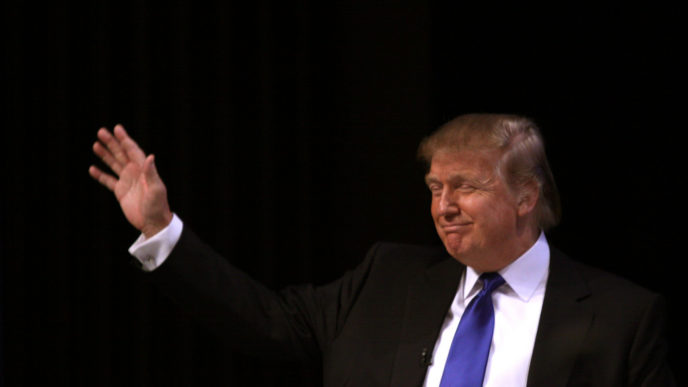
Trump Will Have His Hands Full Fixing LGBT Extremism in the State Department

It may be a new year, but there’s nothing new about the concerns surrounding the State Department’s liberal activism. While Americans were busy unwrapping presents, conservatives were tearing into something else: Obama’s record on social issues. After eight years of watching the State Department operate as a global base for abortion and sexual activism, most Republicans are ready to get back to the real business of diplomacy. That’s a tough job under normal circumstances, but after two terms of President Obama, the Trump team will have its hands full.

Lately, there have been some who have suggested that (after almost a decade of proving otherwise) the State Department has nothing to do with abortion and sexual politics. Tell that to our friends around the globe, who’ve spent the last eight years trying to dodge this administration’s biggest export: rainbow flags and abortion dollars. Under President Obama, this radical agenda has completely infiltrated the State Department — usually eclipsing the agency’s other vital functions, like defending religious liberty. Obviously, America has a sincere interest in stopping the unjust persecution or targeting of any human being. But what’s happened for the last eight years is not the simple defense of those who are mistreated — it’s the elevation of people around the world based on sexual behavior.

State’s Culture of Extremism: LGBT Issues

While some people are falling for the line that social issues are “irrelevant” to the work of the State Department, the Trump team isn’t buying it. They’re keenly aware of the culture of extremism at the agency — so much so that they’ve requested a detailed list of the ways the office has tried to promote “gender equality.” Late last month, the New York Times reported on the Trump memo, which asked the department to provide, among other things, details on the positions “‘whose primary functions are to promote such issues’ — as well as how much funding was directed to gender-related programs in 2016.” (Read more from “Trump Will Have His Hands Full Fixing LGBT Extremism in the State Department” HERE)

Follow Joe Miller on Twitter HERE and Facebook HERE.

Trump’s ‘Historic’ Opportunity to Reshape the Federal Courts

After an election in which the Supreme Court proved to be a deciding factor in how people voted, President-elect Donald Trump has a significant opportunity to reshape the federal judiciary from top to bottom.

In addition to the vacant Supreme Court seat, Trump will inherit at least 103 openings in the lower courts—that is, district and circuit courts. They don’t get the same attention as the top court, but hear many more cases on a variety of issues involving federal law.

The 103 vacancies is nearly double the 54 openings President Barack Obama had upon taking office in 2009.

Another 12 federal judges have announced plans to leave their posts later this year.

While the Supreme Court reviews roughly 75 cases a year, the nation’s 13 regional circuit courts (or federal courts of appeals) heard more than 55,000 cases last year. The Supreme Court accepts 1 percent of the cases submitted to it, so in the great majority of cases, the circuit courts set a legal precedent when they decide appeals.

“If you are a cultural warrior watching for rulings on gay marriage and abortion, the Supreme Court is where you should look, but if you are a business, a taxpayer, an employee involved in a workplace dispute, or someone making a discrimination complaint, the circuit court is often the final word,” Curt Levey, a legal affairs fellow at FreedomWorks, said in an interview with The Daily Signal.

Conservative groups such as FreedomWorks say they expect Trump to quickly nominate justices to the lower courts, taking advantage of an opportunity given to him after Senate Republicans declined to confirm some of Obama’s judicial nominees the past few years.

Before the last Senate ended its two-year term, 25 of Obama’s court nominees did not get a vote on the floor after the Judiciary Committee approved them, The Washington Post reported.

The nonpartisan Judicial Conference of the United States, a national policymaking body for the federal courts created by Congress, has deemed 41 of the openings to be judicial emergencies, because cases in those jurisdictions are severely backlogged as a result of long-vacant seats.

Though Trump did not talk about the lower court openings on the campaign trail, the circuit courts often serve as a pipeline of judges considered qualified for a Supreme Court appointment. Of the current Supreme Court justices, only Elena Kagan, an Obama appointee, did not serve on a U.S. appeals court.

Trump could get additional opportunities to nominate Supreme Court justices, beyond Antonin Scalia’s replacement.

Justices Ruth Bader Ginsburg, 83, and Stephen Breyer, 78, both liberals, and Justice Anthony Kennedy, 80, considered a swing vote, may choose to retire soon.

District and circuit judges, like Supreme Court justices, serve lifetime appointments unless they retire before they die.

“President-elect Trump realizes this issue gave him the election, that there’s a historic interest in the Supreme Court and the courts in general, and that the public increasingly recognizes the significance of the president’s role in shaping the courts’ composition,” Carrie Severino, chief counsel and policy director of the conservative Judicial Crisis Network, said in an interview with The Daily Signal.

‘Big Fight’ Ahead

Democrats eager to strike back at Republicans are likely to try to thwart Trump’s effort to name more conservative judges, even if their ability to vote down potential judges is limited.

When Democrats controlled the Senate, they changed the rules to allow for confirmation of all presidential nominees, except for the Supreme Court, by a majority vote. Republicans now have a 52-vote majority.

But Senate leaders usually follow a tradition of considering lower court nominees only if they are supported by both senators representing the state in which the court is situated. Democratic senators are represented in 28 of the 50 states in the new Congress, including large ones such as California, Florida, and New York.

“Trump won’t automatically get who he wants,” Russell Wheeler, an expert on judicial nominations at the Brookings Institution, said in an interview with The Daily Signal. Wheeler added:

The Democrats will put up a big fight and say, ‘There were nominees for these vacancies which were bipartisan and you refused to bring them for a vote when you could have confirmed them in an afternoon.’ It will be the fight over the Scalia vacancy, only multiplied by 100 because there are a lot more players in this.

Obama’s Influence on Federal Courts

Even with Republicans’ resistance to Obama’s nominees in his second term, the outgoing president was able to dramatically reshape the federal judiciary.

In his eight years, Obama ended up with three more judicial confirmations than his Republican predecessor, President George W. Bush, 329 to 326.

Today, nine of the 13 circuit courts have a majority of justices appointed by a Democrat, compared to only one when Obama took office.

Wheeler says Trump’s appointments won’t significantly shift these appeals courts because only about 10 percent of the 179 circuit judgeships—17 of them—are vacant.

This is significant because the Supreme Court, experts say, tends to take cases on issues in which the circuit courts split on their rulings. So if more of the courts are liberal-leaning, they likely will be more cohesive in their decisions, and those rulings, without making it to the Supreme Court, would become the law of the land.

According to Wheeler’s research, the Republicans’ challenge today is compounded because the majority of district and circuit court judges who are most likely to retire in the coming years are Republican appointees.

Still, Wheeler predicted that by mid-2020, Republican appointees would hold about half of the 673 district judgeships, compared to the current 34 percent.

In the circuit courts, Wheeler expects Democratic appointees to fall from 51 percent to about 43 percent by mid-2020.

“It’s not insurmountable in four years for Trump to restore the courts almost to what they were before Obama took office,” FreedomWorks’ Levey said. “If he can do that, the chances are conservatives will be in great shape if Trump serves eight years.”

Policy Impact

Legal experts say many of Trump’s policy priorities could be affected by the makeup of the courts.

For example, if Trump fulfills his plans to repeal some Obama administration regulations dealing with issues such as the environment, labor, and energy development, he likely will meet resistance from opposition figures and groups who could challenge his changes in the federal courts.

“In general, what will happen is as the Trump administration and his Cabinet appointees try to pull back, amend, change, or otherwise void regulations issued by the Obama administration in many different areas, you will see a huge number of lawsuits filed by everyone from environmental groups to perhaps state attorneys general to try and stop regulations from being changed or rewritten,” Hans von Spakovsky, a senior legal fellow at The Heritage Foundation, said in an interview with The Daily Signal.

Ernest Young, a Duke University law professor focused on the federal courts, said he expects Democrat-led states to respond to Trump’s potential regulatory changes by issuing their own regulations on issues such as climate change and immigration.

If that happens, Young predicts the lower federal courts will see cases involving conflicts between federal and state law.

“Progressive policy experiments at the state level will raise questions about what extent the federal government can shut those down,” Young told The Daily Signal in an interview, adding:

I expect you will see more challenges dealing with the validation of state law—about how easy or hard it is for federal statutes to preempt state law. Some of those may go to the Supreme Court, but the lower courts are critical on issues like that.

(For more from the author of “Trump’s ‘Historic’ Opportunity to Reshape the Federal Courts” please click HERE)

Follow Joe Miller on Twitter HERE and Facebook HERE.

Don’t Let the Media Confuse You: Obamacare Is a Policy Failure

Leave it to the media, which spent the latter half of 2016 highlighting how outrageously expensive Obamacare premiums were becoming, to suddenly shift gears in 2017 and stress the health law’s many “pluses.”

Such was the case in a recent interview with Heritage President Jim DeMint, in which CNN anchor Carol Costello suggested that lawmakers would need to preserve the so-called benefits of Obamacare if they repealed it.

In Costello’s words:

For example, this is according to the nonpartisan Congressional Budget Office and the Federal Reserve in Dallas. Preventative care provided by Obamacare … saves money and health care costs overall. In 2015, the cost of health care services increased 0.5 percent. The typical price increase before Obamacare, it was around 3 to 4 percent. Obamacare will lower the deficit by $143 billion over the next 10 years. So, there are pluses to Obamacare. So, how do you keep the pluses and get rid of the minuses?

DeMint shot back that those “facts” could fall “under the category of fake news.” This set Costello off to correct him that the numbers had come from the Congressional Budget Office.

Well, here’s what the Congressional Budget Office actually said about the cost of preventative care in 2009: “Although different types of preventive care have different effects on spending, the evidence suggests that for most preventive services, expanded utilization leads to higher, not lower, medical spending overall.”

For Americans paying premiums, this year’s price increases speak for themselves. According to the Obama administration, on the exchanges, the average increase this year in the benchmark plan premium is 25 percent across the 39 states that use the HealthCare.gov platform. Certainly this cannot be considered a “plus,” even by the law’s most zealous supporters.

It is true that the Congressional Budget Office did originally say that the law would reduce the deficit, but that analysis was always based on questionable assumptions and the double-counting of Medicare savings.

Indeed, in 2014, the Senate Budget Committee went back and used the Congressional Budget Office’s same scoring conventions and found that Obamacare would increase the deficit by $131 billion over the next decade.

Although the details of this year’s repeal bill are not yet known, the Congressional Budget Office’s latest score of an Obamacare repeal—based on the reconciliation bill passed by the last Congress, which repealed the law’s major spending provisions and tax increases—was projected to reduce federal deficits by roughly $516 billion over the 2016-2025 period, accounting for the economic benefits that would result.

But on CNN, Costello wasn’t finished. “So, all those 20 million people enrolled in Obamacare, they’re all going broke and it’s not working for any of them?” she asked. Actually, 20 million is a debatable enrollment figure, given that it is based on survey data that can be off by millions of people.

Using actual insurer enrollment data, which is only available through the end of 2015, there was an increase in coverage of only 14 million Americans from 2013 to 2015, with the vast majority (11.7 million) being pushed into Medicaid coverage.

Moreover, the actual net increase in private coverage during this period was only 2.3 million due to a decline in employment-based coverage, which offset the increase in the individual health insurance market.

Furthermore, Costello forgot about all of the people (over 10 million) who purchase coverage in the individual market and receive no Obamacare subsidy. These people have been getting hammered by premium increases caused by Obamacare every year and have to pay the full cost on their own.

Costello asked, “How do you take care of people much better than they’re taken care of now?”

Considering that many Americans are now facing fewer insurer options, higher insurance deductibles, and higher premiums than prior to Obamacare, the need for real cost relief is immense.

The first step in providing relief is to quickly repeal the law and then do the legislative work that will allow for patient-centered reforms. (For more from the author of “Don’t Let the Media Confuse You: Obamacare Is a Policy Failure” please click HERE)

Follow Joe Miller on Twitter HERE and Facebook HERE.

REINS Act Will Check Executive Overreach, Restore Constitutional Balance

As a new Congress begins, Republicans have made it clear that regulatory reform is a priority that puts the interest of all Americans first, especially concerning the economy.

It’s been said that sometimes government rules “have gotten out of balance, placing unreasonable burdens on business—burdens that have stifled innovation and have had a chilling effect on growth and jobs.”

It is in fact President Barack Obama who made that statement in 2011 in his appeal “to strike the right balance” in executive rulemaking.

In an outstanding contradiction to the spirit of these words, the current administration brought our regulatory burden to a bloated $1.88 trillion in 2015—meaning that on average, each U.S. household is bearing an annual economic weight of $15,000. This underscores the reality that unchecked regulations smother business and family finances without distinction.

That’s where the REINS Act comes in.

Federal agencies currently have the power to make “major rules”—ones that have an economic impact of $100 million or more—without the oversight of Congress or the signature of the president. The REINS Act would put in place meaningful checks on agency overreach by requiring congressional approval and the president’s signature for major rules.

Absent these checks, we fall victim to oppressive regulations like the Department of Labor’s overtime rule, which hurts the very people it is trying to help and imposes unworkable burdens on businesses, universities, and employees.

In 2015, the Department of Labor raised the salary threshold under which people are eligible for overtime from $23,660 to $47,476. While the rule seems like it would provide more overtime pay to more people, the economic effect is that it smothers job creators.

With their administrative resources consumed by tracking more information with less flexibility, it turns out that businesses have to cut jobs as a result of the overtime rule. Even if businesses raise salaries above new overtime levels to avoid additional administrative costs, they are still left with less money to pay salaries overall—which means they can support fewer jobs.

As it stands, the Congressional Review Act of 1996 represents the only recourse Congress has for reversing harmful rules without having to scale the great wall of the filibuster. All but one of the joint resolutions of disapproval that Congress has passed under the Congressional Review Act have been vetoed by the president.

As a tool for checking executive overreach, the Congressional Review Act is begging for improvement, which the REINS Act offers by amending the original legislation.

If the overtime rule had been subject to a vote by Congress before it was enacted, as the REINS Act would require, American workers could have been spared the consequences of the heavy-handed and poorly-crafted regulation. Yet support for the REINS Act is not merely practical—it is also constitutional.

Article 1 of the Constitution assigns the responsibility of lawmaking to a House and Senate made up of elected officials, and it does so in order to ensure that the people who are affected by federal laws and regulations have a say in how those rules are made.

Without the balance that the REINS Act offers, Americans and their economy remain subject to the decisions and missteps of unelected bureaucrats, who seem agonizingly unable to “strike the right balance” between helpful and harmful rules.

Executive agency overreach is, at heart, a constitutional issue, and one that the REINS Act remedies in a way that reformers in both parties should be able to support. If made law, this legislation would require agencies to submit their major regulations for congressional approval before they could go into effect, and both chambers would be required to accept or reject the rule within 70 legislative days.

The president’s signature would also be required for any of Congress’ joint resolutions on a major rule to take effect. Agency regulations with economic impacts of under $100 million would remain unaffected by the REINS Act.

The bill is not retroactive, so Republicans haven’t devised it as a way to blot out the actions of a previous administration and the agencies it oversaw. It’s also not unwieldy from a legislative perspective, adding only 50-100 votes to the congressional calendar each year.

What we’ve done is to craft a way to move forward with legislative business and restore accountability to the legislative process while better protecting our economy from suffocating regulations that Americans never voted to enact.

The current president has said balance in federal regulations is necessary, and President-elect Donald Trump has said the REINS Act will help guarantee that balance, promising that he would sign this “major step toward getting our government under control” were the bill to reach his desk.

The REINS Act brings transparency, accountability, and constitutional balance to the branches of government regardless of which party controls those branches, and it returns power to the electorate by making sure that their votes have a voice in major federal rulemaking. (For more from the author of “REINS Act Will Check Executive Overreach, Restore Constitutional Balance” please click HERE)

Follow Joe Miller on Twitter HERE and Facebook HERE.

Meet the Only Republican to Vote Against Re-Electing Paul Ryan as Speaker of the House

On the first day of the 115th Congress, Paul Ryan was re-elected as speaker of the House. The vote would have been unanimous, except for the vote of one conservative dissenter.

In an effort to “drain the swamp,” Rep. Thomas Massie of Kentucky cast the lone Republican vote against Speaker Ryan, and voted for Florida Rep. Daniel Webster.

Massie had better company two years ago. In January 2015, 25 conservatives dissented from the Republican caucus and voted against re-electing John Boehner as speaker. Twelve of those dissenters voted for Rep. Webster. Webster’s previous experience as speaker of the House in Florida — where he was known for restoring regular order and honest practices — was a big selling point to the defecting conservatives.

But with a new Republican administration coming in and with conservatives in Congress still hoping to work with Speaker Ryan, there was much less dissent leading up to Tuesday’s vote, versus two years ago.

While Massie wasn’t joined by his fellow conservatives, he was suspected as a possible dissenter:

No one can say Rep. Thomas Massie isn’t afraid to go against the grain (For more from the author of “Meet the Only Republican to Vote Against Re-Electing Paul Ryan as Speaker of the House” please click HERE)

Follow Joe Miller on Twitter HERE and Facebook HERE.

Rand Paul Has a Novel Idea: Let’s Kill Obamacare and Try Freedom

Congress is going to vote on Obamacare. Senate Majority Leader Mitch McConnell, R-Ky. (40%) has promised that an Obamacare repeal resolution will be the first item on the Senate’s agenda, but there is some disagreement among Republicans as to what the replacement for President Obama’s failed health care reform law should be.

Sen. McConnell’s fellow Kentuckian, Sen. Rand Paul, R-Ky. (A, 92%) suggests “freedom.”

In an op-ed written for Rare, Sen. Paul suggested it would be “wise” for the GOP to immediately vote on a replacement health insurance reform law, guided by four principles.

1. The freedom to choose inexpensive insurance free of government dictates.

2. The freedom to save unlimited amounts in a health savings account.

3. The freedom to buy insurance across state lines.

4. The freedom for all individuals to join together in voluntary associations to gain the leverage of being part of a large insurance pool.

Rand Paul’s guidelines come as other Republicans in Congress have begun to back away from full ACA repeal, to some form of partial repeal and a replacement plan that keeps parts of Obamacare.

“It’s a partial repeal first of all, it’s not a total repeal,” Sen. David Perdue, R-Ga. (C, 75%) told reporters in late November. “Let’s get that out of the way. It’s a partial repeal, and I think there are pieces of it in there that have to stay in place for awhile and that is what we are going to be working on.”

Sen. John Cornyn, R-Texas (F, 42%) floated a “three-year transition” period to delay the effective repeal of Obamacare while lawmakers develop a replacement plan. One of those plans in development, authored by Sen. Bill Cassidy, R-La. (F, 47%) and Rep. Pete Sessions, R-Texas (F, 57%), “does not purport to repeal the [Affordable Care Act],” in the words of Health Affairs contributing editor Timothy Jost.

Sen. Paul warns that anything less than a full repeal will end in disaster:

My fear is that if you leave part of Obamacare in place (the dictate that insurance companies must sell insurance to individuals with pre-existing conditions) then you will see an acceleration of adverse selection and ultimately mass bankruptcy of the healthcare insurance industry.

Don’t misunderstand me. We should repeal Obamacare, but partial repeal will only accelerate the current chaos and may eventually lead to calls for a taxpayer bailout of insurance companies.

And he is joined by other conservatives in Congress.

Senator Mike Lee, R-Utah (A, 100%) and Rep. Mark Walker R-N.C. (C, 75%) wrote, in a joint op-ed, that President-elect Trump’s administration and the new Congress must not “fumble” full repeal. “We can’t afford to just squeak by with the bare minimum, while preserving many of Obamacare’s most burdensome and intrusive provisions,” they wrote.

Freedom Caucus Chairman Rep. Mark Meadows (A, 94%) has unequivocally stated Obamacare “should be repealed and replaced, and all of that should be done in the 115th Congress,” and “not left to a future Congress to deal with.”

And, of course, Senator Ted Cruz, R-Texas (A, 97%) has made his position on Obamacare abundantly clear:

“Principled opponents of Obamacare rejected it because we reject the use of state force to mandate that we buy a commercial good from a private seller. Pragmatic opponents want to keep the feel good aspects of Obamacare while cleaving the individual mandate that forces people to buy insurance,” Paul writes.

Will the principled conservatives in Congress be enough to dissuade GOP leadership’s partial-repeal agenda? Sen. Paul’s conclusion is pessimistic.

“Partial repeal of Obamacare will likely win the day,” he predicts. “But when the insurance companies come to Washington crying for a bailout don’t say that no one warned of this preventable disaster.” (For more from the author of “Rand Paul Has a Novel Idea: Let’s Kill Obamacare and Try Freedom” please click HERE)

Follow Joe Miller on Twitter HERE and Facebook HERE.
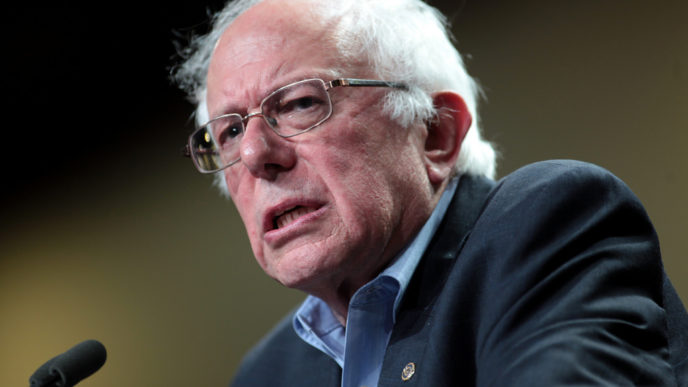
Is God Capturing the Heart of Donald Trump?

When I walked in Mr. Trump’s office in April 2016 at his invitation, I knew I had been sent by God. I went with confidence in the Lord, trusting that He would speak through me. I was impressed to ask Mr. Trump’s second son, Eric, to join us for the first few minutes. I felt he would want to say some things about his father, and I would say some things about the need for a fatherless nation to have a father. The interaction was gratifying — more than I could have hoped.

Eric said, “I have a great father.” I said, “Let’s join in prayer and hope that he will learn what it is to be a wise father figure to a fatherless nation.” Eric agreed, and I don’t think we’ve ever stopped agreeing in our hearts and in prayer that President-elect Trump can actually become that kind of example.

Not many thought what is happening with Mr. Trump would have been likely, perhaps even possible, and certainly not probable. As I look in from the outside, and also from the inside as a result of the journey I’ve had in interaction and prayer with Mr. Trump, I sense that he is being captured by the heart of our Father.

I think many of his decisions may even surprise him — not that he lacks a brilliant mind, tremendous insight and ability to make a deal. This is beyond that. In my opinion, Mr. Trump is receiving wisdom only God can provide. The Lord freely offers it to anyone willing to hear, seek and heed. I think Mr. Trump is hearing, and I believe he is diligently seeking to heed what every American must know: America cannot be great without God.

The Great Shepherd in Stormy Times

I believe God is seeking to impart to President-elect Trump, Vice President-elect Pence and every prospective cabinet member the very heart of the ultimate Father and the Great Shepherd. Our Lord made it clear that when we allow Him to become our Shepherd, we need not want. He is our source. However needy we may be, He is the solution and He will often use compassion-filled people to meet our needs. But we will never, never become dependent on a source other than God our Father and Shepherd.

When we understand the freedom the Shepherd offers, we refuse to become pawns to any power-broker, power source or political party; for the Shepherd, who loves us with the love of the Father, will lead us in green pastures, not barren deserts. He will meet our needs. He will give us opportunity and productivity. He will lead us beside water made calm by His Spirit.

The raging storms of terrorist activity and continual threats to freedom can be miraculously calmed. The enemy will not cease to scheme, plot and attack, but when we move into the presence of overwhelming peace that only God can offer, there will be supernatural calmness and security. We will find our souls being restored, just as Betty’s and mine are being restored now.

Four years ago, just three days after Christmas and three days before the new year, we lost our baby girl, Robin — our miracle baby. That beautiful baby we did not expect and was so difficult to carry to term came into this world to sow seeds of life for the next 40 years that will reap eternal dividends. When we think of our precious daughter, our Lord restores our soul. He binds up our broken heart. Yes, it is still broken, and He is still binding it with His love and peace. We will depend on that from now until we see our beautiful daughter in His presence when we enter forever the house of the Lord. And we will say with her, “I was glad when they said, ‘Let us go into the house of the Lord.’”

I can promise you that God our Father and Shepherd wants to restore the soul of every person reading these words and every broken heart in this nation. He will lead us not in paths of religious pretense and the “traditions of men taught as the commands of God” but rather in His righteousness, and He will do it for His name’s sake, for His glory — and He will be exalted.

“Surround Me”

I want to be honest with you. I think the leadership we have chosen in our nation wants that deep in their hearts. They may not say it the way we as Christians would want to hear it, but I believe it is the longing of their hearts. Yes, I believe it is the longing of President-elect Trump and Vice President-elect Pence. I believe Mr. Trump wants for you something so far beyond what he can give you that he knows it must come from above. The morning after the election, I talked to him by phone. “We’re going to keep surrounding you with prayer, love and all the help we can give you,” I said. He responded, “Surround me. Don’t let me ever forget! Surround me!”

I’m saying to every person who knows how to pray, who knows God as Father, and who has experienced the watch-care of the Great Shepherd, please pray for our nation’s leadership and all they appoint, for they will be under fierce assault.

You can rest assured there will be a non-stop, all-out attack on every decision Mr. Trump makes. Some will be as fierce and potentially damaging as the father of lies, the enemy of truth and wisdom, can bring to pass. You will see venomous hatred spewing from expected and unexpected sources.

The poisoned darts will also be aimed at those he appoints. I’ll be sharing in another column their willingness to wear the bull’s-eye on their backs and sacrifice for their country, knowing the cost for taking this journey with President-elect Trump.

Our experience with our daughter confirms that even when we “walk through the valley of the shadow death,” we “fear no evil” because He is with us. As the passage says, “His rod and His staff comfort us.” That means we receive His correction and direction through the rod and the staff of the loving Shepherd. He will, in fact, “prepare a table before us in the presence of all our enemies and anoint our heads” with the oil of His love, compassion and mercy. We will be able to say we are witnesses of the fact that “goodness and mercy” indeed follows us all the days of our lives and throughout eternity. And we know that we “will dwell in the house of the Lord forever,” beginning now, as we choose to live in His shelter.

This is the heart of the Father and the heart of our Shepherd. I believe it’s what the people who voted for correction, hope and change in our nation desire — whether they’ve confessed the Lord or not. How I pray that all will come to know Him and experience Him with all the evidence of His grace and glory. I believe the desire of our Father and Shepherd is the desire of the leadership we have chosen in our nation. We must pray for that because if that is not their desire, it must become their desire. Our desire must be His desire.

We Can Make a Kingdom Imprint

Let me sum it up. Although I was not initially a Donald Trump fan or supporter, God sent me to him. The love God has given me for him is totally supernatural. Although he might not put it in these terms, I believe Mr. Trump wants what our Father in heaven wants for all people: God’s best for you and every American. I think he knows that if we receive God’s best, we are in fact going to be a blessing and an inspiration to the nations of the world, and we will be a beacon of hope and freedom until Christ comes. We can make a kingdom imprint in today’s very sick world. (For more from the author of “Is God Capturing the Heart of Donald Trump?” please click HERE)

Follow Joe Miller on Twitter HERE and Facebook HERE.

What Would Jesus Do to Nazi War Criminals?

Are you looking for a book that will change your life?

No, neither am I. I’m tempted like everyone else to find instead erudite and witty titles that confirm what I already think. But since (as I’ve learned) it turns out that such a reading plan was the exact one that Hitler followed, I’ve had to reconsider it.

Now, I’m not suggesting you start the New Year by running out and buying some radical feminist manifesto — except the really crackpot ones that are good for a laugh, and are fun to read aloud to friends over pints and pretzels. See nun-turned-witch Mary Daly’s Gyn/Ecology: The Metaethics of Radical Feminism, and Valeria Solanas’ Society for Cutting Up Men (SCUM) Manifesto. Those are a lot of fun.

Read Something that Makes You Uncomfortable

No, instead I’d like to suggest you find a book that takes a sane and wholesome, even spiritual view of a deeply uncomfortable subject. So you will look with the eyes of reason and faith, but at something you’d rather not think about. Consider the topics that make you just want to turn away and switch on the television, or spend an hour “evangelizing” on Twitter.

It might be global poverty, aggressive Islam, abortion, the collapse into doctrinal mish-mash of a church you’ve always loved, or some other ugly subject. Consider whether your aversion might be a sign that you really do need to give this topic (whatever it is) some hours of your attention. Perhaps there is something you really are called to do, in your own small way, to make things better. Maybe it’s just important that you be better informed on it as a voter, parent, or general purpose Christian.

Recently I hunkered down to tackle a deeply disquieting subject: The nexus point of cheap grace, repentance and genocide. They all come together in Tim Townsend’s fascinating, carefully researched book Mission at Nuremburg. It tells the story of Henry Gerecke, a good-hearted Lutheran pastor who became an army chaplain during the Second World War, and got assigned to pastor some of the worst human beings on earth: the Nazi defendants at the Nuremburg war crimes trials. It wasn’t Reinhold Niebuhr or Karl Barth whom the American military authorities chose to interview and counsel these architects of aggressive war, eugenics programs and large scale genocide. It was an ordinary, middlingly-educated Lutheran minister from St. Louis. Most of his previous experience was with small-town Midwestern German-American farmers, and urban missions to the homeless — with some time spent in U.S. prisons ministering to run-of-the-mill criminals.

Alongside equally ordinary Catholic chaplain Rev. Sixtus O’Connor — a humble Franciscan philosophy teacher from upstate New York — Gerecke was the man whom Providence placed in the cells that held Albert Speer, Heinrich Himmler, Julius Streicher, and the top Nazi generals who survived the collapse of the Reich. Their task? From the perspective of the U.S. military which dispatched them, it was to comply with the terms of the Geneva Convention by providing prisoners with access to religious counseling and services. But Gerecke knew that much more was asked of him than that. It was his job to confront men who had risen to the top of the world — gained wealth and fame and the power of life and death over millions — by discarding the Christian vision of human dignity, in favor of a pagan fetish of a single race and nation.

Treading the Tightrope Between Judgmentalism and Cheap Grace

He had to hold them accountable for their crimes, the fruits of which he’d witnessed on visits to the bloodstained cells of Dachau, where countless clergy and political prisoners had been brutalized, starved and shot. He had to be on guard against a cheap, last minute “repentance” on the part of these conquered Nazis, embraced for the sake of leniency in sentencing — or even worse, as a cynical means of evading their guilt before the fearsome judgment seat of Christ (which is, when you think about it, also a ploy for leniency in sentencing).

But Gerecke also knew that he had to minister to these men with all sincerity, to offer them if possible the chance to reclaim the Christian faith of their youth, and accept the Grace of forgiveness that Christ offers to all — even the worst of men, if they will accept it.

Townsend depicts with power and spiritual sensitivity Gerecke’s attempts to discern how sincere each war criminal is in his belated approach to the Gospel, pursed under the shadow of the gallows that would claim all but a few of them. The story also highlights how spiritually beneficial capital punishment can be — in that it forces such criminals to confront the inevitability of judgment, and starkly underlines the sanctity of innocent life, by imposing the ultimate earthly penalty for profaning it. How much less likely such habitually arrogant, ideologically self-poisoned men would be to repent if instead of facing the hangman they were sitting comfortably in prison, reading fan letters from neo-Nazis around the world.

Holy Communion for Hermann Goering?

The most powerful scene in the book is Gerecke’s last interview with Hermann Goering — the most comprehensibly human among the leading Nazi criminals. Here was a man motivated not by an almost psychotic hatred of Jews — as Streicher, for instance, was.

Instead, he had lived in the grips of deadly sins such as gluttony, vainglory, and greed, stuffing his belly with the finest foods till the end of the war and hoarding stolen works of art. He didn’t detest Christianity as a Jewish plot to undermine Aryan vigor, as Baldur von Schirach had. Instead, Goering treated the Gospel with a modern, world-weary shrug, as a fable designed to console women and children.

It’s with that blasé, self-serving attitude that Hermann Goering asks Gerecke to administer him Communion. As a registered member of the Lutheran church, he claims that he is entitled to it. And he thinks it couldn’t do him any harm. It might even do him some good in case — you know, all that redemption business turns out to be true after all.

Gerecke agonizes over this, but finally sees that he must deny him. Communion given to the unrepentant is not an opportunity of grace, he remembers, but a sin of sacrilege. Rather than heap yet another sin on Goering’s impressive record, he gently shakes his head but firmly refuses. He is appalled, but not quite surprised, when Goering’s pride drives him to suicide to avoid the shame of the gallows.

At a time when my own Catholic church is agonizing over the question of Communion for those living in sexually active, non-sacramental relationships, I wish that a clear ray of Lutheran light from Nuremburg could shine on certain quarters in Rome. (For more from the author of “What Would Jesus Do to Nazi War Criminals?” please click HERE)

Follow Joe Miller on Twitter HERE and Facebook HERE.

Incentivizing Sex: Where Social and Fiscal Conservatives Must Learn to Agree

As I was eating at a restaurant on Saturday, a young woman wearing a Rosary caught my eye. Raised Catholic, she told me that she doesn’t believe in abstinence until marriage, she doesn’t need to marry the father of her child and that women’s bodies must be liberated from the control of the Church’s male hierarchy.

She also argued that more welfare would be needed if people had more kids, and that drug overdoses were the greatest population control methods in America.

Drug Overdoses Versus Abortion

Are drug overdoses the greatest population control method in the nation? The answer is definitely “no.”

According to the Centers for Disease Control, over 52,000 people died of drug overdoses in 2015. The pro-abortion research organization Guttmacher Institute calculated that about 1.1 million unborn children were aborted in 2011, the latest figures they have. (This doesn’t include all the unborn children aborted using abortion-inducing drugs and devices.)

Using Guttmacher’s numbers, about 21 times as many pregnancies were ended by abortion than the number of people who died due to drug overdoses. Whether one believes an unborn child is human, stopping over one million pregnancies from coming to completion is the definition of population control. Additionally, tens of millions of women use contraception to stop themselves from getting pregnant.

The woman agreed with both of these points, once they were spelled out. But a simple mathematical “smell test” would have sniffed out this falsehood.

Welfare and Kids

She was partly right about welfare. America would spend more than its current hundreds of billions of dollars on welfare if people had more kids irresponsibly. What she didn’t realize is that welfare as it’s now administered makes irresponsible parenting more common.

And that what raises the costs. Consider an analogy.

As former Obama administration economic adviser and former Harvard University president Lawrence Summers says, government programs like welfare provide people with “an incentive, and the means, not to work.”

Summers explained that “each unemployed person has a ‘reservation wage’ — the minimum wage he or she insists on getting before accepting a job. Unemployment insurance and other social assistance programs increase that reservation wage, causing an unemployed person to remain unemployed longer.”

According to a 2013 Cato Institute report, 13 states provided welfare that equaled a wage of more than $15 per hour. The federal minimum wage is $7.25. The highest minimum wage in the country is $15, in cities like Seattle. Why would anyone get off welfare to work, unless they could make more than what they’re getting from the government dole?

The same logic applies to family size and welfare. With so much “free” money for single mothers, men and women alike are encouraged to engage in irresponsible sexual practices that often leave women pregnant, ready to rely on the government. In other words, families are incentivized to replace a father in the home with a government check.

It’s simple math and incentives. For another example, the federal government provided $60 million for the Title X program in 2014. The program provides “family planning services.” The government is telling tens of millions of women that they can have sex without getting pregnant. It’s telling all their partners that they can have sex without worrying about becoming a father.

Your tax dollars are encouraging promiscuity.

But what’s the reality? Greater access to contraception reduces neither unintended pregnancies nor abortions. Contraceptives sometimes fail, for one thing. They also make people over-confident, which leads to riskier sexual behavior with more partners — and therefore, many more unintended pregnancies. And, therefore, more demand for welfare.

Think About Incentives

It’s long past time for all Americans to think about incentives when considering public policy. Liberals understand this when it’s convenient — they raise soda taxes to reduce obesity. The idea is that the more something costs, the less of it that people buy. But by that same economic theory, doesn’t a welfare payment that’s higher than the wages people will get paid reduce their reason to work?

A Heritage Foundation analysis found that over $400 billion in “means-tested welfare” went to “low-income families with children” in 2014.

Conservatives have no excuse not to understand the basic truths about incentives. Fiscal conservatives regularly complain about high welfare costs, and social conservatives frequently point to Planned Parenthood’s taxpayer-funded promotion and provision of contraceptives and abortion.

Yet both groups often fight different battles that are intertwined because of incentives, and thus their effectiveness is limited. One worries about the family, and the other worries about the budget … but as shown above, they are intertwined.

Social conservatives should work with fiscal conservatives to reduce budgets that incentivize poor sexual behavior that breaks down families and leads to more abortions. Fiscal conservatives should work with social conservatives to encourage strong families, because strong families use fewer government resources and are more economically powerful.

That’s one way to make America great again. (For more from the author of “Incentivizing Sex: Where Social and Fiscal Conservatives Must Learn to Agree” please click HERE)

Follow Joe Miller on Twitter HERE and Facebook HERE.