Cough Syrup With GPS Tracker Helps Police Nab Suspected Pharmacy Burglars

The suspects had no idea that the bottle of cough syrup perched on a shelf at a Tustin pharmacy contained something more than cough relief.

It wasn’t until the nondescript package was removed from the small Newport Avenue business by burglars that its secret ingredients went to work.

Concealed inside the bottle of cough syrup was a GPS device that began tracking the medicine thieves’ every move, according to police investigators.

After days of tracking, undercover surveillance and evidence gathering, investigators arrested Willie James Clark, 21, of Roland Heights and Brian Vega Salinas, 20, of La Puente on suspicion of committing the Nov. 10 burglary. (Read more from “Cough Syrup With GPS Tracker Helps Police Nab Suspected Pharmacy Burglars” HERE)

Follow Joe Miller on Twitter HERE and Facebook HERE.

Deep Learning: Teaching Computers to Predict the Future

Using algorithms partially modeled on the human brain, researchers from the Massachusetts Institute of Technology have enabled computers to predict the immediate future by examining a photograph.

A program created at MIT’s Computer Science and Artificial Intelligence Laboratory (CSAIL) essentially watched 2 million online videos and observed how different types of scenes typically progress: people walk across golf courses, waves crash on the shore, and so on. Now, when it sees a new still image, it can generate a short video clip (roughly 1.5 seconds long) showing its vision of the immediate future.

“It’s a system that tries to learn what are plausible videos — what are plausible motions you might see,” says Carl Vondrick, a graduate student at CSAIL and lead author on a related research paper to be presented this month at the Neural Information Processing Systems conference in Barcelona. The team aims to generate longer videos with more complex scenes in the future.

But Vondrick says applications could one day go beyond turning photos into computer-generated GIFs. The system’s ability to predict normal behavior could help spot unusual happenings in security footage or improve the reliability of self-driving cars, he says.

If the system spots something unusual, like an animal of a type it hasn’t seen before running into the road, Vondrick explains that the vehicle “can detect that and say, ‘Okay, I’ve never seen this situation before — I can stop and let the driver take over,’ for example.” (Read more from “Deep Learning: Teaching Computers to Predict the Future” HERE)

Follow Joe Miller on Twitter HERE and Facebook HERE.

Tolerance Strikes Again: College Students Shout Down Rick Santorum During Speech

Open-minded, tolerant liberals are at it again — this time, shouting down former Pennsylvania U.S. Senator and two-time presidential candidate Rick Santorum for making a speech at Cornell University on the future of America under President-elect Donald Trump. Famously socially conservative, Santorum made a short speech and opened up the floor to questions from the packed audience.

But liberals couldn’t wait that long to heckle Santorum, both in the marked area outside the auditorium and indoors. Hosted by the Cornell Republicans, the campus’ Young America’s Foundation and the Student Activities Funding Commission, Santorum was introduced by Cornell College Republicans President Olivia Corn. Within a minute of speaking, Corn had to firmly ask hecklers to “please give me the respect I’m giving you.”

It only got worse from there, with hecklers chanting “Shame!” as Santorum spoke. They also said he should leave campus, and were otherwise hostile despite claiming to have liberal values. The event can be seen in full at the video immediately below, starting around 29:00.

In a particularly poignant clip, Santorum seemed to chuckle as he noted that the same liberal students yelling “Shame!” were likely to “walk around this campus and talk about tolerance.” Santorum was interrupted this time by cheers and a partial standing ovation, after which he continued: “And all of them will tell you that you have to celebrate what? Diversity! Celebrate diversity! Preach tolerance! But when it comes to anybody who disagrees with them, there is no tolerance.”

The conservative student publication Cornell Review mocked the protesters, while The Cornell Daily Sun gave prominent voice to students who claim Santorum is “anti-gay” and “racist.” The independent student newspaper The Daily Sun article noted that the evening began with the usual reading of the university’s free speech policy, which had to be read again half-way through, “as protesters were continually hindering the speaker’s ability to address attendees.”

The SJW students at Cornell clearly can’t tolerate a viewpoint or rationale with which they disagree, though it appears the number of outlandishly rude and intolerant students was small compared to the 500-person audience reported by the Review. Cornell’s student leadership and administration deserve credit for hosting Santorum despite the students who showed their liberal values go no further than their safe spaces. (For more from the author of “Tolerance Strikes Again: College Students Shout Down Rick Santorum During Speech” please click HERE)

Follow Joe Miller on Twitter HERE and Facebook HERE.

Unexpected Friendship: 4-Year-Old Gives Hugs and Purpose to Elderly Widower

When Dan Peterson went to the grocery store only months after his wife’s death, he didn’t want to be there. For Dan, everything was a chore. Most days he spent staring out the window at squirrels. As he admitted tearfully in a recent CBS interview, he was just waiting to die — he had no purpose, no reason to live.

But this day brought something different, for as Dan rounded the corner of the canned vegetable aisle, a little girl reached out to him. “Hi old person!” she said happily, “It’s my birthday!” Surprised, Dan smiled. “Well hello, little lady! How old are you today?” he asked.

Norah’s mom, Tara Wood, said the two chatted for a few minutes then they went their separate ways. But after a few minutes, Norah decided she wanted to get a picture with Dan. “And so they posed together, and then they hugged each other like they were long lost friends,” said Tara. When Norah asked for a hug, Dan was taken aback. “A hug? he said, ‘Absolutely!’”

Tara said Norah “zeroed in on him like a missile,” not asking for anything, just wanting Dan to feel loved and to give him that hug. “It was just sweet,” she said.

Dan laughed at the memory, then teared up again. “I said ‘You don’t know, this is the first time for quite a while that I’ve been this happy.’”

Tara thought that was the end of story. She returned home and posted the photos on Facebook.

The post went viral, but something more miraculous happened. A friend of Dan’s told Tara that Dan’s wife had recently passed away — and it had been a long time since she’d seen him so happy. It was through this friend that she was able to get Dan’s contact information.

When she called Dan, he knew exactly who she was. “[Tara] said, ‘Is this the Dan that talked to the little girl at the grocery store?’ I said, ‘Are you talking about Norah?’” Tara and Norah decided to visit Dan and brought a framed picture of the two at the grocery store, pictures she colored and a bag of candy. Dan promptly placed the pictures on his refrigerator. Mom and daughter have been visiting Dan once a week ever since. They even celebrated Dan’s birthday recently — Norah brought balloons and a giant cupcake.

Norah remains concerned about Dan. “Norah has been worried about Mr. Dan being alone. She wanted to know if we could buy him a dog because dogs make everything better,” said Tara. Dan said that Tara convinced Norah that a real dog might not be a good idea, but one day she brought by a present. “And she had this bag and Norah took out a stuffed puppy for me.”

According to Tara, Norah has helped put Dan’s mind at ease. “He said that he hadn’t had an uninterrupted night of sleep for the past several months. Sadness and anxiety had made his mind wander at night, but since meeting Norah, he has slept soundly every single night. He said she healed him.”

Dan believes the meeting was by divine intervention and said he feels that God had a hand in putting the two friends together. Tara said the friendship was just meant to be. “Mostly, she just cares about his well-being and his heart. She wants him to be happy … I guess that’s what friends are supposed to do, huh?”

For Dan, the friendship has given him new meaning and a sense of purpose: “Norah. Watching her grow up. If I didn’t have anything else to do the rest of my life, I have her to love.”

(For more from the author of “Unexpected Friendship: 4-Year-Old Gives Hugs and Purpose to Elderly Widower” please click HERE)

Follow Joe Miller on Twitter HERE and Facebook HERE.
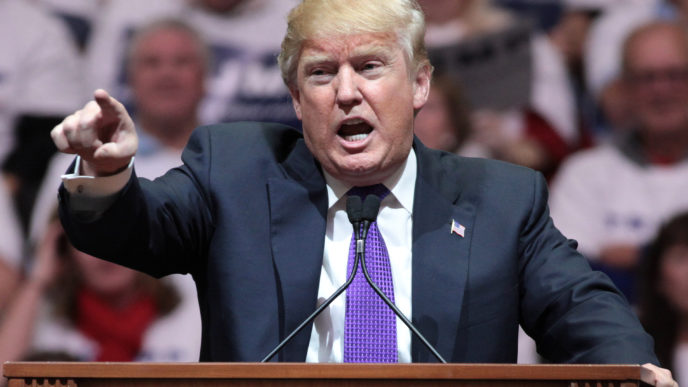
UN Honors Fidel Castro With ‘Minute of Silence’

The President of the United Nations General Assembly and ambassadors from around the world stood for a “minute of silence” earlier this week to honor the deceased Cuban dictator Fidel Castro.

Peter Thomson of Fiji called for the minute of silence Tuesday, beginning the session with what Thomson called his “sad duty to pay tribute to the memory” of the former Cuban president:

“I’m deeply saddened by the passing of Fidel Castro … [O]ne of the iconic leaders of the 20th century, with a great love for his homeland and the Cuban people, he dedicated his life to their welfare and development. A tireless advocate for equity in the international arena, he was an inspirational figure for developing countries in particular. His dedication to their advancement, especially in the fields of education and health, will long be remembered.

Thomson then invited the other representatives to stand with him in observation of the minute of silence . . .

A Legacy of Tyranny

Nearly a week has passed since Castro died at age 90. Even as Cuban exiles in Miami celebrated his death and the end of his tyrannical reign over Cuba, numerous world leaders lauded him — largely ignoring the countless atrocities committed against Cubans during his near half-century in power.

Perhaps most notable was Canadian Prime Minister Justin Trudeau’s statement expressing “deep sorrow” over Castro’s death and describing him as a “larger than life leader who served his people for almost half a century.” An international backlash against those comments led Trudeau to acknowledge Castro as “a polarizing figure” whose leadership led to “significant concerns around human rights.”

Those familiar with Castro’s autocratic 50-year regime were less sanguine. Mike Gonzalez, a senior fellow at the Heritage Foundation and veteran international correspondent, wrote last week that over 8,000 political arrests were made during the first eight months of 2016, and over 50,000 Cubans fled to the United States last year. While the number of exiles has recently increased, Cubans have been fleeing to America’s shores for years, braving shark-infested waters and sometimes dying along the way.

In a Miami Herald piece published in response to Castro’s death, Armando Salguero, a Cuban immigrant, details the harrowing story of his family’s escape from Castro’s rule, which resulted in a three-year separation from his father. They were eventually reunited.

Stream Senior Editor John Zmirack told the story of his high school best friend, a Cuban exile, whose father had been tortured in prison camps under Castro’s rule and who said the only reason Cuba so heavily emphasized literacy — a point many world leaders have praised — was because “They wanted everyone to be able to read their propaganda … so there was no excuse for disobedience.”

And another Cuban-American, Ana Quintana, recalled this week her grandfather’s stories of life under Castro:

Religion was criminalized, dissent was violently punished, and Cuban citizens became property of their communist state. Fidel’s rule brought the world to its closest point of nuclear war during those fateful 13 days in 1962. He indoctrinated hate and pushed millions out of their country.

World Leaders’ Reactions to Castro’s Death

After Castro’s death, President Barack Obama said that “History will record and judge the enormous impact of this singular figure on the people and world around him.”

British Labour Party leader Jeremy Corbyn acknowledged Castro’s “flaws” but also called him a “champion of social justice.”

In a telegram to Raul Castro, Castor’s younger brother, Russian President Vladimir Putin said, “Free and independent Cuba, which he (Fidel Castro) and his allies built, became an influential member of the international community and became an inspiring example for many countries and nations. Fidel Castro was a sincere and reliable friend of Russia.”

The Associated Press reported statements from other world leaders after Castro’s passing. Like those issued by Trudeau, Putin and Corbyn, the statements mostly consisted of praise for the dictator:

Salvador Sanchez Ceren, the president of El Salvador, said he felt “deep sorrow … of my friend and eternal companion, Commander Fidel Castro Ruz.”

Mexican president Enrique Pena Nieto tweeted that “Fidel Castro was a friend of Mexico, promoting bilateral relations based on respect, dialogue and solidarity.”

“India mourns the loss of a great friend,” Indian Prime Minister Nerendra Modi said on Twitter.

The country’s president, Pranab Mukherjee tweeted: “Heartfelt condolences on sad demise of Cuba’s revolutionary leader, former president & friend of India, Fidel Castro.”

Peter Hain, a former member of the British Cabinet and anti-apartheid campaigner, tempered praise for Castro with criticism of some aspects of his long rule.

“Although responsible for indefensible human rights and free-speech abuses, Castro created a society of unparalleled access to free health, education and equal opportunity despite an economically throttling USA siege,” Hain said. “His troops inflicted the first defeat on South Africa’s troops in Angola in 1988, a vital turning point in the struggle against apartheid.”

A statement from the Spanish government hailed Castro as “a figure of enormous historical importance.”

“As a son of Spaniards, former president Castro always maintained close relations with Spain and showed great affection for his family and cultural ties. For this reason Spain especially shares the grief of Cuba’s government and authorities,” the government statement said.

“Fidel Castro in the 20th century did everything possible to destroy the colonial system, to establish cooperative relations,” former Soviet President Mikhail Gorbachev was quoted as telling the Interfax news agency.

“Fidel survived and strengthened the country during the most severe U.S. blockade, while there was enormous pressure on him, and still led his country out of the blockade on the road of independent development.”

Venezuelan President Nicolas Maduro recalled Castro’s departure from Mexico on the yacht Granma with his brother Raul and several dozen supporters to start their revolution.

“Sixty years after the Granma sailed from Mexico, Fidel sails toward the immortality of all those who fight their whole lives,” Maduro tweeted. “Onward to victory, always!”

U.S. President-elect Donald Trump, however, refused to sing Castro’s praises. Calling him a “brutal dictator who oppressed his own people for nearly six decades,” Trump said in a statement, “Fidel Castro’s legacy is one of firing squads, theft, unimaginable suffering, poverty, and the denial of fundamental human rights.” (For more from the author of “UN Honors Fidel Castro With ‘Minute of Silence'” please click HERE)

Follow Joe Miller on Twitter HERE and Facebook HERE.

Federalism When It Works for Them: Why Liberals Are Wrong About Sanctuary Cities

When it comes to nullifying federal immigration statutes, the most foundational powers of a national government, liberals suddenly develop an affinity for localism. With Trump promising to finally crack down on sanctuary cities, liberals are now fanning the flames for nullification and disobedience. In fact, they are somehow trying to suggest that it is arduous or unconstitutional for the federal government to punish sanctuary cities. As always, liberals have the Constitution exactly backwards.

Amber Philips, a writer for the Washington Post, penned a piece examining (and advocating for) “why Donald Trump may not be able to close sanctuary cities.” Citing “immigration experts,” she asserts that Trump will be confronted with “constitutional, geographic and even legal challenges.”

First, she notes that most sanctuary cities are geographically in blue states where state governments won’t cut off funding to those localities. But conservatives, for the most part, are not counting on states to do it. Rather they are asking Congress and the Department of Justice to crack down on those lawless cities — two entities that have jurisdiction over immigration in all 50 states.

So why can’t Congress simply cut off funds?

Philips suggests that GOP leaders might not be so excited about the proposal. Well, Ms. Philips, you just discovered America. Yes, GOP leaders stink. They couldn’t care less about national sovereignty. There’s nothing new there. While they are likely to be an obstacle against many sweeping reforms, including on the topic of immigration, it is very unlikely they will fight against one of Trump’s biggest mandates. The sitting party in control almost always defers to the president (when he is of the same party) regarding his key agenda items, unless they are clearly unpopular. With regards to stopping sanctuary cities, the public overwhelmingly favors national sovereignty and the rule of law.

Philips goes on to suggest the DOJ might sue in the courts to get sanctuary cities to comply with immigration officials. She knocks down that option but rightly noting that the courts are certainly unreliable for conservatives. But that is exactly the point. The courts will never be an easier route than Congress, which is why we don’t need to grovel to the lawless courts to respect the Constitution. Congress can simply pass a law or include those provisions in must-pass budget bills.

So it’s now unconstitutional for the federal government to defend national sovereignty?

Next, Philips quotes law professors saying that somehow even Congress can’t force states to cooperate with federal immigration officials because it is unconstitutional. So while the unelected branch of the federal government can crush the states on internal issues that are manifestly within the purview of the state — and evidently there is nothing states can do to fight back — these same scholars believe that states can thwart a foundational enumerated federal power and that there is nothing the stronger legislative and executive branches can do about it.

Opponents of punishing sanctuary cities cite past court cases where the courts have limited the power of the federal government to place conditions on grants to the states in order to induce them to accept specific policies. For example the court has ruled that the conditions must be unambiguous “so that states can knowingly decide whether or not to accept those funds.” Moreover, the condition must not be “so coercive as to pass the point at which pressure turns into compulsion” akin to “a gun to the head.”

However, the comparison to these court cases doesn’t get off the ground. Although this point requires an article in itself, here are some key points:

In South Dakota v. Dole, the federal government was leveraging an enumerated spending power to induce states into raising their minimum age for alcohol assumption, a power that does not belong to the federal government and should be left to the states. In Pennhurst, the federal government was forcing states into a costly and burdensome disability program full of extra costs and regulations. In the case involving Medicaid expansion (NFIB v. Sebelius), the federal government was placing a massive unfunded liability on the states — which accounts for the single-largest expenditure for a state. These are instances when it is appropriate, within certain limits, for states to tell the federal government to get off their lawns.

Immigration, on the other hand, is one of the most foundational enumerated powers and responsibilities of the federal government to the entire union of states. [4] The federal government has the right to send out agents anywhere at any time to apprehend and deport illegal aliens. Furthermore, the federal government isn’t foisting upon the states implementation of a cumbersome, officious, and costly spending or regulatory regime. All they are asking for is the minimum cooperation needed for the federal government to protect the sovereignty and security of all the states, which merely requires states to communicate with ICE and detain illegal immigrants in jail until they are picked up by the feds. At the very least, they are asking that states don’t take active steps to undermine, thwart, and downright prohibit police from cooperating with ICE, as required by law [8 U.S.C. 1373]. There is no practical way for the federal government to exercise this solemn responsibility if states are active accomplices to the assault on the national sovereignty.

Federalism flipped upside down, inside out

Finally, Amber Philips suggests that this entire priority of cracking down on sanctuary cities is somehow an anathema to the typical conservative preference for state and local control.

Here is where liberals have no understanding of our Constitution and republican form of government. We have a dual track system: states and the national government. Then there are three branches of the federal government, each with distinct roles, powers, and responsibilities. While there have always been and will always be gray areas of jurisdiction and/or disagreements over jurisdiction and policies, most of the basic powers are incontrovertibly vested in one of the branches. Conservatives are not “pro-states” or “anti-federal government” or pro-Congress and anti-courts. Conservatives are for keeping what is rightfully vested to the federal government in federal hands and what is rightfully vested in the hands of state governments in state hands.

When it comes to immigration — who gets to enter or remain in the country — power, beyond a shadow of a doubt, is given over exclusively to the United States Congress, which represents the sovereignty of the whole federal union. Just like the federal government has absolutely no legal right to nullify local zoning decisions, something the Obama administration had done, states have no right to nullify immigration law, which stems from an unambiguous enumerated power of Congress.

Liberals might disagree vehemently with Trump’s immigration policies. They might want an unlimited number of illegal aliens, Muslim immigrants, and refugees. They have the right to hold that view and advocate strongly for their convictions. But none of them can say with a straight face that federal immigration law and national sovereignty is unconstitutional. Nobody has the right to enter this country without the consent of the people, as reflected through congressional statutes. The framers vested the power over immigration in the hands of the federal government precisely for the purpose of precluding the sanctuary city mindset.

Roger Sherman, among the greatest of all the Founders, noted during the House debate on the Naturalization Act of 1790 that “it was intended by the Convention, who framed the Constitution, that Congress should have the power of naturalization, in order to prevent particular States receiving citizens, and forcing them upon others who would not have received them in any other manner.” Sherman was emphatic that federal control was designed to “guard against an improper mode of naturalization,” and prevent individual states from flooding the country with immigrants based on “easier terms.”

Thus, states have absolutely no right to disobey the most foundational sovereignty laws of the nation. If liberals in blue states disagree with these policies, they must win congressional and presidential elections.

But don’t conservatives want states to ignore federal usurpations?

While I have encouraged states to fight back against the tyranny emanating from the federal judiciary, I have never advocated that states nullify statutes duly passed by Congress. Moreover, once again, the devil is in the details of the particular issue and how it relates to the Constitution. It is settled law that states have plenary power over marriage, legislative districts, and methods and procedures of elections. The federal judiciary has no right to nullify state laws in those spheres of policy. If they do so, states have the right to interpret the Constitution as they clearly understand it. After all, state officials swear the same oath to uphold the federal constitution as federal judges do.

Contrast those issues to sanctuary cities and immigration law and there are no similarities to be observed. While individual states and cities might be repulsed by certain immigration laws, they cannot suggest that those laws are unconstitutional.

Yet, ironically, the Left somehow believes that when states like Arizona affirm, defend, augment, or enable implementation of federal immigration law, they are interfering with federal power. But states like California openly nullifying immigration law is just fine and even a righteous exercise of conscience-based decision-making.

We have a very polarized and diverse country that has boiled over into widespread acrimony in recent years. However, if we respected the constitutional processes of law-making even as we disagree on individual policies, it would go a long way in healing the divide. This is not a matter of whether states should predominate or whether the Feds should rule; whether Congress should reclaim more power or whether the other branches should remain strong. This is an issue of constitutional supremacy. We all must follow the rules of the Constitution in pursuing our diverse policy ideas. Process matters. And in the case of loosening our immigration laws, there is only one legitimate process to pursue: getting Congress to pass amnesty. Until then, liberals have no one to blame but themselves. (For more from the author of “Federalism When It Works for Them: Why Liberals Are Wrong About Sanctuary Cities” please click HERE)

Follow Joe Miller on Twitter HERE and Facebook HERE.

SHOCK: Senate to Vote on Letting Democrats Keep Control of the FCC

Multiple sources confirm that the nightmare scenario identified by ATR is indeed likely to occur: Senate Democrats have picked off enough Republicans to force a vote next week on reconfirming Democrat Jessica Rosenworcel to the FCC, resulting in at best an initial 2-2 deadlock on the committee if Tom Wheeler, the current chairman, follows precedent and resigns, leaving only four commissioners at the FCC until another is confirmed. That would delay action on President Trump’s job creation agenda at the agency, which is bad enough.

But there is an even more disturbing possibility: If Wheeler follows through on his threat not to resign, it would mean Democrats would retain control of the FCC well into Trump’s presidency.

The FCC is a huge deal economically, overseeing a portion of the economy – television, radio, the Internet, mobile – roughly equal in size to the healthcare sector.

Moreover, under Obama the FCC has been a massive weapon of regulatory control, imposing public utility-style regulation of broadband, with a serious negative impact on investment and job creation. In that and many other ways, the FCC has been politicized and corrupted under Obama Democrats.

Imposing a Democratic FCC on a Republican president is completely outrageous and no Republican should vote for it. It is inconsequential whether it is paired with Republican Ajit Pai’s renomination, because he is already slated to stay on the FCC for another year and can be easily reconfirmed next year.

Under these circumstances, a Senate vote on Jessica Rosenworcel has nothing to do with her qualifications or record on the FCC.

It is a simple referendum on one thing: should an Obama FCC be forced on President Trump and rewarded for its outrageous regulatory assault on the U.S. economy by retaining power? (For more from the author of “SHOCK: Senate to Vote on Letting Democrats Keep Control of the FCC” please click HERE)

Follow Joe Miller on Twitter HERE and Facebook HERE.

The North Carolina Conservative Who Wants to Lead the Freedom Caucus

Rep. Mark Meadows, R-N.C., hopes to become the next chairman of the House Freedom Caucus. And he has big plans for what he’ll accomplish in the role.

“From day one since our founding almost two years ago, the mission of the Freedom Caucus has been to give a voice to the countless Americans who feel that Washington does not represent them,” Meadows said.

The 57-year-old lawmaker from Jackson County in western North Carolina is perhaps best known for filing the House motion that ultimately led to the resignation of former Speaker John Boehner, R-Ohio.

Now, should he win the Freedom Caucus chairmanship, Meadows said he hopes to continue to unify the caucus and specifically focus on the issues of regulatory reform and Obamacare.

“We are trying to put a real emphasis on policy and regulatory reform going forward,” Meadows told The Daily Signal in a phone interview. “One of our renewed interests, should I be elected the chairman, would be to focus on trying to take more of a proactive approach on policy and take official positions that are supported by most if not all of our [Freedom Caucus] members and how we can make sure that we move that positive agenda going forward.”

Meadows said the specific committee skills of Freedom Caucus members could help them tackle regulatory reform.

“Additionally, on the regulatory reform side of things, [we will be] using each of the member’s expertise as well as their committee assignments to really dig deep into the types of regulation and specifics within the agencies that they authorize on how they can best change and streamline those regulations to create job growth,” Meadows said.

Repealing and replacing Obamacare is also high on the list for Meadows.

“We will have no higher priority than repealing and replacing the Affordable Care Act,” Meadows said. “The Freedom Caucus will put a great emphasis on doing the tough work and getting the tough votes in the first 100 days for repealing it.”

According to Meadows, there are a number of conservative members who believe in having a Obamacare replacement plan “very quickly.” Meadows said the plan could include competition and personal accountability.

“We are optimistic that we can find some common ground with not only the conservative members, but also with health care providers and insurance providers that will allow there to be a real affordable and a real compassionate health care system in the years to come,” Meadows said.

Meadows was elected to Congress in 2012 and previously worked 27 years as a small business owner.

If elected chairman, he would replace Rep. Jim Jordan, R-Ohio, who has served as the caucus chairman since its creation in January 2015.

The caucus holds no official roster of its members and is well-known for its opposition to the Washington establishment.

While there is not expected to be a challenger to Meadows for the chairman position, the nine members of the Freedom Caucus board will have to “accept Meadows’ candidacy and formally nominate him,” according to Roll Call. (For more from the author of “The North Carolina Conservative Who Wants to Lead the Freedom Caucus” please click HERE)

Follow Joe Miller on Twitter HERE and Facebook HERE.

Has North Korea Reopened an Old Prison Camp?

Recent satellite images reveal that a North Korean political prison camp, former Camp 18, may have been reopened.

It is unclear when and why this may have happened. The time lag in obtaining detailed information from North Korea means this could be somewhat dated information. But even the possibility that the camp has reopened raises red flags—political prison camps in North Korea have been home to some of the most egregious human rights violations in modern times.

Camp 18, also known as Pukchang political prison camp, was approximately 28 square miles and could hold roughly 27,000 prisoners. It used to be one of the five biggest political prison camps in North Korea. Camp 18 was situated just across the Taedong River from Camp 14, a similar prison camp. Combined, the two camps held an approximate total of 50,000 political prisoners and their families.

Camp 18 was supposedly shut down sometime around 2006. But since 2011, satellite imagery has shown substantial housing growth in the area.

Recent imagery from Google Earth provides evidence that the camp has in fact been reopened. Images show that a substantial number of houses have been razed and a new security perimeter with guard barracks has been built. ”Immortality Tower,” a statue dedicated to North Korea’s founding dictator Kim Il-Sung, had long been an essential element of the residential area, but it has now been removed.

All of this points to the likelihood that either Camp 18 has been reopened, or Camp 14 is expanding.

North Korea has long denied the existence of political prison camps in the country, but various reports on North Korea have confirmed they indeed exist and have been the focus of grave human rights abuses.

In 2014, the United Nations Commission of Inquiry on Human Rights in North Korea (COI) released a report describing “unspeakable atrocities” being committed in North Korea. It attests that the North Korean regime is responsible for crimes such as “deliberate starvation, forced labor, executions, torture, rape and the denial of reproductive rights enforced through punishment, forced abortion and infanticide.”

The North Korean government uses political prison camps as a means of keeping the North Korean people in check, often sending as many as three family generations to the camps for committing alleged crimes against the state.

Since the release of the COI report, the international community—including the United States—has admonished North Korea to “dismantle” its prison camps and release political prisoners. Yet, according to analysis by Amnesty International, Pyongyang “is continuing to maintain, and even invest, in these repressive facilities.” Other new satellite imagery verifies this, confirming “the sustained, if not increased importance of the use of forced labor under Kim Jong-un.”

The United States took a positive step forward in 2016 by sanctioning North Korean Supreme Leader Kim Jong-Un and other known human rights violators in North Korea, but much more can and should be done. The issue of prison camps must be addressed as both a strategic and humanitarian consideration. The U.S. and the international community should develop a feasible plan to hold North Korea accountable for crimes against humanity. (For more from the author of “Has North Korea Reopened an Old Prison Camp?” please click HERE)

Follow Joe Miller on Twitter HERE and Facebook HERE.

Top 4 Homeland Security Issues for the Trump Administration

President-elect Donald Trump and his soon-to-be-selected secretary of homeland security will have a full plate when they take over in January.

Indeed, there are so many areas for reform and improvement that any efforts to fix the Department of Homeland Security could easily get bogged down.

Luckily, The Heritage Foundation has identified four main priorities that the next administration should focus on.

1. DHS Management

DHS management needs to be fixed. Its organizational cohesiveness and central leadership continue to present significant challenges that require more work than the Obama administration’s Unity of Effort initiative.

Additionally, the DHS’ office policy should be strengthened to create intra-agency policy, resolve agency disputes, and, above all, drive structural change so that DHS components can work more efficiently as a cohesive unit.

Luckily, the newly released National Defense Authorization Act conference report takes a step in this direction by upgrading the head of the DHS office of policy from assistant secretary to under secretary.

2. Immigration Laws

Current immigration laws must be enforced. In fiscal year 2015, DHS data show that only 462,463 removals and returns occurred—the lowest number since 1971. Immigration and Customs Enforcement deported merely 63,000 criminal illegal immigrants from the U.S. compared to 150,000 in 2015.

President Barack Obama’s executive actions on immigration enforcement must be rescinded, and the 287(g) program, which trains and deputizes state and local police to help enforce immigration laws, needs to be strengthened.

Rapid-removal authority under Section 235 of the Immigration and Nationality Act should be expanded to discourage surges of illegal immigration. Additional prosecutors, judges, and agents should be requested so that more cases can be heard and illegal immigrants deported.

The U.S. also needs to make sure these criminal illegal immigrants appear at their designated court hearings by expanding effective “alternatives to detention,” such as GPS tracking anklets.

3. Cybersecurity

DHS has a much larger role in domestic cybersecurity due to the passage of the Cybersecurity Information Sharing Act. The primary purpose of that bill was to make information sharing between private and public sectors more efficient.

This sharing will need to be monitored and improved, together with DHS’ intrusion detection and prevention system known as Einstein.

DHS will also need to play a role in helping the Trump administration respond to state-sponsored and directed cyberattacks. The U.S. should deploy all the tools at its disposal, including diplomatic, legal, visa, financial, and others, to retaliate.

4. Proper, Thorough Vetting

There is growing concern over how individuals, whether they are refugees, permanent immigrants, or visitors, are vetted before entering the U.S.

The refugee process takes on average 12-18 months to complete, with background checks being requested through various department databases, including the State Department, DHS, FBI, and National Counterterrorism Center databases.

Interviews are conducted that ask security and country-specific questions. In the case of Syrian refugees, the Syrian Enhanced Review has already started applying additional scrutiny to cases.

Congress needs detailed information from the administration on the nature of the risks incurred in the vetting process, and how it plans to mitigate those risks. Congress and the administration must also work together to begin the much-needed repair of America’s intelligence capabilities.

For regular immigrants and visitors, there is the traditional visa process, which involves a less lengthy but similar vetting process. San Bernardino attacker Tashfeen Malik managed to slip through this system, proving that there is always room for improvement.

Visitors from many countries are able to use the Visa Waiver Program, which does not require an in-person interview in order for the applicant to travel to the U.S.

Instead, VWP countries provide the U.S. with important intelligence on a variety of things, including known and suspected terrorists, serious criminals, and lost and stolen passports, as well as improving their airport security. VWP is a unique tool that is extremely valuable for U.S. security and should be strengthened and expanded.

In order to keep our homeland secure, the next homeland security secretary should prioritize these four issues. These reforms are essential to a cohesive, effective, and efficient Department of Homeland Security that can keep the U.S. safe. (For more from the author of “Top 4 Homeland Security Issues for the Trump Administration” please click HERE)

Follow Joe Miller on Twitter HERE and Facebook HERE.