4 Damning Truths You Need to Know About the Democrats

It’s tragic that nearly everything we suspected about the broken Democratic Party has turned out to be true. After the WikiLeaks release and the release of the Project Veritas recordings, we can now confirm that:

1. Democrats have embraced violence as a campaign tactic. In fact, they have no problem with people being seriously hurt as long as their political goals are met. Free speech means nothing to the Democrats, and they will use violence to suppress any speech with which they disagree.

2. Democrats have embraced voter fraud by “bussing people in,” and have done so for decades. The integrity of elections are a big joke to Democrats.

3. Democrats will sell access to power for donations to their campaigns or foundations. Power to the people is a big joke to them. Power to those willing to pay them off is what really matters.

4. Democrats don’t believe in process. It’s a common misconception that the far-left wants a big, powerful government. They don’t. The Wikileaks emails show that the Democrats want a big, powerful government that serves their needs. The State Department, the FEC, the DOJ and other government agencies were all targets of the Clinton influence operation. The Clintons, in conjunction with their Democratic Party connections, are more than content to destroy anyone — employed by the government or not — who gets in their way.

Disagree with this? Please, go ahead and read the WikiLeaks emails and watch the Project Veritas recordings yourself. The evidence is damning if your mind is open. (For more from the author of “4 Damning Truths You Need to Know About the Democrats” please click HERE)

Follow Joe Miller on Twitter HERE and Facebook HERE.

Socialist, Refugee Advocate to Run UN for Next 5 Years

While it’s hardly the election to get the most attention this year, the United Nations General Assembly has confirmed a nominee with a background in socialist politics and refugee matters to be the organization’s new secretary-general.

The 193-member United Nations General Assembly approved Antonio Guterres, a socialist whom President Barack Obama called a man of “character, vision, and skills” in a statement five days before speaking with him on the phone.

Guterres replaces U.N. Secretary-General Ban Ki-moon, who served two five-year terms and is stepping down from the position on Dec. 31.

Obama said in his statement that the new secretary-general would be instrumental in dealing with “unprecedented challenges” facing the world, including the surge of millions of displaced people and climate change.

In the midst of the Syrian civil war, the refugee crisis has become front and center for most Western countries, including the United States. Guterres, 67, was prime minister of Portugal from 1995 to 2002, as head of the country’s Socialist Party. He also was the head of the U.N. High Commission for Refugees from 2005 through 2015. Both roles involved some controversy.

When addressing the U.N. General Assembly after his victory, Guterres talked about bringing relief to refugees and promoting gender equality as key priorities, but also said he would take a limited approach to his new office.

“I believe this process means that the true winner today is the credibility of the U.N. And it also made very clear to me that, as secretary-general, having been chosen by all member states, I must be at the service of them all equally and with no agenda but the one enshrined in the U.N. Charter,” Guterres said.

The bigger question might be whether the role matters, said Fred Fleitz, a former U.N. analyst for the CIA and the chief of staff for former U.N. ambassador John Bolton.

“The U.N. is more and more a nonentity,” Fleitz told The Daily Signal in a phone interview. “It’s used to justify actions, but because of the vetoes on the Security Council, there is no way to act on Syria or North Korea. I don’t know if this election matters.”

Still, Fleitz said he believes the socialist background of the new secretary-general is relevant.

“It should be concerning to have someone with that perspective for thinking along the lines of one-world government at a time when the world is moving away from that, if you look at the European Union,” Fleitz said.

In addition to leading the Socialist Party in Portugal, Guterres presided over Socialist International, a global group of 153 socialists, social democratic, and labor party leaders, from 1999 to 2005.

Guterres weathered controversy in both of his past positions, said Brett Schaefer, a senior fellow in international and regulatory affairs at The Heritage Foundation.

Guterres resigned as prime minister of Portugal when the Socialist Party took heavy losses in the 2001 local elections following an economic downturn. At the U.N., a 2010 independent Board of Auditors cited the United Nation’s refugee agency for weak financial management and oversight.

Still, Guterres was clearly the best out of a crowded field of candidates for the job, Schaefer said. Schaefer said he thinks the new U.N. chief’s socialist affiliations say something about him.

“It provides some insight into his political leanings and shows that he advocates an economy where the state is more interventionist in markets and over the lives of individuals,” Schaefer told The Daily Signal.

Schaefer anticipates that Guterres will be a strong spokesman on the refugee front, possibly using his platform to call for more Western countries to increase the number of refugees they take in.

“I’m sure he will advocate for the part of the U.N. system he knows the best, given the significant rise in refugees we’ve seen in recent years, he will do what he can to address that problem,” Schaefer said.

Ultimately, Guterres’ ability to push an agenda will be limited, since the U.N. Security Council has the ultimate authority to make major decisions, Schaefer said. That’s why Schaefer contends it would be better to focus on weeding out waste and corruption in the organization.

Guterres, a practicing Catholic, is a trained engineer and was a professor before going into politics in 1974. Guterres will take his post in January, just weeks before the inauguration of a new U.S. president. (For more from the author of “Socialist, Refugee Advocate to Run UN for Next 5 Years” please click HERE)

Follow Joe Miller on Twitter HERE and Facebook HERE.

How Obama’s Post-Presidency Could Affect Your State Legislature

During his final State of the Union address, President Barack Obama insisted that one means of ending the nation’s polarized political environment is changing how the states draw congressional and state legislative districts.

“If we want a better politics, it’s not enough just to change a congressman or change a senator or even change a president. We have to change the system to reflect our better selves,” Obama said. “I think we’ve got to end the practice of drawing our congressional districts so that politicians can pick their voters, and not the other way around. Let a bipartisan group do it.”

Obama apparently plans to devote much of his post-presidency to the cause of moving congressional and state legislative districts in Democrats’ favor.

Politico first reported that former Attorney General Eric Holder, an Obama appointee and friend, will be chairman of a new group called the National Democratic Redistricting Committee that was established in “close consultation” with the White House.

Elisabeth Pearson, executive director of the Democratic Governors Association, will be president of the organization.

The Democratic Legislative Campaign Committee, which focuses on raising money and campaigning for Democrats running for state legislatures, expects the new organization will align with its efforts to win back statehouses before the 2020 Census and subsequent redistricting, spokeswoman Carolyn Fiddler said.

“DLCC is thrilled that former Attorney General Holder and President Obama are engaging in this crucial effort,” Fiddler told The Daily Signal. “Redistricting and state legislative elections are vital to the future of the Democratic Party, and the president’s involvement will help drive that fact home to a broad audience.”

The new National Democratic Redistricting Committee is a “527,” a name derived from a section in the federal tax code, which means it is an organization dedicated to influencing policy or elections and may raise unlimited amounts of money from corporations and labor unions.

In a widely published statement last week, Holder seemed less concerned about better politics and more about partisanship when he said:

American voters deserve fair maps [of election districts] that represent our diverse communities—and we need a coordinated strategy to make that happen. This unprecedented new effort will ensure Democrats have a seat at the table to create fairer maps after 2020.

The White House didn’t respond to inquiries from The Daily Signal on the effort, nor did the Democratic Governors Association. Holder also did not respond to an inquiry left on his voicemail at Covington & Burling law firm, where he is a partner.

While the president seemed to rail against the practice of gerrymandering by calling for a bipartisan commission to redraw legislative districts, the National Democratic Redistricting Committee reportedly is focusing on state legislative and gubernatorial races, election-related litigation, and voter initiatives at the state level. The goal: Rebuild a bench of future Democratic candidates for state and national offices.

White House officials informally approved naming Holder, a close friend of Obama’s, to run the new organization, The Washington Post reported.

“Over the past eight years the president has seen firsthand Republicans pulled to the far right for fear of a primary challenge instead of trying to govern from the center,” White House spokesman Eric Schultz told the newspaper.

During Obama’s two terms as president, Democrats lost 69 seats in the House of Representatives. The president’s party also lost 913 state legislative seats. A total of 32 state legislative chambers flipped to Republicans during Obama’s two terms, according to the University of Virginia’s Center for Politics.

While some of these losses could be blamed on the way Republican-controlled state legislatures drew up maps for legislative districts, it can’t explain why Democrats lost 13 U.S. Senate seats and 11 governorships during statewide elections over Obama’s nearly eight years in office.

Obama’s backing of the organization after his presidency is drawing attention because, as The Washington Post reported, it “marks a rare, if not unprecedented, step in the modern era.”

Obama’s affiliation with the group is likely a means to rake in large donations, said J. Christian Adams, a former Justice Department lawyer and an expert on elections who was a critic of Holder’s actions as attorney general.

“This is about raising the dollars to swamp Republican efforts,” Adams, president of the Public Interest Legal Foundation, told The Daily Signal. “An ex-president will have access to almost limitless amounts of money to fuel efforts to manipulate the political system to advantage the left.”

Every 10 years after the Census, states complete redistricting for congressional and state legislative districts. States generally are free to conduct redistricting how they choose as long as it adheres to the “one man, one vote” principle laid out by the Supreme Court in 1962.

Democrats and Republicans have complained for years about state legislatures seeking to draw the lines of district maps so that the results are favorable to the dominant party’s interest.

The complaining party typically depends on who has the advantage in a particular state. The practice of drawing up such districts commonly is known as gerrymandering.

In response to complaints, 13 states established special commissions to draw state legislative boundaries, taking redistricting out of the hands of the legislature—similar to what Obama, in his State of the Union address, said a bipartisan group should do.

The 13 states are Alaska, Arizona, Arkansas, California, Colorado, Hawaii, Idaho, Missouri, Montana, New Jersey, Ohio, Pennsylvania, and Washington.

Seven of them—Arizona, California, Hawaii, Idaho, Montana, New Jersey, and Washington—have special commissions to determine congressional districts as well as state legislative districts.

However, such commissions haven’t always made the process less political, said Wendy Underhill, program director for the National Conference of State Legislatures. That’s because even nominally bipartisan commissions frequently have a party advantage.

“It’s not necessarily a given it will have a less political outcome just because you have a commission,” Underhill told The Daily Signal. “It depends on the rules and the makeup of the commission.”

In some of the 13 states, Arizona and California among them, the commissions are made up of nongovernment members and include an equal number of Republicans, Democrats, and independents.

In Ohio, where a commission will go into effect after 2020, the body will be made up of the governor, auditor, secretary of state, and four others appointed by majority and minority members of the general assembly.

In Arkansas, a board is made up of the state’s governor, attorney general, and secretary of state. Currently, all these officials are Republicans, so redistricting decisions likely would have a partisan tilt.

Even if each of the three elected Arkansas officials were not of the same party, a majority party likely would have a 2-1 advantage in determining the makeup of legislative districts. So, redistricting in Arkansas would not be void of politics. (For more from the author of “How Obama’s Post-Presidency Could Affect Your State Legislature” please click HERE)

Follow Joe Miller on Twitter HERE and Facebook HERE.

What the Founders Thought About the Value of a ‘Classical’ Education

The generation that produced the U.S. Constitution lived at a time when liberal education was being rethought, redefined, stretched, and challenged.

The Founders lined up on different sides of that debate. They argued over whether or not a liberal education worthy of the name had to be a classical education based on instruction in the Greek and Latin languages. They divided into factions we might call, for convenience, “classicists” and “anti-classicists.”

Among the things most surprising is how early in the Colonial period objections were raised to the teaching of Greek and Latin; how widespread the resistance was; how many very famous Americans weighed in on the debate; and how modern the arguments brought by the anti-classicists sound.

The past is different and distant from us, and yet, in this case, the similarities are striking, leading one to wonder if there is a timeless element to America’s quarrel over the means and ends of good education. We sound like them to a surprising degree, and they sound like us. But not exactly, and the differences do matter.

The anti-classicists appeared in print as early as 1735—40 years before the Revolution. In that year, an anonymous Philadelphian called for a system of private education that would recognize the needs of different students and their families.

Debate Over Dead Languages

Not everyone was destined to be a scholar. Not everyone aspired to the professions of law, theology, or medicine. A thriving society needed farmers and tradesmen, clerks and accountants. Why should these children spend precious years trying to master languages they would soon forget? Why teach them Latin when what they needed in life were skills in English grammar and composition?

This anonymous author cited the English empiricist John Locke, who ridiculed the folly of wasting time teaching Latin to students who would never use it.

Over the ensuing 70 or 80 years, these arguments found renewed expression among some of America’s most articulate statesmen and reformers. Future scholars, they allowed, could continue to devote their childhood to mastery of Greek and Latin, but a young, ambitious, expansive republic on the rise needed to train its citizens in plain and vigorous English and in modern foreign languages for the sake of commerce in goods and ideas.

The nation needed to equip them for a vocation; to provide them with a utilitarian education for the sake of tangible “advantages” in life; to lay the groundwork for progress in science and the discovery of new knowledge; to offer a “universal” education (one open to common people, not just the elite); and to promote a distinctly American, even nationalist, education free from the dead hand of Europe’s antiquated ways of teaching and learning.

(These calls for reform sound like we’ve stepped into a modern debate over STEM education in our schools today.)

To understand the Founders and liberal education, we need to know first that among the Founders, there were champions of the classics who had every intention that Greek and Latin remain central to liberal education in the American republic; second, that there were dissenters who objected strenuously to the classics’ powerful grip on American education; and third, that even the champions of the classics tossed onto the rubbish heap some of the most venerable of the ancients.

All three parts of this argument matter if we want to arrive at a balanced judgment of the Founders and liberal education.

The takeaway from this is that the Founders’ legacy for classical and liberal education is a mixed one: It depends on which ones we quote.

Founders Against Founders

Classical and liberal education have proven to be resilient. So has the opposition. Classicist and anti-classicists alike would be partly pleased, partly disappointed, and partly alarmed if they could visit 21st-century America and the jumble of public schools, private schools, home schools, online schools, classical schools, and vocational schools that make up our educational “system.”

Among the “classicists” we find the ornery New England statesman John Adams, our second president. As an adult, Adams maintained his skill in Latin and Greek along with proficiency in a number of modern languages. Adams read widely in ancient and modern history, philosophy, constitutionalism, and political theory. His indebtedness to liberal learning could not have been greater.

Adams argued that the stability and durability of the young United States rested on the twin pillars of knowledge and virtue, a common refrain among the Founders.

Though a voracious reader of the classics himself, Thomas Jefferson, Adams’ bitter rival during the early years of the republic, was somewhat ambivalent and spoke rather disparagingly of the classicists: “They pretended to praise and encourage education, but it was to be the education of our ancestors. We were to look backward, not forward, for improvement.”

One of the earliest critics of the prevalence of the classical languages was Benjamin Franklin.

His opposition to a certain kind of instruction in Greek and Latin came not from any anti-elitism, but from a conviction that time spent in this way had become an impediment to education, even an impediment to liberal education, depending on how we define liberal learning.

If “liberal” meant a broad, generous education for a man of the world able to navigate through polite society, then Latin and Greek seemed cramped and pedantic.

Franklin himself was a multilingual, learned man of cosmopolitan tastes and interests, yet he still opposed the classics. Why?

Flexibility

Franklin aimed at a utilitarian education that would equip ordinary citizens for their professions, including competence in their own language.

Education must be useful. The curriculum must include, he wrote in 1749, penmanship, drawing, English grammar and style, public speaking, history (with an emphasis on politics), geography, chronology, morality, natural history, and what his generation called “good breeding.”

The ultimate aim of this useful education was public service to the community. Franklin wasn’t opposed to the training of classical scholars, but not everyone was destined to be a scholar, and a practical education suited to the needs of a dynamic and prosperous society could not pretend everyone was going to be an academic.

Another Founder named Benjamin—Benjamin Rush—in 1789 argued for “liberal education” (his words) without instruction in Greek and Latin at all. Note the flexibility of the phrase “liberal education.” It could be divorced from classical education. Rush regretted the prominence of the “dead languages” as an obstacle to the promotion of “useful knowledge.”

By being so specialized, he thought, classical education could never meet the demands of “universal knowledge.” That is to say, it obstructed not only the progress of practical knowledge, but also the spread of knowledge through all levels of society that would make participatory government possible. The times demanded a new system of education to meet the needs of a new kind of government and society.

The criticism articulated by Franklin, Rush, and others formed part of a much larger story. We see by the end of the 18th century the opening of a distinct divide in educational theory and practice that runs right down to the present.

The emerging industrial, mass democratic, utilitarian, market-driven age turned out to have very different expectations for the kind of people schools ought to produce.

Importance of the Ancients

It should be noted, however, that opponents of classical education did not wage a war of extermination against the classics themselves: 1) They still wanted scholars to master Greek and Latin; 2) they still wanted the ancients read in good English translations; and 3) they wrestled with the inescapable question of whether an education for everyone could be built on instruction in the Greek and Latin languages.

At the same time, the defenders of the classical languages were not necessarily supporters of the whole of the Greek and Roman tradition. They were selective in their judgments. They even rejected parts of the ancient heritage that today many advocates of classical education in particular consider to be foundational to the whole tradition.

Indeed, for the generation of 1787, for the culture that gave the United States its Constitution, the ancient world and its authors and their ideas mattered very much. The Greeks and Romans provided examples of success and failure, models to follow and models to avoid.

If any of the Founders rejected the study of Greek and Latin, that did not mean they rejected reading the ancients in good modern translations. It did not mean removing grammar, logic, and rhetoric from the curriculum—the trinity of subjects at the very heart of liberal education.

That even the generation of 1787 argued about education reminds us that the problem of education in American society and politics has never been a settled question. Not even close. (For more from the author of “What the Founders Thought About the Value of a ‘Classical’ Education” please click HERE)

Follow Joe Miller on Twitter HERE and Facebook HERE.

Joe Miller: Murkowski Has Been A ‘Big Part Of Problem’ In DC

Our nation and state are clearly on the wrong path. Alaskans feel it: mounting national debt, steep deficits, social unrest, and an economy that has all but flat-lined.

Unfortunately, Lisa Murkowski has been a big part of the problem, and to borrow a phrase from Ronald Reagan, “I cannot and will not stand by and see this great country destroy itself.”

Murkowski stated earlier this month she “cannot and will not support” Republican nominee Donald Trump for president, meaning she presumably would rather see Hillary Clinton occupy the Oval Office.

As Chief Executive, Clinton will fill the Supreme Court and the rest of the federal bench with liberal justices, while taking America further down President Obama’s road to ruin.

During the last session of Congress, Murkowski voted with President Obama 72 percent of the time, making her the most liberal “Republican” senator up for re-election.

Because of her votes in Congress, the senator received an “F” rating from Conservative Review coming in below liberal New York Democrat Charlie Rangel.

Murkowski also garnered failing grades from Heritage Action and FreedomWorks. Family Research Council also gave her an “F” and National Right To Life, did so as well during the last session of Congress.

Meanwhile, NARAL Pro-Choice America recognized Murkowski as being an abortion supporter, giving her an 80 percent rating for her votes in 2014. Just this past December, Murkowski offered legislation, along with Sen. Susan Collins of Maine, seeking to block Republican efforts to defund Planned Parenthood.

This is not the record of the “Conservative Voice for Alaska” Lisa Murkowski claims to be in campaign ads.

Despite being from the Last Frontier, “Murkowski acts like a Republican from New Jersey,” conservative radio talk show host Mark Levin charged on his program a few weeks ago when he endorsed my candidacy.

Murkowski’s liberal, big government credentials are long-standing. While serving as a state legislator, she co-sponsored legislation to take part of your PFD and use it to fund state government and also voted to institute a state income tax.

Earlier this year, she suggested that your PFD should be on the table as a possible solution to the government’s spending addiction.

Her record in Washington on issues that specifically impact Alaska is no better. The senator voted to confirm anti-gun Attorney General Eric Holder and anti-development, radical environmentalist Sally Jewell to be Secretary of the Interior.

Under Jewell’s leadership, Alaskans saw control of another 100 million acres of their land ceded to the federal government over just the last few months.

Nearly two-thirds of Alaska’s territory is already controlled by the feds, ranking second only to Nevada. Washington, D.C. should not be taking more of our land, it should be relinquishing it, as the Statehood Act (1958) requires.

Murkowski facilitated this most recent land grab in her position as chair of the Senate appropriations subcommittee on the Interior and Environment, when she voted to fund the very program that is responsible for the theft.

If you grant me the honor to serve as your next United States Senator, I’ll fight to protect your interests, not special interests.

The Constitution will be the North Star that guides my decisions.

You have my word that I will stand up to the Establishment, in both parties, and be relentless in the fight to restore our nation to its constitutional foundations, where government is once again the servant, and not the master.

I will fight to rescind all of President Obama’s unconstitutional executive orders, including executive amnesty. Americans shouldn’t lose their jobs or see their pay held down due to cheap, illegal labor.

Further, the administration’s Islamic refugee resettlement must end, unless a means to adequately vet individuals seeking entry can be but in place.

Our foremost liberty is the right to life. I am the only U.S. Senate candidate that has been endorsed by Alaska Right to Life and Alaska Family Action.

The Second Amendment is essential to our liberty, and I will oppose all efforts to thwart this fundamental right. I am the only candidate in the race backed by Gun Owners of America.

As a veteran (endorsed by Combat Veterans for Congress) who has used Veterans Administration medical services, I will be tireless in ensuring our nation keeps its promises to those who have served our nation in uniform.

It is time for Alaskans to take control of our destiny. With courage and hard work, the fortunes of America and Alaska can turn again. I believe a return to constitutional government can restore the nation we know and love.

I would be honored to have your vote on November 8th.

Congress Demanding More FBI Docs on State Department’s Alleged ‘Quid pro Quo’

The House Oversight and Government Reform Committee is demanding that the FBI hand over more documents from their investigation into Hillary Clinton’s use of a private email server. But this time, the request is more narrow — the committee is asking for all investigation documents related to Under Secretary of State Patrick Kennedy’s alleged “quid pro quo” proposal, in which the top Clinton aide offered more FBI agents overseas in exchange for the classification change of a certain email before it went public.

The topic of the email in question? Benghazi.

According to a Fox News report, the FBI has until Thursday of next week to hand over the documents.

“The FBI thought this information was not relevant,” Jason Chaffetz (R-UT), Chairman of the House Oversight and Government Reform Committee told Fox News, “and that is just stunning to me, because this is some of the most unbelievable set of documents that we’ve seen to date, and it really goes to the core of why we’re so concerned and why we have to continue to do vigorous oversight.”

What is the Quid Pro Quo Scandal?

The quid pro quo scandal surfaced Monday after the FBI released 100 more documents from their Clinton investigation — the final set in a four-part release.

The Stream covered the controversial finding, which suggested that Kennedy unsuccessfully pressured multiple people at the FBI to change the classification of one email before it was released. The classification change Kennedy sought would have allowed the State Department to archive the email instead of releasing it to the public in accordance with Congress’s Freedom of Information Act request. According to one interview summary of a senior FBI official, Kennedy offered a “quid pro quo:” more FBI agents “in countries where they are presently forbidden” in exchange for the classification change. The FBI’s request for those agents had previously been ignored by Kennedy.

Members of Congress expressed outrage over the finding, including House Speaker Paul Ryan (R-WI), Chaffetz and Devin Nunes (R-CA), Chairman of the House Intelligence Committee. In a joint statement, Chaffetz and Nunes said Kennedy’s alleged conduct is “extremely disturbing” and called for Kennedy’s removal:

Someone who would try to get classified markings doctored should not continue serving in the State Department or retain access to classified information. Therefore, President Obama and Secretary Kerry should immediately remove Under Secretary Kennedy pending full investigation.

What Was the Email?

The email that Kennedy allegedly attempted to have “doctored” is one of two emails that sparked the initial FBI investigation into Clinton’s email habits as secretary of state, reported Catherine Herridge, Fox’s Chief Intelligence correspondent. The subject line of the email is, “FW: FYI — Report of arrests — possible Benghazi connection.” The email was sent on November 18, 2012, two months after an attack on U.S. government facilities in Benghazi, Libya. Four Americans, including U.S. Ambassador to Libya J. Christopher Stevens, were killed in the attack.

The heavily redacted email says that individuals possibly connected to the attack had been arrested in Libya. The majority of the email’s contents, such as confidential sources, were classified, Herridge reported. The email was sent on Clinton’s private email server.

Clinton, secretary of state at the time of the attack, has been accused of failing to provide adequate security for the Americans who were stationed in Benghazi. Clinton also long insisted there was no classified information on her private email server. This email contradicted that assertion.

Did Kennedy Really Offer a Quid Pro Quo?

After the release of the FBI documents Monday, the State Department released a statement that “there was never a quid pro quo,” a position they have since maintained.

“They’re notes from interviews,” John Kirby, State Department spokesman, said of the interview summaries, indicating that they may not be accurate. “They’re not facts, they’re not conclusions, they’re not investigative work.”

But for Chaffetz and his committee who are waiting to see more FBI documents, that’s not a good enough answer. (For more from the author of “Congress Demanding More FBI Docs on State Department’s Alleged ‘Quid pro Quo'” please click HERE)

Follow Joe Miller on Twitter HERE and Facebook HERE.
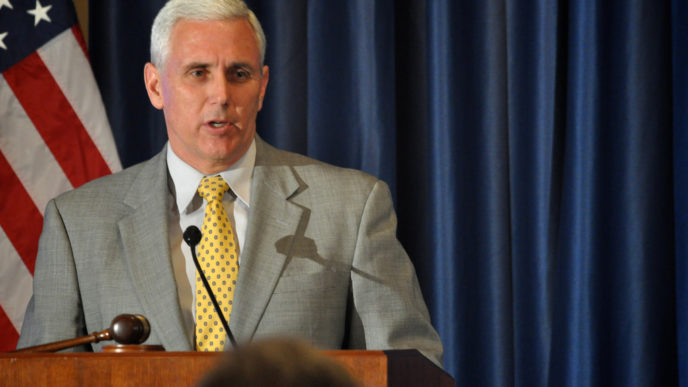
Undercover Activist: New Video Targeting Clinton, DNC Coming … Dead or Alive

Activist James O’Keefe has a warning for Democratic presidential nominee Hillary Clinton and Democratic National Committee Chairman Donna Brazile.

The man whose undercover videos detailing dirty tricks — activities those on the videos insist were bought and paid for the Clinton campaign and the DNC — is going to be back next week, with a vengeance.

O’Keefe implied Friday that his high-profile videos were endangering his life, but said the truth would emerge regardless.

Brazile came in for special mention.

Trump himself mentioned the video Saturday to buttress his claim that the election has been “rigged.”

This past week, O’Keefe’s Project Veritas Action released undercover videos taken by a Project Veritas Action staff member who infiltrated a group called Americans United for Change. The videos were released on its Project Veritas Action channel on YouTube.

In one of the videos, staff members of the group who have since resigned their jobs claimed they planned and executed a scheme to cause disruptions at rallies held by Republican presidential candidate Donald Trump.

Staff members claimed they were the lead organizers of a violent protest that forced the cancellation of a Donald Trump rally in Chicago. One leader, Scott Foval, claimed a woman who alleged she was punched by a Trump supporter last month was one of the group’s activities. Although that woman has denied the claim, she has also withdrawn her assault accusation since the videos came out.

A second video released by Project Veritas Action showed a group of staff members talking about how to get around laws regarding voter fraud without the authorities being any wiser. (For more from the author of “Undercover Activist: New Video Targeting Clinton, DNC Coming … Dead or Alive” please click HERE)

Follow Joe Miller on Twitter HERE and Facebook HERE.
Cardinal Dolan: Donald Trump and Hillary Clinton Prayed Together Before Al Smith Dinner

With all of the political barbs thrown in each other’s direction lately, one would think it would take miracle for someone to convince Donald Trump and Hillary Clinton to take a quiet moment and pray together. Thursday night before the Alfred E. Smith Memorial Dinner the miraculous happened. Cardinal Timothy Dolan, who suggested the prayer and sat between the two presidential nominees during the evening, recounted the “touching” moment Friday on NBC’s Today show.

“When we were going in, I said ‘Could we pray together?’ as we were waiting to be announced,” said Cardinal Dolan, “and after the little prayer, Mr. Trump turned to Secretary Clinton and said ‘You know, you are one tough and talented woman. This has been a good experience in this whole campaign as tough as it’s been.’ And she said to him, ‘And Donald, whatever happens, we need to work together afterwards.’” Cardinal Dolan said he thought that was the evening at its best.

According to Cardinal Dolan, the Al Smith Dinner is traditionally an evening of “unity and friendship and joy.” However, this time around, he said, it was like a family dinner “where you’re just hoping that everything goes well … and in general, alleluia, the evening went very well!” Cardinal Dolan was touched by the obvious attempt by both Clinton and Trump to be courteous and get along. “I was very moved by that.”

Although there was clearly some awkwardness and iciness between Clinton and Trump, Cardinal Dolan said that’s nothing new, describing the chill four years ago between Obama and Romney. Breaking some of that ice is a goal of the dinner, Cardinal Dolan explained, and “thanks be to God it worked!”

The private amity between Trump and Clinton wasn’t as present during the prepared speeches. Cardinal Dolan acknowledged that there were some tense moments and some boos from the audience. He attributes that to the break in the Al Smith Dinner tradition of self-deprecating humor.

John Kennedy and Ronald Reagan “brought the house down,” Cardinal Dolan said, because they were the butt of their own jokes. Last night, Trump and Clinton made each other the butt of their jokes. “The characteristic of the evening is self-deprecating, humble humor,”said Cardinal Dolan, but that goal is tougher to achieve nowadays, as evidenced by Thursday night’s dinner.

But for one moment they played nice, and they prayed. (For more from the author of “Why Is Every Political Party and Independents, Terrified of Clinton and the People Around Her?” please click HERE)

Follow Joe Miller on Twitter HERE and Facebook HERE.

Why Is Every Political Party and Independents, Terrified of Clinton and the People Around Her?

Never in the history of our country, have we seen a general collaboration of the Republican, Green, Libertarian, and Constitution Parties against the War Machine that is Hillary Clinton.

You can be a supporter of any of these four parties and still unanimously agree that Clinton is a criminal and the Democratic Party is rigging this election.

The fact that all four of these major parties are in complete agreement should scream “WARNING” to those who are even remotely considering voting for Clinton.

I can’t comprehend it.

Then again, we can’t comprehend it. We don’t understand Clinton voters because we have actually read at least one article that shows the amount of war and body trail that Clinton administrations have left behind. The lies that have been told. The fraud that has been committed.

Hillary’s voters have not read one article about her that exposes who they are, without dismissing it immediately to being “just bad guys talking about a nice old woman.”

I’ve spoken to Clinton supporters. They are very unaware to what she really is. Look at Clinton’s Facebook. It’s nothing but stories of a nice old woman that’s “fighting for women and kids.” This is all they know about Clinton because this is all they see. Their environment is safe from the truth because they don’t read online news. They see what’s on TV once in a while, painting the Third-Parties as “never having a chance” and “a wasted vote.” The only talk about Trump being “racist,” a “sexist,” this, that, and whatever. These people have a closed world view that everyone other than Hillary is “the bad guy” and we will be destroying the country for women and children.

This is crunch time. This is the final showdown. The Globalist Bankers want to usher in Clinton to allow them to continue to rob the American people of their money and rights in broad daylight. You have to be gentle as they already view you as “the enemy.” While frustrating, be patient with a Clinton supporter and explain that they should take a look at why every political party in America is terrified of a Clinton Presidency. Ask them to just think about that. When Jill Stein and Donald Trump are agreeing that Clinton is a threat to all of our safety and the world, maybe it will be enough for the idea to hit them to look at all the things that are being said.

We can’t afford another 4 to 8 years of what has felt like one giant Presidential term since Bill Clinton. War since him through Bush to Obama. Poverty and recession. Big banks getting bailed out and avoiding criminal justice. American citizens being killed by the militarized police state and the massive incarceration by the prison industrial complex. We can’t as a nation afford this.

Please, Clinton voters. We are asking that you simply ask the simple question, “Why is every political party and independents, terrified of Clinton and the people around her?” If she’s truly the nice woman that wants to take care of women and children, why are we so scared of this? Just, please, think about it. Then start reading the articles we are sharing, listen to the things we are saying. All we ask is that you look and see what we are talking about and why we do. (For more from the author of “Why Is Every Political Party and Independents, Terrified of Clinton and the People Around Her?” please click HERE)

Follow Joe Miller on Twitter HERE and Facebook HERE.

Will Republicans Help Fix Obamacare?

After years of denial and outright lies (“If you like your plan, you can keep it!”), President Obama has recently been forced to acknowledge that his signature law has some big issues — and he’s asking Republicans to join him in fixing it. Only half-joking, Obama quipped at a Hillary Clinton campaign event:

They can change the name of the law to “Reagancare,” or they can call it “Paul Ryancare.” I don’t care about credit. I just want it to work!

And regardless of who controls the White House or Congress in 2017, Republicans may well oblige him. Fixing Obamacare, that is, not calling it “Reagancare.”

Many Republican politicians continue to insist they support repealing and replacing Obamacare. Repeal and a fresh start is what ought to happen in a sane world, given that even Democrats who helped pass the law acknowledge it’s a “trainwreck”.

But given that many Republican leaders never truly supported repeal in the first place, when the effort to merely patch up Obamacare begins, a great many of the GOP will assuredly (feigning reluctance) go with the flow.

The shift from “repeal” to “fix” came early, with Republican leaders warning even before the law came into full effect that Obamacare was “the law of the land” and that we can only hope to work around it. Even the one bold stand Republicans took against Obamacare, resulting in a protracted government shutdown in 2013, was undercut by GOP leadership from the start and accomplished nothing.

What many Republicans and conservatives appear to fear even more than Obamacare is disruption in the health insurance markets. Indeed, they might be said to agree in large part with a very salient observation Hillary made in the second presidential debate:

Look, we are in a situation in our country where if we were to start all over again, we might come up with a different system. But we have an employer-based system. That’s where the vast majority of people get their health care.

The entire health insurance market is organized around a government-altered structure, caused by the massive disadvantage in the cost of individual health insurance versus employer-provided benefits, which are tax-exempt.

Insurers sell the majority of their policies via employers and groups, and middle-class Americans in particular, have become accustomed to getting their benefits this way over several generations. Thus politically, there is a massive incentive to fill the gap in coverage for individuals by just finding the least painful way to give government subsidies in the individual market.

Trying alternative solutions — like letting market forces actually work in health care — would bring a torrent of angry insurance lobbyists to Congress, worried that new policies might endanger their market share.

And, of course, voters are nervous about change as well. For the majority of folks, the current screwed-up system works just tolerably well enough that the prospect of moving away from it in a fundamental way is daunting.

Never mind that just getting everybody on an insurance plan does next to nothing in terms of actually making health care more affordable. In fact, the better and lower deductible that insurance coverage gets, the more it encourages people to overconsume health care services and to ignore the costs because they don’t pay them out of pocket anyways. The price of health care then becomes a struggle between insurers and hospitals and doctors, all deciding how much services will cost in a process patients never see.

But attaining “insurance for all” is easier for politicians to sell than removing government shackles from the health care industry and letting market forces do their work.

Instead of focusing on lowering actual health care costs and improving patient outcomes, even most conservative solutions are more focused on just increasing Americans’ dependence on the third-party payment structure — whether by the government or by insurance carriers. It’s not their intention, perhaps, but if your goal is merely “universal coverage,” that’s the inevitable result.

Moving forward, I’ll be writing about alternatives to the third-party payment model and about how conservatives should focus on allowing patient choice and innovation in the health care marketplace.

The only way out of this broken health care mess is though choice and competition — not just competition within government-managed insurance markets, but competition with the entire insurance model itself. (For more from the author of “Will Republicans Help Fix Obamacare?” please click HERE)

Follow Joe Miller on Twitter HERE and Facebook HERE.