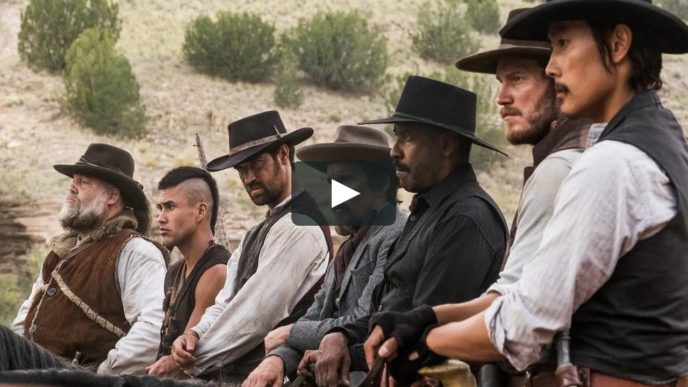
Magnificent Seven Actor Martin Sensmeier on Getting Chewed out by an Oscar-Nominee

Martin Sensmeier is an American actor of Tlingit, Koyukon-Athabascan and Irish descent. Raised in a Tlingit Coastal Community in Southeast Alaska, Martin moved to Los Angeles in 2007 to pursue acting and modeling . . .

He recently finished filming the remake of The Magnificent Seven, directed by Antoine Fuqua. He is starring alongside Denzel Washington, Chris Pratt, Ethan Hawke, and Vincent D’onofrio.

In an interview with ICTMN’s Vincent Schilling, Sensmeier spoke about his journey to become one of Hollywood’s hottest actors, as well as discussing an amazing memorable moment with an Oscar-nominated actor . . .

Any memorable moments for you in your career?

One morning, my clock was off by six minutes and I was one minute late for the van to take us to the set. I won’t say his name, but an Oscar-nominated actor tore into me – he said I was blessed to be in my situation, and tore into me for being late. I thought, Wow, what an experience to be chewed out by an Oscar nominee!

(Read more from “Magnificent Seven Actor Martin Sensmeier on Getting Chewed out by an Oscar-Nominee” HERE)

Follow Joe Miller on Twitter HERE and Facebook HERE.

Former Bill Clinton Paramour Accepts Ringside Seat for Monday Night’s Presidential Debate

Whether Republican presidential nominee Donald Trump uses Monday night’s presidential debate to talk about the extramarital affairs of former President Bill Clinton remains uncertain in the days leading up to the Monday night debate.

However, the millions of viewers watching will be reminded of them, even if Trump never says a word.

Gennifer Flowers, with whom Bill Clinton had an affair he admitted to under oath, on Saturday tweeted that she will be accepting an invitation Trump issued her earlier in the day to have a front-row seat when Trump debates Democratic presidential nominee and former first lady Hillary Clinton.

“Hi Donald. You know I’m in your corner and will definitely be at the debate!,” read a tweet from what appears to be Flowers’s account.

The tweet came in the wake of a comment from Judy Stell, Flowers’s assistant, who told Buzzfeed that Flowers would attend.

“Ms. Flowers has agreed to join Donald at the debate,” she said.

Clinton, in fact, had started the ball rolling by inviting billionaire Mark Cuban to have a front-row seat for the debate. Cuban has relentlessly needled Trump throughout the general election campaign and derided Trump’s business success with a series of caustic interviews.

Cuban announced Thursday he has accepted the invitation.

Trump, a premier political counter-puncher trained in the art of one-upmanship by decades spent in the New York City corporate wars, responded on Saturday by mentioning Flowers.

In an October interview, Flowers spoke candidly about the past.

“You know, people criticize me for talking about her because I had an affair with her husband. And I don’t blame them for that,” she said.

But Hillary Clinton “never accepted her responsibility at being an enabler. She’s been an enabler that has encouraged him to go out and do whatever he does with women,” Flowers said.

“Women’s rights, ha”, she added. (For more from the author of “Former Bill Clinton Paramour Accepts Ringside Seat for Monday Night’s Presidential Debate” please click HERE)

Follow Joe Miller on Twitter HERE and Facebook HERE.

Charlotte Releases Police Video of Fatal Shooting of Keith Lamont Scott

The city of Charlotte has released some video of Tuesday’s fatal shooting of Keith Scott by a Charlotte-Mecklenburg police officer.

“What we are releasing are the objective facts,” Charlotte-Mecklenburg Police Chief Kerr Putney said Saturday, calling the shooting “a complex case.” He said the videos to be released will show Smith had a gun with him when he was shot.

As of Saturday evening, one video had been released.

“The footage itself will not create in anyone’s mind as to what this case represents… the footage only supports the other information” including forensic evidence and witness statements, Putney said.

Putney said that Scott was “absolutely in possession of a handgun.” He said that officers spotted marijuana in Scott’s car, which is what caused them to confront Scott.

Release of the videos had been a point of contention between police and Scott’s family, each of which have offered a differing version of events surrounding Tuesday’s fatal shooting of the 43-year-old father of seven.

In a Facebook post, North Carolina Gov. Pat McCrory supported the decision.

“I have been assured by the State Bureau of Investigation that the release will have no material impact on the independent investigation since most of the known witnesses have been interviewed,” he wrote.

Release of the video followed another day of protests in which demonstrators gathered in Charlotte’s Marshall Park to demand release of the video.

North Carolina’s State Bureau of Investigation said Friday the city was free to release the video whenever it chose to do so.

On Friday, Scott’s wife released a cell phone video in which she is heard both trying to dissuade her husband from taking an unspecified action while also pleading with police not to shoot her husband.

Two different narratives of the incident have emerged.

Scott’s family has said that he was sitting in a parked car when confronted by police and that he had been reading a book. The family insists he was obeying police commands and was not acting in an aggressive manner when he was shot and killed by a black police officer.

Police have said Scott was in possession of a gun, and that he was acting in a manner that was threatening to the officers. Police said no book was recovered from the scene. A gun that was recovered reportedly has Scott’s fingerprints and DNA upon it.

Putney, who has said the video supported the police version of events but is not definitive on its own, has said the video “when taken in the totality of all the other evidence … supports what we’ve heard and the version of the truth that we gave about the circumstances that happened that led to the death of Mr. Scott.”

Putney emphasized that although the video was “compelling,” police cannot make their case based solely upon it.

Putney said the officers heard in the videos gave Scott “loud, clear, verbal commands.”

“Mr. Scott exited his vehicle armed with a handgun as the officers continued to yell at him to drop it,” Putney has said (For more from the author of “Charlotte Releases Police Video of Fatal Shooting of Keith Lamont Scott” please click HERE)

Follow Joe Miller on Twitter HERE and Facebook HERE.

Are Polls Underestimating Trump’s True Support?

The press in 1980 did their best to scupper Ronald Reagan. They said he was an “extremist” and that he would “would divide America along racial, religious, and regional lines”. They said Reagan was a “dangerous cowboy” with his finger on the nuclear button. They seethed, raged, insinuated.

The Republican establishment joined in the calumnies. The strain on party brotherhood was so bad that after the primaries, one-time Republican candidate John Anderson split from the party and ran as a NeverReagan.

It was thus unfashionable to admit liking Reagan, and so not a few kept their mouths shut.

Presidential polls might have reflected this Reagan shyness. In the month before the election, polls had Carter up an average 44% to Reagan’s 40%. Anderson hovered around 9%, which left about 7% of voters unaccounted for. Were some of these 7% shy Reagan voters?

The final averages right before the election gave Reagan the edge, 47% to Carter’s 44% and Anderson’s 8%. That left only 1% unaccounted for.

The final tallies gave Reagan 51% of the popular vote, Carter 41%, and Anderson 7%, with the remaining 1% spread over novelty candidates.

There is a huge discrepancy here. Polls showed Reagan with 4% less support than he actually had, and Carter with 3% more and Anderson 1% more. These errors could have been caused by Reagan supporters unwilling to tell pollsters their true preference, but they also could have been because of built-in biases of the polls themselves. These biases should not surprise given that many polls are conducted or commissioned by mainstream media outlets, whose sins and biases do not need recounting.

Shy Trump Voters?

At this writing most polls show Hillary nearly tied with Trump, yet there is a suspicion that, like in 1980, some voters are shy about admitting that they like Trump. If this is so, the polls exaggerate Hillary’s true support.

Is anybody who is for Trump coy? If so, how many secret supporters are there? Or are the polls biased?

It’s easy to imagine scenarios where a pollster queries a citizen who is reluctant to say he’s voting for Trump. The college professor or student called on campus, an employee polled at any company in San Francisco or Los Angeles, a canvasser knocking at the door at a certain address in Chappaqua, New York when the lady of the house is in residence, and so on.

Hillary said half of Trump’s supporters are a “basket of deplorable.” Many on the left agree with these harsh words; deviation from leftist ideology is not countenanced.

So rather than trigger a social justice warrior by announcing their Trump preference, some surely keep their mouths shut.

On the other hand, as the election nears and, for instance, the NeverTrump camp realize how horrible the alternative is, and adding in the common knowledge that Americans like a winner, liking Trump grows easier. The polls, as in 1980, are tightening. Even so, there is still a sense polls under-count Trump’s true base.

Shy Brexit Voters

Disentangling voter shyness from poll biases is not easy. Modern polls over emotionally contentious questions suggest shyness is not negligible. Journalist Michael Tracey reminds us that six weeks before the Brexit vote, which the media and majority of the establishment hysterically disfavored, “Remain” led by 4% with “Undecideds” at 14%. But the final tally was 52% for “Leave,” a huge discrepancy and 8-point swing.

In the Brexit case, poll bias is not a likely explanation because Brexit polls were not sampled in the complex way presidential polls are. The results of the Brexit polls were also simple, in the sense that the numbers released were close to the actual numbers received in the polling process. By these comments I mean that the numbers released to the public in presidential polls are not in their raw form; they have been manipulated by various statistical models (this article explains how).

Scientific Polls? Nah

Now, despite what you might have heard, there is no such thing as a “scientific poll.” Or, rather, all polls are equally scientific. But not all polls are equally good. That public poll numbers are actually the result of statistical models means there is plenty of opportunity for bias and error to creep in.

This is well illustrated by no less than the New York Times, which recently gave four polling groups the same raw data. If polling were a rigid science, the answers should have been the same. But they weren’t. Results ran from Hillary +3 to Trump +1, a 4-point swing, a discrepancy more than large enough to change the outcome of the election (especially considering details about the Electoral College which needn’t detain us here).

There is also the possibility that some biases are intentional, as in so-called push polls, or because the samples are finagled in a preferred direction. Unscrupulous pollsters know that simply showing a candidate is ahead causes some people to favor that candidate (Americans like a winner). And if that candidate is shown to be well ahead of her true support, others will be discouraged from voting (why bother?). But surely the mainstream media would never lie to us, right?

Whatever the polls show, there is no certain way to say anything about their performance until after the election. See you on the other side. (For more from the author of “Are Polls Underestimating Trump’s True Support?” please click HERE)

Follow Joe Miller on Twitter HERE and Facebook HERE.

O.J. To Charlotte in Black and White

I remember the moment well.

I was sitting in my car, waiting outside my office, my ear glued to the radio. The newscasters were about to announce the verdict of the O. J. Simpson double murder case. Would he be found guilty or not?

The evidence against him seemed overwhelming. But was he framed? Could the police be trusted? Yet if he was innocent, why did he run?

It seemed all of America was waiting with bated breath. What would the jury decide?

Many Americans stood gathered around TV monitors in public places, and as the words “Not guilty” were pronounced something extraordinary happened. Many blacks were absolutely elated while many whites were absolutely shocked, as preserved in more than one iconic photo.

Why such disparate reactions?

Was it simply a matter of skin color, with blacks siding with O. J. and whites siding with the victims?

For some, it may have been that simple, but remember that O. J. was hugely popular in white America, and he had been married to a white American and was living the American dream. And how many blacks would want a cold-blooded, double-murderer, living in privileged white communities, to walk away free?

No, there was something deeper going on, and it had to do with perceptions about “the system,” in this case, police and the courts.

Blacks, generally speaking, tended to distrust the system; whites, generally speaking, tended to trust it.

Even today, more than 20 years after the O. J. verdict in June, 1995, “A full 83 percent of white Americans said that they are ‘definitely’ or ‘probably’ sure of Simpson’s guilt. By contrast, 57 percent of black Americans agreed.”

Significantly, 2015 marked the first time that polls indicated that a majority of black Americans also believed O. J. was guilty, in sharp contrast with a 1997 poll where 82 percent of whites and just 31 percent of blacks believed he was guilty.

But the numbers still remain quite disparate today, with the 2015 poll still showing a difference of 26 percent between the views of white and black Americans, and those deep difference in perceptions have surfaced time and again in the last few years (think Trayvon Martin, Michael Brown, Eric Garner, Alton Sterling, Philando Castile, Terrence Crutcher, and Keith Lamont Scott).

After George Zimmerman was acquitted in the killing of Trayvon Martin, I wrote an article titled, “The George Zimmerman Trial in Black and White,” where I laid out the varied racial perspectives on the trial, arguing passionately for each position and doing my best to expose each side to the perspective of the other side.

Now, this tragic scenario is playing out again with the Charlotte shooting of Keith Lamont Scott.

Speaking again in broadly general terms (and I apologize for the obvious over-generalizations), white Americans are grieved over the shooting but see it as justifiable.

After all, the man had a gun, he refused to obey numerous orders by the police officer (hey, he didn’t even listen to his wife saying, “Don’t do it!”), and he was potentially threatening the life of others. He also had a police record – come on, he previously assaulted someone with a deadly weapon – and his fingerprints, blood, and DNA were found on the gun.

And there’s more: The officer who shot him is black and the local police chief is black, and the police chief insists that there are eyewitnesses, along with video evidence, confirming that the officer acted properly.

Black Americans are not just grieved over the shooting, they are outraged.

They’re thinking: Here was a man sitting peacefully in his car, waiting for his son to come home from school as he did every day, reading a book (the Quran). He posed no threat to anyone, nor did he own a gun or regularly carry a gun.

And for goodness sake, the man had been in a motorcycle accident and had a traumatic brain injury (TBI), making it difficult for him to respond to the police properly. His own wife was shouting, “He doesn’t have a gun!” and “He has a TBI!”

As for the gun, the police planted it at the scene (remember the white cop in South Carolina who was charged with murder and who allegedly altered the crime scene to implicate the black man he shot in the back?), and there are eyewitnesses who confirm that it was a white officer who shot Mr. Scott.

White Americans then say, “You’ve got to be kidding me! You’re sticking your head in the sand. And just look at these lawless rioters and looters. No wonder the police are so quick to shoot.”

Black Americans say, “What will it take for you to accept that we are not treated equally? And while these looters do not represent our community, they’re expressing a deep frustration we’ve felt for decades.”

And on and it goes, with no end in sight.

A few days ago, my wife Nancy said to me, “How would we feel if, as whites, we were the small minority, brought over on slave ships and sold as slaves, then oppressed by black society for generations, with anti-white prejudice still alive and well in many parts of the society?”

Obviously, we’ve thought about these things before, but it’s almost impossible for us to know how we’d feel since this was not our background and experience (although as Jews, we have had more than our share of suffering in history through the centuries).

At the same time, the perception of the oppressed can also be skewed, especially when agitators play into a perpetual victim mentality that continues to enslave rather than empower.

What, then, is the solution?

At the risk of repeating points I’ve made in previous articles, here are four simple things we must do.

First, we must determine not to react in a fleshly, emotional, even irrational way, recognizing that carnal anger does not produce positive results. Pointing fingers, insulting others, and, worse still, breaking the law, does far more harm than good.

Second, we must talk face to face as much as possible with other fair-minded people across the racial divide, asking them to share their perspectives before allowing us to share ours.

Third, we must ask God to reveal blind spots we might have along with blind spots our friends and colleagues might have.

Fourth, we must commit to following the truth wherever it leads – to pursuing justice, regardless of the consequences and implications – which requires courage and integrity and humility.

Can we do this together?

Do we really have a choice? (For more from the author of “O.J. To Charlotte in Black and White” please click HERE)

Follow Joe Miller on Twitter HERE and Facebook HERE.

A Proper American Response to Chinese Aggression and Humiliation

Upon entering office, President Obama fought a nomenclature battle with the Bush administration over China. “Strategic competitor” became “strategic partner.” The “Strategic Economic Dialogue,” critically, became the “Strategic AND Economic Dialogue.” Despite this lunacy and China’s flagrant disrespect for Obama, our China policy did not change all that much from President Bush’s. Yes, Obama’s fecklessness accelerated the downward trajectory of our position in Asia, but that trajectory was already plunging. Presidents Bush and Obama share the same affliction: muddling our economic and security interests. The muddle results in China’s regional security provocations going unchallenged, and the reasons why are linked.

Firstly, administrations fail to respond to China’s security transgression for fear that it will damage our economics interests. It is a perverse, defensive form of mercantilism. Secondly, we have a bad habit of reaching for economic sanctions as part of our toolkit for responding to security threats.

For both of these reasons, China’s security transgressions should only beget security responses.

Why? Because economic sanctions tend to boomerang back on us and act as a regressive tax on the middle class. We may not like it, but American and Chinese economic interests align more often than not. We and the global economy need a healthy Chinese economy (and vice versa). Most of what we would sanction are things that we buy or need for manufacturing inputs. That spells inflation here and less competitive manufacturing and exports. Imagine Chrysler sales if the Detroit automakers’ vehicles suddenly cost more than a Mercedes. And that is before Chinese retaliation or a move in the value of the dollar.

The other big reason Chinese security violations should be met with a security response is the empty nature of our economic threats. Policy makers usually figure out that economic threats will hurt U.S. consumers and consequently back down. We end up looking feckless, and China’s security challenges go unanswered.

When China tests us, we need a firm response. Failure to do so just invites more antics from Beijing, and we look like, well, Obama.

During his last trip to China the Chinese gratuitously snubbed Obama by making him deplane “from the ass end of the plane.” China likewise set the tone in 2010 in Copenhagen when the they sent a junior official to negotiate with Obama. After making the president wait for hours, Obama met with the waterboy.

China has stolen the files of millions of Americans, including me. Maybe the government passed China a stern note, but as far as I could tell the only administration response was to give me a subscription to an identity monitoring service … as if China using my credit card numbers is the worry.

Similarly, when China established an air defense identification zone (ADIZ) in the East China Sea in November 2013, Obama’s silence was deafening. China made a naked attempt at a territory grab that could restrict trade routes, freedom of navigation, and pit our ally Japan against China. Obama flew one unarmed B52 sortie through the area and then advised U.S. airlines to comply with China’s demands.

So when China began building islands in the South China Sea and claiming new territory, it correctly assumed a weak U.S. response would follow.

Each of these events had an appropriate rejoinder. Obama should have refused the meeting with the junior official in Copenhagen and ignored China’s demands to deplane from the back of Air Force One. Why did he follow small orders from Beijing’s communist leadership? The ADIZ and the South China Sea situations placed China’s credibility in our hands, but we did not use that leverage. We should have regularly sent planes and ships through the territory China claimed. When China did not back up their threats of force (and they would not have), we could have advertised it.

It should trouble us that both Hillary Clinton and Donald Trump want to lead with an economic and not a security response. They thunder about economic reprisal, but, should they be elected, will almost certainly back down. Clinton has adopted Sen. Schumer, R-N.Y. (F, 2%) and Donald Trump’s currency manipulation hobbyhorse (which, by the way, is wildly inaccurate), and Trump has his trade war threat. Both are terrible ideas, though does anyone doubt that they will get left on the cutting room floor after November? To be sure, both belong on the floor, but we should worry that — in the midst of the flip-flops — we will once again fail to respond to China.

China presents a security challenge for us in Asia, but we must better relearn how to respond. Our reflexive grasp for economic responses creates threats from which we must eventually climb down or, if followed through on, would significantly harm the U.S. economy. The Chinese must be overjoyed at economic threats because they must know we do not mean it. China sees the American presence in the region as limiting its geopolitical rise, but the zero-sum thinking stops there. Economically they need us, and we need them. While no politician, especially Trump and Clinton, will say that in our populist moment, failure to do so merely aids China. (For more from the author of “A Proper American Response to Chinese Aggression and Humiliation” please click HERE)

Follow Joe Miller on Twitter HERE and Facebook HERE.
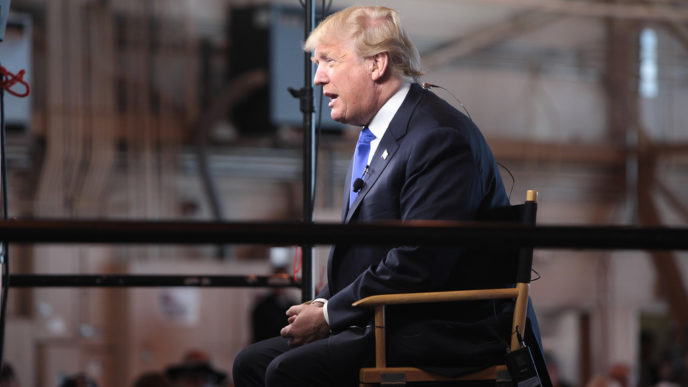
Here’s What Mark Levin Thinks of Ted Cruz Endorsing Trump

Friday evening, Conservative Review Editor-in-Chief Mark Levin commented on the big news of the day, Senator Ted Cruz’s endorsement of Donald Trump.

Levin read Cruz’s statement on the air along with the statement in response released by the Trump campaign.

Listen:

Levin offered a few comments, noting that he himself is voting for Donald Trump because he is the only candidate who can defeat the Democrat.

“I have no illusions about Donald Trump,” Levin said. “In many respects he’s a liberal, but he has some conservative positions. Some important conservative positions.”

Hilary Clinton, on the other hand, “she was Obama before Obama was Obama,” Levin remarked. “The only way to stop her, is with [Donald Trump].” (For more from the author of “Here’s What Mark Levin Thinks of Ted Cruz Endorsing Trump” please click HERE)

Follow Joe Miller on Twitter HERE and Facebook HERE.

Hey, Hollywood, Want Better Emmy Ratings? Start by Cutting the Liberal Crap

The 2016 Emmy Awards, hosted by Jimmy Kimmel, brought in the lowest ratings of all time. People thought the disaster last year — hosted by Andy Samberg — was bad, but this year was far worse. The Emmys drew in 11.9 million viewers. Last year, it was 15.6 million. This year was lower than 1990, when the Emmys made its first appearance on Fox and attracted 12.3 million viewers.

Award shows, for the most part, have become a cesspool of left-wing propaganda that it’s no wonder so many people are tuning out. Would you want to watch a show where your political ideology was routinely ridiculed and mocked for the sake of stroking the political feelings of other performers in the audience?

The producers of the Emmys may want to take a look at the possibility of letting presenters and recipients know that politics should be left at home. There is a strong likelihood some of the celebrities would object to the point of threatening not to attend, but so what? Would the producers rather have seven to eight million more people watching the telecast or spend time assuaging the feelings of a handful of celebrities who think awards shows are their own personal political platforms?

It starts with the host, and while Jimmy Kimmel was happy to poke fun at Donald Trump, Hillary Clinton went unscathed. Jokes made at the expense of politicians are nothing new but when all the jokes focus on only one side, people will notice.

Julia Louis-Dreyfus in accepting her Emmy award brought everybody tears with a touching tribute to her father who had died only days before. However, she couldn’t resist taking a shot at Trump when she said, “Our show started out as a political satire, but it now feels more like a sobering documentary. So I certainly do promise to rebuild that wall and make Mexico pay for it.”

Jill Soloway, creator of “Transparent,” won the award for Best Directing in a Comedy Series. She finished off her speech by shouting, “Down with the patriarchy!” and then launched into anti-Trump tirade backstage where she said,

He needs to be called out at every chance he gets for being one of the most dangerous monsters to ever approach our lifetimes. He’s a complete dangerous monster, and any moment that I have to call Trump out for being an inheritor to Hitler, I will.

That’s a tad melodramatic. People certainly have differing opinions on Trump, but the idea he is anywhere akin to a man who set in motion events that resulted in the extermination of six million people is asinine.

If the commentary from performers wasn’t anti-Trump, they were certainly happy to express their fondness for Hillary Clinton. Courtney B. Vance, who won for his portrayal of Johnny Cochrane in “The People v. O.J. Simpson,” ended his acceptance speech saying, “Obama out! Hillary in!”

Kate McKinnon, who has done a masterful job portraying Hillary Clinton on “Saturday Night Live,” won the award for Outstanding Supporting Actress in a Comedy Series. She accepted her award and thanked Hillary Clinton personally. Despite her spot-on portrayal, she is a Clinton supporter. Hillary Clinton congratulated McKinnon on Twitter.

A lot of viewers simply aren’t going to tolerate this kind of blatant politicking on an awards show when it is so one-sided. The producers need to be aware of that. They need to stop operating under the assumption that conservatives don’t watch any of these shows and therefore aren’t going to tune in, regardless. It’s not true.

People, including conservatives, like to see their favorite television shows, movies, and musical performers win awards for their work. It’s the blatant left-wing politics they can do without. If producers put an end to that, they’d likely see their ratings increase substantially. (For more from the author of “Hey, Hollywood, Want Better Emmy Ratings? Start by Cutting the Liberal Crap” please click HERE)

Follow Joe Miller on Twitter HERE and Facebook HERE.

Syria Cease-Fire Collapse Highlights How Far US-Russia Relations Have Fallen

The story is depressingly familiar.

On Friday, the cease-fire in Syria, which was brokered by U.S. Secretary of State John Kerry and his Russian counterpart Sergei Lavrov, collapsed as Russian and Syrian warplanes resumed their scorched earth airstrike campaign in Aleppo.

“Russia has no vested interest in stability in the Middle East,” Stephen Blank, senior fellow for Russia at the American Foreign Policy Council, told The Daily Signal.

“For Russia, security is only achievable if everyone else is insecure,” Blank said. “They’re not peacemakers, it’s a pretense. They want to force people to accept that Russia is important.”

The collapse of the cease-fire in Syria is the latest in a series of setbacks for U.S.-Russian relations.

Repeated attempts to cooperate in defusing conflicts in Ukraine and Syria have fallen flat. And a pattern of Russian warplane flybys of U.S. military aircraft and naval vessels in Eastern Europe, as well as allegations that the Kremlin is trying to influence the U.S. election through cyberattacks have exacerbated tensions.

Joint operations to support the International Space Station are among the last holdouts of post-Cold War cooperation between the U.S. and Russia.

Verbal sparring between Kerry and Lavrov at a United Nations Security Council meeting Wednesday highlighted how relations between Russia and the U.S. are at a post-Cold War nadir.

“Russia and the United States are in a state of conflict,” Blank said. “But it’s not a new Cold War. It’s a struggle between democracy and autocracy, not communism and capitalism.”

War of Words

The Syrian cease-fire, which went into effect Sept. 12, was dead on arrival, underscoring how far U.S.-Russia relations have deteriorated. The failed truce also highlighted intractable differences of opinion over key questions related to the war in Syria, such as the fate of the country’s ruler, Bashar al-Assad.

The 5-year-old war in Syria has displaced half of the country’s population and is estimated to have killed more than 400,000 people.

Fighting briefly ebbed last week in Syria after the cease-fire allegedly went into effect, but the war never stopped.

The cease-fire edged toward total collapse Monday night when, according to U.S. officials, Russian warplanes bombed a convoy transporting humanitarian aid to the 78,000 people trapped in the rebel-controlled city of Aleppo.

Twenty out of the convoy’s 31 trucks were destroyed, and about 20 people died, according to news reports.

The strikes were likely carried out by two Russian Su-24 warplanes, which were recorded as operating in the vicinity of the convoy, according to U.S. officials.

Marine Corps Gen. Joe Dunford, chairman of the Joint Chiefs of Staff, said during Senate testimony on Thursday that either Russian or Syrian warplanes might have attacked the convoy.

“It was either the Russians or the regime,” Dunford said. “There’s no doubt in my mind that the Russians are responsible. I just don’t know whose aircraft actually dropped the bomb.”

At the U.N. on Wednesday, Kerry blamed Russia for the attack.

The Kremlin has subsequently suggested a series of alternative scenarios, including the possibility that a U.S. drone carried out the strike, or that the convoy was attacked from the ground by opposition forces fighting against the Assad government.

“I listened to my colleague from Russia and I sort of felt like we’re in a parallel universe here,” Kerry said in response to Lavrov’s remarks at Wednesday’s U.N. Security Council meeting.

Kerry called for a halt in Syrian and Russian airstrikes to allow the cease-fire to take hold.

Yet, as of Friday, Russian and Syrian airstrikes had resumed in Aleppo and a new offensive by Assad’s forces to take back the city had begun, according to news reports from the region.

Machinations

In a gambit to increase its importance on the world stage, Moscow has positioned itself as a key player in negotiating peace deals in conflicts it started, such as Ukraine, or elbowed its way into, as in Syria.

“I think Russia, through Putin, is the ultimate opportunist,” said Steven Bucci, visiting fellow at The Heritage Foundation’s Allison Center for Foreign Policy Studies.

“They see U.S. weakness and exploit it,” Bucci, a former Army Special Forces commander, said. “I’m not sure if they want to be peace arbiters, but they want influence, and they need domestic control. Their growing engagements give them both. They are now seen as a serious player on the world stage, who many believe are more steady than the U.S. That turnaround is remarkable.”

Some experts claim that Russia has little genuine interest in ending the conflicts in Ukraine or Syria. The longer those conflicts last, some say, the longer Russia is able to remain relevant as a global power.

“That creaking sound you hear is Russia’s international credibility taking an additional hit,” White House spokesman Josh Earnest told reporters in Washington.

Modern Russia doesn’t have the Soviet Union’s military clout to force countries in Eastern Europe to succumb to its vassalage or to shape outcomes in other regions like the Middle East.

But the metrics of state power in the post-Cold War era are not defined by the ability to invade or subjugate countries. Russia has created diplomatic leverage in Ukraine and Syria through limited military operations, which exploit the reluctance of U.S. and European leaders to become entangled in those conflicts.

In 2013, Assad used chemical weapons against rebel-controlled pockets of the Damascus suburbs. The attacks killed about 1,500 civilians, including more than 400 children, and tested President Barack Obama’s “red line” warning to Assad—that the use of chemical weapons would spur a U.S. military response.

As the U.S. prepared to attack, Russia stepped in to arbitrate a last-minute deal to dismantle Syria’s chemical weapons stockpiles. The U.S. never launched punitive strikes, and Assad, a Moscow ally, remains entrenched in power.

“Russia is working hard to show the U.S. is not the leader it claims to be, but Russia is,” Bucci said. “They know Obama does not want or have the stomach for difficult foreign policy situations, and that Kerry is a incompetent negotiator. They are taking full advantage of that.”

In Ukraine, the more than 2-year-old conflict is in a perpetual holding pattern, periodically spiking in violence. Russia played a hand in brokering multiple failed cease-fires while it simultaneously and covertly armed pro-Russian separatists and deployed its own troops inside Ukraine.

“Nowhere is Russia’s intervention in internal affairs more brazen and bloody than in the conflict in Ukraine, which Russia continues to fuel by arming, training, and commanding so-called ‘separatists,’” Tom Malinowski, U.S. assistant secretary of State for Democracy, Human Rights, and Labor, said during remarks at a Sept. 19 meeting of the Organization for Security and Cooperation in Europe in Warsaw, Poland.

“The Cold War was a global struggle between two power blocks—that’s not the case today,” Blank said. “Today, it’s a multipolar world order. Russia is upset they don’t have the status they had during the Cold War. They want to be coequal to the United States, but they’re not going to get it.” (For more from the author of “Syria Cease-Fire Collapse Highlights How Far US-Russia Relations Have Fallen” please click HERE)

Follow Joe Miller on Twitter HERE and Facebook HERE.
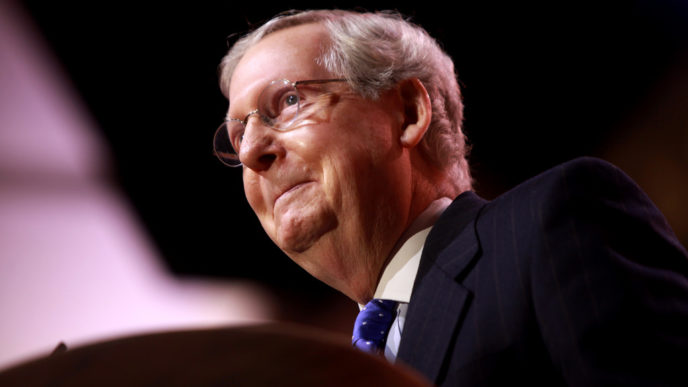
House Conservatives Resort to Spending Plan B to Avoid Government Shutdown

When Congress returns to Capitol Hill on Monday to hammer out a stopgap spending measure, House conservatives plan to introduce a spending safety valve that would eliminate the possibility of a government shutdown.

Congress has struggled for months to reach a spending agreement.

As the end of the fiscal year approaches and government’s spending authority expires Oct. 1, lawmakers have opted to pass a temporary funding extension. Known as a continuing resolution, that measure will extend spending authority into December and requires Congress to revisit the issue shortly before Christmas.

Now, Rep. Jim Jordan, R-Ohio, chairman of the House Freedom Caucus, and Rep. Mark Meadows, R-N.C., a founding member of the caucus, say they will introduce an amendment to that short-term spending bill.

The amendment would trigger an automatic, 40-day extension of government funding if Congress fails to pass a long-term spending bill in December, during a lame-duck session between the Nov. 8 election and the beginning of the new Congress in January.

“I’m trying to give as much flexibility [as possible] to our leadership and appropriators, while at the same time realizing that a potential [government] shutdown should not be the focus of any conversation,” Meadows told The Daily Signal.

“This 40-day extension amendment would allow us to negotiate in good faith,” he said.

The Freedom Caucus considers itself a group of the House’s most conservative members. The new proposal is part of conservatives’ effort to be part of a process that already is moving quickly in the Senate.

Majority Leader Mitch McConnell, R-Ky., introduced the Senate version of that legislation Thursday, over complaints from some in his party that it doesn’t include conservative policy proposals.

“There have been broad requests for a clean continuing resolution,” McConnell said, referring to the fact that the measure has no policy riders tacked on to draw votes. “So that’s what I’ve just offered. It’s the result of many, many hours of bipartisan work across the aisle.”

McConnell’s unwillingness to fight in the Senate puts conservatives at an early disadvantage in the House, Rep. Bill Flores, R-Texas, told The Daily Signal on Friday:

Unfortunately, Senate Majority Leader Mitch McConnell is caving in to this irresponsible behavior by surrendering important conservative policies while allowing liberal interest riders to be attached to government funding.

The view of Flores, chairman of the Republican Study Committee, the House’s largest GOP caucus, carries weight. Some of his fellow House Republicans complain that they didn’t have a say in negotiations.

Earlier in September, before the party reached a unified agreement on spending levels, McConnell announced he was working with the White House and Senate Democrats to reach a deal.

A temporary fix, the Senate measure extends federal funding at the current $1.07 trillion level until Dec. 9. That timetable sets up another fight over spending during the lame-duck session after the election.

The Senate’s legislation also includes relief funds for victims of the flooding that battered Louisiana in August and money to combat the Zika virus that has spread in the South all summer.

It does not contain a provision that would keep money meant to fight the Zika virus from flowing to the nation’s largest abortion provider, Planned Parenthood. Democrats torpedoed three earlier Zika bills that contained the prohibition.

But Democrats still weren’t satisfied.

Democrats want Republicans to include funds to address the Flint water crisis in the stopgap spending bill. Their request comes months after President Barack Obama publicly drank a glass of water in May to reassure residents of the Michigan town that the public health crisis was over.

Raising the possibility of a government shutdown for lack of a budget deal to fund the government, the ranking Democrat on the Appropriations Committee, Sen. Barbara Mikulski of Maryland, called on her colleagues “to vote against” the legislation because it didn’t contain money for Flint.

Conservatives weren’t pleased either.

The Senate’s continuing resolution doesn’t contain any language barring the White House from relinquishing U.S. control of ICANN, the nonprofit that functions as the directory of the internet by curating website domain names.

Sen. Ted Cruz, R-Texas, said he was “profoundly disappointed” in McConnell’s final spending bill. The Texas senator had quarterbacked an effort to stop the transfer of ICANN to an international body for more than a month.

The Senate recessed after introduction of the spending measure and it’s not clear when, or if, it will pass.

That could be to the benefit of Democrats. If the process drags on, Republican senators considered vulnerable on Election Day are kept on Capitol Hill and off the campaign trail.

“I would’ve thought we’d be done by now,” a senior GOP aide told The Daily Signal. “But the Senate has just stalled and stalled. From my perspective in the House, it looks like [the Democrats] are trying to shut down the government.”

By law spending bills must originate in the House, but House Speaker Paul Ryan, R-Wis., appears to be waiting on the Senate to send over its version of the continuing resolution. After months of infighting among House members, Ryan predicted a vote on the Senate measure would be “low drama.”

House factions have clashed all year over how to fund the government, with conservatives conceding on every point.

They originally opposed any bill that exceeded the $1.04 trillion spending limits established in the 2011 Budget Control Act and allowed lawmakers to move major legislation during the lame-duck session.

Conservatives fear the lame duck because it provides an opportunity for outgoing—and thus unaccountable—members of Congress to legislate.

Recently, however, Flores and several members of the House Freedom Caucus told GOP leadership that they could concede on both points in exchange for additional screening for Syrian refugees and a stop to the ICANN transition.

Though conservatives said those “sweeteners” would be enough to help them swallow a spending bill they loathe, Democrats decried both as “poison pills.” Neither made the cut in the Senate bill.

“That doesn’t really give conservatives hope for anything,” a second GOP aide told The Daily Signal. “And if we’re not getting anything now, how are we going to get anything better in the lame duck?”

Unable to add anything to the legislation so far, conservatives remain dissatisfied. If that doesn’t change, Republican leadership likely will have to seek Democrat votes to pass the short-term spending measure out of the House. (For more from the author of “House Conservatives Resort to Spending Plan B to Avoid Government Shutdown” please click HERE)

Follow Joe Miller on Twitter HERE and Facebook HERE.