New Zealand health officials announced Wednesday that new prescriptions for puberty blockers will no longer be issued to children identifying as transgender.
Doctors will stop prescribing the gender-affirming medication — gonadotropin-releasing hormone analogues — to minors starting Dec. 19, after the health ministry cited a lack of “high-quality evidence that demonstrates the benefits or risks,” Health Minister Simeon Brown said.
Existing patients can still access the medication for gender dysphoria or other conditions, such as early-onset puberty, endometriosis, and prostate cancer.
Officials said 113 people were using puberty blockers in 2023 — down from 140 in 2021.
Hormone blockers can pause puberty and are occasionally used to treat children with gender dysphoria.
Critics slammed the decision, warning the ban will severely impact transgender and gender-diverse youth, arguing medical decisions should be left to the individuals doctor. (Read more from “New Zealand bans puberty blockers for transgender minors” HERE)
By CNA. US President Donald Trump said on Tuesday (Nov 18) that the United States would sell advanced F-35 stealth fighter jets to Saudi Arabia, signalling that Riyadh would receive the same top-tier defence equipment long reserved for Israel.
“As far as I’m concerned, I think they are both at a level where they should get top-of-the-line F-35s,” Trump told reporters at the White House, calling Saudi Arabia and Israel “great allies”.
The comments came as Trump hosted Saudi Crown Prince Mohammed bin Salman for talks aimed at deepening defence cooperation and expanding a growing US–Saudi security partnership.
Trump said Washington and Riyadh had reached a “defence agreement”, though he offered no details. Saudi Arabia is seeking stronger security guarantees from the US amid heightened regional tensions and has been pushing for access to advanced military hardware.
The crown prince, making his first White House visit in more than seven years, said security cooperation was a core priority of the trip. He also announced that Saudi Arabia would increase its planned investments in the United States to nearly US$1 trillion, up from a US$600 billion pledge made during Trump’s visit to Riyadh in May. (Read more from “Trump Says Saudi Arabia to Get F-35 Jets Under Arrangement Similar to Israel” HERE)
Israel’s ICC appeal is not about Karim Khan, but Trump – analysis
By The Jerusalem Post. Israel’s appeal to the International Criminal Court’s highest chamber to cancel the arrest warrants outstanding against Prime Minister Benjamin Netanyahu and former defense minister Yoav Gallant on the basis of disqualifying ICC’s chief prosecutor Karim Khan has much more to do with US President Donald Trump than with Khan.
If the only questions were: “Can Israel get Khan disqualified, and can this lead to the arrest warrants being tossed?” the answer would surely be that the arrest warrants won’t be nixed, even if Khan is.
But there are broader issues at stake here, and, though unlikely, the ICC could choose to use disqualifying Khan as a way out from its nearly year-long conflict with the Trump administration.
Since Trump returned to power in January and gave the ICC a brief ultimatum to withdraw the arrest warrants against Israel, the US government has escalated sanctions against ICC officials, one move after another.
Cumulatively, the ICC has lost employees, funding, and general flexibility in operations due to its stance on maintaining the arrest warrants. (Read more from “Israel’s ICC appeal is not about Karim Khan, but Trump – analysis” HERE)
https://joemiller.us/wp-content/uploads/11292218914_55ea9557b7_b-3749929691.jpeg7311024Joe Millerhttps://joemiller.us/wp-content/uploads/logotext.pngJoe Miller2025-11-18 18:26:002025-11-18 18:24:16Trump Says Saudi Arabia to Get F-35 Jets Under Arrangement Similar to Israel
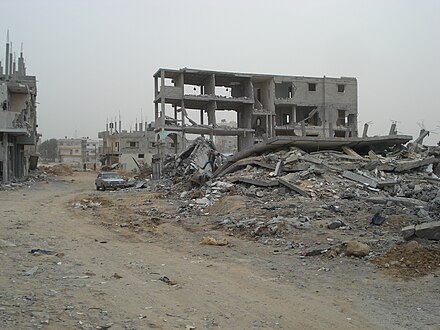
The US is planning to build a large military base in Israel on the Gaza border, according to a joint report from the Israeli investigative outlet Shomrim and the Israeli newspaper Yedioth Ahronoth.
The report said that the construction of the base would cost about $500 million and would be designed to house thousands of US and international troops tasked with maintaining the Gaza ceasefire deal.
The US has already established a military outpost in southern Israel to oversee the ceasefire, known as the Civil-Military Coordination Center (CMCC), but the construction of such a large base would mark a significant escalation of the US military presence. It would also increase the US involvement in Gaza, where Israel is regularly carrying out attacks and killing Palestinians despite the truce deal. . .
The US has already deployed 200 troops to the CMCC, which has replaced Israel as the “overseer” of humanitarian aid deliveries into Gaza, according to a report from The Washington Post. Israel has continued to restrict aid deliveries to Gaza in violation of the ceasefire deal.
Bloomberg later reported that the US military was exploring the possibility of building a “temporary” base capable of housing 10,000 people near Gaza. The report cited a Request for Information document dated October 31 that said the US Navy was seeking a cost estimate for “a temporary, self-sustaining military base of operations capable of supporting 10,000 personnel and providing 10,000 square feet of office space for a period of 12 months.” (Read more from “Report: US To Build $500 Million Military Base in Israel on the Gaza Border” HERE)
https://joemiller.us/wp-content/uploads/440px-War_in_Gaza_096_-_Flickr_-_Al_Jazeera_English-4264648521.jpeg330440Joe Millerhttps://joemiller.us/wp-content/uploads/logotext.pngJoe Miller2025-11-12 17:52:132025-11-12 17:50:42Report: US To Build $500 Million Military Base in Israel on the Gaza Border
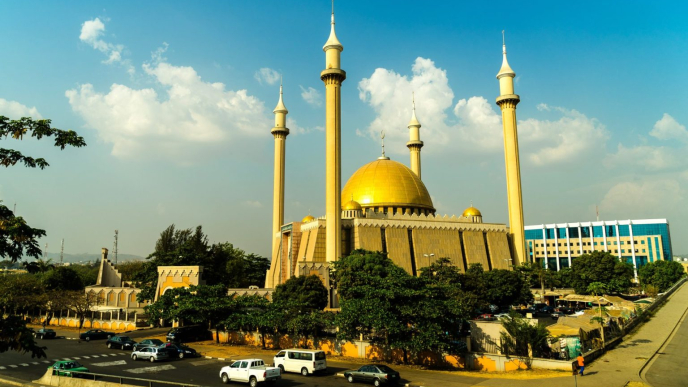
At least 17 Christians were killed in Nigeria hours after President Donald Trump designated the nation as a Country of Particular Concern (CPC) for ongoing attacks by radical Islamists, with local media reporting “fresh attacks by gunmen across communities in Plateau and Kaduna states.”
A Friday evening attack in Kaduna claimed the lives of seven people and injured one more, with Nigerian outlet Punch reporting that the assailants “invaded” the Damakasuwa community in Chawai Chiefdom around 8:00 pm and began “shooting sporadically and forcing residents to flee into nearby bushes for safety.”
The chief of Chawai, Alhaji Yahaya Muhammad, told the newspaper that five of the fatalities died at the scene while the other two later succumbed to their injuries.
“The incident heightened tension in the area, but normalcy has since been restored due to the presence of military personnel in the community,” the chief said. “We have urged our people to remain calm and allow the security agencies to carry out their duties diligently to ensure the perpetrators are apprehended.”
In Plateau State, 10 more people were reportedly killed in separate attacks on Friday and Saturday, Punch reported. (Read more from “17 Nigerian Christians Killed in Attacks Hours After Trump Called Out Religious Persecution” HERE)
https://joemiller.us/wp-content/uploads/Nigerian-National-Mosque-in-Abuja-Nigeria.-Mark-Fischer-Creative-Commons-1536x1034-3254577688.jpeg10341536Joe Millerhttps://joemiller.us/wp-content/uploads/logotext.pngJoe Miller2025-11-03 17:45:532025-11-03 17:41:2017 Nigerian Christians Killed in Attacks Hours After Trump Called Out Religious Persecution
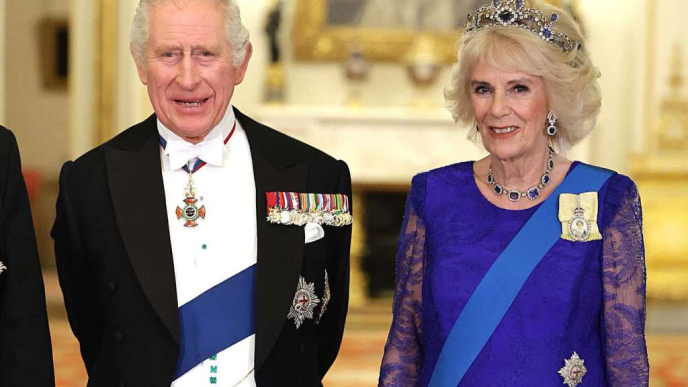
King Charles III has unveiled a memorial to lesbian, gay, bisexual and transgender military personnel after a decades-long campaign against a ban on being gay in the armed forces.
In his first official engagement in support of the LGBT+ community, the King visited the sculpture, named “an opened letter”, at the National Memorial Arboretum in Staffordshire.
The memorial is dedicated to those from the LGBT+ community now serving in the forces, as well as those who served at a time when it was illegal to be gay in the military. . .
The memorial project was led by Fighting With Pride, an LGBT+ veterans support charity set up to campaign for justice and support those impacted by the ban. . .
Veterans impacted by the ban can apply for a financial redress payment of up to £70,000 [$93,000 USD]. (Read more from “King of England Goes All in on Military Gay “Pride”; UK Offering Homosexual Ex-Soldiers Up To $93K” HERE)
https://joemiller.us/wp-content/uploads/king-charles-iii-and-camilla-queen-consort-tout-112222-e1d9f3ad5fe54b0b8737ecf899b1da50-361898978.jpeg6821024Joe Millerhttps://joemiller.us/wp-content/uploads/logotext.pngJoe Miller2025-11-02 21:31:232025-11-02 21:28:05King of England Goes All in on Military Gay “Pride”; UK Offering Homosexual Ex-Soldiers Up To $93K
A Mexican mayor who called for “brute force” against the country’s violent drug cartels was gunned down in public Saturday night during “Day of the Dead” celebrations in his hometown.
Carlos Manzo, 40, the firebrand mayor of Uruapan in Mexico’s Michoacan province, was shot dead by two gunmen in front of shocked supporters in the city’s central square, the Los Angeles Times reported.
“I condemn in the strongest possible terms the vile assassination of the mayor of Uruapan, Carlos Manzo,” Mexican president Claudia Sheinbaum wrote on X. “I express my deepest condolences to his family and loved ones, as well as to the people of Uruapan, for this irreparable loss.”
Condeno con absoluta firmeza el vil asesinato del presidente municipal de Uruapan, Carlos Manzo. Expreso mis más sinceras condolencias a su familia y seres queridos, así como al pueblo de Uruapan ante esta irreparable pérdida.
Security consultant David Saucedo described the brazen assassination as a “kamikaze attack.”
Manzo gained fame as head of the city of 300,000 when he stood up to the bloody cartels that have terrorized Mexico for decades — and acknowledged the risk he was taking. (Read more from “Mexican Mayor Who Stood Up to Cartels Gunned Down in ‘Kamikaze Attack’ Weeks After Haunting Statement” HERE)
https://joemiller.us/wp-content/uploads/6328959088_8a1a0fe119_b-2804633931.jpeg6831024Joe Millerhttps://joemiller.us/wp-content/uploads/logotext.pngJoe Miller2025-11-02 20:52:082025-11-02 20:47:57Mexican Mayor Who Stood Up to Cartels Gunned Down in ‘Kamikaze Attack’ Weeks After Haunting Statement
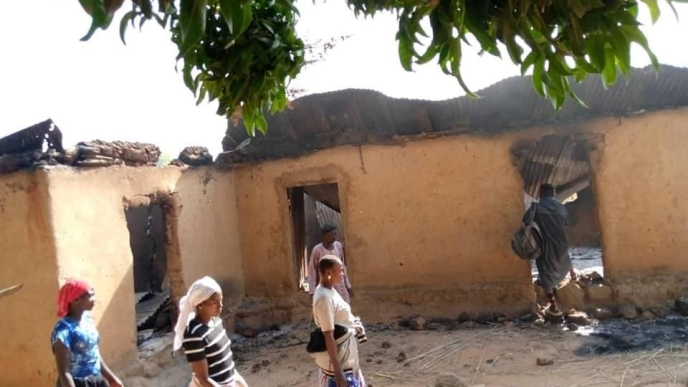
President Donald Trump has designated Nigeria as a “country of particular concern” for the ongoing mass murders of Christians by radical Islamists, directing the House Appropriations Committee “to immediately look into this matter” and stating that the United States “cannot stand by” while the slaughters occur.
Trump posted the Friday announcement on Truth Social, following a recent letter from Rep. Riley Moore (R-WV) urging the administration to take “immediate action to address the systematic persecution and slaughter of Christians in Nigeria.”
Christianity is facing an existential threat in Nigeria. Thousands of Christians are being killed. Radical Islamists are responsible for this mass slaughter. I am hereby making Nigeria a “COUNTRY OF PARTICULAR CONCERN” — But that is the least of it. When Christians, or any such group, is slaughtered like is happening in Nigeria (3,100 versus 4,476 Worldwide), something must be done! I am asking Congressman Riley Moore, together with Chairman Tom Cole and the House Appropriations Committee, to immediately look into this matter, and report back to me. The United States cannot stand by while such atrocities are happening in Nigeria, and numerous other Countries. We stand ready, willing, and able to save our Great Christian population around the World!
DONALD J. TRUMP,
PRESIDENT OF THE UNITED STATES OF AMERICA
Moore, a member of the House Appropriations Committee, detailed in his October 6 letter to Secretary of State Marco Rubio that over 7,000 Christians have been killed in Nigeria in 2025 alone, with hundreds more kidnapped, tortured, or displaced by Muslim terrorist groups like Boko Haram.
The congressman had also cited reports stating that 19,100 churches had been destroyed in the country since 2009. (Read more from “Trump Designates Nigeria as ‘Country of Particular Concern’ for Slaughters of Christians by Islamists” HERE)
https://joemiller.us/wp-content/uploads/Homes-burned-by-Fulani-assailants-in-Bassa-County-Plateau-state-Nigeria-in-February-2021.-David-Mali-photo-1427488950.jpeg720960Joe Millerhttps://joemiller.us/wp-content/uploads/logotext.pngJoe Miller2025-10-31 19:40:542025-10-31 22:38:34Trump Designates Nigeria as ‘Country of Particular Concern’ for Slaughters of Christians by Islamists
Pastor Stephen Tong preached a fiery sermon at the World Evangelical Alliance’s General Assembly, rebuking hypocritical pastors who indulge in sin yet step up to the pulpit on Sundays to preach God’s holy word.
Tong, the founder and senior pastor of the Reformed Evangelical Church of Indonesia, known as the “Billy Graham of Asia” for his global evangelistic work, preaching to more than 37 million people over more than 66 years of ministry, admonished “hypocritical” pastors leading double lives.
“Shame on this kind of servant of God,” he said.
In his sermon titled “to be a holy servant,” Tong focused on the holiness of the Gospel message.
“If you want to be a servant of God, you promise to God to lead a holy life,” the 85-year-old declared, detailing the purity of mind, speech and actions required of pastors to lead exemplary lives above reproach. (Read more from “‘Billy Graham of Asia’ Stephen Tong Rebukes Hypocritical Pastors Indulging in Sin, Refusing to Leave the Pulpit” HERE)
https://joemiller.us/wp-content/uploads/5811115037_d41365b3c0_b-2560295307.jpeg6831024Joe Millerhttps://joemiller.us/wp-content/uploads/logotext.pngJoe Miller2025-10-29 16:11:132025-10-29 16:08:06‘Billy Graham of Asia’ Stephen Tong Rebukes Hypocritical Pastors Indulging in Sin, Refusing to Leave the Pulpit
Ukrainian President Volodymyr Zelensky has issued a blunt message to his Western allies: the fight against Russian aggression will continue for “two or three years,” and Kyiv wants other countries to fund it.
In remarks made public on October 28 2025, Zelensky told European leaders that Ukraine is not preparing for “decades” of war, but does “require” a defined period of financial support. “I emphasised this again to all European leaders. I told them that we are not going to fight for decades, but you must show that for some time you will be able to provide stable financial support to Ukraine… [for] two or three years,” he said.
Zelensky made clear that, even if the war ends earlier than anticipated, the funds are still something he wants. “If the war ends in a month, we will spend this money on recovery. If it does not end in a month, but after some time, then we will spend it on weapons. We simply have no other choice,” he said.
As the war between Russia and Ukraine stretches into its fourth year, Ukraine remains heavily dependent on military and financial aid from Western countries.
While Zelensky addressed European leaders, his remarks also touched on U.S. policy and broader global shifts. He urged U.S. President Donald Trump to lean on China’s leader Xi Jinping to curb Russia’s oil revenues, referencing recent U.S. sanctions on Russian energy.
Earlier in 2025, the Trump administration had threatened new tariffs on countries importing Russian oil, signalling that U.S. policy toward Ukraine and Russia remains a key factor in the broader conflict.
On Zelensky’s part, the conversation dovetails with European plans to unlock tens of billions of euros in frozen Russian assets to fund Ukraine’s defense and reconstruction. EU leaders are working on mechanisms that could channel these funds to Ukraine over the next two to three years, in alignment with Zelensky’s request.
https://joemiller.us/wp-content/uploads/AA-20230209-30232672-30232665-UKRAINIAN_PRESIDENT_VOLODYMYR_ZELENSKYY_IN_BRUSSELS-3.webp622933Joe Millerhttps://joemiller.us/wp-content/uploads/logotext.pngJoe Miller2025-10-29 14:59:442025-10-29 14:55:07Zelensky Tells Allies Ukraine Expects Western Nations to Fund War Effort for ‘Two or Three More Years’
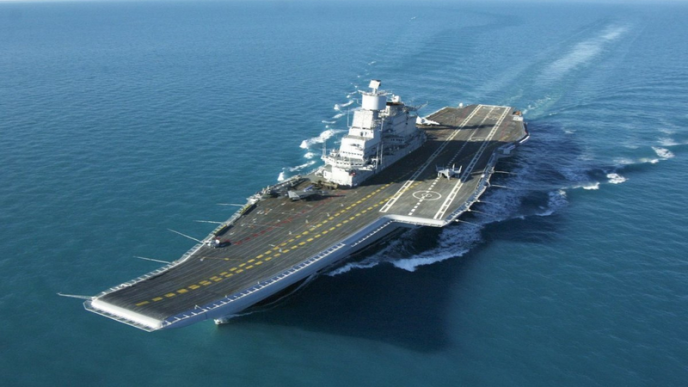
By ABC News. A Navy helicopter and a fighter jet, both conducting routine operations from the USS Nimitz aircraft carrier, went down in the South China Sea about 30 minutes apart Sunday, the U.S. Pacific Fleet said in a statement.
The U.S. Navy MH-60R Sea Hawk helicopter went down at about 2:45 p.m. local time. All three crew members were safely recovered, the Navy said.
“Following the incident, separately, at 3:15 p.m., an F/A-18F Super Hornet fighter assigned to the ‘Fighting Redcocks’ of Strike Fighter Squadron (VFA) 22 also went down in the waters of the South China Sea while conducting routine operations from Nimitz.”
Both crew members ejected and were also safely recovered, the Navy said.
“All personnel involved are safe and in stable condition. The cause of both incidents is currently under investigation,” the U.S. Pacific Fleet said in the statement. (Read more from “Huh?! Helicopter AND Jet from the Same Aircraft Carrier Go Down Minutes Apart in the South China Sea” HERE)
_________________________________________________
5 crew members rescued after Navy helicopter, fighter jet go down in South China Sea in separate incidents
By NBC News. Five crew members were rescued after a Navy Seahawk helicopter and a Super Hornet fighter jet went down in the South China Sea a half-hour apart in separate incidents Sunday, the Navy’s Pacific Fleet said.
In one incident, an MH-60R helicopter assigned to the “Battle Cats” of Helicopter Maritime Strike Squadron 73 went down at 2:45 p.m. local time, the Pacific Fleet said on Facebook. The squadron is based at Naval Air Station North Island on the Coronado peninsula in San Diego.
Search-and-rescue teams were deployed and safely recovered all three crew members on the helicopter, the Pacific Fleet said.
Separately, an F/A-18F Super Hornet fighter assigned to the “Fighting Redcocks” of Strike Fighter Squadron 22 went down at 3:15 p.m., according to the fleet. That squadron is based at Naval Air Station Lemoore in Kings and Fresno counties, California.
Both crew members “successfully ejected” and were also rescued, the Pacific Fleet said. (Read more from “5 crew members rescued after Navy helicopter, fighter jet go down in South China Sea in separate incidents” HERE)
https://joemiller.us/wp-content/uploads/Heres_how_Chinas_aircraft_carrier_stacks_up_to_other_world_powers_1_desarrollodefensaytecnologiabelica.blogspot.com_.ar-1971464280.png500800Joe Millerhttps://joemiller.us/wp-content/uploads/logotext.pngJoe Miller2025-10-28 15:53:432025-11-01 21:02:15Huh?! Helicopter AND Jet from the Same Aircraft Carrier Go Down Minutes Apart in the South China Sea