New Secret Nuclear Site in Iran Revealed

The major Iranian opposition group known as the People’s Mojahedin Organization of Iran, or PMOI/MEK, on May 8 exposed a secret nuclear facility in Semnan Province. Known as “Ranginkaman” (Rainbow), the site operates under the guise of Diba Energy Sina, a company claiming to produce chemicals for the oil and petrochemical industries. In truth, however, it is part of the SPND – an Iranian organization tasked with building nuclear weapons.

The facility’s primary objective is to design warheads for missiles with a range exceeding 3,000 kilometers. Its use of tritium, a radioactive isotope, raises serious concerns for global security. . .

Recent reports in regime-aligned media suggest Iran and the U.S. may be exploring nuclear cooperation, including joint uranium enrichment in a third-party country. Some sources even speculate about a potential meeting between Iran’s president and U.S. President Donald Trump.

Regardless of their accuracy, these rumors must be approached with skepticism. The Islamic Republic has repeatedly violated its nuclear commitments – such as breaching the 3.67% enrichment cap set by the 2015 Joint Comprehensive Plan of Action, or JCPOA (the “Iran nuclear deal”) and enriching uranium to 60%.

The revelation of yet another hidden nuclear site serves as a clear warning: Complacency in confronting Tehran’s nuclear ambitions could once again plunge the region into crisis, as history has already shown. (Read more from “New Secret Nuclear Site in Iran Revealed” HERE)

Zelensky Willing to ‘Personally’ Meet With Putin in Istanbul, but Demands Ceasefire Before Talks

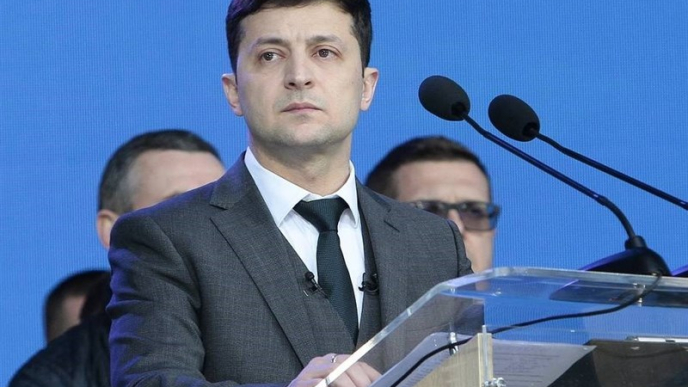
Ukrainian leader Volodymyr Zelensky said he would be willing to “personally” meet with Vladimir Putin for peace talks in Istanbul next week, but he continued to demand that a ceasefire be established before negotiations begin.

Following meetings with the leaders of France, Germany, Poland and the United Kingdom in Kyiv to mark the 80th anniversary of the end of World War II, President Zelensky and his European counterparts called for a “full, unconditional ceasefire” starting on Monday for 30 days.

In a counter-proposal, Russia’s Vladimir Putin proposed direct peace talks between Moscow and Kyiv for the first time since 2022. Turkish leader Recep Tayyip Erdoğan said that he would be willing to host the parties again in Istanbul next week for a potential redo of failed talks held there in the immediate aftermath of the Russian invasion.

Responding to the proposal on Sunday, Zelensky wrote on X that he would be willing to meet with Putin in Istanbul but demanded that a ceasefire begin on Monday as a prerequisite for such talks.

“We await a full and lasting ceasefire, starting from tomorrow, to provide the necessary basis for diplomacy. There is no point in prolonging the killings. And I will be waiting for Putin in Türkiye on Thursday. Personally. I hope that this time the Russians will not look for excuses.” (Read more from “Zelensky Willing to ‘Personally’ Meet With Putin in Istanbul, but Demands Ceasefire Before Talks” HERE)

White House Says Trade Deal Struck With China

The White House announced Sunday that the United States had reached a trade deal with China but said details wouldn’t be released until Monday.

The breakthrough was announced after two days of talks between U.S. and Chinese negotiators in Geneva.

Treasury Secretary Scott Bessent and U.S. Trade Representative Jamieson Greer emerged from the talks saying “substantial progress” had been made toward de-escalating an all-out trade war between the two economic superpowers.

“The United States has a massive $1.2 billion trade deficit. So the president declared a national emergency and imposed tariffs,” Mr. Greer said. “We are confident that the deal we struck with our Chinese partners will help us to work toward resolving that national emergency.”

Chinese Vice Premier He Lifeng told reporters that negotiators had agreed to establish a “trade consultation mechanism.” He said the two sides “have taken important steps to resolve differences through equal dialogue and consultation,” according to state news agency Xinhua. (Read more from “White House Says Trade Deal Struck With China” HERE)

Foreign Spy Agency Finds Way To Surveil Right-Wingers Even Harder

Germany’s domestic intelligence agency labeled the country’s popular right-wing party as an “extremist” organization in a statement released Friday, opening the door for the government to ramp up efforts to surveil the right, according to multiple reports.

The Verfassungschutz, or Federal Office for the Protection of the Constitution (BfV), claimed in the statement that Alternative for Deutschland (AfD) is a right-wing extremist party, paving the way for the government to double down on its surveillance of the organization’s activities, according to The New York Times. AfD came in second place in the February federal elections as its platform proved popular among voters tired of runaway immigration and ceding sovereignty to the European Union.

“The ethnicity and ancestry-based understanding of the people prevailing within the party is incompatible with the free democratic order,” the BfV said in the statement, according to a BBC translation.

BfV’s designation has drawn a sharp response from AfD, which characterized the move as being purely predicated on politics.

“This decision by the Office for the Protection of the Constitution is complete nonsense in terms of substance, has nothing to do with law and justice, and is purely political in the fight between the cartel parties against the AfD,” Stephan Brandner, an AfD leader, said regarding the designation, according to the NYT. (Read more from “Foreign Spy Agency Finds Way To Surveil Right-Wingers Even Harder” HERE)

Stunning Japan Railgun Breakthrough Has the U.S. Navy Asking Tough Questions

Japan is successfully advancing its electromagnetic railgun program, with ongoing ship-based tests aboard the JS Asuka showcasing the weapon’s potential.

-Designed to counter hypersonic missiles and saturation attacks, the railgun fires projectiles at Mach 6+ speeds using electricity. . .

Japan’s efforts to build and develop an electromagnetic railgun, a futuristic weapon that fires projectiles using electricity, appear to have been successful.

The Japan Maritime Self-Defense Force (JMSDF) released an image of its state-of-the-art railgun on April 18. It is currently undergoing testing aboard the test ship JS Asuka.

The Japanese ship-mounted railgun offers a cost-effective and rapid response to potential missile saturation threats by utilizing electromagnetic energy to launch projectiles at hypersonic velocities. In this case, it would be to defend itself against Chinese and Russian hypersonic missiles. (Read more from “Stunning Japan Railgun Breakthrough Has the U.S. Navy Asking Tough Questions” HERE)

Pakistan Fears ‘Imminent’ Indian Attack, Warns of Nuclear Response

Pakistan’s defense minister warned Monday that a military attack by neighboring India could be imminent following last week’s deadly militant attack on tourists in Kashmir, escalating tensions between the two nuclear-armed rivals. . .

Last week’s attack in Kashmir, which left 26 people dead, sparked outrage in Hindu-majority India and fueled calls for action against Muslim-majority Pakistan. India has long accused Pakistan of supporting militancy in Kashmir, a disputed region the two countries have fought two wars over.

Vice President J.D. Vance was in India during the attack in Kashmir, but his trip was part of a previously planned diplomatic mission aimed at strengthening U.S.-India relations. In the aftermath, Vance also reaffirmed U.S. support for India, condemning the attack and emphasizing the importance of the U.S.-India partnership. His visit underscored the strategic significance of bilateral ties, particularly as tensions with Pakistan escalated. Vance’s presence at such a critical moment allowed for immediate engagement with Indian leadership.

Asif added that Pakistan was on high alert and emphasized that the country would only consider using its nuclear arsenal in response to “a direct threat to our existence.” (Read more from “Pakistan Fears ‘Imminent’ Indian Attack, Warns of Nuclear Response” HERE)

WATCH: LGBTQ+ Rally Calls Palestine a ‘Shining Light’ in ‘Struggle’ for Trans Rights

Thousands of LGBTQ+ activists marched in London this weekend, chanting in support of both “trans rights” and “Palestine” as part of the same struggle — with one speaker hailing the Palestinian cause as “the strongest shining light” in a shared fight for “liberation.”

On Saturday, radical demonstrators rallied in Parliament Square in opposition to a British Supreme Court ruling that affirmed sex as biologically binary, barring men who identify as women from accessing women-only spaces.

Statues outside Parliament, including a monument to suffragette Millicent Fawcett, were vandalized during the protest, which saw crowds waving signs reading, “trans women are real women” and “biology is not binary.” Meanwhile, Palestinian flags, union banners, and transgender symbols were prominently displayed throughout the capital.

“We need to connect with the Palestine movement, the strongest shining light in this dark time that says no to hopelessness, no to cynicism, no to nihilism, and says yes to justice, freedom, and liberation,” a speaker declared.

Amid chants for “trans liberation,” protesters shouted: “One struggle, one fight: Palestine — trans rights.” (Read more from “WATCH: LGBTQ+ Rally Calls Palestine a ‘Shining Light’ in ‘Struggle’ for Trans Rights” HERE)

Photo credit: Flickr

Zelensky Says ‘Good Progress’ on U.S.-Ukraine Minerals Deal

Ukrainian President Volodymyr Zelensky on Wednesday reported “good progress” on negotiations for a mineral rights deal between Ukraine and the United States.

“The basic legal stuff is almost finalized, and then, if everything moves as quickly and constructively, the agreement will bring economic results to both our countries,” Zelensky said in his daily address to the Ukrainian people.

Zelensky’s remarks echoed the assessment given by Economy Minister Yulia Svyrydenko, who said “significant progress” has been made on the deal.

According to Svyrydenko, Ukrainian negotiators have “adjusted several items within a draft agreement.” If the American side is satisfied with those adjustments, a memorandum of intent could be signed very soon.

U.S. Treasury Secretary Scott Bessent said on Monday that a deal “could even be signed as early as this week.” (Read more from “Zelensky Says ‘Good Progress’ on U.S.-Ukraine Minerals Deal” HERE)

Hungarian Constitutional Amendment Rejects Transgenderism

The Hungarian parliament delivered a rejection of transgenderism on Tuesday with the passage of a constitutional amendment against the legal recognition of gender transition.

The amendment, which also includes articles addressing matters such as the sale of drugs within the country, passed by a 140-21 margin in the National Assembly.

Prime Minister Viktor Orbán touted the move on social media, saying, “Hungary’s constitutional amendment is now law. We’re protecting children’s development, affirming that a person is born either male or female … . In Hungary, common sense matters.”

Although the Hungarian government has not yet released an English translation of the Hungarian text, a translation from the online translator service DeepL provides a rough picture of what will go into effect. Statements by Hungarian politicians support the relative accuracy of the translation.

One article of the amendment states, “the Hungarian legal system does not recognize any change in the sex of birth,” per the translation.

(Read more from “Hungarian Constitutional Amendment Rejects Transgenderism” HERE)

Photo credit: Flickr

Catholics in Spain Ask Church to Protect Religious Site From Government Destruction

Some Catholics in Spain are asking the Catholic Church to save a religious site in Madrid from threats of alteration and decommissioning by the Spanish government, which claims the site honors a former right-wing dictator. Critics claim the government is opposed to the site because it is religious, noting that officials have already removed 35 public crosses throughout the country under a law that allows them to remove public monuments associated with the dictator.

The Spanish government, in cooperation with the Holy See, the central government of the Catholic Church, has begun the process of resignification for the Valley of the Fallen, a more than 3000-acre complex dedicated to the fallen from both sides of the Spanish Civil War. The process of resignification involves redefining the meaning of a historic site in order to adapt it to a new purpose.

The Spanish Civil War was a conflict from 1936-1939 between the Nationalists, led by right-wing leader Francisco Franco, and the Republican faction. Thousands of Catholics were martyred by the Republican faction during the war. The bodies of more than 30,000 victims of the war from both sides are buried at the Valley of the Fallen, according to the Catholic News Agency. The site was built on Franco’s orders, and the former dictator was buried in the complex until 2019, when his body was exhumed and moved.

The site is also home to a Benedictine abbey, a boys’ Catholic Gregorian choir school, and a basilica situated underground in an excavated space in the mountain. A 492-foot cross, the largest in the world, towers above the complex.

The Spanish government reached an agreement with the church in February to force out the Rev. Santiago Cantera, the Catholic former prior of the Benedictine community there, whom the government called a “Francoist.” It now seeks to alter the site to align with the 2022 Law of Democratic Memory, which aims to condemn the wrongs of the Francoist regime. (Read more from “Catholics in Spain Ask Church to Protect Religious Site From Government Destruction” HERE)

Photo credit: Flickr