Trump, Zelensky, and European Leaders Meet at White House as NATO Chief Hails “Breakthrough” on Ukraine Peace Talks

In a high-stakes day of diplomacy at the White House, President Donald Trump welcomed Ukrainian President Volodymyr Zelensky and a delegation of European leaders for talks aimed at securing a potential peace deal to end the war in Ukraine.

NATO Secretary General Mark Rutte described Trump’s offer of U.S. security guarantees for Ukraine as a “breakthrough” moment, saying it could pave the way toward a lasting settlement.

“The fact that you have said, ‘I am willing to participate in the security guarantees,’ is a big step. It’s really a breakthrough, and it makes all the difference,” Rutte told Trump during a multilateral meeting alongside Zelensky and European leaders. He also credited the American president with “breaking the deadlock” and drawing Russian President Vladimir Putin into peace negotiations.

Trump Hints at U.S. Troop Role

Earlier in the Oval Office, Trump left the door open to sending American troops to Ukraine to help enforce a potential agreement. “We’ll let you know that, maybe later today,” he said when asked whether U.S. forces could be deployed.

The U.S. president suggested that negotiations are moving quickly: “I have a feeling you and President Putin are going to work something out. Ultimately, this is a decision that can only be made by President Zelensky and the people of Ukraine, working in agreement with President Putin.”

Trump’s envoy, Steve Witkoff, explained that Washington’s proposed commitments could amount to “Article 5-like protections,” a reference to NATO’s collective defense clause. Such guarantees, he said, would deter future Russian aggression without granting Ukraine formal NATO membership — a long-standing red line for Moscow.

Zelensky Praises “Very Good Conversation”

For his part, Zelensky signaled cautious optimism. “I think that we had a very good conversation with President Trump,” he told reporters, adding that they discussed security guarantees, humanitarian concerns, and abducted Ukrainian children. “We will come to a resolution today, I think, on almost everything, including probably the security.”

He also reiterated Ukraine’s willingness to consider a trilateral meeting with Trump and Putin if Russia agrees.

Europe Pushes for a Bigger Role

French President Emmanuel Macron, also present in Washington, argued that Europe should be directly represented in any future negotiations. “When we speak about security guarantees, we speak about the whole security of the European continent,” Macron said, suggesting a quadrilateral format for talks.

While Trump appears intent on pursuing a direct arrangement with Putin and Zelensky, Macron’s comments reflect Europe’s deep concerns about being sidelined in discussions that could reshape the continent’s security order.

A Crucial Test for Trump’s Diplomacy

Analysts caution that Trump’s next steps will be decisive. After meeting Putin last week and placing responsibility on Zelensky to seek compromise, Trump now faces the delicate task of balancing Kyiv’s survival with Moscow’s demands.

Ukraine insists on maintaining sovereignty and strengthening its military after the war, while Putin seeks to cement territorial gains and limit Ukraine’s ties to the West. For Trump, the prize is a swift peace deal he can claim as a political victory.

Whether the U.S. president can keep all sides at the table long enough to bridge these divides remains uncertain. But for now, NATO’s chief says the American commitment has already changed the calculus.

“This is a breakthrough,” Rutte said. “And it makes all the difference.”

Photo credit: Flickr
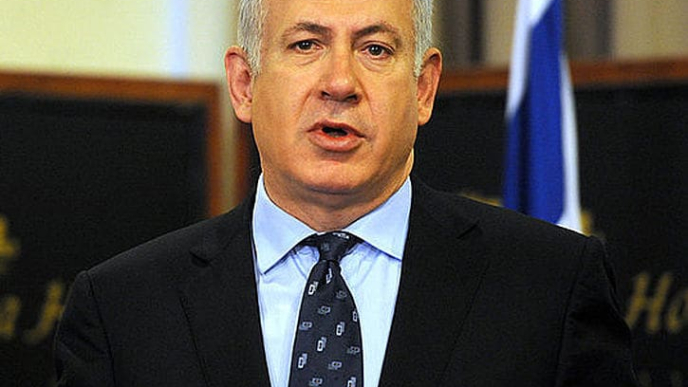
Netanyahu’s ‘Greater Israel’ Remarks Sets Off a Wave of Anger in Egypt

Egypt has strongly denounced Israeli Prime Minister Benjamin Netanyahu’s ‘Greater Israel’ vision, which implies expanding Israel’s territories from the Nile to the Euphrates rivers.

In a statement late on Wednesday, the Egyptian Foreign Ministry said Netanyahu’s remarks undermine regional stability and reflect a policy direction opposed to peace, one that aims for escalation.

“This contradicts the aspirations of regional and international parties that crave peace and want to achieve security and stability for all regional peoples,” the Egyptian Foreign Ministry said.

“Egypt is keen on laying the foundations of peace in the Middle East,” it added.

Netanyahu stirred up major debates in Egypt after divulging his attachment to the controversial vision. During an interview with the Israeli television channel i24 late on Tuesday, the far-right premier said he feels he is on a “historic and spiritual mission” to fulfill this vision. (Read more from “Netanyahu’s ‘Greater Israel’ Remarks Sets Off a Wave of Anger in Egypt” HERE)

IDF Claims Killed Gaza Journalist Was Hamas Member as UN, EU Demand Independent Investigation

The Israel Defense Forces (IDF) said Monday that Anas al-Sharif, a veteran Al Jazeera correspondent killed in Gaza City over the weekend, was a member of Hamas’ military wing and received a salary from the group. The claim, made amid mounting global condemnation of the strike, comes as the European Union and United Nations call for an independent investigation into the killing of al-Sharif and five other journalists.

Lt. Col. Nadav Shoshani, the IDF’s international spokesman, stated that “current intelligence” showed al-Sharif was “the head of a Hamas terrorist cell” and had been involved in coordinating rocket attacks on both Israeli civilians and soldiers. The IDF did not provide details on the nature of the intelligence or public evidence supporting the allegation.

The strike, which took place Sunday near Gaza City’s Shifa Hospital, also killed Al Jazeera correspondent Mohammed Qraiqea, cameramen Ibrahim Zaher, Moamen Aliwa, and Mohammed Noufal, along with freelance journalist Mohammad al-Khaldi. The IDF declined to comment on any alleged affiliations of the other reporters killed in the incident.

International reaction was swift. EU foreign policy chief Kaja Kallas urged Israel to provide “clear evidence” for its claims about al-Sharif’s ties to Hamas. United Nations Secretary-General António Guterres called for an “independent and impartial investigation,” noting that at least 242 journalists have been killed in Gaza since the current war began. UN spokesperson Stéphane Dujarric stressed that “journalists and media workers must be respected, they must be protected, and they must be allowed to carry out their work freely, free from fear and free from harassment.”

Al Jazeera has rejected Israel’s claims outright, accusing the IDF of deliberately targeting its staff in Gaza. The network released a statement calling the killing of al-Sharif and his colleagues “a direct attack on press freedom” and “part of a systematic campaign to silence journalists.”

A posthumous message, reportedly written by al-Sharif in April in case of his death, was published on his social media account Monday morning. In it, he urged the public “not to forget Gaza” and warned of the dangers facing those reporting from the conflict zone.

The attack came just days after Israel announced plans to take full control of Gaza City and relocate approximately one million Palestinians currently sheltering there to the south of the territory. The decision, and the broader military campaign, have drawn criticism from multiple countries, including some of Israel’s closest allies.

Since the start of the war, Israel has barred most foreign journalists from independently entering Gaza, except for a limited number of press tours arranged under military supervision.

Photo credit: Rawpixel.com

Russia Set to Test ‘Unstoppable Doomsday’ Nuclear Missile as Fears of WW3 Surge

Russia is reportedly preparing to carry out a new test of its doomsday nuclear-powered missile, as fears continue to grow that the Kremlin is preparing for a major war with NATO. Satellite imagery and activity at the Pankovo test range on the Novaya Zemlya archipelago suggest renewed preparations for a launch of the 9M730 Burevestnik.

At least four Russian vessels, previously anchored near the test site, have moved into observation positions in the eastern Barents Sea. The maneuver is a standard safety measure during large missile trials, according to military experts. Russian aviation authorities also issued a Notice to Airmen (NOTAM) covering 40,000 square kilometers over Novaya Zemlya. . . 

The development of the Burevestnik was announced by Vladimir Putin in 2018 and is one of Russia’s next-generation strategic weapons.

Nicknamed the “flying Chernobyl”, it uses a nuclear-powered engine to achieve unlimited range.

In theory, the nuclear armed missile is able to loiter in flight waiting for a strike order, then approach its target via unexpected routes. The Russians believe that the missile will be therefore impossible to intercept by air defense systems. (Read more from “Russia Set to Test ‘Unstoppable Doomsday’ Nuclear Missile as Fears of WW3 Surge” HERE)

Photo credit: Flickr

Report: Putin Floats Proposal to End Ukraine War

Russian President Vladimir Putin has reportedly indicated he would be willing to end the war in Ukraine if Kyiv agreed to surrender significant portions of its eastern territory, according to European and Ukrainian officials cited by The Wall Street Journal.

The proposal was allegedly made to U.S. Special Envoy Steve Witkoff during talks on Wednesday. Putin’s offer, as described by officials briefed on the conversation, involved Ukraine ceding the Donbas region — a largely Russian-speaking area — in exchange for an end to active hostilities. The Donbas includes Donetsk and Luhansk, the latter of which Russia already fully controls. Moscow also holds territory in the Zaporizhzhia and Kherson regions, though it remains unclear if those areas would be part of any potential withdrawal.

President Donald Trump, who has pursued peace in the region since the start of his term, reportedly took part in the initial discussion alongside Secretary of State Marco Rubio, Vice President JD Vance, and Witkoff. Follow-up calls on Thursday and Friday involved European officials and senior members of Trump’s team, focusing on the structure of Putin’s proposal.

According to Witkoff’s account to European diplomats, the plan would unfold in two stages. First, Ukrainian forces would withdraw from Donetsk, effectively freezing the current frontlines. The second stage would involve negotiations between Trump, Ukrainian President Volodymyr Zelensky, and Putin to reach a longer-term agreement.

Ukrainian officials have reportedly signaled that Kyiv would require a ceasefire before entering into any such talks. The war, which began with Russia’s full-scale invasion in 2022, has resulted in hundreds of thousands of casualties on both sides and continues to reshape security dynamics across Europe.

China Deploys ‘Robot Wolves’ in Military Drills, Showcasing AI-Powered Combat Tactics

China has revealed that its armed forces have incorporated new “robot wolves” into military exercises, according to state media reports released Wednesday. The quadruped machines—designed to mimic the coordinated tactics of real wolf packs—are the latest sign of Beijing’s growing focus on autonomous battlefield technology.

Footage aired by state broadcaster CCTV and the Global Times showed the four-legged robots carrying rifles on their backs, climbing stairs, and maneuvering across challenging terrain. Officials claimed the machines can conduct precision strikes from as far as 100 meters, carry specialized equipment, and execute swarm tactics under the direction of a designated “pack leader.” This lead unit transmits reconnaissance data to human operators while coordinating the movements and attacks of the rest of the robotic pack.

The system bears similarities to tactics developed for drone swarms during the ongoing Russia-Ukraine conflict. By limiting the number of units that must maintain direct communication with human controllers, swarm formations can be more resistant to electronic jamming and signal interference.

While Chinese media promoted the “robot wolves” as a breakthrough in combat capabilities, analysts noted that such demonstrations often double as propaganda, and real-world battlefield performance remains untested. Similar claims about China’s edge in autonomous infantry drones have been made in the past, but no conclusive evidence of their combat effectiveness has emerged.

The U.S. military is pursuing parallel technology with its own Quadrupedal Unmanned Ground Vehicles (Q-UGVs). American designs range from weaponized models equipped with rifles or anti-tank rocket launchers to unarmed versions focused on reconnaissance and logistical support. The U.S. Marines have even explored using Q-UGVs as mobile air-defense units, leveraging artificial intelligence to detect and neutralize small aerial drones—a tactic developed in response to the proliferation of such systems in Ukraine.

The introduction of China’s “robot wolves” underscores the accelerating global race to integrate autonomous, AI-driven platforms into military doctrine.

Putin Drops Missile Pact, Sparking Fears of New U.S.-Russia Nuclear Arms Race

In a chilling throwback to Cold War brinkmanship, arms race fears are mounting as Putin says Russia is no longer bound by missile treaty limits that once curbed the deployment of intermediate-range nuclear weapons. The announcement has escalated tensions between Moscow and Washington to dangerous new levels as both nations engage in an increasingly volatile military standoff centered around Ukraine.

On Monday, the Russian Foreign Ministry declared an end to its self-imposed moratorium on intermediate-range missile deployments, citing aggressive moves by the United States and NATO allies, particularly the planned stationing of American Typhoon and Dark Eagle missile systems in Germany next year. The ministry warned that such deployments near Russian borders are a “direct threat” to the country’s security and could have “significant harmful consequences” for regional and global stability.

“Russia no longer has any limitations,” Kremlin spokesman Dmitry Peskov told reporters. “Russia believes it has the right to take respective steps if necessary.”

While the statement stopped short of detailing where or when Russia might deploy its own systems, President Vladimir Putin has already announced the coming placement of Russia’s new Oreshnik intermediate-range missiles in Belarus later this year. Designed for maximum speed and devastation, the Oreshnik—capable of flying at Mach 10 and carrying conventional or nuclear warheads—can reportedly reach any target in Europe.

NATO’s Missile Moves Spark Russian Reaction

Russia’s Foreign Ministry justified the policy shift as a response to Washington’s missile plans and broader NATO military buildup. “Decisions on specific parameters of response measures will be made based on the scale of deployment of American and other Western missiles,” the ministry said, stressing the need for a flexible strategy as the international security landscape evolves.

The United States and Russia both abandoned the Intermediate-Range Nuclear Forces (INF) Treaty in 2019 after accusing each other of violations. Signed in 1987 by Ronald Reagan and Mikhail Gorbachev, the INF Treaty had banned land-based missiles with ranges between 500 and 5,500 kilometers. Following the collapse of the agreement, Moscow pledged a voluntary halt in deployment—until now.

Former Russian President Dmitry Medvedev, now deputy chairman of the country’s Security Council, celebrated the end of the moratorium as a “new reality” that “all our opponents will have to reckon with.” In a post on X (formerly Twitter), Medvedev warned, “Expect further steps.”

Trump Orders Submarine Repositioning

The Kremlin’s announcement follows a separate development that could compound tensions. Former President Donald Trump, now leading in the polls as the 2024 election nears, said Friday he had ordered the repositioning of two U.S. nuclear submarines. The move came after a defiant Medvedev dismissed Trump’s warning to accept a Ukraine peace deal or face severe consequences.

Trump said he was alarmed by Medvedev’s combative rhetoric and nuclear threats, noting the escalation as a sign of worsening nuclear brinkmanship. “Each new ultimatum is a threat and a step toward war,” Medvedev had replied to Trump’s peace proposal.

With Trump’s self-imposed deadline for a Ukraine deal approaching, the maneuvering of both Russian and American nuclear assets underscores the renewed volatility in U.S.-Russia relations and the looming threat of a broader conflict that could involve NATO states.

Photo credit: Flickr

Japan’s Demographic Crisis Deepens as Population Falls by Nearly a Million

Japan is facing its steepest population decline in modern history, with newly released government figures revealing a drop of more than 900,000 people in a single year—a record-setting contraction that highlights the country’s deepening demographic emergency.

According to data published this week by Japan’s Ministry of Internal Affairs and Communications, the total number of Japanese nationals fell by 908,574 in 2024. The nation’s population now stands at approximately 120 million, down from its peak of 126.6 million in 2009.

This marks the 16th consecutive year of population decline, driven by two reinforcing trends: persistently low birth rates and an aging society. In 2024 alone, Japan recorded fewer than 690,000 births, the lowest figure since the government began tracking the statistic in 1968. Meanwhile, nearly 1.6 million deaths occurred, marking the highest annual total on record.

The demographic imbalance is creating severe strain on Japan’s economic and social systems. The country’s working-age population (defined as individuals aged 15 to 64) has dropped to just 59% of the total population, significantly below the OECD global average of 65%.

At the same time, nearly one in three Japanese citizens is now over the age of 65, placing immense pressure on public pension systems, healthcare infrastructure, and eldercare services.

Economists warn that without a substantial reversal, Japan may face major labor shortages, economic stagnation, and difficulties maintaining basic public services—especially in rural areas that are losing residents faster than cities.

Japanese policymakers have been attempting to reverse the downward spiral for years, ramping up support for families and encouraging higher birth rates through a range of initiatives. These include offering financial incentives for childbirth, subsidizing housing for young families, and promoting greater participation in childcare by fathers.

But so far, those efforts have yielded limited results.

“Japan is confronting the consequences of demographic inertia,” said a Tokyo-based population analyst. “Even if the birth rate were to rise tomorrow, it would take decades for that shift to be reflected in a balanced age structure. The current pyramid is simply too top-heavy.”

Experts attribute Japan’s declining birthrate to a combination of economic insecurity, high living costs, and entrenched gender roles that continue to limit career and family options for women. Many young couples report delaying marriage and childbirth due to financial pressure or a lack of support in the workplace.

The fertility rate in Japan has hovered well below the replacement level of 2.1 children per woman since the 1970s and currently sits closer to 1.3. Unless that changes dramatically and quickly—a scenario many demographers view as unlikely—the population will continue to shrink for decades.

While Japan is not alone in facing aging demographics, the pace and scale of its population decline are among the most severe globally.

Photo credit: Flickr

U.S. Maintains Neutral Stance as El Salvador Removes Presidential Term Limits

The United States has taken a non-interventionist approach to recent sweeping constitutional reforms in El Salvador, which include eliminating presidential term limits and the country’s runoff voting system. The move has drawn polarized reactions across the political spectrum, but the U.S. State Department emphasized the nation’s right to self-govern.

In a statement to Spain’s EFE news agency, the U.S. government affirmed that it would not interfere in El Salvador’s internal decisions, underscoring the democratic nature of the country’s legislature and its authority to amend the constitution.

“The legislative assembly of El Salvador was elected democratically to promote the interests and policies of its electors,” the statement read. “The decision to make constitutional changes is theirs. It is up to them to decide how to govern their country.”

This response followed a controversial vote by El Salvador’s Legislative Assembly last week that formally removed presidential term limits—a provision that had existed in some form since 1841. The reforms also abolished the two-round presidential runoff system, meaning future presidential elections will be decided by simple majority in a single vote.

President Nayib Bukele, who first took office in 2019, was reelected in 2024 with a resounding 85% of the vote. He sidestepped existing term limit restrictions by resigning from the presidency prior to running, technically making him a non-incumbent candidate. The election was certified by the Organization of American States (OAS) as legitimate, with observers noting no irregularities.

Bukele’s approval ratings have soared largely due to his uncompromising crackdown on organized crime, especially gang violence that had long plagued Salvadoran communities. Supporters credit him with restoring order to daily life, while critics warn that his popularity is allowing him to consolidate power in ways that could erode democratic safeguards over time.

The State Department’s statement pushed back against comparisons between El Salvador and authoritarian regimes in the region, asserting that the Salvadoran process was rooted in constitutional authority.

“We reject the comparison of the legislative process of El Salvador, based on democracy and constitutionally sound, to illegitimate dictatorial regimes in other parts of our region,” it stated.

The Trump administration’s stance mirrors its broader foreign policy philosophy of prioritizing national sovereignty and discouraging intervention in the domestic affairs of allied nations.

President Bukele addressed criticism from international observers and media outlets with a sharp rebuke, accusing critics of holding his country to a double standard.

“90% of developed countries allow the indefinite reelection of their head of government, and no one bats an eye,” Bukele said in a widely circulated social media post. “But when a small, poor country like El Salvador tries to do the same, suddenly it’s the end of democracy.”

Photo credit: Flickr

UN Warns of “Classroom a Day” Death Toll as Gaza Children Face War, Starvation, and Aid Blockades

The humanitarian crisis in Gaza has reached devastating new heights, with the United Nations reporting that an average of 28 children are dying every day due to ongoing bombardment, severe malnutrition, and restricted access to aid. That figure — the equivalent of a full classroom — highlights what the UN has called an unfolding catastrophe for an entire generation.

In a stark warning shared Tuesday, the UN Children’s Fund (UNICEF) described the daily toll as “death by bombardments, death by malnutrition and starvation, and death by lack of aid and vital services.”

According to UNICEF and other aid agencies, children in Gaza are in desperate need of food, clean water, medical care, and protection. “More than anything,” the agency said, “they need a ceasefire, NOW.”

Since the start of the conflict on October 7, 2023, following a surprise Hamas attack on southern Israel, the reported death toll in Gaza has surpassed 60,000 people, with more than 150,000 wounded, according to data from local health authorities.

The blockade and bombardment have led to 188 starvation-related deaths, including 94 children, amid what UN officials have described as a “man-made famine.”

For surviving children, the crisis has robbed them of any sense of normalcy or safety.

Since March 2, Israeli authorities have closed border crossings into Gaza, allowing only 86 trucks of aid per day, which accounts for just 14% of the minimum 600 trucks needed daily to meet basic needs, according to Gaza’s Government Media Office.

International pressure has pushed Israel to announce limited “humanitarian pauses” and conduct airdrop operations, but residents say the efforts have made little difference. On the ground, desperate civilians reportedly fight over scattered rations, with images showing crushed food tins and chaotic crowds at drop zones.

While the humanitarian community warns of starvation, Israeli Prime Minister Benjamin Netanyahu has rejected those claims, stating: “There is no policy of starvation in Gaza, and there is no starvation in Gaza. We enable humanitarian aid throughout the duration of the war.”

Former U.S. President Donald Trump openly disagreed with Netanyahu’s assessment, citing recent images of emaciated children. “Those children look very hungry,” he said last week.

Israel continues to assert that Hamas is interfering with aid distribution, allegedly diverting supplies for its own use. However, the United Nations has pushed back, stating there is no evidence of systematic looting and that when aid is permitted to flow at adequate levels, diversion largely ceases.

Photo credit: Flickr