Trump Has a Chance to Shake up the US-Saudi Relationship: Will He?

If the U.S.-Saudi alliance is to continue, the parameters of it must change so that American security interests can be preserved.

President Trump will meet Thursday with Saudi Arabia’s Mohammed bin Salman, the country’s deputy crown prince and next in line to the throne.

The Saudi agenda at the meeting in Washington will involve “the strengthening of bilateral relations between the two countries and regional issues of mutual interest,” according to the state-run Saudi Press Agency.

The president’s agenda for the meeting is currently unknown, and the White House has not yet released talking points on the matter. However, top agenda items in past meetings between the two countries have centered on energy prices and the wars in the Middle East.

The United States used to rely heavily upon Saudi Arabia for the importation of energy resources. But recent discoveries have changed that leverage; the U.S. has billions of barrels of oil that have yet to be utilized, and President Trump has expressed that he wants America to become more energy independent.

Next on the agenda involves analyzing the complicated relationship between the United States and Saudi Arabia, and how to proceed with the alliance moving forward.

Saudi Arabia is one of the world’s foremost violators of the basic human rights of its citizens. The country treats women (both through legal and traditional procedures) as inferior beings, imposing harsh restrictions that limit their mobility in both their personal and professional lives.

Not only does Saudi Arabia impose human rights violations within its borders, the country is heavily engaged in proselytizing its radical Wahhabi doctrine throughout the world.

Wahhabism, the predominant ideology inside the country, was founded about 250 years ago after the Saudi royal family established an alliance with cleric Sheikh Muhammad bin Abd al-Wahhab. This allowed for the Saudi royal family to stay in power while fundamentalists could preach their fringe ideology without question. Today, the treaty still remains in place between Riyadh’s radical Islamic forces and its dynasty.

Critics allege that Wahhabism promotes a fundamentalist version of Islam that leads followers to embrace groups such as al-Qaeda and the Islamic State. Moreover, individuals within the country (who work inside and outside the government) are suspected of directly funding countless militant jihadist movements.

And, at the same time, Saudi Arabia has funneled hundreds of millions of dollars into normalizing its ideology in the West. The Saudis have donated countless millions to establish its Islamist brand in America’s finest academic institutions, such as Harvard and Yale University.

President Trump should ask that Saudi Arabia rein in its anti-American elements and end its domestic abuses. Doing so would be in America’s best interests and could provide for a stronger basis for a real partnership between the two nations. Saudi Arabia should stop promoting dangerous, undemocratic ideologies if it wants a continued partner in the United States. (For more from the author of “Trump Has a Chance to Shake up the US-Saudi Relationship: Will He?” please click HERE)

Follow Joe Miller on Twitter HERE and Facebook HERE.

Poland Confirms Minnesota Man as Nazi Commander

Poland will seek the arrest and extradition of a Minnesota man exposed by The Associated Press as a former commander in an SS-led unit that burned Polish villages and killed civilians in World War II, prosecutors said Monday.

Prosecutor Robert Janicki said evidence gathered over years of investigation into U.S. citizen Michael K. confirmed “100 percent” that he was a commander of a unit in the SS-led Ukrainian Self Defense Legion.

He did not release the last name in line with privacy laws but the AP has identified the man as 98-year-old Michael Karkoc, from Minneapolis. (Read more from “Poland Confirms Minnesota Man as Nazi Commander” HERE)

Follow Joe Miller on Twitter HERE and Facebook HERE.

US Authorities Are Refusing to Reveal What Led to Death of Russian Ambassador to the UN

New York City officials, wishing not to be identified and only speaking under the condition of anonymity, revealed the Russian Ambassador to the United Nations (UN), Vitaly Churkin, suffered from a heart attack when he collapsed in his office last month in New York. An autopsy was performed, presumably a result of his diplomatic status, yet the underlying cause of the heart attack is being withheld.

Exactly what caused the ambassador’s death is known, but according to the Associated Press (AP), those who are in the know, aren’t allowed to say. “An autopsy was performed on Churkin last month, but the death required further study. The additional tests had been completed, but Julie Bolcer, a spokeswoman for the city’s medical examiner, said the city’s Law Department told the office not to release any further information ‘to comply with international law and protocol,’” writes the AP.

As The Free Thought Project reported earlier, Churkin was highly critical of his U.S. and U.K. counterparts who preferred escalation of the Syrian conflict over measures which would produce a peaceful resolution to the Middle East’s latest international conflict, which may serve as the stage to World War III. Churkin’s obituary, first reported by The Guardian, indicated the ambassador, “hated the moralising tone of his US, British and French counterparts on the UN security council who, he felt, were not only hypocritical but were playing to the global gallery and aiming to score rhetorical points instead of looking for compromises that could lead to the resolution of differences. This applied particularly to the war in Syria, about which western governments tabled resolutions.”

Churkin was one of 7 Russian diplomats identified by The Free Thought Project who’d died mysteriously since the presidential election of 2016. And while his official cause of death is a heart attack, the factors leading up to it are still shrouded in mystery. Were there any substances in his system which would have caused his death? Was he taking heart medications? Who would have wanted he and the other six diplomats dead? These questions and more remain unanswered, even as NYC officials, who wish to remain in the dark, are reassuring the Russian official’s death was not a result of foul play.

UN officials are running interference in an apparent attempt explain away whey they’re unable to release the cause of death. James Donovan, minister counselor for host country affairs for the U.S. mission to the United Nations, told the AP in a statement, “The United States insists on the dignified handling of the remains of our diplomatic personnel who pass away abroad (including in Russia) and works to prevent unnecessary disclosures regarding the circumstances of their deaths.” Nonetheless, more questions remain.

The U.S. State Department is also involved in keeping the details of Churkin’s death a closely guarded state secret. The federal agency, “asked the city in writing on Feb. 24 not to reveal the autopsy results because Churkin’s diplomatic immunity survives his death,” writes the AP.

Later on March 1, the State Department sent another letter to the city revealing Russian officials were very concerned with the proceedings of the autopsy and subsequent discussions with the media about Churkin’s medical history, something they should not have done. Even Donovan penned a letter to NYC Mayor Bill de Blasio’s office of International Affairs, expressing concern over the city’s discussions of Churkin’s medical history.

For those seeking fodder for conspiracy theories, it must be noted that Churkin was a member of the UN Security Council. It consists of “China, France, Russian Federation, the United Kingdom, and the United States, and ten non-permanent members elected for two-year terms,” according to the UN website. Discussions at the security council are often heated and contentious. Just two weeks before his death, Churkin made international headlines when he quoted from the US Constitution after being lambasted by a recently appointed member to the council, former South Carolina Governor Nikki Haley.

Haley passionately called for Russia to return Crimea to the Ukraine and promised, “Until Russia and the separatists it supports respect Ukraine’s sovereignty and territorial integrity, this crisis will continue.” After the meeting adjourned, Churkin told reporters, “In this regard, one cannot forget the remarkable historical words that are found in the constitution of the United States: ‘We the people’…The people of Crimea quite clearly expressed their will in a referendum.” Not shrinking away from cries for Russia to leave the Ukraine and return Crimea to the sovereign country, Churkin told reporters the UK should first return the Malvinas islands which are claimed by Argentina, Gibraltar claimed by the Spanish, and the “annexed part of Cyprus which you turned into a huge military base.” (For more from the author of “US Authorities Are Refusing to Reveal What Led to Death of Russian Ambassador to the UN” please click HERE)

Follow Joe Miller on Twitter HERE and Facebook HERE.

Putin Spokesman: Russian Ambassador Also Met With Clinton Advisors

The spokesman for Russian President Vladimir Putin turned the tables Sunday by saying that the Russian ambassador to the U.S. also met with people connected to Hillary Clinton’s campaign, not just Trump advisers.

Dmitry Peskov, Putin’s spokesman, told CNN GPS host Fareed Zakaria that Russian ambassador Sergey Kislyak met with “people working in think tanks advising Hillary or advising people working for Hillary,” The Hill reports.

Peskov stressed that part of Kislyak’s job entails talking to officials and advisers on both sides of the aisle.

“Well, if you look at some people connected with Hillary Clinton during her campaign, you would probably see that he had lots of meetings of that kind,” Peskov said. “There are lots of specialists in politology, people working in think tanks advising Hillary or advising people working for Hillary.”

Yet, according to Peskov, none of these meetings constituted an attempt to influence the electoral process. (Read more from “Putin Spokesman: Russian Ambassador Also Met With Clinton Advisors” HERE)

Follow Joe Miller on Twitter HERE and Facebook HERE.

Palestinian Leader, President Trump to Hold First Phone Call

Palestinian President Mahmoud Abbas will speak Friday by telephone with U.S. President Donald Trump in the first contact between the two leaders since Trump took office in January.

Trump’s planned phone call to Abbas was revealed in a White House notice.

Abbas has spent many hours on the phone and in meetings with U.S. presidents and secretaries of state over the past decade but he has been unsuccessful when reaching out to Trump. His office did not comment ahead of the call. (Read more from “Palestinian Leader, President Trump to Hold First Phone Call” HERE)

Follow Joe Miller on Twitter HERE and Facebook HERE.

‘Man-Made’ Famine Leaves Millions Facing Starvation in Africa

Years of internal conflicts and poor governance are not the only problems facing the African countries of South Sudan, Nigeria, and Somalia.

The United Nations recently declared famine in parts of South Sudan and Nigeria. Judging by current conditions, it won’t be long before Somalia follows suit.

The number of people affected is staggering. In South Sudan, 100,000 people are on the verge of starvation with another 5 million at risk. That number of at-risk people totals 6.2 million in Somalia—half of its population—and 4.4 million in Nigeria.

Across all three countries, roughly 1.4 million children are at imminent risk of death. Those numbers are unlikely to decrease anytime soon and could even increase in the coming weeks.

This is not the first time these three nations have faced famine and starvation. The semi-arid climates in parts of their countries make them prone to drought.

But this current famine was brought on by more than below-average rainfall. Humanitarian aid organizations and the U.S. State Department have called the famine in South Sudan “man-made.”

It is not difficult to understand why. Weather conditions may cause drought, but poor governance and instability quickly turn a drought into a humanitarian crisis.

Take South Sudan as an example.

After 25 years of war, the country gained independence from Sudan in 2011. Only 18 months later, tensions within the government plunged the South Sudanese nation into a crippling civil war that cut off South Sudan’s trade routes with neighboring countries, prevented farmers from growing and harvesting food, and caused remaining food prices to skyrocket.

A famine was narrowly averted in 2014 thanks only to a massive international humanitarian effort. However, famine looms again. Various countries have pledged help for this latest hunger crisis, but this relief may never reach the people who need it most.

Despite the South Sudanese government promising “unimpeded access” for aid workers in the country, the South Sudanese security services and aligned forces frequently block the delivery of humanitarian relief.

The government has delayed agencies’ paperwork that would allow them to distribute aid. Soldiers have instituted military checkpoints around famine stricken areas and are preventing relief workers from crossing them.

The government is blocking aid for a number of likely reasons. It has for years stirred up anti-Western and anti-U.N. sentiment over the international community’s pressure on the government to halt its campaign of war crimes and ethnic killings. It may be blocking humanitarian aid in an attempt to retaliate.

The government is also likely blocking aid to rebel-controlled or influenced areas to punish those communities for what the government believes is their support for the rebels.

Poor governance and internal conflict have similarly contributed to the hunger crises in Somalia and Nigeria. Internal conflict has wreaked havoc in Somalia for nearly three decades, and the internationally-backed government has been mired in corruption and bickering.

Furthermore, the government has been unable to extend its authority to much of the country.

Nigeria’s government is relatively stable, but for years it has mismanaged the fight against the ISIS-aligned Boko Haram terrorist group that at one point controlled much of northwest Nigeria. Now, that same northwest region—torn by violence and terrorism—faces the worst of this famine crisis.

As the current humanitarian crisis grows, the international community will continue to offer emergency relief, and it should. But without better governance and stability in these countries, there is only so much these efforts will achieve. (For more from the author of “‘Man-Made’ Famine Leaves Millions Facing Starvation in Africa” please click HERE)

Follow Joe Miller on Twitter HERE and Facebook HERE.

North Korea, Malaysia Ban Each Other’s Citizens From Leaving

North Korea barred Malaysians from exiting its borders and Malaysia followed suit Tuesday, turning ordinary citizens into pawns in the diplomatic battle surrounding the investigation into the bizarre death of North Korean leader Kim Jong Un’s half brother.

The tit-for-tat directives come as relations between the two countries disintegrate over the poisoning of Kim Jong Nam in a crowded airport terminal in Kuala Lumpur on Feb. 13.

“This is way out of normal diplomatic practice,” Lalit Mansingh, a New Delhi-based scholar and longtime top Indian diplomat, said of North Korea’s decision. He could not recall anything similar in recent years, where so many everyday citizens were pulled into a diplomatic standoff. (Read more from “North Korea, Malaysia Ban Each Other’s Citizens From Leaving” HERE)

Follow Joe Miller on Twitter HERE and Facebook HERE.
ISIS Attacks Military Hospital in Afghan Capital

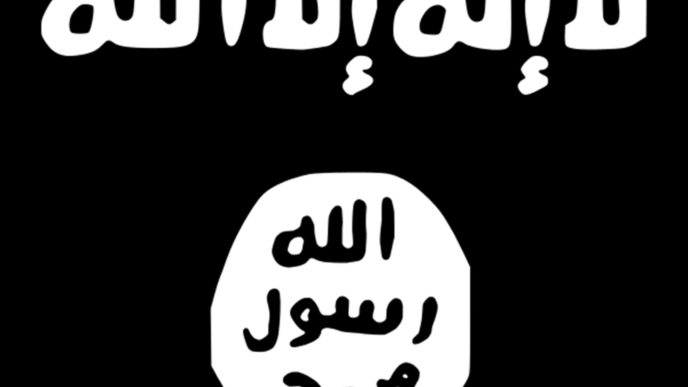
Gunmen wearing white lab coats stormed a military hospital in Afghanistan’s capital on Wednesday, killing at least four people, wounding dozens and setting off clashes with security forces that were still underway hours later.

An Islamic State affiliate claimed the attack on the 400-bed military hospital, which is located near two civilian hospitals in Wazir Akbar Khan, Kabul’s heavily-guarded diplomatic quarter.

Health Ministry spokesman Ismail Kawasi said at least three bodies of civilians and more than 60 wounded people had been brought to nearby hospitals, adding that the toll was likely to rise as ambulances were still at the scene. (Read more from “ISIS Attacks Military Hospital in Afghan Capital” HERE)

Follow Joe Miller on Twitter HERE and Facebook HERE.
Pakistani Judge Threatens to Shut Down Country’s Social Media Over Free Speech ‘Terrorists’

Pakistan is no place for free speech.

A justice on Pakistan’s Islamabad High Court (IHC) has threatened to shut down the entirety of social media if criticism of Islam’s Muhammad continues, declaring these “blasphemers” as “terrorists.”

According to local reports, Justice Shaukat Aziz Siddiqi burst into tears while issuing the warning for those who apparently have taken to social media to criticize Muhammad. Siddiqi made it very clear that Pakistan would not allow for such displays of free speech.

“Why is the blasphemous content present on the social media? What steps had the government taken up in this regard so far?” Siddiqi asked. “I submit and sacrifice myself and all what I have including my parents, my life and job to the person of Allah’s messenger … If the sacrilegious pages cannot be blocked, then, Pakistan Telecommunication Authority (PTA) should cease to exist,” he added.

Siddiqi then took his comments a step further, arguing that social media in its entirety should be cut off for Muhammad’s sake.

“Each and everything can be sacrificed for the honor of Allah’s Messenger. I will close entire social media, if I have to,” he said.

And then came the conclusion: The justice declaring those who decide to engage in free speech as “terrorists.”

“I hereby declare as terrorists who commit blasphemy to the holy Prophet.” the IHC justice declared.

About 75 percent of Pakistanis support the country’s blasphemy laws, which say that insulting Islam is punishable by death. This has led to massive discrimination against Christians and other religious minorities living inside Pakistan. The blasphemy edicts sometimes lead mobs to take the streets, and guarantees violent repercussions for those who have been deemed slanderers of Islam.

Pakistan is currently fending off a wave of jihadist terrorist attacks. In one such incident in February, a suicide bomber killed 88 people after detonating his vest at a Sufi shrine. This might lead observers to believe that such a vital issue to national security would take priority in Islamabad. Instead, the judiciary is discussing how to block what its citizens discuss on social media.

Free speech does not exist in Pakistan. And worse, the highest levels of government are accused of becoming cozy with international terrorist groups.

Pakistan was notoriously once the home base for deceased al-Qaeda chief Osama bin Laden, who set up shop in Abbottabad, located less than a mile away from a prominent Pakistani military academy. Its Inter-Services Intelligence (ISI) agency has long been accused of collaborating with jihadist terror outfits. (For more from the author of “Pakistani Judge Threatens to Shut Down Country’s Social Media Over Free Speech ‘Terrorists'” please click HERE)

Follow Joe Miller on Twitter HERE and Facebook HERE.
Russia and Corruption: Jeff Sessions Versus the Clintons

Attorney General Jeff Sessions was asked, during his Senate confirmation hearing, if he had had contact with Russian officials during the late campaign on behalf of then-candidate Donald Trump. He quickly and candidly said no.

Turns out he did meet with the Russian Ambassador twice last year. Were I a bettor, I would place a healthy amount on the belief that the AG did not mention these meetings because they were so far removed from anything to relating to the Trump campaign that they did not even occur to him.

Then-Senator Sessions was chairman of the Senate Armed Services Subcommittee on Strategic Forces. Has it occurred to anyone that in that capacity, he might have wanted to speak to the ambassador of America’s leading challenger in the realm of nuclear weapons about its resurgent and deliberate nuclear re-armament?

Regardless, one thing is sure: President Trump’s chief rival for the presidency, Hillary Clinton, as well as her husband, former President Bill Clinton, have deep ties to Russia, including ties that involve, potentially, Russia’s nuclear weapons capacity.

Bill & Hillary’s Excellent Uranium Payoff

In 2010, according to the New York Times, “leaders of the Canadian mining industry, who (had) been major donors to the charitable endeavors of former President Bill Clinton and his family” sought access to uranium production facilities in the U.S. “Among the agencies that eventually signed off was the State Department, then headed by Clinton’s wife, Hillary Rodham Clinton.”

Funny thing: Soon after, the Times reports, things got quite interesting for the Clintons. The president of Uranium One, as the company came to be known, “used his family foundation to make four donations totaling $2.35 million” to the Clinton Foundation.

And that was just a fraction of what came pouring in: The Clinton Foundation received no less than $145 million from nine of Uranium One’s shareholders. As noted by Peter Schweizer, who exhaustively tracks the extensive corruption of the former first couple, “the deal allowed Rosatom, the Russian State Nuclear Agency, to buy assets that amounted to 20 percent of American uranium. Rosatom, by the way controls the Russian nuclear arsenal.”

Back to the Times: “Shortly after the Russians announced their intention to acquire a majority stake in Uranium One, Mr. Clinton received $500,000 for a Moscow speech from a Russian investment bank with links to the Kremlin that was promoting Uranium One stock.”

$500,000 — yikes. As the former chief speechwriter for the Secretary of our country’s largest Cabinet department, I can only say that must have been one epic speech.

Skolkovo: Russian for “More Clinton Cash”

Then there’s the case of Skolkovo Innovation Center “Russia’s Silicon Valley.” Then Secretary of State Hillary Clinton pulled together a number of American high tech firms to underwrite Skolkovo. A number of these firms had already given to the Clinton Foundation and, soon, 17 of their Russian counterparts in Skolkovo also contributed to the Foundation. As Peter Schweizer notes, these “financial commitments to the Clinton Foundation (were in the) tens of millions of dollars, or sponsored speeches by Bill Clinton.”

Sleazy enough, but only the first peel of a rancid onion: As explained by journalist Rudy Takala, “Government documents suggest Skolkovo’s work conflicted at least in part with U.S. military interests. The U.S. Army Foreign Military Studies Program described it in 2012 as a ‘vehicle for worldwide technology transfer to Russia in the areas of information technology, biomedicine, energy, satellite and space technology, and nuclear technology.’”

FBI Assistant Special Agent Lucia Ziobro, in a recent op-ed, affirmed these concerns: “The FBI recently released a notification to technology companies and research facilities … warning them of the possible perils of entering into joint partnerships with foreign venture capital firms from Russia … The FBI believes the true motives of the Russian partners, who are often funded by their government, is to gain access to classified, sensitive and emerging technology from the companies.”

Former presidents have access to pretty much whatever information they want. Certainly sitting Secretaries of State do. Yet Bill and Hillary Clinton, fully aware of the intimately close connections between Russian “private” industries, the Russian military, and the Putin regime, went forward with their Skolkovo initiative.

And one more: At one time, “Hillary Clinton’s campaign chairman John Podesta sat on the executive board of an energy company, Joule Unlimited, which received millions from a Putin-connected Russian government fund,” writes journalist Jerome Hudson. In addition, Podesta held 75,000 common shares in Joule which he later put in a “holding company.”

The Sad Circus

I have highlighted only the Clintons’ connections with Russia and its dangerous government. There is so much more in the vast archive of their multiple relationships with foreign governments, many of which have policies inimical to the interests of the United States. And still they continue to wander the globe selling influence and accruing massive wealth.

Meanwhile, Jeff Sessions is being assailed and unctuously belittled by the giants of the American Left, even today, for forgetting to mention a couple of meetings with the Russian Ambassador. This circus is a sad commentary on the character of our times. (For more from the author of “Russia and Corruption: Jeff Sessions Versus the Clintons” please click HERE)

Follow Joe Miller on Twitter HERE and Facebook HERE.