US Leads Boycott of UN Talks on Nuclear Weapons Ban

The United States, Britain and France are among almost 40 countries boycotting talks on a nuclear weapons ban treaty at the United Nations, according to Nikki Haley, the US ambassador to the world body.

With none of the participants – more than 100 countries – at Monday’s talks belonging to the group of states that possess nuclear weapons, the talks were doomed to failure.

According to Haley, the countries skipping the discussions “would love to have a ban on nuclear weapons, but in this day and time we can’t honestly say we can protect our people by allowing bad actors to have them and those of us that are good trying to keep peace and safety not to have them.”

Speaking as the debate at the UN headquarters in New York got under way, Haley also mentioned North Korea, which has recently has carried out missile tests that violate UN resolutions.

“We have to be realistic. Is there anyone who thinks that North Korea would ban nuclear weapons?” Haley said. “North Korea would be the one cheering and all of us and the people we represent would be the ones at risk.” (Read more from “US Leads Boycott of UN Talks on Nuclear Weapons Ban” HERE)

Follow Joe Miller on Twitter HERE and Facebook HERE.

Why This Pastor Refuses to Leave War-Torn Syria, and Even Considers His Work a Privilege

Pastor Edward Awabdeh has been leading souls to Christ in Syria for over a decade, even through the worst of his country’s catastrophic civil war.

“It’s so painful to see the degree of evil that’s taken place in my country,” Awabdeh says, lamenting what has become of Syria. But his faith has not only grown in response, it has helped him make sense of the disaster.

Awabdeh oversees Alliance Church and around 20 other congregations in Syria, according to a story at the U.K. Express last year, where his congregation has endured not only the horrors of the country’s civil war, but the encroaching presence of ISIS in the region.

When your mission field is a literal warzone and your congregants under constant threat of becoming casualties, carrying out the great commission is a daunting task.

In an interview with Conservative Review, Pastor Awabdeh recalls one week in particular that was exceptionally trying for his flock. During the week leading up to Easter a few years ago, one of the church girls – who was supposed to sing for Palm Sunday – lost both of her feet in a mortar attack on her school, one of the women of the church was killed in a missile attack on an apartment complex, and a son of one of the church’s pastoral team was killed amidst the conflict.

“I felt a very heavy burden … that it was too much to handle,” Awabdeh said, explaining that he also had to go through with the regular Easter services all the while supporting the grieving families affected by loss.

“It was very challenging,” he said. “But when you see people experiencing the help of the Lord and seeing that the Holy Spirit is really filling their hearts with peace, it was really a great encouragement to us. It really empowers us.”

Speaking before the interview at an event on Capitol Hill, Awabdeh told a similar story of a woman in the congregation whose son was killed by Al-Nusra forces, where militants went door to door slaughtering Christian men en masse, in a genocidal attack. He said the mother – whose son willfully and proudly accepted his martyrdom – still doesn’t know where her child is buried.

Another man he knew, Awabdeh says, was killed by Islamists simply because he had a Christian name.

But, for Christians, the Syrian civil war and its impact are just part of a larger pattern of persecution, conflict, and genocide that is steadily driving Christianity out of the region in which it was born. In his speaking engagement on Capitol Hill, hosted by the International Christian Concern, United States Commission on International Religious Freedom, and the House International Religious Freedom Caucus, Awabdeh remarked sadly on Christianity’s desperate and beleaguered situation in the region.

“It seems that each year goes by, more Christians leave the country,” he said. “Century after century, Christians became less and less.”

Times are indeed dark in the pastor’s homeland. But seeing people come to Christ through such indescribable suffering and desolation is what makes the nightmare in his country make sense to him.

“I see that the Lord has allowed this disaster in my country, but that he is using this disaster to bring eternal salvation, eternal fruits [to people],” Awabdeh tells CR. “That helps me — that He has a great project that He is working on … that it is something eternal and that He is using church to be an instrument in this project. This is the most, one singular encouragement of my life.”

Having served as a pastor in Damascus since 2004, Awabdeh said that the decision to stay when war broke out was a natural one for him and his congregation, even as millions of others began to flee the carnage.

“It was not a challenging decision at all, because I am pastoring a church and I am just helping people,” he says, adding that he only thinks about it when he is asked. “So, when things got worse we felt it was just the normal thing to do — the right thing to do.”

“When things got really bad,” Pastor Awabdeh said, “we felt like it was a privilege to be there. We felt that the hand of the Lord was doing something in this country. How blessed are we that we are there to be part of what the Lord is doing in this country? So we thank God for this privilege.”

“It really taught us in a hard way how to be focused on what’s eternal. And I think this lesson was spread in a clear language to everybody among us,” he said, saying that the challenges he and his congregation have endured have taught them to rely on their faith and God completely. “We need Him every minute, every day of our lives.”

He says that when things get especially tough, one portion of scripture that he goes to for support is the second half of Romans 8, which St. Paul wrote to persecuted Christians, laying out the promises and the power of God.

“I feel that’s very comforting, the wonderful promise of Jesus,” Awabdeh says. “I always feel like the sovereignty of God and the love of God are the two wings that carry me through the storm.” (For more from the author of “Why This Pastor Refuses to Leave War-Torn Syria, and Even Considers His Work a Privilege” please click HERE)

Follow Joe Miller on Twitter HERE and Facebook HERE.

Russia Rocked by Nationwide Protests

Russia’s opposition, often written off by critics as a small and irrelevant coterie of privileged urbanites, put on an impressive nationwide show of strength Sunday with scores of protest rallies spanning the vast country. Hundreds were arrested, including Alexei Navalny, the anti-corruption campaigner who is President Vladimir Putin’s most prominent critic.

It was the biggest show of defiance since the 2011-2012 wave of demonstrations that rattled the Kremlin and led to harsh new laws aimed at suppressing dissent. Almost all of Sunday’s rallies were unsanctioned, but thousands braved the prospect of arrests to gather in cities from the Far East port of Vladivostok to the “window on the West” of St. Petersburg.

An organization that monitors Russian political repression, OVD-Info, said it counted more than 800 people arrested in the Moscow demonstrations alone. That number could not be confirmed and state news agency Tass cited Moscow police as saying there were about 500 arrests. (Read more from “Russia Rocked by Nationwide Protests” HERE)

Follow Joe Miller on Twitter HERE and Facebook HERE.

UK Churches Seeing a Surge in Muslim Refugee Conversions

Churches in Europe are experiencing a steep growth in membership — but not from native Europeans. New converts from Islam are reviving Christian churches in the area, Fox News reports.

Matthew Kaemingk, a professor at Fuller Theological Seminary in Seattle, said that Europeans think they have what they need. “Europeans are wealthy, comfortable, healthy and powerful,” he said. “In short, they don’t think they need God.”

In contrast, Muslim refugees are “quite the opposite.” They are spiritual and struggling in a variety of ways. As a result, said Kaemink, Muslim immigrants are “much more open to the message of Christianity.”

Church Growing from Muslim Converts

Muslim converts have helped Trinity church in the Berlin suburbs grow from 150 to 700 members in two years, said Pastor Gottfried Martens. One Austrian Catholic church estimated that refugees accounted for 70 percent of its 300 baptisms in 2016. The bishop of Bradford, Tony Howarth, said that 25 percent of all confirmations he conducted last year were Muslim converts.

Churches are growing in large part because they offer help and support to those most in need. And the needs are more than physical. The average Muslim experiences “a deep sense of displacement,” Kaemingk explained. “Their sense of homelessness is not only geographical, it is spiritual. Churches who offer these Muslims real and meaningful hospitality are seeing some surprising results.”

Former Refugee Remembers

Mohammad Eghtedarian recalled the harrowing days traveling from Iran to the UK, broke and scared. Christians gave him much-needed support along the way. Eghtedarian then spent four months waiting to be granted asylum. “Every day was challenging and beautiful,” he said. “Challenging because I didn’t know if they would deport me; beautiful because I was in the Lord’s hands. I promised the Lord: If you release me, I will serve you.” He’s now a curate at Liverpool Cathedral. Eghtedarian’s own refugee experience allows him to minister to current refugees in a way that perhaps others could not.

Questioning Faith Led One Refugee to Christ

One refugee named Johannes began questioning his Muslim faith while attending an Iranian university. “I found that the history of Islam was completely different from what we were taught at school.” Johannes fled to Austria after he and others were ambushed leaving a Bible class.

“A religion that began with violence cannot lead people to freedom and love,” he said. “Jesus Christ said ‘those who use the sword will die by the sword.’ This really changed my mind.”

Johannes is still waiting to hear whether he’s been granted asylum.

Converting for Asylum?

Faith leaders are well aware that some immigrants may have ulterior motives for converting. The Catholic Church in Austria has published guidelines to help priests confront the problem. It warns that admitting persons for baptism who are found to be ‘not credible’ harms the church’s credibility.

“There has to be a noticeable interest in the faith that extends beyond merely the wish to obtain a piece of paper,” said Friederike Dostal, coordinator of preparation courses in Vienna’s archdiocese. Currently, applicants for conversion must be informally assessed by the Church for a year.

Eghtedarian admitted some people pretend to convert to Christianity to help their asylum applications. “I do understand there are a lot of mixed motives. There are many people abusing the system. … but is it the person’s fault or the system’s fault? And who are they deceiving? The Home Office, me as a pastor, or God?”

He compared the deception to parents attending a church so their children can get into good Christian schools, or cheating on taxes. Eghtedarian’s response remains the same. “We still try our best to serve people. Jesus Christ knew Judas was going to betray him but he still washed his feet. Thank God it is not my job to judge them.” (For more from the author of “UK Churches Seeing a Surge in Muslim Refugee Conversions” please click HERE)

Follow Joe Miller on Twitter HERE and Facebook HERE.

London Terror Suspect Identified for Parliament Square Jihad, ISIS Claims Responsibility

The Islamic State terror group has claimed responsibility for Wednesday’s terrorist attack in London, according to the jihadi outfit’s propaganda outlet, Amaq News Agency.

“The perpetrator of the attacks yesterday in front of the British Parliament in London is an Islamic State soldier and he carried out the operation in response to calls to target citizens of the coalition,” Amaq revealed.

On Wednesday, four people were killed and dozens more injured when the Islamic terrorist drove his vehicle along a pedestrian walkway over the Westminster Bridge in London. After ramming several people, the terrorist got out of his car and proceeded to go on a stabbing spree, before he was finally neutralized by police. The terrorist utilized a vehicular jihadi tactic popularized by Palestinian terrorists, a tactic which has since spread to groups like al-Qaeda and ISIS.

An American citizen, 54-year-old Kurt Cochran from Utah, was among those killed in the attack, along with a police officer and a female schoolteacher. Cochran was in London celebrating his 25th wedding anniversary with his wife Melissa, who was also injured in the melee.

British authorities have named British-born Khalid Masood as the man responsible for the attack.

“Masood was not the subject of any current investigations and there was no prior intelligence about his intent to mount a terrorist attack. However, he was known to police and has a range of previous convictions for assaults, including GBH, possession of offensive weapons and public order offences,” said a statement from London Metropolitan Police.

British Prime Minister Theresa May said that the killer had previously been investigated for ties to extremist activity.

“Our working assumption is that the attacker was inspired by Islamist ideology,” May said at the British Parliament. “We know the threat from Islamist terrorism is very real. But while the public should remain utterly vigilant, they should not and will not be cowed by this threat.”

“An act of terrorism tried to silence our democracy, but today we meet as normal … we are not afraid and our resolve will never waver in the face of terrorism,” May added. “Democracy and the values it entails will always prevail.”

Meanwhile, police have spent much of Thursday conducting raids throughout the country. They are reportedly investigating areas where Masood has previously lived. (For more from the author of “London Terror Suspect Identified for Parliament Square Jihad, ISIS Claims Responsibility” please click HERE)

Follow Joe Miller on Twitter HERE and Facebook HERE.
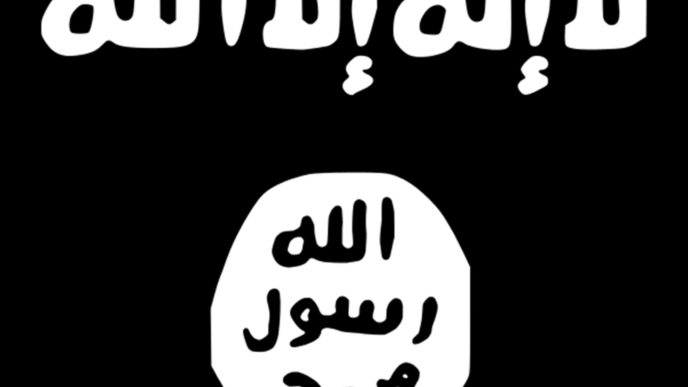
London Attack Shows Challenge of Stopping Terrorism in Age of ISIS

At least four people were killed, including a police officer and the suspected assailant, and 40 others wounded in a terrorist attack Wednesday in London.

British Prime Minister Theresa May described the suspected attacker, whose name she did not release, as a British-born man “inspired by Islamist ideology” whom the country’s domestic intelligence agency had investigated for connections to extremism.

The man drove a large vehicle into pedestrians on Westminster Bridge, which leads to the United Kingdom’s Parliament, authorities said.

After the vehicle crashed, the man got out and approached Parliament, where he fatally stabbed a police officer as he tried to enter the building. Police then fatally shot the attacker, authorities said.

The Islamic State, the terrorist group also known as ISIS, on Thursday claimed responsibility for the attack.

Heritage Foundation terrorism expert Robin Simcox told The Daily Signal that “anyone who has looked at this [security] issue will tell you that even with the best intelligence, this was going to happen at some point.”

Some of those wounded or injured were teenage schoolchildren from France, The New York Times and other media reported.

Police said they were treating the attack as terrorism. Parliament chambers and offices were placed on lockdown for more than two hours. Both the House of Commons and House of Lords will sit Thursday at their normal times.

The attack, which unfolded around 2:40 p.m. local time, came on the anniversary of suicide bombings in Brussels—claimed by ISIS—that killed 32 people, along with three bombers.

“This is the day we have planned for but we hoped would never happen,” Mark Rowley, the acting deputy commissioner with London’s Metropolitan Police Service, said at a news conference. “Sadly, it’s now a reality.”

President Donald Trump spoke with May to express his condolences over the attack.

Before Wednesday, Britain had not suffered a major terrorist attack since the rise of ISIS, unlike the U.S., France, Belgium, and Germany. But the United Kingdom long has been an attractive target for terrorists.

British intelligence services, considered some of the best in the world, have foiled planned attacks before they happened.

Long before the most recent threats, Britain maintained a comprehensive, preventive approach to counterterrorism, beginning its efforts shortly after the 2005 bombings by Islamist terrorists of London’s public transport network. That attack is commonly known as 7/7 for the month and day it occurred.

“The U.K had escaped the attacks of France and Germany—not because the U.K. is not a target but because it has a world-class intelligence service and collection capacity and the agencies work very well together,” Simcox said.

“Britain has an extremely well-integrated intelligence system,” Simcox continued. “But anyone who has looked at this issue will tell you that even with the best intelligence, this was going to happen at some point. The U.K. is a very high-value target for ISIS. It has had a host of plots thwarted in recent years, and eventually one would get through.”

In 2015, authorities made 35 percent more terrorism-related arrests in the United Kingdom than in 2010. About 800 individuals from Britain have traveled to Iraq and Syria to fight in the conflicts there. Among them was Mohammed Emwazi, a British Arab known as Jihadi John who notoriously beheaded multiple Americans and Britons before he was killed in a U.S. airstrike in November 2015.

Counterterrorism experts say the mode of the Wednesday’s attack—car-ramming and stabbing—are ISIS’ staples and relatively easy to carry out and difficult to stop.

“It’s impossible to stop in a free society because these are very simple attacks,” said Rashad Ali, a U.K.-based resident senior fellow at the Institute for Strategic Dialogue, in an interview with The Daily Signal. “Anyone can drive a car into anything and anyone can find a large knife. It would be completely in line with the kind of attacks we have seen over recent years.”

Indeed, in a December 2016 terrorist attack in Berlin, Germany, an attacker—who pledged allegiance to ISIS—drove a truck into a Christmas market, killing 12 people and injuring 56 others.

In Nice, France, last July, that same tactic was used when a Tunisian resident of France drove a cargo truck into crowds celebrating Bastille Day, resulting in the deaths of 86 people and injuring 434.

ISIS claimed responsibility for that attack as well.

“We don’t know for sure if [the London attack] is ISIS,” said Daveed Gartenstein-Ross, a senior fellow at the Foundation for Defense of Democracies, in an interview with The Daily Signal. “But looking at the ISIS sphere, a lot of the reasons why this stuff works is the attacks that are a little more low grade are harder to protect against than grandiose plots that occurred in the decade following 9/11.”

Gartenstein-Ross and other experts say these types of attacks are becoming more difficult to stop because domestic extremists are able to use encrypted technology to communicate with terrorist groups overseas.

The New York Times recently reported that as ISIS has lost territory in Iraq and Syria, its members are increasingly conceiving and guiding domestic attacks through virtual communications.

“ISIS has operatives where their role is to basically do online what physical recruiters used to do,” Gartenstein-Ross said. “They identify domestic operatives, move them forward to the point where they are ready to carry out attacks, help them prepare propaganda in advance, and even help them do technical things if necessary.”

Experts say these methods make the jobs of already overburdened law enforcement agencies that much harder.

“Law enforcement is the least of the problems,” Gartenstein-Ross said. “They are doing everything they can to stop these plots.”

Ali seconded this view.

“You can’t take away from this [London attack] that counterterrorism measures aren’t working,” Ali said. “That isn’t true. They are working because the large-scale attacks are being thwarted. Now isn’t the time for recriminations of groups and knee-jerk reactions. We need to heal before we decide how to respond to this.” (For more from the author of “London Attack Shows Challenge of Stopping Terrorism in Age of ISIS” please click HERE)

Follow Joe Miller on Twitter HERE and Facebook HERE.

Cuba: Christian Leader Receives 3-Year Prison Sentence for Anti-Castro Comments

Eduardo Cardet, the head of Cuba’s anti-communist Christian Liberation Movement (MCL), has been sentenced to serve three years in prison following his violent arrest in front of his two young children after the death of Fidel Castro in November.

Some witnesses say Cardet had been heard criticizing the government for forcing Cubans to sign overwrought goodbye notes in government-issued “condolence books.” The Cuban government imposed a nine-day “mourning period” following the elder Castro’s death in late November 2016, imprisoning those who dared defy it.

On Tuesday, Cuban courts convicted Cardet of assault against an officer of the state, a crime his family who witnessed his arrest, say he did not commit. “The sentence is based on manipulated data, without taking into consideration the testimony of defense witnesses,” Cardet’s wife, Yaimaris Vecino, said in a statement published by the MCL. “As we imagined, this has been another attempt to detain him as long as possible.” His family, she says, will appeal the sentence.

Vecino witnessed her husband’s arrest. Cuban police apprehended and beat him, she says, while she held her children away from the scene. Police hauled Cardet away and have since denied him bail on three occasions.

Amnesty International has declared Cardet a prisoner of conscience. “Doctor Cardet is confined to an Holguín prison just for having criticized Fidel Castro,” a statement released Wednesday by the NGO read. Cardet is a medical doctor by trade. “Dr. Cardet is a prisoner of conscience who should be freed immediately.” Amnesty declared Cardet a prisoner of conscience in February. (Read more from “Cuba: Christian Leader Receives 3-Year Prison Sentence for Anti-Castro Comments” HERE)

Follow Joe Miller on Twitter HERE and Facebook HERE.

In New Zealand, “Transgender” Wins Weightlifting Contest, River Becomes Person

Is it strange that in a country where a woman pretending to be a man wins a weight-lifting contest, that the government would declare a river to be a person?

Wait. It might have been a man pretending to be a woman. You can never tell in these “transgender” stories which part of Reality has been affronted.

What we do know is that the New Zealand Herald reported that a “transgender” person named Hubbard won a weight-lifting competition. Hubbard beat the second-place finisher by hoisting about 40 additional pounds.

Maybe this was a man pretending to be a woman. In that case, then a man lifted more weight than a woman. So Dog-Bites-Man. Or it was a woman pretending to be a man. In that case it must have been a woman juiced on various drugs, like anabolic steroids and testosterone, to make her competitive with real men. And that makes it a story of performance-enhancing illegal drug use.

Both stories are depressing.

As What Gender Does the River Identify?

So is the story that New Zealand’s Parliament has recognized the Whanganui River as a legal person. Yes, the river, also called Te Awa Tupua, is to be treated the same as hot dog hawkers and college professors. According to BioEdge:

Riverine personhood is an untested concept in a Western legal system. According to the government, Te Awa Tupua will now have its own legal personality with all the corresponding rights, duties and liabilities of a legal person. Lawyers say that the river cannot vote and cannot be charged with homicide if people drown in it. But it will have to pay taxes, if liable. The gender of the river is unspecified at the moment.

How this riverine person will pay taxes is something to be watched. Maybe in the spirit of Finders-Keepers, the river will offer up rings and other jewelry lost by actual people while swimming. But will swimming even be allowed? Unless you’re still preborn, you can’t swim in an actual person. May you swim in a riverine person?

That brings up the natural question: How will we know Mr. — or Ms.? — Whanganui’s opinion about swimming? We don’t even know his or her preferred “gender.” Obviously, like in Hubbard’s case, people are free to call themselves whatever “gender” they wish. Thinking anything else is rank bigotry. But we at least have the advantage of asking Hubbard’s opinion whether she is a he or he is a she, or whatever. We can assume that Whanganui gurgles, as all rivers do, but who speaks River? Who can tell us Whanganui’s preferred gender?

We’ll have to rely on hydromancy. That’s the “method of divination by means of water, including the color, ebb and flow, or ripples produced by pebbles dropped in a pool.” Or in this case, dropped in a river.

Hydromancy requires a hydromancer. That’s an actual human person who can interpret the wiggles and waves of (Mr. or Mrs. or Ms. or Mx.) Whanganui into human commands and desires. Since New Zealand’s Parliament says that these human-like desires exist, they’re going to have to fund the position of Official Hydromancer (which, in a way, they are).

The person-river also now has rights.

One politician said, “The river itself has the right itself not to be polluted. It has the right not to be degraded. It has the right not to be overdrawn before it can replenish itself.”

So Rivers Have Rights. Do They Have Duties?

These are fine rights, sure to swell in number as time passes, as all rights do. But it does seem unfair that the river gets only rights but has no duties. It can commit homicide but can’t be held accountable for it? Wait and see: this leniency will encourage bad behavior, like flooding. Don’t anger Whanganui!

There are, of course, deep tangled sensitive politics behind New Zealand’s move to call a river not a river but a man (or woman). Yet these motivations, weighty as they are, fail to explain the full enthusiasm of the Parliament for its ruling. For instance, the government could have ceded control of the river or applied vast quantities of money to those who hold the river sacred. Instead, they insisted that all of New Zealand call the river a person.

Or it could have agreed that those who wanted could call the river a person. Instead, it gave freedom to those who wanted to follow Reality to call the river a river.

Yet if a man can call himself a woman (or vice versa) and expect all must agree with his choice of “gender,” it follows that a river can be a man and that all must agree that a river is a man.

Or a woman. (For more from the author of “In New Zealand, “Transgender” Wins Weightlifting Contest, River Becomes Person” please click HERE)

Follow Joe Miller on Twitter HERE and Facebook HERE.

The U.S. And U.K. Just Banned Something Everyone Uses on Certain Flights

Senior administration officials confirmed Tuesday that the U.S. will be implementing carry-on restrictions banning electronic devices larger than a smartphone from flights arriving in the United States from selected airlines in the Middle East and Northern Africa. The new TSA “emergency amendment” requires passengers to put their laptops, tablets, game consoles, etc., in with their checked baggage, whether they intended to check any luggage or not.

The new procedure affects the following airports: Jordan’s Queen Alia International; Egypt’s Cairo International; Kuwait International; Qatar’s Doha International; Turkey’s Istanbul Ataturk; Saudi Arabia’s King Abdulaziz International; Saudi Arabia’s King Khalid International; Morocco’s Mohammed V Airport; Dubai International; and Abu Dabi International.

Airlines affected by the ban are as follows: Turkish Airlines; Royal Jordanian; EgyptAir; Saudia; Qatar Airways; Kuwait Airways; Royal Air Maroc; Emirates; and Ethiad Airways. The ban does not apply to airline employees or flights into any of the listed airports.

DHS officials are calling it a safety precaution, citing past attacks in Egypt, Turkey, Belgium, and Somalia — none of which involved explosives or weapons being smuggled onboard in electronic devices. They also dismissed questions regarding whether or not the sudden restrictions were in response to any credible threat, how long the “emergency amendment” will be enforced, or the difference between a device being held in the cargo hold or held in the cabin of the same plane.

Less than 24 hours later, the U.K. followed suit, announcing a carry-on electronics ban “on direct flights to the UK from Turkey, Lebanon, Jordan, Egypt, Tunisia and Saudi Arabia.” The airlines affected by the ban are British Airways; EasyJet; Jet2.com; Monarch; Thomas Cook; Thompson; Turkish Airlines; Pegasus Airways; Atlas-Global Airlines; Middle East Airlines; Egyptair; Royal Jordanian; Tunis Air; and Saudia.

The spokesman for the prime minister declined to comment on what prompted the new procedures. (For more from the author of “The U.S. And U.K. Just Banned Something Everyone Uses on Certain Flights” please click HERE)

Follow Joe Miller on Twitter HERE and Facebook HERE.

Where the Fight Against ISIS Stands, and How the US Can Win

The Trump administration has invited 68 countries and international organizations to attend a summit in Washington on Wednesday to coordinate policies to defeat the Islamic State, also known as ISIS.

Secretary of State Rex Tillerson will lead the two-day gathering of foreign ministers in synchronizing coalition efforts to destroy ISIS on the battlefield, prevent it from staging a comeback, and deprive it of money, arms, and recruits.

The military campaign launched by the anti-ISIS coalition has made considerable progress in recent months. The ongoing offensives to push ISIS out of Mosul, Iraq’s second-largest city, and seize Raqqa, the de facto ISIS capital city in Syria, will be key topics at the summit.

The Iraqi army, in coordination with Iraqi Kurdish and Shiite militias, launched the offensive against Mosul in October, and has surrounded and retaken most of the city. They have been aided by a U.S.-led air campaign and supported by U.S. advisers, trainers, artillery batteries, and special operations forces.

Defeating ISIS in Syria is likely to be much more difficult than in Iraq because of the lack of reliable partners on the ground.

Syria’s brutal dictatorship has long been hostile to the United States. Backed by Russia and Iran, President Bashar al-Assad’s regime has focused its military attacks not on ISIS, but against more moderate rebel groups, including some supported by the United States.

Washington has been working with Syrian Kurdish militias, which have been effective military forces, but they are handicapped by the fact that they are feared and resented in the predominantly Arab areas that ISIS controls.

Moreover, Turkey considers them to be terrorists due to their affiliation with the Kurdistan Workers’ Party, a terrorist group that Turkey has been fighting on and off since 1984.

The Pentagon in recent weeks has deployed several hundred Army rangers and Marines to Syria to bolster Syrian rebel groups and provide artillery support to help them defeat ISIS. This is in addition to an estimated 500 American special operations personnel already in Syria.

The Trump administration’s revised plans for seizing Raqqa reportedly call for an enhanced U.S. military role, including the deployment of additional U.S. special operations forces, artillery, and attack helicopters.

More Help Needed

Washington also should press its NATO allies and Arab coalition members to provide more military forces and support for the impending offensive against Raqqa.

The anti-ISIS summit also is an opportunity to develop a supportive international framework for transforming the military defeat of ISIS into a sustainable long-term political defeat.

The summit meeting should focus on how to restore law and order and enable self-government in areas of Syria liberated from ISIS. This means recruiting as many local Sunni Arabs as possible to root out ISIS and preclude it from resurging.

Washington also should press coalition members to take more effective steps to choke off fundraising for ISIS, combat its internet recruitment efforts, and discredit its propaganda.

The summit meeting also should focus on enlisting coalition members–particularly the rich Sunni Arab oil kingdoms—to provide adequate financial support for humanitarian aid for Syria’s huge refugee population and help Syrians to eventually rebuild cities shattered by the war.

But as long as Syria’s ferocious civil war rages on, international efforts to ease the humanitarian catastrophe, stabilize the country, and permanently bury ISIS will remain precarious exercises.

Washington should lead international diplomatic efforts to pressure the Assad regime to accept a political settlement to end the conflict, including the full autonomy of regions that have expelled the regime’s repressive presence.

To nail the ISIS coffin shut, Washington must use the summit meeting to coordinate coalition efforts not only on the military front, but on the diplomatic, counterterrorism, humanitarian, and self-government fronts as well. (For more from the author of “Where the Fight Against ISIS Stands, and How the US Can Win” please click HERE)

Follow Joe Miller on Twitter HERE and Facebook HERE.