Is the Chinese Economy Hitting Stagnation?

For roughly three decades, the Chinese economy registered a staggering annual growth rate in the vicinity of 10 percent. Over the past four years, however, it has clearly slowed from that breakneck speed.

There has also been increased skepticism about the reliability of the old growth figures, and even whether today’s slower pace of expansion can be maintained. These signs and others suggest that China may be entering a period of stagnation.

Is this true?

While China’s economy recorded its slowest growth in 25 years in 2015, its official number was still a respectable 6.9 percent.

Many who follow China are increasingly relying on microeconomic data to assess the direction of China’s economy. This includes electricity consumption, passenger traffic, service sector spending, freight volume, and credit growth.

Here, the data is mixed. For example, in 2015, the number of international passengers traveling to and from China reached 42 million—a new record. The service economy has also been growing briskly, at an 8-9 percent pace in recent years.

On the other hand, the volume of rail freight traffic has declined for two consecutive years and electricity consumption has risen only 0.5 percent during the past year.

These microeconomic factors point to an economy growing in the 4-5 percent range.

Most importantly, much of the recent growth has been manufactured by enormous credit growth. Despite the authorities’ goal of wanting to trim total debt, total social credit growth is advancing close to the pace it was during the 2008-2009 global financial crisis.

Much of the rise in debt has been at the corporate level. According to the Bank for International Settlements, Chinese companies have accumulated $18 trillion in debt, equivalent to approximately 170 percent of gross domestic product.

The loans have come from the banking sector, which are now very vulnerable in the event of heavy defaults. State-owned companies account for over 55 percent of that debt.

Moreover, Chinese are issuing far more short-term debts. In the third quarter of 2016, 82 percent of Chinese corporate bonds had maturities of less than three years, compared with just 36 percent in the same quarter of 2010.

China’s two steadfast pillars of growth, exports and domestic investment, clearly show cracks in their veneers. China’s exports for October slumped 7.3 percent from the previous earlier, despite the yuan’s depreciation during the past year.

This is reflected in the stock of foreign exchange reserves, which peaked over a year ago at $4 trillion but have now fallen to $3.1 trillion.

Imports have also been falling—clear evidence that domestic demand has slowed more than the authorities or headline numbers acknowledge. Despite stringent capital controls, capital flight has clearly accelerated as affluent Chinese have lost confidence in the domestic economy.

Fixed asset investment is still running at 45 percent of GDP, leading to significant excess capacity in industries ranging from steel to solar panels.

Earlier objectives to lay off 6 million workers in state-owned enterprises early in President Xi Jinping’s term have not materialized, and state-owned banks continue directing credit to prop them up.

So, is the Chinese economy entering a period of stagnation?

Because the credit spigots cannot gush indefinitely and much of the mounting debt will likely go bad, it appears reasonably likely. And the window to solve these problems is quickly closing. (For more from the author of “Is the Chinese Economy Hitting Stagnation?” please click HERE)

Follow Joe Miller on Twitter HERE and Facebook HERE.

UN Honors Fidel Castro With ‘Minute of Silence’

The President of the United Nations General Assembly and ambassadors from around the world stood for a “minute of silence” earlier this week to honor the deceased Cuban dictator Fidel Castro.

Peter Thomson of Fiji called for the minute of silence Tuesday, beginning the session with what Thomson called his “sad duty to pay tribute to the memory” of the former Cuban president:

“I’m deeply saddened by the passing of Fidel Castro … [O]ne of the iconic leaders of the 20th century, with a great love for his homeland and the Cuban people, he dedicated his life to their welfare and development. A tireless advocate for equity in the international arena, he was an inspirational figure for developing countries in particular. His dedication to their advancement, especially in the fields of education and health, will long be remembered.

Thomson then invited the other representatives to stand with him in observation of the minute of silence . . .

A Legacy of Tyranny

Nearly a week has passed since Castro died at age 90. Even as Cuban exiles in Miami celebrated his death and the end of his tyrannical reign over Cuba, numerous world leaders lauded him — largely ignoring the countless atrocities committed against Cubans during his near half-century in power.

Perhaps most notable was Canadian Prime Minister Justin Trudeau’s statement expressing “deep sorrow” over Castro’s death and describing him as a “larger than life leader who served his people for almost half a century.” An international backlash against those comments led Trudeau to acknowledge Castro as “a polarizing figure” whose leadership led to “significant concerns around human rights.”

Those familiar with Castro’s autocratic 50-year regime were less sanguine. Mike Gonzalez, a senior fellow at the Heritage Foundation and veteran international correspondent, wrote last week that over 8,000 political arrests were made during the first eight months of 2016, and over 50,000 Cubans fled to the United States last year. While the number of exiles has recently increased, Cubans have been fleeing to America’s shores for years, braving shark-infested waters and sometimes dying along the way.

In a Miami Herald piece published in response to Castro’s death, Armando Salguero, a Cuban immigrant, details the harrowing story of his family’s escape from Castro’s rule, which resulted in a three-year separation from his father. They were eventually reunited.

Stream Senior Editor John Zmirack told the story of his high school best friend, a Cuban exile, whose father had been tortured in prison camps under Castro’s rule and who said the only reason Cuba so heavily emphasized literacy — a point many world leaders have praised — was because “They wanted everyone to be able to read their propaganda … so there was no excuse for disobedience.”

And another Cuban-American, Ana Quintana, recalled this week her grandfather’s stories of life under Castro:

Religion was criminalized, dissent was violently punished, and Cuban citizens became property of their communist state. Fidel’s rule brought the world to its closest point of nuclear war during those fateful 13 days in 1962. He indoctrinated hate and pushed millions out of their country.

World Leaders’ Reactions to Castro’s Death

After Castro’s death, President Barack Obama said that “History will record and judge the enormous impact of this singular figure on the people and world around him.”

British Labour Party leader Jeremy Corbyn acknowledged Castro’s “flaws” but also called him a “champion of social justice.”

In a telegram to Raul Castro, Castor’s younger brother, Russian President Vladimir Putin said, “Free and independent Cuba, which he (Fidel Castro) and his allies built, became an influential member of the international community and became an inspiring example for many countries and nations. Fidel Castro was a sincere and reliable friend of Russia.”

The Associated Press reported statements from other world leaders after Castro’s passing. Like those issued by Trudeau, Putin and Corbyn, the statements mostly consisted of praise for the dictator:

Salvador Sanchez Ceren, the president of El Salvador, said he felt “deep sorrow … of my friend and eternal companion, Commander Fidel Castro Ruz.”

Mexican president Enrique Pena Nieto tweeted that “Fidel Castro was a friend of Mexico, promoting bilateral relations based on respect, dialogue and solidarity.”

“India mourns the loss of a great friend,” Indian Prime Minister Nerendra Modi said on Twitter.

The country’s president, Pranab Mukherjee tweeted: “Heartfelt condolences on sad demise of Cuba’s revolutionary leader, former president & friend of India, Fidel Castro.”

Peter Hain, a former member of the British Cabinet and anti-apartheid campaigner, tempered praise for Castro with criticism of some aspects of his long rule.

“Although responsible for indefensible human rights and free-speech abuses, Castro created a society of unparalleled access to free health, education and equal opportunity despite an economically throttling USA siege,” Hain said. “His troops inflicted the first defeat on South Africa’s troops in Angola in 1988, a vital turning point in the struggle against apartheid.”

A statement from the Spanish government hailed Castro as “a figure of enormous historical importance.”

“As a son of Spaniards, former president Castro always maintained close relations with Spain and showed great affection for his family and cultural ties. For this reason Spain especially shares the grief of Cuba’s government and authorities,” the government statement said.

“Fidel Castro in the 20th century did everything possible to destroy the colonial system, to establish cooperative relations,” former Soviet President Mikhail Gorbachev was quoted as telling the Interfax news agency.

“Fidel survived and strengthened the country during the most severe U.S. blockade, while there was enormous pressure on him, and still led his country out of the blockade on the road of independent development.”

Venezuelan President Nicolas Maduro recalled Castro’s departure from Mexico on the yacht Granma with his brother Raul and several dozen supporters to start their revolution.

“Sixty years after the Granma sailed from Mexico, Fidel sails toward the immortality of all those who fight their whole lives,” Maduro tweeted. “Onward to victory, always!”

U.S. President-elect Donald Trump, however, refused to sing Castro’s praises. Calling him a “brutal dictator who oppressed his own people for nearly six decades,” Trump said in a statement, “Fidel Castro’s legacy is one of firing squads, theft, unimaginable suffering, poverty, and the denial of fundamental human rights.” (For more from the author of “UN Honors Fidel Castro With ‘Minute of Silence'” please click HERE)

Follow Joe Miller on Twitter HERE and Facebook HERE.

Has North Korea Reopened an Old Prison Camp?

Recent satellite images reveal that a North Korean political prison camp, former Camp 18, may have been reopened.

It is unclear when and why this may have happened. The time lag in obtaining detailed information from North Korea means this could be somewhat dated information. But even the possibility that the camp has reopened raises red flags—political prison camps in North Korea have been home to some of the most egregious human rights violations in modern times.

Camp 18, also known as Pukchang political prison camp, was approximately 28 square miles and could hold roughly 27,000 prisoners. It used to be one of the five biggest political prison camps in North Korea. Camp 18 was situated just across the Taedong River from Camp 14, a similar prison camp. Combined, the two camps held an approximate total of 50,000 political prisoners and their families.

Camp 18 was supposedly shut down sometime around 2006. But since 2011, satellite imagery has shown substantial housing growth in the area.

Recent imagery from Google Earth provides evidence that the camp has in fact been reopened. Images show that a substantial number of houses have been razed and a new security perimeter with guard barracks has been built. ”Immortality Tower,” a statue dedicated to North Korea’s founding dictator Kim Il-Sung, had long been an essential element of the residential area, but it has now been removed.

All of this points to the likelihood that either Camp 18 has been reopened, or Camp 14 is expanding.

North Korea has long denied the existence of political prison camps in the country, but various reports on North Korea have confirmed they indeed exist and have been the focus of grave human rights abuses.

In 2014, the United Nations Commission of Inquiry on Human Rights in North Korea (COI) released a report describing “unspeakable atrocities” being committed in North Korea. It attests that the North Korean regime is responsible for crimes such as “deliberate starvation, forced labor, executions, torture, rape and the denial of reproductive rights enforced through punishment, forced abortion and infanticide.”

The North Korean government uses political prison camps as a means of keeping the North Korean people in check, often sending as many as three family generations to the camps for committing alleged crimes against the state.

Since the release of the COI report, the international community—including the United States—has admonished North Korea to “dismantle” its prison camps and release political prisoners. Yet, according to analysis by Amnesty International, Pyongyang “is continuing to maintain, and even invest, in these repressive facilities.” Other new satellite imagery verifies this, confirming “the sustained, if not increased importance of the use of forced labor under Kim Jong-un.”

The United States took a positive step forward in 2016 by sanctioning North Korean Supreme Leader Kim Jong-Un and other known human rights violators in North Korea, but much more can and should be done. The issue of prison camps must be addressed as both a strategic and humanitarian consideration. The U.S. and the international community should develop a feasible plan to hold North Korea accountable for crimes against humanity. (For more from the author of “Has North Korea Reopened an Old Prison Camp?” please click HERE)

Follow Joe Miller on Twitter HERE and Facebook HERE.
‘We Need to Know We’re Not Alone’: Ukraine’s Soldiers Carry the Burden of a Nation at War

As the war in Ukraine nears its third calendar year, Ukrainian troops remain entrenched along a static front line in eastern Ukraine where they exchange small arms and artillery fire with combined Russian-separatist forces every day.

More than 21 months after it was signed, the cease-fire is a charade. The war may be at a lower intensity due to the cease-fire’s loosely adhered-to rules—but there is still very much a war in eastern Ukraine.

Combat is ongoing and intense throughout the Donbas—Ukraine’s embattled southeastern territory on the border with Russia. And civilian and military casualties still occur daily.

For many Ukrainian soldiers, war has become a way of life.

“I am at home now, this is my family,” Andriy, a 30-year-old soldier in the Ukrainian army’s 92nd Mechanized Brigade, told The Daily Signal from a front-line position in the embattled town of Marinka.

Andriy has continuously served in combat since the war began in spring 2014. He asked that his last name not be used due to security concerns.

The Ukrainian troops believe in the justice of their cause, yet, there is a pervasive sense of disappointment, bordering on betrayal, expressed by many front-line soldiers toward their civilian leadership in Kyiv.

“We are fighting for our land, to defend every centimeter of our country,” Dimitry Karamushka, a 30-year-old soldier in the 92nd Brigade, told The Daily Signal in Marinka. “We are not fighting for our government.”

The 92nd Brigade recently rotated to Marinka from a previous combat deployment outside the separatist stronghold of Luhansk. The unit comprises a mix of both draftees and volunteers, with some soldiers having served continuously in combat, with only periodic breaks of a week or two to go home, since spring 2014.

Ukrainian forces are dug in, battle-hardened, and better equipped and armed than they were a year ago. Conditions have improved, but supply shortages are still common, and the Ukrainian troops are still largely left to fend for themselves to provide many basic necessities—such as electricity.

“More than ammunition, we need to know we’re not alone,” Andriy said. “We are fighting two wars. One against Russia, and the other against the government in Kyiv.”

Casus Belli

Ukraine’s deployed troops remain committed to their cause, and treat the war as an existential fight for the country’s independence against what they call a Russian invasion of their homeland.

“We can’t leave the war and go to Kyiv,” Karamushka said. “It would mean surrender to Russia. And what would it mean to all the people who died?”

“We are standing for our territory,” said Alexandr Chernov, a chaplain in the 92nd Brigade. “Everyone wants peace. But peace will only come after victory.”

Chernov paused, smiled, and then added: “And when [Russian President Vladimir] Putin is gone.”

Ukraine’s military has been locked in a static, frontal war against a combined force of pro-Russian separatists and Russian regulars since the second, current cease-fire—called Minsk II—was signed in February 2015.

Today, at some places in and around Marinka, less than 300 meters (about 1,000 feet) of no man’s land divide the opposing camps.

“The situation here is stabilized,” said Vsevolod Chernetskyi, a 22-year-old soldier and Raven drone operator, in near perfect English. “We are in the same positions as a year ago, the Russians and us. It’s mostly artillery now.”

The war has killed about 10,000 Ukrainians and displaced about 1.7 million people, according to various reports from humanitarian organizations.

The conflict began in spring 2014 when Russian-backed separatists formed two breakaway republics in the Donbas.

Despite denials from Moscow, numerous news reports have shown that Russian troops are fighting among the separatists, that Russian military commanders command and control separatist forces, and that Russian weapons and ammunition continue to feed the war effort.

Through binoculars from the roof of the 92nd Brigade’s outpost in Marinka, this correspondent observed a Russian flag flying over a building across no man’s land on the combined Russian-separatist side of the contact lines.

According to Ukrainian military intelligence estimates, there are about 5,000 to 7,500 Russian troops currently deployed in the Donbas. About 55,000 Russian military personnel are also forward deployed to locations within Russia near the Ukraine border.

Combined Russian-separatist forces in eastern Ukraine currently control more tanks than Germany’s armed forces, and the Donbas is replete with Russian surface-to-air missile systems.

“I don’t feel we are winning,” Chernetskyi said. “The Russian forces are much stronger than ours. They can always provide more artillery than us, better tanks, more drones.”

During breakfast, this correspondent remarked to Chernetskyi how the shooting had stopped in time for both sides to take their morning meal.

Chernetskyi replied that the combined Russian-separatist forces operate on Moscow time, one hour ahead of Kyiv’s time zone.

“They eat an hour before us,” he said.

He paused a beat and then added: “They’re always one step ahead of us.”

Differences

The corner of an artillery-blasted apartment building in Marinka is marked by a spray-painted word in Russian. In English it translates to “For what?”

Approximately 5,000 civilians have fled Marinka since the war began, comprising about half of the town’s pre-war population of 10,000.

Daytime is usually relatively peaceful here. Civilians mill about outdoors, pedestrians are on the sidewalks. There’s an outdoor market where one can buy goods ranging from produce to clothing.

Across town, there is the sound of hammering as workers repair buildings damaged by shelling. They replace shattered windows and reconstruct crumbled walls.

There is a daily rhythm to the war, which conceals the brunt of the fighting from the intergovernmental organization responsible for overseeing the cease-fire.

Monitors from the Organization for Security and Cooperation in Europe, or OSCE, do not travel through the war zone at night due to security restrictions.

At night, consequently, the war begins in earnest.

“There is almost no artillery during the day, because the OSCE is here,” Chernetskyi, the 22-year-old Raven operator, said.

Winter sunsets in eastern Ukraine come early, around 4:30 p.m. As darkness falls there is, at first, only the occasional sound of a mortar explosion or an artillery shot, and the every-so-often burst of a machine gun or Kalashnikov.

As the hours pass, the pace and intensity of the shooting slowly builds like the different sections of an orchestra chiming in.

At the nocturnal peak of the fighting, typically around midnight, tracers cut across the night sky, the flashes and booms of mortar and artillery explosions come several times a minute, and there is a nearly constant background din of small arms fire.

This correspondent witnessed such a scene in Marinka on the night of Nov. 21. The Ukrainian soldiers on scene, as well as several civilians from the area, said the intensity of the fighting on that night was “normal.”

While casually smoking a cigarette in the night, one soldier jokingly recommended that this correspondent return “when things really get hot.”

Spartan

When U.S. troops go to war, they usually enjoy the support of specialized units—such as the Army Corps of Engineers, the Navy Seabees, or Air Force Civil Engineers—dedicated to building and maintaining base infrastructure, even in the most austere locations.

For deployed Ukrainian troops, however, this task is a collective effort, in which the diverse skills each soldier brings to the war are identified and utilized for the common good.

One example. A 92nd Brigade soldier with a university electrical engineering degree illegally tapped into the local power grid to provide electricity for the outpost in Marinka—effectively stealing electricity from the same government that had sent him to war.

The power still frequently goes out, however. Wood-burning furnaces provide heat to stave off the winter cold and cook food.

Soldiers say the military has improved on its deliveries of basic necessities such as water and foodstuff during the past year.

Yet, non-essential food items like honey, sugar, and coffee are still provided by civilian volunteers. As are other more vital supplies, including most soldiers’ body armor, boots, and winter underwear.

Weapons and ammunition are not a problem, although the soldiers complain about the quality of their armaments—some of which date back to World War II, almost all of which are Cold War vintage.

The soldiers in Marinka still lack basic sanitation. They use a wooden outhouse as a toilet—a miserable proposition in eastern Ukraine’s frigid winters.

The soldiers’ diets mainly comprise traditional Ukrainian foodstuff—including copious amounts of buckwheat, bread, potatoes, and salo (cured slabs of pork fat). Sweetened condensed milk is another troop favorite.

At night, the soldiers sometimes enjoy a moonshine popular throughout the front lines called Avatar; a reference to one’s facial complexion after over-indulging.

Nearly everyone smokes. At night, as the not-too-distant battles rages, the soldiers stand casually outside for as long as they can tolerate the cold to enjoy a cigarette or two. They are desensitized to the war, able to instantly and instinctively tell when the shooting is near enough to pose a real threat.

As at other front-line Ukrainian positions across the war zone, the items hung on the interior walls are a testament to the life stories of these men at war.

Kalashnikovs and body armor hang beside Orthodox religious icons, and posters of soccer stars and beautiful women. Letters from home share tabletops with grenades and bullets.

Outside the few scattered buildings in which the soldiers are holed up, a collection of tanks and armored personnel carriers are scattered under concealment.

At dawn, this correspondent joined a brief patrol into no man’s land in an armored personnel carrier from the 1970s called a BMP. The foray was cut short when the Ukrainian driver spotted enemy forces.

The ebb and flow of life here is likely not too different than it was for the soldiers who fought for this land in World War II.

Except for the presence of smartphones and a few laptops—and the U.S.-made Raven UAV the unit operates—the war-fighting technology and the circumstances of day-to-day life here would not be out of place seven decades ago.

“We want people to know that this war could happen in other places in Europe,” Chernov, the chaplain, said. “We have to stop Russia here.”

Red to Blue

The soldiers (the majority of whom are millennials) reject their country’s Soviet military heritage in favor of closer ties with the U.S. and NATO.

On Soviet battle maps, red icons (for the Red Army) symbolized friendly forces, and enemy forces were blue.

After the current war in the Donbas began, Ukrainian forces flipped the colors of their icons to match NATO maps, in which the colors are reversed.

The move was a practical step in bringing Ukraine’s military in line with NATO standards (part of a larger effort to foster closer ties with the Western alliance), but it was also a symbolic pushback against Russia.

The soldiers consider the United States to be an ally, and they want American military support. Many, however, oppose the idea of direct U.S. military intervention.

“American help is OK,” Andriy, the 30-year-old soldier from Kharkiv, said. “But we need to learn how to do this on our own. We shouldn’t rely on other countries for help. We need to fight this war on our own.”

There is a symbolic value to U.S. support that the soldiers exploit to rattle their enemies.

The Punisher skull symbol—a comic book emblem made popular among soldiers by Navy SEAL Chris Kyle of “American Sniper” fame—is painted on Ukrainian armored fighting vehicles in Marinka.

As at other locations along the front lines, the Ukrainian soldiers in Marinka did not have encrypted communications. They shared the airwaves with their enemies on off-the-shelf walkie-talkies.

A common Russian propaganda line is that U.S. troops are deployed and fighting alongside the Ukrainians. (There are, in fact, no U.S. troops fighting in the Ukraine conflict.)

Sometimes, as a joke, a Ukrainian soldier fluent in English will speak on the open airwaves, pretending to be a Navy SEAL, or a U.S. Marine. The gag usually elicits a flurry of incensed responses from their enemies, the Ukrainian soldiers said.

The Raven

One overt sign of U.S military support for Ukraine is the 92nd Brigade’s use of the U.S.-made Raven drone. The small drone is tossed in the air like a giant paper airplane.

The U.S. gave 24 Ravens in all to the Ukrainian military, and the drones are scattered throughout various units.

Chernetskyi trained on the Raven with the U.S. Army for three weeks in Huntsville, Alabama.

The Raven is a non-offensive weapon, but Ukrainian forces use it for artillery spotting.

While not a game-changer on the battlefield, the Raven does afford the Ukrainians some advantages over the modified off-the-shelf drones they also use.

“It’s useful mostly because it can fly at night,” Chernetskyi said.

The Raven is still susceptible to Russian jamming, however.

“The Russians can jam it, no problem,” Chernetskyi said. “It was made for Afghanistan, and the Taliban didn’t have jamming.”

Defenders of the Motherland

Some soldiers expressed frustration that their commanders were stuck in antiquated habit patterns from the Cold War, making them resistant to commonsense changes implemented from the bottom up, which could streamline the war effort.

Andriy brought out a thick stack of worn paper maps of the Marinka area. Each map was thoroughly marked in pen and marker notations, indicating enemy and friendly positions.

The troops complained that this pile of maps, enough to fill a wheelbarrow, could be condensed into a single app for a tablet or a file on a laptop.

An electronic version could be continuously updated and overlaid with other information, such as weather or locations where civilians are observed, the soldiers said.

Perhaps most frustrating of all for the front-line troops is the disconnect between life on the front lines and the rest of the country, where daily life seems to carry on unaffected by the war.

While front-line soldiers shiver in sub-zero temperatures, enduring artillery and sniper fire, in Kyiv—a 9-hour journey from the front lines by car and rail—there were Black Friday sales going on at the city’s many shopping malls last weekend.

(Ukraine does not celebrate Thanksgiving, yet Black Friday is a major shopping event.)

Over the weekend, the malls in Kyiv were crammed with bargain-hunting patrons in stores like The Gap, Columbia Sportswear, and Zara. Christmas lights and trees are going up around town.

Bars and restaurants in Kyiv remain busy. At more popular places, you can’t get in without a reservation on the weekends. The city’s trendy speakeasy-style, craft cocktail bars are always packed. One would hardly know this is the capital city of the country home to Europe’s only ongoing land war.

“Everyone should know our story,” Chernetskyi said.

The soldiers are not generally resentful that life is going on outside the war. In fact, many say that’s what they’re fighting for; a sign that the Russian threat has been kept at bay.

Yet, the head-spinning contrast with life on the front lines sparks feelings of unequally shared sacrifice among the troops and combat veterans.

“It is war here,” Evgeniy Varavin, a 27-year-old soldier from Kharkiv, said from Marinka.

“Some civilians look at soldiers and don’t understand why we’re fighting,” Varavin, who was a construction worker before the war, continued. “I don’t pay attention to what civilians say. My parents are proud of me, but they’re worried. They don’t understand why I came back for the second time. But how can I work back home in Kharkiv when there is war, and while my comrades are here? My soul is here.” (For more from the author of “‘We Need to Know We’re Not Alone’: Ukraine’s Soldiers Carry the Burden of a Nation at War” please click HERE)

Follow Joe Miller on Twitter HERE and Facebook HERE.
Revival in Iran: ‘You Can See What the Holy Spirit Is Doing’

The Islamic Republic of Iran is experiencing a revival of faith in a big way, said Rahman Salehsafari, a house church pastor who ministers there as well as worldwide via Skype, in a CBN News interview. The Holy Spirit’s work in Iran is evident in the large numbers of people accepting Jesus, he said.

“Right now you can see the results of the Holy Spirit. [In] 1994, there were about 100,000 believers,” he explained. “Right now, there are 3 million. You can see what the Holy Spirit is doing with the people.”

For some, the experience that drew them to Christ was nothing short of miraculous. “I had a dream a long time back and every time that Jesus was with me,” said a young man named Reza. “In all of my life He was helping me and I didn’t know who is this person. Suddenly, Jesus Christ was over there and He said, ‘Come to Me.’ Then I came to that side and He accepted me.”

Becoming a Christian was not something they took lightly — they knew they would have difficulty living out their new-found faith in their homeland.

Many of the new Christians had to flee Iran because of religious persecution and ended up in Turkey. They noticed a marked difference in the freedom to practice their faith. Afshin, an Iranian who lives in Turkey now, said the contrast is extreme. “[It’s] totally different from Iran,” he explained. “I can privilege [speak about] God’s Word to other guys. I can freely praise the Lord. I can easily go to church. It’s really completely different.”

Afshin, who attended Pastor Saeed Abedini’s church before Abedini’s 2012 arrest, said he fled Iran because it was getting progressively difficult each day to live as a Christian and he felt it was too much of a risk. Afshin said he had to leave his home because he believed the intelligence service would recognize it as a home church. Others fled in fear for their lives.

A young woman named Raizal, along with her brother Reza, fled Iran for fear they would be killed. “Even if I say ‘Jesus Christ,’ they may kill me,” she said. “They tried to kill me,” said Reza, who also had problems with his health and at his job because he was a Christian. “Then I start (sic) to run away.”

Many of the Iranian believers in Turkey hope to one day achieve refugee status and immigrate to other countries.

Even with the persecution, the threats on their lives, the uprooting and fleeing to another country and the unstable residency status, these Christians maintain their joyfulness and love of Christ. They clap and cheer as new brothers and sisters in Christ are baptized. They worship the Lord with praise songs and laughter.

Their desire now is that their brothers and sisters around the world would pray for Iran and the Church there. “I’m just begging really from other believers, from the other sisters and brothers from all over the world to pray for Iran,” said Afshin. “To all the people of Iran, to be familiar with God, with Jesus Christ.”

See the full interview here:

(For more from the author of “Revival in Iran: ‘You Can See What the Holy Spirit Is Doing'” please click HERE)

Follow Joe Miller on Twitter HERE and Facebook HERE.

Better Late Than Never: Germany’s Chancellor Decides to Deport 100,000 Refugees

Following a year of the chaos and facing a reelection challenge in the coming year, German Chancellor Angela Merkel seems to finally be rethinking her open-borders refugee policy, and is making plans to start deporting thousands.

According to the Daily Mail:

Germany is planning to return 100,000 rejected asylum seekers to their home countries after Angela Merkel admitted: ‘It cannot be that all young people from Afghanistan come here’.

About 60,000 will be returned under voluntary repatriation programmes while the rest face compulsory deportations, the German chancellor revealed.

Of course, the decision won’t be cost neutral for the German people, as the deportees will be given both a plane ticket and some startup money to help them get back on their feet in their homelands.

And this took a while. Since September of last year, Merkel has stood firmly in her open-borders stance, which allowed over an estimated 1 million unvetted migrants to enter the European country. What followed in the months afterward was a year of chaos, including innumerable sexual assaults, multiple jihadist attacks, and concerns of jihadist infiltration into refugee populations as well as the military. At one point, German officials were even considering putting troops on the streets to address increased security problems.

And who can forget when migrants burned down a refugee center in Düsseldorf earlier this month, claiming there wasn’t enough Nutella and sweets?

The chancellor has invited criticism even from members of her own party, which has suffered in state and local elections in recent months. She faced further challenge recently, after announcing her run at her national party conference.

“With your truly unparalleled ‘laissez-faire’ refugee policy you have burdened us with something that we will not get rid of any time soon,” party member Ulrich Sauer said, according to Reuters. “Step down now before the damage you have done becomes even greater.”

Now, it would seem that after months of electoral hits, intra-party damage, and falling poll numbers, Frau Merkel is finally listening to the will of her own people, but only time will tell if this is the true beginning of a return to normalcy for them.

If the reversal succeeds electorally, Merkel will not have to learn the difficult electoral lesson as the anti-Brexit crowd did in the U.K. or that pro-amnesty Democrats and Republicans learned in the U.S. this year, giving her the chance to eclipse her mentor Helmut Kohl as Germany’s longest-serving postwar chancellor.

As it turns out, when you remove the ability of the body politic to control its own sovereignty, the body politic tends to get ticked off and vote you out of power (especially when they’re being shot, stabbed, blown up, or dealing with artificially deflated wages as a result). Borders are important, as is prioritizing the concerns of your own citizens first.

The world is still dealing with the greatest refugee crisis since the Second World War, but as policymakers like Angela Merkel and others have learned, answering this crisis with charity unbalanced by prudence is a good way to lose the support of your people rather quickly. (For more from the author of “Better Late Than Never: Germany’s Chancellor Decides to Deport 100,000 Refugees” please click HERE)

Follow Joe Miller on Twitter HERE and Facebook HERE.
Republican-Led Congress Oversees Large-Scale Importation of Somali Migrants

The Somali refugee responsible for attacking young Americans at Ohio State University was deliberately imported into the country by the nation’s federal immigration policy–yet the scale and impact of immigration from undeveloped, foreign cultures is still a surprise to some politicians.

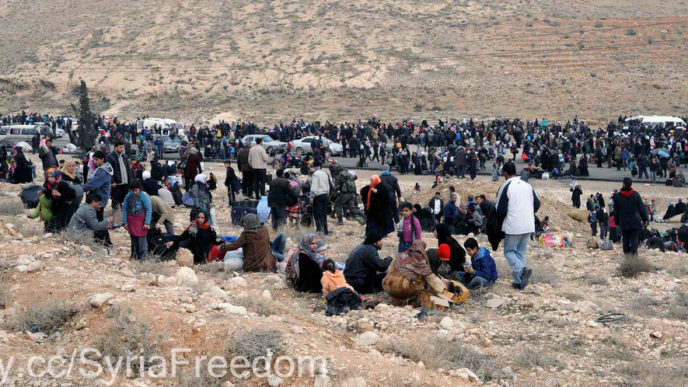
Since 2001, the United States has permanently resettled nearly 100,000 migrants from Somalia–a nation where the prevalence rate of Female Genital Mutilation for women and girls ages 15 to 49 is 98 percent, and where homosexuality can be punishable by death. In a single year, a Republican-led Congress funded visas for nearly 300,000 (temporary and permanent) Muslim migrants, which is a population that is nearly twice the size of the entire population of Dayton, Ohio.

The federal government invited Abdul Razak Ali Artan, 18, into the United States as a refugee, according to reports. Artan reportedly came to the U.S. in 2014, and his refugee status allowed him to fill a coveted slot at Ohio State University. It also allowed him to obtain federal benefits, and eventually would have given him quick access to citizenship, the voting booth, and the ability to bring over foreign relatives through chain migration.

Yet some Republican lawmakers seem unaware of the social and cultural impact that large-scale Muslim migration has had in their own backyards. (Read more from “Republican-Led Congress Oversees Large-Scale Importation of Somali Migrants” HERE)

Follow Joe Miller on Twitter HERE and Facebook HERE.
After Castro’s Death, Trump Seeks ‘Concessions’ From Cuba

Under the Castro regime in Cuba, Sebastian Arcos spent a year of his life in prison for trying to escape the grip of communism.

But the death of Fidel Castro on Friday did not give Arcos immediate relief, because the regime that altered the course of his life remains in power.

“I have become old and cynical, so I was not particularly happy when he died—I was not sad either,” said Arcos, who spent the first 30 years of his life in Cuba before coming to Miami, where he is now the associate director of the Cuban Research Institute at Florida International University.

“Unquestionably, the world is a better place today without Fidel Castro,” Arcos added in an interview with The Daily Signal.

“More importantly, even if I don’t have any hope the regime will change in the short term, as a friend said to me yesterday, nothing changes and everything changes. Nothing changes because in the short term, Raul Castro [Fidel’s brother and Cuba’s president] remains firmly in control. But everything changes because the paramount leader of the Cuban Revolution has died, and when they bury him, they will bury the Cuban Revolution with him.”

Arcos, like many Cuban-Americans and others with a stake in Cuba’s future, views Fidel Castro’s death as an inflection point in how the U.S. engages with the Communist-ruled island.

Supporters of President Barack Obama’s decision to normalize relations with Cuba hope that Fidel Castro’s death will hasten the rapprochement of the two countries. But skeptics like Arcos say Fidel Castro’s death, and the attention it is drawing, will expose the human rights abuses and oppression that he says has continued under Raul Castro’s leadership, providing an opportunity for the next U.S. administration to press harder for change.

“President-elect Donald Trump made a campaign promise here in Miami, and he has to find a way to fulfill that campaign promise,” Arcos said.

Trump has sent mixed signals on his potential Cuba policy.

During a campaign event in Miami in September, Trump accused the Obama administration of making “concessions” to Cuba and he said he would reverse the president’s actions, many made by executive authority, unless “the Castro regime meets our demands.”

Monday, Trump took to Twitter to clarify his policy, writing: “If Cuba is unwilling to make a better deal for the Cuban people, the Cuban/American people, and the U.S. as a whole, I will terminate deal.”

But Trump also spoke positively of Obama’s policy early in his campaign, saying restarting diplomatic relations with Cuba was “fine.”

Obama’s Dramatic Change

In December of 2014, Obama announced a renewal of diplomatic ties with Cuba that included a loosening of decades-old restrictions on travel, trade, investment, and remittances.

Within a year, the countries reopened their embassies.

It is now easier for Americans to visit Cuba and send money and goods there, and also for American businesses to establish a presence on the island. Obama recently used executive action to expand the legal importation of Cuban cigars and rum by Americans who visit the island.

Hundreds of commercial flights go to and from the island weekly, with U.S. airlines scheduled to join this week.

Obama could not end the trade embargo against Cuba. Only Congress can do that.

Ricardo Herrero, the executive director of #CubaNow, an advocacy group that supports Obama’s policy change, said that the opening to Cuba has encouraged private industry and promoted free expression from reform-minded citizens.

“It would be a grave mistake to pull back now,” Herrero told The Daily Signal in an interview. “By demanding concessions, all you are doing is empowering the regime and enabling them to go to reformers on the island and say, ‘See, they [the U.S.] are trying to govern us already.’ That’s why we need to remain strong. Let’s not give more oxygen to those who want to continue fighting the Cold War forever.”

‘Important Opportunity’

If Trump moves forward with changing Obama’s Cuba policy, he will find influential allies in the Republican-controlled House and Senate.

Rep. Mario Diaz-Balart, R-Fla., told The Daily Signal that he and other Cuban-American Republicans in Congress are “so encouraged” by Trump’s public statements regarding Cuba.

He said he would push for Trump to “eliminate” all of Obama’s actions unless Cuba meets certain conditions, including freeing all political prisoners “without exception,” allowing for “basic freedoms,” and starting the process “toward multiparty elections.”

“Let’s help the internal opposition,” Diaz-Balart said. “Let’s stand with them, and encourage and legitimize them, as opposed to what Obama has done to legitimize the dictatorship that oppresses those folks. This is a very important opportunity for the president-elect to do an awful lot of good for the prospects of a free Cuba.”

Rep. Mark Sanford, R-S.C., who supports Obama’s policy change, is more circumspect about radically shifting course.

“I am hopeful he [Trump] will come out on the side of his earlier statements that were pro-engagement and question the validity of a 50-year policy that has not brought about change,” Sanford told The Daily Signal in an interview. “I have no problem with the idea of asking for more. If one can come up with a better deal, we should. What I would hope not to see is the perfect being the enemy of the good. Wherever you are in the debate, people are foreseeing change in Cuba. The question is how do we get there.”

Eric Hershberg, the director of the Center for Latin American and Latino Studies at American University, said Trump has the authority to walk back much of Obama’s Cuba policy.

He argues that in this uncertain period after Fidel Castro’s death, and the election of Trump as U.S. president, Raul Castro and his communist regime may be more tempted to act out in the short term.

“Fidel leaving the scene may accentuate the regime’s message to the Americans that we are still here and will act in our interests, not yours,” Hershberg said. “The Cubans aren’t going to give any concessions at all. The Cubans have never gave concessions since the revolution and they won’t start now.” (For more from the author of “After Castro’s Death, Trump Seeks ‘Concessions’ From Cuba” please click HERE)

Follow Joe Miller on Twitter HERE and Facebook HERE.
Castro May Be Dead, but Religious Freedom in Cuba Still Suffers

Fidel Castro is dead, but even with the passing of the tyrannical persecutor religious freedom in Cuba still has a long way to go.

Late Friday night, Fidel’s little brother Raul, who took over the country due to Fidel’s health problems in 2006, confirmed the death of the dictator on Cuban state television.

Unfortunately, communism in the island nation will not die with him, thanks to his brother Raul and the callous actions of western governments in recognizing the regime.

The New York Times’ obituary hailed the Marxist dictator as a “revolutionary,” Liberal Party Canadian prime minister Justin Trudeau said in a statement that he was “deeply saddened” by the passing of “Cuba’s longest serving president” who “made significant improvements to the education and healthcare of his island nation.” U.S. president Barack Obama also chimed in with a sterilized recognition of “the countless ways in which Fidel Castro altered the course of individual lives, families, and of the Cuban nation.”

Meanwhile, U.S. President-elect Donald responded (correctly) to the news as the passing of a brutal dictator who oppressed his citizens for the greater part of the 20th century:

Well, at least one world leader is willing to speak to the regime’s true nature.
As a result of the reign of terror and persecution wrought by the Castro brothers, the state of religious freedom and other vital human rights in the tiny communist country just 90 miles from America’s shores, is still dismal despite the meager, nominal improvements that Raul has sought since taking power in 2006.

The Castro regime, first through Fidel, then through his brother Raul, has engaged in a decades-long campaign against the religious liberty of its citizens. This has included the jailing of religious and political dissidents in prisons and concentration camps, the demolition of places of worship, and the systematic regulation of religious groups through the state.

In just one of the most recent and egregious examples of this systematic persecution, the nonpartisan United States Commission on International Religious Freedom’s 2016 report on the country noted that in 2015 “the government designated 2,000 Assemblies of God churches as illegal and ordered their closure, confiscation, or demolition.”

When the Obama administration visited Cuba after symbolically opening up diplomatic relations with the country earlier this year, president Obama said, while standing next to Fidel had the audacity to claim that the two could hopefully learn from each other on human rights.

Meanwhile, just a few days before, scores the Ladies in White – pro-democracy protestors, many of which are the relatives of jailed dissidents – were arbitrarily rounded up by the truckload and were imprisoned so that their demonstrations wouldn’t interfere with the proceedings.

The irony was, and is still, incredible in the worst sense of the word.

As long as Raul remains in place and communism reigns across the Caribbean island, religious freedom is a dream for many not yet realized, and will remain a distant memory so long as governments continue to deem themselves governors of the human soul and the final arbiters of human worth.

If the United States has anything to learn about human rights from the Castro brothers on human rights, that lesson is a case study in what never to do if you believe in fundamental human rights in the first place.

Fidel Castro is dead, and may God have mercy on his soul; he’s going to need it. (For more from the author of “Castro May Be Dead, but Religious Freedom in Cuba Still Suffers” please click HERE)

Follow Joe Miller on Twitter HERE and Facebook HERE.

Mexican Cement Maker Ready to Help Trump Build Border Wall

A Mexican cement maker is ready to lend its services to U.S. President-elect Donald Trump to build the wall he wants to erect on the southern border of the United States to curb immigration.

“We can’t be choosy,” Enrique Escalante, Chief Executive Officer of Grupo Cementos de Chihuahua (GCC) said in an interview. “We’re an important producer in that area and we have to respect our clients on both sides of the border.”

Republican Trump campaigned vowing to build a “big, beautiful, powerful” wall across the 2,000 mile (3,200 km) frontier in order to stop illegal immigrants from Mexico, which he accused of sending rapists and drug traffickers north.

The campaign of the New York businessman who has never previously held public office was widely reviled in Mexico.

Parts of the border are already divided by high fences, and a huge part of the boundary runs along the Rio Grande river. (Read more from “Mexican Cement Maker Ready to Help Trump Build Border Wall” HERE)

Follow Joe Miller on Twitter HERE and Facebook HERE.