Eastern Europe Arms Itself Against Russian Military Aggression

Countries across Eastern Europe are militarizing to defend themselves from Russia, underscoring how Kremlin brinkmanship could spark a regional conflict.

“If you’re in Estonia, or Latvia, and Russia’s sitting there on your border, it’s scary,” Jill Russell, teaching fellow in the Defense Studies Department at King’s College London, told The Daily Signal. “And those countries want a capability to defend themselves.”

And by going outside the protective umbrella of NATO and U.S. security guarantees, the military buildup in post-Soviet Europe highlights a budding rift in security priorities across the Continent.

“The states of Eastern Europe inevitably see their security focus as being the need to deter an increasingly antagonistic Russia,” said Ben Wheatley, honorary research fellow in the School of History at the University of East Anglia in the United Kingdom. “Therefore, the Eastern European states concentrate on building up their conventional armed forces to meet this threat.”

“The closer you are to Russia, the more you don’t care about terrorism,” Russell said.

Recent media headlines have painted modern East-West tensions as a new Cold War. However, some experts say the military buildup among post-Soviet countries across what the Kremlin considers its “near abroad” (essentially the former territory of the Soviet Union) might be the early stages of a regional arms race, and a reflection of centuries-old power struggles.

“Russia’s near abroad has once again become a flashpoint,” Russell said, adding:

But there’s not an ideological component, that is what defined the Cold War. Russia wants to show it’s still a great power … This isn’t at all like the Cold War.

What we are really in is a standard power struggle over frontiers. What’s unfortunate is that the frontier countries are peopled with those not necessarily interested in being pawns in a great power struggle—and are wanting to break free from Russian dominion.

“There is no doubt the conflict in the East is a localized affair rather than a new Cold War,” Wheatley told The Daily Signal.

Ready for War

Latvia, Lithuania, and Estonia—NATO’s three Baltic member countries—increased their collective spending on new military equipment from $210 million in 2014 to $390 million in 2016, according to a report by IHS Jane’s, a commercial British defense analysis and intelligence firm.

By 2018, the three Baltic countries are expected to spend around $670 million a year on new military equipment. By 2020, the region’s defense budget will be $2.1 billion, up from $930 million in 2005.

Latvia and Lithuania have had the two fastest-growing military budgets in the world since 2014, according to IHS Jane’s.

“This growth is faster than any other region globally,” Craig Caffrey, principal analyst at IHS Jane’s, said in the report.

“The increase in defense spending in the Baltics is largely linked to the growing confrontation between Russia and the West, often described as the ‘new Cold War,’” said Alex Kokcharov, principal analyst at IHS Country Risk. “We have seen political confrontation between Russia and the West in the past two and a half years escalate to military assertiveness, and we don’t see this ending anytime soon.”

Poland, also a NATO member, has doubled its military spending since 2006, reaching $9.2 billion in 2016. Polish military spending has increased in eight of the past 10 years, with an 18 percent jump in 2015 alone.

For its part, the Kremlin also boosted its military spending by 28.6 percent in 2015—Russia’s largest defense budget increase since 2002.

This combination of escalating military firepower and the will to use it has some worried that a miscalculated act of brinkmanship, or nationalistic fervor run awry, could spark a broader regional conflict.

“It’s a regional war—and something more,” Tarik Cyril Amar, associate professor of history at Columbia University, told The Daily Signal. “It’s not merely a regional conflict. I think it’s connected to many larger processes.”

“They [Russia] are operating where they were always operating, in their near abroad,” Russell said. “Everything is about taking back territory that was historically Soviet.”

Breakdown

Tensions with Russia have been spiraling toward a nadir since the Kremlin annexed Ukraine’s Crimean Peninsula in 2014 and followed up with military operations in eastern Ukraine.

Russian military brinksmanship has taken many forms across the region, including the buzzing of NATO ships and aircraft by Russian warplanes, subversive propaganda campaigns, cyberattacks, and covert efforts to stir up separatism among minority Russian populations.

Contributing, more broadly, to the breakdown in relations between Russia and the West are accusations of Russian cyberattacks to affect the U.S. presidential election, and Moscow’s financial support for far-right political parties in Western Europe.

The deployment of military hardware and troops to Russia’s Kaliningrad exclave and occupied Crimea (including bombers and missiles capable of carrying nuclear weapons) and Russia’s scorched-earth bombing campaign in Syria also have the West on edge.

For the time being, the Baltic states and Poland haven’t given up on NATO. In fact, the alliance’s military presence in Eastern Europe is set to expand dramatically.

To reassure its eastern members and to send a message of deterrence to Moscow, NATO has announced plans to deploy military units to Eastern Europe in numbers unmatched since the Cold War.

At the NATO summit in July in Warsaw, Poland, alliance leaders formally announced the planned deployment of four combat battalions to Poland, Estonia, Latvia, and Lithuania on a rotational basis beginning next year.

The battalions will be fielded by Canada, Germany, the United Kingdom, and the United States. The U.K. announced last week that it was bolstering its planned force to be stationed in Estonia from 500 to 800 troops.

These deployments are in addition to a previously announced U.S. plan to deploy about 3,500 troops to Eastern Europe on a rotational basis.

The deployments are considered “tripwire forces,” presumably meant to deter Russia from an attack due to the risk of spurring a massive NATO response to defend forward units.

“They’re really just notional forces,” Russell said, referring to the NATO units. “They’re not at all capable of doing anything offensive into Russia.”

The rotational NATO units planned for the Baltics and Poland are not a realistic threat to Russian forces, Wheatley said, but they have a deterrence value.

“Their installment in reality guarantees peace in the Baltic region and Poland, as Russia would never attack NATO units in open conflict,” the U.K. research fellow said.

U.S. warplanes and land units constantly cycle through Eastern European countries in an ongoing series of exercises. The U.K. also has announced it will send Typhoon fighters to Romania as part of an air policing mission.

Grassroots Defense

Paralleling the rise in defense budgets, the ranks of civilian volunteer militias in the Baltic countries have swelled since Russia’s military intervention in Ukraine in 2014. The change reflects the deadly seriousness with which politicians and populations in the region consider the possibility of war with Russia.

Conscription has been reinstated in Lithuania, where the government also recently issued a guerrilla warfare manual for the country’s 3 million citizens.

Estonia’s standing army comprises about 6,000 troops out of an overall national population of 1.3 million. Meanwhile, the country’s Defense League—a civilian paramilitary group—holds weekend partisan warfare training events for its 25,400 volunteers.

Civilians of all stripes spend their weekends tramping through forests with heavy rucksacks, training in military skills such as how to lay landmines and plant booby traps.

Like many post-Soviet countries, the legacy of World War II paramilitary units runs deep in the Baltic states and Poland, where citizens fought against both Nazi and Red Army invaders.

Tensions with Russia also have rattled longtime NATO holdouts Sweden and Finland. The two Scandinavian countries, which claimed to be neutral interlocutors between NATO and the Soviet Union during the Cold War, have forged closer ties with the Western military alliance since 2014.

“Sweden is no longer part of any buffer zone,” former Swedish Defense Minister Sten Tolgfors told The Wall Street Journal. “That’s an idea from the old days.”

Brothers at Arms

Ukraine is the epicenter of modern East-West tensions, and could be a flashpoint for future conflicts.

A war between Ukraine’s armed forces and a combined force of pro-Russian separatists and Russian regulars has killed 10,000 people and displaced about 1.7 million from their homes in the Donbas, Ukraine’s embattled southeastern territory on the border with Russia.

Despite a 17-month-old cease-fire, heavy artillery, rocket attacks, and tank shots still occur daily along the front lines in the Donbas. So do military and civilian casualties.

The war in Ukraine has not spilled over into a broader conflict involving NATO countries as many feared it would in 2014.

Today, NATO members such as the U.S., Canada, and Poland have military training missions ongoing in Ukraine, but NATO troops are not directly involved in combat operations in the Donbas.

“There was never any possibility of NATO combat troops being stationed in Ukraine,” Wheatley said.

The Ukrainian military was a ragtag force in the opening days of the conflict. Its soldiers were not prepared for combat, and reserves of weapons and ammunition had been depleted by decades of plundering by corrupt oligarchs and arms dealers.

In a speech at a military parade on Ukrainian Independence Day, Aug. 24, Ukrainian President Petro Poroshenko signaled a long-term plan to build up the nation’s military to counter the Russian threat.

Even though Ukraine has a long way to go to match Russian firepower, some fear the current conflict could spark an arms race between the two former Soviet states.

Since the war in the Donbas began in 2014, Ukraine has fielded more than 300,000 soldiers, both recruits and draftees.

Ukraine increased its military budget by 23 percent in the year after the war began, and military spending is set to increase by 10 percent each year going forward.

Ukraine’s overall military strength went up by 25 percent—from 200,000 to 250,000 troops—in the two years since the war began in 2014. Ukraine currently has a reserve force of more than 80,000 men and women.

The composition of Ukraine’s armed forces also has evolved during the past two years.

About 17,000 women currently serve in the Ukrainian military, 10,000 of them in combat units. On June 3, Ukrainian women were officially allowed to serve in combat units, although many women already had served unofficially in combat roles within civilian volunteer battalions. Ukrainian women are also eligible to be drafted as officers.

Ukraine’s military now comprises 70 percent contract soldiers, a jump from 60 percent before the war began. An average of 6,000 servicemen signed contracts to join Ukraine’s armed forces each month this year. Ukrainian officials expect 65,000 new contract military personnel in 2016.

To boost recruitment, military officials bumped up the salary for active duty volunteers to about $275 a month—well above Ukraine’s monthly minimum wage of about $54.

Ukraine also reconstituted its National Guard, folding into its ranks the myriad civilian volunteer battalions that formed in the early days of the war when the regular army was caught on its back foot.

Russia’s military campaign in eastern Ukraine has hardened Ukrainians’ attitude toward their eastern neighbors.

In 2011, 84 percent of Ukrainians had a favorable opinion toward Russia. Today, 72 percent of Ukrainians have an unfavorable opinion about Russia, and 77 percent consider Russia to be a threat to its neighbors, according to the Democratic Initiatives Foundation, a Ukrainian think tank.

After more than two years of war, there also has been a turnaround in Ukrainians’ attitudes toward military service. In the post-Soviet period, military service was not held in high regard in Ukraine, and often was considered a life path for those with limited options.

Today, soldiers in uniform are a common sight on the streets and train stations of any Ukrainian city or town. Veterans groups have sprouted up, and a subculture of bearded war veterans wearing stylized T-shirts—much in the model of America’s post-9/11 veteran generation—has emerged.

“Soldiers and officers will feel once again not only their social responsibility, but also society’s respect and esteem to their defenders,” Poroshenko said at the Independence Day parade.

“This parade will signal to our international partners that Ukraine is capable of defending itself, but requires further support,” Poroshenko said. “Finally, our parade is a signal to our enemy as well. Ukrainians are ready to carry on the fight for their independence.” (For more from the author of “Eastern Europe Arms Itself Against Russian Military Aggression” please click HERE)

Follow Joe Miller on Twitter HERE and Facebook HERE.

No Ties Between Trump and Russia, New York Times Reports

The FBI has found no direct links between Donald Trump and the Russian government, The New York Times reported Sunday.

The report came shortly after Mother Jones cited an anonymous “former spy,” who claimed that “there was an established exchange of information between the Trump campaign and the Kremlin of mutual benefit.”

Unnamed senior FBI officials quoted in the Times indicated otherwise.

What Do Comey, Russia and Harry Reid Have to Do With Each Other?

Over the weekend, Democrats hurled criticism toward FBI Director James Comey for announcing Friday the discovery of more emails related to the federal investigation of Democratic presidential hopeful Hillary Clinton. Amid the firestorm of condemnation came one particularly harsh letter from Sen. Harry Reid, who accused Comey of a “double standard” for going public with information related to the FBI investigation of Clinton’s emails, but not the FBI investigation of Trump’s possible connections to Russia.

Earlier this month, Comey did not sign the statement issued by the Department of Homeland Security and The Office of the Director of National Intelligence claiming Russia guided the Wikileaks hacks, because he said it was too close to the election.

A former FBI official suggested that Comey chose to break that protocol and announce the discovery of the new emails since he had already testified publicly about the matter in July, unlike the ongoing Russia investigation.

In Reid’s letter to Comey Saturday, he demanded more information:

In my communications with you and other top officials in the national security community, it has become clear that you possess explosive information about close ties and coordination between Donald Trump, his top advisers, and the Russian government. … The public has a right to know this information.

What Was the Trump-Russia Investigation All About?

The officials cited in the Times noted that Trump himself has not been the subject of any FBI investigation.

Some of Trump’s acquaintances have been investigated, the Times reported. One was Paul Manafort, Trump’s former campaign chairman. The investigation centered on his personal business ties, and “not necessarily on any Russian influence over Mr. Trump’s campaign,” the Times reported.

Others targeted by the FBI investigations have been Carter Page, an early campaign adviser, and Roger Stone, “Republican strategist and Trump confidant.” The Times reported that Page called the allegations against him a “witch hunt,” and Stone denied the implied Russia connection in a Breitbart op-ed earlier this month.

Federal investigations of people close to the Republican presidential nominee began earlier this year, with Democrats accusing Trump and his campaign of cahoots with Russia to tip Election Day results.

It didn’t help that Trump and Russian President Vladimir Putin publicly praised each other. The blame intensified as Wikileaks, evidently linked to Russian hackers, continued to release batches of emails stolen from Democrats.

But a senior official at the FBI told the Times they don’t believe the Russians are attempting to get Trump elected through the Wikileaks hacks.

“It isn’t about the election,” he said, “It’s about a threat to democracy.” (For more from the author of “No Ties Between Trump and Russia, New York Times Reports” please click HERE)

Follow Joe Miller on Twitter HERE and Facebook HERE.
‘Hope Is Not Enough’: Ukrainian University Students Prepare for War

The young man never told anyone he was going to war.

The 20-year-old student at Kyiv’s Taras Shevchenko National University slipped away in June 2014 to join a civilian paramilitary group fighting in eastern Ukraine.

The young man, whose name was Sviatoslav Horbenko, was a star pupil at the university’s Institute of Philology, where he studied Japanese. When he transferred from a university in Kharkiv, a city in eastern Ukraine, during his third year, he had to retake 17 exams.

He aced them all.

“There was no bellicose air about him,” said Serhiy Yanchuk, an associate professor at Taras Shevchenko University and coordinator of the university’s Students Guard, a volunteer militia comprising students and faculty.

“He never acted or behaved aggressively for his personal cause,” Yanchuk said. “He was friendly, warm hearted, and an easy-going person. One would surely want to be a friend of such a guy.”

“He was an exceptional student,” said Ivan Bondarenko, a professor who heads the university’s Institute of Philology. “And he was an inspiration to all of us.”

Horbenko’s angular features and piercing eyes distinguished him physically, reflecting the intensity of his inner convictions. His work ethic and natural intelligence set him apart from his peers academically, inspiring high hopes for the future among those who knew him well.

Horbenko’s father, Olexander Horbenko, is a surgeon. He volunteered to treat wounded protesters in Kyiv during the 2014 revolution.

The younger Horbenko was active in pro-revolution groups in Kharkiv, where he was studying at the time. As the revolution became violent in February 2014, Olexander Horbenko encouraged his son to transfer to Kyiv to continue his studies due to the threat of reprisals against protesters by authorities in Kharkiv.

At his father’s behest, the younger Horbenko moved to Kyiv and settled into life and his studies at Taras Shevchenko National University.

And then, a few months after the war began in the summer of 2014, Sviatoslav Horbenko disappeared. Without telling his friends, family, or teachers, he joined Right Sector, a civilian volunteer battalion, to fight at the battle for the Donetsk airport.

Olexander Horbenko ultimately was able to track Sviatoslav down at boot camp. The father tried to dissuade his son from going to war. But Sviatoslav was determined.

“That was my last meeting with him alive, our unforgettable conversation,” Olexander Horbenko later said. “Sviatoslav considered defending his fatherland as his duty, and he developed the strong bonds of military comradeship.”

At their parting, the elder Horbenko placed a necklace with an icon and a cross around his son’s neck. It was the same necklace worn by his own father—Sviatoslav’s grandfather—during World War II when he fought the Nazis. And Olexander had worn it as he weathered sniper fire on the Maidan during the revolution.

“And I let him go,” Olexander Horbenko said. It was the last time he saw his son alive.

In September 2014, Sviatoslav Horbenko stepped onto the battlefield for the first time. One month later, on Oct. 3, 2014, he ran into the line of fire to rescue a wounded comrade.

While Horbenko dragged the man to safety, a tank shot at them. A piece of shrapnel from the round went into Horbenko’s neck, slicing his carotid artery. He was dead within minutes. As for the soldier he had run out to save—he survived.

“Death takes the best of us,” said Denys Antipov, an instructor at Taras Shevchenko University and a veteran of the war in eastern Ukraine.

Because Horbenko served in a civilian volunteer battalion, he is not officially recognized as a combatant by the Ukrainian government. He has not received any posthumous decorations, and his family has not received the compensation of about $23,000 that typically is given to the families of fallen soldiers.

“His family feels really humiliated by such ignorance,” said Yanchuk, the professor who coordinates the university’s Students Guard.

Hell and Cyborgs

The second battle for the Donetsk airport, for which Horbenko volunteered, was fought at close quarters, and it was brutal.

Opposing troops sometimes holed up on different floors of the same building. For months, soldiers on both sides endured near constant shelling, tank shots, rocket attacks, close-quarters gunfights, and even hand-to-hand fighting, according to some Ukrainian soldiers who fought in the battle.

Ukrainian soldiers had taken control of the airport in May 2014, during the opening weeks of the war. That September, weeks after the conflict’s first cease-fire, combined Russian-separatist forces launched an offensive—comprising heavy armor, artillery, and rocket attacks—to take back the airport.

What followed was an apocalyptic showdown that lasted until January 2015.

The Ukrainians gave the nickname “cyborgs” to their soldiers who fought at the Donetsk airport—a reference to the science fiction beings that are a fusion of man and machine. It alluded to the superhuman grit required to endure such intense and brutal fighting, and a mechanical ability to endure endless fear and suffering.

Donetsk’s Sergey Prokofiev International Airport was rebuilt in 2011 for the Euro 2012 soccer championships. More than 1 million passengers passed through the facility in 2013, the year before the war started, on airlines including Lufthansa and Aeroflot.

The new terminal was stylish and modern. It featured manicured landscaping, polished floors, and chic metal detailing. A bellwether, many hoped, for Ukraine’s more prosperous future.

As the war in Ukraine evolved from skirmishes to artillery and tank battles in 2014, the Donetsk airport became a key prize. The opposing sides fought savagely for its control. Artillery and rocket attacks reduced the modern buildings to gutted ruins of crumbling concrete and twisted rebar.

Runways and the surrounding open spaces were churned into a cratered lunarscape, reminiscent of images of no man’s land from World War I battles like the Somme or Verdun.

The charred skeletons of planes littered the tarmac. The physical destruction evidenced the intensity of the battle, and the hellish conditions soldiers on both sides endured.

Surrounding villages like Pisky, about 1 mile from the airport perimeter, where Ukrainian troops staged for battle and fired artillery, also were reduced to demolished ghost towns by reciprocal separatist artillery, rockets, and tanks.

Yet, even amid the bloodletting, the opposing sides were able to demonstrate fleeting acts of humanity. Soldiers who fought at the airport described short truces, during which officers ventured out to collect the dead. Enemies walked among each other, their desire to kill undimmed, but held in check to honor the fallen men under their command.

Pro-Russian separatists, commanded and supported by Russian regulars and armed with Russian weapons, ultimately won control of the airport in January 2015. Ukrainian forces pulled back to nearby villages where they dug in for a protracted, static, long-range battle.

Two years later, Ukrainian forces still are entrenched on the periphery of the airport. Both sides fight from trenches and abandoned, artillery-blasted homes and buildings in a daily, tit-for-tat exchange of artillery and sniper fire.

The fighting has de-escalated from the death spiral of the winter of 2014-2015, but it hasn’t ended.

‘We Shouldn’t Give Up’

The students filled the hallway at the appointed hour. They squeezed, shoulder to shoulder, leaving a pocket of empty space in front of the table with the flowers, which was next to a poster with a picture of Sviatoslav Horbenko and some details about his life.

Behind the table and the poster was the entrance to the room at Taras Shevchenko University’s Institute of Philology that was named in Horbenko’s honor.

It was the second anniversary of Horbenko’s death. Some students held flowers. Others stood quietly, with their hands clasped in front of them.

“He would have made a good professor, a good husband,” Antipov, a 27-year-old teacher and war veteran, told the students gathered at the memorial ceremony.

“Do whatever you can to help our country,” Antipov told them. “But the most important thing you can do is to study, so that his death wasn’t in vain.”

Down the hall from the ceremony was a wall display featuring pictures of students and faculty who served in past military conflicts, including Lyudmila Pavlichenko, a Ukrainian sniper for the Red Army credited with 309 kills in World War II.

Horbenko’s picture is now among the others.

“History constantly repeats,” Antipov said.

Grassroots Defense

About 200 students and faculty from Taras Shevchenko National University died fighting in World War II. The history of students volunteering for war dates back to the Battle of Kruty in 1918, during the Russian Civil War.

About 300 students, along with about 100 free Cossacks, mobilized to defend Kyiv against a force of about 5,000 Bolsheviks. The students holed up at the Kruty railway station on the outskirts of the city, but eventually were overwhelmed.

More than half of the combined force of students and Cossacks died in the battle. Kyiv ultimately fell to the Bolsheviks and, along with the rest of Ukraine, was incorporated into the Soviet Union.

The legacy of the students who fought at the Battle of Kruty inspired the formation in 2014 of the group called the Students Guard. Under the direction of Yanchuk, approximately 200 students and faculty members have received military training as part of an auxiliary guerrilla force dedicated to Kyiv’s defense.

“Our goal is to train students to take up arms in the event of an emergency,” Yanchuk, the coordinator, said.

Life in Kyiv is moving on from the war, even though it hasn’t ended yet and the front lines are only a six-hour train ride from Ukraine’s capital city.

There is a film festival in Kyiv this week. The hip underground speakeasies in the city center are filled every night with patrons sipping on craft cocktails while jazz bands play covers of American songs.

At the Art-Zavod Platforma on the left bank, a former Soviet industrial space is now an art flea market and a venue for food festivals and concerts nearly every weekend.

The coffee bars in central Kyiv perpetually are filled with hipsters and students. The foreign journalists who used to be an ubiquitous presence largely have left. Only a few stalwart holdouts remain, convinced that the forgotten conflict in the east still holds the potential to spiral into something much worse.

“Here in Kyiv, the mass media, the political leadership tries to make the war look far away,” said Vasyl Yutovets, a student at Taras Shevchenko University and commander of the Students Guard. “We try to remember that the war is far from over. The threat is growing day by day.”

Yet, despite the distractions of youth, and many Ukrainians’ blind eye to the ongoing combat in the east, some students haven’t forgotten about the war.

“The hardest part is not going to the front line,” said Yutovets, who served in Ukraine’s National Guard and is a veteran of the war.

“But returning is hard, too,” Yutovets said, adding:

I can’t imagine doing nothing while our country is suffering. We are still hopeful for our future. When the war began, it was very easy to get to the front lines. We realized, then, it was our duty to support the war.

Civilian defense battalions like the Students Guard are also a hedge against further Russian aggression, Yanchuk said.

“When [Russian President Vladimir] Putin encounters the possibility of fighting territorial defense battalions, militias, or even students, it acts as a deterrent,” Yanchuk said.

Yanchuk served in Ukraine’s armed forces for three years and took part in peacekeeping operations in Kosovo. He also participated in joint training events with the U.S. military at bases in Louisiana, North Carolina, and Texas.

Yanchuk leverages his military experience and his personal connections with Ukrainian military instructors to organize training events for the Students Guard.

The group conducts weekend training events, including first-aid courses, field training exercises, and weapons training. The group also runs specialty courses, including training on mines and booby traps, tactical mountaineering, and a basic sniper course.

Ownership

The Students Guard at Taras Shevchenko University is another instance of Ukrainians’ enterprising solutions to their country’s myriad problems independent of official government channels.

“Civil society is two, or three, or five steps ahead of the government,” Yanchuk said. “Civil society is winning the war, despite all efforts from Ukrainian and Russian politicians.”

In eastern Ukraine, grassroots humanitarian groups have popped up to address the needs of Ukraine’s 1.7 million internally displaced persons as a result of the war. Across the country, veterans’ groups have formed to help returning soldiers reintegrate into civilian life and deal with the psychological consequences of combat.

And as fighting in the Donbas continues, volunteer civilian territorial defense battalions remain ready to defend their respective cities in the event of a Russian invasion.

Harkening back to the legacy of partisan groups of World War II, Ukrainians took their country’s defense largely into their own hands in the opening months of the war in 2014.

As the pro-Russian separatists and their Russian military handlers seized town after town in eastern Ukraine, some feared a march on Kyiv, which could have split the country in two. In the eyes of many Ukrainians who volunteered to fight, the war in the Donbas had become an existential battle for the country’s survival.

The Ukrainian military was at that point a ragtag force. Its soldiers were a motley mix of draftees and recruits; equipment reserves had been depleted by decades of plundering by corrupt oligarchs and arms dealers.

With the regular army on its back foot, civilian volunteer battalions formed out of the remnants of protest groups active during the revolution. These paramilitary groups mainly comprised young men with no military experience, although some veterans from the Red Army, including Afghanistan veterans, also were in the ranks.

“There was a real chance the front could have collapsed in 2014,” Antipov said. “Nobody knew what was going to happen. So, many young people wanted to train for guerrilla warfare.”

Initially armed with hand-me-down weapons from local police forces, or collected from the enemy dead, the volunteer battalions stalled the combined Russian-separatist march across eastern Ukraine.

“There was no army in 2014,” Antipov said. “In my opinion, the volunteer battalions were the only reason we kept our independence. Why else would the Russian tanks have stopped in 2014?”

Then, in August 2014, thousands of Russian regulars streamed into eastern Ukraine to reverse the Ukrainian offensive. At the time, it looked like Ukraine was facing a full-scale Russian invasion.

“We were concerned in the summer of 2014 of how far Putin was willing to go,” former U.S. Ambassador to Ukraine Geoffrey Pyatt told The Daily Signal in an earlier interview.

“If the Russians broke through, there was no stopping them,” Pyatt said. “We were concerned that Putin was deploying enough force to mass an invasion.”

Although hundreds of miles from the front lines, some in Kyiv began to prepare for a partisan, guerrilla defense of the city.

Spray painted signs indicating the nearest bomb shelter became ubiquitous—they still are. City authorities issued instructions on how to use the metro as a bomb shelter.

Officials across the country made similar preparations for war. The Ukrainian military built anti-tank trenches around Kharkiv in eastern Ukraine, the country’s second-largest city. And local officials and civilian groups built a network of fortified checkpoints around Dnipro (formerly Dnipropetrovsk), Ukraine’s fourth-largest city.

Ultimately, Ukraine’s cobbled-together military was able to thwart the combined Russian-separatist advance at several key places, including the battle for Mariupol. Today, many credit the civilian volunteer battalions with turning the tide of war and fundamentally reshaping the Kremlin’s strategic objectives in Ukraine.

“It was Ukraine’s improvised army that held it all together [in 2014],” Pyatt, the former U.S. ambassador to Ukraine, said.

Scars

Later, after the ceremony to honor Horbenko, members of the Students Guard gathered in a nearby lecture hall to speak with this foreign correspondent.

Yanchuk was among the students and faculty members. He wore a pressed suit and tie and carried himself with military bearing as he explained the history and the mission of the Students Guard by giving a PowerPoint presentation that would make any U.S. military officer proud.

Yanchuk never met Sviatoslav Horbenko, yet he spoke reverently about the young man, explaining how the courage and sacrifice of Ukrainian millennials could finally put an end to Ukraine’s generational cycle of war and revolution.

Yanchuk posthumously enlisted Horbenko in the Students Guard in 2015.

“The war leaves scars,” Yanchuk said. “Both physical and moral.”

The 39-year-old teacher and Ukrainian army veteran then beamed with pride as he talked about the students who volunteered for the Students Guard, and their willingness to spend weekends training for their country’s defense.

“In the U.S., college life is associated with fraternities and parties,” Yanchuk said. “For these students, they have to seriously consider the possibility of fighting to defend their homes from a Russian invasion.”

The students were initially reluctant to speak openly about their fears and hopes. But they began to speak freely (and mostly in English), revealing a resilient hope that life will get better.

“My hope is very strong,” said Olga Makhinya, a student at Taras Shevchenko University and a member of the Students Guard. “I want to live in a united Ukraine. My native country, without war, without problems.”

But there was also a pervasive sense that the struggle is far from over. Their youthful, romantic vision of the future was moderated by a sober cynicism born from a collective exposure to violence.

“The time of idealistic and romantic people is over,” Yutovets said. “Now is the time to be pragmatic. We shouldn’t give up.”

Many of the young people gathered in the lecture hall that day had witnessed lethal violence, whether on the front lines in the Donbas, as the veterans had, or during the 2014 revolution. They shared a common bond and a collective sense of sacrifice.

“We don’t have faith,” said Viacheslav Masniy, a 24-year-old Ph.D. student and a veteran of the war in the Donbas. “Faith is to pray and wait. We are willing to struggle. We are tired of hiding our identity, like our parents did in the Soviet Union.”

These students and faculty considered the conflict in the Donbas to be a fight for their country’s independence from Russia and freedom to foster closer ties with Western Europe.

“Our enemies are not fighting for their freedom,” Masniy said. “They are fighting to destroy our country. They don’t believe we are a nation, or that we are a state.”

But Ukraine’s better future will not happen automatically. The students and faculty, mostly in their early and mid-20s, repeated a commonly held opinion among Ukraine’s millennials—that the “Homo Sovieticus” mindset of the older generations is beyond fixing, and real change in Ukraine will be possible only when the younger generations, for whom the Soviet Union is not a living memory, take power.

“I think that the future of our country depends on our generation,” said Olga Svysiuk, a student at Taras Shevchenko University and a member of the Students Guard.

“Our example shows other people that we can change the situation for the better,” Svysiuk said. “We can change everything, if we want to do it.”

“We don’t just need heroes,” Masniy said. “We need to build a country.” (For more from the author of “‘Hope Is Not Enough’: Ukrainian University Students Prepare for War” please click HERE)

Follow Joe Miller on Twitter HERE and Facebook HERE.

National Geographic: Scientists Uncover, Study Burial Place of Jesus

The limestone slab traditionally considered to be Jesus Christ’s burial bed has been uncovered for the first time since at least 1555 A.D., National Geographic reported Wednesday.

Housed in the Church of the Holy Sepulchre, also known as the Church of the Resurrection, in the Old City of Jerusalem, the tomb has been covered by marble cladding for centuries. Now it is finally undergoing renovation, giving scientists an “unprecedented” opportunity to study the burial bed.

National Geographic reports that the location was first identified as Jesus’ burial place in A.D. 326 by Helena, mother of Constantine the Great, the Roman emperor historians say favored Christianity.

“It will be a long scientific analysis, but we will finally be able to see the original rock surface on which, according to tradition, the body of Christ was laid,” said Fredrik Hiebert, archaeologist-in-residence at the National Geographic Society and a partner in the restoration project.

“We are at the critical moment for rehabilitating the Edicule,” said Professor Antonio Moropoulou, who is directing the restoration project. “The techniques we’re using to document this unique monument will enable the world to study our findings as if they themselves were in the tomb of Christ.”

The decision to pursue the renovation was made earlier this year, after the three major groups in custody of the church building — the Greek Orthodox Church, the Roman Catholic Church and the Armenian Orthodox Church — invited the National Technical University of Athens to study the Edicule, which encloses the burial bed. Renovations are expected to be complete in the spring of 2017. (For more from the author of “National Geographic: Scientists Uncover, Study Burial Place of Jesus” please click HERE)

Follow Joe Miller on Twitter HERE and Facebook HERE.

US Security Benefits When Japan, south Korea Share Intelligence

South Korea recently announced it would restart negotiations with Japan for a military and intelligence sharing agreement. Washington should encourage this growing security cooperation.

Moon Sang-gyun, spokesman for South Korea’s Ministry of National Defense, said Sept. 27 that North Korea’s “nuclear and missile threats are escalating by the day, so our security situation is becoming more critical.”

My own recent private discussions with government officials in Seoul confirmed South Korea’s intent to move forward on the agreement, formally called a General Security of Military Information Agreement (GSOMIA).

The GSOMIA would be the first military pact between Seoul and Tokyo since 1945. Though historic, the agreement is simply a legal framework of required methods to protect classified information that allows for the bilateral exchange of intelligence about North Korea’s nuclear, missile, submarine, and conventional force threats as well as potential military and cyberattacks.

History Impeded Progress

While Washington has strong alliances with both South Korea and Japan, the security relations between Seoul and Tokyo have been extremely limited due to territorial disputes and bitter historical animosities dating to Japan’s brutal, 35-year occupation of the Korean Peninsula between 1910 and 1945.

In June 2012, South Korea and Japan were within an hour of signing a General Security of Military Information Agreement, but Seoul canceled at the last moment. The reasons: fierce domestic criticism and legislative backlash over the secretive nature of the talks and the prospect of signing a pact with Korea’s former colonial oppressor.

The head of the opposition party at the time accused the South Korean government of seeking “to give access without restriction to military facilities and intelligence in seeking to forge a military intelligence treaty with a country that invaded our nation in the past.”

In reality, under the planned agreement Seoul and Tokyo would retain authority for deciding what data are shared.

Despite the collapse of the agreement, Seoul and Tokyo continued to quietly improve bilateral security relations. They exchanged observers during military exercises and engaged in trilateral naval and missile defense training exercises with the United States.

The U.S., South Korea, and Japan signed a limited intelligence sharing agreement in December 2014, but it still required Washington to be the intermediary for information provided by Seoul and Tokyo. While that agreement was an improvement, it still didn’t enable effective, real-time security cooperation during a crisis or attack.

Recent progress was enabled by the December 2015 bilateral agreement on South Korean women forced into sexual slavery—they were known euphemistically as “comfort women”—during the 1910-1945 Japanese occupation.

The landmark agreement was a stunning success achieved through diplomatic perseverance, as well as political courage by Japanese Prime Minister Shinzo Abe and South Korean President Park Geun-hye to push back against nationalist elements in their respective countries.

This past March, the U.S., Japanese, and South Korean leaders pledged to increase military cooperation against the growing North Korean threats.

On Oct. 14, South Korean Defense Minister Han Min-koo explained that “the need has heightened” for the bilateral agreement because of North Korea’s two nuclear tests and breakthrough successes on several missile systems in 2016.

Seoul is also probably more receptive given China’s heavy-handed threats of economic, diplomatic, and military pressure against the U.S. in deploying the missile defense system known as Terminal High Altitude Area Defense, or THAAD, in South Korea.

Critical for Allied Security

A bilateral General Security of Military Information Agreement between America’s critical northeast Asian allies would improve deterrence and defense capabilities against Pyongyang’s escalating nuclear and missile threats. Currently, for example, U.S. military officers must turn off live feeds from South Korean or Japanese sensors when representatives of the other ally enter a command or intelligence center.

Removing the intelligence-sharing constraints would be in South Korea’s national interests, since it would enable access to North Korean threat data from Japan’s high-tech intelligence satellites, AEGIS ships, and early warning and anti-submarine aircraft. South Korea could provide information on the North’s missiles detected by long-range air search radar.

Both South Korea and Japan have extensive, highly capable militaries. Given Pyongyang’s large submarine fleet and successful launch of a submarine-launched ballistic missile this year, coordinated trilateral anti-submarine and counter-mining operations are increasingly important.

The GSOMIA also is necessary for a comprehensive allied missile defense system in Asia. Integrating South Korea, Japanese, and U.S. warning sensors and tracking radars would enhance real-time missile defense security for all three countries. However, to date, South Korea has refused to integrate its Korea Air and Missile Defense system into the more comprehensive and effective allied ballistic missile defense system.

Despite the clear and present danger from North Korean missiles, South Korea insists on maintaining an independent and less capable missile defense system to protect its citizens and U.S. forces in Korea against the North’s nuclear, biological, and chemical missile attacks.

In addition to signing the agreement, South Korea should integrate its missile defense system into the comprehensive allied system with linked sensors to improve deterrence and defense capabilities for the forces of all three countries.

What Washington Should Do

U.S. interests in Asia—ensuring regional stability, protecting maritime freedom of navigation, and peaceful resolution of disputes—benefit from greater multilateral cooperation.

Washington therefore should continue policies to augment bilateral and trilateral military cooperation efforts with Seoul and Tokyo, particularly in missile defense against the North Korean threat.

Strong trilateral security cooperation also can affirm recently improving South Korea-Japanese relations and form the basis for addressing other regional and global security challenges.

The U.S. will remain the guarantor of regional stability and should:

• Publicly highlight the need for greater South Korean-Japanese military and diplomatic cooperation as a vial component of comprehensive security efforts against North Korea’s growing military threat. While the immediate need is on missile defense and anti-submarine operations, Japan and South Korea should discuss potential joint peacekeeping missions, counterterrorism, counterpiracy, and disaster response operations.

• Step up trilateral military exercises to increase transparency, augment familiarity of operations necessary during a crisis, and improve combined capabilities.

• Continue to affirm unequivocal military support for South Korea and Japan, including the U.S. extended deterrence guarantee of the nuclear umbrella, missile defense, and conventional forces.

• Maintain robust, forward-deployed military forces in South Korea, Japan, and the Western Pacific to deter, defend, and defeat security threats to U.S. national interests and American allies. The U.S. presence also should allay South Korean concerns over Japan’s defense reforms and slowly growing security role.

• Privately counsel both South Korea and Japan to make progress on implementing the December 2015 “comfort women” agreement and refrain from comments and actions that could incite nationalist responses in either country.

• Propose an annual trilateral meeting of the three countries’ foreign and defense ministers (a “2+2+2 meeting”) to develop a joint strategic vision and integrate roles, missions, and capabilities.

A Necessity

U.S. national interests and ability to defend them are enhanced by greater cooperation among our allies. This is particularly true between South Korea and Japan, which recently have overcome strained bilateral relations.

The growing military capabilities of North Korea and China, and their willingness to use them to test international resolve, have increased tensions and the risk of military incidents or clashes.

While the actions by Pyongyang and Beijing are inimical to allied interests, they have crystalized the necessity that South Korea and Japan overcome historic differences to address current and future threats.

Washington should welcome and encourage growing South Korean-Japanese security cooperation. (For more from the author of “US Security Benefits When Japan, South Korea Share Intelligence” please click HERE)

Follow Joe Miller on Twitter HERE and Facebook HERE.

Here’s Why It’s Wrong That America Refused to Defend Its Embargo on Cuba at the UN

For the first time ever, the United States abstained from voting on a United Nations resolution condemning America’s embargo on Cuba.

This breaks decades of bipartisan support for U.S. law on the international stage. It shows just how far the Obama administration is willing to take its misguided and ill-informed Cuba policy.

For the past quarter century, the Castro regime annually introduced a U.N. General Assembly resolution blaming America’s trade embargo for the island’s chronic economic and social problems and calling for the end of the embargo. Until Wednesday, the U.S. has always voted against the resolution, often standing virtually alone in defense of human rights and democracy for the Cuban people.

President Barack Obama’s administration has refuted this bipartisan position. Ben Rhodes, deputy national security Adviser, stated there was “no reason to defend a failed policy.”

U.S. Ambassador to the U.N. Samantha Power celebrated the abstention by declaring the U.S. was closing the door on “50-plus years of pursuing isolation,” in favor of choosing the “path of engagement” in order to be better able to empower the Cuban people.

This is no cause for celebration. The U.S. embargo is not the source of the suffering of ordinary Cubans, but rather the Castro regime and its economically destructive policies. Over 190 countries do not observe the U.S. embargo and engage with Cuba economically and diplomatically, and yet there has been no positive change on the island.

If “engagement” with the rest of the world has not alleviated economic hardship or produced positive political change in Cuba, then the Obama administration and the international community must realize that it has been the policies of the Castro regime itself that have led to the deplorable conditions on the island.

The Obama administration made this exact argument as recently as 2014, when U.S. Ambassador Ronald D. Godard stated in explanation of America’s vote against the Cuba resolution:

The Cuban government uses this annual resolution in an attempt to shift blame for the island’s economic problems away from its own policy failures … the Cuban economy will not thrive until the Cuban government permits a free and fair labor market, fully empowers Cuban independent entrepreneurs, respects intellectual property rights, allows unfettered access to information via the internet, opens its state monopolies to private competition, and adopts the sound macroeconomic policies that have contributed to the success of Cuba’s neighbors in Latin America. …

The United States strongly supports the Cuban people’s desire to determine their own future, through the free flow of information to, from, and within Cuba. The right to receive and impart information and ideas through any media is set forth in Article 19 of the Universal Declaration of Human Rights. It is the Cuban government’s policies that continue to prevent enjoyment of this right. …

This resolution only serves to distract from the real problems facing the Cuban people, and therefore my delegation will oppose it … We encourage this world body to support the desires of the Cuban people to choose their own future. By doing so, it would truly advance the principles the United Nations Charter was founded upon, and the purposes for which the United Nations was created.

Abruptly abandoning America’s principled position of championing the Cuban people against the repression of its government is a disgrace.

Repealing the embargo, which is the aim of the U.N. resolution on which the U.S. abstained Wednesday, will do nothing but further empower the brutal Castro regime. It would also serve to diminish the leverage we would bring to any engagement we have with Cuba. The U.S. must recognize that it is the Castro regime that needs to change its policies first, not the other way around.

It is one thing for the Obama administration to pursue its reckless policy toward Cuba domestically, but quite another to fail to defend our nation against a U.N. resolution attacking America’s laws and established policy. It demonstrates a shocking disregard for its responsibility to loyally represent and defend our nation and its policies in international organizations.

Unfortunately, the potential for damage by the Obama administration in the U.N. is not limited to fecklessness on nonbinding Cuba resolutions in the General Assembly.

The Palestinians are reportedly sounding out the Security Council in another attempt to secure full U.N. membership and demand a halt to Israeli settlements. Would anyone be surprised if the Obama administration changed its position on this as well? (For more from the author of “Here’s Why It’s Wrong That America Refused to Defend Its Embargo on Cuba at the UN” please click HERE)

Follow Joe Miller on Twitter HERE and Facebook HERE.

An Ancient Rabbi Brings an Urgent Warning to Christian Leaders Today

In the year 123 A.D., the Roman government launched a severe crackdown against the Jews, culminating in 134 A.D., when all Jewish practices were forbidden, including circumcision, Torah study, and Sabbath observance.

How did the rabbis respond? One of the noted leaders of that day, Rabbi Hananiah ben Teradyon, conducted public Torah classes, paying for it with his life.

But this was no emotional, spur of the moment decision. There was a rationale behind his actions, traceable to Rabbi Akiva, the greatest rabbinic sage of that era, also martyred for his allegiance to Torah.

The Talmud relates:

Once the wicked Roman government issued a decree forbidding the Jews to study and practice the Torah. Pappus ben Judah came by and, upon finding Rabbi Akiva publicly holding sessions in which he occupied himself with Torah, Pappus asked him: “Akiva, are you not afraid of the government?”

Rabbi Akiva replied: “You, Pappus, who are said to be wise, are in fact a fool. I can explain what I am doing by means of a parable: A fox was walking on a river bank and, seeing fishes hastening here and there, asked them, ‘From whom are you fleeing?’ They replied, ‘From the nets and traps set for us by men.’ So the fox said to them, ‘How would you like to come up on dry land, so that you and I may live together the way my ancestors lived with yours?’ They replied, ‘You — the one they call the cleverest of animals — are in fact a fool. If we are fearful in the place where we can stay alive, how much more fearful should we be in a place where we are sure to die!’

“So it is with us. If we are fearful when we sit and study Torah, of which it is written, ‘For that is thy life and the length of thy days’ (Deut. 30:20), how much more fearful ought we to be should we cease the study of words of Torah!” (see b. Berakhot 61b with Eyn Yaakov)

There is a lesson here for us today, especially those of us in Christian leadership. I pray that we will take heed!

You see, for years we have made careful calculations, not wanting to rock the boat, not wanting to offend our constituents, not wanting to stir up controversy, not wanting to provoke the ire of our ideological enemies. And outwardly, it appeared that our “tiptoe through the culture wars” strategy was succeeding, as our church buildings were full and our bank accounts overflowing.

But all the while, we were selling our souls, losing our lives to save our lives, denying the calling of the Lord to preserve our reputations. And now we are paying the price, with our religious freedoms being threatened and with some dangerous, uncharted waters ahead should Hillary Clinton be elected.

A Christian leader might protest and say, “You have it all wrong. If things get really rough, then we’ll take a stand. When we’re truly threatened with the loss of our freedoms, then we’ll be courageous.”

That, my friend, is a self-deceived mindset, like a morbidly obese man who says, “It’s true that I can’t get up the stairs without losing my breath, but if I need to run up those stairs, I’ll be ready.”

Not a chance.

As the Lord said to Jeremiah the prophet when he was complaining about the tough times he was experiencing in his hometown of Anathoth, “If you race with the foot-runners and they exhaust you, how then can you compete with horses? If you are secure only in a tranquil land, how will you fare in the jungle of the Jordan?” (Jer. 12:5, New Jewish Publication Society Version)

To apply this to us in America now, if we’re afraid to speak up today because someone will unfriend us on Facebook, what will we do tomorrow when someone puts a gun to our heads? (That gun could be metaphorical or real.)

If we won’t take a stand today for fear of losing some wealthy congregants, what will we do tomorrow when obedience to God will cost us our tax exemption?

If, in our Christian schools today, we won’t address cultural controversies for fear of offending some board members (or drawing the attention of the local accrediting association), what will we do tomorrow when refusing to compromise could mean the complete shutting down of our schools, along with a possible prison sentence?

People of God, it’s time for us to wake up. Do you sense the Lord stirring your heart?

If Donald Trump is our next president, he might well stand up for our religious liberties, helping to push back against the anti-Christian spirit rising in our land. But if we don’t seize the moment and come out of our self-imposed closets, speaking the truth with boldness and love, a far worse fate will come upon us.

And if Hillary Clinton is our next president, you can be sure that you will be in her crosshairs.

What will we do then?

Will we cave in and capitulate, claiming in our pseudo-spiritual language that, “The culture wars are over and God just wants to love others”? Or will we demonstrate real love for God and our neighbor by declaring with Paul, “I eagerly expect and hope that I will in no way be ashamed, but will have sufficient courage so that now as always Christ will be exalted in my body, whether by life or by death”? (See Phil. 1:20, NIV) Note that he wrote this from prison, facing potential martyrdom.

Now is the time to read the stories of men and women of God from past generations (and to this day) who refused to bow down to the gods of this age, laying down their lives rather than denying their Lord.

Now is the time for us to take a determined, uncompromising stand — while it is still light and while the door is still open — before we hang our heads in shame when our kids and grandkids ask us, “What were you afraid of? Why were you so silent? Why did you let this happen to us?”

I’m not counseling anyone to do anything foolish — to provoke some kind of religious conflict or to engage in self-righteous, obnoxious behavior or to respond in a fleshly, emotional way. Instead, I’m urging each of us (in particular those of us in leadership), to do what is right today, to stand for what is true regardless of cost or consequences, walking in the footsteps of Jesus our Lord.

As He warned us repeatedly, “For whoever would save his life will lose it, but whoever loses his life for my sake and the gospel’s will save it” (see, for example, Mark 8:35, ESV). It’s time we find out exactly what He meant, before the spirit of the world entices us out of our element (like that fox enticing the fish), thereby leading us to our spiritual graves.

In short, to compromise is to shrivel up and die; to obey the Lord at any cost is to flourish and thrive. What will we do? Let us heed the wisdom of an ancient rabbi, and let us shout our message from the rooftops, without shame and without fear. And let us remember again the words of Jesus, who said, “For whoever is ashamed of me and of my words in this adulterous and sinful generation, of him will the Son of Man also be ashamed when he comes in the glory of his Father with the holy angels.” (Mark 8:38, ESV)

It’s time that the whole world know that we are not ashamed. (For more from the author of “An Ancient Rabbi Brings an Urgent Warning to Christian Leaders Today” please click HERE)

Follow Joe Miller on Twitter HERE and Facebook HERE.

Death With Dignity? European Countries Are Now Euthanizing Mentally Ill

In his weekend editorial, Chris Lane of The Washington Post outlined how the once truly unthinkable has now become reality: The mentally ill are now being regularly euthanized in the developed countries of Belgium and the Netherlands in Europe.

Writes Lane, on a recent report from Belgium’s Federal Commission on the Control and Evaluation of Euthanasia:

In the 2014-2015 period, the report says, 124 of the 3,950 euthanasia cases in Belgium involved persons diagnosed with a “mental and behavioral disorder,” four more than in the previous two years. Tiny Belgium’s population is 11.4 million; 124 euthanasias over two years there is the equivalent of about 3,500 in the United States.

The figure represents 3.1 percent of all 2014-2015 euthanasia cases — and a remarkable 20.8 percent of the (also remarkable) 594 non-terminal patients to whom Belgian doctors administered lethal injections in that period.

Belgium, of course, became the first country in the world to do away with age restrictions for euthanasia and passed the so-called “right to die” for patients suffering “unbearably” from “untreatable” conditions, regardless of whether or not the condition is terminal. In 2014, there were a reported 1,800 cases of euthanasia in Belgium.

This includes mental conditions like autism, bipolar disorder, schizophrenia, dementia, and even depression. Meanwhile, The Netherlands (the first country to legalize euthanasia) are trying to further relax its euthanasia policies.

Of course, similar trends are already starting in the United States, upending the popular narrative of assisted suicide that Brittany Maynard tried to craft in 2014, when she became the new face of America’s “right to die” and “death with dignity” movement.

In 2008, Barbara Wagner, a 64-year-old cancer patient in Oregon, was denied coverage of her lung cancer medication by her insurance company. Rather, Oregon Health Plan (the state’s Medicaid program) offered to pay for the $50 drugs necessary in a doctor-prescribed death.

More recently, Stephanie Packer, a 33-year-old terminally-ill mother of four in California received similar news. Rather than cover the inconvenient expenses of chemotherapy treatment, her insurance company determined that she was more cost-effective to them dead. So, instead, they offered to provide drugs that would end her life, as the End of Life Option Act made it a legal option in the Golden State in June .

The effect on support groups has been particularly notable. “[P]eople constantly are talking about, ‘We should be doing this [dying],’” Packer stated, via the New York Post.

It was only after threatening to go public with the story that Packer — a devout Roman Catholic who “wanted no part of” physician-assisted suicide — had her treatment approved.

And while many in the culture of death like to dismiss protests to the contrary, dismissing all “slippery slope” warnings as wholly irrational and unfound fears, the trajectory of history’s “necessary evils” show that they often become positive goods with far worse unintended consequences.

We in America are more familiar with this kind of slippery slope at the beginning of life, rather than the end. It’s the kind of slope that transforms the taking of unborn life from an illegal, hushed affair to a necessary evil, to something that public figures can now openly joke about applying post-birth as well.

Over the weekend, Newsbusters’ Jack Coleman reported that at Vanity Fair’s third annual “New Establishment Summit,” the publication’s contributing editor Fran Lebowitz brazenly called for “retroactive abortions” against pro-life advocates like Mike Pence, referring to the VP nominee and other pro-lifers as “perfect advertisements” for having a child murdered.

Lebowitz may very well be joking about having her political enemies murdered in utero, such a joke could only exist in a truly despairing social climate. Despite the fact that the percentage of pro-choice Americans is on the rise, the arguments of many in the pro-abortion crowd have long since left the realm of “necessary evil” in their efforts to make the grisly mundane. After all, in the era of “shouting your abortion,” abortion parties, and celebrating the procedure with tacos and beer, the appearance of a joke like Lebowitz’s in a national outlet is just par for the course.

The problem with permitting “necessary evils” in a society on utilitarian grounds is that they rarely seem to stay that way. Such was the case with slavery in our early republic, and such is proving to be the case with utilitarian euthanasia in Europe and some jurisdictions in the U.S.

We currently have before us the whole pattern of events from across the Atlantic, and what is now occurring in our very own courthouses and hospitals. They show us that when the “right to die” becomes a duty to die (it always does), the implications fall hardest on the most vulnerable — the poor, the elderly, the disabled, and yes, the mentally ill.

The fact that this is even occurring ought to give voters in both the District of Columbia and the State of Colorado (both of which are currently considering assisted suicide bills) pause regarding the frightening euphemisms/promises of “death with dignity.”

Perhaps describing these trends as “slippery slopes” is insufficient to their nature, as they more closely resemble a grim and merciless riptide. (For more from the author of “Death With Dignity? European Countries Are Now Euthanizing Mentally Ill” please click HERE)

Follow Joe Miller on Twitter HERE and Facebook HERE.
Yazidi Children Screamed and Cried Outside the Door While ISIS Fighters Raped Their Mothers

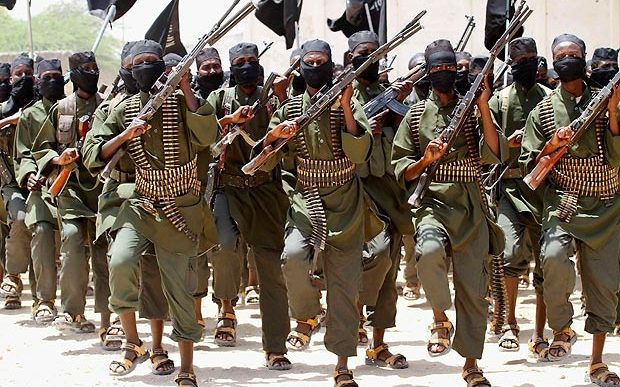
As the Islamic State continues its genocide of Yazidis and Christians in Syria and Iraq, a detailed report by the U.N.’s Human Rights Council reveals that Yazidi mothers and their children are brutally persecuted – mothers sold and re-sold as sex slaves, children murdered, and children traumatized from being forced to listen behind locked doors as their mothers are raped and beaten.

One Yazidi woman who was sold seven times to ISIS fighters said, “When he would force me into a room with him, I could hear my children screaming and crying outside the door. Once he became very angry. He beat and threatened to kill them. He forced two of them to stand outside barefoot in the snow until he finished with me.”

An ISIS fighter killed the children of a Yazidi woman who was sold three times as a sex slave. When she asked him, “What did you do to them?” he beat her and said, “They are kuffar [non-Muslim] children. It is good they are dead. Why are you crying for them?”

The U.N. report from June, They Came to Destroy: ISIS Crimes Against the Yazidis, explains the Islamic State’s attacks on Yazidi villages in Sinjar in August 2014 and the subsequent (and ongoing) genocidal actions taken by ISIS to destroy the Yazidi people.

The report is based on 45 interviews with survivors, religious leaders, doctors and journalists. An estimated 5,000 Yazidis have been killed, so far, by the Islamic State. “ISIS has sought to destroy the Yazidis through killings, sexual slavery, enslavement, torture and inhuman and degrading treatment and forcible transfer causing serious bodily and mental harm,” states the report. (Read more from “Yazidi Children Screamed and Cried Outside the Door While ISIS Fighters Raped Their Mothers” HERE)

Follow Joe Miller on Twitter HERE and Facebook HERE.

Socialist, Refugee Advocate to Run UN for Next 5 Years

While it’s hardly the election to get the most attention this year, the United Nations General Assembly has confirmed a nominee with a background in socialist politics and refugee matters to be the organization’s new secretary-general.

The 193-member United Nations General Assembly approved Antonio Guterres, a socialist whom President Barack Obama called a man of “character, vision, and skills” in a statement five days before speaking with him on the phone.

Guterres replaces U.N. Secretary-General Ban Ki-moon, who served two five-year terms and is stepping down from the position on Dec. 31.

Obama said in his statement that the new secretary-general would be instrumental in dealing with “unprecedented challenges” facing the world, including the surge of millions of displaced people and climate change.

In the midst of the Syrian civil war, the refugee crisis has become front and center for most Western countries, including the United States. Guterres, 67, was prime minister of Portugal from 1995 to 2002, as head of the country’s Socialist Party. He also was the head of the U.N. High Commission for Refugees from 2005 through 2015. Both roles involved some controversy.

When addressing the U.N. General Assembly after his victory, Guterres talked about bringing relief to refugees and promoting gender equality as key priorities, but also said he would take a limited approach to his new office.

“I believe this process means that the true winner today is the credibility of the U.N. And it also made very clear to me that, as secretary-general, having been chosen by all member states, I must be at the service of them all equally and with no agenda but the one enshrined in the U.N. Charter,” Guterres said.

The bigger question might be whether the role matters, said Fred Fleitz, a former U.N. analyst for the CIA and the chief of staff for former U.N. ambassador John Bolton.

“The U.N. is more and more a nonentity,” Fleitz told The Daily Signal in a phone interview. “It’s used to justify actions, but because of the vetoes on the Security Council, there is no way to act on Syria or North Korea. I don’t know if this election matters.”

Still, Fleitz said he believes the socialist background of the new secretary-general is relevant.

“It should be concerning to have someone with that perspective for thinking along the lines of one-world government at a time when the world is moving away from that, if you look at the European Union,” Fleitz said.

In addition to leading the Socialist Party in Portugal, Guterres presided over Socialist International, a global group of 153 socialists, social democratic, and labor party leaders, from 1999 to 2005.

Guterres weathered controversy in both of his past positions, said Brett Schaefer, a senior fellow in international and regulatory affairs at The Heritage Foundation.

Guterres resigned as prime minister of Portugal when the Socialist Party took heavy losses in the 2001 local elections following an economic downturn. At the U.N., a 2010 independent Board of Auditors cited the United Nation’s refugee agency for weak financial management and oversight.

Still, Guterres was clearly the best out of a crowded field of candidates for the job, Schaefer said. Schaefer said he thinks the new U.N. chief’s socialist affiliations say something about him.

“It provides some insight into his political leanings and shows that he advocates an economy where the state is more interventionist in markets and over the lives of individuals,” Schaefer told The Daily Signal.

Schaefer anticipates that Guterres will be a strong spokesman on the refugee front, possibly using his platform to call for more Western countries to increase the number of refugees they take in.

“I’m sure he will advocate for the part of the U.N. system he knows the best, given the significant rise in refugees we’ve seen in recent years, he will do what he can to address that problem,” Schaefer said.

Ultimately, Guterres’ ability to push an agenda will be limited, since the U.N. Security Council has the ultimate authority to make major decisions, Schaefer said. That’s why Schaefer contends it would be better to focus on weeding out waste and corruption in the organization.

Guterres, a practicing Catholic, is a trained engineer and was a professor before going into politics in 1974. Guterres will take his post in January, just weeks before the inauguration of a new U.S. president. (For more from the author of “Socialist, Refugee Advocate to Run UN for Next 5 Years” please click HERE)

Follow Joe Miller on Twitter HERE and Facebook HERE.