
Freed American Pastor’s Story Adds More Questions to Dispute over Iran Cash Payment

The fallout from the revelation that the Obama administration paid $400 million in cash to Iran continued on Thursday when one of the four American hostages freed on the same day described how his trip home was delayed under murky circumstances.

Pastor Saeed Abedini, an Iranian-American Christian pastor who was imprisoned in Iran, told Fox Business Network in an interview that he was taken out of his prison cell and brought to an airport in Tehran. There, a plane was waiting for him and other freed American prisoners, Abedini said. But before they could be flown home, Abedini said he and the other prisoners had to wait several hours for another plane to land first.

The Wall Street Journal reported earlier this week that a $400 million cash payment to settle a longstanding legal claim was delivered to Iran on palettes aboard an unmarked plane on the same day in January when Abedini and the other hostages were freed. The nuclear deal with Iran was also implemented that day.

Critics quickly charged that the transfer of cash to Iran—money it was already owed—amounted to a “ransom” payment.

When Fox Business Network’s Trish Regan suggested to Abedini that the plane he said he was waiting for could be the plane that delivered the $400 million to Iran, the pastor said he wasn’t told the details of the hold-up.

“They didn’t talk about money,” Abedini said. “They just told me about the plane. The reason they said you are here in the airport is because we are waiting for another plane. After that, they never told anything to me and I didn’t see anything.”

Abedini said he and the other freed hostages ended up spending the night at the airport waiting for the second plane.

Under those circumstances, Regan asked Abedini if he thought the U.S. government paid a ransom for his freedom.

“I don’t believe they will use this money for just building an orphanage, but I prefer that the politicians answer this question,” Abedini said.

At a press conference Wednesday, a deputy spokesman for the State Department would not clarify the timeline for reporters.

“As to the timing, I simply don’t—I can’t answer conclusively that these hostage—or these detainees, Americans, were on a plane before that money arrived,” said the spokesperson, Mark C. Toner.

President Barack Obama, meanwhile, has tried to settle criticism of the cash payment.

Speaking to reporters at the Pentagon on Thursday, Obama said that the administration publicly announced on the day of the hostage release, and implementation of the nuclear deal, that it had also settled a $1.7 billion financial dispute with Iran over a failed arms deal dating back to the Iranian revolution.

The administration did not mention at the time that the first installment of that payment—the $400 million in cash—was paid in stacks of foreign currency that were flown to Iran on the same day the prisoners were released.

“This wasn’t some nefarious deal,” Obama said. “It wasn’t a secret. We were completely open about it. The only bit of news is that we paid cash.”

“The reason is because we couldn’t send them a check and we couldn’t wire the money. We don’t have a banking relationship with Iran which is part of the pressure we applied on them,” Obama added, referencing American sanctions that prevent dollars from being used in a transaction with Iran.

Obama’s defense hasn’t stopped critics from demanding more answers.

Sen. Chuck Grassley, R-Iowa, the chairman of the Senate Judiciary Committee, sent a letter to Attorney General Loretta Lynch on Friday asking about the Justice Department’s involvement in the cash payment.

The Wall Street Journal reported on Thursday that senior Justice Department officials had objected to the cash payment, worried it would be seen as a ransom.

They were overruled by the State Department, the newspaper said.

“There are serious questions about this administration’s policies regarding paying ransoms to terrorists and state-sponsors of terrorism,” Grassley wrote in the letter. (For more from the author of “Freed American Pastor’s Story Adds More Questions to Dispute over Iran Cash Payment” please click HERE)

Follow Joe Miller on Twitter HERE and Facebook HERE.
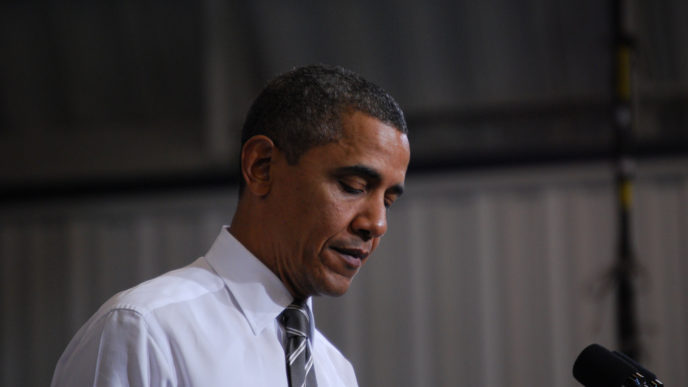
DOJ Protested Payment to Iran; Prisoners Told They Couldn’t Leave ‘Until Other Plane Arrives’

Count the Department of Justice among those who thought it was a boneheaded idea to drop $400 million cash in the Iranian ayatollah’s hands the same day four American prisoners were released.

According to The Wall Street Journal, which broke the story of the secret cargo plane of cash Tuesday, the timing and manner of the flight raised alarms with senior Justice Department officials. As one told the WSJ, “People knew what it was going to look like, and there was concern the Iranians probably did consider it a ransom payment.”

The State Department rejected DOJ’s concern and carried out the payment. On Thursday, Secretary of State John Kerry flatly denied any connection between the pallet of cash and the prisoner swap and implementation of the nuclear deal. “The United States does not pay ransom and does not negotiate ransoms,” Kerry told reporters while in Buenos Aires. “It is not our policy.”

President Obama himself scoffed at the notion he’d paid a ransom to Iran, telling reporters Thursday, “This wasn’t some nefarious deal.” But an interview of one of the prisoners conducted after his release challenges that assertion.

Timing Is Everything

A quick timeline may help explain DOJ’s alarm and the growing suspicion.

Way back in 1979, when Jimmy Carter was still in the White House, the Shah of Iran dropped $400 million into a Pentagon account to purchase U.S. fighter jets. Soon after, the Shah was overthrown by the Iranian Revolution and Carter canceled the deal, understanding that arming America-hating Islamists is never a good idea. The $400 million was frozen after those Islamists stormed our embassy, taking 56 Americans hostage.

In the decades since, Iran has wanted its money back with billions in interest, with the two sides endlessly haggling over the matter at an international court at The Hague.

Meanwhile, in recent years, Iran has been arresting Iranian-Americans, holding four in captivity like aces in a poker game as the Obama urged the terrorist nation to accept a deal over its nuclear program.

But what about the four hostages? John Kerry declared they are not part of the nuclear negotiations.

Obama got his Iran nuke deal last summer, with the agreement scheduled to formally go into effect January 2016.

The hostages remained rotting in prison. The public pressure mounted.

Suddenly, after 36 years — and entirely coincidentally, claims the White House — Obama decides it’s time to settle the matter of the $400 million. He’s going to give Iran back its $400 million, plus $1.3 billion in taxpayer money. And — entirely coincidentally — the hostages were being freed. Said Obama on January 17, “With the nuclear deal done, prisoners released, the time was right to resolve this dispute as well.”

The time was right, indeed, if you were one of those four hostages. Obama forgot to mention that the initial payment to Iran had already happened nearly simultaneously with the release of the prisoners. The White House Wednesday refused to clarify whether the money had to be delivered before the four were freed.

However, also on Thursday, Fox News played a clip of an interview they conducted with one of the prisoners, Saeed Abedini, the day he was freed. Abedini said that they kept being delayed “hours and hours” at the airport even though their plane was there and the pilots were ready. When he asked about the delay, he was told repeatedly they could not leave “until the other plane arrives” and “if that other plane doesn’t come we’ll never let you go.”

The Delivery

It’s not just the timing that made the deal suspicious. It was the delivery. The money wasn’t wired. There was no delay until a proper arrangement of U.S. funds could be made. There was no ceremony with a big check acknowledging this diplomatic breakthrough-cum-lottery-win for Iran. The administration got hold of $400 million in francs and rubles, packed it on a pallet, loaded it onto an unmarked cargo plane and landed it into the waiting arms of the world’s biggest state sponsor of terrorism. And our hostages were free.

No wonder the Justice Department thought the arrangement smelled an awful lot like a ransom payment. Still, the State Department rejected DOJ’s concerns and went ahead with its fly-by-night operation.

The Justice Department isn’t exactly denying the Wall Street Journal account, telling the newspaper the agency “fully supported the ultimate outcome of the administration’s resolutions of several issues with Iran.” “Ultimate outcome” is legal-speak for “At least they got the prisoners back in one piece.” A State Department spokesman declined to comment on the latest WSJ story.

Let’s add one more curious event to the timeline. Remember how Iran grabbed two boats full of U.S. sailors, made them kneel at gunpoint, made them appear in videos, made some of them cry, made a mockery of international law and standards? Remember John Kerry gushing over the Iranians like girls at a Justin Bieber concert? That happened just days before this magical congruence of cash flying one way, hostages flying the other and the Iran nuclear deal officially going into effect.

With Obama desperately needing the Iran deal to be implemented without a hitch, with the hostages still in limbo, with a settlement over the $400 million not yet announced, did the Iranians want to wring a few more concessions or a few more dollars out of its enemy? Or was it yet another coincidence?

John Kerry, Hillary Clinton and “Old News”

Secretary of State Kerry attempted to dismiss the significance of the WSJ bombshell, telling reporters, “This story is not a new story. This was announced by the president of the United States himself at the same time.”

His predecessor, current candidate for president Hillary Clinton, said almost exactly the same thing, like it was from a script: “Well,” she says in the clip below, “the White House talked about this and this is kind of old news. It was first reported about seven or eight months ago.”

“Old news” is a familiar phrase to those who have followed Clinton scandals. As Politistick.com notes when a scandal emerges the Clinton strategy is to deny, deflect, delay and then declare any further revelations as “old news.” Still, in this case, Hillary was not at the helm when the deal was completed, and indeed her answer above is carefully couched in phrases like, “as I understand.”

Meanwhile, Clinton’s opponent Donald Trump is being roasted for suggesting he watched Iranian government video of the Iranians unloading the $400 million. It was actually file footage from Fox News of the January prisoner release. Curious how quickly the media moves away from Obama’s actions to Trump’s mouth.

The “But the Sale Was Going to End” Defense

There’s an old joke. A woman comes home from the department store with a new dress. “Honey, I made us $50!” “Great, dear. How?” “This dress was $100, but I got it half off!” Secretary Kerry is waiving that dress in defending the payment to Iran. He claims agreeing to pay $1.7 billion to Iran to settle the matter of the $400 million was a win for America. “We believe this agreement … actually saved the American taxpayers potentially billions of dollars,” Kerry said. “There was no benefit to the United States of America to drag this out.” After 36 years, how does dragging it out a few weeks make a difference?

The notion that we had to pay Iran this money right now because the only alternative was paying billions more later struck a familiar chord. As President Obama and Kerry were pushing the Iranian nuclear deal, they repeatedly stated that the only alternative to signing the deal they negotiated was war.

This was one of the false narratives — what others would call “lies” — White House adviser Ben Rhodes admitted he created in order to sell the Iranian nuclear deal.

In the wake of Rhodes’ boast and the events surrounding the $400 million payment, it’s no stretch to suggest that while America citizens were ransomed, our credibility was destroyed. (For more from the author of “DOJ Protested Payment to Iran; Prisoners Told They Couldn’t Leave ‘Until Other Plane Arrives” please click HERE)

Follow Joe Miller on Twitter HERE and Facebook HERE.

FBI Technician Convicted of Spying for China

An FBI computer technician with top-secret clearance who regularly accessed restricted information has been outed as a Chinese spy. Working in the agency’s large New York City office, Reuters reports, Kun Shan Chun was convicted Monday of acting as an agent of a foreign government and will be sentenced December 2. He had been arrested in March after a sting operation.

Chun, known as “Joey,” came to this country from China with his parents when he was 5. A naturalized citizen of the United States, he began working for the FBI in 1997 but admitted only to passing secrets to the Chinese government from 2011 to 2016, working through a Chinese printer company, for which he worked as a researcher and consultant.

The assistant U.S. attorney said that the information he passed to the Chinese government “included the identity and travel plans of an FBI agent; an internal organizational chart; and photos he took of documents in a restricted area related to surveillance technology,” according to Reuters.

Rising Chinese Espionage

Chun had been charged with four counts, but accepted a plea bargain for the one charge with the agreement he would serve a short sentence. “Since the government’s evidence against Chun looks airtight,” wrote security expert John R. Schindler, “it seems likely that the Feds don’t want a trial which would require the Bureau to explain in detail what their mole gave to Beijing.” Writing in The Observer, a New York City weekly, he argued that

rising Chinese espionage presents a serious problem for the United States because it’s so heavily ethnic in character. Beijing expects its nationals overseas — whom we want to view as patriotic immigrants and naturalized Americans — to serve as their spies abroad, and some of them are quite willing to do so, particularly if China sweetens the pot with financial incentives. This seems to have been the case with Chun.

Schindler warned that such spies are hard to catch, partly because of “political correctness.” No one “wants to be accused of ethnic bias — or worse “racial profiling” — over molehunts. As with counterterrorism in the age of Obama, it’s worse for your counterespionage career to be accused of racism than to miss the mole right in your midst.”

Schindler has, he said, knowledge of “suspected Chinese moles inside our Intelligence Community” who “were allowed to resign, never to face charges of any kind.”

The Daily Caller quoted a report by Manhattan U.S. Attorney Preet Bharara stating that Chun’s is the second Chinese espionage case in the past four months. The other is the case of Amin Yu, “‘who smuggled underwater drone parts from U.S. companies to a state-owned university in China that does military research.’” Yu was a permanent resident who used her own companies to acquire the parts she sent on to China.

The week before Yu was arrested, Newsweek reported, Chinese citizen Fuyi Sun was arrested in another sting operation for buying strictly controlled carbon fiber to send to China. And those arrests followed yet others, including this one described in a New Yorker feature. (For more from the author of “FBI Technician Convicted of Spying for China” please click HERE)

Follow Joe Miller on Twitter HERE and Facebook HERE.

Republicans Consider Next Steps After News of Obama Administration Cash Transfer to Iran

Republicans in Congress are criticizing President Barack Obama’s administration for its approval of a $400 million delivery of cash to Iran on the same day the country released four American prisoners and formally implemented the nuclear deal.

Though the administration says the timing of the $400 million money transfer was coincidental, and part of a resolution of a failed arms deal between the two countries that dates to the Iranian revolution, critics say that a link between the payment and the prisoner exchange is undeniable.

“The claim that the timing is coincidental is beyond unbelievable,” said Rep. Lee Zeldin, R-N.Y., an outspoken critic of U.S. policy toward Iran. “It is clear at this point that one of two possibilities apply to this administration: either the president has absolutely no idea what he is doing or the president knows exactly what he is doing and is playing for some other team.”

“Unfortunately, paying a $400 million ransom is no game and the consequences are grave,” Zeldin told The Daily Signal in an interview.

Critics of the deal on Wednesday called on the White House to disclose details of the payment.

Sen. Tom Cotton, R-Ark., sent a letter to Secretary of State John Kerry and Treasury Secretary Jack Lew demanding answers on the timing and nature of the money transfer, and how the remaining $1.3 billion will be paid.

Other opponents of the deal predicted the money transfer would have broader repercussions.

“The revelation that the Obama administration ransomed the three Americans being unjustly detained by Iran with $400 million in cash is only the most recent piece of evidence that the so-called nuclear deal with the mullahs is fundamentally illegitimate,” Sen. Ted Cruz, R-Texas, said in a statement.

“It is nothing but a series of bribes and secret agreements that will do nothing to prevent Iran from reaching nuclear capability, yet will provide funding for their sponsorship of terrorism and encourage them to detain more of our citizens. This ‘deal’ should be ripped to shreds immediately before more damage is done.”

Contested Transaction

In January, the Obama administration announced the implementation of the nuclear deal between the U.S. and Western powers, and Iran, that would constrain Tehran’s nuclear capability in exchange for billions in sanctions relief.

That same weekend, the White House and State Department simultaneously announced a prisoner swap—including the U.S. freeing seven Iranian citizens and dropping extradition requests for 14 others—and the settlement of a financial dispute with Iran that awarded $1.7 billion to Tehran.

But Tuesday night, The Wall Street Journal reported details of the transaction that struck a nerve with Republicans.

The newspaper reported that the administration secretly arranged a plane delivery of $400 million in cash to Iran, representing the first installment of a $1.7 billion settlement resolving claims at an international tribunal at The Hague over the sale of military equipment prior to the Iranian revolution.

The United States sold the military equipment to Iran, but Tehran never received the material because the shah was overthrown in the 1979 revolution.

According to The Wall Street Journal, the U.S. procured the $400 million from central banks in Switzerland and the Netherlands, since American sanctions prevent dollars from being used in a transaction with Iran.

The White House on Wednesday disputed Republicans’ characterization of the cash payment.

“We would not, we have not, we will not, pay a ransom to secure the release of U.S. citizens,” Josh Earnest, White House press secretary, said at a press conference. “That’s a fact. That is our policy and it is one that we have assiduously followed. The only people who are making that suggestion are right-wingers in Iran who don’t like the deal and Republicans in the United States that don’t like the deal.”

Richard Nephew, a former State Department official who served as the lead sanctions expert for the U.S. team negotiating with Iran, told The Daily Signal that since 1981 the U.S. has been trying to settle various claims from before the revolution.

Nephew said the negotiators were attorneys with the Office of the Legal Adviser at the State Department who were working in the background removed from policy issues related to Iran, including the nuclear component.

He said, in his negotiations with Iran on the nuclear deal before he left the State Department in January 2015, the issue of the outstanding claims to Tehran never came up.

“The reality is a lot of these claims have been settled over the last 30 years that most Americans never heard of,” Nephew said. “This kind of transaction would have happened anyway, without the nuclear deal and prisoner release. I think for opponents of the Iran deal there will always be something you can point to and say this proved how bad the Iran deal is, but we ought to be more careful about how we characterize certain things.”

‘No Coincidence’

U.S. officials have conceded, however, that the Iranians wanted the $400 million money transfer to coincide with the release of the American prisoners to show that Tehran got something of value from the deal.

The Wall Street Journal reported that Iranian media have quoted senior Iranian defense officials describing the cash as a ransom payment.

Gary Samore, Obama’s former chief adviser on nuclear policy, told The Daily Signal in an interview that the cash transfer should not be technically referred to as a ransom, since the money belonged to Iran.

Yet he said the timing of the payment was not coincidental.

“I don’t think the prisoner release would have taken place without a settlement of this dispute,” Samore said. “If you ask would the Iranians have released those four Americans in the absence of an agreement on this long dispute, the answer is no. From Iran’s perspective, getting their hands on their cash was an essential element of releasing the prisoners. The plane with cash arrived on the same day the prisoners came home. That’s no coincidence. That’s quid pro quo.”

‘We Don’t Have Leverage’

Since the implementation of the nuclear deal, Republicans in Congress have sought ways to punish Iran for its continued support of U.S.-declared terrorist groups Hezbollah and Hamas, and conducting ballistic missile tests.

In addition, Iran’s Revolutionary Guard, which reports to Supreme Leader Ayatollah Ali Khamenei, has continued to arrest foreign nationals, including Iranian-Americans, since striking the nuclear deal.

Before leaving for its summer recess, the House passed legislation to impose a set of sanctions on Iran, and another measure to block Iran’s access to the U.S. financial system.

“If we want to deal with Iran’s bad activities, which include imprisoning more Iranian-Americans and foreigners, we need to put that leverage back on table,” Zeldin said. “We don’t have leverage right now.”

In the Senate, meanwhile, the Foreign Relations Committee introduced a bill in July that extends the Iran Sanctions Act and adds new sanctions related to ballistic missiles, terrorism, and cybersecurity.

The Obama administration has expressed openness to extend the Iran Sanctions Act, a core element of U.S. sanctions on Tehran that punishes foreign entities supporting Iran’s energy sector and purchase of advanced conventional weapons.

But it views other means of punishment as undermining the nuclear agreement, meaning Iran may have less incentive to comply with the deal. (For more from the author of “Republicans Consider Next Steps After News of Obama Administration Cash Transfer to Iran” please click HERE)

Watch a recent interview with the author below:

Follow Joe Miller on Twitter HERE and Facebook HERE.
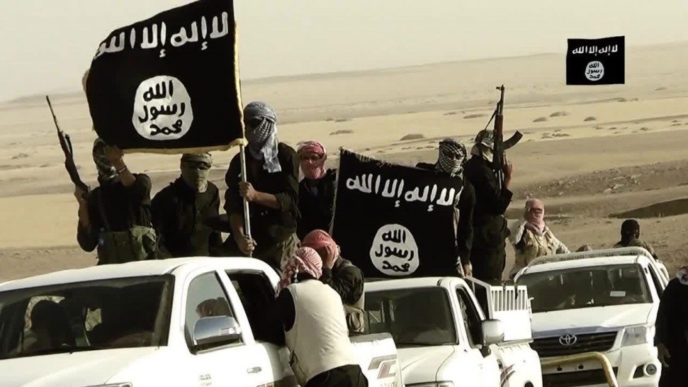
French Prime Minister Plans Ban on Foreign Funding for Mosques

The French government is considering banning the foreign financing of mosques as it reshapes its counter-extremism strategy following a fresh wave of terror attacks.

Manuel Valls, the Prime Minister, told Le Monde the prohibition would be for an indefinite period but gave no further detail on the policy.

“There needs to be a thorough review to form a new relationship with French Islam,” he added.

“We live in a changed era and we must change our behaviour. This is a revolution in our security culture…the fight against radicalisation will be the task of a generation.”

Following the murder of a priest by teenage Isis supporters at a church in Normandy and the Nice attack, Mr Valls said France was “at war” and predicted further atrocities. (Read more from “French Prime Minister Plans Ban on Foreign Funding for Mosques” HERE)

Follow Joe Miller on Twitter HERE and Facebook HERE.

The Nusra Front Is Dead and Stronger Than Ever Before

The jihadi group Jabhat al-Nusra announced on July 28 that it had severed all ties to al Qaeda and established a new movement in Syria: Jabhat Fateh al-Sham, or “the Front for the Conquest of the Levant.” The unprecedented move was formally sanctioned by al Qaeda’s senior leadership and comes as the group has also revealed its leader’s identity for the first time.

In a video statement televised simultaneously on pro-opposition Orient News and on Al Jazeera, Jabhat al-Nusra leader Abu Mohammed al-Jolani — whose real name was separately revealed to be Ahmed Hussein al-Shara — presented the split as one driven by a desire “to form a unified body” of Islamist forces and to bring together the disparate factions of Syria’s revolution to best ensure the credible defense of Islam from attack. Continuing a long-held theme, Jolani introduced Jabhat Fateh al-Sham as a movement that would exist to “protect” and to “serve,” rather than to rule or oppress. He also said that the international community’s increasing attention to the group, due to its al Qaeda links, was a reason for “the complete cancellation of all operations under the name of Jabhat al-Nusra.”

Nobody should be confused by this maneuver: Jabhat al-Nusra, which is also known as the Nusra Front, remains as potentially dangerous, and as radical, as ever. In severing its ties to al Qaeda, the organization is more clearly than ever demonstrating its long-game approach to Syria, in which it seeks to embed within revolutionary dynamics and encourage Islamist unity to outsmart its enemies, both near and far. In this sense, the Nusra Front (and now Jabhat Fateh al-Sham) differ markedly from the Islamic State, which has consistently acted alone and in outright competition with other Islamist armed factions. Instead of unity, the Islamic State explicitly seeks division.

Ultimately, while this may be a change in name and formal affiliation, Jolani’s group will remain largely the same. Therefore, this is by no means a loss to al Qaeda. In fact, it is merely the latest reflection of a new and far more potentially effective method of jihad focused on collective, gradualist, and flexible action. Its goal is to achieve recurring tactical gains that one day will amount to a substantial strategic victory: the establishment of an Islamic emirate with sufficient popular acceptance or support. (Read more from “The Nusra Front Is Dead and Stronger Than Ever Before” HERE)

Follow Joe Miller on Twitter HERE and Facebook HERE.

N. Korea: US Has Crossed Red Line, Relations on War Footing

North Korea’s top diplomat for U.S. affairs told The Associated Press on Thursday that Washington “crossed the red line” and effectively declared war by putting leader Kim Jong Un on its list of sanctioned individuals, and said a vicious showdown could erupt if the U.S. and South Korea hold annual war games as planned next month.

Han Song Ryol, director-general of the U.S. affairs department at the North’s Foreign Ministry, said in an interview that recent U.S. actions have put the situation on the Korean Peninsula on a war footing.

The United States and South Korea regularly conduct joint military exercises south of the Demilitarized Zone, and Pyongyang typically responds to them with tough talk and threats of retaliation. (Read more from “N. Korea: US Has Crossed Red Line, Relations on War Footing” HERE)

Follow Joe Miller on Twitter HERE and Facebook HERE.

Is This Hillary’s New Libya Narrative?

Lanny Davis, trusted Clinton surrogate and advisor, told Washington’s WMAL radio station Thursday that Democratic nominee Hillary Clinton is not to blame for Libya’s current state of affairs because the U.S. role was under a joint NATO operation.

Davis’s comments may indicate the Clinton campaign intends to blame Libya’s failed state on NATO and President Barack Obama, to absolve her significant role in pushing for the intervention in 2011. Clinton was a strong advocate of military force against NATO in 2011. Sidney Blumenthal, a trusted Clinton confidant and Davis friend, even emailed Clinton in 2011 counseling her, “this is an historic moment and you will be credited for realizing it.”

When WMAL radio hosts asked Davis about Clinton’s complicity in the Obama administration’s withdrawal from Iraq, Davis retorted “that was Obama’s policy.” Davis’s comments may indicate the Clinton campaign intends to drastically play down Clinton’s role in the effects of Obama’s foreign policy, while simultaneously taking credit for the office of Secretary of State.

Davis’s comments portrayed the Libyan intervention as one that NATO, with France in the lead, would pursue regardless of a U.S. role in the operation. Washington committed significant U.S. assets to the operation, and was critical in bringing the fall of Libyan dictator Colonel Gadhafi. A New York Times report from February 2016, examining the U.S. decision-making process in Libya, revealed that Clinton was the key to Obama’s decision to intervene. (Read more from “Is This Hillary’s New Libya Narrative?” HERE)

Follow Joe Miller on Twitter HERE and Facebook HERE.

How Other Nations Stop US From Deporting Criminal Illegal Aliens

Susanna Ruth Makinson can blame a lot of things for why her then-husband was shot dead eight years ago while patrolling the streets of Fort Myers, Florida, the first time since 1930 a police officer had been gunned down in the city.

That’s because, in a distant way out of her—and his—control, Andrew Widman’s death felt preventable; his killer, Abel Arango, was an illegal immigrant and convicted felon who was released from detention because his native Cuba wouldn’t take him back.

But though Makinson wishes the government would do more to fix this little-known problem in the immigration system, to do more to pressure uncooperative countries to accept their citizens who are here illegally and commit crimes, she also has gained a lifetime of perspective raising three kids without their father.

“It’s a huge problem that criminals take advantage of; most people don’t know it’s possible for the originating country to decline the person being deported,” Makinson told The Daily Signal in an interview. “It bothers me. At the same time, what if I had been sick that day and my husband hadn’t gone to work? I would go crazy thinking through every ‘what if’ scenario. I try not to do that. We don’t live in a perfect world.”

Pressure to Do More

Yet in 2016, the inability to deport criminals continues to frustrate lawmakers, advocates of tougher immigration laws, and families who’ve been victimized by violent offenders.

According to Immigration and Customs Enforcement (ICE), an agency of the Department of Homeland Security, thousands of illegal immigrants with criminal convictions have been released from custody—some who’ve committed crimes like assault and murder—because they can’t be repatriated.

As of May, ICE classified 23 countries, including China, Afghanistan, Iraq, Iran, and Libya, as being “recalcitrant,” or uncooperative.

That lists also still includes Cuba, a country with which the Obama administration restored diplomatic relations with last year after five decades of hostility.

“We shouldn’t allow other countries to dictate who will be deported from the United States,” said Jessica Vaughan of the Center for Immigration Studies. “The Obama administration has been passive on this and not used the tools Congress has given them to address this problem.”

Deporting illegal immigrants is more complex than simply sending them on a plane home.

Like anyone traveling abroad, those destined for deportation need documentation, like a passport.

If the native country refuses to issue those papers, the U.S. cannot deport people there.

But critics say the government can be more aggressive in using diplomatic leverage to pressure countries to comply.

Under immigration law, the State Department can deny visas to citizens of countries that refuse to repatriate their nationals.

The government is reluctant to use this authority, however. A State Department official told The Daily Signal that the government has refused to issue visas to only one nation, in 2001 against the South American nation of Guyana.

“Visa restrictions are not imposed lightly,” the State Department official said. “For many years, we have worked with DHS [Department of Homeland Security] to review the status of each recalcitrant country on a case-by-case basis. We engage at the highest levels to resolve these issues diplomatically when possible, while remaining ready to invoke visa restrictions, as warranted, in consultation with DHS.”

Sen. Chuck Grassley, R-Iowa, who chairs the Judiciary Committee, wrote a letter last month to Homeland Security Secretary Jeh Johnson urging him to work with the State Department to more liberally administer visa sanctions to noncompliant countries.

“The Department of Homeland Security and the State Department together have an effective tool to discourage this behavior, and it’s high time they use it,” Grassley told The Daily Signal in an emailed statement. “No other American family should have to endure a tragedy because criminal immigrants are allowed to stay in this country, even if foreign countries won’t take responsibility.”

In addition, Sen. Richard Blumenthal, D-Conn., plans to introduce legislation to sanction countries that won’t take back their citizens.

One of the most egregious crimes occurred in Blumenthal’s state. Last month, Jean Jacques, an illegal immigrant from Haiti, was sentenced to 60 years in prison for murdering Casey Chadwick, a 25-year-old woman from Norwich, Connecticut.

Jacques, 41, had a previous attempted murder conviction and should have been deported, but Haiti would not take him back because they said he could not prove he was a citizen.

Challenges to Deportation

The government faces a number of challenges in deporting illegal immigrants who commit crimes here.

A 2001 Supreme Court decision, Zadvydas v. Davis, said that the government cannot indefinitely detain an immigrant just because that person’s country of origin declines to accept his repatriation. If the immigrant cannot be deported after six months, they must be released from custody. However, according to ICE, immigration authorities can hold immigrants longer in a “very narrow category of cases involving special circumstances, including certain terrorist [activities] and dangerous individuals with violent criminal histories.”

But immigration officials argue the legal standard for keeping an immigrant in detention for that reason is tough to meet.

“The Supreme Court’s Zadvydas decision has required ICE to release thousands of dangerous individuals,” said ICE Deputy Director Daniel Ragsdale in testimony before Congress this month. “Sadly, ICE records indicate a number of these aliens have gone on to commit additional crimes while in the United States.”

Despite the hurdles, ICE and the State Department claim to be making progress.

In fiscal year 2015, Ragsdale told Congress, ICE was able to remove convicted criminals to 10 countries, including Uganda and Sudan, which did not previously accept its citizens back.

The State Department and ICE are pursuing other avenues to push countries to cooperate.

An ICE official told The Daily Signal that the agency has sent 125 letters this fiscal year to nation’s embassies in the U.S. seeking cooperation in the deportation process. The official said ICE has issued more of these letters this year than in any other year.

Also, before resorting to visa sanctions, the government can recall a recalcitrant country’s ambassador to the U.S. for a meeting.

‘Andy’s Story’

Despite these efforts at improvement, uncooperative nations continue to contribute to a glaring weakness in the U.S. immigration system, leading to tragic consequences.

Makinson, the then-wife of Widman, the murdered Fort Myers police officer, cannot be the agent of change people may want her to be.

Now 37 years old and remarried, Makinson is consumed with raising the three kids she had with Widman, in a place far away from Fort Myers, in Franklin, North Carolina.

It would have been too hard to remain in a city where her deceased husband’s legacy literally exists—the street outside the Fort Myers police station was renamed Widman Way.

But Makinson still holds dear her relationship with Widman, which began when the couple met at Toccoa Falls Bible College in Toledo, Ohio.

It was there that Widman studied to become a missionary, before he was later attracted to the service of law enforcement.

“He was very community minded,” Makinson said. “He wasn’t in police work because he wanted to prove something. He really want to help people and impact their lives, and he thought this was a good way.”

Widman had been at the police department less than year—and patrolling his own car for even less time than that—when he was called to patrol downtown Fort Myers in the early morning hours of a muggy July night in 2008.

The clubs and bars were letting out when Widman intervened on a verbal argument between Arango, the Haitian immigrant, and a woman. Arango shot Widman, 30, from close range in the face, killing him instantly.

Widman’s surviving children, Samuel, Sasha, and Sylvia, carry his last name, they know his story, and will carry it on.

“The conversations about Andy [Widman] never stop,” Makinson said. “This is their history, this is their life and it always will be. It’s helped them to be free to talk about him and ask me questions—anything from, ‘I don’t like carrots; did dad like carrots?’ To my son asking me what his voice sounds like, and I tell him it sounds like his dad.”

Samuel, the oldest, was only 4 when Widman was killed. He shares his father’s spiritual, thoughtful demeanor, Makinson says.

The children refer to Makinson’s new husband, Jonathan, as “dad.” Their biological father has his own special title. “We talk about him as ‘dad in heaven,’” Makinson said.

Makinson is trying to fulfill her own life, and her children’s lives, as best she can, while preserving meaning from Widman’s.

“The most courageous thing I’ve ever done with my entire life is moving to participate in life and be a real person for my children after Andy’s death,” Makinson said. “But I’m still hoping that Andy’s story can be a catalyst for change, and if we can get that immigration loophole closed, I hope it can save other lives.” (For more from the author of “How Other Nations Stop US From Deporting Criminal Illegal Aliens” please click HERE)

Watch a recent interview with the author below:

Follow Joe Miller on Twitter HERE and Facebook HERE.

Obama Implies Russians Committed DNC Email Hack to Benefit Trump

President Obama suggested there could be a relationship between Donald Trump and the Russians in an interview excerpt Tuesday, citing the Democratic National Committee email hack.

NBC’s Savannah Guthrie asked Obama a two-pronged question: the first was if the Russians were behind the hack, and the second was if they were trying in interfere in an American presidential election.

He said that the FBI still has an open investigation into this matter, but experts point to the Russians.

He then implied that there was a relationship between Russia and Trump. Even though the comment was vague, the suggestion was still present.

“Well, I think the FBI is still investigating what happened,” he said. “I know that experts have attributed this to the Russians. What we do know is that the Russians hack our systems, not just government systems, but private systems. But, you know, what the motives were in terms of leaks, all that, I can’t say directly. What I do know is that Donald Trump has repeatedly expressed admiration for Vladimir Putin.” (Read more from “Obama Implies Russians Committed DNC Email Hack to Benefit Trump” HERE)

Follow Joe Miller on Twitter HERE and Facebook HERE.