What Brexit Means for the European Union’s Future

Britain’s decision to leave the European Union could inspire other disaffected nations to consider a way out unless the bloc responds to anxiety across the continent over jobs, immigration, and globalization.

While experts say an all-out breakup of the European Union is far-fetched, countries both successful (like Sweden) and struggling (such as Greece) may view the British experience as a model to change their own lots in life.

“There is a serious risk that Britain’s decision to withdraw from the European Union could set off similar demands on other member states,” said Michael Leigh, a senior fellow at The German Marshall Fund of the United States, adding:

It was clear even before the British referendum that the EU is facing a number of problems, and if the EU wishes to regain credibility in the eyes of the citizens of European countries, it must find a way to tackle its own disorders effectively, and demonstrate it can function properly.

Last week, Britain, the European Union’s second-largest economy after Germany, became the first to decide to leave the 28-member bloc.

Leigh, in an interview with The Daily Signal, said the European Union must not view Britain’s exit as a unique case, but rather, a consequence of populist anger that exists throughout the continent. That anger, he said, is fueled by unease that the global economy has created winners and losers, and that integration and bureaucracy may be making that gap harder to close.

According to experts, other member countries with large populations of people skeptical of the European Union—and also may demand a similar referendum—include France, Denmark, Italy, the Netherlands, Hungary, Poland, and Austria.

The European Union also faces other challenges, such as the refugee crisis sparked by refugees fleeing war and poverty in the Middle East and North Africa; Russian aggression in Ukraine; and Greece’s faltering economy.

“We shouldn’t really expect the British referendum to be followed by this sudden surge of integration,” Leigh said:

That’s not realistic because there’s serious differences of views concerning the way forward. The main lesson EU leaders will have learned about the rise of populism is there is no expectation or demand for more Europe. As a result of the British experience, the people will be looking for pragmatic solutions and concrete projects to get out of this problem rather than some new commitment to a more united Europe.

The first big hint of how member governments view the British decision to exit the EU, known as Brexit, will come as they negotiate the terms of Britain’s position outside the union. Also not clear is whether they’ve learned lessons from the result of Britons’ vote.

In an emergency meeting over the weekend of foreign ministers from the European Union’s six founding states—Belgium, France, Germany, Italy, Luxembourg, and the Netherlands—leaders expressed a desire for Britain to quickly invoke Article 50, which would allow the process for severing ties to begin and set a two-year timeline for doing so.

Leigh, and other experts, say those favoring a fast resolution may try to impose harsh conditions on Britain, and limit its interaction with the bloc, in order to make an example of the British.

But other leaders, especially German Chancellor Angela Merkel, considered a key figure in rebuilding the EU, prefer a more patient approach so as to preserve the bloc’s integrity.

“The EU is liable to just bully Britain in order to discourage others from leaving,” said James Jeffrey, a former U.S. ambassador to Iraq who specializes in European security and political issues, adding:

That would be the wrong path to take because instead of discouraging the political class, they would really be discouraging the general population, which is fed up with business as usual inside the EU. So the EU could draw the wrong lessons from Britain’s exit.

Jeffrey, in an interview with The Daily Signal, cautioned European leaders to acknowledge the divide between the elite and masses, and seek to do something about it.

“This is a struggle between the cosmopolitan elite—not just bureaucrats but people who are successful in a modernized globalized economy in Europe and happy with the idea of an ever closer union—and others who want to stay a part of their own countries who have a patriotic feeling and don’t buy the EU’s goals,” Jeffrey said. “We have to reform the EU and water down this idea of a union and take effective action on immigration and address how to loosen the inevitable mountain of regulations that the EU puts on everybody, which just drives some people crazy.”

Ted Bromund, a Heritage Foundation expert on U.S. and British relations with the European Union, argues that though member countries have different conditions, their collective anxiety is animated by the European debt crisis that began at the end of 2009.

“Some nations, like Greece, feel that the EU is bossing them around politically and economically in a particularly brutal way,” Bromund wrote to The Daily Signal in an email:

In others, the slow growth—which a result partly of their own economic policies—is also reflected on the EU. So there is no one single answer [driving the unrest]. If I had to pick one, it would probably be the economic factors around the Euro, and the EU’s low growth; but they are all wrapped up together, and you can’t pull them apart.

Despite these ongoing challenges, the European Union is likely to limit decisive action as the two most powerful nations in the bloc, Germany and France, grapple with national elections in 2017. Leaders of those countries cannot afford to alienate the populist strands of the electorate.

So, as one expert predicts, the European Union—the world’s biggest single economic market—may trudge on for now, until something dramatic happens again.

“There is a deep taboo among member states leaving the EU,” said Tim Oliver, a professor who is the Dahrendorf fellow on Europe-North America relations at the London School of Economics and Political Science.

“The European institution is about moving forward, not backward,” Oliver told The Daily Signal. “Finding a united position is never easy for the EU on a good day, let alone when it is facing something like this. The EU has so far muddled through these challenges. They never solve them. They cope.” (For more from the author of “What Brexit Means for the European Union’s Future” please click HERE)

Follow Joe Miller on Twitter HERE and Facebook HERE.

Report: Obama Administration Arming Those Killing Us in Middle East

What happens when Obama sends weapons, money, and American troops into a theater of war with no coherent mission and no clear enunciation of American strategic interests? Our own weapons and training are used against our soldiers and intelligence workers.

Last November, two American contractors were killed at a Jordanian police training center in Amman, Jordan, when a former trainee turned his guns on the Americans and several other foreign workers. This training facility is funded by U.S. taxpayer dollars to train Palestinian security forces, an endeavor we should not be supporting at all. To make matters worse, the New York Times is now reporting that the weapons used in the attack were purchased on the black market in Jordan through a stream of weapons from a CIA program intended to train and equip Syrian rebels!

Weapons shipped into Jordan by the Central Intelligence Agency and Saudi Arabia intended for Syrian rebels have been systematically stolen by Jordanian intelligence operatives and sold to arms merchants on the black market, according to American and Jordanian officials.

Some of the stolen weapons were used in a shooting in November that killed two Americans and three others at a police training facility in Amman, F.B.I. officials believe after months of investigating the attack, according to people familiar with the investigation.[…]

This program, which operated under code name Timber Sycamore, according to the Times, began in April 2013 in conjunction with Saudi Arabia and other gulf states. Remember, these are some of the same actors who are also directly funding Al Qaeda in Syria. Many of the Syrian rebels are either Islamists themselves or have allowed weapons to fail into the hands of Al Nusra and Ahar al-Sham, two Al Qaeda-linked groups operating in Syria . Now it has been revealed that some of those weapons, including Kalashnikovs, mortars and rocket-propelled grenades, were purloined by corrupt Jordanian officials and are now out on the “streets” of the Middle East’s black market.

This is just the latest example of how Obama is helping arm our enemies and sending our brave CIA and special operations troops into war to risk their own lives in helping our enemies or doing the bidding of Saudi Arabia. The House and Senate recently passed the annual defense authorization bill, which authorizes several hundred million dollars for the Syrian rebel train and equip program. As I noted at the time, it was a colossal lost opportunity for Republicans not to defund the program. Fortunately, they still have the opportunity to do so between the Senate-House conference committee or in the upcoming defense appropriations bill.

If Democrats want to distract from the problem of Islamic jihad and discuss gun control, they might want to start by preventing our own government from repeating the Fast and Furious gun running scandal on a global level. (For more from the author of “Report: Obama Administration Arming Those Killing Us in Middle East” please click HERE)

Follow Joe Miller on Twitter HERE and Facebook HERE.

Mexico President Urges North American Integration After Brexit

Mexican President Enrique Pena Nieto on Monday called for greater integration with Canada and the United States in the wake of Britain’s vote to split with the European Union.

Nieto, who spoke during a stopover in Quebec City, is scheduled to attend a North American leaders summit in Ottawa on Wednesday with his US and Canadian counterparts.

The three countries are economic partners in the North American Free Trade Agreement (NAFTA), and work closely on security matters.

At Wednesday’s summit, the leaders are expected to announce joint energy and environmental strategies, including matching renewable energy targets.

“The purpose of this visit is to renew our bilateral relationship, to give it new life, to find ways to advance the prosperity and competitiveness of North America,” Pena Nieto said. (Read more from “Mexico President Urges North American Integration After Brexit” HERE)

Follow Joe Miller on Twitter HERE and Facebook HERE.

If Mr. Obama Secretly Planned to Give Iran Nuclear Weapons, Exactly What Would He Be Doing Differently?

The Obama administration is encouraging companies to do business with Iran in order to make last year’s nuclear deal irreversible, The Wall Street Journal reported (Google link) Thursday.

Administration officials told the Journal that they were encouraging businesses to make agreements with Iran in order to make it harder for future administrations to unravel the deal, since that would then threaten American jobs. The push for opening up Iran to American business has been led by Secretary of State John Kerry, which has put him at odds with the Treasury Department, which enforces sanctions on Iran.

“We’re not going to stand in the way of permissible business activity with Iran,” a senior administration official told the Journal. “As long as Iran is meeting the terms of the deal, then we’re going to uphold our end of the bargain, and that is going to result in some additional business activity with Iran.”

The administration is also trying to improve Iran’s standing with the Financial Action Task Force (FATF), a watchdog organization that works to prevent illicit financial transactions. The FATF temporarily suspended countermeasures placed on Iran due to its its money laundering and terror financing on Friday after securing commitments from Iranian officials to clean up its practices. Treasury Secretary Jack Lew met with the governor of Iran’s central bank in April to discuss improving Iran’s standing with the FATF, senior administration officials told the Journal. The efforts to improve Iran’s standing with FATF, and thereby ease Iran’s path towards rejoining the global financial system, came despite the fact that, as a Treasury official noted in letters to Sens. Marco Rubio (R-Fla.) and Mark Kirk (R-Ill.) that were leaked to the Washington Free Beacon earlier this week, “Iran is a high-risk financial jurisdiction and has been designated as such by [FATF…and] is a Jurisdiction of Primary Money Laundering Concern….The concerns remain regarding Iran’s economy, such as transparency issues, corruption, and regulatory obstacles, have given businesses and banks pause when considering whether to engage with Iran.” The Treasury’s desire for Iran’s FATF rehabilitation, despite its statements to lawmakers (shortly before FATF suspended its countermeasures) that Iran remains a money-laundering concern, may raise suspicions that the government lobbied FATF to support Iran’s efforts in the same way that it has done for other international bodies.

The United States is also caught between opposing groups of allies regarding Iran’s desire to join the World Trade Organization (WTO). European allies have been pushing for Iran to join the WTO, while Gulf states, led by Saudi Arabia, oppose the membership bid. “The WTO accession process is based on consensus, and as of now, there are a number of countries that oppose appointing a chair to Iran’s working party on accession,” a State Department official told the Journal.

“Business diplomacy has been a core part of Mr. Obama’s foreign policy approach in engaging U.S. adversaries,” the Journal explained. “Mr. Obama sees the expansion of business transactions with the West in countries such as Iran and Cuba as the most promising means for solidifying the president’s policies there, his aides have said.” The controversial $25 billion sale of Boeing planes to Iran’s national carrier, Iran Air, is seen as “a boost” to these efforts.

Despite these efforts, Iranian Supreme Leader Ayatollah Ali Khamenei tweeted a complaint earlier this month that they didn’t go far enough: “US didn’t fulfill key part of commitments; oil money isn’t paid to us, while we’ve done our part, 20% enrichment, Fordow & Arak are stopped.”

Sen. Chris Coons (D – Del.), criticized the administration earlier this week for its efforts to boost business with Iran, saying, “I don’t think it’s our job to act as the chamber of commerce for Tehran.” (For more from the author of “If Mr. Obama Secretly Planned to Give Iran Nuclear Weapons, Exactly What Would He Be Doing Differently?” please click HERE)

Follow Joe Miller on Twitter HERE and Facebook HERE.
New UK Petition Calling for New Brexit Vote

No sooner has the Brexit vote passed, the referendum withdrawing the United Kingdom from the European Union, than a new referendum has been called to modify the referendum results, post-passage.

In other words, those who were opposed to the U.K. withdrawing from the EU have started a petition to call into question the Brexit results. And as of the writing of this story, nearly 2 million signatures have been added to the petition.

The Brexit vote resulted in 51.9 percent of UK residents demanding the U.K. pull out of the EU, while 48.1 percent voted to remain in the EU. But the new petition is asking for a new referendum to be issued.

According to Lizzie Dearden of the Independent, “Signatories are calling for a new rule to be implemented stipulating that polls on the European Union with a majority under 60 percent and turnout under 75 percent must be re-started.” They’re not petitioning for a recount, but a re-vote.

According to the BBC, “The petition’s website states it was set up by an individual called William Oliver Healey, and says: ‘We the undersigned call upon HM Government to implement a rule that if the Remain or Leave vote is less than 60 percent, based on a turnout less than 75 percent, there should be another referendum.’ Thursday saw a 72.2 percent turnout, significantly higher than the 66.1 percent turnout at last year’s general election, but below the 75 percent mark suggested by Mr. Healey as a threshold.”

At this point, the parliament is not considering another follow-up referendum according to recently resigned British Prime Minister David Cameron.

Further complicating matters is the fact not everyone in the U.K. wanted to withdraw from the EU. Both Scotland and Northern Ireland voted to remain in the EU. “The Scottish independence referendum in 2014 had a turnout of 84.6 percent — but there has not been a turnout above 75 percent at any general election since 1992,” the BBC stated. (For more from the author of “New UK Petition Calling for New Brexit Vote” please click HERE)

Follow Joe Miller on Twitter HERE and Facebook HERE.
UN: Brexit Means We Have to ‘Recalibrate’ Our Global Warming Plans

The U.K.’s Thursday referendum on European Union membership means that the United Nation’s global warming plans need to be rewritten, according to the executive secretary of the Paris global warming deal.

The referendum, often called Brexit, significantly changes the agreement, which assumed Britain would remain part of the EU.

“From the point of view of the Paris Agreement, the UK is part of the EU and has put in its effort as part of the EU so anything that would change that would require a recalibration,” Christiana Figueres, one of the architects of the Paris global warming deal, said the day before the Brexit vote. “In principle, it is actually, historically, we say, as humankind, we are moving towards larger and larger tents of collaboration […] rather than in the opposite way.”

Progressive outlets like The Guardian are already claiming that Brexit will reduce environmental protections and create more carbon dioxide (CO2) emissions.

The U.N.’s Paris global warming agreement will cost a minimum $12.1 trillion over the next 25 years, according to calculations performed by environmental activists. However, these estimates are likely low, as they exclude energy efficiency measures which will bring the total to $16.5 trillion, according to projections from the International Energy Agency.

That’s almost as much money as the U.S. federal government spent on defense in 2015, according to 2015 spending numbers from the bipartisan Committee For Responsible Federal Budget. The required annual spending is almost 3.7 times more than the $131.57 billion China spent on its military in 2014.

The deal, which was heavily encouraged by the Obama administration, encourages nearly 200 countries to reduce carbon dioxide emissions, slowing global warming. Secretary of State John Kerry however admitted that reducing carbon dioxide emissions in the U.S. and the developed world will not help the environment or even slow down global warming. (For more from the author of “UN: Brexit Means We Have to ‘Recalibrate’ Our Global Warming Plans” please click HERE)

Follow Joe Miller on Twitter HERE and Facebook HERE.
BREXIT: Just What the Doctor Ordered

Janet Yellen should send a note of congratulations to Nigel Farage and Boris Johnson, the British politicians most responsible for pushing the Brexit campaign to a successful conclusion. While she’s at it she should also send them some fruit baskets, flowers, Christmas cards, and a heartfelt “thank you.“ That’s because the successful Brexit vote, and the uncertainty and volatility it has introduced into the global markets, will provide the Federal Reserve with all the cover it could possibly want to hold off on rate increases in the United States without having to make the painful admission that domestic economic weakness remains the primary reason that it will continue to leave rates near zero.

For months the corner that the Fed has painted itself into has gotten smaller and smaller. It continues to say that rate hikes will be appropriate if the data suggests the economy is strong. Then its representatives continually cite (arguably bogus) statistics that suggest a strengthening economy, which cause many to speculate that rate hikes are indeed on the horizon. But then at the last minute the Fed conjures a temporary reason why it can’t raise rates “right now,” but stresses that they remain committed to doing so in the near future. But each time they conduct this pantomime, they lose credibility. Sadly, Fed officials are discovering that their supply of credibility is not infinite, even among those who would like to cut them a great deal of slack.

But the Brexit vote saves them from all this unpleasantness. Now when critics question the Fed’s unwillingness to deliver on the suggested rate hikes, given what they believe to be a strong economy, all the Fed needs to do is point to the “uncertainty” that will be in play now that the world’s fifth largest economy is disengaging from the European Union. And since this process is bound to be long, messy, and fraught with uncertainties (as there is no precedent for a country leaving the EU), this will be a handy excuse that the Fed will be able to rely on for years.

Brexit could also place severe strains and uncertainties on the global currency markets. The fear of financial losses could encourage investors to seek safe haven assets like gold and, at least for now, the U.S. dollar. Given that there is already much concern that the dollar is valued too highly against most currencies, and that this has created imbalances in the global economy, any surge in the dollar that results from Brexit may have to be fought by the Federal Reserve through lower interest rates and quantitative easing. This would rule out the potentially dollar-strengthening interest rate hikes that they supposedly planned on delivering. So as far as Janet Yellen is concerned, the British have given her the gift that keeps on giving.

On another level, the vote in the UK illustrates the fundamental inefficacy of the monetary and financial policies that have been implemented by the world’s dominant central banks and central bureaucracies. For years, global elites have been telling us that deficit spending, government regulation, and central bank stimulus is the best way to cure the global economy in the wake of the 2008 Financial Crisis. To prove these points, elite economists associated with the government, academia, and the financial sector have pointed to all kinds of metrics to show how their policies have been successful. But the man on the street perceives a very different reality. They know that their living standards have fallen, their cost of living has risen, and that their job prospects have deteriorated. They see a loss in confidence and economic stagnation when they are being assured the opposite.

This disconnect has fueled anti-establishment sentiment on both sides of the Atlantic. In the United States, it has given rise to the insurgent candidacies of both Donald Trump and Bernie Sanders. The unexpected successes of both reflect a deep distrust of the establishment. Such discontent would not be in play if the positive stories being told by the elites had made any resonance with rank and file voters.

The same holds true with the unexpected strength of the anti-EU voters in Britain. The “Remain” camp had the support of virtually all the elite members of the major UK political parties, the media, and the cultural world. In addition, foreign leaders, including President Obama in a state trip to England, harangued British voters with warnings of economic catastrophe if the British were to make the grave error of defying the advice of their “best” economists.

Given all this, poll numbers that suggested the vote could be close had been dismissed. The elites, as evidenced by recent drifts in currency and financial markets, had all but assumed that British voters would fall into line and vote to remain. Instead, the people revolted. After having been misled for so many years by the very elites who urged them to remain, the rank and file finally asserted themselves and voted with their feet.

British voters may not know what they will get with an independent Britain, but they knew that something was rotten, not just in Denmark, but all over the European Union. The same holds true in the United States. Until our leaders can paint more realistic pictures of where we are and where we are going, we should expect more “surprises” like the one we got [last week]. (For more from the author of “BREXIT: Just What the Doctor Ordered” please click HERE)

Follow Joe Miller on Twitter HERE and Facebook HERE.
Iran’s Unfriendly Skies

With the blessing of the Obama administration, Boeing Co. has negotiated the sale of a fleet of new jets to the world’s foremost state sponsor of terrorism.

The $17.6 billion deal between the aviation giant and the Islamic Republic of Iran was made possible by the lifting of economic sanctions against Tehran in January. It is a reckless piece of business that Congress must address.

Under terms of the memorandum of agreement, Boeing reportedly will supply 80 planes—including intercontinental jumbo jets—to state-owned Iran Air.

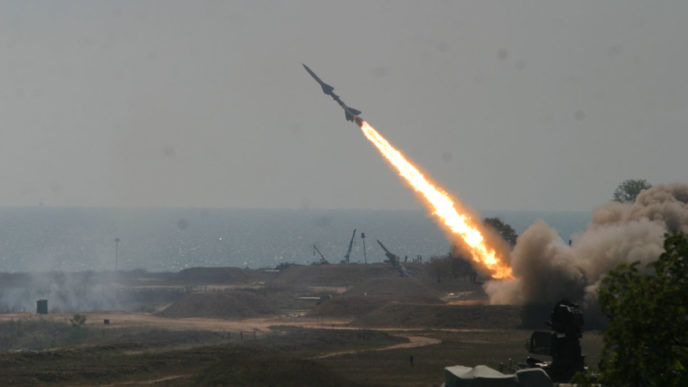
The carrier, according to the U.S. Department of Treasury, has been routinely commandeered by the Islamic Revolutionary Guard Corps and Iran’s Ministry of Defense and Armed Forces Logistics to transport rockets, missiles, and other military equipment, including materials and technologies with ballistic missile applications.

Iran Air flights have also transported military components to Syria (another state sponsor of terrorism).

None of which concerns President Barack Obama, evidently. His nuclear deal with the ayatollahs, including $150 billion in sequestered funds, specifically lifted restrictions on the sale of commercial aircraft. Indeed, enabling Iran to modernize its timeworn fleet was “essential” to striking agreement with Tehran to (supposedly) restrict its nuclear operations in return for easing economic sanctions, according to Boeing executives.

To complete the sale, Boeing still must obtain an export license from the U.S. Department of Treasury’s Office of Foreign Asset Control. Should a U.S. bank or investment firm wish to finance the purchase, it, too, would have to obtain a license from the Office of Foreign Asset Control. (Officials of the U.S. Export-Import Bank have said the bank charter prohibits financing for Iran, but they aren’t the most credible bunch.)

This “licensing” procedure seems downright silly considering that Iran has been designated for years by the U.S. Department of State as “the leading state sponsor of terrorism globally.” As noted in the 2015 edition of the Country Reports on Terrorism, “Iran continues to provide support to Hizballah, Palestinian terrorist groups in Gaza, and various groups in Iraq and throughout the Middle East.”

There is little reason to think that U.S. engagement with Iran is now moderating the regime, according to James Phillips, The Heritage Foundation’s senior research fellow for Middle Eastern affairs. Despite the agreement, he reports, the Islamic Revolutionary Guard Corps has repeatedly challenged U.S. naval forces in the Persian Gulf.

For example, the Guard Corps vessels launched rockets within 1,500 yards of the carrier Harry S. Truman near the Strait of Hormuz in late December, and in January flew drones over U.S. warships and detained and humiliated 10 American sailors. In March, the Guard Corps launched a series of missiles, including two that were emblazoned with the message “Israel must be wiped out” in Hebrew.

To their credit, Reps. Jeb Hensarling, R-Texas, and Peter Roskam, R-Ill., aren’t quite as trusting of Iran as the Obama administration. In a June 16 letter to Boeing CEO Dennis Muilenburg, the lawmakers said they “strongly oppose the potential sale of militarily-fungible products to terrorism’s central supplier,” and sought assurances that the company would repossess or remotely disable aircraft if Iran violated the nuclear deal.

Meanwhile, Roskam has introduced the No Dollars for Ayatollahs Act, which would impose an excise tax of 100 percent on any transaction that involves Iran conducting a financial transaction in U.S. currency.

According to Roskam, “It’s tragic to watch such an iconic American company make such a terribly short-sighted decision. If Boeing goes through with this deal, the company will forever be associated with Iran’s chief export: radical Islamic terrorism.”

In addition, Rep. Charles Boustany, R-La., has introduced the Preventing Investment in Terrorist Regimes Act, which would deny U.S. tax credit to Boeing for the foreign taxes it would pay on the income derived from the Iranian deal.

Both measures are co-sponsored by all six subcommittee chairs of the House Ways and Means Committee. But whether either measure would prove effective in halting the sale, using the tax code to steer the actions of a multinational corporation is a lousy way to set policy.

Besides, Boeing generated more than $96 billion in revenue last year, and its market cap exceeds $86 billion. It also paid a lot of money to lobby in favor of the nuclear deal, including hiring Thomas Pickering, a former ambassador to Israel and the United Nations, to testify before Congress, write letters to high-level officials, and submit op-eds in support of lifting the sanctions. All of which is perfectly acceptable—except that he systematically failed to disclose his relationship with Boeing.

Boeing executives say the proposed sale is necessary to remain competitive against Airbus, the European aviation manufacturer that has struck a $27 billion deal with Iran for 118 planes. But that’s the same lame argument Boeing made in lobbying for reauthorization of the Export-Import Bank—from which Boeing was the top beneficiary of export subsidies.

The fact is, projected demand for commercial planes is forecast to rise for years to come, and both manufacturers are carrying huge backlogs that will take years to fulfill.

Rather than tweak the tax code, Congress should, at the very least, explicitly prohibit financing from the Export-Import Bank for the sale of Boeing planes (or any other product) to Iran.

Additional actions are needed as well. The administration has already increased the risk of yet more death and destruction by the terrorist state. Lawmakers should ensure that Boeing and other U.S. companies don’t become tools of Tehran. (For more from the author of “Iran’s Unfriendly Skies” please click HERE)

Follow Joe Miller on Twitter HERE and Facebook HERE.

LET (BRITISH) FREEDOM RING: UK Gives Middle Finger to the Elites, Exits European Union

By BBC. Prime Minister David Cameron is to step down by October after the UK voted to leave the European Union.

Speaking outside 10 Downing Street, he said he would attempt to “steady the ship” over the coming weeks and months but that “fresh leadership” was needed.

The PM had urged the country to vote Remain but was defeated by 52% to 48% despite London, Scotland and Northern Ireland backing staying in.

UKIP leader Nigel Farage hailed it as the UK’s “independence day”.

The pound fell to its lowest level against the dollar since 1985 as the markets reacted to the results. (Read more from “Let (British) Freedom Ring: UK Gives Middle Finger to the Elites, Exits European Union” HERE)

___________________________________

Brexit Upends Global Markets as Stocks, Pound Plunge; Yen Soars

By James Regan and Stephen Kirkland. Global markets buckled as Britain’s vote to leave the European Union drove the pound to the lowest in more than 30 years and European banks to their steepest losses on record.

“It’s scary, and I’ve never seen anything like it,” said James Butterfill, 41, head of research and investments at ETF Securities in London. “A lot of people were caught out, and many investors will lose a lot of money.”

Sterling slid by the most on record and European stocks headed for the biggest drop since 2008 as trading soared. The yen strengthened past 100 per dollar for the first time since 2013, gold rose the most in more than seven years and benchmark Treasury yields had their biggest drop since 2009.

The victory for the “Leave” campaign prompted Prime Minister David Cameron to resign. The outcome stunned many investors who’d put wagers on riskier assets over the past week as bookmakers’ odds suggested the chance of a so-called Brexit was less than one in four. (Read more from “Brexit Upends Global Markets as Stocks, Pound Plunge; Yen Soars” HERE)

___________________________________

Britain Has Voted to Leave the EU – What Happens Next?

By Patrick Wintour. The UK’s historic decision to end its 43-year love-hate relationship with the European Union represents a turning point in British history to rank alongside the two world wars of the 20th century.

On the assumption there is no turning back, or collective buyer’s remorse, Britain will live with the political, constitutional, diplomatic and economic consequences for a decade or more . . .

So what happens next? . . .

The scale of the destruction wrought by independence day is such that one of the last redoubts of the establishment left standing – the civil service led by the cabinet secretary Sir Jeremy Heywood – will now take centre stage.

It will be his task, in conjunction with the governor of the Bank of England, Mark Carney, and David Cameron acting as a caretaker prime minister to bring a semblance of shape to the chaos that is likely to ensue. (Read more from “Britain Has Voted to Leave the EU – What Happens Next?” please click HERE)

Follow Joe Miller on Twitter HERE and Facebook HERE.

Burned by Liberal Refugee Policies, Sweden Now Wises Up

Sweden had been one of the top refugee intake countries in the world, accepting 160,000 asylum-seekers last year despite only having a population of 9.5 million.

But on Tuesday the country overwhelmingly passed a series of tough new restrictions that will limit the number of people granted permanent residency and make it harder for migrants to bring family members over.

A New York Times report says Sweden viewed the restrictions as “necessary to prevent the country from becoming overstretched”:

The government said that under the new rules, individuals who want to bring over family members but do not apply to do so within three months of arriving in Sweden, would have to prove they can financially support them; current regulations require sponsors to demonstrate only that they can support themselves. Permanent residency for asylum-seekers under the age of 25 would be restricted to those who have completed high school and can support themselves. (emphasis mine)

People who are formally granted refugee status would be able to bring over family members from abroad, but the legislation would circumscribe the family members who are eligible.

The new rules clearly have an emphasis on migrants being financially independent enough that they can support themselves and contribute to society.

Of course, human rights groups have already jumped on Sweden, denouncing the move as harmful to children, according to the New York Time. Protesters have gathered outside of Parliament declaring it “inhumane,” says the Associated Press.

Is a sovereign nation not permitted to decide who does and does not enter their borders?

Kudos to the Swedish lawmakers for finally paying attention to their citizens who have been negatively affected by Sweden’s past extremely liberal refugee policies. Better late than never. (For more from the author of “Burned by Liberal Refugee Policies, Sweden Now Wises Up” please click HERE)

Follow Joe Miller on Twitter HERE and Facebook HERE.