Let ‘Em Hang: A Response to Todd Starnes’s Column on the Christmas Mall Fights

Brawls involving hundreds of teenagers broke out at 15 malls in at least eight states the day after Christmas.

Yesterday, Fox News columnist and friend of The Stream Todd Starnes offered some thoughts about the incidents in a column entitled “Hey Parents, Malls Are for Commerce — Not Babysitting.” In the spirit of friendly disagreement, here are a few alternative arguments.

‘No Rhyme or Reason,’ or Coordinated Effort?

Starnes claims that “there was no rhyme or reason to the violence.” Reports from police actually indicate that there may have been a reason and a rhyme — in fact, an organized one.

Starnes acknowledges the speculation that social media played a role in the mall outbreaks, but given the striking similarity of the events (15 malls? Eight states? Same night?), I’m willing to give a little more credit to the organized-on-social-media theory than the growing-problematic trend theory Starnes favors.

It smells to me like a one-off online plot of mischievous rebels, and not something that should give all rule-abiding teens a bad rap from now on.

Unsupervised Teenagers Aren’t Terrorists

Starnes claims that “anyone under the age of 18 without parental supervision has no business in a mall.”

Not so long ago, I was under 18 myself, and spent my fair share of time in a mall with friends. Moreover, I have young teen relatives with young teen friends who regularly enjoy grabbing lunch at the food court, trying on clothes or catching a movie — at the mall.

I live not five minutes from one of the most popular malls in my metropolitan area, and I would say over 50 percent of the shoppers I squeeze by while meandering between stores are those “underage young people” Starnes complains about.

The worst offense I’ve seen from them in my several years of mall shopping? Not moving out of the way fast enough when I’m in a rush because they are too busy laughing with their friends, flirting with each other, or, in recent years, Snapchatting their very non-eventful exploits.

In other words, while unruly youth and teen violence are real issues, I don’t think they are the shopping-mall trends that Starnes seems to indicate.

To be fair, some share Starnes’s concerns following the frightening fights on Monday, with reports of certain malls considering restrictions or bans on underage teen shoppers. Only about one-tenth of American malls currently have such restrictions, and many others are loath to implement them. I get why.

When I first graduated college, I snagged a part-time job at my local mall’s Forever 21 to tide me over financially while navigating job applications and interviews in my field. Can you imagine how forlorn a Forever 21 would be without after school and weekend teen shoppers? (If you have never shopped in a Forever 21 — and I don’t necessarily recommend it — you’ll just have to trust me.)

The Real Reason Malls are Shutting Down

Starnes seems to think that these “rampaging mobs of teenage thugs” are the reason you don’t see as many malls anymore — or the ones you do see look creepy and abandoned, a relic of bygone ’80s glory.

“Why do you think so many enclosed shopping centers are shutting down?” Starnes asks. “Nobody wants to risk their life for a Cinnabon or a discount on hand soap at Bath & Body Works.”

Starnes is right — I don’t want to risk my life standing in line for a Cinnabon or buying discount soap at Bath & Body Works (how did he know what I do at the mall?!). But to be honest, when I go to the mall I am more concerned about a deranged lone wolf with a knife or a gun who might be attracted to a busy place, and not “little thuglings” hanging out with their friends. That’s why I keep my Glock on my body and my license to carry in my wallet (one of the benefits of being a mall shopper over the age of 21 in Texas).

The truth is that people have long been analyzing why malls are closing down (and will likely continue to close over the next decade). While the mall I frequent is always teeming with activity (the benefit of catering to an upper-middle class area), others, like the one my mom took me shopping at in the 90’s, are emptying out.

One explanation is the rise of online shopping, as this New Yorker article explained back in 2014. Another is the waning relevance of middle-class department stores like Macy’s and J.C. Penney, which have traditionally served as “anchor stores” and a main reason for people to go to a mall, according to this Money article.

A Cop’s Perspective

As someone who has grown up in a family of law enforcement and security officers, it’s easy for me to reach out to someone who can offer this unique perspective. I called my closest cop friend yesterday to ask whether Starnes’s statement that “if teenagers disrupt commerce and cause mayhem, they should spend the night in jail” was unequivocally fair.

My cop friend said no. He said in any fight involving anyone, the resulting consequences “totally depend” on the situation. He said it’s possible for one party to get arrested and another go free, for one or both (or several) to be handcuffed or made to sit down while the officers investigate, for one or multiple parties to be given tickets, etc.

Additionally, Starnes’s comment that “hardly anyone was arrested” in the December 26 mall fights is not exactly true. Eight teens were charged in Aurora, Ill. (where CNN reported that police were considering raising some misdemeanor charges to felonies), five teens arrested in Aurora, Colo., and seven juveniles were arrested in Memphis, Tenn.

If the multiple police officers responding to these calls on Monday decided to arrest only a certain amount of teens in each case, I am going to trust that they had a reason, and I’m also going to trust that their first priority (and rightly so) was the safety of all around.

(Side note: Christmas weekend can be one of the worst, busiest times for law enforcement officers. Filling jail cells with all 200 teens involved in no-weapons-found mall brawl might not be their top priority the day after Christmas.)

Teens Aren’t All Bad

There is one point that I’ll agree with Starnes on. America doesn’t need any more programs for youth paid for by the government — which is what Starnes says that some people are pushing for in light of Monday’s events. If there truly is a need for more youth programs, then churches, religious groups, non-profit or family-led efforts should step up and provide them. And in fact, many already are.

I won’t deny that trouble making teens are out there (aren’t they always?), but I’ve made somewhat of a habit of defending my Millennial generation, and that goes for those trailing behind a few years in age as well.

I say, let them eat Cinnabon — and shop — and hang at the mall — while we still have malls left. (For more from the author of “Let ‘Em Hang: A Response to Todd Starnes’s Column on the Christmas Mall Fights” please click HERE)

Follow Joe Miller on Twitter HERE and Facebook HERE.
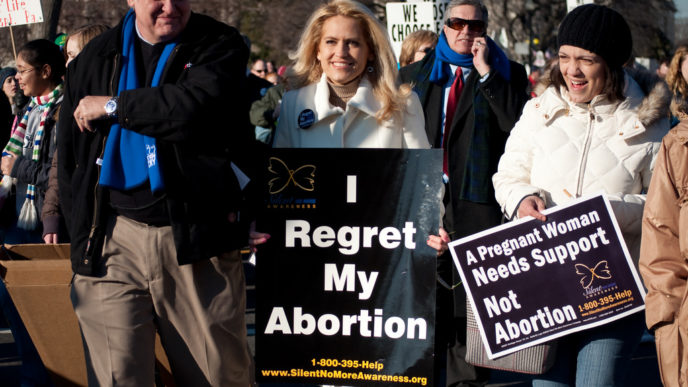
The Pro-Life Cause in 2016: Some Bad Losses, some Hopeful Victories

2016 saw losses and victories for the pro-life movement. The biggest loss was million-plus lives lost in the womb thanks to surgical, medical and drug-induced abortions.

But our movement also saw victories. Perhaps the biggest was when voters blocked strongly pro-abortion Hillary Clinton from the White House and elected Donald Trump instead, in part because he promised to end federal funding of abortion and to nominate a pro-life U.S. Supreme Court justice.

Here is The Stream’s list of some of the most consequential losses and victories this year.

Losses

The U.S. Supreme Court ruled against Texas’ laws mandating that abortion centers increase their standards of care. Specifically, the laws required abortionists to have admitting privileges at nearby hospitals, as well as requiring abortion centers to raise their standards to meet those of outpatient surgical centers. The laws had closed about half of Texas’ abortion centers.

The Court’s decision provided legal justification for lower courts to knock down similar standards in other states, including most recently the Oklahoma Supreme Court’s decision to overturn an admitting privileges law in that state.

A number of federal courts blocked state efforts to defund Planned Parenthood, for example one in Ohio and another in Utah.

The U.S. Supreme Court also refused to hear a pharmacy owner’s challenge to a Washington State requirement that the pharmacy provide abortion-inducing drugs to customers.

Illinois enacted a law requiring pro-life pregnancy care centers to refer women for abortions. That law is being challenged by the Alliance Defending Freedom on behalf of pregnancy resource centers in the state. (Disclosure: One of the plaintiffs representing the centers is the National Institute of Family and Life Advocates, which is a client of this reporter.)

In January, President Barack Obama vetoed a bill to defund Planned Parenthood.

President Obama’s administration recently finalized a rule that effectively bans states from blocking Planned Parenthood’s access to Title X program funds. (Title X gives states money for “family planning services,” including abortion-inducing drugs and devices.) The rule was created after many states attempted to defund the abortion giant thanks to videos allegedly showing Planned Parenthood engaged in illegal abortions to illegally profit off of fetal harvesting.

California’s liberal Catholic Governor, Jerry Brown, signed a law written by Planned Parenthood that could jail pro-life journalists.

For the first time, the Democratic Party’s platform formally endorsed repealing the Hyde Amendment. In effect since 1980, the amendment has been annually approved in a bipartisan manner, and one analysis estimates it has saved over two million children from abortion.

Planned Parenthood, which spends millions in each election cycle to elect pro-abortion politicians, gave its first endorsement in its 100-year history. The endorsement went to Hillary Clinton.

A Houston, Texas, grand jury chose to not indict Planned Parenthood over fetal harvesting charges. Instead, the jury indicted investigators David Daleiden and Sandra Merritt for alleged lawbreaking. (On the good news front, those charges were dropped over the summer.)

The abortion industry and its allies used misleading rhetoric to create panic about the risk of microcephaly to the unborn children of women who contracted the Zika virus. That rhetoric likely was a reason that people across the country tended to support late-term abortions when the mother has contracted the Zika virus.

Victories

As mentioned above, the Center for Medical Progress’ Daleiden and Merritt saw charges against them dropped.

The U.S. Supreme Court sent to lower courts the Obama administration’s mandate that religious non-profits violate their employees’ consciences and participate in insuring contraceptives and abortifacients. Pro-life leaders said the decision was a partial victory for the Little Sisters of the Poor, Priests for Life, Oklahoma Wesleyan University and other plaintiffs..

A federal court rejected an American Civil Liberties Union’s (ACLU) lawsuit meant to force a Catholic hospital chain to provide abortions and contraceptives.

As outlined in this Washington Post piece, South Dakota, South Carolina and Ohio passed bans on abortions after 20 weeks’ gestation were signed in 2016, making 18 states with such bans. Additionally, at least two states lengthened abortion waiting periods, and Indiana banned abortion if the mother was getting one because of the race or sex of the child, or because the child had Down Syndrome.

Several states have banned dismemberment abortions, which are used in 95 percent of second-trimester abortions. While most of the measures have been blocked by courts, and even if upheld would still allow abortions in the second trimester, supporters such as Oklahoma Senator James Lankford (R-OK) say the effort will educate the public on the realities of abortion.

A Created Equal-commissioned study in Canada found that graphic images of abortion victims modestly swayed people’s views of abortion towards supporting life. Graphic images of abortion victims are controversial both inside and outside the pro-life movement, so understanding their effectiveness is important. Additionally, the study noted, people’s personal views on abortion are often correlated to supporting pro-life policies. Thus, the study could have a secondary effect of leading to pro-life policies, at least in the area in which it was conducted.

Another study found that about two-thirds of babies born at 22 and 23 weeks’ gestation survive to leave the hospital if proper medical care is provided. This German study further weakens the abortion industry’s argument for the alleged necessity of late-term abortions — the earliest birth at which a baby has survived is prior to 21 weeks’ gestation — and is yet another rebuttal to the idea that abortion until the ninth month is an acceptable political and moral perspective.

In the third and last debate during the 2016 general election presidential campaign, Trump said about late-term abortions, “I think it’s terrible. If you go with what Hillary is saying, in the ninth month, you can take the baby and rip the baby out of the womb of the mother just prior to the birth of the baby.”

Trump said that in front of an estimated 72 million viewers. Millions of Americans also watched Mike Pence defend unborn life in the vice presidential debate with Senator Tim Kaine (D-VA). (For more from the author of “The Pro-Life Cause in 2016: Some Bad Losses, some Hopeful Victories” please click HERE)

Follow Joe Miller on Twitter HERE and Facebook HERE.

5 Things Pro-Lifers Have to Celebrate as 2016 Comes to a Close

2016 has been rough on everyone, and the pro-life movement is no exception. With the loss of Supreme Court Justice Antonin Scalia in February, followed by a major pro-abortion victory in Whole Woman’s Health v. Hellerstedt, the calendar year has been capped off by President Obama’s feeble, 11th-hour attempt to force states to fund Planned Parenthood.

However, as the numbers and some key developments illustrate, advocates for the unborn actually have great cause to celebrate at year’s end. Here are five signs of hope and encouragement.

1. Polling shows that a majority of Americans are pro-life

Almost 44 years after the Roe v. Wade decision was handed down in January of 1973, a majority of Americans identify as “pro-life” and support substantial restrictions on abortion:

A July survey conducted by the Marist Institute for Public Policy found:

[A]bout 8 in 10 Americans support substantial restrictions on abortion (78 percent), and would limit it to, at most, the first three months of pregnancy. This number includes 62 percent of those who identify as pro-choice, 85 percent of African-Americans and 84 percent of Latinos …

Furthermore, a Gallup poll in May found that more Americans regard themselves as “pro-life” than “pro-choice” (48 vs. 45 percent, respectively). “What’s more,” writes Jeffrey H. Anderson at The Weekly Standard, “opposition to abortion is rather plainly on the rise, as those numbers were effectively flipped 10 years ago — and as, in the mid-1990s, the number of people who considered themselves ‘pro-choice’ outpaced the number who considered themselves ‘pro-life’ by about 20 percentage points.

A November poll by the polling company, inc./WomanTrend found that a stark majority of Americans (64 percent) support a nationwide ban on abortions after 20 weeks (with the mother’s life, rape, and incest exceptions), when the unborn child is believed to feel pain. The measure was especially popular with African Americans and millennials, 70 and 78 percent of whom supported it, respectively.

2. Abortion clinics are closing nationwide

Recent findings from pro-life group Operation Rescue show that 31 abortion facilities across 18 states closed in 2016. According to the Christian activist group’s report, the number of facilities providing surgical and medical abortions currently stands at 731 nationwide, a 15 percent decrease from the 860-facility high in 2012.

“The political pendulum has swung our way, and we plan to work very hard to take advantage of this opportunity to immediately call for enforcement of laws that will shut down abortion facilities and save lives,” said Operation Rescue President Troy Newman.

“I believe this dramatic reversal of fortunes will pave the way for the eventual end to abortion in our country. There is now no excuse for failure.”

3. Abortion rates are down, in a big way

Data most recently available by the Centers for Disease Control and Prevention show that abortion numbers and rates are on a general decline. The latest figures, from 47 states, shows a total of about 665,000 abortions performed in 2013.

“[C]ompared with 2012, the total number, rate, and ratio of reported abortions for 2013 decreased by 5%,” writes the Family Research Council’s Arina Grossu. “From 2004–2013, the number, rate, and ratio of reported abortions also decreased 20%, 21%, and 17%, respectively, reaching their lowest level across the board for that time period.

“Additionally, the abortion rate for 2013 was 12.5 abortions per 1,000 women aged 15-44 years, about half of the 1980 recorded rate. The Associated Press reported that the CDC has not recorded a lower abortion rate since 1971, two years before the Roe v. Wade landmark decision.”

4. Pro-life laws are on the rise at the state level

According to the Guttmacher Institute (also known as Planned Parenthood’s research arm), the year 2016 continued a growing trend of pro-life laws at the state level.

By July, states had already adopted 46 new abortion restrictions, the Guttmacher Institute lamented. The report goes on to say that, since 2010, states have passed 334 pro-life laws, which make up 30 percent of all such measures.

And with Republicans now controlling a record number of state legislatures, the trend is certain to continue.

5. The 2016 election results hold some serious pro-life promise

Perhaps some of the most heartening numbers for social conservatives this year are the following: 1 president, 2 houses of Congress, 4 big promises.

The sanctity of life played a tremendous part in the 2016 presidential election, and President-elect Donald Trump’s promises to pro-life voters were a big part of the coalition that arguably brought him over the finish line.

And he made some pretty big promises, too.

Now with a Republican-run legislative and executive branch stacked up to govern in January, there’s literally no reason whatsoever not to defund Planned Parenthood, replace Justice Scalia’s seat with a pro-life constitutionalist, pass and sign a pain-capable abortion ban, and make the Hyde Amendment permanent law.

2016 has indeed been a doozy, but — for pro-lifers, at least — the numbers are looking good for the year to come. (For more from the author of “5 Things Pro-Lifers Have to Celebrate as 2016 Comes to a Close” please click HERE)

Follow Joe Miller on Twitter HERE and Facebook HERE.

Scientists Keep Trying to Deny the Heartache of Abortion — With Poor Science

Our culture is in a worrisome state when major medical journals ignore the foundation and methods of science in service to a political end. Equipped for decades with billions in grant revenue, ideological control of the academy, and agenda-driven professional organizations, scores of scientists have suspended personal and professional ethics to safeguard women’s right to end the lives of their children and suffer the concomitant effects. Dr Antonia Biggs and colleagues are just the latest to march down this path with their JAMA Psychiatry article titled “Women’s Mental Health and Well-Being 5 Years after Being Denied an Abortion: A Prospective, Longitudinal Cohort Study.”

What once appeared to be a subtle mainstream journal bias in favor of publishing results, suggesting abortion poses no threat to women’s psyches, has morphed into a peer-review process, blind to scientific deficiencies as long as the results further leftist abortion rights initiatives. These are desperate times for the pro-choice community, as they seek to block women-centered abortion laws rooted in strong empirical evidence and the voices of brave women standing up to share their post-abortion struggles.

What better way than to grab bullet points from a JAMA article and flood the popular media with them? Women deserve better and here is why the latest study results have absolutely no merit and will not hold up in any court.

Study results and their obvious bias

The authors compared women who received abortions just under legal gestational limits with women who wanted an abortion but were denied, because they were just over the facility gestational limit (Turnaway Group) relative to psychological outcomes. The Turnaway Group was subdivided into those who gave birth and those who obtained an abortion subsequently or miscarried. The authors summarized the results by stating “Women who were denied an abortion, in particular those who later miscarried or had an abortion elsewhere (Turnaway no-birth group), had the most elevated levels of anxiety and lowest self-esteem and life satisfaction 1 week after being denied an abortion, which quickly improved and approached levels similar to those in the other groups by 6 to 12 months.”

The authors’ objective for publishing the study is introduced in the opening line: “The idea that abortion leads to adverse psychological outcomes has been the basis for legislation mandating counseling before obtaining an abortion and other policies restricting abortion” and it is nailed down at the end of the article when they state “…there is no evidence to justify laws that require women seeking abortion to be forewarned about negative psychological responses.” As scientists we never make such sweeping conclusions based on a single study, particularly when there is an abundant literature comprised of sophisticated studies with discrepant conclusions.

Courts throughout the US have concluded that women should be appraised of the risks before consenting to abortion; it is absurd that these researchers have attempted to shift the tide based on this one study. Funding was predictably secured from the David and Lucille Packard Foundation among other sources with a political agenda. As described on their website, “Our work in the United States seeks to advance reproductive health and rights for women and young people by improving access to quality comprehensive sexuality education, family planning and safe abortion care.”

Results are inconsistent with the current state of knowledge

The results of hundreds of studies published worldwide over the past three decades indicate that abortion is a substantial contributing factor to women’s mental health problems. I published a meta-analysis on the association between abortion and mental health in the British Journal of Psychiatry (BJP) in 2011. In a meta-analysis, the contribution of any particular study to the final result is based on objective scientific criteria (sample size and strength of effect). The BJP sample consisted of 22 studies and 877,297 participants.

Results revealed that women who aborted experienced an 81% increased risk for mental health problems. When compared exclusively to unintended pregnancy delivered, women were found to have a 55% increased risk of experiencing mental health problems. This review offers the largest quantitative estimate of mental health risks associated with abortion currently available. Evidence of this nature has influenced informed consent legislation in many states. For example, upholding the South Dakota law in 2012, the US Court of Appeals relied upon the emerging body of data.

Methodological shortcomings

• Only 37.5% of women invited to take part in the study actually participated, and across the study period 42% of these dropped out, rendering the final sample comprised of under 22% of those eligible for inclusion! The 78% of women whose voices are not included were likely those who had the most serious post-abortion psychological complications. With sensitive topic research, securing a high initial consent rate and avoiding sample loss are vitally linked to the validity of the conclusions. The authors acknowledge this fact as they state “we cannot rule out the possibility that women with adverse mental health outcomes may have been less likely to participate and/or been retained.” We really can just stop here, because this is a fatal flaw.

• In a previous article with the same data published last year in PLoS ONE, the authors noted that the sample had a high concentration of women from low socioeconomic backgrounds, obviously not representative of US women undergoing abortion today. Now we hear from the research group that “given the large number and range of recruitment facilities representing geographically diverse regions in the US (30 clinics from 21 states), and that our sample demographics are consistent with those of nationally representative samples of women seeking abortion, we believe these results are generalizable.” A sample is either representative or it is not.

• The authors failed to reveal the specific consent to participate rates for each group. Second trimester abortions have been established as potentially more traumatizing than first trimester procedures; therefore it is likely that a significantly higher percentage of women in the first-trimester group compared to those in the second trimester group consented to participate. If the rates were comparable, why not report this? Failure to report critical information increases suspicion that this “near limit’ group is in no way representative.

• In the Turnaway Study, women who secured abortions near the gestational limits included women for whom the legal cut off ranged from 10 to 27 weeks. There is a wealth of data indicating that women’s reasons for choosing abortion and their emotional responses to the procedure differ greatly at varying points of pregnancy. Women aborting at such widely disparate gestational ages should therefore not be lumped together, particularly when such information is available in the data.

• The authors do not explain how the sites were actually chosen. What type of sampling plan was employed? Why were only those identified with the National Abortion Federation used? What cities were included? Which areas of the country were sampled?

• All 4 outcome measures are shockingly simplistic with 2 variables containing only 6 items and 2 variables measured with single items. This is inexcusable given the many psychometrically sound multiple item surveys available in the literature. Further, no theoretical basis is given for the cut-score employed to determine clinically relevant cases of depression or anxiety. Well-trained behavioral science researchers should not measure complex human emotions in such a superficial manner; and ethically responsible scientists would not extrapolate from minimalistic assessments to women’s emotional reactions to one of life’s more challenging decisions.

The authors suggest that later abortions are healthier for women than childbirth when women seek abortions, obscuring the well-documented risks of late abortions to women’s physical well-being in addition to the elevated psychological risks. For example, using national data, Bartlett and colleagues reported in 2004 that the relative risk of abortion-related mortality was 14.7 at 13–15 weeks of gestation, 29.5 at 16-20 weeks, and 76.6 at or after 21 weeks. This compares to a 12.1 rate for childbirth. Bartlett reported that the causes of death during the second trimester included hemorrhage, infection, embolism, anesthesia complications, and cardiac and cerebrovascular events.

Many women who make the decision to abort do so without a thorough understanding of the procedure. A number of studies have revealed that feeling misinformed or being denied relevant information often precipitates post-abortion difficulties. There is also considerable evidence that a high percentage of women walking into abortion clinics are conflicted about the choice.

In a 2006 study I published with colleagues in the Journal of Medical Ethics, we found that 95% of a socio-demographically diverse group of women wished to be informed of all possible complications associated with drugs, surgery, and/or other forms of elective treatments, including abortion. Fortunately state-level legislation has responded to the needs of women, respecting the gravity of an abortion decision by mandating dissemination of accurate information on the procedure and risks involved, time to reflect on the decision, and sensitive pre-abortion counseling.

This latest study in JAMA will be aptly tossed on the dusty stack with other similarly compromised studies that have yielded results palatable to a culture fighting to normalize a procedure that will never feel natural or right to countless women. The studies will be unattended to by the average person, clinicians, and the science-savvy alike, because the results simply do not align with the lived experiences of women. (For more from the author of “Scientists Keep Trying to Deny the Heartache of Abortion — With Poor Science” please click HERE)

Follow Joe Miller on Twitter HERE and Facebook HERE.
An Arizona Waitress Receives a Christmas Gift From God

From Phoenix comes a story of good will this Christmas season. It’s a story about a woman with child who had an encounter with God in the most unusual of places.

Sarah is about to give birth and her fiance is recovering from knee surgery — so money is tight. And Sarah has been putting in as many hours as possible before she goes on maternity leave . . .

Sarah was clearing a table when she noticed the customer had given her a $900 tip on a $61.30 check!

he diners had written a note on the receipt:

“This is God’s money – He gave it to us so we could give it to you.” (Read more from “An Arizona Waitress Receives a Christmas Gift From God” HERE)

Follow Joe Miller on Twitter HERE and Facebook HERE.

My Baby — the World’s Savior

Okay Simeon, let me tell you the whole story — a story I wouldn’t have believed if it hadn’t happened to me. When I lived in Nazareth and was engaged to Joseph, my life was very busy. My thoughts were on the wedding preparations, and as you can imagine, I had a lot to do! One day as I was sweeping my house, an angel suddenly appeared to me — and frightened me, to tell the truth! His words were curious: “Greetings, you who are highly favored! The Lord is with you. … Do not be afraid, Mary; you have found favor with God.”

He went on to tell me that I would conceive and give birth to a son, whom I would name Jesus. “How can this be,” I asked him in bewilderment, “since I am a virgin?” He told me that I would conceive through the power of the Holy Spirit. Then he told me that my cousin, a woman of old age, was already pregnant! I decided to see for myself.

I hurried to her town in the hill country of Judea. When I went into her house and called her name, Elizabeth grabbed her stomach and said “Oh!” Then she looked at me, filled with the Holy Spirit, and said, “Blessed are you among women, and blessed is the child you will bear! But why am I so favored, that the mother of my Lord should come to me? As soon as the sound of your greeting reached my ears, the baby in my womb leaped for joy. Blessed is she who has believed that the Lord would fulfill his promises to her!”

I thought about what she said and I decided to stay for a few months before returning home. I helped with baby John’s birth, rocked him to sleep and changed his diapers. “What will my baby be like?” I thought. “What will Joseph think?” Surely this would be a problem. Joseph was a good man. I thought of the ridicule of the townspeople when they found out I was pregnant. I knew I had to tell him right away.

I found out later that after I talked with Joseph, he was planning to break our engagement quietly. I wouldn’t have blamed him. After all, he was a righteous man who did not deserve the mockery of those who did not understand. But another miracle happened! An angel appeared to him also and told him not to be afraid to marry me, that my baby is conceived of the Holy Spirit, and that my son will “save his people from their sins.” Can you imagine? My baby is a savior for the world?

Joseph then took me as his wife, and we made plans to travel to Bethlehem for the census that Caesar Augustus required. The travel was wearisome and I was heavy with my pregnancy. It was almost time for my baby to be born, but we had to register in Bethlehem, so we pressed on. I was exhausted when we arrived — hot and dusty — and just wanted a drink of water and a bed. But everywhere we tried was full because of the census. Door after door was closed in our faces — I couldn’t believe it. As time went by, I felt something like my cousin described before John’s birth. I was terribly uncomfortable and my lower back was hurting badly. Where were we going to sleep?

I told Joseph that I could go on no longer. It was time. At that point he was willing to take just about any accommodation. His frustration was evident in his stride and every drop of sweat he brushed from his brow. Finally, an innkeeper pointed us to his stable to use for the night. I wasn’t pleased that this is where my baby was going to be born, but I didn’t have a lot of time to think about it, either! Shortly after we got settled in, and with Joseph’s help, I delivered my miracle baby.

He was beautiful. I know all mothers say that! But he was. Such a tiny face, button nose and rosy lips and cheeks. A savior for the world? He’s just a baby, I thought. But I trusted God. After all, I had every reason to trust that what He said would come to pass. I had the fruition of his promise in my arms at that very moment.

Within hours, some shepherds came to see the baby — and they already knew about him! Another angel told them of his birth and that he is the Messiah. After they found him and held him, the shepherds left rejoicing and told everyone about my baby and the promises the angel foretold. I just thought about it in my heart. What did it all mean?

We named him Jesus, as the angel instructed, on the eighth day. Now, Joseph and I bring Jesus to the temple to present him to the Lord. You picked up Jesus in your arms and praised God for allowing you to see the Messiah before you die. Your words are still ringing in my ears: “This child is destined to cause the falling and rising of many in Israel, and to be a sign that will be spoken against, so that the thoughts of many hearts will be revealed. And a sword will pierce your own soul too.”

I treasure all of these things in my heart. Although I’m not sure what it all means, I know I’ve been blessed with a precious and extraordinary gift from God through my baby Jesus. He has an enormous calling on his life, from all that is said of him, from the angel to Elizabeth to you. While I think about all of these things, I trust God without question, because the baby he promised — a miracle child — is here in my arms and he will one day save us from our sins.

Can you believe it? (For more from the author of “My Baby — the World’s Savior” please click HERE)

Follow Joe Miller on Twitter HERE and Facebook HERE.

5 Selfless Acts of Christmas Charity That Will Make You Cry Tears of Joy

Here are five stories of the most powerful acts of charity this Christmas season.

1. 5-year-old boy gives a homeless man a gift, and receives one in return

Five-year-old Dylan Hurt from Seattle wanted to help the homeless. So, with his dad’s help, he gave a man living in one of Seattle’s tent cities a one hundred-dollar bill, Q13 Fox reports.

The homeless man thanked Dylan with a hug … and with his own gift in return — a skateboard! The experience was so positive for young Dylan that he wants to continue the charitable acts.

2. 8-year-old boy gives up birthday presents to donate to Akron school

Second-grader Colin Roubic told his parents he didn’t want any presents for his birthday. Instead, Colin asked for footballs, soccer balls, basketballs, kick balls, and jump ropes to donate to the Akron Public School system, so other kids may play.

“I have lots of stuff and other people don’t, so I wanted to donate something,” Colin told News 5 Cleveland. That is the picture of charity.

3. Doctors said young girl would never walk. Now she runs to bring Christmas gifts to needy children

Faith Russell was born with spina bifida and doctors feared she would never walk. But the 10-year-old girl beat the odds, and now runs monthly 5k races. She invites everyone to come and see her race, but on one condition: They must bring shoe-box supplies for Operation Christmas Child.

NBC News reports that Faith and her donors filled 500 shoe boxes with supplies for needy children last year. This year, her goal was an ambitions 20,000 boxes. “Wow, we have been working for at least eight weeks, three to four days a week,” said Faith’s mom, Robin. “It has taken a village.”

Faith exceeded her goal, packing an amazing 20,001 shoe boxes for needy children all around the world.

“I just want to let them know that they are not forgotten,” Faith said. “And that they’re loved.”

4. 9-year-old student mows lawns to buy presents for strangers

Charles Howard is doing what many young entrepreneurial kids do — mowing lawns for an extra buck. But he’s not keeping the $10 he makes for every yard for himself.

No, Charles is laboring in order to buy “dozens” of Christmas presents for less fortunate kids in his community. “They’re going to a Toys For Tots place,” Charles told Tampa’s WTSP. “It feels really good inside. It makes my heart feel really good.”

Charles’ mother set up an Amazon wish list for anyone who wants to contribute to Charles’ mission.

5. Secret Santa pays off $46K in layaway items at a Pennsylvania Walmart

A small Pennsylvania town of about 1,700 people recently received a big unexpected Christmas blessing.

Walmart store manager Ryan Kennedy received an anonymous phone call from “Santa B.” On that phone call, the mysterious stranger told Kennedy he wanted to pay off all the Everett store’s layaway accounts, which allow financially strapped customers to pay off items over time. Santa B’s check came out to be over $46,000 for the 194 people with layaway accounts.

“It was complete disbelief,” Kennedy told CNN. “It was definitely a great gesture. I was completely shocked.”

Tearful shoppers wanted to know who the donor was to express their gratefulness, but the secret Santa remains secret. (For more from the author of “5 Selfless Acts of Christmas Charity That Will Make You Cry Tears of Joy” please click HERE)

Follow Joe Miller on Twitter HERE and Facebook HERE.

The Miracle of Pregnancy and God’s Redeeming Love

It was not an easy Christmas that year. Several of us had experienced trauma in our families: divorce, estrangement, abandonment. I was grateful to be included in a small circle at my friend’s house for Christmas dinner, knowing it was a safe place to feel that not all was merry and bright.

Yet as we gathered around the table, there was a quiet joy. My friend’s mother prayed to bless the feast, closing with great thanksgiving for the baby growing inside her youngest (and unmarried) daughter, a sign of God’s favor and love for this hurting family.

Praise God for new life, she said.

I have another friend who, in similar circumstances, was told by her mother that her pregnancy itself was a sin. God help us, but there are many in the church who have a problem celebrating children outside of marriage, offering censure and shame instead.

Children are not sin. Every child, regardless of the circumstances of its birth, is a miracle orchestrated by God in His goodness.

When I think of both women in this story who faced unplanned pregnancies, and I see them now with their children, I am in awe of God’s goodness. Both would say that their children are gifts from the Father above, and both are thankful for the way He redeemed their broken hearts through miracles of new life. But it breaks my heart that only one birth was celebrated.

The church, especially, should be a place where unwed mothers are loved and welcome. As Christmas approaches and we remember Mary and Joseph being turned away from place after place, may we pray to welcome the pregnant and stranded in our families, churches and communities.

This is the very work that women like Amy Ford are championing. If you want to learn more, you should listen to this week’s episode of UpNext, where Gabrielle interviews Amy about her work with Embrace Grace, a ministry that helps churches connect with single pregnant women to support and love them. Amy’s mission is to see the church become “the first place a girl runs to with a pro-love movement.”

Amen. Listen below to learn more, and visit embracegrace.com for resources for your church.

(For more from the author of “The Miracle of Pregnancy and God’s Redeeming Love” please click HERE)

Follow Joe Miller on Twitter HERE and Facebook HERE.

Why Can’t I Marry the Robot I Love? The Rise of Robosexuals

Do people have the right to marry the one they love, even if the one they love is a robot? If not, why not? After all, in the words of Lilly from France, who has fallen in love with her robot, “We don’t hurt anybody, we are just happy.”

Isn’t that what matters in the end, that people are happy?

Lilly calls herself a “proud robosexual,” and she fully plans on marrying her robot, whom she named InMoovator.

As explained in the Daily Mail, “Lilly is reportedly engaged to the robot and says they will marry when human-robot marriage is legalised in France.”

But why should this surprise us? People have not only married their same-sex spouses (which has the merit of joining together fellow-humans, albeit completely opposite to the God-ordained male-female pattern), but they have married animals and inanimate objects and, with increasing frequency, married themselves.

Indeed, it was just a few days ago that Good Housekeeping — not some radical, far-out, tabloid — ran the story, “WHY I MARRIED MYSELF. Self-marriage is a small but growing movement around the world.”

The article speaks at length (and with seriousness) about “solo weddings” and references people like Dominique, who“is a self-marriage counselor and minister, offering services including consulting sessions and private ceremonies through her website, Self Marriage Ceremonies, which she runs from her home in northern California.”

The article also include self-marriage vows like these: “I will never leave myself.” “I promise to ask for help when I’m suffering.” “I promise to look in the mirror every day and be grateful.” “I promise to give you the incredible life that you long for.”

If, then, you can “marry” yourself — I ask again, why not, since you’re not hurting anyone, which has been one of the loudest arguments used by advocates of same-sex “marriage” — why can’t you marry a robot? At least the robot can provide both companionship and unflinching loyalty, also helping to lighten your daily load by performing some menial chores. And now, in ever increasing measure, robots can provide sex as well.

Just yesterday, the BBC ran a story in its Technology section called “Sex robots: Experts debate the rise of the love droids.”

The article begins with these words: “Would you have sex with a robot? Would you marry one? Would a robot have the right to say no to such a union?

“These were just a few of the questions being asked at the second Love and Sex with Robots conference hastily rearranged at Goldsmiths University in London after the government in Malaysia — the original location — banned it.”

Yes, this was a subject of a conference at a London university, and it ended with a speech by Dr. David Levy, who said, “We have companion robots and a partner robot is the logical continuation of the trend.

“In the next 10 years it is perfectly achievable in software to create a robot companion that is everything that people might want in a spouse — patient, kind, loving, trusting, respectful and uncomplaining,” he said.

“[However] some enjoy the friction of a relationship and may want to marry an aggressive robot, some people would find that exciting.”

In light of these arguments, not to mention the personal story of Lilly (among others of like mind), I can think of only reason anyone would oppose robot marriage: robophobia. (Please forgive the sarcasm.) After all, robot marriage harms no one, robot marriage makes people happy, and perhaps robot marriage will even help bring sexual release to people who might otherwise show their aggression in socially harmful ways. And surely, in an increasingly robophilic world, I do not want to be categorized as robophobic. I’m no robophobe!

In all seriousness, I do understand that some people are very lonely and that, just like they can build deep bonds with their pets, they can build deep bonds with their (increasingly animated) robot companions. And I certainly make a clear distinction between gay “marriage” (which I recognize as potentially loving and committed, even while I reject it as real marriage) and robot “marriage.”

But all this simply underscores the point that marriage advocates like myself have made over and again for years: Once you redefine marriage you render it meaningless. As further evidence I now present to you robot marriage.

And if you say in protest, “But marriage is the union of two people,” I reply, “Who said that it’s limited to two people or that it even requires two people?”

The fact is that once you move marriage away from its divinely intended, one man-one woman union for life, you open the door to virtually anything, including robot marriage.

Why not? (For more from the author of “Why Can’t I Marry the Robot I Love? The Rise of Robosexuals” please click HERE)

Follow Joe Miller on Twitter HERE and Facebook HERE.

The Christmas Story Retold in Light of the Ghoulish Practices of Planned Parenthood

At this time of the year, in churches around the world, the opening chapters of Matthew and Luke will be read afresh, describing the miraculous births of Jesus and His forerunner John. In light of a recent 500-page Senate report, detailing some of the barbaric practices of Planned Parenthood, I thought it good to retell the story, but with a striking new twist.

There was an old woman named Elizabeth, a godly, devoted woman, blessed by God in so many ways except one: She was unable to have a child. But now, a miracle had taken place, and this saintly woman found herself pregnant, to her delight and the delight of her husband Zechariah. It was even revealed to them that they were having a boy, a boy with a very special destiny. His name would be John.

But there’s more. Elizabeth had a young cousin named Miriam (Mary), just a young teenager and still a virgin, although she was betrothed to be married to a fine man named Joseph. To her absolute shock, she found herself pregnant out of wedlock but claimed — get this — that an angel appeared to her and told her that she was pregnant by the Holy Spirit and was going to give birth to the Messiah. Either this was the most miraculous story in history or it was a tall tale worthy of legend.

About six months later, the two pregnant women met, so many years apart in age but so united by their shared experiences, and when Miriam walked into the room, the baby in Elizabeth’s womb seemed to jump, as if he realized that the other baby in the room was really the Messiah.

Could it be true?

Well, as incredible as the story sounds, reality soon set in, and when Zechariah and Elizabeth realized the very strong chance that their child would be born with Down syndrome (or some other debilitating condition) they did the compassionate thing, found a Planned Parenthood clinic, and aborted the one who was destined to be the forerunner of the Messiah, popularly known as John the Baptist.

And in a further act of compassion, rather than let John’s little body go to waste, it was meticulously divided up and sold off – in the name of science, Zechariah and Elizabeth were told – with detailed records of all the transactions carefully preserved: His brain was sold to one customer for $325 in today’s dollars; both of his eyes for $325 each ($650 total); a portion of his liver for $325; his thymus for $325, along with another portion of his liver; and his lung for $325, all to different customers, allowing John to touch so many more lives. (These figures are based on actual Planned Parenthood transactions, as detailed in the Senate report.)

Reality also set in for Miriam.

Although her husband claimed to believe her story, it was obvious that their marriage would be challenged in the days ahead. Worse still, their child would be tainted — they had given him a name too, Yeshua (Jesus) — always known as the kid born out of wedlock. Why bring someone into the world with a lifelong cloud hanging over his head?

So Miriam and Joseph also found a local Planned Parenthood (thank God there were so many available, especially in the poor neighborhoods) and aborted their little boy, sparing him from an uncertain future. And did I mention that Joseph was also concerned about Miriam’s physical and emotional health? After all, she was so young and the whole experience was so traumatic. Surely, this was best way to go.

The little body of Jesus was also cut up into little pieces — tiny eyes, ears, heart, liver, limbs — each one sold for a good purpose.

And that is the end of the Christmas story — no salvation for the lost, no joy to the world, no hope for the human race — or, I should say, that would have been the end of the story had Planned Parenthood been operating in first century Judea.

I, along with billions of other people, am everlastingly grateful that was not the case.

The Savior has come and hope reigns eternal.

Thanks be to God! (For more from the author of “The Christmas Story Retold in Light of the Ghoulish Practices of Planned Parenthood” please click HERE)

Follow Joe Miller on Twitter HERE and Facebook HERE.