
Who Wins and Who Loses Under These 8 Big Government Policies

It’s clear that many big government policies are creating winners and losers in America.

The story has been the same for decades. Government makes friends with a company or an industry, blocks out the competition with regulation, and in some cases gives the company subsidies.

Such cronyism is bad for innovators and for consumers. But fewer people realize that it’s also bad for the poor.

A recent report from The Heritage Foundation detailed 23 of these big government policies that hurt the poor, and provided concrete ways to address them.

Winners and losers from big government policies are not always clear. And yet for some crony policies, the winners and losers are very clear.

The winners are a small group of identifiable government cronies, while the losers include people of little or no influence with the government.

Here is a look at eight big government policies from the report that benefit government cronies at the expense of other groups of people, including the poor.

1. Renewable Fuel Standard

The Energy Policy Act of 2005 mandated that renewable fuels be mixed into America’s gasoline supply, primarily by using corn-based ethanol. Then, the 2007 Energy Independence and Security Acts significantly increased the amount that must be mixed in.

This mandate is known as the Renewable Fuel Standard. It forces the use of higher levels of biofuels than the market would otherwise bear. The result has been higher food and fuel prices.

Who Wins: Corn farmers, soybean farmers, and biofuel companies.

Who Loses: Consumers of gasoline, consumers of food, and farmers that rely on feedstock and restaurants.

2. Federal Sugar Program

The federal government tries to limit the supply of sugar that is sold in the United States.

This federal sugar program uses a combination of price supports, marketing allotments that limit how much sugar processors can sell each year, and import restrictions that reduce the amount of imports.

As a result, the price of American sugar is consistently higher than world prices.

Who Wins: Sugar growers and sugar harvesters.

Who Loses: Workers in sugar-using industries, and consumers of food (including bread) that contains sugar.

3. Catfish Inspection Program

As a result of the U.S. Department of Agriculture’s catfish inspection program, the USDA inspects catfish while the Food and Drug Administration inspects all other seafood.

This creates duplication because seafood processing facilities that produce both catfish and any other seafood will have to deal with two different types of seafood regulatory schemes instead of just one.

This program also creates a non-tariff trade barrier that will make it extremely difficult for foreign catfish exporters to export to the U.S., likely reducing competition for the domestic catfish industry.

Who Wins: Domestic catfish producers.

Who Loses: Domestic catfish consumers.

4. The Merchant Marine Act of 1920 (the Jones Act)

The Merchant Marine Act—nicknamed after Sen. Wesley Jones, R-Wash.—requires the use of domestically built ships when transporting goods between U.S. ports. The ships must also be U.S.-owned, and mostly U.S.-crewed.

Who Wins: The U.S. domestic shipping industry.

Who Loses: The U.S. military, automobile drivers, users of propane and heating oil, and anyone benefitting from the trade and transportation of goods between U.S. ports.

5. Occupational Licensure

Licensure laws create government requirements for being allowed to practice a profession. These requirements exist even though the market would produce certification options if consumers desired such information.

Who Wins: Workers who have already obtained licenses.

Who Loses: People wanting to work who can’t because they don’t have a license, and consumers who have to pay higher prices for services.

6. Economic Development Takings

On June 23, 2005, the U.S. Supreme Court held in Kelo v. City of New London that the government can seize private property and transfer it to another private party for economic development.

This type of taking was deemed to be for “public use” and ruled a proper use of the government’s eminent domain power under the Fifth Amendment of the United States Constitution.

Who Wins: People who successfully lobby the government to seize other people’s property for financial gain.

Who Loses: Property owners who have their property seized.

7. Home-Sharing Regulations

Local governments sometimes ban or excessively regulate home-sharing—that is, renting out one’s home to accommodate travelers, such as through Airbnb.

When this happens, consumers have less choices of where to stay when traveling, hotels can charge higher prices, and homeowners and renters can’t make full use of their legally possessed homes to earn income for themselves.

Who Wins: Hotel employee union lobbies, and the hotel industry.

Who Loses: Homeowners and renters.

8. Ride-Sharing Regulations

In some state and local jurisdictions (such as outside Portland, Oregon; Alaska; and Austin, Texas), the government bans or heavily regulates ride-sharing companies like Uber and Lyft.

These companies are popping up all over because they meet consumers’ needs, but they are being held down in certain cities where the government backs the establishment industry.

Who Wins: Traditional taxicab companies.

Who Loses: Uber, Lyft, and drivers looking for low barriers to entry; taxicab customers; customers who want to go in or out of certain neighborhoods that traditional taxi drivers avoid; and users of public transportation seeking to complete the “last mile” of their trips.

When industries or groups win special favors from politicians at the expense of ordinary Americans and the poor, it is an affront to freedom—especially to the economic freedom of the poor.

Policies that drive up prices—especially of commodities—are harder to absorb if you are poor.

The policies listed above can block off the only escape route that poor people have from poverty, preventing them from doing what they are good at for a living, for example, or from renting out their home or other property.

All Americans should have the same opportunities open to them. But when government cronyism rears its ugly head, they don’t.

Those who fall on the losing side of cronyism are more likely to agree with President Ronald Reagan when he said, “The nine most terrifying words in the English language are: I’m from the government and I’m here to help.” (For more from the author of “Who Wins and Who Loses Under These 8 Big Government Policies” please click HERE)

Follow Joe Miller on Twitter HERE and Facebook HERE.

Deep State Cover-Up? DNC Staffer Seth Rich Spoke to WikiLeaks Prior to Murder; Police, Feds Told to Stand Down

Seth Rich, the Democrat National Committee staffer murdered last summer on Capitol Hill, was speaking with WikiLeaks before he died, according to new reports.

Not satisfied with the pace or direction of the D.C. police investigation, the Rich family hired private detective Rod Wheeler to seek answers. That Rich was in touch with WikiLeaks is just one of the explosive claims Detective Wheeler has made.

The as-yet unsolved murder has been characterized as a botched robbery by D.C. police, even though evidence doesn’t actually point to a robbery. Rich was shot on July 10, 2016 after an apparent struggle, but his wallet, credit cards, cellphone and wristwatch were not taken.

Rich’s mother said, “There had been a struggle. His hands were bruised, his knees are bruised, his face is bruised, and yet he had two shots to his back, and yet they never took anything.”

She questions the claim that her son was working with WikiLeaks. “They took his life for literally no reason. They didn’t finish robbing him, they just took his life,” Rich said. “They hurt the community, and they hurt the long-term possibility of what he could have done.”

But Wheeler is standing by his story and he is getting backed up by the feds.

A “federal source” told Fox News Channel that the FBI generated a forensic report regarding Rich’s computer within 96 hours of his death. The report indicated Rich was in contact with WikiLeaks through the late Gavin MacFadyen, an American investigative reporter, documentary filmmaker, and WikiLeaks official who had been living in London at the time.

The Fox report continues:

“I have seen and read the emails between Seth Rich and WikiLeaks,” the federal investigator told Fox News, confirming the MacFadyen connection. He said the emails are in possession of the FBI, while the stalled case is in the hands of the Washington Police Department.

The revelation is consistent with the findings of Wheeler, whose private investigation firm was hired by a third party on behalf of Rich’s family to probe the case.

“My investigation up to this point shows there was some degree of email exchange between Seth Rich and WikiLeaks,” Wheeler said. “I do believe that the answers to who murdered Seth Rich sits on his computer on a shelf at the D.C. police or FBI headquarters.”

The federal investigator, who requested anonymity, said 44,053 emails and 17,761 attachments between Democratic National Committee leaders, spanning from January 2015 through late May 2016, were transferred from Rich to MacFadyen before May 21.

On July 22, just 12 days after Rich was killed, WikiLeaks published internal DNC emails that appeared to show top party officials conspired to stop Sen. Bernie Sanders of Vermont from becoming the party’s presidential nominee. That controversy resulted in Debbie Wasserman Schultz resigning as DNC chairperson.

Meanwhile, police have not revealed if the victim was able to identify his attackers or provide any information before he died in a hospital. A surveillance video shows Rich being followed by two men, but police have not made that video public.

After the shooting, WikiLeaks founder Julian Assange claimed he had been working with Rich and implied he was murdered because he was the source of the hacked DNC emails. Assange has offered a $20,000 reward for information leading to the arrest of the killers. D.C. police are offering a $25,000 reward for information leading to the conviction of Rich’s murderer. Republican lobbyist Jack Burkman is offered a separate $130,000 reward.

Assange’s claims and allegations of a DNC cover-up were widely dismissed as “conspiracy theories.” But Wheeler says FBI sources tell him that Rich was working with WikiLeaks, “absolutely, and that’s been confirmed.” Wheeler’s clear implication is that the DNC or some other political organization or individual could be involved.

“I want to find out who caused that man’s death, so we can put them behind bars. But if there’s somebody in politics, somebody in government – whether it’s the mayor’s office or anywhere else in this city that’s involved, you better believe they’re gonna be dragged in and questioned.”

Wheeler claims something is being deliberately hidden. Local police and the FBI “haven’t been cooperating at all. I believe that the answer to solving his death lies on [Rich’s laptop] computer, which I believe is either at the police department or either at the FBI. I have been told both… I have a source inside the police department that has looked at me straight in the eye and said, ‘Rod, we were told to stand down on this case and I can’t share any information with you.’” Wheeler says.

“I don’t think it comes from the Chief’s [of police] office, but I do believe there is a correlation between the mayor’s office and the DNC, and that’s the information that’s gonna come out tomorrow [i.e. Tuesday],” Wheeler said yesterday. (For more from the author of “Deep State Cover-Up? DNC Staffer Seth Rich Spoke to WikiLeaks Prior to Murder; Police, Feds Told to Stand Down” please click HERE)

Follow Joe Miller on Twitter HERE and Facebook HERE.

This Latest Trump-Russia Leak Smells Like a Coup Attempt

There is, indeed, a bombshell of a story coming out of the news that President Donald Trump revealed sensitive information during his White House meeting with Russian officials last week. But it’s not that President Trump committed any crime. The really alarming news is that the duly-elected President of the United States appears to be the target of a political coup.

First, let’s be clear: President Trump has been sloppy, arrogant, and just plain misguided plenty of times during his short tenure in office — including the way he handled the firing of FBI Director James Comey and the hiring and firing of National Security Adviser Michael Flynn. And if he did unnecessarily compromise the source of the sensitive information he shared with the Russians, shame on him.

But a president cannot be removed from office for arrogance and sloppiness. The Constitution sets specific grounds for impeachment. They are “treason, bribery, and other high crimes and misdemeanors.” To be impeached and removed from office, the House and Senate must find that the official committed one of these acts.

Here’s what I think is the bigger scandal: Someone at the highest levels of government has leaked information to the news media about President Trump’s discussions with Russian officials. That’s potentially a serious crime. And, this wasn’t the first time. (Read more from “This Latest Trump-Russia Leak Smells Like a Coup Attempt” HERE)

Follow Joe Miller on Twitter HERE and Facebook HERE.

School: Praying for a Colleague Is Unacceptable

A school worker in Augusta, Maine was ordered to stop using religious phrases like “I will pray for you” and “You were in my prayers” because such language is not allowed inside a public school building — even in private conversations with coworkers.

The Augusta School Department launched an investigation of Toni Richardson after they alleged she “imposed some strong religious/spiritual belief system” towards a coworker.

Now, imposing your religion on someone is a serious allegation. Was Ms. Richardson forcing her coworker to convert to Christianity? Did she attempt to baptize him against his will?

It turned out to be nothing of the sort.

According to an official memorandum from the school district, Ms. Richardson had told a colleague that she was going to pray for him. It just so happens that Ms. Richardson and the colleague attended the same church. (Read more from “School: Praying for a Colleague Is Unacceptable” HERE)

Follow Joe Miller on Twitter HERE and Facebook HERE.

Chelsea Manning Will Remain Active-Duty, Receive Health Care and Benefits on Release

When Chelsea Manning is released from military prison, he will remain in active duty status and be eligible for health care benefits.

Manning, who is widely known for leaking hundreds of thousands of national security documents to WikiLeaks in 2010, will leave Fort Leavenworth on May 17 and be entitled to health care, USA Today reports.

Although Manning initially entered prison as a man named Bradley, he later transitioned and adopted the name Chelsea in 2013. He attempted suicide multiple times while in confinement and complained of abuse like “routinely forced haircuts.” In 2016, Manning engaged in a hunger strike until the government agreed to provide gender transition treatment.

As one of his last moves before leaving the White House, President Barack Obama commuted Manning’s 35-year sentence, which enraged President-elect Donald Trump.

“Ungrateful TRAITOR Chelsea Manning, who should never have been released from prison, is now calling President Obama a weak leader. Terrible!” Trump tweeted January 26. (Read more from “Chelsea Manning Will Remain Active-Duty, Receive Health Care and Benefits on Release” HERE)

Follow Joe Miller on Twitter HERE and Facebook HERE.

Judges Who Fret Over Trump’s Motives Are Ignoring US Judicial History

President Donald Trump’s revised executive order on immigration is back in court, and therefore back in the news.

On Monday, a three-judge panel of the Ninth Circuit Court of Appeals heard arguments on the order’s constitutionality. Opponents of the order claim that it violates the Establishment Clause by setting up a ban on Muslim immigration.

This argument seems strange, since the order does not purport to do any such thing, and in fact applies only to a handful of predominantly Muslim countries for only a short period of time.

Some lower courts, however, have held the order unconstitutional—not because of what it says and does, but because of things Trump said on the campaign trail last year.

In essence, these courts have gone beyond the words of the order itself and claim to have found an impermissible, anti-Muslim intention behind it in the mind of the president.

In taking this interpretive path, the judges in question have followed an example set by the Supreme Court in some recent Establishment Clause cases.

But as I explain at greater length in an issue brief for The Heritage Foundation, there is an older, more venerable, safer tradition that counsels against judges making such an inquiry.

Under the leadership of John Marshall, “the great chief justice,” the early Supreme Court declined to look beyond the words of the law to the personal intentions of its authors.

In Fletcher v. Peck (1810), the Court refused to say that a state law providing for the sale of public lands could be held invalid because of the corrupt motives of the legislators.

After all, Marshall pointed out, it would be difficult if not impossible for a court to say how far such corruption had to extend in order to justify an invalidation of the law.

In Sturgis v. Crowninshield (1819), the Court declined an invitation to interpret the Contracts Clause—not on the basis of its rather expansive wording, but instead on the narrower immediate intentions of those who wrote it.

While Marshall conceded that “the spirit of an instrument” must be “respected not less than its letter,” he also admonished that “the spirit is to be collected chiefly from its words.”

We might ask why modern courts should follow Marshall in declining to look into the personal intentions of the lawmaker. The answer is that preservation of the rule of law requires such judicial modesty.

Rule of law does not mean rule by judges acting on their whims. Rather, it means that cases will be determined on the basis of objective information examined through accepted modes of reasoning.

As Marshall suggested in Fletcher v. Peck, however, an inquiry into the subjective motives of the lawmaker quickly leads judges into a realm in which there are no clear, compelling standards of judgment.

This problem arises not only in dealing with a multiplicity of intentions, such as those that move a legislative body to action. We also confront it when dealing with a legal pronouncement—like the president’s executive order—which proceeds from one person.

After all, even the actions of a single individual are usually complex, motivated by more than one intention. It is certainly possible that in signing the executive order, Trump intended to deliver in some limited, indirect way on the “Muslim ban” about which he mused during the campaign.

But it is equally, if not more possible, that Trump also intended to make the country more safe by regulating immigration from a set of nations known to have problems with terrorism.

There can be no objective, compelling reason for a court to lay hold of the president’s impermissible motive while discounting the permissible motive.

The court can only be exerting its raw will to seize upon the impermissible motive in order to achieve a desired outcome—namely, invalidating the order.

In Federalist 78, however, Alexander Hamilton promised the nation that courts would only exercise “judgment” and not “will.”

We should therefore hope that the Ninth Circuit follows the path of judicial modesty marked out by Marshall and judge the executive order by its words—and not the endlessly debatable intentions that may lie behind it. (For more from the author of “Judges Who Fret Over Trump’s Motives Are Ignoring US Judicial History” please click HERE)

Follow Joe Miller on Twitter HERE and Facebook HERE.

The 1 Change the Government Could Make to Drive Down College Prices

Over the past 20 years, the price of wireless service has fallen 46 percent, the price of software has fallen 68 percent, the price of televisions has fallen 96 percent, and the quality of these services and technologies has improved markedly.

But over that same time, the price of college tuition has risen 199 percent, and most parents would agree that the quality has not greatly improved.

But if prices typically fall as competition spurs quality advancement, as seen by the technological achievement of the last two decades, how has that not happened in education?

There is no one simple answer to this question, but the different regulatory environment facing higher education is a significant factor.

One hundred years ago, there were six regional, voluntary, nongovernmental institutions that helped universities and secondary schools coordinate curricula, degrees, and transfer credits. These institutions had no power to prevent the creation of higher education institutions.

This changed with the 1952 GI Bill.

After congressional investigators found thousands of sham colleges were created overnight to take advantage of the benefits provided in the first 1944 GI Bill, the federal government turned these voluntary institutions into accreditors.

As the federal government steadily ramped up its financial support for higher education benefits, it continued outsourcing the vetting of higher education institutions to these regional accreditors.

This makeshift system worked well for decades, but in recent years these regional accreditors have come under heavy criticism for both lax oversight over some online institutions and a heavy hand in killing some promising innovations.

No regulator is ever going to be perfect, but if they are going to be gatekeepers for a sector of the economy as important as higher education, they must be transparent and accountable to the American people.

Unfortunately, our nation’s regional accreditors are neither. They do not share how they make their accrediting decisions with anyone and their board members do not face accountability at the ballot box.

This needs to change.

That is why I have introduced the Higher Education Reform and Opportunity Act. This bill would allow states to create their own accreditation system for institutions that want to be eligible for federal financial aid dollars.

Each state could then be as open or closed to higher education innovation as they saw fit. They could even stick with their current regional accreditors if they chose to do so.

But they could also enable innovators like Purdue University President Mitch Daniels, who recently signed a deal with the online provider Kaplan University, to go even further in their mission to expand higher education access to those who had limited access before.

Our higher education system should not be held captive to 100-year-old institutions that were never intended to be regulatory gatekeepers in the first place.

Instead, we should allow those communities that want to experiment with higher education policy the freedom and accountability to do so. (For more from the author of “The 1 Change the Government Could Make to Drive Down College Prices” please click HERE)

Follow Joe Miller on Twitter HERE and Facebook HERE.
Facebook Now Targeting, Suspending Pages of Ex-Muslims Who Criticize Muhammad

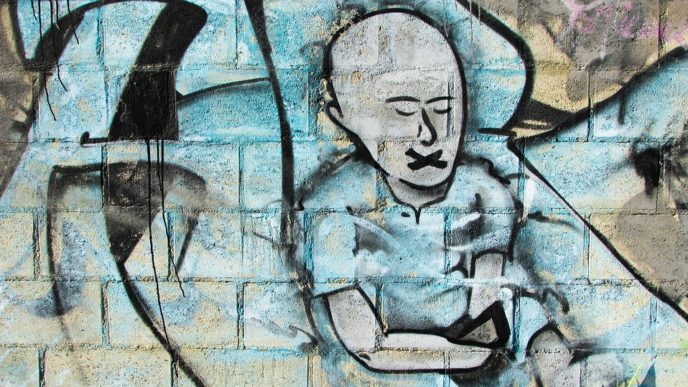
Yesterday, Facebook restricted and then shut down the public pages of Ex-Muslims of North America (24k followers) and Atheist Republic (1.6 million followers) – groups that advocate secularism and provide support to “apostates” (people who leave Islam and who often face persecution).

In fact, the ex-Muslim group claims that for the last several years, Facebook has been continuously blocking groups like it. The ex-Muslims have written an open letter to the social media giant, calling on it to “to stop exercising intellectual persecution” against atheist and ex-Muslim organizations and to “whitelist” such vulnerable groups from organized false flagging attacks.

On Monday, Muhammad Syed, the president of the Ex-Muslims of North America took to Twitter to report that the Facebook pages of Ex-Muslims and Atheist Republic were restricted (and the next morning shut down) “in violation of Facebook’s community standards”. No details were given as to what standards were violated . . .

Syed believes the pages had been targeted in coordinated attacks by Muslim fundamentalists using “simple and effective” Facebook flagging tools to report that pages falsely for standards violations. Facebook, Syed said, isn’t doing enough to protect “groups vulnerable to malicious attacks”. (Read more HERE about Facebook now targetting ex-Muslims and others).

Christian Pastor in Bible Belt Admits Personally Worshiping Allah

A former church has been taken over and converted to a mosque in a rural North Carolina county, and a group of Christian pastors took part in the conversion ceremony in an effort to “show mutual respect” for their Muslim neighbors.

Crosses have been removed from the former church’s facade and steeple, and mosque leader Ali Muhammad turned them over to the group of pastors.

“What they were attempting to do is honor our tradition and so they wanted to turn the crosses over to us,” said the Rev. Jim Melnyk, pastor of St. Paul’s Episcopal Church in Smithfield, a small town in Johnston County about 45 minutes south of Raleigh. “They were reaching out to us, and we were reaching out to them.”

Melnyk said he was joined by pastors from the United Methodist Church, United Church of Christ and three different Baptist congregations at Saturday’s ceremony, which marked the official conversion of a former Pentecostal church into a mosque. One lay person from the local Presbyterian Church was also present for the “celebration.”

Melnyk told WND the mosque had reached out to the local churches through an interfaith group in Raleigh and was hoping to strike a welcoming and respectful tone for the two faiths. (Read more from “Christian Pastor in Bible Belt Admits Personally Worshiping Allah” HERE)

Follow Joe Miller on Twitter HERE and Facebook HERE.
Good Fences Make Good Neighbors: Build the Wall

It’s that time of year again. Financial reserves from our December fundraiser have been slowly depleted and VDARE.com is staring down a funding shortage as we creep into summer. In order for us to survive until the fall, we have to bring a total of $80,000 right now. We all need to pull together to make it happen.

Earlier this week, our intrepid editor, Peter Brimelow, noted that “This is the spring of our discontent” – in other words, although we’re all discontented with Trump’s lack of progress so far, the fact is, there are tremendous opportunities right now because the Trump administration exists at all. We must build the wall. We must restrict legal immigration. We must deport illegals, for the sake of America. These things will only happen if organizations like VDARE.com have your support.

Of course, no matter how generous the funding, if we didn’t have concrete plans for changing the tide, nothing would happen.

So what are our plans?

Here’s a sample of what we can do immediately with the right funding:

VDARE Book Club: The discussion over Steve Bannon’s edgy reading list has created a major stir in the Main Stream Media and opened the opportunity for a VDARE Book Club. We have an incredible lineup of books that examine the roots of our movement and look ahead to where we go from here. We just need an initial capital investment to roll it out.

VDARE Campus Speaking Tour: Peter Brimelow and John Derbyshire were doing campus talks before they were cool. For that matter, they were protested against and blacklisted before it was cool. Now, with anti-Free Speech activism taking over college campuses, we cannot back down. We have several invitations that we’re eager to accept and we’d like to add as many more as possible.

VDARE Conferences: It’s no secret that public meetings of American patriots can be tricky to pull off. We will not be cowed by the strong-arm tactics of Cultural Marxist enforcers. Conferences provide a space for the most significant thinkers in America today to come together and work out solutions to keep America American, plus our attendees have the opportunity to get to know fellow patriots. The show must—and will—go on!

VDARE Merchandise: A strong defense of culture cannot overlook the importance of social signaling, and the most effective way for us to harness that power is by getting VDARE.com’s brand and ideas in people’s daily lives. Clothing, bags, lapel pins, bumper stickers, Christmas ornaments—it’s time to develop witty, beautiful, powerful merchandise for our audience.

All of these projects will chip away at the Mainstream Media blackout on our issues (patriotic immigration reform and questions of American national identity). Together, they will strengthen the VDARE.com brand, reach new audiences and open possibilities for ever more effective execution of our mission.

The mission of the VDARE Foundation is education on two main issues: first, the unsustainability of current US immigration policy and second, the “National Question,” which is the viability of the US as a nation-state. We do this through the VDARE.com webzine and VDARE Books, public speaking, conferences, debates and Mainstream Media appearances.

In this capacity, VDARE.com has accomplished a great deal. Already, we have taken our place as the voice of patriotic immigration in America. Our country need that voice – now more than ever – to get louder and louder until it is impossible to ignore.

Our ultimate goal is to become a far-reaching patriotic media conglomeration. VDARE.com will always be our flagship operation and we want to expand into hard-hitting podcasts, professional videos and books that can reflect the paradigm shift America so desperately needs. VDARE.com can amplify the most interesting and disciplined voices of this movement we have created, and unite the community under the shared interest in keeping America American. But none of this is possible without your help. What do you have to give? (For more from the author of “Good Fences Make Good Neighbors: Build the Wall” please click HERE)

Follow Joe Miller on Twitter HERE and Facebook HERE.