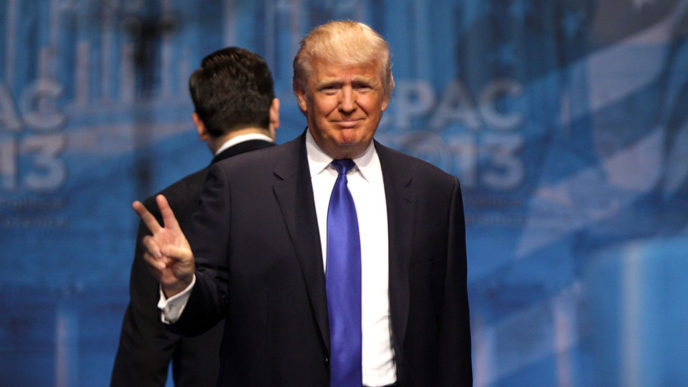
Trump: May Cancel Briefings for ‘Sake of Accuracy’

President Donald Trump tweeted several times Friday morning after the firing of FBI Director James Comey, defending the narrative and timeline his administration gave for the decision.

He questioned whether his administration should cancel all future press briefings and, instead, replace them with written responses to questions, “for the sake of accuracy.”

The president’s advisers said this week that Trump fired Comey on Tuesday in response to a recommendation by Deputy Attorney General Rod Rosenstein. Later, however, they said that Trump had planned to fire Comey regardless. (Read more from “Trump: May Cancel Briefings for ‘Sake of Accuracy'” HERE)

Follow Joe Miller on Twitter HERE and Facebook HERE.

Removal of Confederate Icons Stirs Nuanced, Varied Reactions

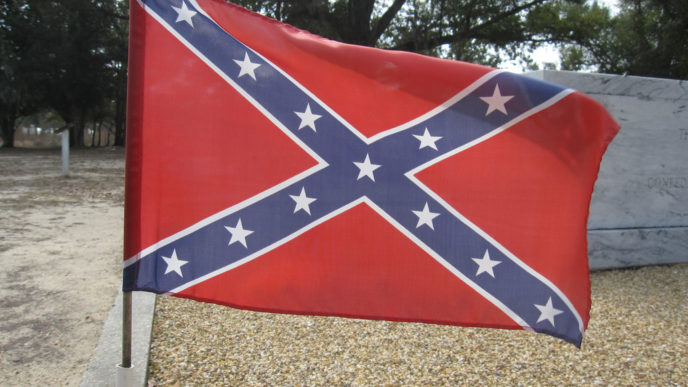
The statue of the Confederacy’s president had been hoisted from its stone pedestal in the pre-dawn hours and the blue glint of police lights was still visible two blocks away outside the corner laundromat where Carol Patterson sat as diverted rush-hour traffic rolled by.

“It’s entertaining,” Patterson, 74, said of the hubbub surrounding the Thursday morning removal of the statue from the busy New Orleans street that still bears the name Jefferson Davis Parkway. Police on horseback stood sentry nearby, in the event of demonstrations.

Patterson, who is white, has taken part in demonstrations and doesn’t share the reverence some white Southerners hold for Confederate figures. But she thinks Mayor Mitch Landrieu’s initiative to remove four monuments to Confederate-era figures was a mistake. (Read more from “Removal of Confederate Icons Stirs Nuanced, Varied Reactions” HERE)

Follow Joe Miller on Twitter HERE and Facebook HERE.

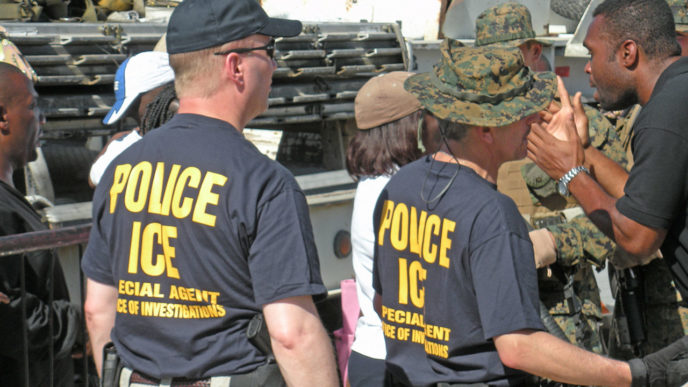
ICE Spent Tens of Thousands of Dollars Sending Officials to Tolerance Seminar

Immigration and Customs Enforcement spent tens of thousands of dollars to send its officials to a “tolerance seminar” put on by the Simon Wiesenthal Center, a group known for opposing immigration control efforts.

Documents provided by ICE to the Immigration Reform Law Institute in response to a Freedom of Information Act request indicate that several dozen ICE officials attended a Simon Wiesenthal Center seminar in Los Angeles. The documents state that the training cost about $1,500 for each official.

The PowerPoint presentation officials viewed at the three-day “Tools for Tolerance” seminar discusses ICE’s own goals regarding “workplace demographics” and the agency’s “diversity and inclusion strategic plan.”

And yet, the documents also show that ICE’s workforce, comprised of more than 200,000 employees, is already in full alignment with American racial demographics. What’s more, in some areas, ICE even far exceeds diversity requirements. More than 50 percent of Border Patrol agents are Hispanic.

“The training was intended to develop “greater cultural awareness” and designed for agents to “recognize their own inherent cultural biases,” as The Daily Caller News Foundation exclusively reported in August 2016. (Read more from “ICE Spent Tens of Thousands of Dollars Sending Officials to Tolerance Seminar” HERE)

Follow Joe Miller on Twitter HERE and Facebook HERE.

Here’s How Far Behind Trump Is on Political Appointments Compared to Obama, Bush

President Donald Trump has begun to move on naming federal judges and will eventually be naming a new FBI director, but more broadly, he remains slow in filling political appointments compared to his predecessors.

Trump has made 85 nominations to the Senate at this point in his presidency as of Friday, according to the Center for Presidential Transition, which tracks presidential appointees. In that same period of his first term, President Barack Obama made 212 nominations, President George W. Bush made 161 nominations, President Bill Clinton made 182 nominations, and President George H. W. Bush made 135 nominees by this point.

Trump, so far, is leaving key management positions unfilled, said Mallory Barg Bulman, vice president of research and evaluation at the Partnership for Public Service, the parent organization to the Center for Presidential Transition.

“Leadership matters a lot, as does having the right people in place,” Bulman told The Daily Signal. “You can’t start the game until the whole team is on the field.”

Trump has no nominee for 460 of the 557 key leadership positions, as of Friday, according to Partnership for Public Service. Trump has nominated 49, announced the nomination of 19, and 29 people have been confirmed.

Earlier this week, White House press secretary Sean Spicer said the administration is taking time to vet employees.

“We’re actually going through the Office of Government Ethics and FBI clearances before announcing most of these individuals,” Spicer said at the Monday press briefing. “And so, there’s a little bit of a difference in how we’re doing this. But we are well on pace with respect to many of these [appointments] to get the government up and running.”

Trump has not yet even named a director to run the Office of Personnel Management, which manages the federal workforce, noted Robert Moffit, a former assistant OPM director under President Ronald Reagan.

“The bottom line is that the president can’t run the federal government out of the White House and secretaries can’t run giant agencies huddled in an executive suite,” Moffit, now a senior fellow for health policy at The Heritage Foundation, told The Daily Signal. “Unilateral disarmament is a victory for the swamp. The swamp creatures have won the fight. Unless you control the bureaucracy, the bureaucracy controls you.”

Moffit, who also worked in the Reagan administration’s Department of Health and Human Services, said Reagan took control of the federal bureaucracy shortly into his presidency.

He said congressional relations is a key area where political appointees should be working, instead of leaving it to career civil service employees in some cases. That’s because, Moffit stressed, it’s the job of the career civil service employees to execute administration policy but the job of political appointees to advocate and explain those policies to Congress.

The president can name about 4,000 political appointees.

Out of that, 1,242 are key leadership positions that need Senate confirmation, according to the Partnership for Public Service. Another 472 political appointees—largely White House staff—don’t require Senate confirmation, according to the partnership. Further, 761 non-career senior executive positions can be filled throughout the executive branch—though not all are presidential appointees. Finally, 1,538 non-career federal employees report directly to a presidential appointee.

The partnership did not have a final number on how many of these positions are filled or unfilled, because it only tracks key leadership positions—most of which require Senate confirmation.

The White House Transition Project measures a different metric, but still finds Trump well behind other presidents going back through Reagan. Trump officially fell behind in March, said Terry Sullivan, a political science professor at the University of North Carolina, Chapel Hill, and the executive director of the project.

Rather than measuring 4,000 jobs, which includes all U.S. marshals, U.S. attorneys, and every inconsequential U.S. ambassador, the White House Transition Project looks primarily at 221 government appointments that are required for the essential function of government, have policy roles, and have the potential to be controversial, Sullivan said.

“This is not a result of a policy predisposition to shrinking government,” Sullivan told The Daily Signal. “He wants a tax cut but he isn’t staffing up the Treasury Department. He doesn’t want more EPA regulations, but he isn’t moving slower or faster with that agency than Veterans Affairs or Health and Human Services, things he cares about.” (For more from the author of “Here’s How Far Behind Trump Is on Political Appointments Compared to Obama, Bush” please click HERE)

Follow Joe Miller on Twitter HERE and Facebook HERE.

Here Are 12 Possible Comey Replacements at FBI

There’s no shortage of familiar names floating to be the next FBI director, after President Donald Trump’s controversial firing of James Comey earlier this week.

But it appears former Republican Rep. Mike Rogers of Michigan could be an early favorite among current and former agents.

Other names in the mix are Rep. Trey Gowdy, R-S.C.; Judge Merrick Garland; former Secretary of State Condoleezza Rice; New Jersey Gov. Chris Christie; and former New York City Police Commissioner Ray Kelly.

The FBI Agents Association, or FBIAA, a group of more than 13,000 current and former FBI agents, endorsed Rogers to replace Robert Mueller for the post in 2013, but President Barack Obama instead nominated Comey.

While the agents group hasn’t made another official endorsement, members “still believe” Rogers meets the principles of what the association is looking for, said Joshua Zive, outside general counsel for the FBIAA, to The Daily Signal.

Rogers was a former FBI special agent from 1989 through 1994. After serving in the Michigan state Senate, he was elected to the U.S. House in 2000. While serving in House of Representatives, he was the chairman of the House Permanent Select Committee on Intelligence. He didn’t seek re-election in 2014. He has also been a regular commentator on CNN.

Zive said he believes Rogers would have credibility with the bureau’s agents. Additionally, he would know how to communicate effectively to the public about the scope of issues the FBI deals with, according to Zive.

Andrew McCabe, the acting FBI director who was the deputy director under Comey, testified on Capitol Hill Thursday. He is also reportedly a contender for the job, but could be challenged due to potential conflicts.

McCabe served as an FBI special agent since 1996, and was elevated to the No. 2 spot in 2016. However, while he was moving up in the FBI during the investigation of Hillary Clinton’s private email server, his wife Dr. Jill McCabe ran for the Virginia state Senate in 2015, with a financial boost of almost $500,000 from Common Good VA. The political action committee is controlled by longtime Clinton ally Gov. Terry McAuliffe.

In a statement to The Wall Street Journal last year, the FBI said, “Months after the completion of [his wife’s] campaign, then-Associate Deputy Director McCabe was promoted to deputy, where, in that position, he assumed for the first time, an oversight role in the investigation into Secretary Clinton’s emails.”

“It needs to be somebody independent,” said Ron Hosko, the FBI’s former assistant director of the criminal investigative division and now president of the Law Enforcement Legal Defense Fund. “With McCabe, this day and age, even the appearance of impropriety is a problem … An appearance can be fatal—maybe not to a career—but to advancement.”

This is certainly true of political figures being rumored for the job, Hosko said.

One big name who has taken himself out of the running is former New York Mayor Rudy Giuliani, a Trump supporter in the 2016 race. Giuliani was formerly a U.S. attorney and was known for reducing crime as mayor.

Christie, also a former U.S. attorney known for prosecuting public corruption cases, is reportedly in the running. After ending his own presidential campaign in 2016, Christie quickly endorsed Trump.

“It’s no disrespect to these individuals, but the president shouldn’t nominate anyone who has a clearly partisan background,” Hosko said. “A Christie or Giuliani pick could give the impression that it’s cooked and they will not find anything on Russia.”

Here are other names being discussed as a potential replacement for Comey, according to former FBI agents and news reports:

John Pistole: Not a household name but prominently talked about, Pistole is getting mentioned by news accounts and by former agents as a contender with potentially bipartisan backing. He also has close ties to Vice President Mike Pence, said Nancy Savage, executive director of the Society of Former Special Agents of the FBI, a separate organization from the FBIAA.

“He was a deputy director of the FBI, head of the TSA, and president of a college in Indiana, and maybe close to Pence,” Savage, an agent for more than three decades, told The Daily Signal. “He would be very familiar to all of the issues.”

Pistole, now the president of Anderson University, formerly served in top law enforcement roles for both parties. He was the administrator of the Transportation Security Administration for President George W. Bush and deputy FBI director for Obama. He served for more than 20 years in the FBI before the Senate confirmed him as TSA chief in July 2010.

Condoleezza Rice: The former secretary of state and national security adviser under Bush would seem unlikely, but Savage said her name is being talked about. Such an appointment could come at an interesting time, while the FBI is investigating Russia’s alleged interference in the 2016 election.

“She is a Russian expert, and fiercely independent,” Savage said. “It would be a different move for her.”

Merrick Garland: Another longshot is the D.C. Circuit Court chief judge whom Obama nominated to serve on the Supreme Court. Sen. Mike Lee, R-Utah, opposed Garland’s Supreme Court nomination, but has touted Garland for FBI director.

Savage said the name was being floated, with the thought it would be a consolation for Garland.

“There is a sentiment about Garland after the Supreme Court, and he does have a strong record as a prosecutor,” Savage said.

President Bill Clinton named Garland as deputy assistant attorney general in the criminal division in 1993. In 1995, Garland led the investigation of the Oklahoma City bombing, and other domestic terrorism cases. Clinton nominated him to serve on the D.C. Circuit Court of Appeals in 1997.

Patrick Fitzgerald: The former U.S. attorney for the Northern District of Illinois became famous and somewhat controversial for investigating both the Valerie Plame leak case as a special prosecutor during the Bush administration and later for his prosecution of Illinois Gov. Rod Blagojevich, a Democrat, on charges of corruption.

Hosko immediately brought up Fitzgerald’s name as a top choice because of his track record for going after both parties.

“Prosecuting Democrats and Republicans is a badge of honor,” Hosko said.

Chuck Rosenberg: The acting administrator of the Drug Enforcement Administration in 2015 would also be a strong candidate with bipartisan appeal, Hosko said. Over his career, he was a federal prosecutor in both Texas and Virginia. He previously served as U.S. attorney for the Southern District of Texas, and later was named as U.S. attorney for the Eastern District of Virginia before working as chief of staff and senior counselor to Comey as FBI director.

Rep. Trey Gowdy: The South Carolina Republican was a former federal prosecutor and is reportedly under consideration. Gowdy chaired the House select committee investigating Benghazi and he has been a member of the House Oversight and Government Reform Committee.

Ray Kelly: Kelly served as the New York City police commissioner following the 9/11 terrorist attacks. He held that job longer than anyone else, and is reportedly under consideration for the FBI job. He backed policies such as stop-and-frisk to reduce crime. (For more from the author of “Here Are 12 Possible Comey Replacements at FBI” please click HERE)

Follow Joe Miller on Twitter HERE and Facebook HERE.

Good Trump: Budget Rumored to Contain Entitlement Reform

President Trump’s White House is reportedly building a fiscal 2018 budget proposal that aims to balance the federal budget in 10 years and cut $800 billion from entitlement programs.

According to Paul M. Krawzak, reporting for Roll Call, Social Security and Medicare will remain untouched. The president campaigned against spending cuts to entitlement programs. However, sources that spoke to Roll Call said the proposal will seek to cut a “wide array of means-tested, mandatory spending programs including Medicaid” over the next 10 years.

Food stamps, Temporary Assistance for Needy Families, Supplemental Security Income, child nutrition programs, and the Pell Grant program are potential welfare programs that the budget may address.

“The budget will include proposals to reduce the cost of the Social Security Disability Insurance program, which is not means-tested,” Krawzak reports.

If true, these proposed reforms are a good step in the right direction. Federal entitlement programs account for 60 percent of the budget and 12 percent of GDP. Social Security, Medicare, and Medicaid are the biggest contributors to the national debt, which is rapidly approaching $20 trillion. In March, the Congressional Budget Office (CBO) estimated the federal debt will reach 150 percent of gross domestic product – that’s all the wealth produced in the U.S. – by 2047 at its current rate of growth. This is unsustainable.

Entitlement reform is necessary to America’s fiscal stability. But do Republicans have the political will to address this problem?

Consider the widely praised Paul Ryan budget plan of FY 2013. When push came to shove, Republicans capitulated to the Democrats, and Paul Ryan, R-Wisc., struck a deal with Senator Patty Murray, D-Wash., that increased spending and failed to reform entitlements. Conservatives were told to wait for a Republican-controlled Senate and a Republican president to achieve real spending reform.

Well, conservatives waited. And when President Donald Trump revealed a “skinny budget” proposal, it did not propose reforms to entitlements. While compensating defense spending increases with domestic spending cuts, the Trump skinny budget still carried a $488 billion deficit. And congressional Republicans blasted those few spending victories as “draconian” cuts to their favorite government programs.

If Republicans, in the majority, were unwilling to support Trump’s budget proposal then, why should we expect them to support more spending cuts in the future? Further, assuming that there are enough Republicans in Congress who will go along with the president’s proposal, what happens when the Democrats threaten a government shutdown? Why should conservatives expect them to fight when last time they surrendered?

President Trump should be encouraged to fight for every penny of this rumored $800 billion entitlement reform. The evidence suggests congressional Republicans won’t. (For more from the author of “Good Trump: Budget Rumored to Contain Entitlement Reform” please click HERE)

Follow Joe Miller on Twitter HERE and Facebook HERE.

States Sue Over Trump Decision to Sell Coal Leases on Federal Lands

Four U.S. states filed a lawsuit Tuesday over President Donald Trump’s decision to restart the sale of coal leases on federal lands, saying the Obama-era block of the leasing program was reversed without studying what’s best for the environment and for taxpayers.

The attorneys general of California, New Mexico, New York and Washington, all Democrats, said bringing back the federal coal lease program without an environmental review risks worsening the effects of climate change on those states while shortchanging them for the coal taken from public lands.

“Climate change has to be considered when we are talking about compensating states and New Mexico citizens for their resources,” said Cholla Khoury, New Mexico Attorney General Hector Balderas’ director of consumer and environmental protection. (Read more from “States Sue Over Trump Decision to Sell Coal Leases on Federal Lands” HERE)

Follow Joe Miller on Twitter HERE and Facebook HERE.
Pundits Speculate About Why Trump Fired FBI Director James Comey

President Trump fired FBI Director James Comey on Tuesday. Comey, he said, is “not able effectively to lead the Bureau.”

In Trump’s letter to Comey informing him of the firing, he wrote, “I greatly appreciate you informing me, on three separate occasions, that I am not under investigation.” He went on, “I nevertheless concur with the judgement of the Department of Justice that you are not able to effectively lead the Bureau.”

Comey Usurped the Attorney General’s Authority

The White House said the president “acted based on the clear recommendations of both Deputy Attorney General Rod Rosenstein and Attorney General Jeff Sessions.” Rosenstein’s memo laid out the case for the firing.

Comey usurped the Attorney General’s authority, he wrote. His job was to lead the investigation and then hand the bureau’s findings to the Justice Department. Instead, he held a press conference giving “his own conclusions about the nation’s most sensitive criminal investigation.”

Rosenstein then presented a long list of Republican and Democratic authorities who thought Comey had acted wrongly. They included two of George W. Bush’s attorneys general, Michael Mukasey and Alberto Gonzales. “Almost everyone agrees that the director made serious mistakes; it is one of the few issues that unites people of diverse perspectives,” Rosenstein wrote.

Comey had already made a series of missteps. Last summer, he said it was a unanimous decision not to suggest prosecuting Clinton. Others within the FBI said that was not true. He also made the claim that no prosecutor would pursue the case. This wasn’t true. Career attorneys and agents on the case thought she should be prosecuted.

He angered members of Congress when he destroyed laptops that were subject to congressional subpoena. Last week, he told Congress that Clinton’s aide Huma Abedin had forwarded thousands of their email exchanges to her then-husband Anthony Weiner. Only a couple of exchanges were forwarded.

Comey’s Investigation of Trump’s Ties to Russia

The firing came in the midst of Comey’s probe of the Trump campaign. He was looking into claims it colluded with Russia to influence the election. The DOJ issued grand jury subpoenas earlier this week to people with ties to Trump’s former National Security Advisor Michael Flynn. Flynn resigned when it was revealed he lied to the vice president about his conversations with the Russian ambassador during the campaign.

Democrats say Trump fired Comey to thwart the probe. They are now calling for a separate investigation. Trump has denied any wrongdoing. A White House press officer told Fox News Tuesday night that the probe would go on.

Last fall, Democrats called for Comey’s firing.

Last fall, Democrats called for Comey’s firing. They were angry he said less than two weeks before election day that he was reopening the probe into Hillary Clinton’s emails.

Some of those same Democrats are now changing their tune. Senate Minority Leader Chuck Schumer (D-N.Y.) said he lost confidence in Comey last fall. Now he is saying Trump made a mistake by firing him.

Senator John Cornyn (R-Texas) tweeted, “Ds were against Comey before they were for him.”

As president, Trump has the authority to fire agency heads. “There are no statutory conditions on the president’s authority to remove the FBI director,” the Congressional Research Service said in a 2014 report. President Bill Clinton fired William Sessions in 1993. Session s had refused to resign after being found to have engaged in unethical practices. (For more from the author of “Pundits Speculate About Why Trump Fired FBI Director James Comey” please click HERE)

Follow Joe Miller on Twitter HERE and Facebook HERE.
Major Health Insurance Provider Ditches Obamacare

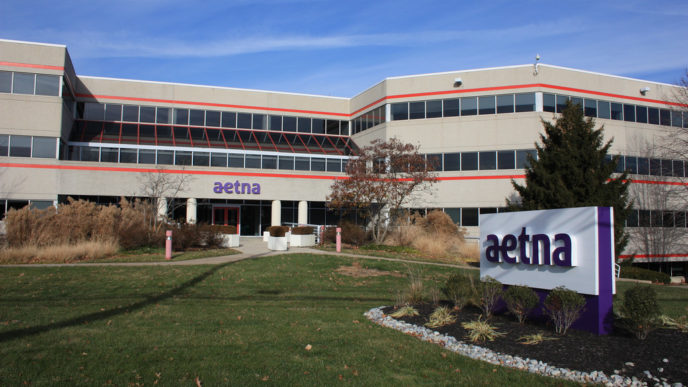
Aetna announced Wednesday that it will stop offering Obamacare exchange plans in 2018, making it the latest major health insurance provider to completely opt out of former President Barack Obama’s landmark health care legislation.

The company cites massive losses among exchange participants and projects the problems to increase over the short term. Aetna will also cease to sell individual plans in Nebraska and Delaware, Bloomberg reports.

“Our individual commercial products lost nearly $700 million between 2014 and 2016, and are projected to lose more than $200 million in 2017 despite a significant reduction in membership,” an Aetna spokesman said in an email. (Read more from “Major Health Insurance Provider Ditches Obamacare” HERE)

Follow Joe Miller on Twitter HERE and Facebook HERE.

Trump Establishes Panel to Probe Voter Fraud

President Donald Trump signed an executive order Thursday establishing a panel to investigate voter fraud, a commission he first talked about in early February.

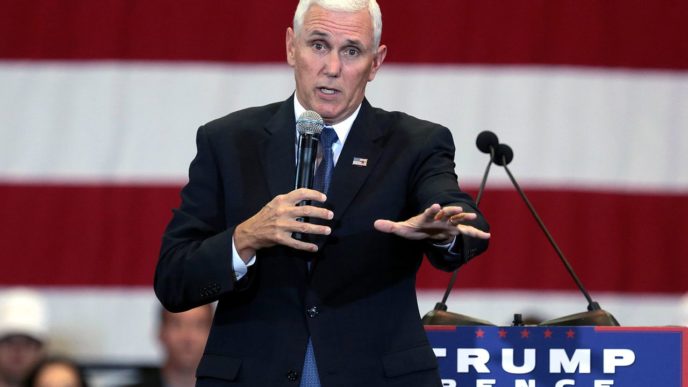
The president named Vice President Mike Pence to lead the Presidential Advisory Commission on Election Integrity, and named a bipartisan group of members that includes chief state election officials.

“The president is committed to the thorough review of registration and voting issues in federal elections and that’s exactly what this commission is tasked with doing,” White House deputy press secretary Sarah Huckabee Sanders said at a press briefing Thursday after Trump signed the order.

She later added:

The commission will review policies and practices that enhance or undermine the American people’s confidence in the integrity of federal elections and provide the president with a report that identifies system vulnerabilities that lead to improper registrations and voting. We expect the report will be complete by 2018. The experts and officials on this commission will follow the facts where they lead. Meetings and hearings will be open to the public for comments and input.

Kansas Secretary of State Kris Kobach, a Republican, will be the vice chairman under Pence. Indiana Secretary of State Connie Lawson will also be on the commission, as will New Hampshire Secretary of State Bill Gardner, a Democrat, and Maine Secretary of State Matthew Dunlap, a Democrat. The commission will also include former Ohio Secretary of State Ken Blackwell, a Republican, and U.S. Elections Assistance Commission member Christie McCormick.

Other members will be named at a later date.

Trump has asserted he would have won the popular vote in the 2016 presidential election had it not been for illegal votes cast. However, he hasn’t provided direct evidence. According to a study by Jesse Richman, an associate professor of political science at Old Dominion University, hundreds of thousands of noncitizens could have voted in the November election.

Based on an extrapolation of previous election studies, Richman determined more than 800,000 noncitizens likely voted in the 2016 presidential race, significant, but not nearly enough to overcome Hillary Clinton’s popular vote victory.

The commission is facing some opposition.

“This commission is a sham and distraction,” Michael Waldman, president of the Brennan Center for Justice, a liberal legal group based at the New York University School of Law, said in a public statement.

“It’s simply an effort to try and find proof of the president’s absurd claim that 3-5 million people voted illegally in November. It tries to pivot from the fact that this week Trump fired the chief law enforcement officer in charge of probing whether his advisers colluded with Russia to influence our elections. He fired the person investigating a real threat to election integrity, and set up a probe of an imaginary threat.”

However, since 2016, there have been cases of voter fraud in North Carolina, Nevada, Ohio, Illinois, Colorado and Wyoming, said Logan Churchwell, spokesman for the Public Interest Legal Foundation, a voter integrity group.

“This order is a step in the right direction in response to widespread concern about failures in our election systems that can lead to fraud and other irregularities,” Churchwell said in a public statement. “The issues of faulty voter registration procedures and record maintenance are ripe for review. Perennial questions surrounding the actual scope of ineligible voters and their rates of participation can only be answered when federal offices share information.”

Trump’s executive order says:

The commission shall be solely advisory and shall submit a report to the President that identifies the following:

(a) those laws, rules, policies, activities, strategies, and practices that enhance the American people’s confidence in the integrity of the voting processes used in Federal elections;

(b) those laws, rules, policies, activities, strategies, and practices that undermine the American people’s confidence in the integrity of the voting processes used in Federal elections; and

(c) those vulnerabilities in voting systems and practices used for Federal elections that could lead to improper voter registrations and improper voting, including fraudulent voter registrations and fraudulent voting.

(For more from the author of “Trump Establishes Panel to Probe Voter Fraud” please click HERE)

Follow Joe Miller on Twitter HERE and Facebook HERE.