
Blame Congress for Trump’s 100-Day Bust

Friday morning, the House of Representatives easily passed a one-week continuing resolution to avoid a partial government shutdown. The Senate followed suit on the bill, and in so doing proved the utter futility of Republican control of Congress in the first 100 days of Donald Trump’s presidency.

While the media will hang the apparent lack of Trump’s legislative accomplishments on the necks of the administration, ultimately this is not a failure of the executive branch. In this constitutional republic, it is Congress that holds the legislative power; the House of Representatives and Senate make the laws. They are responsible for the legislative policy of the Trump administration, and they’ve blown the first 100 days.

The failed negotiations over the spending bill Congress must now take up next week is the capstone on congressional Republican incompetence and the failed leadership of Sen. Mitch McConnell, R-Ky., and Speaker Paul Ryan, R-Wis.. The Republican Party has not received a single concession from the Democrats to implement any of President Trump’s agenda … and they will not.

Democrats succeeded in bullying the GOP, threatening a government shutdown over border-wall funding and other “poison pill” riders.

“Our position has been clear, and it’s nothing new: no poison pill riders. The sooner we can resolve this issue, the quicker we can have an agreement on appropriations for 2017, so I object,” Senate Minority Leader Chuck Schumer, D-N.Y., said on the Senate floor Thursday. Schumer prevented the Senate from automatically approving the short-term continuing resolution on grounds that changes to environmental regulations and Dodd-Frank protections are unacceptable.

While the Democrats fight to protect every inch of the leviathan federal government they explicitly support, the Republicans – who pretend to seek to put up a fight on the campaign trail – roll over once they have to take a tough vote.

Observe what has become of the Republican agenda, as timid or cowardly GOP members refuse to fight for smaller government.

Obamacare repeal? That promise was broken and now seems delayed indefinitely, as liberal Republicans fight to keep the core parts of the law they like, and are otherwise afraid of making major changes to any entitlements.

Tax reform? The big announcement that came from Treasury Secretary Steve Mnuchin and White House adviser Gary Cohn Wednesday left out the important details, as both administration officials had nothing but vague answers for reporters and essentially said Congress is “working on it.”

Build the wall? Republicans capitulated after Democrats’ threats to shut down the government.

Speaking of government spending, where is the budget? Where is the congressional action on President Trump’s skinny budget? Why is a Republican-controlled Congress still using soft continuing resolutions to pass short-term spending in place of hard budgets and a return to separate appropriations bills? That’s another broken promise.

What cuts to government spending are happening? None. Why does Planned Parenthood remain funded? Because Democrats will shut down the government to fight for baby murder. But you won’t hear a single Republican speak in those terms.

And then there are the 127 federal court vacancies that need filling. Where is the Trump administration on nominating conservative judges to fill those vacancies? Where is the Senate on taking those nominations up?

Apologists for Congress’ (lack of) accomplishments in the first 100 will note the regulations that have been repealed under the Congressional Review Act. Trump has signed 13 reversals of Obama administration policies into law.

But were Republicans actually interested in dealing a unifying, single blow to the administrative state, the Senate would take up the REINS Act.

The REINS Act is legislation designed to require regulators to seek congressional approval for their most expensive regulations. It passed the House of Representatives in early January, and since then the Senate hasn’t budged on it. What gives?

President Trump promised to “work hard to get it passed” on the campaign trail.

“I will sign the REINS Act should it reach my desk as President and more importantly I will work hard to get it passed,” Trump previously told American Commitment President Phil Kerpen. “The monstrosity that is the Federal Government with its pages and pages of rules and regulations has been a disaster for the American economy and job growth. The REINS Act is one major step toward getting our government under control.”

Nearly every Republican agrees that regulations need to be scaled back, and to a large degree that has been the focus of the Trump administration’s executive actions. But when it comes to legislation from Congress, Republicans are taking time to repeal several regulations individually instead of pursuing sweeping conservative reforms.

The U.S. Senate has not even been in session for 100 days this year. Including weekends, the Senate has taken 54 days off since the session began in January. What have they done to deserve the vacation time?

Like it or not, voters are going to demand that this Congress make the legislative trains run on time before the 2018 midterm elections. Given the GOP’s failure to keep basic promises so far, with no change on the horizon, what campaign promises can Republicans make in 2018 that voters will believe?

We will soon find out if “at least we’re not Democrats” is enough to get Republicans elected in this country. (For more from the author of “Blame Congress for Trump’s 100-Day Bust” please click HERE)

Follow Joe Miller on Twitter HERE and Facebook HERE.
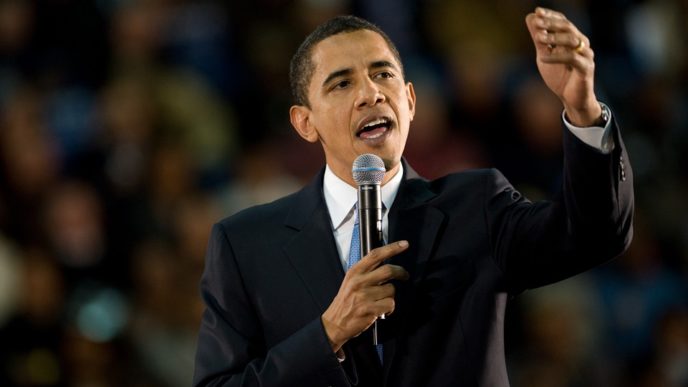
House Conservatives Won’t Pass Omnibust Without a Fight

Don’t expect conservatives in Congress to swallow the bipartisan $1 trillion spending bill, which is funding all of former President Obama’s priorities, without a fight, says Rep. Jim Jordan, R-Ohio.

Jordan, a member of the House Freedom Caucus, said Monday he expects “lots of conservatives” to oppose the bill as written.

“Money goes to Planned Parenthood […] Money continues to go to sanctuary cities, but no money for the border wall,” Jordan explained on CNN’s “New Day.”

“I think you’re going to see a lot of conservatives be against this plan this week.”

By threatening a government shutdown, Democrats in the minority pressured the GOP to remove 160 conservative agenda items from the spending bill. They assented to the liberal demands without a fight. Rep. Jordan questioned why Republican leaders passed a short-term spending bill in the first place last fall “if we weren’t going to actually fight for the things we told the voters we were going to fight for.”

Jordan’s discontent has been matched by other House conservatives on social media. Rep. Justin Amash, R-Mich., blasted the omnibus as “another deal to grow the government.”

Representative Thomas Massie, R-Ky., a Freedom Caucus ally but not a member himself, offered up criticism for the process behind the omnibust legislation.

But Congressman Jeff Duncan, R-S.C., had the most heated words in a Facebook post, describing the spending deal as “unbelievable,” and saying Democrats have successfully done “what Speaker John Boehner refused to do in 2011 – stand FIRM in the negotiations on government funding and debt for the principals and promises we (GOP) made to the American people.”

“Now – Schumer and Company have a liberal press (MSM) to support them if they stand firm and threaten a government shutdown – the GOP didn’t,” Duncan wrote. “But we do have the White House and its ‘Bully Pulpit.’”

“But when Republicans (moderates) hide from the shadow of a government shutdown and fail to stand firm, when we have House, Senate and the White House, to defund the murder and dismemberment of babies in the womb, fund border security and defund cities which are in direct violation of Federal Immigration laws, well we get crap like this latest CR – government funding ‘Deal.’”

Though many conservatives will likely oppose this omnibust deal, moderate Republicans will betray their campaign promises once again and join with Democrats and pass it.

At this point, the only way to stop the bill is President Trump’s veto power. Now, the American people will see if the president was serious when he said he would go to Washington, D.C., and fight the big government establishment of both parties.

Will President Trump veto the omnibus spending bill and demand a bill that funds the border wall, defunds Planned Parenthood, defunds sanctuary cities as he promised? Or will Trump sign a $1 trillion deficit spending bill into law, funding Democrat priorities (like every other establishment Republican president who has come before him)? (For more from the author of “House Conservatives Won’t Pass Omnibust Without a Fight” please click HERE)

Follow Joe Miller on Twitter HERE and Facebook HERE.

Trump’s Agriculture Chief Tosses out Michelle Obama’s School Lunch Rules

Former first lady Michelle Obama’s dictates on school lunches were thrown out Monday by one of President Donald Trump’s Cabinet members.

Agriculture Secretary Sonny Perdue signed a proclamation to begin to undo federal standards that the Obama administration placed on lunches in public schools and return those decisions to local schools.

“This announcement is the result of years of feedback from students, schools, and food service experts about the challenges they are facing in meeting the final regulations for school meals,” Perdue said in prepared remarks. “If kids aren’t eating the food, and it’s ending up in the trash, they aren’t getting any nutrition—thus undermining the intent of the program.”

The announcement “begins the process of restoring local control of guidelines on whole grains, sodium, and milk,” a press release from the Agriculture Department reads.

The standards, implemented in 2012, were crafted with the heavy involvement of Michelle Obama, who made better nutrition and more exercise for children part of her agenda as first lady. The standards include directives on vastly reducing use of salt, calorie limits, restrictions on meat, prohibitions on the contents of vending machines, and increased servings of whole grains, fruits, and vegetables, as the New York Post reported.

The standards implemented provisions of a law called the Healthy, Hunger-Free Kids Act of 2010. President Barack Obama’s wife also championed the law, Daren Bakst, a research fellow in agricultural policy at The Heritage Foundation, told The Daily Signal in an email.

The 2010 law set calorie limits, stipulated portion sizes, and required specific nutrients.

“Michelle [Obama] is a big proponent and defender of the standards,” Bakst said.

Perdue, the former governor of Georgia, said in a tweet that the rules have been counterproductive:

Perdue “took an important step to making school meals edible again,” Bakst told The Daily Signal. “The federal school meal standards implemented by the Obama administration have been a disaster, creating massive plate waste and imposing high costs on schools.”

Perdue’s action, Bakst said, is significant for both parents and kids.

“This issue isn’t about nutrition,” Bakst said Monday, adding:

It’s about whether one believes the federal government should dictate almost every aspect of what kids eat at schools, or if local communities, with the input of parents, should make these decisions. Today was certainly a big win for kids across the country, but it was also a big win for those who respect the opinions of parents more than those of federal bureaucrats.

Patricia Montague, CEO of the School Nutrition Association, a national nonprofit with more than 57,000 members that provides meals to students across the nation, praised Perdue’s leadership.

“I commend Secretary Perdue for taking this important step,” Montague said. “We have been wanting flexibility so that schools can serve meals that are both nutritious and palatable. We don’t want kids wasting their meals by throwing them away. Some of our schools are actually using that food waste as compost. That shouldn’t be happening.” (For more from the author of “Trump’s Agriculture Chief Tosses out Michelle Obama’s School Lunch Rules” please click HERE)

Follow Joe Miller on Twitter HERE and Facebook HERE.

This Republican Senator Pushes Congress for ISIS War Authorization

For political and practical reasons, lawmakers across the partisan divide have permitted President Barack Obama, and now, President Donald Trump, to carry out a bombing campaign against the ISIS without specific congressional approval.

More than 40 times in U.S. history, Congress has authorized the use of military force in the form of what’s known as an Authorization for Use of Military Force, or AUMF, which gives the basic legal authority for American military power against an enemy.

As Trump carries on where Obama left off, and promises to accelerate the fight against the Islamic State, also known as ISIS, in Iraq and Syria, some lawmakers who have long called for explicit congressional approval for this military campaign—but failed to inspire Congress to even take a vote—are making a strong push to revisit the issue.

“I believe it is long past time for Congress to pass and consider an AUMF for the fight against ISIS,” said Sen. Todd Young, R-Ind., in a speech at The Heritage Foundation on Monday. “The Founders, in my view, intended—and the Constitution demands—that Congress play a decisive role in the decision go to war, not acting as a rubber stamp or passive observer. This failure by Congress to fulfill its constitutional authorities isn’t good for our country.”

Trump, like Obama before him, is operating the fight against ISIS under an existing 2001 AUMF permitting the targeting of groups connected to the 9/11 attacks and the 2012 AUMF authorizing the Iraq War.

Obama had encouraged Congress to authorize military force against ISIS, and even authored his own AUMF explicitly targeting ISIS for lawmakers to review.

Democrats and Republicans found different reasons to oppose Obama’s AUMF, which included limitations on the length of time the U.S. could fight ISIS—the measure would have expired in three years—and on the use of troops (“long-term, large-scale ground operations” were not permitted).

Many Republicans viewed this proposal as overly restrictive, and Democrats, meanwhile, saw it as not limiting enough.

Stephen Preston, the general counsel for the Department of Defense in the second term of the Obama administration, says the former president had the authority to prosecute the military campaign against ISIS using the old 2001 and 2012 AUMFs.

But Preston says he, on behalf of Obama, continued to push for a new ISIS-specific AUMF as a way for Congress to show the world that America is united in the fight against terrorism.

“I firmly thought then and now that it’s imperative for Congress to act to carry out its constitutional role to take this country to war,” said Preston, who also spoke at The Heritage Foundation event. “I feel this way not because [a new AUMF] is necessary to be lawful, but because it’s important in our democracy and government of shared powers for Congress to play its role. It’s important to show the men and women in uniform, and the American people, that the government is united in its support for the fight, and also to show our partners and our adversaries that this country and our government is united in the fight.”

In a sign that Congress may be ready to take a more active role, a new spending agreement to fund the government through the end of the fiscal year contains a clause providing an additional $2.5 billion in military spending if Trump delivers a plan on how to defeat ISIS.

Young, a member of the Senate Foreign Relations Committee, has introduced a proposed AUMF that would also mandate the Trump administration to submit a “comprehensive strategy” to beat ISIS.

His AUMF would approve the use “of all necessary and appropriate force” against al-Qaeda, the Taliban, ISIS, associated forces, and “successor organizations.”

Young said he believes that Trump would be more likely than Obama to support a broader, more open-ended AUMF such as this.

Yet he recognizes potential opponents may seek stronger limitations—such as a sunset provision limiting the duration of military force—at a moment when Americans are weary of war.

“I struggled with this,” said Young, who served in the Navy and Marines. “The downside of a sunset [provision] is you allow the enemy to figure out when you will disengage. When America goes to war, it ought to win, so it’s important to give the commander in chief discretion in that area. On the other side, we need to avoid perpetual wars, and I believe we can avoid that by ensuring we have a robust strategy with sufficient congressional oversight.”

Charlie Savage, a Pulitzer Prize-winning journalist with The New York Times who has written extensively about the government’s power to prosecute war, shares Young’s optimism that a Republican-controlled Congress may be likelier to pursue an ISIS-specific AUMF under Trump.

But Savage, speaking at The Heritage Foundation event, argued that Congress has already harmed its reputation, and weakened its own powers, by not yet having authorized the ISIS fight.

“It seems like the conditions are there to clean this up, just because I don’t see where the opposition to [an ISIS AUMF] is organized in the sense that Obama won’t sign the bill,” Savage said. “Trump will sign the bill.”

“As time continues to pass, this is the opposite of urgency,” Savage added. “The damage is sort of done. At this point, it may be that the scab and the scar tissue has already formed. I am not quite sure what damage is being fixed as much today if this ever were to happen.” (For more from the author of “This Republican Senator Pushes Congress for ISIS War Authorization” please click HERE)

Follow Joe Miller on Twitter HERE and Facebook HERE.
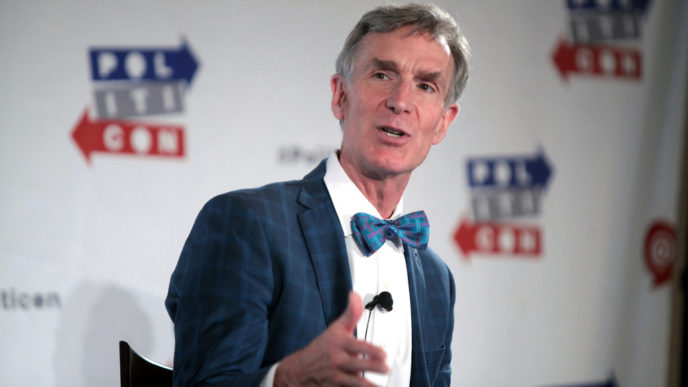
Let’s Penalize People for Having ‘Extra Kids’ — Bill Nye’s Outrageous Idea

By Todd Starnes. These days Mr. Nye hosts a series on Netflix – Bill Nye Saves the World. The other day – he pondered this question – should people be penalized for having extra kids.

Travis Rieder, a bioethicist at Johns Hopkins University, told Mr. Nye it was a good idea.

“I do think that we should at least consider it,” he said.

“Well, ‘at least consider it’ is like ‘do it,’” Nye replied.

Their theory is that big American families are hurting the environment. (Read more from “Let’s Penalize People for Having ‘Extra Kids’ — Bill Nye’s Outrageous Idea” HERE)

________________________________________

Bill Nye: Should Parents Be Penalized for Having ‘Extra Kids?’

By Chris White. Comedian Bill Nye suggested that saving the world from climate change might entail punishing people in developed countries for having too many children.

Nye asked one of the panelists on the Tuesday episode of his Netflix show “Bill Nye Saves The Earth” if it would be a good idea to have the government penalize having “extra kids.”

“Should we have policies that penalize people for having extra kids in the developed world?” Nye asked Travis Rieder, an academic for Berman Institute of Bioethics at Johns Hopkins University.

“I do think we should at least consider it,” said Rieder, who believes that limiting the size of families is paramount to fighting global warming.

“Well, ‘at least consider it’ is like, ‘do it,’” Nye replied. Conservatives have had a field day lampooning the former children’s TV host over the content of his new show, which is directed toward adults with a layman’s understanding of scientific issues. (Read more from “Bill Nye: Should Parents Be Penalized for Having ‘Extra Kids?'” HERE)

Follow Joe Miller on Twitter HERE and Facebook HERE.

Will Trump’s Plan Raise or Lower Your Taxes?

President Trump’s administration has finally rolled out a blueprint for tax reform. Treasury Secretary Steven Mnuchin is selling the proposal as “the biggest tax cut and largest tax reform in the history of this country.”

Whether that claim is accurate remains to be seen as many of the specifics on the Trump plan were left out of the press conference. The administration reiterated, however, that tax reform to encourage economic growth remains a top priority for the president.

“President Trump has made tax reform a priority, and the Republican Congress wants to get it done.” Senior Trump adviser (and liberal Democrat) Gary Cohn said, speaking at a press conference Wednesday.

Candidate Trump proposed lowering individual tax rates by consolidating the number of tax brackets from seven to three. Trump proposed those rates to be 10%, 20%, and 25%. He later amended those rates to 12%, 25% and 33%, but the principle of his proposal was massive tax cuts for individuals.

What President Trump is now proposing is a three-bracket system with rates of 10%, 25%, and 35%. Married couples will have a “zero tax rate” on the first $24,000 they earn. The administration has not yet decided the income levels assigned to each bracket, though the promise is for a net tax cut for the lower and middle class.

Without knowledge of the range of the income tax brackets, it is difficult to estimate the impact these new tax rates will have.

“We are in constant dialogue with the House and the Senate,” Cohn clarified when pressed for more specifics. “We have outlines. We have a broad brush view of where they’re gonna be.”

Other details from the plan that leaked prior to the press conference were confirmed.

Several taxes are eliminated. The death tax and the alternative minimum tax are gone under Trump’s plan. Additionally, the 3.8% Obamacare tax on dividends and capital gains is repealed.

The tax plan includes a child care tax credit, though the details of the credit were not discussed.

Notably, President Trump’s plan calls for the elimination of most individual income tax deductions.

“We are going to eliminate most of the tax breaks that are mainly benefits to high income individuals,” Cohn said. Indeed, the Trump plan eliminates every single itemized deduction for individuals except for mortgage interest and charitable contributions. “This isn’t going to be easy,” Cohn admitted, noting this proposal may not be immune to criticism. “We will be attacked from the Left, and we will be attacked from the Right.”

“We think that will be sweeping reform,” Mnuchin later added.

The effect of eliminating individual income tax deductions on high income earners while cutting the top rate from 39.6% to 35% may actually have the effect of a net tax increase for higher income earners. Yet, again, it is impossible to know for sure because the administration did not relay the specifics of their proposal.

On the business side, the president wants to slash business tax rates from 35% to 15%. Small business owners will be eligible for the 15% business rate. The object is growth.

“The president’s objective is creating economic growth,” Mnuchin said. “We believe we can get back to 3% or higher GDP [growth] that is sustainable in this country.”

Additionally, there will be a one-time tax on overseas profits — a repatriation tax. President Trump has previously discussed cutting the repatriation tax on offshore business earnings from the current 35 percent to 10 percent. Secretary Mnuchin said the specifics of the repatriation tax rate are still under discussion.

The bottom line is the president’s tax plan will result in big tax cuts for businesses that will stimulate business and job growth. With the elimination of individual tax deductions, however, the effectiveness of tax cuts on individual income may be mitigated, and in some cases individual filers with high incomes may see a net increase in the tax they pay.

Ultimately, without further answers to questions on the specific details of the plan, people who want to know if their taxes are going to go up or down are left in the dark. (For more from the author of “Will Trump’s Plan Raise or Lower Your Taxes?” please click HERE)

Follow Joe Miller on Twitter HERE and Facebook HERE.

New Facility Beams a Beacon of Hope for the Addicted in DC

In December 2016, we brought you the story of Washington D.C.’s Community Action Group, a local addiction recovery ministry that has been serving those suffering from substance abuse in our nation’s capital for nearly 20 years.

At that time, CAG – as it is known in the District – was eagerly anticipating the opening of its new outpatient facility and community center at the corner of 15th Street and Independence Avenue in Southeast D.C.

On a sunny morning this past Friday, the group’s goal was realized in a fanfare of joy and gratitude from the local community as government leaders cut the ribbon on the dazzling new facility, which stands as a beacon of hope and perseverance for the residents of East Capitol Hill.

The phrase “nevertheless, she persisted” gained nationwide popularity after Sen. Elizabeth Warren was lionized for running afoul of Senate rules a few months ago, but it’s probably better applied to Janice Desasso Gordon, CAG president and co-founder – who oversaw the long-awaited completion of the project. For, without her persistence and that of others, Friday’s celebration simply would not have happened.

As noted in our earlier profile, the remodeling project has been completed through many obstacles, including the death of founder Harold “Hal” Gordon – the namesake of the new facility – and was held up by a seemingly never-ending mix of bureaucratic wrangling, funding measures, and a wall collapse that threatened to stop the project dead in its tracks. Now, CAG’s headquarters are back in their historic location on Capitol Hill.

In her ceremonial remarks, Gordon was gracious to what she called a team of “angels” who “surrounded” her and helped finish the project when it was at its most difficult point.

“What we had was the support that was so solid,” she told those in attendance at the ribbon cutting, “that there was no way that we would not persevere.”

The new two-story facility features a spacious auditorium with a stage and industrial kitchen to support the many different programs and approaches that CAG uses in its innovative, client-driven approach to combatting addiction. The auditorium will be used for the group’s weekly fellowship meetings and by its multiple artistic groups, like the CAG choir, who performed at the event. There is also a conference room for group therapy and a library.

Shanta Belton Carter, president of the CAG alumni association – a group of recovering addicts and alcoholics who have gone through the program and have organized to assist each other – says that she is so “grateful … honored, and blessed, to just be a part of today’s grand opening.” She also expressed hopes that the building will serve as a reminder that there is always help waiting for those who are still suffering.

“I pray,” she told me, “that this building right here will reach out to the community … that it’s a place where they can come and get help and not feel like they’re ostracized from society … where they can get some sort of hope.”

The event is an emotional one for Carter, who has been clean and sober for over a decade thanks to CAG.

“I am honored and touched just to be a part of it,” she concluded, “because CAG is home to us … Just to be back home, I can’t even describe what I’m feeling right now.”

(For more from the author of “New Facility Beams a Beacon of Hope for the Addicted in DC” please click HERE)

Follow Joe Miller on Twitter HERE and Facebook HERE.

4 Fixes From Congress to Prevent ICE Agents From Being Crushed

It’s a perfect racket to steal the sovereignty of the American people: illegal aliens flood our country in such large numbers and then use our own generosity and the runaway courts against the citizenry. In order to bend over backwards to grant each individual due process they historically were never entitled to, ICE agents delay deportations for months, prompting the courts to demand the release of thousands of aliens. Unfortunately, as a new report from the DHS Inspector General reveals, there are too many illegals and too few agents to deport the bulk of them within the court-mandated time period, resulting in the indefinite release of hundreds of thousands of people who have no right to be in this country.

Here are some of the key findings from the IG’s report, which reviewed ICE’s operations as of last year when Obama was still in office:

As of August 2016, ICE was overseeing 2.3 million illegal aliens who were released from detention, 368,574 of whom had prior criminal convictions but were allowed to remain in the country. Nearly one million have already received final deportation orders.

Only a small percentage of this pool of illegals is deported in a given year. In fiscal year 2015, ICE removed or returned 235,413 illegal immigrants.

While those released from detention, due to runaway court decisions, are officially supervised by ICE, the report found that in some field offices there is only one agent per 10,000 released aliens. This is a de facto ticket to remaining in the country indefinitely. Worse, the report found that that “a heavy workload limited oversight of non-detained aliens in that geographic area that ICE had flagged as risks to national security.”

Naturally, the Inspector General recommended throwing more money at the problem and hiring more agents as well as spending more money on training. Undoubtedly, until there are systemic changes made to our laws and the role of the courts in immigration policy, there is a need to hire more staff. After all, there is no greater role of the federal government than protecting national sovereignty. Historically, we never allowed a single public charge to enter the country, much less millions of predominantly impoverished and often criminal individuals to remain here illegally. To that end, the Trump administration has rightfully proposed hiring 10,000 new ICE agents and is requesting an additional $3 billion for the remainder of FY 2017. Sadly, Republicans appear ready to fund Planned Parenthood and refugee resettlement in next week’s budget, but not the much-needed beefing up of immigration enforcement resources.

However, as is the case with most problems in government, this is a policy problem more than a resource problem. That is why it’s time for Congress to either clarify some of the loopholes in statute that courts are abusing or kick the courts out of immigration altogether. I proposed 20 immigration and homeland security ideas for Congress to pursue at the beginning of the session, yet they have refused to touch this issue in the first 100 days. President Trump (on the days when President Kushner is not presiding) should demand from GOP leadership the following four fixes:

1. Restrain the courts: Congress must overturn the Zadvydas decision, which mandated the release of most aliens from detention after six months. Ironically, by affording illegals procedural due process against deportation — which takes a long time due to the mass invasion of criminal aliens — our immigration officials are accused of violating their rights. They are using our own compassion against us. Because of the sheer number of illegals, the desire to vet any asylum claims, the effort to humanely return them to workable circumstances, and the recalcitrance of many countries to repatriate their illegals, it takes a while to deport these individuals. They are using the courts to obtain release and disappear into our communities. This is fundamentally unfair to a sovereign nation. These illegals came here of their own volition and always have the opportunity to voluntarily depart to their country of origin. They have no affirmative right to demand a day in court to litigate a right to stay in this country but at the same time demand to be released from detention. Congress must update the law to mandate detention for any alien whom we are making a reasonable effort to deport.

2. Fix asylum loophole: Many of the cases in the immigration courts are the result of smugglers exploiting our asylum policies. Congress and the State Department must enforce international law requiring asylum seekers to apply for asylum in the first safe country they encounter in their journey. Congress must also better define the statutory language of persecuted “social group” so that it remains in line with the traditional impetus for our asylum laws: to protect religious and ethnic minorities.

3. Expand expedited deportations and deputize states to help with enforcement: Pass the Davis-Oliver Interior Enforcement Act, which punishes sanctuary cities, deputizes states to enforce immigration laws, and bolsters expedited deportations. Under current law and practice, expedited deportations are rarely utilized and are never used for those in the country for more than two years.

4. Immediate funding for border fence: The IG’s report is yet another demonstration of how interior enforcement is so costly and inefficient. Obviously, in the short run, we must have a robust interior enforcement regime to compensate for two decades of failed immigration policies. But in the long term, there is no more efficient way to deal with immigration than to prevent them from coming here to begin with, thereby precluding the cumbersome legal problems. This is why Trump must demand that Congress fund the border wall in the upcoming budget.

Many of these reforms can be done administratively; simply by clarifying the true meaning of existing statutes. However, unless Congress gets involved and explicitly reclaims power from the courts, we will continue to suffer from judicial amnesty.

Immigration is the issue of our time, and Trump was elected to deal with this problem more than any other issue. Instead of trying to repackage a phony repeal of Obamacare, Trump should work with conservatives to finally reclaim our sovereignty. And while he is at it, he should stop obsessing about the so-called “Dreamers” and learn from the Rockville rape tragedy that Americans must come first. As the president said during his address before Congress, “My job is not to represent the world. My job is to represent the United States of America.” (For more from the author of “4 Fixes From Congress to Prevent ICE Agents From Being Crushed” please click HERE)

Follow Joe Miller on Twitter HERE and Facebook HERE.

Trump Opens Doors on Oil Exploration, but Deeper Reforms Still Needed

In another move to free up domestic energy supplies, President Donald Trump signed an executive order Friday aimed at lifting the Obama administration’s offshore drilling restrictions.

For decades, bad policies have blocked access to America’s abundance of domestic resources, yet America has still managed to be a global energy leader. Trump’s executive order, “Implementing an America-First Offshore Energy Strategy,” could unleash further success in the energy sector.

The economic potential sitting just off America’s coasts is enormous. The Outer Continental Shelf is awash with natural resources, containing an estimated 86 billion barrels of oil and 420 trillion cubic feet of natural gas.

Realizing that potential could create nearly a million American jobs, and the increased energy supplies that would result would put money back into the bank accounts of American families. It would also generate new prospects for investment and job creation, as cheap energy lowers the cost of business operations across all sectors, not just energy.

The federal government has placed various bans on offshore drilling for decades. Last November, the Obama administration’s Department of Interior finalized some of the most restrictive leasing programs to date.

The Interior Department’s final 2017-2022 Outer Continental Shelf Oil and Gas Leasing Program was best known for the areas it placed off limits, rather than what it made available to lease for energy exploration.

It excluded lease sales in the oil-rich Beaufort or Chukchi seas off the coasts of Alaska, as well as areas off the Atlantic and Pacific coasts. The Interior Department also restricted opportunities in the Gulf of Mexico and the Cook Inlet off south central Alaska.

Critics of Trump’s decision to free up leasing are making the same arguments they’ve made for years: “Oil prices are too low, so the decision won’t spur more oil exploration. Drilling offshore takes too long, so it’s not going to have any immediate impact.”

But those arguments ignore the biggest drivers of investment. Juliet Eilperin and Brady Dennis were spot on in writing for The Washington Post, “[L]ocal political considerations and the global energy market are likely to influence future exploration far more than an executive order in Washington.”

While Trump’s executive order will open more doors for exploration, it won’t automatically trigger an energy boom. That’s the way it should be.

Oil prices are long-term and, as history has shown, can increase rather quickly. Industry makes investment decisions looking decades into the future, not simply based on short-term projections.

Although it certainly is possible that low oil prices could prohibit offshore production, that’s a decision for the private sector to consider. Businesses are much better equipped and flexible to deal with changing economic circumstances than shortsighted politicians in Washington.

Another battle cry for of those who oppose offshore drilling is: Do we really want to risk another Deepwater Horizon spill?

The Deepwater Horizon spill of 2010, which caused environmental degradation in the Gulf of Mexico, was a rare and isolated incident, not a result of any systemic problem associated with offshore oil and gas operations.

That’s not to say flaws don’t exist in the current system or that improvements can’t be made.

In fact, after Deepwater Horizon, Congress examined the government-imposed offshore liability cap but never implemented any prudent solution.

Current law states that oil or gas companies do not have to pay more than $75 million in liability costs for accidents they cause—no matter how great the damages.

Additional fees can be paid out of a government-mandated trust fund (the Oil Spill Liability Trust Fund), which effectively socializes the risk of offshore oil and gas activities.

Congress should reform the Oil Spill Liability Trust Fund and remove the $75 million liability cap, replacing it with a new system that assesses the risks of offshore oil and gas operations and appropriately assigns those risks to industry operators.

A new approach would accurately assign risk to all offshore operations, including exploratory drilling, production, and tanker movements.

Such a system should also hold operators fully liable for their actions and guard against frivolous lawsuits. It should rely on market-based mechanisms and be built around private insurers and professional risk assessors.

Environmental activists aren’t the only ones opposed to Trump’s executive order. Some members of the tourism industry have also voiced concerns about expanded drilling off the Atlantic.

But the energy industry has worked in perfect harmony with other industries. Just look to the Gulf Coast. Every year, residents of the Gulf come to Morgan City, Louisiana, to celebrate the lifeblood of the region’s economy: seafood and oil.

Morgan City’s Shrimp and Petroleum Festival emphasizes “the unique way in which these two seemingly different industries work hand-in-hand culturally and environmentally in this area of the ‘Cajun Coast.’”

While the Deepwater Horizon spill affected all industries in the Gulf Coast, the majority of seafood and tourism companies supported the oil industry throughout the ordeal.

In fact, in many respects, the spill has strengthened the bond between the oil and seafood industry. Shrimpers and fishers were as vocal as anyone in lifting the offshore drilling ban after the spill.

Drilling off the Atlantic coasts could welcome the same symbiotic relationship, which already exists in the Gulf and in the state of Alaska.

Furthermore, states should collect more royalty revenue for offshore production.

Currently, states receive 50 percent of the revenues generated by onshore oil and natural gas production on federal lands, and Congress should apply this allocation offshore as well.

Drilling off states’ coasts and allowing them a larger share of the royalty revenue would encourage more state involvement in drilling decisions.

Offshore drilling would also promote state and local government participation in allocating funds, helping them to close their deficits, enabling coastal restoration and conservation, and shoring up funds for schools.

Trump’s executive order is a welcome step to increasing access to domestic resources, but the back-and-forth of banning resource exploration and then undoing it is a sign that wholesale reform is necessary.

The politicization of the leasing program and the static central planning process that has stifled a dynamic, constantly changing energy market points to the need for legislative action. It is time for a fundamental reconsideration of how the U.S. manages offshore resource development.

Congress should amend the Outer Continental Shelf Leasing Act and get rid of this antiquated, piecemeal leasing approach. (For more from the author of “Trump Opens Doors on Oil Exploration, but Deeper Reforms Still Needed” please click HERE)

Follow Joe Miller on Twitter HERE and Facebook HERE.

Spending Deal Near After Congress Gives Itself a Few More Days to Craft Package

Hours before the federal government’s spending authority expired Friday at midnight, the Senate advanced a one-week continuing resolution by voice vote, putting spending on autopilot and avoiding a looming government shutdown.

The Senate action followed a 382-30 House vote to pass the one-week extension. Without the measure, the government would have run out of money as Friday turned to Saturday.

Update: Congressional negotiators agreed late Sunday on a broad spending plan to fund the government through September, The Washington Post reported, citing several aides who also said Democrats got their way with Republicans in key policy areas. Congress is expected to vote within days on the roughly $1 trillion package, which the newspaper said includes $12.5 billion in new military spending and $1.5 billion more for border security, but not to begin constructing a wall.

The makeshift spending agreement allowed lawmakers in the House and Senate another week to negotiate and pass a huge, omnibus spending bill to fund the government through the rest of fiscal year 2017, which ends Sept. 30.

“It really bothers me that we’re so late in getting this thing done,” Rep. Andy Biggs, R-Ariz., said of the 11th-hour spending resolution in an interview Friday with The Daily Signal.

Rep. Andy Harris, R-Md., a member of the House Appropriations Committee, told The Daily Signal before the weekend that the omnibus bill, expected to be introduced Monday, was progressing well.

“My understanding is that the omnibus bill is nearly complete, that … we may actually be able to combine all the separate appropriations bills into that omnibus bill, and that’s good news,” Harris said in an interview.

President Donald Trump signed the stopgap spending measure later Friday, the White House announced.

Votes on the omnibus bill were expected Thursday.

Funding for Trump’s promised border wall is not included. Republican lawmakers in the House and Senate have said they prefer to put off a fight with Democrats over beginning to pay for the wall until the fall, rather than as part of funding the government for the rest of the current fiscal year.

“Full border wall funding can’t be there at this point,” Sen. James Lankford, R-Okla., a supporter of the wall, said in a recent interview with The Daily Signal. “It’s not designed, prototypes have not been created.”

Authorization of the new border-security money requires that the Trump administration use it only for technology and repairs to existing fencing and infrastructure, The Post reported.

Biggs said he was preparing an amendment to defund Planned Parenthood for inclusion in the omnibus spending bill. He said it mirrors Vice President Mike Pence’s amendment to defund Planned Parenthood that the House passed in 2011, when Pence was a Republican congressman from Indiana.

Update: According to The Post’s report Sunday night, the legislation as drafted would ensure that Planned Parenthood continues to receive federal funding through September. The newspaper reported that Senate Minority Leader Charles Schumer, D-N.Y., and House Minority Leader Nancy Pelosi, D-Calif., “boasted that they were able to force Republicans to withdraw more than 160 unrelated policy measures, known as riders, including those that would have cut environmental funding and scaled back financial regulations for Wall Street.”

The Post quoted Schumer as saying: “The bill ensures taxpayer dollars aren’t used to fund an ineffective border wall, excludes poison pill riders and increases investments in programs that the middle class relies on, like medical research, education and infrastructure.”

National defense must be a priority in the omnibus bill, Harris told The Daily Signal on Friday.

“I look forward to a very lively discussion for the next year’s appropriations bills on the president’s plan to begin to prioritize funding within the nonmandatory side of the ledger and to re-emphasize defense of the nation and homeland security as a top priority,” Harris said.

Pelosi earlier had predicted a battle between Democrats and Republicans over the omnibus bill.

“There are probably still 70 poison pills in the bill that we can’t live with,” Pelosi said Wednesday on CNN.

“One party now controls the White House and both chambers of Congress,” Sen. Patrick Leahy, D-Vt., ranking member of the Appropriations Committee, said in a prepared statement about the one-week extension. “It is incumbent upon them to ensure that the government of the American people stays open and is fully funded.”

Biggs sounded cautiously optimistic about what those crafting the omnibus would present to fellow lawmakers.

“I hope they produce something in writing soon because I don’t know how they expect people to vote on stuff they don’t have time to read,” the Arizona Republican said. (For more from the author of “Spending Deal Near After Congress Gives Itself a Few More Days to Craft Package” please click HERE)

Follow Joe Miller on Twitter HERE and Facebook HERE.