All Sitting Supreme Court Justices Have Been Involved With Federalist Society, Labeled a ‘Front’ Group by Democrats

Judge Neil Gorsuch, President Donald Trump’s Supreme Court choice, came under fire from Democrats Monday because of his involvement with the Federalist Society, a conservative legal organization.

“I don’t know what Donald Trump’s judicial philosophy [is] as president, but we sure do know the judicial philosophy of the Federalist Society, which was given the responsibility of coming up with a list of nominees to fill the [Antonin] Scalia vacancy on the Supreme Court,” Sen. Dick Durbin, D-Ill., said Monday before Gorsuch’s Senate Judiciary Committee vote.

A new report, however, released Monday by the conservative nonprofit America Rising Squared, or AR2, shows that all current U.S Supreme Court justices, appointed by both Democrats and Republicans, and not just Gorsuch, have been involved with the Federalist Society.

The Federalist Society, established in 1982, was “founded on the principles that the state exists to preserve freedom, that the separation of governmental powers is central to our Constitution, and that it is emphatically the province and duty of the judiciary to say what the law is, not what it should be,” according to the society’s website.

Durbin further voiced his opposition to the involvement of the Federalist Society in the Supreme Court vetting process.

“They did it,” Durbin said. “In fact, the Federalist Society takes pride in the fact that they say that under Republican presidents, every appointment to the Supreme Court has either been a member of the Federalist Society or cleared by the Federalist Society.”

Sen. Sheldon Whitehouse, D-R.I., also attacked Gorsuch’s ties to conservative organizations.

“This president chose … a candidate off lists put together by what I consider to be front groups for big special interests,” Whitehouse said. “This nominee’s candidacy was born on a list prepared by right-wing, pro-corporate front groups.”

The report from America Rising Squared shows, however, that justices appointed by both Republican and Democrat presidents have been involved with the the Federalist Society.

Justice Elena Kagan, who was nominated by President Barack Obama in 2010, spoke at a Federalist Society event in 2005 and during her remarks reportedly said, “I love the Federalist Society.”

Justice Sonia Sotomayor, nominated by Obama in 2009, addressed a meeting of the Federalist Society that year.

Justices Stephen Breyer, Anthony Kennedy, and Ruth Bader Ginsburg have all addressed Federalist Society meetings, as have Justices Clarence Thomas, Samuel Alito, and John Roberts.

Jeremy Adler, the communications director at America Rising Squared, told The Daily Signal in an email that “Democrats have no grounds to oppose Judge Gorsuch and are reaching for absurd and untrue claims about the Federalist Society to try and smear his immaculate record.”

Individuals who are familiar with the Federalist Society, Adler said, will see that these accusations are baseless.

“Anyone with an understanding of the Federalist Society would quickly recognize that they are not some secretive, extreme ‘front group,’ but are an upstanding organization that exists to preserve freedom and defend the Constitution,” Adler said.

John Malcolm, the director of the Edwin Meese III Center for Legal and Judicial Studies and a senior legal fellow at The Heritage Foundation, told The Daily Signal in an email that the involvement of justices with the Federalist Society should be recognized and commended.

“The Federalist Society is no more ‘extreme’ than its liberal counterpart, the American Constitution Society for Law and Policy,” Malcolm said. “It is heartening, but not surprising, to know that conservative and liberal jurists and scholars regularly participate in Federalist Society events, and that they also do so at [American Constitution Society] events.”

Gorsuch was appointed by President George W. Bush in 2006 to serve on the 10th U.S. Circuit Court of Appeals.

Trump nominated Gorsuch in January to fill the seat of Scalia, who died in February 2016. (For more from the author of “All Sitting Supreme Court Justices Have Been Involved With Federalist Society, Labeled a ‘Front’ Group by Democrats” please click HERE)

Follow Joe Miller on Twitter HERE and Facebook HERE.

Conservatives Skeptical of White House’s Proposed Changes to Obamacare Replacement Bill

Less than two weeks since the collapse of Republicans’ plan to repeal and replace Obamacare, lawmakers and White House officials have revived talks aimed at crafting a health care bill that can make it through Congress.

But a new pitch from the White House designed to get conservative lawmakers on board, though in its early stages, already has left some conservatives skeptical.

“The goal for the Freedom Caucus has always been we want to see a reduction in [health insurance] prices. That’s still the bottom line,” Rep. Dave Brat, R-Va., told The Daily Signal. “We’re open to any package of ideas that gets us to that goal of lower premiums.”

“We’re still not quite there yet,” he said. “It’s not a heavy lift, and we always say we’re for free markets. Well, now we have to walk the walk here and get some free markets and drive the price down for the kids.”

The potential deal, on which details are beginning to trickle out, attempts to address conservatives’ most significant concern—they won’t support a health care bill that doesn’t result in lower premiums.

Vice President Mike Pence, joined by White House budget director Mick Mulvaney and President Donald Trump’s chief of staff, Reince Priebus, outlined the plan to woo conservatives Monday night during a Freedom Caucus meeting.

The potential agreement would allow states to apply for a waiver from the federal government to exempt them from some of Obamacare’s regulations, including the community rating provision, which prohibits insurers from charging sicker customers more through higher premiums.

The Trump administration is also looking at allowing states to opt out of the “essential health benefits” requirements implemented by Obamacare, a list of 10 services that plans are required to cover, and narrowing use of a $115 billion “stability fund” to be spent on high-risk insurance pools.

The approach again could open Republican lawmakers to the charge that, despite their campaign pledges, this particular bill would not repeal Obamacare in full.

“What we all need to acknowledge is that you either are going to keep the framework of Obamacare in place or say we’re going to not have the framework of Obamacare in place,” Rep. Andy Biggs, R-Ariz., told The Daily Signal.

“Right now, people are saying you Republicans promised to repeal Obamacare, and if you’re going to keep the framework in place so that states have to opt out, or if you have to rely on a bureaucrat, [then] Price is our bureaucrat,” Biggs said, referring to Health and Human Services Secretary Tom Price. He added:

After this administration is over, we don’t know who the next bureaucrat will be. While Tom Price is going to go through and switch off all the light switches as he possibly can on the regulations, there’s no guarantee that the next person if they come from the other party won’t try to come in and put those switches back up. That’s really what people understand, and why I think they’re kind of skeptical about what the proposals are right now in Washington.

The initial pitch from the White House has piqued the interest of Biggs and other members of the Freedom Caucus, who have maintained that they’re open to negotiating. The group of conservative House members are set on unraveling Obamacare regulations that they say increased the price of premiums for Americans.

Rep. Mark Meadows, R-N.C., the group’s chairman, told reporters Monday that the White House presented a “solid idea.” However, he said, the Freedom Caucus wants to see legislative text, which was expected by late Tuesday.

Biggs said he so far is “agnostic” about the proposal, but found the White House’s attempts to target Obamacare’s regulations “a little bit alluring.”

“There’s some interesting aspects of what was presented, and I think for me, I want to see the language of the bill and analyze the language of the proposal that we have,” he said.

Still, conservative lawmakers are wary of continued control by the federal government over the insurance market, since state governments would need Washington’s approval to opt out of the regulations.

“In one instance, the one I favor, [it’s totally] within the control of the state government to decide what insurance policy provisions best meet the needs of its citizens,” Rep. Mo Brooks, a Freedom Caucus member from Alabama, told The Daily Signal. “In the other instance, the state has to go hat in hand on bended knee, begging the federal government to allow the state to have influence over the insurance policy provisions that are best for that state’s residents.”

Brooks said the agreement presented Monday night to Freedom Caucus members was not one he would support. He said he wants to see Trump and Republican leaders make “larger strides in the direction of what America needs.”

The House GOP leadership’s negotiations over the original bill they said would begin to repeal and replace Obamacare came to a grinding halt March 24 after House Speaker Paul Ryan attempted to bring the legislation, called the American Health Care Act, to a vote.

Ryan withdrew the bill after opposition from conservatives and centrists indicated the votes weren’t there for it to pass.

After some conciliatory statements from Trump, though, came a flurry of criticism from the president. Trump took to his Twitter account to chastise members of the Freedom Caucus, and vowed instead to work with Democrats to reform the health care system.

Republicans are preparing to head home to their districts for a two-week recess, where they’re sure to face questions from constituents on their failed attempts to repeal and replace Obamacare.

But it’s unlikely the Republican conference will be able to send a health care bill to Trump’s desk before the lawmakers leave for home.

In a press conference Tuesday morning, Ryan told reporters that House Republicans were in the “conceptual stage.”

“It’s important that we don’t just win the votes of one caucus or one group, but that we get the votes and the consensus of 216 of our members,” Ryan, R-Wis., said.

Brat, too, dismissed the notion that the White House’s pitch was a “deal,” but instead said the proposal, alongside other provisions floated by Republican lawmakers, was a “good assembly of ideas.”

“We’re all just waiting to see a combination of policies that bring prices down,” Brat said. “We can all get to yes. We’re just all waiting for various policies and ways of putting it together. You’re managing one-fifth of the economy, so that’s not a small little bill.” (For more from the author of “Conservatives Skeptical of White House’s Proposed Changes to Obamacare Replacement Bill” please click HERE)

Follow Joe Miller on Twitter HERE and Facebook HERE.
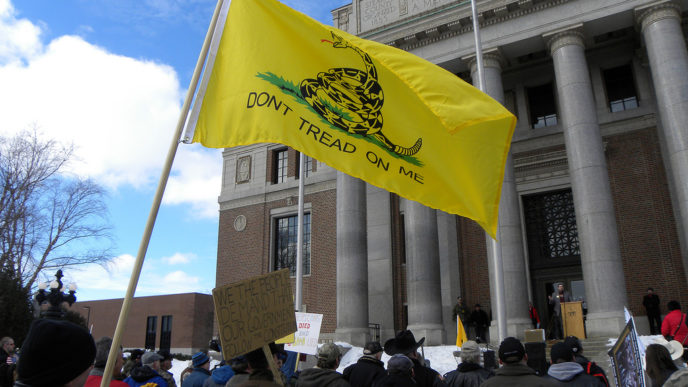
Texas Tea Party Groups Send a Clear Message to President Trump: ‘The Freedom Caucus Is Not the Problem’

The Texas Tea Party will not be silent.

Last week, Republicans scrambled to form a circular firing squad in the wake of the American Health Care Acts’ failure to launch. Conservatives’ opposition to the legislation drew the ire of President Trump and members of the Republican Establishment, who (unfairly) attacked the Freedom Caucus for killing the bill.

But in a letter made available to Conservative Review, Lone Star state Tea Party organizations make clear that the Republican Party base in the highly consequential state of Texas stands with the Freedom Caucus in opposition to RINOcare. The letter was signed by over 90 conservative grassroots leaders and state GOP officials, and will be sent to President Trump Monday.

“To our dismay, the ‘repeal and replace’ plan put forward by U.S. House Speaker Paul Ryan (R-Wisc.) did nothing to address the core regulatory infrastructure of Obamacare, which means that American families would still see health care costs continue to rise until at least 2026,” the letter reads. “This is unacceptable.”

Public support for the American Health Care Act placed around 17 percent, per Quinnipiac polls. The Freedom Caucus members argue their push for more conservative amendments saved the Republican Party from political disaster. According to the leader of the organization that put the letter together, those members are exactly right.

“The Freedom Caucus is doing exactly what their supporters and their constituents sent them to Washington to do,” JoAnn Fleming told Conservative Review. “The Ryancare bill did not do what the Republicans promised they would do.”

Fleming is the Executive Director of Grassroots America – We the People, a political action committee that is “the largest constitutional conservative citizen organization in East Texas and one of the largest in Texas.” A volunteer conservative activist in Texas for over 25 years, Fleming also serves as the three-term chairman of the Texas Legislature’s TEA Party Caucus Advisory Committee, Chairman of Lt. Governor Dan Patrick’s Grassroots Advisory Board, and an adviser to the newly formed Freedom Caucus of the Texas state legislature.

“Frankly, the people that I work with in Texas, all these grassroots leaders on this letter – they worked their tails off to send Republicans to Washington and to offices at every level of government — to stand strong behind conservative, limited government, constitutional conservative principles,” Fleming said.

In the eyes of these activists, Fleming explained, the GOP plan was a betrayal.

If you go back and look at the 60 times there was a bill that fully repealed Obamacare, why now is that not the right kind of bill? What this does is it just peels back the façade. What this says to grassroots conservatives in Texas is, “You really didn’t mean it to begin with. You knew President Obama would veto any repeal that you sent to him, and so it was all political theater.”

Opposition to RINOcare was exactly what voters wanted from their elected representatives. The letter takes pains to drive that point home to the president.

With a bad “take it or leave it” bill on the table, the Freedom Caucus rightly believed they had a responsibility to protect both the GOP and the Trump Administration from the political fallout that would surely come in 2018 and 2020 when angry voters realized their healthcare costs did not go down and health care access did not improve. The Freedom Caucus had the promises they made back home and the long-term good of the American people on their minds and in their hearts when they opposed the AHCA.

President Trump’s pledge to “fight” the Freedom Caucus is baffling for these Tea Party activists.

Trump had long positioned himself as an ally of the Tea Party. And so, according to JoAnn Fleming, this letter intends to make clear exactly where one of the Republican Party’s most organized and enthusiastic voter base stands.

The point of this is we’re trying to say, “We don’t agree with you, Mr. President, on the approach you’re taking toward the Freedom Caucus and toward the promises we intend to hold the GOP to. They made a promise that they were going to repeal Obamacare, and that means take out all of the big government structure that was there, the mandates, and to get us back to a patient-centered, free-market based approach to health care. This bill did not do any of that and what we believe is that it would have driven up costs, premiums.”

The Tea Party groups of Texas urge Trump to work with the HFC to actually “drain the swamp.”

“We believe that he’s not going to be able to drain any Washington, D.C., swamp without the support and help of conservatives,” Fleming told CR. “That’s just a given.”

All signs point toward another attempt at Obamacare repeal happening sooner rather than later. Over the weekend, President Trump tweeted an attack on the “Fake News media” for suggesting that attempts at repeal were “dead.”

Some liberal Republicans have signaled they’d rather work with Democrats than join with the Freedom Caucus to come up with a conservative plan. The Texan Tea Party is not willing to follow President Trump down that path.

“Unfortunately, the president will be on the opposite side of many conservative grassroots leaders on the ground, in the trenches every single day,” should he continue to oppose the Freedom Caucus, Fleming said.

“This is what we do. We try to advance liberty through conservative principles. It’s not about the person. It’s not about a political icon. It is about principle for us.”

The dedicated hard work of the Tea Party base here in Texas, as well as all across the nation, has bestowed Republicans with historic majorities in Congress and placed the presidency in their hands. If the GOP believes Tea Party activists will go away or blindly trust the Republicans in control, they are mistaken.

“I have given up the best part of my life to do this, and I’m not about to change. I don’t do this because I don’t have anything else that I could do. I gave up a career in business to do this, and I do it because it’s the right thing to do,” said Fleming.

“Anything that makes it harder for my grassroots colleagues to do what they do in their own communities just kind of sets my teeth on edge,” Fleming said. “That’s where this letter came from.” (For more from the author of “Texas Tea Party Groups Send a Clear Message to President Trump: ‘The Freedom Caucus Is Not the Problem'” please click HERE)

Follow Joe Miller on Twitter HERE and Facebook HERE.

Psychologist Analyzes Trump’s Election and the Progressive Left

Sifting through the tumultuous aftermath of President Donald Trump’s election, a former clinical psychologist steeped in understanding cultural Marxism, shares his observations on how Democrats are working to distract and delegitimatize Trump.

According to Tim Daughtry, co-author of Waking the Sleeping Giant, our elections since 2010 demonstrate citizens want Washington to stop governing against the will of the people as it drives the nation towards liberal progressive socialism. The clear 2016 ballot box message, he says, was “change course, secure our borders, get rid of Obamacare, put in some free market reforms, get our economy going again” with this man, who has never held elective office.

Daughtry says America is clearly facing a crisis over the “consent of the governed” as citizens demand a responsive national government, just as the British turned from globalism of the European Union in their surprising Brexit vote last June. Trump’s inaugural address echoed this very theme as, to cheers, he promised to transfer power back to the citizen, from a small Washington elite.

“The establishment protected itself, but not the citizens of the country. Their victories have not been your victories,” Trump said, echoing his defense of the “forgotten man and woman” who elected him.

If Washington’s swamp-like behavior continues, Daughtry predicts “conditioned helplessness,” apathy and the surrender of America being founded on the core principle of the “consent of the governed” as elections will demonstrate to have no consequences. (Read more from “Psychologist Analyzes Trump’s Election and the Progressive Left” HERE)

Follow Joe Miller on Twitter HERE and Facebook HERE.

Politically Incorrect Professor Gets Denied Grant Funding

A professor who opposes political correctness and refuses to use gender-neutral pronouns was denied research grant funding.

Professor Jordan Peterson of the University of Toronto, who has recently sparked controversy for opposing social justice initiatives, was denied research grant funding, according to his Twitter account.

“This was the money that would have funded my research into the personality predictors of political correctness (and liberalism/conservatism),” noted Peterson in a subsequent Friday tweet.

The professor also tweeted that the reviewers for Social Science and Humanities Research Council grants are anonymous and that he had predicted he would be denied grant money in the fall of 2016.

(Read more from “Politically Incorrect Professor Gets Denied Grant Funding” HERE)

Follow Joe Miller on Twitter HERE and Facebook HERE.
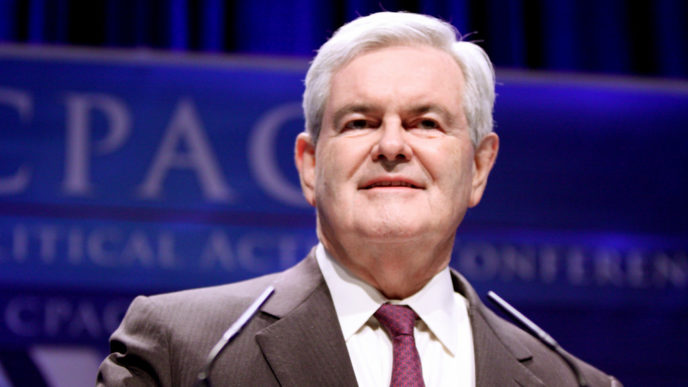
What Newt Gingrich Sees as Missteps by Trump, House Leaders in Failed Obamacare Repeal

House Republican leaders made a big mistake by trying to rush through their plan to replace Obamacare, conservative star Newt Gingrich says.

And, Gingrich adds, President Donald Trump should have waited longer to step in.

Instead of setting unrealistic timelines that don’t account for the complexity of health care policy, the former House speaker said during a speaking engagement, Republican leaders should have allowed for a vigorous debate that could stretch out for months.

“I actually think the system, if you let it, works pretty well,” Gingrich told an audience of about 1,000 at Rider University’s Rebovich Institute for New Jersey Politics.

“But to work well takes time,” he said. “You have to have hearings, then you have to have markups, then you have to find out what is good, and the leadership has to realize it may not be perfect. Maybe it could be improved.”

The day after Gingrich spoke, one of his successors, House Speaker Paul Ryan, pulled Republican leadership’s Obamacare replacement bill—the American Health Care Act—for lack of enough votes as conservatives and some centrists refused to embrace it.

Trump got involved and put himself on the line too early in the Obamacare repeal debate, Gingrich argued.

“The time for President Trump to become involved in health care legislation is when a bill finally moves to [House-Senate] conference,” Gingrich said, because until then, “you are not shooting with real bullets.”

The House Freedom Caucus, made up of some of the most conservative members of the House, argued that the leadership bill supported by Trump did not completely repeal the Affordable Care Act, popularly known as Obamacare.

Among other things, caucus members complained that Ryan did not hold hearings on the plan, nor allow major changes.

Gingrich, a former Republican congressman from Georgia and presidential candidate who is now a prolific author, initially gained national attention as the primary architect of the GOP’s “Contract with America.” The agenda proved to be instrumental in securing majorities for his party in both houses of Congress in 1994, for the first time in 40 years.

Gingrich spoke March 22 at Rider on “The Virtues of Capitalism and Free Markets” as part of a series of lectures bringing prominent public figures to campus.

During the question-and-answer session following his talk, Gingrich was asked to comment on how the House and Senate have handled health care after the election of Trump and the GOP’s promised repeal and replacement of Obamacare.

Before President Barack Obama’s health care bill became law, it took eight months for the legislation to work its way through both chambers of Congress, Gingrich reminded audience members.

Rep. Nancy Pelosi, D-Calif., who was House speaker when the Democrats were in the majority, introduced the Obamacare bill in July 2009; Obama signed the final version of the massive bill into law in March 2010.

In the end, not a single Republican voted for it in either the House or Senate.

“Why these guys would have set up a two- or three-week process is beyond me,” Gingrich said of Ryan and other House Republican leaders seeking to repeal and replace Obamacare.

Proponents of any legislation must navigate through both the House and Senate, two very different bodies, Gingrich noted.

“The House is a truck stop and the Senate is a country club,” he quipped. “I’m a creature of the House, so I have a very deep bias.”

Conservative Republicans in the Senate also had big concerns with the House GOP’s health care bill. And the Senate, Gingrich reminded the audience, typically rewrites and revises House bills before final details are worked out by conferees from both chambers.

Every morning, each U.S. senator looks in the mirror and says, “Yes, I would be a better president,” Gingrich said in jest. “So, what you have there [in the Senate] are 100 presidents negotiating.”

In his prepared remarks, Gingrich referenced an essay by Lebanese-American statistician and scholar Nassim Nicholas Taleb. Called “The Intellectual Yet Idiot,” it critiques governing elites, including tenured academics who are “really good at taking tests and writing essays” but can’t operate in the real world.

The elite figures described by Taleb “could write a brilliant essay on how to change a flat tire,” Gingrich said, “but if you walk into their office and say, ‘I have a flat tire,’ they wouldn’t know what to do because they’ve never seen a flat tire.”

Gingrich also took on academics who have been reticent to acknowledge the benefits of capitalism and free markets.

“To walk around and say capitalism doesn’t work and free markets don’t work is a denial of everything we know,” Gingrich said. “It would be like flying on a 747 from New York to Tokyo and debating whether or not the Wright Brothers succeeded.”

Tom Simonet, a journalism professor at Rider University, bristled at Gingrich’s description of tenured professors.

“The market does not magically regulate itself, and his anti-academic theme sounds like reverse elitism,” Simonet told The Daily Signal. “If he hears a critique of any one of his positions from a scholarly, well-researched point of view, he can just sit back and say it is fantasy.”

But Simonet said he enjoyed Gingrich’s discussion of the legislative process.

“He made the House and Senate sound almost like different planets in terms of culture,” Simonet said in an email, adding: “I was surprised that Gingrich voiced any criticism of the president. But the process of legislation is a subject Gingrich really knows.”

Ben Dworkin, a political science professor at Rider, is director of the Rebovich Institute for New Jersey Politics.

“His descriptions of House-Senate relations were realistic and often [are] overlooked by outside observers watching the legislative process unfold,” Dworkin told The Daily Signal in an email. “Trump has moved very quickly in a number of different areas, and I think one big takeaway from the speaker’s remarks was his view that six weeks is not nearly enough time to build the coalition to replace the ACA.”

Gingrich’s robust defense of capitalism and his challenge to academic elites struck a chord with Rob Pluta, who owns and operates Leonardo’s II restaurant in Lawrenceville, a few miles from the Rider campus.

“Tenured professors who are protected by the bubble of academia never have to worry about meeting a payroll or having enough business to pay the mortgage,” Pluta said. “This is exactly what Newt meant when he talked about people who can test well and write well but have no idea of how the real world works.” (For more from the author of “What Newt Gingrich Sees as Missteps by Trump, House Leaders in Failed Obamacare Repeal” please click HERE)

Follow Joe Miller on Twitter HERE and Facebook HERE.

Gun Sales Have Fallen Since Obama Left Office

The gun industry may be headed for a slump after eight years of explosive growth under former President Barack Obama.

From December through February, the number of federal background checks conducted each month declined from the same month a year ago, according to the Associated Press. While not an exact measure of total firearm sales, background checks are considered a key measure of how gun manufacturers are performing.

One reason for the softening demand, some gun industry experts say, is that potential gun buyers are no longer worried Washington will issue new regulations restricting gun sales.

“President Obama was the best gun salesman the world has ever seen,” Karl Sorken, a production manager at Houston-based Battle Rifle Co., told the AP.

During Obama’s tenure, customers rushed to buy firearms before the administration could follow through on its goal of placing tighter controls on the type and number of guns that could be sold. The gun industry boomed on the surging demand: The number of U.S. companies licensed to make firearms jumped 362 percent over the decade ending in 2015. (Read more from “Gun Sales Have Fallen Since Obama Left Office” HERE)

Follow Joe Miller on Twitter HERE and Facebook HERE.

It’s Official, Pentagon Will Now Keep Troop Count in Iraq and Syria Secret

The U.S. Central Command recently announced that troop numbers in Iraq and Syria will no longer be reported to the public. In its announcement, CENTCOM spokesman Army Col. John Thomas declared that “capabilities, not numbers,” should be the area of focus, and the public will be given general estimates of troop sizes in the future.

Jason Ditz of antiwar.com points out that the Obama administration was already less than forthcoming about the number of soldiers sent to these areas by utilizing a variety of tactics, including “deliberately omitting large numbers of troops from the official count by labeling them ‘temporary.’”

The Pentagon’s announcement comes during a time in which the U.S. military’s recent use of airstrikes is under fresh scrutiny and stands accused of causing deaths of hundreds of civilians in recent weeks, including strikes in Mosul last week that killed an unconfirmed, but reportedly numerous, number of noncombatants.

According to Reuters regarding the strike in Mosul, “Eyewitnesses from Mosul and Iraqi officials have said last week’s strike on Islamic State targets may have collapsed homes where rescue officials say as many as 200 people were buried in the rubble.” Reuters described this event as “one of the deadliest single incidents for civilians in recent memory in any major conflict involving the U.S. military.”

In the Pentagon’s acknowledgment of the Mosul strike and announcement of its investigation into the incident, Army Col. Joseph Scrocca admitted that “we believe a coalition strike contributed in at least some way to the civilian casualties.”

In addition, reports have surfaced alleging that recent U.S. airstrikes in Syria have led to significant civilian deaths. One strike that was launched in northern Syria in mid-March, reportedly targeted at a building “that local officials said was a mosque filled with worshippers at evening prayer” and also resulted in civilian casualties. Another strike by a U.S.-led coalition at a school in Raqqa that was being “used as refugee centre,” according to The Guardian. The Guardian’s report notes that “Over the past eight months, there have been four cases in which US planes or drones have been blamed for mass civilian casualties in Syria.”

The new U.S. presidential administration has unsurprisingly provided little change in its approach to foreign policy and the war on terror; in fact, President Trump is currently considering sending at least 1,000 more troops to Syria. As Ditz noted, the government has long lacked transparency regarding troop numbers in Iraq and Syria, and it appears that CENTCOM may be seeking to avoid further criticism over specific deployment numbers by simply eliminating these reports. However, this increase in secrecy that further places civilians in the dark will undoubtedly exacerbate tensions across the globe in regards to American accountability.

Another troubling revelation from Thomas is the military’s dismissal of making changes to airstrike policy. Thomas stated that General Joseph Votel, the head of CENTCOM, “is not looking into changing the way we operate other than to say our processes are good and we want to make sure we live by those processes.” (For more from the author of “It’s Official, Pentagon Will Now Keep Troop Count in Iraq and Syria Secret” please click HERE)

Follow Joe Miller on Twitter HERE and Facebook HERE.
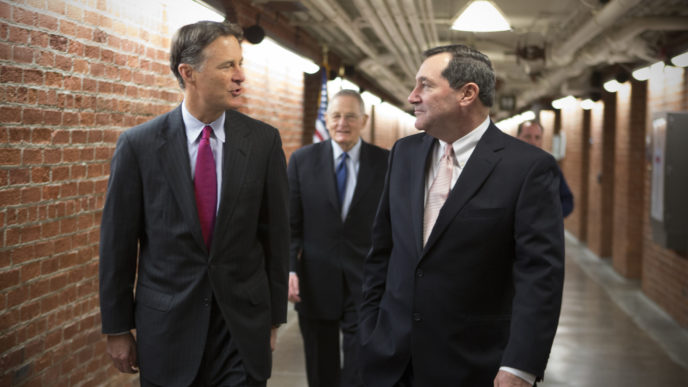
Donnelly Becomes Third Democrat to Back Gorsuch

Sen. Joe Donnelly (D-Ind.) said Sunday that he will support the nomination of Neil Gorsuch to the Supreme Court, becoming the third moderate Democrat to break with his party and back President Trump’s nominee.

“After meeting with Judge Gorsuch, conducting a thorough review of his record, and closely following his hearing before the Senate Judiciary Committee, I believe that he is a qualified jurist who will base his decisions on his understanding of the law and is well-respected among his peers,” Donnelly said in a statement.

Donnelly said the Senate should keep its 60-vote requirement for breaking a filibuster on Supreme Court nominees in place, a reference to Republicans suggesting they may resort to the “nuclear” option.

Republicans, vowing to confirm Gorsuch “one way or another,” have indicated, however, they may alter the Senate rules so that ending debate on Gorsuch would only need a 51-vote simple majority. They currently hold a 52-person majority in the upper chamber and would need five additional Democrats or Independents to back Gorsuch if the rules are not changed . . .

Democrats, still reeling after former President Barack Obama’s nominee to the court was blocked by Republicans from getting a hearing or a vote last year, have largely come out against Gorsuch. Thirty-eight Democrats have said they will oppose his nomination. (Read more from “Donnelly Becomes Third Democrat to Back Gorsuch” HERE)

Follow Joe Miller on Twitter HERE and Facebook HERE.

Donald Trump Vows to ‘Solve North Korea’ Problem

Speaking from the Oval Office in an interview with the Financial Times, the US president gave China an ultimatum: “Well if China is not going to solve North Korea, we will. That is all I am telling you.”

In a separate interview with the publication, deputy White House national security adviser KT McFarland warned: “There is a real possibility that North Korea will be able to hit the US with a nuclear-armed missile by the end of the first Trump term.”

The US sees North Korea as its most pressing threat after former president Barack Obama warned Trump about the substantial advancements Pyongyang has made with their nuclear weapons and long-range missiles.

Trump confirmed he would be discussing the issue of North Korea with Chinese president Xi Jinping when he hosts the world leader at his resort this week.

The president added: “China has great influence over North Korea.” (Read more from “Donald Trump Vows to ‘Solve North Korea’ Problem” HERE)

Follow Joe Miller on Twitter HERE and Facebook HERE.