This Isn’t Over: SCOTUS May Have Put Its Trans-Bathroom Case on Hold, but More Are to Follow

School administrators trying to set common-sense bathroom safety policies received a temporary respite from the Supreme Court Monday. But the fight is far from over.

The court announced Monday morning that in the case of G.G. vs Gloucester County School Board, the judgment has been vacated and remanded to the Fourth Circuit appeals court in light of the Trump administration’s recent rescinding of the Obama-era transgender bathroom guidance.

The Supreme Court decided that it would not hear the case of biological teenage girl Gavin Grimm, who sued her local Virginia school board to use the boys’ room, citing federal discrimination law under Title IX, the 14th Amendment, and the Obama-era set of administrative guidelines.

A vacate and remand offers the parents and administrators temporary respite from complying with any court orders to the subject, as a vacated decision renders all previous judgement – which sided with Grimm – void, while allowing the competing arguments to be evaluated without Obama’s bureaucratic interpretation in the mix.

“The first duty of school districts is to protect the bodily privacy rights of all of the students who attend their schools and to respect the rights of parents who understandably don’t want their children exposed in intimate changing areas like locker rooms and showers,” reads a statement from Alliance Defending Freedom attorney Kerri Kupec, whose organization represents the school board.

“It only makes sense for the Supreme Court to vacate the 4th Circuit’s earlier decision and instruct it to reconsider this case,” Kupec said. “The 4th Circuit should affirm the plain meaning of Title IX, which protects boys’ and girls’ privacy in locker rooms, showers, and restrooms. School officials should be free to protect their students’ privacy, safety, and dignity without federal government interference.”

This development follows the news that both parties actually wanted to press forward with the case, despite the rollback of the Obama administration edict.

According to SCOTUSblog’s Amy Howe, while the parties still wanted the case heard by the high court, they differed on the when. The student’s ACLU legal team wanted the justices to hear the case and rule as planned, while the school board asked for more time.

However, the debate over who sets privacy policies in public schools – judges, bureaucrats, legislators, or educators and parents at the local level – isn’t over.

In addition to the eventual Fourth Circuit decision, there still remains the issue of the plaintiffs in the Sixth Circuit and two lower-level cases that were awaiting a ruling in Gloucester that will now be “coming out of hibernation,” ADF senior counsel Gary McCaleb explained in a phone interview.

Simply, for opponents of unconstitutionally rewriting federal discrimination law, this is more a breather than a win.

At heart, the cases raise the question of which branch writes our laws and further highlights the need for legislative or administrative language clarifying what Title IX actually means.

Title IX is the product of a 1972 law that prohibits schools receiving federal funds from discriminating “on the basis of sex.” While the law was clearly passed by Congress with biological sex in mind, there has been a concerted push from the Left in recent years to redefine that understanding to mean gender (which, of course, is based on thoughts and feelings, rather than science).

As we have previously pointed out at CR, legislation that would analogously redefine sex as gender identity in federal law has already been introduced in multiple congressional sessions, to no avail. Since Democrats have failed to get this sort of legislation through Congress thus far, that effort has now moved to the courtroom with these such cases.

Last year, Rep. Pete Olson, R-Texas (F, 58%) introduced a bill aimed at clearing up this confusion once and for all. The Civil Rights Uniformity Act of 2016 would have sought to “prevent the [Obama administration] from unilaterally rewriting Federal civil rights laws,” by barring the executive branch from interpreting Title IX’s provisions on “sex” to mean “gender.”

There may no longer be a soft mandate from the executive branch, but the ongoing nature of these cases shows that the American people have the option to answer this question via Congress, or leave it up to the federal judiciary. (For more from the author of “This Isn’t Over: SCOTUS May Have Put Its Trans-Bathroom Case on Hold, but More Are to Follow” please click HERE)

Follow Joe Miller on Twitter HERE and Facebook HERE.

Obama Audited Billy Graham, so Wiretapping Trump Tower Is Not a Stretch

The Obama Administration engaged in eight years of political payback and heavy-handed bullying that specifically targeted their “political enemies.” They used the Internal Revenue Service to wage an ugly campaign of bullying and intimidation to silence Tea Party groups and Christian ministries.

In 2013 President Obama’s minions sent IRS agents to bully the Billy Graham Evangelistic Association. “I believe that someone in the administration was targeting and attempting to intimidate us,” Franklin Graham wrote in a letter to the White House. “This is morally wrong and unethical — indeed some would call it ‘un-American.’”

The BGEA’s only crime against Obama was to urge voters to back candidates who base their decisions on biblical principles. They also supported an effort to support traditional marriage in the state of North Carolina.

I believe the government used the power of the IRS to silence dissent and punish those who refused to comply. They targeted Billy Graham, America’s pastor. Just let that sink in, folks.

So if the Obama Administration went after Billy Graham, it’s not out of the realm of possibility they wiretapped Donald Trump. The Mainstream Media believes such a charge is absurd, but is it really? (Read more from “Obama Audited Billy Graham, so Wiretapping Trump Tower Is Not a Stretch” HERE)

Follow Joe Miller on Twitter HERE and Facebook HERE.
House Republicans Release Text of Obamacare Repeal, Conservatives Call for Action ‘Now’

A key conservative lawmaker is urging Republicans to make good on their promises to repeal Obamacare before they get distracted by other legislative issues.

“We think it is time to repeal it, clean repeal, and replace with market-centered health care [and] patient-centered health care,” Rep. Jim Jordan, R-Ohio, said of conservatives and Obamacare in a phone interview Monday with The Daily Signal.

A senior Republican congressional aide told The Daily Signal in an email to expect the text of a “consensus” bill to repeal and replace Obamacare “early this week.” By Monday evening, House Speaker Paul Ryan and his leadership team had posted the language of the bill and talking points online, referring to action made possible by “unified Republican government” under President Donald Trump:

Asked whether he was concerned that repeal of Obamacare might be sidetracked to address upcoming legislative matters such as the debt limit, Jordan told The Daily Signal: “I hope not.”

“Let’s do Obamacare repeal and replace right now,” Jordan, former chairman of the House Freedom Caucus, said. “Then we can move on to the other issues and deal with tax reform and deal with the budget issues and deal with the debt ceiling issues and all the other things we gotta get to. It could be so simple.”

But Jordan said he is calling for passage of a repeal bill along with “a separate piece of legislation, done at the same time which replaces Obamacare with patient-centered, market-centered, family-centered health care.”

He made a similar point last week on “Fox & Friends”:

Trump has pledged to sign legislation to repeal and replace Obamacare as soon as possible, and increasingly has shown a preference for one bill that does both. Office of Management and Budget Director Mick Mulvaney said as much in an interview earlier Monday with radio host Hugh Hewitt.

For procedural reasons amid Democrats’ opposition to undoing Obamacare, however, conservatives such as Jordan see a danger in trying to do both in one bill.

Jordan said Obamacare repeal is a “top priority for the American people,” and he will vote for nothing less than the 2015 repeal bill that was passed by both chambers and vetoed in January 2016 by President Barack Obama.

Other pressing matters that could distract from the Obamacare debate include the debt limit deadline March 16, Judiciary Committee hearings for Supreme Court nominee Neil Gorsuch, which commence March 20, and the expiration date for the current continuing resolution funding the government, April 28.

On March 16, the ability of the U.S. Treasury “to borrow on the credit of the U.S. government” will expire and Congress either must balance the budget or raise the debt limit.

On April 28, the continuing resolution adopted in December to fund the government will expire. A continuing resolution is a type of appropriations or spending bill that sets money aside for government use.

Congress ought to repeal Obamacare before it turns to other items such as the debt limit, argues Thomas Binion, director of policy outreach at The Heritage Foundation.

“I believe they must address [Obamacare] before moving on to other items for several reasons,” Binion said in an email to The Daily Signal. “The first is that they have to pass appropriations to fund the government by April 28 when the current [continuing resolution] expires. If Obamacare is still the law of the land at that time, Congress will face the impossible choice of whether or not to fund Obamacare.”

In 2013, Republican lawmakers’ refusal to fund Obamacare resulted in a 16-day partial shutdown of the government, Binion noted, and a similar funding battle could occur if lawmakers don’t address Obamacare before April 28.

With Ryan and other House GOP leaders releasing the text of an Obamacare repeal and replace bill Monday evening, Congress may be able to get ahead of the game.

The senior aide noted that several high-level meetings took place Friday and Saturday to finalize the Obamacare legislation, adding:

There was a large staff meeting at the White House Friday led by OMB Director Mulvaney to identify and resolve the few outstanding issues. The health care committees in Congress worked over the weekend with the White House to tie up loose ends and incorporate technical guidance from the administration.

On Saturday, the aide said, Ryan had a conference call that included Mulvaney, House Energy and Commerce Chairman Greg Walden, Health and Human Services Secretary Tom Price, and Andrew Bremberg, an assistant to Trump who directs the Domestic Policy Council.

House and Senate staff worked through Saturday to address unresolved issues. “We are in a very good place right now, and while drafting continues, we anticipate the release of final bill text early this week,” the aide said earlier Monday.

In the House, the Energy and Commerce and Ways and Means committees were tentatively scheduled to vote on the repeal bill this week, followed by a full House vote later this month, The New York Times reported.

AshLee Strong, national press secretary for Ryan, told The Daily Signal that Congress was on the cusp of Obamacare repeal.

“We are now at the culmination of a yearslong process to keep our promise to the American people,” Strong said in an email.

Dan Holler, spokesman for Heritage Action for America, the lobbying affiliate of The Heritage Foundation, told The Daily Signal in an email that despite the slowed progress of Obamacare repeal, it remains the highest priority for conservatives.

“President Trump and congressional leaders understand Obamacare repeal is the first major agenda item, and they have said so publicly,” Holler said. “Even though the repeal effort slowed dramatically over the last month, the expectation remains that Obamacare can and will be repealed.” (For more from the author of “House Republicans Release Text of Obamacare Repeal, Conservatives Call for Action ‘Now'” please click HERE)

Follow Joe Miller on Twitter HERE and Facebook HERE.

Experts Differ on Whether Trump’s New Travel Ban Makes America Safer

President Donald Trump sought to settle legal and political concerns Monday with his revised executive order pausing travel from six countries plagued by terrorism—and temporarily keeping out all refugees.

While the order contains notable revisions—including removing restrictions on Iraq, a crucial counterterrorism partner, and applying restrictions only to prospective new travelers—its intent remains the same.

“The executive order allows for the proper review and establishment of standards to prevent terrorist or criminal infiltration by foreign nationals,” the first sentence reads.

In making the case for the policy, the revised order contains a clause noting about 300 pending FBI counterterror investigations involve individuals who came to the U.S. as refugees.

Government officials declined to say how many of the 300 are from the six countries targeted in the order, or how many are currently refugees or simply were refugees at one time. The administration also did not say whether any of the 300 actually have been charged with a crime.

“As threats to our security continue to evolve and change, common sense dictates we continually re-evaluate and reassess the system we rely upon to protect our country,” Secretary of State Rex Tillerson said during a Monday press conference announcing the revised order, where he was joined by Attorney General Jeff Sessions and John Kelly, secretary of the Department of Homeland Security.

“While no system can be made completely infallible,” Tillerson said, “the American people can have high confidence we are identifying ways to improve the vetting process and keep terrorists from entering our country.”

National security and diplomatic experts credit the Trump administration for changes, but some continue to question the target of the order—foreign nationals from countries already deemed terror threats by the Obama administration and Congress—at a time when recent terrorist attacks against the U.S. have been perpetrated by American citizens or legal residents.

“The Trump administration has taken out all of the things that caused courts to object, which is good news,” said James Jeffrey, U.S. ambassador to Iraq from 2010 to 2012 and deputy national security adviser in the George W. Bush administration.

“There is nothing illegal or objectionable about it. But the substance of the policy is small potatoes either way,” Jeffrey, who is now a fellow at the Washington Institute for Near East Policy, added in an interview with The Daily Signal. “There is not much to get excited about and not much in here that will make America safer.”

‘Big Step Forward’

The new order addresses many of the concerns that followed Trump’s announcement of the original directive five weeks ago. Federal courts froze that order, which critics said resulted in confusion and chaos at airports and some labeled a “Muslim ban.”

As the administration evaluates how to enhance vetting procedures, Trump’s new order bars for 90 days the issuance of new visas for citizens and residents of six countries. It also pauses for 120 days resettlement to the U.S. of refugees from anywhere in the world.

Syrian refugees no longer are subject to an indefinite ban, as they were in Trump’s first order.

The 90-day travel restriction applies to Iran, Syria, Somalia, Sudan, Yemen, and Libya, six Muslim-majority and terrorism-prone countries that were contained in the original order.

Jeffrey, like other experts, lauded the Trump administration for removing Iraq from this list, saying doing so “makes a hell of a lot of sense” because Baghdad has a functioning government that is allied with the U.S. to fight the Islamic State, the terrorist group also known as ISIS.

“The deletion of Iraq is a big step forward,” said Michael O’Hanlon, a senior fellow in foreign policy at the Brookings Institution, in an email to The Daily Signal. “Of the remaining governments, most are adversarial, nonexistent/weak, or at best lukewarm in their willingness to work with the United States.”

“Thus there is a certain logic in the list—even if I consider the need for such a list unpersuasive, given where most attacks have originated in the past and given our existing rigorous vetting practices,” O’Hanlon said.

Treating Visa Holders Fairly

When the government lifts the suspension on refugees, the number of refugees allowed into the U.S. will be capped at 50,000 for fiscal year 2017. The U.S. admitted 84,995 refugees in fiscal year 2016, the most since 1999.

The new order takes effect March 16, and does not apply to individuals from the six countries who had valid visas at 5 p.m. ET on Jan. 27. In addition, travelers who hold valid visas and are in transit still will be allowed to enter the U.S.

The order also provides other exceptions not contained in the initial order for travelers from the six countries who are legal permanent residents of the United States, dual nationals who use a passport from another country, and individuals who already have been granted asylum or refu­gee status.

“This revision makes clear that the focus of the order is on dealing with the emerging threat of foreign fighters coming out of the region to the U.S. rather than punishing or ostracizing Muslim peoples,” said James Carafano, a national security expert at The Heritage Foundation.

“It is also notable how the administration has gone out of its way to accommodate current visa holders to ensure they are treated fairly and not penalized by a plan that focused on future threats,” Carafano said.

Facing Complex Challenges

Critics of Trump’s order counter that none of the recent terrorist attacks in the U.S.—from San Bernardino to Orlando—were perpetrated by anyone from the nations listed in the travel ban. Nationals from the countries targeted have killed no one on American soil.

A recent Department of Homeland Security report found that “country of citizenship is unlikely to be a reliable indicator of potential terrorist activity.”

The Trump administration has fought the findings of that report, which was cited in recent media accounts. The administration argues it was misleading and excluded classified information that would show a more dangerous threat.

“When you look at the six countries subject to the travel ban, they are either amidst a civil war or a state sponsor of terrorism,” Jonathan Schanzer, a former terrorism finance analyst at the Treasury Department, said in an interview with The Daily Signal.

“From a logical standpoint, it would make sense to have greater scrutiny when looking at immigrants or visitors from these countries,” added Schanzer, who is currently vice president of research at the Foundation for Defense of Democracies. “With that said, what we really need is to see an assessment from the intelligence community about those risks, and it’s unclear if we have that here.”

In a briefing with reporters Monday afternoon, White House press secretary Sean Spicer said the list of six targeted countries could expand if the U.S. government, after reviewing vetting procedures, finds gathering and sharing of information to be unsatisfactory.

‘Crisis Will Continue’

Under the order, the Department of Homeland Security, State Department, Office of National Intelligence, and Justice Department are to develop “uniform screening standards for all immigration programs government-wide.”

Schanzer argued that the United States and other Western countries will continue to confront challenges related to refugee and immigration flows from countries devastated by terrorism unless the U.S. does more to help resolve underlying conflicts.

“We would not be having this flow of refugees and migrants if it were not for several conflicts taking place across the Middle East,” Schanzer said, adding:

We are not trying to solve these conflicts. As long as we are merely managing these conflicts, this crisis will continue. To a certain extent, all of this is a distraction from challenges we face, which boil down to ISIS and the Islamic Republic of Iran wreaking havoc across the Middle East.

(For more from the author of “Experts Differ on Whether Trump’s New Travel Ban Makes America Safer” please click HERE)

Follow Joe Miller on Twitter HERE and Facebook HERE.
Trump Surveillance Allegation Could Trace to Reported Court Order

There isn’t yet a paper trail, but there is a potential press trail to follow on President Donald Trump’s claim of surveillance by the Obama administration. Still, there’s a question about whether this action was illegal and whether the former president directed it—as Trump asserted in a series of tweets Saturday.

The genesis of the wiretapping story seems to be reporting from Heat Street and the BBC that President Barack Obama’s administration sought a FISA court order, named for the Foreign Intelligence Surveillance Act, to monitor the Trump campaign’s potential ties to Russia.

“It could be FISA, it could be surveillance. Look, I think [Trump has] made it clear there have been continued reports that have been out there,” White House press secretary Sean Spicer told reporters Monday. “I think the president made it clear yesterday that he wants Congress to go in and look at this. I think there is substantial reporting out there from other individuals and sources.”

Democrats and the media widely criticized Trump’s Saturday tweets for being posted without evidence.

J. Christian Adams, a former Justice Department attorney, said “wiretapping,” could be the wrong term and might distract from actual spying that must have occurred because of the leaked transcripts of former national security adviser Michael Flynn’s conversations.

“[The surveillance] may be from FISA, it may not be. If this is [National Security Agency] intercepts for the transcript without FISA, that would be worse, and leaking to The New York Times would demonstrate an astounding level of ideology in the bureaucracy,” Adams, president of the Public Interest Legal Foundation, told The Daily Signal.

Adams further disagreed with the White House’s demand for a congressional investigation.

“Congress does not have the skill set to do anything about this. If it goes to the House Oversight Committee, it will languish for months,” Adams said. “Trump needs to appoint an acting deputy attorney general with sharp elbows who isn’t afraid of the bureaucracy, not an Obama appointee.”

Judicial Watch, a conservative government watchdog group, announced a Freedom of Information Act lawsuit against the CIA, the Justice Department, and the Treasury Department regarding records related to the investigation of Flynn and his communications with Russian Ambassador Sergey Kislyak.

“President Trump is onto something. The Obama-connected wiretapping and illegal leaks of classified material concerning President Trump and Gen. Flynn are a scandal,” Judicial Watch President Tom Fitton said in a public statement. “Judicial Watch aims to get to the truth about these crimes, and we hope the Trump administration stands with us in the fight for transparency.”

The first report appeared on the website Heat Street, a U.S and U.K. website launched by Louise Mensch, a former member of Parliament who wrote a story in November—one day before the election—that said:

Two separate sources with links to the counterintelligence community have confirmed to Heat Street that the FBI sought, and was granted, a FISA court warrant in October, giving counterintelligence permission to examine the activities of ‘U.S. persons’ in Donald Trump’s campaign with ties to Russia … The first request, which, sources say, named Trump, was denied back in June, but the second was drawn more narrowly and was granted in October after evidence was presented of a server, possibly related to the Trump campaign, and its alleged links to two banks; SVB Bank and Russia’s Alfa Bank.

However, Mensch tweeted that she didn’t use the term “wiretapping” in her piece.

Obama’s Director of National Intelligence James Clapper said Sunday on NBC’s “Meet the Press,” when asked if there was a FISA, “I can deny it … not to my knowledge.”

During the Monday press gaggle, Spicer said regarding Clapper: “I take him at his word that he wasn’t aware [of a FISA order], but that doesn’t mean it didn’t exist.”

On another Sunday show, ABC’s “This Week,” former Attorney General Michael Mukasey, who served in the George W. Bush administration, said it was likely the Trump administration would find that there was surveillance.

“I think he’s right in that there was surveillance and that it was conducted at the behest of the attorney general—at the Justice Department,” Mukasey said. He added, “It means there was some basis to believe that somebody in Trump Tower may have been acting as an agent of the Russians for whatever purpose. Not necessarily the election, but for some purpose.”

Obama gave what seemed to be a denial through a spokesman over the weekend.

“A cardinal rule of the Obama administration was that no White House official ever interfered with an independent investigation led by the Department of Justice,” spokesman Kevin Lewis said in a statement. “As part of that practice neither President Obama nor any White House official ever ordered surveillance on any U.S. citizen. Any suggestion otherwise is simply false.”

The Guardian on Jan. 10 also reported a judge rejected the FBI’s request for a FISA warrant in June, but only cited the Heat Street article to confirm an order had been granted.

Still, others reported the court granted the FISA warrant.

On Jan. 12, BBC News reported that a judge rejected the Department of Justice’s first application for a FISA court order in June. The report says the Department of Justice “returned with a more narrowly drawn order in July and were rejected again. Finally, before a new judge, the order was granted, on 15 October, three weeks before Election Day.”

Neither Mr. Trump nor his associates are named in the FISA order, which would only cover foreign citizens or foreign entities—in this case the Russian banks. But ultimately, the investigation is looking for transfers of money from Russia to the United States, each one, if proved, a felony offense.

Talk radio host Mark Levin, a constitutional attorney and former chief of staff to Attorney General Edwin Meese III in the Ronald Reagan administration, cited these and other news reports during an interview Sunday on Fox News.

“The issue isn’t whether the Obama administration spied on the Trump campaign or transition of surrogates; the issue is the extent of it,” Levin said.

The Washington Post “Fact Checker” column gave Trump “Four Pinocchios,” for the surveillance claim, stating: “Even if these media reports are accepted as accurate, neither back up Trump’s claims that Obama ordered the tapping of his phone calls. Moreover, they also do not back up the administration’s revised claim of politically motivated investigations.” (For more from the author of “Trump Surveillance Allegation Could Trace to Reported Court Order” please click HERE)

Follow Joe Miller on Twitter HERE and Facebook HERE.

Professors, Students Demand College Start Fund for Illegal Aliens

Cornell University students hosted a protest to demand the college provide funds for all illegal immigrant students.

The protest, organized by the Cornell Coalition for Inclusive Democracy, drew about 250 students and faculty members, reports Heat Street.

The protesters want the school to provide special funding for all immigrant students, even those not protected by the Obama administration’s Deferred Action for Childhood Arrivals (DACA) executive order.

“Our endangered community members still lack explicit assurance that the institution that took them in will protect them,” professor Russell Rickford said. “That’s shameful.”

The group also wants Cornell to provide on-campus housing and shelter for immigrant students who have been warned from traveling overseas. It wants the college to fight for legislation that protects illegal immigrants. (Read more from “Professors, Students Demand College Start Fund for Illegal Aliens” HERE)

Follow Joe Miller on Twitter HERE and Facebook HERE.

Trump vs. Deep State: Full-Scale Information War Revealed

By Shepard Ambellas. It appears that the Deep State’s push to oust President Trump and close associates may have backfired to some extent after President Trump revealed on Twitter that outgoing president Barack Obama had previously requested that Trump Tower be wiretapped. However, make no mistake, the powers-that-be have no intentions of stopping now and are in fact suiting up for battle — this is a literal information war and it has gone full-scale. . .

They are trying to create a trail of fake news which they can later use to target popular independent news sources (like Restoring Liberty) which they’ve already deemed to be ‘enemy combatants’ under the National Defense Authorization Act (NDAA). In fact, deep state lingo injected into the 2017 NDAA offers provisions for drone strikes on such targets. . .

It all came together for the when U.S. Senators Rob Portman (R-OH) and Chris Murphy (D-CT) announced that the Countering Disinformation and Propaganda Act legislation was in fact signed into law as part of the FY 2017 National Defense Authorization Act (NDAA) Conference Report which is aimed at countering “foreign propaganda and disinformation” . . .

It’s sad to say, but it’s a control war. It’s all about maintaining full control of the helm at all times. It’s a simple as that. That’s all it’s ever been about and that’s all it ever will be about. That’s just how it works. The system was designed a certain way — it can be used or abused and powerful forces have learned how to manipulate it. . .

For decades, through a legacy, the corrupt global elite at the top of the food chain (i.e. the Rothschilds, Rockefelllers, Soros and others) and their prized deep state controllers (i.e. Barack & Michelle Obama and Bill Clinton & Hillary Clinton and others) have salted their most valuable players (i.e. John Podesta, John McCain, Anderson Cooper and others) into every nook and cranny of government and media. Their job is to manage and pull the strings of their M.V.P.s to create a desired narrative just as the man behind the curtain did in the 1939 fantasy adventure film the Wizard of Oz. . .

Trump’s victory was a barn burner. Thus far Donald Trump has played nearly a perfect hand which has cost the elite a good portion of their power and control. They were blindsided. They were so arrogant with their fake news reports and their fake polls leading up to the election that they didn’t even see it coming. They lost — and now they are pissed. (Read more from “Trump vs. Deep State: Full-Scale Information War Revealed” HERE)

__________________________________________

FBI Director Urges Justice Dept. To Reject Trump Claim on Wiretap

By Solange Reyner. FBI Director James Comey on Sunday asked the Justice Department to publicly knock down President Donald Trump’s allegations that former President Barack Obama directed intelligence agencies to wiretap his phones during the presidential election, The New York Times reports.

Comey has said in private that the charges are entirely false and has been working to get the DOJ to reject the claim because “it falsely insinuates that the FBI broke the law,” officials told the Times.

Trump early Saturday, through a series of tweets, accused Obama of ordering wiretaps on his telephones in Trump Tower as part of an investigation into whether his campaign was communicating with the Russian government. He equated the alleged tapping to the Nixon/Watergate scandal and called it “McCarthyism.”

Trump’s aides on Sunday called for a congressional investigation into whether Obama had abused his investigative powers during the 2016 election. (Read more from “FBI Director Urges Justice Dept. To Reject Trump Claim on Wiretap” HERE)

__________________________________________

Levin: Trump a ‘Victim’ of ‘Police-State Tactics’

By Eric Mack. Conservative radio host and constitutional lawyer Mark Levin slammed the Obama administration for its politicized overreach and “police-state tactics,” claiming Sunday morning evidence backing President Donald Trump’s claims Obama spied on him using wiretaps “is overwhelming.”

“This is not about President Trump’s tweeting,” Levin, told “Fox & Friends Sunday.” “This is about the Obama administration spying. And the question is not whether they spied – we know they went to court twice. Who they did spy? Trump transition, Trump surrogates.

“. . . Two separate sources with links to the counter intelligence community have confirmed that the FBI sought and was granted a foreign intelligence surveillance act court [order]. This is spying.” . . .

“Donald Trump is the victim,” Levin told Fox News. “His campaign is the victim. His transition team is the victim. His surrogates are the victim. These are police-state tactics.” (Read more from “Levin: Trump a ‘Victim’ of ‘Police-State Tactics'” HERE)

Follow Joe Miller on Twitter HERE and Facebook HERE.

FISA Explained and How the Left Is Trying to Mislead on the Trump “Wiretaps”

On Saturday, President Donald Trump threw the equivalent of rhetorical megaton nuclear bomb into the nation’s political discourse. In a series of tweets, Trump accused former President Barack Obama of “wire-tapping” his Trump Tower office. While it is unknown if Obama himself ordered a wire-tap of equipment in the Manhattan skyscraper, it has been reported that a FISA warrant was requested over the course of the campaign for equipment in the building.

Since Trump’s series of tweets, there has been a lot of misinformation about the FISA court, and the threshold that is necessary to obtain a warrant from the court. Here’s what we know about Trump’s claims, and how that relates to the FISA courts.

On November 7, 2016, the day before the 2016 general election, HeatStreet released a bombshell report that a FISA warrant was issued for a server in Trump Tower.

Two separate sources with links to the counter-intelligence community have confirmed to Heat Street that the FBI sought, and was granted, a FISA court warrant in October, giving counter-intelligence permission to examine the activities of ‘U.S. persons’ in Donald Trump’s campaign with ties to Russia.

In January National Review picked up on the story with former U.S. Attorney Andrew C. McCarthy offering his take. McCarthy explained that as a terrorist prosecutor he often argued against the “wall” separating the FBI’s Counter-Intelligence division, and the criminal investigative division. McCarthy leads with, “the idea that FISA could be used against political enemies always seemed far-fetched. Now it might not be.”

That leads to the question, what is the FISA court and how is it different than a regular criminal court.

Unlike the misconception proffered by Howard Dean, the FISA court was not, “set up after 9/11 by Bush.” According to the Department of Justice, The Foreign Intelligence Service Court was established by the Foreign Intelligence Surveillance Act of 1978. Here is how the DOJ describes it.

Like Title III of the Omnibus Crime Control and Safe Streets Act of 1968 (the “Wiretap Act”), the FISA legislation was the result of congressional investigations into Federal surveillance activities conducted in the name of national security. Through FISA, Congress sought to provide judicial and congressional oversight of foreign intelligence surveillance activities while maintaining the secrecy necessary to effectively monitor national security threats. FISA was initially enacted in 1978 and sets out procedures for physical and electronic surveillance and collection of foreign intelligence information. Initially, FISA addressed only electronic surveillance but has been significantly amended to address the use of pen registers and trap and trace devices, physical searches, and business records.

FISA also established the United States Foreign Intelligence Surveillance Court (FISC), a special U.S. Federal court that holds nonpublic sessions to consider issuing search warrants under FISA. Proceedings before the FISC are ex parte, meaning the government is the only party present.

There are currently eleven members of the court. They are appointed for set terms, and also hold judgeships in other Federal Courts. Judges were appointed to their district courts by both Republican and Democratic presidents, and FISC judges are appointed to the court by the Chief Justice of the Supreme Court.

The narrative from the Left has quickly morphed from denial that the Obama administration wiretapped Trump Tower to an admonishment that if a wiretap did happen is was after a FISA court warrant. The Left has further stated that if a warrant was issued, then it must have been because probable cause was found to give the warrant. Here’s David Axelrod, a high level Obama confidant, making that assertion.

If there were the wiretap @realDonaldTrump loudly alleges, such an extraordinary warrant would only have been OKed by a court for a reason.

— David Axelrod (@davidaxelrod) March 4, 2017

That’s not how FISA warrants are given. Here’s how the DOJ describes the warrant process in a FISC [emphasis added].

Electronic Surveillance Procedures – Subchapter I of FISA established procedures for the conduct of foreign intelligence surveillance and created the Foreign Intelligence Surveillance Court (FISC). The Department of Justice must apply to the FISC to obtain a warrant authorizing electronic surveillance of foreign agents. For targets that are U.S. persons (U.S. citizens, permanent resident aliens, and U.S. corporations), FISA requires heightened requirements in some instances.

Unlike domestic criminal surveillance warrants issued under Title III of the Omnibus Crime Control and Safe Streets Act of 1968 (the “Wiretap Act”), agents need to demonstrate probable cause to believe that the “target of the surveillance is a foreign power or agent of a foreign power,” that “a significant purpose” of the surveillance is to obtain “foreign intelligence information,” and that appropriate “minimization procedures” are in place. 50 U.S.C. § 1804.

Agents do not need to demonstrate that commission of a crime is imminent.

For purposes of FISA, agents of foreign powers include agents of foreign political organizations and groups engaged in international terrorism, as well as agents of foreign nations. 50 U.S.C. § 1801

There you have it, the “agents do not need to demonstrate that commission of a crime is imminent.” This low bar results in almost all warrant requests being granted by the FISC. In 2013, Mother Jones reported that the FISC had rejected just 0.03 percent of all requests.

McCarthy explained further in his January, 2017 piece how a FISA warrant differs from a criminal warrant.

The theory of the Clinton DOJ brass in imposing the Wall was the potential that a rogue criminal investigator, lacking sufficient evidence to obtain a traditional wiretap, would manufacture a national-security angle in order to get a wiretap under the 1978 Foreign Intelligence Surveillance Act (FISA). A traditional wiretap requires evidence amounting to probable cause of commission of a crime. A FISA wiretap requires no showing of a crime, just evidence amounting to probable cause that the target of the wiretap is an agent of a foreign power. (A foreign power can be another country or a foreign terrorist organization.) The reason the Wall theory was absurd was that a rogue agent would surely manufacture evidence of a crime before he’d manufacture a national-security angle. The process of getting a traditional wiretap is straightforward: FBI crim-div agents and a district assistant U.S. attorney (AUSA) write the supporting affidavit; it gets approved by the AUSA’s supervisors; then it is submitted to the Justice Department’s electronic-surveillance unit; after that unit’s approval, the attorney general’s designee signs off; then the AUSA and the FBI present the application to a district judge. FISA wiretaps, by contrast, go through a completely different, more difficult and remote chain of command. In it, the district AUSA and FBI crim-div agents who started the investigation get cut out of the process, which is taken over by Main Justice’s National Security Division and the FBI’s national-security agents. In other words, if we assume an agent is inclined to be a rogue, it would be far easier (and less likely of detection) to trump up evidence of a crime in order to satisfy the probable-cause standard for a traditional wiretap than to manufacture a national-security threat in order to get a FISA wiretap. No rational rogue would do it.

What McCarthy describes is that a FISA warrant is much easier to obtain, and that the Clinton DOJ set up a wall between counter intelligence officers and the criminal division to ensure that a rogue FBI agent, unable to demonstrate probable cause, would be unable to obtain a FISA warrant to circumvent the criminal courts. If the Obama administration went to the FISC for a FISA warrant, that is exactly what seemingly happened.

While we will not definitively know that if there was or was not a FISA warrant until it is released to the public, it is important to know the facts surrounding the court to parse the statements being made by the Left. (For more from the author of “FISA Explained and How the Left Is Trying to Mislead on the Trump “Wiretaps”” please click HERE)

Follow Joe Miller on Twitter HERE and Facebook HERE.
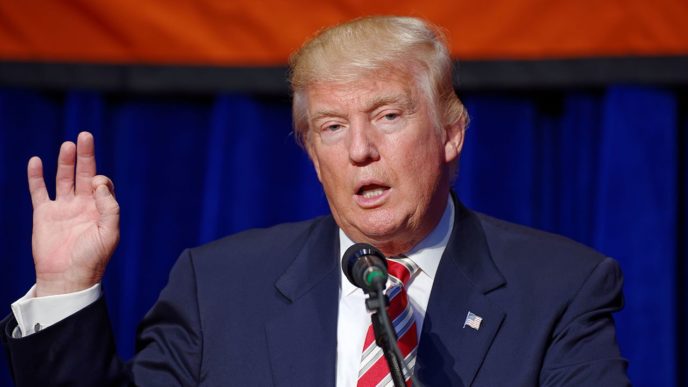
Senator: US Is ‘in the Midst of a Civilization-Warping Crisis of Public Trust’

Sen. Ben Sasse, R-Neb., on Saturday said the country is “in the midst of a civilization-warping crisis of public trust” following President Trump’s alleging the Obama administration wire-tapped the campaign headquarters last October.

“The President today made some very serious allegations, and the informed citizens that a republic requires deserve more information,” Sasse said in a statement released Saturday afternoon. “[T]he President’s allegations today demand the thorough and dispassionate attention of serious patriots. A quest for the full truth, rather than knee-jerk partisanship, must be our guide if we are going to rebuild civic trust and health.”

The Tea Party-affiliated senator then laid out an explanation of what may have transpired.

“If there were wiretaps of then-candidate Trump’s organization or campaign, then it was either with FISA Court authorization or without such authorization. If without, the President should explain what sort of wiretap it was and how he knows this. It is possible that he was illegally tapped,” Sasse said.

“On the other hand, if it was with a legal FISA Court order, then an application for surveillance exists that the Court found credible,” Sasse added. “The President should ask that this full application regarding surveillance of foreign operatives or operations be made available, ideally to the full public, and at a bare minimum to the U.S. Senate.” (Read more from “Senator: US Is ‘in the Midst of a Civilization-Warping Crisis of Public Trust'” HERE)

Follow Joe Miller on Twitter HERE and Facebook HERE.
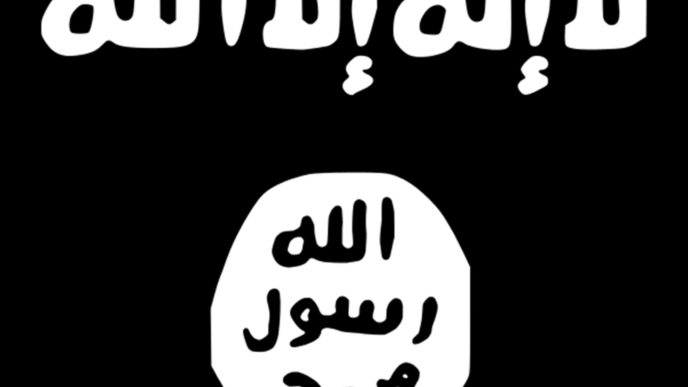
Prosecutors: NY Man Hoping to Become Suicide Bomber for Jihad

A New York man was being held without bail on terrorism charges after federal authorities said he was prepared to strap on a bomb and sacrifice himself for jihad and persistently tried to join the Islamic State or another extremist group in Syria.

Elvis Redzepagic, 26, was charged Saturday with attempting to provide material support to a foreign terrorist organization. Police on suburban Long Island arrested Redzepagic on Feb. 2 on a minor, unrelated charge, and he told them: “I’m going to leave this country, and I’m going to come back with an Army — Islam is coming,” according to a federal court complaint . . .

Redzepagic “was persistent in his efforts” to join Islamic militants in civil-war-ravaged Syria, making it to Turkey in 2015 and Jordan last year and even getting to the Syrian border, said William F. Sweeney, assistant director in charge of the FBI’s New York field office. (Read more from “Prosecutors: NY Man Hoping to Become Suicide Bomber for Jihad” HERE)

Follow Joe Miller on Twitter HERE and Facebook HERE.