
Look Out! New Border Tax Will Increase Your Cost of Living

Tax reform is one of the most important things the Trump administration might achieve. High on the new president’s list of priorities, the reduction of tax rates for corporations and individuals would be a tremendous boost for our economy, not to mention the purely moral aspect of allowing people to keep more of the money they’ve earned. However, there is one little-understood aspect of the proposed tax reform package that should have all Americans worried: the benignly named “border adjustment tax.”

This new tax is being floated as a way to raise revenue to cover the cost of the border wall, as well as to make up for other decreases in the corporate tax rate, and also as a way to incentivize exports and punish imports. Many people still mistakenly believe that importing goods and services is somehow bad while exporting them is good. This misunderstanding of trade policies is going to hurt American consumers considerably.

Here’s how the tax works. Proposed by Kevin Brady, R-Texas (F, 51%) and Paul Ryan, R-Wisc. (F, 52%), the border adjustment tax would disallow the deduction of business expenses incurred in other countries from a company’s taxable income. Currently, if a company buys inventory overseas and sells it domestically, it only gets taxed on the profits, not the entire revenue. This is the same for domestic companies that do all their business in the United States, and it’s easy to see why. If you purchase $100,000 of equipment to produce goods that only sell $110,000, it makes no sense to tax the whole $110,000, as doing so would make an otherwise profitable enterprise too expensive to sustain. Taxing only the profits allows companies with a large volume of sales but a narrow profit margin to continue to operate successfully.

Eliminating this system for imported goods means that many imports will simply not be worth the money. That means fewer available options for you and me. Those bananas grown in Costa Rica may disappear from supermarket shelves, forcing us to subsist on less exotic, homegrown produce. Turnips maybe. Yuck. Other imports will still be profitable, but only at increased prices, so once again, the American consumer is harmed by the tax.

The other piece of the border adjustment tax, designed to encourage exports, allows exporting companies to deduct business expenses, but exempts revenue earned abroad from taxation entirely. Thus, the company in the example above would be able to reduce its taxable income by the $100,00 in expenses, while not being taxed at all on the $110,000 in revenue. This means that, from the IRS’s perspective, the company will look like it lost $100,000, and can use that claim to qualify for tax refunds. In other words, it would be possible for a profitable exporter to get checks from the government, as if they were on the brink of bankruptcy.

Now, this is hardly fair, but perhaps the more important point is the incentive effect it will have on business. Notice that in the cases of both the exporter and the importer companies are punished for selling to Americans. Under such a tax structure, no company, whether it be located in the United States or elsewhere, will want to sell its products to American consumers if it can find buyers elsewhere. The tax advantages of selling to foreigners will simply be too great. This is not to say that no one will sell to Americans, it’s just that they will need an added incentive to do so, an incentive most likely to found in the form of higher prices.

So, let’s review, The border adjustment tax will remove some imports from the market, giving us fewer choices about what to buy, for the rest, it will raise the prices we pay. The tax also unfairly rewards those who sell their wares abroad, giving them no reason to want American customers unless they can charge higher prices as well. Americans get it both coming and going.

For a populist administration that claims to care about the plight of the working man, pushing a tax plan that will substantially increase his cost of living seems an odd choice.

Then again, no one ever said politics was rational. (For more from the author of “Look Out! New Border Tax Will Increase Your Cost of Living” please click HERE)

Follow Joe Miller on Twitter HERE and Facebook HERE.

They Lied All Along: Republicans Plan to ‘Repair’ Not Repeal Obamacare

Is it possible to repair a house on fire without extinguishing the raging inferno in it?

Republicans think we are stupid enough to believe so.

First they promised to repeal Obamacare “root and branch.” Then they promised to “repeal and replace” without explaining its meaning — other than to legitimize the premise of Obamacare as a partial force for good. Now, they are on to “repair.”

The Hill has the relevant quotes from two of the most important committee chairmen (Senator Walden, R-Ore. (F, 36%) and Senator Alexander, R-Tenn. (F, 15%)) drafting the repeal bill … which will not repeal Obamacare:

“I’m trying to be accurate on this that there are some of these provisions in the law that probably will stay, or we may modify them, but we’re going to fix things, we’re going to repair things,” House Energy and Commerce Committee Chairman Greg Walden (R-Ore.), a key player on healthcare, told reporters Tuesday.

“There are things we can build on and repair, there are things we can completely repeal,” he said.

Senate Health Committee Chairman Lamar Alexander (R-Tenn.) is sounding a similar note. […]

“I think it is more accurate to say repair ObamaCare because, for example, in the reconciliation procedure that we have in the Senate, we can’t repeal all of ObamaCare,” Alexander said. “ObamaCare wasn’t passed by reconciliation, it can’t be repealed by reconciliation. So we can repair the individual market, which is a good place to start.”

As we noted before, every word of this premise is false because the price-hiking coverage regulations are inextricably linked to the subsidies, as noted by the courts and CBO. Therefore, the regulations can be repealed through budget reconciliation. Moreover, the Senate parliamentarian doesn’t have the final say on addressing Senate precedent.

However, there is a more important point to bring out from this story. These people lied to all of us. They told a bald-faced lie. Absolutely nothing changed structurally about Obamacare from the time they made these promises during the past three elections until now. If anything, premiums went up even more than expected and there are even fewer insurers than previously predicted, making the case for repeal an easier political sell.

Likewise, nothing changed procedurally from the time they promised to use budget reconciliation to repeal at least most of the main elements of the law. Republicans always knew that they would need to get rid of the actuarially crippling regulations, which would then unfreeze the insurance market, lower costs, bring back choice and competition, and engender much less of a need for subsidies. All the while, everyone always planned to maintain the subsidies and Medicaid expansion for a one to two-year transition period while other free market health care and health insurance reforms were put in place.

Yet, Republicans, particularly those in the Senate, never had any intention of repealing it because they don’t believe or understand free markets, are owned by the big pharma/big government complex, and have no desire or ability to articulate a winning issue to the public without shooting themselves in the foot.

This day was predicted long ago

In 2012 and 2014, conservatives worked against Mitch McConnell, R-Ky. (F, 40%) and his sitting RINO Senators (such as Thad Cochran, R-Miss. (F, 22%), Pat Roberts, R-Kan. (F, 51%) Lisa Murkowski, R-Ala. (F, 20%) and Lamar Alexander, R-Tenn. (F, 15%)) and his chosen challengers in open seats (such as Sens. Tillis, R-N.C. (F, 35%) and Cassidy, R-La. (F, 47%)). Voters were warned that they had no intention of repealing Obamacare. Conservatives cautioned that if Ted Cruz’s, R-Texas (A, 97%) plan to defund Obamacare at its inception was not followed, the law would never be repealed. That if we failed to build a Senate majority upon a solid foundation and stronger leadership, Obamacare would never be repealed even if we were so fortunate to control all three branches. [See my op-ed at Fox News Opinion on October 25, 2013, “Building a GOP Majority on Quicksand”]

Groups like Senate Conservatives Fund were maligned as pursuing “purity for profit” and undermining the creation of a GOP majority that would truly repeal Obamacare. Establishment voices accused the grassroots activists of needlessly creating a civil war over disagreements on strategy. Yet, we knew all along it was a disagreement over beliefs and courage, not strategy. Unfortunately, the establishment used their superior funding (from groups like the Chamber of Commerce that wanted to keep Obamacare all along) to run on repealing the law “root and branch,” as McConnell famously said. Now, some of these very senators are leading the charge to repair the law, which is not feasible.

Trump must intervene

Obviously, President Trump is having a busy week with his immigration policies and the Supreme Court pick, among many other issues. He can’t address everything in the first month of his presidency. But there is no way to ignore Obamacare. Unless it is FULLY repealed, within a few years no middle-income American will be able to live in freedom and dignity without permanent government support and intervention in healthcare. We will have no freedom in one sixth of our economy. Moreover, the crushing job loss, debt, and diminished wages from the Obamacare regulations are weighing down the economy and will undermine the president’s ability to grow the economy with some of his other plans. It will limit his ability to secure a legacy as a jobs president.

The plan forward

Trump should dispatch Vice President Pence to work with the House Freedom Caucus as well as Speaker Paul Ryan, R-Wisc. (F, 52%) and ensure that the House passes the full repeal bill — along with the regulations. They should make it clear that there are no excuses for the Senate to not overrule the parliamentarian, but at the same time they should not wait around for the lords of the Senate to do the right thing. The reconciliation bill should be structured as follows:

An 18-month transition for retaining the subsidies and the Medicaid expansion. However, immediately freeze both programs from new registrations.

Repeal Obamacare’s taxes immediately and the regulations by mid-year so that insurance companies can have certainty to offer cheaper, competitive plans in 2018

On the administrative end, have Tom Price, R-Ga. (D, 62%) get rid of any cost-sharing subsidies and risk corridor bailouts for insurance companies. This will force them to utilize the lifting of regulations to lower prices and actually compete for business rather than relying on subsidies.

Meanwhile, individual states should work on reducing their own onerous health care and health insurance regulations in order to maximize the market effect of reducing federal insurance regulations.

At that point, Trump should relentlessly use his bully pulpit to name and shame the Senate into fulfilling their promise. It can be done if we actually got the momentum rolling in the House. As Reps. Mark Meadows, R-N.C. (A 94%) and Jim Jordan, R-Ohio (A, 96%) said in a statement today, “We committed to the American people to repeal every tax, every mandate, the regulations, and to defund Planned Parenthood. That’s what the American people expect us to do — and they expect us to do it quickly.”

In the meantime, conservatives should put the pressure on the Senate by launching a new round of primaries. Members like Jeff Flake, R-Ariz. (F, 50%), Bob Corker, R-Tenn. (F, 45%), Roger Wicker, R-Miss. (F, 28%), and Orrin Hatch, R-Utah (F, 33%) could be prime targets in states won by Trump.

As Bobby Jindal said, “Republicans who want to retreat from repeal to repair should be replaced.” (For more from the author of “They Lied All Along: Republicans Plan to ‘Repair’ Not Repeal Obamacare” please click HERE)

Follow Joe Miller on Twitter HERE and Facebook HERE.

Will Trump Defy Pressure to Betray Promises on Religious Liberty?

The anticipation behind a Pres. Trump executive order protecting religious liberty within the federal government would appear to be all for naught, according to a recent report, leaving social conservative concerns out in the cold.

As Politico’s Annie Karni reported Friday:

Jared Kushner and Ivanka Trump helped lead the charge to scuttle a draft executive order that would have overturned Obama-era enforcements of LGBT rights in the workplace, multiple sources with knowledge of the situation told POLITICO.

A draft executive order on LGBT rights — which outlines how to roll back former president Barack Obama’s protections and expand legal exemptions based on religious beliefs has been circulating among journalists and worried progressive groups this week.

Put simply, the draft executive order is balanced, solid, commonsense, and worthy of immediate signage. Others in the White House, however, see things differently.

“There are some in Trump’s family that have some views on these things,” a source close to the discussions told Karni. “That’s where the decision is ultimately being made.”

If true, this is horrible news for the voters who helped bring Trump across the November finish line on his promises to protect religious liberty (among other social conservative concerns). In fact, such a blatant reversal would constitute nothing short of a betrayal of those coalitions.

“This president’s number one priority is demonstrating to the people that got him elected that he is doing the people’s business,” the Heritage Foundation’s James Carafano told Politico.

And Carafano’s right — the 2016 election was a referendum on Barack Obama and the Left’s criminalization of Christianity. And countless social conservatives were willing to look past a great many things of their GOP nominee in pursuit of those promises.

During his RNC acceptance speech in Cleveland, Donald Trump recognized that it was evangelicals who brought him to the ball. Right alongside the assuaging promises for a worthy successor to Antonin Scalia on the Supreme Court were irrefutable promises to protect human life and the consciences of private-sector businesses to service ideas that violated their deeply held convictions rooted in our history and tradition.

The people elected a president who promised to 1) protect their religious liberty, by signing the First Amendment Defense Act; 2) abolish the Johnson Amendment; and 3) ending the taxpayer funding of the abortion giant Planned Parenthood. Had those voters really wanted a continuation of Obama’s extreme anti-religious zealousness, they could have easily voted for Democratic nominee Hillary Clinton instead.

Overturning prima facie discrimination against anyone who doesn’t subscribe to the Left’s sexual identity agenda is more important than changing longstanding Johnson Amendment policy. And, in fact, administration officials promised conservatives this would be done. This is why conservatives backed off the legislative fight to overturn Obama’s discriminatory order in the national defense bill after the election.

While religious liberty opponents claim that because Trump made overtures to the sexual identity lobby during the campaign — and that this promise would contradict the other — is made on a patently false (albeit popular) assumption that rests on the gross mischaracterization that religious liberty protections are “anti-LGBT.”

Rather, as The Heritage Foundation’s Ryan Anderson explains at The Daily Signal: “Opponents to the executive order misrepresent the order by claiming it would repeal an Obama-era executive order elevating LGBT status to a protected class in federal contracts … Rather, it protects the religious liberty rights of all Americans in very tailored ways that address problems of today.”

The notion that barring government contracts with businesses that believe in authentic marriage or don’t have men use female bathrooms in their corporate offices is somehow “anti-” anything is absurd. Quite the contrary. Doing business with any contractor irrespective of their views is the default position. Barring those who don’t have transgender bathroom accommodations is itself discriminatory and sets a horrible precedent in the private sector. Let liberty work.

Pres. Trump would be the best ambassador for this message; it would fit right into his branding. He could sign this executive order and say, “Look, I’m a businessman and I want to get the job done. If you are a contractor who gets the job done, you’re hired. If not, you’re fired! I don’t care about what you do in your offices, and I have no plans to discriminate against any side of social debates in this country. In order to get government out of this debate, I’m repealing Obama’s discriminatory and ill-conceived order that has only further divided this country.”

Trump must also remember that by catering to the sexual identity boycott lobby, he will never win a single new vote and will only divide and demoralize his own base. The same individuals and powers behind the immigration-related protests and boycotts are behind the boycotts against religious institutions.

In the first few weeks of the Trump administration, there have been some soundly fulfilled promises worthy of applause from conservatives.

This, however, does not look like one of them.Some might just call anything they read in Politico “fake news.” But this is not just coming from Politico. Everyone knows that these liberal forces are in the White House and conservatives will not win these policy fights by remaining complacent. Conservatives must remember: We can’t be like liberals and hope for change. We must ensure of change. Trust, but verify™.

This is doubly true when it comes to social conservatives, who have essentially been relegated to the back of the bus in the Republican Party … even though their ideas are codified in the GOP platform that Trump praised.

This current situation could be very well be, as The Heritage Foundation’s James Carafano told Politico, the avoidance of an “unforced error” early in the administration. This could very well just be one piece of an “Art of the Deal” brand puzzle that will dazzle us all in due time.

But “hope,” warns Francis Bacon, “is a good breakfast, but … a bad supper.” (For more from the author of “Will Trump Defy Pressure to Betray Promises on Religious Liberty?” please click HERE)

Follow Joe Miller on Twitter HERE and Facebook HERE.

The Four Chaplains Who Went Down With the Ship

Had the men obeyed the captain’s order, more would have survived that night.

On February 2, 1943, 902 servicemen, merchant seamen and civilian workers sailed on the United States Army Transport (USAT) Dorchester from New York on their way to Greenland. Most were 18 and 19-years-old. A Coast Guard cutter picked up sonar evidence of a German U-boat below. The captain ordered that the men sleep in their clothes and life jackets.

Many of the men chose to sleep without the life jackets or day clothes as ordered, perhaps because they were uncomfortable. At 12:55 a.m. on February 3, 1943, a U-boat torpedoed the Dorchester, knocking out its electrical system. In the chaos, men ran for their lives, some of them still in their underwear, leaving behind warm clothing in the near-freezing temperatures.

One man, while trying to retrieve his gloves, was stopped by one of the ship’s four chaplains, Rabbi Alexander Goode. “Never mind,” Rabbi Goode said, “I have two pairs.” Later, he realized that Rabbi Goode did not have another pair of gloves and that he’d decided to stay with the Dorchester as she sank.

The Chaplains On the Sinking Ship

The chaplains — Rabbi Goode, Methodist minister George Fox, Catholic priest John Washington, and Dutch Reformed pastor Clark Poling — were new to their jobs and were being taken to their assignment. They walked around the evening before the disaster, reminding men to sleep in their clothes and life jackets. They handed out crackers and comforted those who were seasick.

The four decided to hold a variety show to ease the tension. The men put on a musical review featuring the chaplains, all of whom could sing very well and loved to perform. Later, when most of the sailers were asleep, the torpedo hit.

The chaplains ran to the deck. One opened a storage locker on the ship’s deck and the four began distributing life jackets. They comforted the men on the ship, offered encouragement for the living and prayed for the dying. Survivors later reported hearing prayers in Hebrew, Latin and English.

When the life jackets ran out, the four gave their own jackets to the men. “It was the finest thing I have seen or hope to see this side of heaven,” said John Ladd, a survivor. After helping men into lifeboats, the chaplains linked arms, braced themselves against the listing deck and, as they sang hymns, went down with the ship.

One survivor, Grady Clark, said, “As I swam away from the ship, I looked back. The flares had lighted everything. The bow came up high and she slid under. The last thing I saw, the four chaplains were up there praying for the safety of the men. They had done everything they could. I did not see them again. They themselves did not have a chance without their life jackets.”

That cold, winter night 672 men perished by the torpedo and in the freezing water. The 230 survivors had been plucked out of the sea by two of the three Coast Guard cutters.

A Light in the World’s Darkness

Almost two years later, the four chaplains were posthumously awarded the Purple Heart and the Distinguished Service Cross for their selfless service and ultimate sacrifice that night.

President Harry S. Truman honored the chaplains on February 3, 1951, when he dedicated The Chapel of the Four Chaplains, now located in the Philadelphia, Pennsylvania Navy yard. Congress couldn’t give them the Medal of Honor because it could only be given for acts of heroism under fire. Their acts of heroism took place after the torpedo. Congress decided to bestow a special medal on the chaplains.

On January 18, 1961, President Eisenhower awarded them “The Four Chaplains Medal.” In 1988, Congress established February 3 as an annual “Four Chaplains Day.”

On that dark and cold night, in the middle of a horrifyingly tragic event, four chaplains of different faiths and denominations stood in unity as a model of John 15:13: Greater love has no man than this, that a man lay down his life for his friends.

They showed love to the men on the Dorchester, and gave their lives so that others could live. May we be as bold if the moment comes when we are called to lay our lives down for others and show the love of Christ that will resonate for generations. (For more from the author of “The Four Chaplains Who Went Down With the Ship” please click HERE)

Follow Joe Miller on Twitter HERE and Facebook HERE.
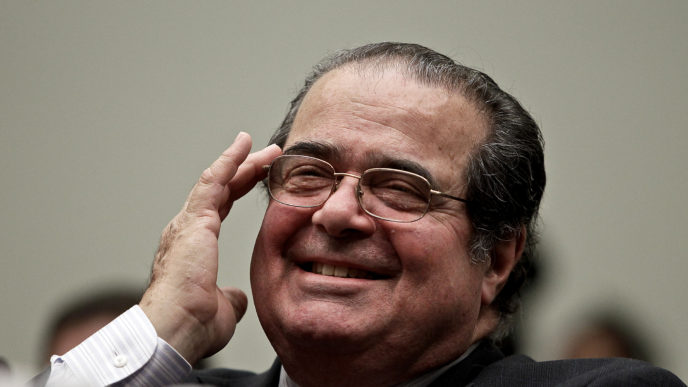
One Way Neil Gorsuch Will Carry Scalia’s Legacy on the Supreme Court

President Donald Trump’s pick for the Supreme Court—Neil M. Gorsuch—is a terrific choice to succeed the late Justice Antonin Scalia.

Heritage Foundation legal scholars and others have noted a number of similarities between the two great judges, and one of them is their sensitivity to issues of overcriminalization.

If confirmed to the bench, Gorsuch would carry on Scalia’s legacy of respect for the rule of law and his keen awareness of how federal criminal law has been misused to punish Americans for minor mistakes that don’t warrant federal prosecution.

Here is some direct evidence.

Undersized Fish, Oversized Federal Criminal Code

Most fishermen can spin a yarn, but in 2007, Florida fisherman John Yates probably never imagined that tossing undersized fish overboard to avoid a citation would bring him before the United States Supreme Court.

Much less, he never expected he would be fighting a maximum 20-year federal prison sentence for allegedly violating the Sarbanes-Oxley Act.

Congress enacted that statute after the Enron fiasco to prevent auditors from destroying corporate records that may contain evidence of crime, thereby obstructing federal investigations.

At oral argument, Scalia balked at the absurdity of Yates’ predicament. He made clear that twisting fairly trivial misconduct already banned by state law into a major federal felony offense is unwise, to say the least.

“This captain is throwing a fish overboard,” said Scalia. “He could have gotten 20 years … What kind of a mad prosecutor would try to send this guy up for 20 years?”

Scalia said that he would be cautious about “how much coverage I give to severe statutes” if prosecutors could stretch them beyond their breaking point.

Justice Elena Kagan wrote in her dissenting opinion that Yates’ case spotlights “overcriminalization and excessive punishment in the U. S. Code,” resulting from an excess of “bad law—too broad and undifferentiated, with too-high maximum penalties, which give prosecutors too much leverage and sentencers too much discretion.”

Kagan called the situation “not an outlier, but an emblem of a deeper pathology in the federal criminal code.”

Gorsuch and Scalia in Lockstep

In one of Scalia’s many pithy dissents—this one in Sykes v. United States (2011), ruling that Indiana’s felony vehicle flight offense counts toward the Armed Career Criminal Act’s sentencing scheme—he directly addressed the legislature’s role in overcriminalization:

We face a Congress that puts forth an ever-increasing volume of laws in general, and of criminal laws in particular. It should be no surprise that as the volume increases, so do the number of imprecise laws. And no surprise that our indulgence of imprecisions that violate the Constitution encourages imprecisions that violate the Constitution. Fuzzy, leave-the-details-to-be-sorted-out-by-the-courts legislation is attractive to the Congressman who wants credit for addressing a national problem but does not have the time (or perhaps the votes) to grapple with the nitty-gritty. In the field of criminal law, at least, it is time to call a halt.

Gorsuch matches not only Scalia’s respect for the principle that judges are not empowered to rewrite or repeal law as they see fit, but also Scalia’s aversion to ramping relatively minor state offenses into major federal prosecutions, or otherwise turning innocent conduct into a crime.

And Gorsuch matches Scalia’s wit, too, especially when it comes to issues of overcriminalization.

In a 2013 lecture titled “Law’s Irony,” published in the Harvard Journal of Law and Public Policy, Gorsuch wrote that today’s criminal justice system “bears its share of ironies.”

He noted that “today we have about 5,000 federal criminal statutes on the books, most of them added in the last few decades, and the spigot keeps pouring, with literally hundreds of new statutory crimes inked every single year.”

And that does not “begin to count the thousands of additional regulatory crimes buried in the federal register,” said Gorsuch. “There are so many crimes cowled in the numbing fine print of those pages that scholars have given up counting and are now debating their number.”

He cited a few examples:

While then-Sen. Joe Biden, D-Del., “worried that we have assumed a tendency to federalize ‘everything that walks, talks, and moves,’” Gorsuch noted that “we should say ‘hoots’ too, because it’s now a federal crime to misuse the likeness of Woodsy the Owl … ”

“Businessmen who import lobster tails in plastic bags rather than cardboard boxes can be brought up on charges.”

“Mattress sellers who remove that little tag? Yes, they’re probably federal criminals too.”
Gorsuch summed up the problem: “Whether because of public choice problems or otherwise there appears to be a ratchet, relentlessly clicking away, always in the direction of more, never fewer, federal criminal laws.”

He asks, “What happens to individual freedom and equality when the criminal law comes to cover so many facets of daily life that prosecutors can almost choose their targets with impunity?”

Warnings From History

Digging into America’s common law history, Gorsuch explained that the “excesses of executive authority invited by too few written laws led to the rebellion against King John and the sealing of the Magna Carta, one of the great advances in the rule of law.”

Looking further into the history of criminal law, Gorsuch noted how “history bears warning that too much—and too much inaccessible—law can lead to executive excess as well. [The Roman emperor] Caligula sought to protect his authority by publishing the law in a hand so small and posted so high that no one could really be sure what was and wasn’t forbidden.”

The American framers were well aware of this history.

“[James] Madison warned that when laws become just a paper blizzard citizens are left unable to know ‘what the law is’ and to conform their conduct to it”—and Gorsuch warns today that either “too much or too little can impair liberty.”

Scalia’s forceful dissent in Sykes v. United States provides some insight into how today’s bloated federal criminal code imperils liberty. Heritage legal scholars and many others have written extensively on the pitfalls, perils, and paths away from overcriminalization.

But as Gorsuch continues in his lecture, “The fact is, the law can be a messy, human business.”

Like Scalia, however, Gorsuch would look to “careful application of the law’s existing premises,” rather than his view on what the law should be, to resolve contemporary social problems.

For that and many other reasons, Gorsuch and Scalia are of like minds.

Both demonstrated respect for the constitutional right to life and the death penalty as punishment for a capital offense, for example. Both are devoted textualists whose opinions reject legislating from the bench.

And Gorsuch would continue Scalia’s legacy on many issues of criminal law—including a sharp, conservative skepticism of the federal government’s ever-increasing expansion of criminal liability. (For more from the author of “One Way Neil Gorsuch Will Carry Scalia’s Legacy on the Supreme Court” please click HERE)

Follow Joe Miller on Twitter HERE and Facebook HERE.

Leftover Obama Refugee Deal With Australia Draws Questions

In mid-November, just after Donald Trump was elected president, the outgoing Obama administration reached an agreement with Australia to resettle hundreds of refugees to America.

Australia’s hard-line policy to deter illegal immigration had banished thousands of asylum-seekers, most from the Middle East, to offshore detention centers on the Pacific island nation of Nauru and Papua New Guinea’s Manus Island.

After human rights groups had reported poor conditions and abuse at camps on the islands, the United Nations intervened and worked with Australia to secure a pledge from President Barack Obama to accept about 1,250 refugees, provided they passed U.S. security screening.

Obama’s deal, which attracted little attention when the U.S. and Australia announced its terms, collided this week with the policies of the Trump administration, which just temporarily barred people from seven countries the Obama administration had designated as posing terrorism risks from entering the U.S.

In a phone call with Australian Prime Minister Malcolm Turnbull on Saturday, Trump reportedly criticized the refugee deal, although the two leaders have disputed media accounts about the content of the discussion.

“You can see why Trump, given his views, would be upset about this deal,” said Kevin Appleby, senior director of international migration policy at the Center for Migration Studies in New York, in an interview with The Daily Signal. “It’s like a fly in his ointment. He sees the deal puts him in a bad position politically. He’s probably wondering what Australia is doing for us when the U.S. is taking in all these refugees from countries that are now banned.”

Despite his misgivings, Trump later agreed to honor the initial agreement, according to Turnbull and the White House press secretary, Sean Spicer. It’s unclear how many refugees will ultimately be resettled in the U.S. and when they might come.

Spicer said Trump was “extremely upset” to have inherited the deal, but would fulfill the U.S.’ commitment to it.

Many of the refugees stranded in the Australian-run detention centers—and designated for resettlement in the U.S.—came from Iran, Iraq, Sudan, and Somalia, countries included in Trump’s order.

A special provision in the Trump order allows for exceptions to honor “a pre­-existing international agreement,” a line that seems to reference the Australia deal.

In November, the parties to the deal said the U.S. would prioritize families and children, and that the transfer of refugees would take six months to a year as the refugees underwent vetting, including two rounds of interviews with America’s Department of Homeland Security.

According to the Australian government, around 80 percent of people in the offshore detention camps have been determined to be legitimate refugees.

As the Trump administration decides how to implement the deal, some are expressing concern about how the Obama administration negotiated the agreement in the first place.

On Thursday, Senate Judiciary Committee Chairman Chuck Grassley, R-Iowa, wrote a letter to Rex Tillerson, Trump’s new secretary of state, asking him to declassify the details of the agreement.

Grassley first raised concerns about the agreement in November, when he wrote to the Obama administration and accused it of “failing to allow for public scrutiny of the plan” and not consulting Congress about it.

“As I said before, the American people have a right to be fully aware of the actions of their government regarding foreign nationals who may be admitted to the United States,” Grassley wrote in the letter to Tillerson. “American taxpayers not only foot the bill for the majority of the refugee resettlement in the United States, but they bear any consequences regarding the security implications of those admitted to our country.”

Appleby doesn’t consider the refugees coming to the U.S. in the deal as much of a security risk.

“It’s beyond reason that some ISIS terrorist would go through all of this when it’s much easier for them to radicalize someone already living in the U.S. or Australia than sending someone through this multi-year, brutal process,” Appleby said.

But he and other experts say the agreement could be viewed as rewarding Australia for an immigration policy that has been widely criticized.

“These are human beings who have been living in very difficult conditions on these islands for years,” Nayla Rush, a senior researcher at the Center for Immigration Studies, said in an interview with The Daily Signal. “It doesn’t make sense for the U.S. to take them. Why should the U.S. be the moral compass of Australia? These people want to go to Australia. They have been stranded by the Australian government, and they are responsible.”

While the Obama administration and Australian government have not said the U.S received something in return as part of the deal, the parties signed their agreement two months after Turnbull agreed to help the U.S. resettle refugees fleeing violence in El Salvador, Guatemala, and Honduras.

“There will not be a people swap,” Scott Ryan, a special minister of state in Australia, said at the time.

Under a long-standing policy, Australia mandates offshore detention centers for asylum-seekers who arrive by boat.

According to CNN, Australia launched Operation Sovereign Borders (OSB) in 2013 after a previous liberalization of immigration policies resulted in a surge of the number of people arriving by boat from 161 in 2008 to 2,726 in 2009.

But the new deterrence strategy did not slow the immigration flow.

The Guardian in 2016 reported cases of physical and sexual abuse of refugees at the detention centers. Protesters rallied across Australia demanding the closure of the centers.

In April 2016, Papua New Guinea’s Supreme Court ordered the Australian government to close the processing center there, calling the facility a violation of the migrants’ rights.

“The Australia deal with the U.S. is reflective of a failed policy, and that’s the larger point here,” Appleby said. “It’s a broader strategy the developed nations are pursuing to deter large movements of people. That doesn’t work, and the U.S. and Australia are now bailing each other out.” (For more from the author of “Leftover Obama Refugee Deal With Australia Draws Questions” please click HERE)

Follow Joe Miller on Twitter HERE and Facebook HERE.
Trump’s Executive Orders on Financial Regulation Are a Great First Step

President Donald Trump has vowed to dismantle the Dodd-Frank Act, and on Friday he signed two executive orders to get that process moving. All Americans should be encouraged by this start, especially since the President is only two weeks into his administration.

One of Friday’s executive orders deals with a single Obama administration rule, but the other one sets the table for much broader reforms.

The former order lays out a path to rescind or revise what’s known as the fiduciary rule, a regulation designed to provide a single standard for anyone providing retirement investment advice.

The Dodd-Frank Act required the Securities and Exchange Commission (SEC) to study the need for a new, uniform federal fiduciary standard for brokers and investment advisers. Despite this provision and a lack of evidence that there was any problem to fix, former President Barack Obama’s Department of Labor (DOL) issued its own fiduciary rule.

In general, a fiduciary standard requires financial advisers to put their individual client’s interests above their own. As simple as that sounds, imposing a one-size-fits-all approach on investors is likely to lead to many unintended consequences, such as less investment advice for average Americans.

Trump’s executive order puts the Department of Labor’s fiduciary rule on a clear path to its demise, and makes it known that the administration wants to “empower Americans to make their own financial decisions.” This statement marks a sharp break from the Obama administration’s paternalistic view that Americans cannot sufficiently educate themselves on even basic investment issues.

The second order has much broader implications for a White House that expects “to be cutting a lot out of Dodd-Frank.”

This order makes it the official policy of the Trump administration “to regulate the United States financial system in a manner consistent with” seven core principles. These principles are as follows:

empower Americans to make independent financial decisions and informed choices in the marketplace, save for retirement, and build individual wealth;

prevent taxpayer-funded bailouts;

foster economic growth and vibrant financial markets through more rigorous regulatory impact analysis that addresses systemic risk and market failures, such as moral hazard and information asymmetry;

enable American companies to be competitive with foreign firms in domestic and foreign markets;

advance American interests in international financial regulatory negotiations and meetings;

make regulation efficient, effective, and appropriately tailored; and
restore public accountability within Federal financial regulatory agencies and rationalize the Federal financial regulatory framework.

Many of these principles closely track the ideas in the Financial CHOICE Act, a bill that Financial Services Chairman Jeb Hensarling, R-Texas, proposed to replace large parts of Dodd-Frank.

The mere fact that the president stated these principles 15 days into his administration is a great sign for anyone who wants to get rid of bureaucratic red tape, government mandates, and taxpayer backing of losses.

Combining these principles with strong actions in new executive orders would be even better, but there’s no reason to suspect the Trump administration will remain idle. (For more from the author of “Trump’s Executive Orders on Financial Regulation Are a Great First Step” please click HERE)

Follow Joe Miller on Twitter HERE and Facebook HERE.
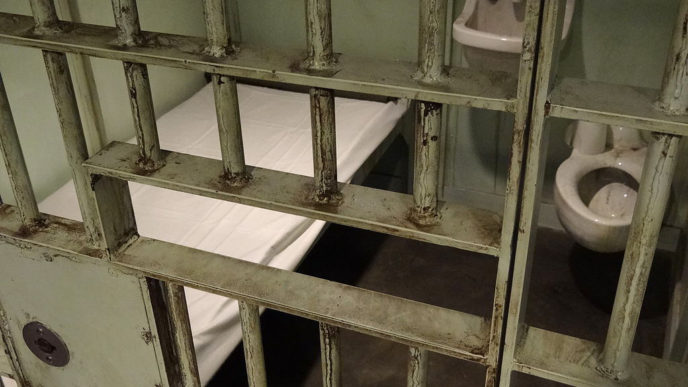
When Sending People to Jail, Criminal Intent Matters

Can a person go to jail for a crime that he had no intent to commit, and that the government admits he did not know would occur?

Jack and Peter DeCoster, father and son executives of the Quality Egg business, have petitioned the U.S. Supreme Court to reconsider their jail sentences for a crime committed by someone else without their knowledge: Selling eggs contaminated with salmonella.

The Outbreak

The DeCoster family was one of the largest egg producers in the United States, with 100 barns housing 5 million egg-laying hens. In 2010, a Salmonella outbreak that caused nearly 2,000 reported consumer illnesses was traced to their Iowa-based farms at Quality Egg, LLC.

The family business had a poor environmental and public health record with several past regulatory violations. But their business was booming until the 2010 outbreak, when about 550 million eggs were recalled.

The Sentence

In 2014, the DeCosters pleaded guilty to introducing adulterated (i.e. contaminated) eggs into interstate commerce, in violation of federal law.

Under the food adulteration provision (21 U.S.C. § 331) of the Food, Drug and Cosmetic Act, “[t]he introduction or delivery for introduction into interstate commerce of any food, drug, device, tobacco product, or cosmetic that is adulterated or misbranded” is prohibited.

The statutory penalty allows for fines and up to one year’s imprisonment.

The family and business paid $7 million in total fines under their plea agreement. Consumers also hit the business with a myriad of lawsuits seeking money damages. In 2011, the DeCosters reached settlements with at least 40 victims, some of whom reportedly received around $250,000.

The family’s loss of their business would seem to be a fair price to pay for sloppy operations that ended up making customers sick. The financial remedies they were forced to pay effectively bankrupted Quality Egg.

But in addition, both Jack and Peter DeCoster were sentenced to serve three months in prison.

This sentence, which the U.S. Court of Appeals for the Eighth Circuit recently upheld, represents a dangerous misstep in the law of criminal liability for corporate supervisors.

As Judge Arlen Beam writes in his dissenting opinion, the government conceded that the DeCosters “did not know that any eggs distributed by Quality Egg at any relevant times ‘were, in fact, contaminated with Salmonella,’” and that “no person associated with Quality Egg had knowledge of salmonella contamination at any relevant time.”

The Appeal

In challenging only their prison sentences, not their convictions, the DeCosters explained that they had no knowledge of the harmful conduct.

They argue that, absent any level of criminal intent, their prison sentence for the offense of food adulteration authorized by statute (21 U.S.C. § 333) violates the due process guarantee of the Fifth Amendment of the U.S. Constitution.

In their defense, the DeCosters note that they periodically conducted salmonella tests of their eggs even before they were under any obligation from the government to do so. They relied on expert advice from food-safety consultants at the University of Georgia and in private practice to develop their Salmonella testing program, which was conducted by a third-party.

Thousands of environmental tests conducted on Quality Eggs products yielded satisfactory results in the years leading up to the 2010 Salmonella outbreak.

Still, the relevant statute that criminalizes supplying adulterated eggs is silent on criminal intent. It does not require that management ever knew of the possible danger. The DeCosters violated the statute and were subjected to criminal liability under the Responsible Corporate Officer Doctrine.

The Responsible Corporate Officer Doctrine

Depending on the outcome of the DeCosters’ appeal, the Responsible Corporate Officer doctrine could become a more significant cause for concern among employers. The doctrine holds employers criminally liable for the bad acts of their employees, even if the former has no knowledge whatsoever of the alleged unlawful acts.

Traditionally, Anglo-American law required proof of some mens rea (Latin for “guilty mind”) standard, also known as a criminal intent standard, which specifies, as the influential English legal scholar William Blackstone wrote, that “an unwarrantable act without a vicious will is no crime at all.”

The United States Supreme Court has recently breathed new life into the old presumption that criminal statutes should be construed to require proof of criminal intent even when a statute is silent on the issue.

This Responsible Corporate Officer doctrine lingers on, in tension with that fundamental mens rea requirement, allowing convictions of supervisors on the basis that alleged misconduct took place “on their watch.”

In United States v. Park (1975), the Supreme Court upheld the conviction of John Park, the president of a national food chain who failed to prevent food safety violations.

Park entrusted compliance with the Food, Drug and Cosmetic Act to a district vice president and his employees who failed miserably in their duties by allowing food to be contaminated by rodents.

Although the results of noncompliance were dangerous to the public, Park had no personal involvement in, or intention behind, any violations of the Food, Drug and Cosmetic Act requirements.

Still, the Supreme Court credited him with responsibility for “the entire operation of the company” that was under his oversight, and upheld the criminal fine levied against him.

While the Responsible Corporate Officer doctrine served as the basis for a criminal conviction without a showing of intent in United States v. Park, it is an open question whether a person may be incarcerated for an unwitting offense under the doctrine.

What’s at Stake

In challenging their prison sentence, the DeCosters rely on the Supreme Court’s decision in Staples v. United States (1994), which instructs that a court should look at the potential penalty before deciding whether it is constitutionally permissible for a statute to lack a mens rea standard.

There, the Supreme Court reiterated that imposing “a small pecuniary penalty [on] a person who has unwittingly done something detrimental to the public interest” is reasonable, but incarceration for an unwitting defendant is entirely different.

The DeCosters’ three month prison sentence represents one small stint for man, one giant leap backward for the law. Other federal courts have reasoned that “the imposition of severe penalties… for the commission of a morally innocent act may violate the due process clause of the Fifth Amendment.”

Heritage scholars have argued elsewhere that incarceration for such an offense could violate the Eighth Amendment’s prohibition of cruel and unusual punishment.

Judge Arlen Beam wrote in his dissenting opinion in the DeCosters’ case that “there is no precedent that supports imprisonment without establishing some measure of a guilty mind on the part of [the DeCosters], and none is established in this case.”

The DeCosters are now asking the Supreme Court to hear their case and rule that the Constitution forbids the imposition of a jail sentence for an unintentional violation of a law that lacks a mens rea standard.

A failure to remedy the lower courts’ reasoning in the DeCoster case could cast the specter of a jail sentence for employers over everyday business activities that they have no involvement in whatsoever. (For more from the author of “When Sending People to Jail, Criminal Intent Matters” please click HERE)

Follow Joe Miller on Twitter HERE and Facebook HERE.

Trump Vows to Repeal Political Limits on Churches

Warning that religious freedom is “under threat,” President Donald Trump vowed Thursday to repeal the Johnson Amendment, an IRS rule barring pastors from endorsing candidates from the pulpit.”

“I will get rid of and totally destroy the Johnson Amendment and allow our representatives of faith to speak freely and without fear of retribution,” Trump said during remarks at the National Prayer Breakfast, a high-profile event bringing together faith leaders, politicians and dignitaries.

Trump made a similar pledge as a candidate but has not detailed how he plans to scrap the rule or how quickly he will proceed in doing do.

Religious conservatives whose overwhelming support propelled Trump to the White House have been watching closely for him to deliver on promised protections for religious objectors to gay marriage and abortion. Kelly Shackelford, head of First Liberty Institute, a non-profit legal group that specializes in religious freedom cases, said no other presidential candidate was “more outspoken on their commitment to religious freedom” than Trump.

The president made no mention at the prayer breakfast of other steps he may take on those issues, saying only that religious freedom is a “sacred right.” He used his remarks to thank the American people for their prayers in his opening days in office. (Read more from “Trump Vows to Repeal Political Limits on Churches” HERE)

Follow Joe Miller on Twitter HERE and Facebook HERE.

Did Obama Just Hack President Trump’s Statement on Israel?

The final major policy fight of Obama’s presidency was his public dispute with Israel over their right to build homes in their biblical homeland. The country was rightly appalled that Obama and then-Secretary of State John Kerry chose to focus on a few thousand Jewish homes in the foothills of ancient Samaria at a time when Islamic mayhem is breaking out all over Western Civilization. In many respects, this parting shot from Obama epitomized the moral dyslexia of his entire presidency.

At the time, conservatives and even some intellectually honest liberals breathed a sigh of relief that a new a president would soon be welcomed — one who stopped condemning our ally as a way of apologizing to the Islamic world. We thought we could finally break away from the global elite’s maniacal obsession with the illogical and incoherent distraction of the two-state solution and focus on the root problem: Islamic supremacism.

Thus, naturally, this statement from the Trump White House was shocking:

The American desire for peace between the Israelis and the Palestinians has remained unchanged for 50 years. While we don’t believe the existence of settlements is an impediment to peace, the construction of new settlements or the expansion of existing settlements beyond their current borders may not be helpful in achieving that goal. As the President has expressed many times, he hopes to achieve peace throughout the Middle East region. The Trump administration has not taken an official position on settlement activity and looks forward to continuing discussions, including with Prime Minister Netanyahu when he visits with President Trump later this month.

At first I thought this was a hoax, or that it was drafted by an Obama holdover.

Some might suggest that at least Trump’s White House put some distance between this administration and his predecessor by recognizing some right for Jews to live in part of Judea and Samaria.

Really folks? Is this the soft bigotry of low expectations? Are we aiming for pale pastels, haggling over a few inches in an area virtually invisible on a map compared to the mass of land controlled by Islam? At a time when the entire premise of this two-state solution has been countermanded by reality, are we going to continue the same failed recognition of the PLO terrorists the way Clinton, Bush, and Obama did?

What exactly does it mean to “achieve peace” and why is the creation of a 23rd Arab state in our best interest? Why should we continue to invest our diplomatic capital into the foreign policy version of Obamacare? I spent the entire week robustly defending Trump’s immigration policy from a legal, political, historical, and philosophical perspective precisely because we don’t want to endanger our land with Islamic supremacism. Why is the Trump White House asking Israel to do something he wouldn’t want to do himself?

Moreover, this is the very stupidity that embodies the anger people felt against the political establishment and why they voted for Trump. While on the campaign trail, President Trump boldly decried the “stupid” politicians who are “pathetic losers” and perpetuate failed policies that are devoid of common sense. There is nothing that better fits this description than the globalist elite obsession with creating a PLO terror state west of the Jordan River; one which will become saturated with ISIS and Al Qaeda elements within days.

The two-state solution is the Obamacare of foreign policy. Much like Obamacare has locked up our economy and job market on the domestic front, the PLO nonsense has paralyzed our leverage in the Middle East and has consumed our foreign policy for 23 years. It is rooted in an apologetic concession to Islam instead of confronting the reality of Sharia-based Islam. Now, Saudi Arabia and the Muslim Brotherhood know that any time they want to leverage Trump into making a concession, they will call upon Hamas and the PLO to ratchet up attacks on Israel and criticize the presence of Jews in Jewish territory. We have lost our leverage now that they know we “fear the Arab street” as it relates to moving the embassy and our ally building homes wherever they damn please.

What happened to the tough negotiator? Is this coming from his meeting with King Abdullah of Jordan today? A tough negotiator would tell Abdullah, “listen buddy, you create an Arab terror state on your western border and your country will fall to the Islamists within weeks. We won’t be there to save you.” Jordan would be just as adversely affected by such a dumb move as Israel.

Finally, there is a background here that is probably missed in the media. The reason Israel announced more construction in Samaria today is because, thanks to Israel’s crazy Supreme Court [Robert Bork wrote a lot about it during his lifetime], the Israeli government just dismantled an entire community of Jews in a town called Amona and sent their own army in to kick out their own families who have been living there for 20 years. This is something, to my knowledge, no other nation has done in history. So the building of more homes was somewhat of a domestic compromise for kicking those people out. For the Trump administration to then issue a statement on the same day and rip that wound wide open is appalling to the many religious Christians and Jews who so enthusiastically supported him on the premise that he wouldn’t follow such policies.

The bottom line is there was absolutely no reason to even focus on this issue at a time like this or issue any such statement. Silence in the face of Israel building homes would have been the refreshing change we all expected.

It’s disappointing that Trump is willing to get us sucked into the foreign policy cause célèbre of the very political establishment he claims to detest. On the one hand, he (rightfully) proclaims that our political leaders have been stupid to try to create democracy in the Middle East among existing Arab nations. Yet at the same time, he is willing to expend American capital creating a new Arab state that hates America, exports terrorism, destabilize the region, strengthen the Muslim Brotherhood, and will become a client-state of Iran?

We know you are better than this, Mr. President. Return to the inner voice of common sense and ignore the foreign policy elites. (For more from the author of “Did Obama Just Hack President Trump’s Statement on Israel?” please click HERE)

Follow Joe Miller on Twitter HERE and Facebook HERE.