Liberals Likely to Use Courts to Thwart Trump Agenda

After the president scolded judges for not ruling his way, some critics accused him of seeking to intimidate an independent judiciary.

That was in 2010, after the State of the Union address when President Barack Obama rebuked the attending Supreme Court justices over the Citizens United free speech and campaign finance case. Some Obama critics also said they felt he was threatening the Supreme Court in 2012 ahead of its ruling on the Obamacare law.

Some legal analysts anticipate the case will be a harbinger of things to come in challenging President Donald Trump’s policies through the courts, as Democrats face diminished power in Congress and could increasingly use the judicial system to block the president’s policies.

Federal courts frequently ruled against Obama’s executive actions during his eight years in office. However, Trump is getting a fast start on clashing with courts after a federal judge in Seattle placed a temporary restraining order nationally on the executive order to restrict immigration from seven Middle Eastern countries that have been designated as terrorist hot spots.

In response to the immigration ruling, Trump tweeted that U.S. District Judge James L. Robart was a “so-called judge,” prompting Democrats such as Senate Minority Leader Charles Schumer of New York to say Trump has a “disdain for an independent judiciary that doesn’t always bend to his wishes.”

Schumer even stretched this criticism into the upcoming Supreme Court nomination debate, claiming the attack on Robart “raises the bar even higher” for the confirmation of Neil Gorsuch over the question of judicial independence.

“That could be a flawed argument because broadly speaking, Gorsuch is probably more skeptical of executive power than Merrick Garland would have been,” said Ilya Shapiro, a senior fellow in constitutional studies at the libertarian Cato Institute, referring to Obama’s nominee to the high court who the Senate did not confirm in 2016.

Shapiro told The Daily Signal in a phone interview he thought Trump’s attack on Robart was inappropriate, but not unheard of.

“It was improper for a president to question the authority of the independent judiciary, but it’s not really different from President Obama calling out the Supreme Court at the State of the Union or in seemingly trying to pressure Justice [John] Roberts on Obamacare,” Shapiro said.

Federal judges should by no means be immune from criticism, said Hans von Spakovsky, a senior legal fellow at The Heritage Foundation. He believes Robart, the Seattle judge, issued a ruling outside the law.

“Judges should not be criticized for fulfilling their constitutional role, but if a judge oversteps that constitutional role and acts as a super legislator, then that judge’s reasoning should be criticized,” von Spakovsky told The Daily Signal.

Litigation and “judge shopping” will likely continue throughout the administration as a means to stop Trump’s agenda, von Spakovsky predicted.

This could be a successful strategy for the left, said Curt Levey, a constitutional law expert with the Committee for Justice, a nonprofit legal group, and FreedomWorks, a conservative advocacy group.

With 94 U.S. district courts, it’s possible for liberal advocacy groups to file suits across the country, particularly with issues such as immigration that have a large pool of potential clients, and gain a sweeping national decision out of just one district court decision, Levey told The Daily Signal.

Levey anticipates an increase in environmental groups suing the administration after Obama-era Environmental Protection Agency regulations are rolled back.

“Democrats don’t have a lot of power in Congress, but they still have governors and state attorneys general and many private outside groups,” Levey said. “These outside groups can’t legislate, but they can sue by themselves.”

It was Washington state Attorney General Robert Ferguson who brought the case on behalf of his state against the Trump executive order.

With regards to the pending case on immigration restrictions from the seven Middle Eastern countries, Levey described this as contrasting somewhat with the Obama executive actions.

Typically, he said, the question with Obama executive actions were about whether the president had the constitutional authority to enact them. In the case of Trump, the question at hand is “negative rights,” or an argument about what the government cannot do with regards to individuals.

The U.S. Court of Appeals for the 9th Circuit did not put an emergency stay on the temporary restraining order, as the Trump administration petitioned, thus preserving the district court ruling. The appeals court asked challengers of the immigration restriction to file written arguments by 4 a.m. Monday and asked Justice Department lawyers to reply by 6 p.m. the same day. The court will then schedule a hearing on whether the hold on the policy will remain in place.

Democrats are almost certain to apply this pending case and other potential cases to the confirmation hearing of Gorsuch, currently a 10th Circuit Court of Appeals judge. In his full statement over the weekend, Schumer said:

The president’s attack on Judge James Robart, a [George W.] Bush appointee who passed with 99 votes, shows a disdain for an independent judiciary that doesn’t always bend to his wishes and a continued lack of respect for the Constitution, making it more important that the Supreme Court serve as an independent check on the administration. With each action testing the Constitution, and each personal attack on a judge, President Trump raises the bar even higher for Judge Gorsuch’s nomination to serve on the Supreme Court. His ability to be an independent check will be front and center throughout the confirmation process.

As for intimidating the judiciary, Levey said he isn’t concerned.

“What seems to be getting so much coverage is Trump threatening the judiciary, but if senators pressure Gorsuch to promise to vote for X or he won’t get confirmed, that’s equally a threat from Congress,” Levey said. (For more from the author of “Liberals Likely to Use Courts to Thwart Trump Agenda” please click HERE)

Follow Joe Miller on Twitter HERE and Facebook HERE.

Republican Lawmakers yet to Deliver Early Wins for Trump

When the 115th Congress arrived Jan. 3, the majority had an ambitious agenda. With Republicans in control of the House and Senate, and soon the White House, it was the first time in 10 years they could advance their policy agenda unobstructed by Democrats.

Yet a month later, the GOP-led Congress has produced just three bills for President Donald Trump to sign: a waiver allowing retired Marine Gen. James Mattis to serve as defense secretary, a joint resolution repealing the Obama administration’s stream protection rule, and another resolution reversing a Securities and Exchange Commission rule pertaining to energy companies.

Republicans have delayed action on campaign promises such as repealing Obamacare and defunding Planned Parenthood.

In the Senate, Republicans are struggling to overcome Democrat delays in confirming Trump’s Cabinet nominees.

Senate Majority Leader Mitch McConnell said those delays have made the Senate’s job unnecessarily difficult. In a statement provided to The Daily Signal, the Kentucky Republican said:

Democrat obstruction has reached such extreme levels that the smallest number of Cabinet officials have been confirmed in modern history at this point in a presidency. It’s a historic break in tradition, a departure from how newly elected presidents of both parties have been treated in decades past.

The result is growing frustration among conservatives that the GOP isn’t moving quickly enough to capitalize on Trump’s first 100 days and the limited window of opportunity in Washington.

This week, for instance, the House will work just two days due to a Democrat retreat. Last month, Republicans decamped for three days for their own retreat in Philadelphia.

Last year, when House Speaker Paul Ryan outlined his “A Better Way” agenda, the Wisconsin Republican billed it as the GOP’s blueprint for the coming year.

“This is our game plan for 2017,” Ryan told reporters in October.

A month later, after Trump’s victory in November, a jubilant Ryan boasted about the forthcoming “dawn of a new unified Republican government.”

“If we are going to put our country back on the right track, we have got to be bold and we have to go big. This country is expecting absolutely no less,” Ryan said in November. “We want to make sure we hit the ground running in January, so we can deliver on the new president’s agenda.”

In December, Ryan told CBS News’ “60 Minutes” that “the first bill we’re going to be working on is our Obamacare legislation.”

And while the House took the first step Jan. 13 by approving a resolution establishing the framework for repeal, lawmakers missed their Jan. 27 deadline to draft the Obamacare repeal legislation.

A senior congressional aide told The Daily Signal that Republicans are determined to “provide Obamacare relief for struggling Americans.”

“The Senate began consideration the first day of the new congressional session,” the aide said of the drive to repeal and replace Obamacare, adding:

After [the Senate passed] that resolution, which is the start of the repeal process, the House passed the resolution immediately upon receiving it. House committees are now writing the reconciliation [bill] to repeal and potentially even include some replace.

Ryan also said defunding Planned Parenthood would be included in the budget reconciliation package, just as it was in a 2015 bill the Republicans passed and President Barack Obama vetoed early in 2016.

The latest timeline, according an internal House schedule leaked last week, suggests the reconciliation bill could be considered in March—although it could slip until April.

Congress’ lack of progress on the Obamacare repeal and Planned Parenthood defunding stand in contrast to the activity of the 111th Congress during Obama’s first weeks in office.

In 2009, Obama signed into law three significant bills passed by the Democrat-led Congress. They included the American Recovery and Reinvestment Act, a $787 billion economic stimulus package; the Lilly Ledbetter Fair Pay Act, which proponents said would end pay discrimination against women; and the Children’s Health Insurance Program Reauthorization Act, which provided states with new funding and programming for children’s health care coverage through Medicaid.

Congress introduced each bill either right before or soon after Obama was sworn into office; Obama signed them within his first 36 days.

Congress passed the Lilly Ledbetter bill Jan. 27, the children’s health bill Feb. 4, and the stimulus package Feb. 13.

So far in the 115th Congress, lawmakers passed the Mattis waiver, approved a resolution undoing requirements for coal mining operations, and approved another resolution loosening restrictions on the extraction of natural resources.

In his first two weeks as president, Trump has kept busy despite the lack of congressional activity. He signed eight executive orders, including one that begins the process of dismantling Obamacare.

The budget reconciliation bill passed by Congress in 2015 repealed Obamacare and defunded Planned Parenthood. Although that bill could not repeal the entirety of Obamacare due to Senate rules, it could dismantle a large portion.

Rachel Bovard, a former Senate aide who is director of policy services at The Heritage Foundation, said Congress could have presented a repeal bill to Trump on Jan. 20, the day he took the oath of office.

“Congress has been a disappointment so far, considering the fact that there is unified control of the government,” Bovard told The Daily Signal. “Congress could have had an Obamacare repeal bill on Trump’s desk at 12:01 p.m. on Inauguration Day, especially if they’d used the 2015 repeal bill that passed both Houses.”

“There is no excuse for the lack of action,” she added. “And, indeed, by delaying it, they’ve allowed the debate to get muddled, slowed the momentum considerably, and in doing so made the task that much harder.”

With midterm elections coming Nov. 6, 2018, some conservatives argue that Republicans have no place to hide.

“The Washington, D.C., Republicans are out of excuses,” Drew Ryun, national director of the Madison Project, a conservative political action committee, said in an email to The Daily Signal. Ryun added:

There are no more electoral goal posts to move. They have the House, the Senate, and with Trump in the White House. For years they have campaigned on the promises of repealing Obamacare and defunding Planned Parenthood.

Unfortunately for them, their inaction is proving two things: They may really be a party without ideas as well as one that pays lip service to its base with no intent of action. This is a dangerous position for them to be in, with midterms just around the corner.

(For more from the author of “Republican Lawmakers yet to Deliver Early Wins for Trump” please click HERE)

Follow Joe Miller on Twitter HERE and Facebook HERE.

Hypocrite McConnell Says There’s No Money For Trump’s Vote Fraud Investigation. What’s He Afraid Of?

Senate Majority Leader Mitch McConnell (R-Ky.) on Sunday said he doesn’t want to spend federal funds to investigate what President Trump claimed was massive voter fraud in the 2016 presidential election. . .

“I don’t think we ought to spend any federal money investigating that. I think the states can take a look at this issue. Many of them have tried to tighten their voter rolls, tried to purge people who are dead,” [McConnell stated]. . .

The president announced on Jan. 25 that he would ask for “a major investigation” into voter fraud, including a review of people who are registered to vote in two states and people who are deceased but still on voter rolls. (read more about the vote fraud investigation McConnell is trying to avoid HERE)

The U.S. Military’s Stats on Deadly Airstrikes Are Wrong. Thousands Have Gone Unreported

The American military has failed to publicly disclose potentially thousands of lethal airstrikes conducted over several years in Iraq, Syria and Afghanistan, a Military Times investigation has revealed. The enormous data gap raises serious doubts about transparency in reported progress against the Islamic State, al-Qaida and the Taliban, and calls into question the accuracy of other Defense Department disclosures documenting everything from costs to casualty counts.

In 2016 alone, U.S. combat aircraft conducted at least 456 airstrikes in Afghanistan that were not recorded as part of an open-source database maintained by the U.S. Air Force, information relied on by Congress, American allies, military analysts, academic researchers, the media and independent watchdog groups to assess each war’s expense, manpower requirements and human toll. Those airstrikes were carried out by attack helicopters and armed drones operated by the U.S. Army, metrics quietly excluded from otherwise comprehensive monthly summaries, published online for years, detailing American military activity in all three theaters.

Most alarming is the prospect this data has been incomplete since the war on terrorism began in October 2001. If that is the case, it would fundamentally undermine confidence in much of what the Pentagon has disclosed about its prosecution of these wars, prompt critics to call into question whether the military sought to mislead the American public, and cast doubt on the competency with which other vital data collection is being performed and publicized. Those other key metrics include American combat casualties, taxpayer expense and the military’s overall progress in degrading enemy capabilities. (Read more from “The U.S. Military’s Stats on Deadly Airstrikes Are Wrong. Thousands Have Gone Unreported” HERE)

Follow Joe Miller on Twitter HERE and Facebook HERE.

Pro-Life Leadership From the White House Can Change the Course of History. Reagan Did It, and So Can Trump

It has been well-reported that the number of abortions in America has dwindled to below the number of abortions in 1973, the year Roe vs. Wade was decided. But one chart shows how extremely important pro-life leadership in the White House can change the course of history.

The Supreme Court’s 1973 decision in Roe vs. Wade encouraged millions of women to have abortions under the assumption that it was a right guaranteed to them by the United States Constitution. That decision was an absolute abomination and as the number of abortions rose exponentially in the first years after the decision, so too did the moral outrage in the hearts and minds of the people. But in 1980 that number reversed course, and the election of Ronald Reagan just might have changed history.

Ronald Reagan made pro-life arguments every single time the issue of abortion came up in his campaign for president. In one debate against John Anderson, who ran as an independent, (then-President Carter declined the debate) a question having to do with whether a president should be guided by organized religion on issues such as abortion was asked. Reagan defended the GOP platform and stated:

The litmus test that John says is in the Republican platform, says no more than the judges to be appointed should have a respect for innocent life. Now, I don’t think that’s a bad idea. I think all of us should have a respect for innocent life. With regard to the freedom of the individual for choice with regard to abortion, there’s one individual who’s not being considered at all. That’s the one who is being aborted. And I’ve noticed that everybody that is for abortion has already been born. I think that, technically, I know this is a difficult and an emotional problem, and many people sincerely feel on both sides of this, but I do believe that maybe we could find the answer through medical evidence, if we would determine once and for all, is an unborn child a human being? I happen to believe it is.

Reagan stated his pro-life views at a time when abortion was wildly popular, in fact, the most popular in all of American history. His courage in stating his views and connecting with the American people might just have turned the tide on the issue.

What many do not remember about back then was that large numbers of so-called “establishment Republicans” at the time embraced the Supreme Court’s ruling. They accepted it as the “law of the land” and wanted to move on from the issue. Indeed, President George H.W. Bush was a pro-abortion Republican as were Presidents Gerald Ford and Richard Nixon. Ronald Reagan was considered by these pro-abortion Republicans during the 1980 campaign to be “backward” on the issue. Still, he was able to make a clear case for life which helped him harness the issue for the American people.

Reagan biographer Craig Shirley characterized the leadership of Ronald Reagan at this point in history. As he said in an email, “Reagan not only freed millions behind the Iron Curtain but he also saved countless lives by being the first president to put a spotlight on the horrors of abortion.” Ever since, the Republican Party has been pro-life.

That’s why it’s so heartening to see Donald Trump take up the torch of life and run with it.

During the 2016 campaign, Trump’s comments on the subject of abortion were hard to sift through. If he wasn’t going over the top — for example, when he said that the woman has to have some sort of punishment, which made every pro-lifer cringe and denounce him — he was muddling the issue on the importance of defunding Planned Parenthood. Many conservatives had a very difficult time trying to figure out just what he would do as president. But only two weeks into his presidency, Trump has already done some significant things on the pro-life front.

First, Trump knocked down International Planned Parenthood’s recent eight-year-stint of population control experiments worldwide by reinstating Ronald Reagan’s Mexico policy. There has been many accolades for this move, but in fairness, George W. Bush also reinstated the policy when he took office. Trump then nominated a justice for the Supreme Court who has taken a clear pro-life position, even writing, “human life is fundamentally and inherently valuable, and that the intentional taking of human life by private persons is always wrong.”

I would challenge Donald Trump to further the pro-life movement by taking a strong stand on defunding Planned Parenthood. The reinstatement of Reagan’s Mexico City policy is good, really good, but it doesn’t go far enough and people may have it confused with actually defunding the private abortion corporation. There should be no quarter given to an organization as heinous as that one exposed by the Center for Medical Progress as profiting off of the death of millions of children who would not receive a decent burial. Instead, they are used as parts ready to be sold to the highest bidder. The American people clearly are turning away from abortion, they should certainly not be funding the nation’s largest provider and butcher shop.

Presidential leadership is often the key to attitudinal changes. If Donald Trump didn’t convince many that his intentions were true on the issue of life, he may be well on his way. But now that the number of abortions has dropped so significantly, it would be a mistake to believe the issue has taken care of itself.

President Trump must take a cue from Ronald Reagan, remember the American people who, during his campaign, so strongly demanded the defunding of Planned Parenthood, and encourage the Republican Congress to listen to the people who gave them the majority. (For more from the author of “Pro-Life Leadership From the White House Can Change the Course of History. Reagan Did It, and So Can Trump” please click HERE)

Follow Joe Miller on Twitter HERE and Facebook HERE.
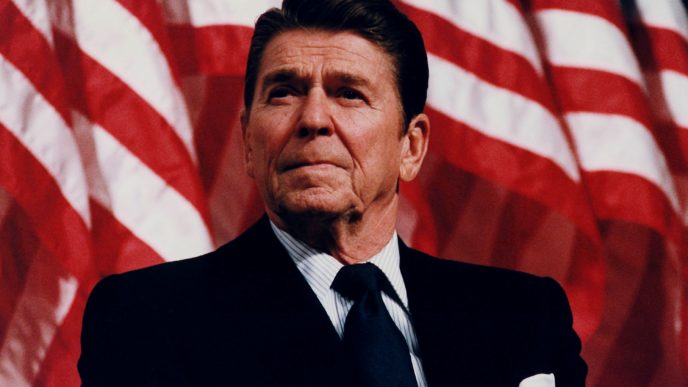
The Super Super Bowl: Patriots Pull off Biggest Super Bowl Comeback Ever!

Tom Brady has a record fifth Super Bowl win for a quarterback after the biggest comeback in the game’s history, and one of the greatest catches.

James White ran 2 yards for a touchdown on the first possession of overtime, and the Patriots came back from 25 points down for a 34-28 win over the Atlanta Falcons in Super Bowl 51.

The Patriots drove to the tying score with help from a unbelievable catch by Julian Edelman, who somehow kept the ball off the turf on a diving grab of a tipped pass that bounced off a defender’s shoe. (Read more from “The Super Super Bowl: Patriots Pull off Biggest Super Bowl Comeback Ever!” HERE)

Follow Joe Miller on Twitter HERE and Facebook HERE.

Rogue Federal Bureaucrats Threaten Trump’s Agenda

Recent scandals in the Department of Veterans Affairs and the Internal Revenue Service demonstrated that it’s almost impossible to fire federal employees, many of whom reportedly intend to go rogue by not implementing President Donald Trump’s agenda.

Conservatives are hopeful the time has come for civil service reform that would rein in this permanent class of government workers who have voiced outright hostility to the new administration. Some have even called it the “fourth branch of government” or “alt-government.”

“This is a situation where people voted and elected a president who is lawfully trying to complete those tasks [he promised in the campaign], while unelected bureaucrats are willing to overturn the will of the people,” Ben Wilterdink, director of the American Legislative Exchange Council’s (ALEC) Task Force on Commerce, Insurance and Economic Development, told The Daily Signal.

Among federal employees, about 95 percent of political contributions went to Democrat Hillary Clinton during the presidential race, according to an analysis by The Hill.

Some of those federal workers are now in consultation with departed Obama administration officials to determine how they can push back against the Trump administration’s agenda, The Washington Post reported last week.

At the State Department, for example, nearly 1,000 government workers signed a letter protesting Trump’s executive order on refugees. A few days later, Trump had to fire acting Attorney General Sally Yates after she announced she wouldn’t defend the administration’s refugee policy.

White House press secretary Sean Spicer said State Department employees who oppose the policy “should either get with the program, or they can go.”

“If a federal employee doesn’t like the ideological foundation or likely outcomes of a presidential directive, it doesn’t mean that the directive is not legal. It means that the views of the federal employee are in conflict with the views of the president who runs the federal government,” said Neil Siefring, vice president of Hilltop Advocacy and a former Republican House staffer, in a column for The Daily Caller.

“In that instance,” Siefring added, “the solution should not be to resist the actions of the president in their professional capacity as a career civil servant in the workplace. The solution is for that federal employee to honorably resign, not actively or passively hamper the White House.”

What if an employee won’t resign? Addressing the problem with the federal workforce won’t be easy, according to experts interviewed by The Daily Signal.

“You can fire federal employees, it’s just that nobody wants to put up with the process,” Don Devine, former director of the Office of Personnel Management during the Reagan administration, told The Daily Signal.

Multiple appeals can be made through the U.S. Merit Systems Protection Board, the Equal Employment Opportunity Commission (EEOC), and the National Labor Relations Board.

“It’s almost impossible to discipline employees because it can be appealed to through the merit system, the labor relations systems, or through the EEOC,” Devine said. “We don’t have a civil service system; we have a dual civil service-labor relations system.”

During the Obama administration, two of its biggest scandals involved the IRS and Department of Veterans Affairs. In 2013, a Treasury Department inspector general report determined the IRS had been targeting conservative groups. In 2014, a VA inspector general’s report revealed falsified appointments in which some veterans died while waiting for care.

Years later, conservatives remain frustrated that federal workers weren’t held accountable.

“I will take your IRS employees and raise you the EPA, where story after story, a worker was viewing porn on work time and couldn’t be fired because the process is fraught with appeals,” Wilterdink said. “It’s hard to argue we have an accountable government when someone can’t be fired for years at a time.”

Earlier this year, the U.S. House revived the Holman Rule, named after a Democrat congressman who introduced it in 1876. It would allow lawmakers to cut the pay of individual federal workers or a government program.

There are other proposals for holding federal workers accountable. House Oversight and Government Reform Chairman Jason Chaffetz, R-Utah, introduced a bill in January to hold seriously tax delinquent people ineligible for federal civilian employment, federal contracts, or government grants. This bill was proposed in response to IRS data that found more than 100,000 federal civilian employees owed more than $1 billion in unpaid taxes at the end of fiscal year 2015.

Adding to the challenge is the process commonly known as burrowing. Frequently, political appointees from one administration convert to a career position that comes with civil service protections, allowing them to continue implementing policy—or resisting the new administration’s approach.

The Pendleton Civil Service Reform Act of 1883 was passed to stop raw political party appointments from securing federal government jobs, or a spoils system. The law introduced the merit system into hiring practices and made numerous civil service positions untouchable after they were filled.

However, burrowing has caused a de facto spoils system, Wilterdink said, because, “the pendulum has swung so far to protecting federal employees” that it allows administrations to keep their people in office long term.

Significant reform doesn’t mean recreating a spoils system, according to Robert Moffit, a senior fellow at The Heritage Foundation who was an assistant Office of Personnel Management director during the Reagan administration. Moffit said a balanced approach would be more desirable.

“You need to have strong managers in each agency to make sure the president’s agenda is properly executed,” Moffit told The Daily Signal. “You must also have a bright line between career and non-career staff so there is no politicization of the merit system.”

Moffit also supports legislation to allow the president to order the firing of career officials who either “broke the law or severely undermined the public’s trust.”

“Even President [Barack] Obama referred to what IRS officials did as outrageous and nothing happened,” Moffit said. “The VA matter is still unresolved. The people responsible for those waiting lists aren’t accountable and people died.” (For more from the author of “Rogue Federal Bureaucrats Threaten Trump’s Agenda” please click HERE)

Follow Joe Miller on Twitter HERE and Facebook HERE.
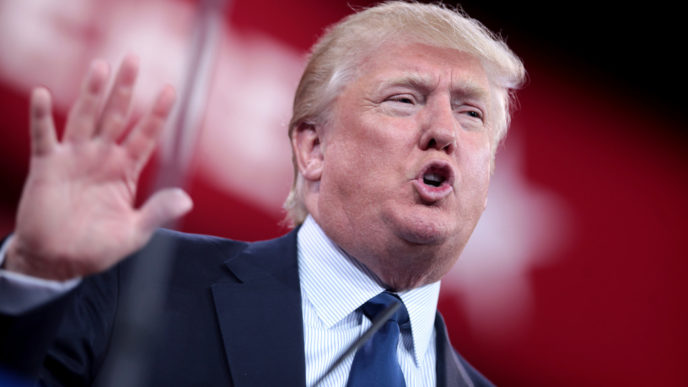
Conservatives Pressure 12 Democrats on Supreme Court Pick

Two conservative advocacy organizations hope to stop Senate Democrats from blocking President Donald Trump’s Supreme Court nominee.

“The focus is to put pressure on Democratic senators to decide between following the will of American people and the voters in their state or to follow Sen. Chuck Schumer and the radical left down a path of obstructionism,” Judicial Crisis Network senior adviser Gary Marx told The Daily Signal.

The Judicial Crisis Network and Heritage Action for America have both launched campaigns to bolster the confirmation of Judge Neil Gorsuch to the U.S. Supreme Court. Gorsuch, currently a judge on the U.S. Court of Appeals for the 10th Circuit, was nominated by Trump to fill the seat of the late Antonin Scalia.

Judicial Crisis Network has formed a coalition enterprise to engage in a $10 million campaign of television and digital advertising, research, and grassroots activism. The group claims this is the “most robust operation in the history of confirmation battles.”

Judicial Crisis Network and Heritage Action are targeting Democrat senators from states that Trump won in the 2016 presidential election. Judicial Confirmation Network is also focusing on Colorado, which is Gorsuch’s home state, while Heritage Action has Minnesota, a state Trump narrowly lost, on its list.

1. Sen. Tammy Baldwin of Wisconsin
2. Sen. Michael Bennet of Colorado
3. Sen. Sherrod Brown of Ohio
4. Sen. Bob Casey of Pennsylvania
5. Sen. Joe Donnelly of Indiana
6. Sen. Heidi Heitkamp of North Dakota
7. Sen. Amy Klobuchar of Minnesota
8. Sen. Joe Manchin of West Virginia
9. Sen. Claire McCaskill of Missouri
10. Sen. Bill Nelson of Florida
11. Sen. Debbie Stabenow of Michigan
12. Sen. Jon Tester of Montana

“Any vulnerable senator who signs up for Schumer’s obstructionist strategy will pay a heavy price,” said Carrie Severino, chief counsel and policy director of the Judicial Crisis Network. “Exit polls showed that over one-fifth of voters said the Supreme Court was a primary reason for their vote, and of that large percentage of Americans, Trump won those voters by a resounding 57-40 margin.”

In a phone interview with The Daily Signal, Severino noted that the group’s pro-Gorsuch campaign is about holding senators accountable to their constituents.

Before Gorsuch was nominated, Schumer, the Senate Democrat leader from New York, said in an MSNBC interview, “We are not going to settle on a Supreme Court nominee. If they don’t appoint someone who is really good, we are going to oppose them tooth and nail.”

Tea Party Patriots’ co-founder and national coordinator, Jenny Beth Martin, who is assisting Judicial Crisis Network’s grassroots effort, told The Daily Signal that “our big initiative includes making phone calls to senators, doing sign-waiving events, letters to the editor, social media posts, and also reaching out to constituents in the key swing states with Democratic senators.”

Judicial Crisis Network also launched a new pro-Gorsuch ad, which began airing on Friday in Montana, Indiana, North Dakota, Colorado, and the District of Columbia, according to a press release. This ad is part of the over $2 million initial advertising buy that started on Tuesday night after Gorsuch was nominated. The campaign is part of the organization’s $10 million overall effort.

Heritage Action’s campaign also targets senators in 10 states where Trump won, although it also targets Klobuchar of Minnesota rather than Stabenow. The group, a sister organization of The Heritage Foundation, asks its support to call these senators and ask for a swift confirmation. It also encourages senators to promptly carry out their constitutional role of “advise and consent.” (For more the author of “Conservatives Pressure 12 Democrats on Supreme Court Pick” please click HERE)

Follow Joe Miller on Twitter HERE and Facebook HERE.
Trump Administration Slaps Sanctions on Iran for Missile Test and Other Provocations

The Trump administration followed through on Friday with a new round of sanctions on Iran, two days after National Security Advisor Michael Flynn announced that it was “officially putting Iran on notice” for a missile test and its hostile regional policies.

The sanctions were targeted at 13 individuals and 12 entities for their support for Iran’s ballistic missile program or for the Islamic Revolutionary Guard Corps Quds Force, which has been designated under an executive order for providing material support to various terrorist groups, including Hezbollah and Hamas.

Those targeted under the sanctions cannot access the U.S. financial system or deal with U.S. companies. They also are subject to secondary sanctions, which would prohibit foreign companies and individuals from dealing with them or risk being blacklisted by the United States.

An anonymous senior U.S. official said Friday’s sanctions were an “initial step” in responding to Iran’s provocative behavior and would be followed by more steps if Iran continues on that path.

Iran’s Jan. 29 missile launch, which reportedly was tracked by at least one U.S. satellite, ended in an explosion after the missile travelled 630 miles, an apparent failure.

Some reports cited U.S. officials suggesting it was a Khoramshahr missile, which has yet to be displayed in public.

The German newspaper Die Welt cited intelligence sources who claimed that Iran also tested a nuclear-capable Sumar cruise missile that same day.

U.S. officials also charge that Iran has armed and assisted the Houthi rebel movement in Yemen, which reportedly launched a Jan. 30 attack by suicide bombers on a small boat that killed at least two sailors on a Saudi warship patrolling the Red Sea off Yemen’s coast.

Last October, a U.S. Navy destroyer, the USS Mason, was unsuccessfully targeted by two anti-shipping missiles launched from Yemen, which prompted the U.S. Navy to launch cruise missiles to destroy Houthi missile launch sites along the coast.

Friday’s sanctions announcement is the first concrete response by the Trump administration, pushing back against Iran’s latest provocations.

The Obama administration preferred to ignore Iranian missile tests and its malign regional activities because it sought to preserve the flawed nuclear agreement, which it considered a positive legacy. This only emboldened Iran.

President Donald Trump warned in a tweet on Friday:

Javad Zarif, Iran’s foreign minister, responded on twitter that Tehran is “unmoved by threats” and will not stop its missile program.

Iran and the United States appear to be on a collision course, with more sanctions and perhaps military clashes on the horizon. (For more from the author of “Trump Administration Slaps Sanctions on Iran for Missile Test and Other Provocations” please click HERE)

Follow Joe Miller on Twitter HERE and Facebook HERE.

Starbucks Gets Scalded in Backlash After CEO Criticizes Trump’s Travel Ban EO

Starbucks CEO Howard Schultz is harming shareholders by damaging the brand he globalized by criticizing President Trump’s executive order on Syrian refugees and travel bans.

Schultz wrote to Starbucks employees on Sunday, January 29, following Trump’s announcement on the previous Friday. The coffee chain CEO issued a broad-based attack against Trump.

The company’s share price has dropped lower (about four percent) following a disappointing earnings announcement and sank deeper (about 3.7 percent) following Schultz’s letter to employees that slammed Trump’s policies.

Schultz’s action serves as a warning to investors that they need to be aware of the CEO’s personal politics and whether the chief executive will create an unnecessary controversy by expressing those views.

Judging by the timing, Schultz let his progressive heart guide a hasty, emotional reaction, ignoring the predictable response by Trump supporters.

His letter said the American Dream is “being called into question” and claimed he was hearing from employees “that the civility and human rights we have all taken for granted for so long are under attack.”

Unleashing his frustration over the new president, Schultz discussed company actions challenging policies that are near and dear to Trump’s supporters.

Schultz expressed actions he is taking to support the Deferred Action for Childhood Arrivals program and mentioned Starbucks employees are “Dreamers.”

He touted the company’s history of hiring refugees and said Starbucks would be “doubling down” on this effort with “plans to hire 10,000 of them over five years in the 75 countries around the world where Starbucks does business.” As part of this effort in the U.S., he wants to employ refugees that support our armed forces.

Under the heading of “Building Bridges, Not Walls, With Mexico,” Schultz discussed the company’s investment in the country, adding the company would support Mexicans affected by trade and restrictions on immigration.

Finally, Schultz said eligible employees would have access to a company health care plan if the Affordable Care Act is repealed.

The response to Schultz’s letter was prompt and brutal on social media with posts calling for a boycott.

Facebook posts slammed Starbucks for its intention to hire refugees over American workers and U.S veterans.

Twitter rocked the company as well. Fortune reported #BoycottStarbucks was the top trending topic on Twitter the day after the Schultz letter.

Social media also distributed derogatory cartoons including a Starbucks store rebranded as “ShariaBucks” with a banner “Now Hiring: Muslim Refugees.”

Starbucks responded to the social media onslaught by emphasizing the company has a policy that encourages hiring veterans and active duty spouses.

Despite the company’s effort to respond to critics, its brand is damaged. The social media blitz and news stories labeled Starbucks as putting refugees before veterans.

Starbucks shareholders are paying the price because of Schultz’s inexcusable self-inflicted wound.

You don’t need to have a Ph.D. in political science to realize political passions are running extremely high, and no good can come from taking a position that conflicts with “America first.”

Like many on the Left, Schultz failed to recognize the mood of the country and the political land mines for not thinking about the consequences of his actions.

Schultz’s fumble exposes a management liability at progressive companies. While Starbucks touts diversity as a core value, the celebration of differences doesn’t apply to political thought. In many companies, conservatives are either absent or treated like social pariahs.

Starbucks is especially vulnerable to consumer backlash. First, Schultz previously used his company as his personal political soapbox. He has commented on race and told gun owners not to carry in their stores.

He also told a shareholder to sell his shares because the individual thought Starbucks’ support of a gay marriage referendum in Washington was bad for business.

Unlike Silicon Valley companies that expressed opposition to Trump’s executive order, Starbucks is a consumer product company with viable competing coffee alternatives on almost every corner.

Other progressive CEOs with vulnerable consumer brands have exercised restraint and not exposed their companies to backlash from Trump supporters.

After making a critical comment about Trump following the election, PepsiCo CEO Indra Nooyi — a Hillary Clinton supporter — quickly recovered. She joined the president’s group of business leaders, the Strategic and Policy Forum.

Similarly, Disney CEO Bob Iger, a long-time backer of Hillary Clinton, also joined Trump’s business group.

Nooyi and Iger’s decision to join the Trump Train is recognition that they are putting shareholders before their personal politics.

Starbucks shareholders wish Schultz would do the same. (For more from the author of “Starbucks Gets Scalded in Backlash After CEO Criticizes Trump’s Travel Ban EO” please click HERE)

Follow Joe Miller on Twitter HERE and Facebook HERE.