Report: Obama Ultimately Convinced Clinton to Concede on Election Night

A new report suggests that Hillary Clinton’s concession call to Donald Trump in the early morning hours of Nov. 9 to congratulate him on winning the presidential election may not have happened if it weren’t for the urging of President Obama.

Amie Parnes, who serves as chief White House correspondent for The Hill, and Jonathan Allen are writing a book about Clinton’s defeat in the election. Among the stories they have compiled is the tale of what happened as the stunning results seemed to all but guarantee a Trump victory.

Parnes and Allen say that according to sources within the Clinton campaign and the White House, just after the Associated Press called Pennsylvania on behalf of Trump at approximately 1:30 a.m. EST, the president called Clinton.

His message was simple.

“You need to concede,” he told Clinton.

Clinton ultimately agreed to call Trump, but according to Parnes and Allen, not without hearing plenty of objections from members of her own staff, who believed there was still a chance Michigan and Wisconsin could turn into victories for Clinton.

“There was a lot of discussion about Michigan and Wisconsin and whether the numbers could flip it,” The Hill quoted one of the sources as saying.

While campaign chairman John Podesta went on stage to address supporters who had gathered to for what was anticipated to be a Clinton victory party at the Jacob Javits Center in New York City — he ultimately told them to go home for the evening because there were still votes being counted in the Rust Belt states — Clinton finally listened to what the president had suggested and decided to call Trump.

The Michigan outcome was so close — approximately 13,000 votes — that the state conducted its own recall, only to determine this week that Trump won by slightly more than 10,000 votes. The win officially gives Trump 306 electoral votes.

With Green Party candidate Jill Stein and other liberals demanding recounts in Pennsylvania and Wisconsin, there are some conservatives pointing out the irony that Trump was ridiculed for not coming out and saying during the third presidential debate that he would automatically accept the results of the election if he were to lose. And yet, more than two weeks after the election, some on the Democratic side are the ones not willing to accept the results because Clinton has lost.

Stein said Friday that her online efforts have raised more than $4.5 million to launch recounts in Michigan, Pennsylvania and Wisconsin.

Officials with the Obama administration are not among those unwilling to accept the results. In fact, the White House has tried to dissuade the financial and logistical investments necessary to challenge the final vote totals because it does not want to be seen as doing anything to disrupt the smooth transition of power between the Obama and Trump administrations.

Clinton has also not lobbied for any official examination of the results, although Podesta has reportedly been contacted by a group of data experts who claim they’ve seen circumstantial evidence of “irregularities” in some of the vote totals, particularly in certain counties in Wisconsin. (For more from the author of “Report: Obama Ultimately Convinced Clinton to Concede on Election Night” please click HERE)

Follow Joe Miller on Twitter HERE and Facebook HERE.

Legendary Entertainer Is Quick to Respond to Inauguration Announcement

Shortly after the announcement that Elton John would be performing at the presidential inauguration in January, the award-winning singer and pianist refuted the claim.

In an interview Tuesday with BBC, Anthony Scaramucci, a member of President-elect Trump’s inauguration committee, said John would be performing at the event.

“Elton John is going to be doing our concert on the mall for inauguration,” Scaramucci told the BBC.

Scaramucci went on to say that having John perform “shows our committment to gay rights.”

He added, “This will be the first American president in U.S. history that enters the White House with a pro-gay rights stance.”

After hearing Scaramucci’s announcement, a spokesperson for the legendary singer was quick to set the record straight.

“Elton will not be performing at Trump’s inauguration,” the spokesman told the New York Post.

Throughout the presidential campaign, John was a supporter of Democratic candidate Hillary Clinton. “We need a humanitarian in the White House, not a barbarian,” John said. “She is, without a doubt, the only candidate supremely qualified to lead this great nation in these challenging times.”

Although Trump used several of the artist’s songs on the campaign trail, “Elton’s music has not been requested for use in any official capacity by Donald Trump,” the singer’s spokesman said. “Any use of his music should not be seen as an endorsement of Donald Trump by Elton.”

In February, John told the Guardian he didn’t want his music associated with an American election campaign because he is British.

He admitted he had met Trump and was treated nicely; however, they have different political views.

“I’m not a Republican in a million years,” said John.

In an earlier announcement based on a report from the New York Daily News, musician Vince Neil of the band Motley Crue said the band had been invited to perform at the inauguration, “no matter who won.”

But Neil later said that after the Republicans won the election, the band’s invitation was rescinded. (For more from the author of “Legendary Entertainer Is Quick to Respond to Inauguration Announcement” please click HERE)

Follow Joe Miller on Twitter HERE and Facebook HERE.

How a Federal Judge’s Last-Minute Injunction Against the Overtime Rule Will Help Workers and Businesses

Yesterday, U.S. District Judge Amos L. Mazzant, appointed by President Barack Obama, issued a nationwide injunction against the administration’s final overtime rule, which was scheduled to take effect on Dec. 1.

The temporary injunction came as the result of a consolidated legal challenge against the rule, brought by 21 states and more than 50 business groups.

The plaintiffs argued that the rule overstepped the Department of Labor’s statutory authority and that the automatic updating mechanism to the salary threshold violated the requirement that such actions undergo a formal rulemaking process.

In a 20-page ruling, Mazzant sided with the plaintiffs, stating that the Department of Labor overstepped its regulatory authority in issuing the rule, which would have doubled the salary threshold under which employees must be paid time-and-a-half for any hours over 40 that they work in a given week.

Mazzant wrote that “the department exceeds its delegated authority and ignores Congress’ intent,” which is to allow an exception to overtime pay for workers who perform executive, administrative, or professional duties.

By setting the threshold so high—at $47,476, or 40 percent of the median wage—Mazzant wrote that the final rule is “directly in conflict with Congress’ intent” because it “creates essentially a de facto salary-only test.”

Mazzant also stated that the final rule is “unlawful.”

In addressing the plaintiff’s argument that the automatic increase in the threshold violates the rulemaking procedure requirements, Mazzant wrote:

Because the final rule is unlawful, the court concludes the department also lacks the authority to implement the automatic updating mechanism. Thus, there is no need to address the state plaintiffs’ other arguments.

Mazzant’s statements suggest that a potential countermanding injunction or appeal will not succeed, meaning that anything resembling the final rule is unlikely to take effect.

That’s good news for President-elect Donald Trump because canceling a rule before it takes effect is far easier than attempting to roll it back after the fact—a process that could take years.

It’s also welcome news for businesses, workers, and families across the U.S.

According to a recent report from the nonpartisan Congressional Budget Office, over the first seven years, the overtime rule would cost businesses $6.9 billion in compliance costs, raise prices by $6.9 billion for consumers, and reduce family incomes (across all income groups) by $8.5 billion.

All these costs for only $2.7 billion in additional wages spread across less than 1 million workers (an average annual increase of $450 per affected worker).

And even those wage increases are questionable, as evidence suggests businesses would keep overall pay the same by reducing base salaries or shifting salaried workers into hourly ones.

Workers, families, and businesses should celebrate this temporary injunction, and hopefully permanent end to a rule that would create significant economic harm. (For more from the author of “How a Federal Judge’s Last-Minute Injunction Against the Overtime Rule Will Help Workers and Businesses” please click HERE)

Follow Joe Miller on Twitter HERE and Facebook HERE.

How Trump Can Reshape US Policy Toward Refugees

As a candidate for president, Donald Trump advocated a restrictive U.S. policy toward refugee resettlement, and other forms of legal immigration.

In his speech accepting the Republican nomination for president, Trump said he would suspend immigration from countries that are “compromised by terrorism.”

Trump, when he assumes office in January, will find that he has significant authority to fulfill his pledge.

“He can decide how many refugees we take and from what regions of the world we take them,” said Kevin Appleby, senior director of international migration policy at the Center for Migration Studies in New York, in an interview with The Daily Signal. “He has a pretty broad brush to pick and choose who he thinks is worthy of admission to the United States.”

Trump has not clarified his position on refugees since becoming president-elect.

But throughout his campaign, Trump targeted the U.S. refugee resettlement program, arguing the government’s vetting system needed to be tougher, especially for Syrians fleeing war and terrorism.

The Obama administration says the current vetting process for Syrian refugees is the most stringent screening for any category of legal immigrant. The process can take up to two years and involves in-person interviews, health tests, and other security checks with multiple government agencies, including the Department of Homeland Security and the State Department.

About 14,500 Syrians have been resettled in the U.S. since last October. There is no known case of a Syrian refugee being involved in a terror plot in the U.S. In January, the U.S. government arrested two men on terrorism-related charges who came to the U.S. as refugees from Iraq.

In September, the Obama administration announced that it wants to resettle 110,000 refugees from around the world—including a substantial number of Syrians—for the fiscal year that began Oct. 1. That’s up from 85,000 refugees last year.

The Refugee Act of 1980 gives the U.S. president unilateral power over how many refugees the country admits each fiscal year, and where they come from.

Congress is only consulted in the process and does not get an up or down vote on the numbers.

Traditionally, the refugee resettlement gets broad bipartisan support, but this year, many Republicans protested President Barack Obama’s pledge to raise the number admitted to the U.S.

“This has become a politically correct program where we are led to believe that we have to take refugees from all over the world no matter how dangerous the threat is,” said Rep. Brian Babin, R-Texas, in an interview with The Daily Signal. “We are out here trying to keep Americans safe. That is our No. 1 duty we have as elected officials.”

Babin has sponsored legislation pausing refugee resettlement from “terrorism hot spots” to the U.S.

He was among 37 Republicans who tried, but failed, to attach language to a must-pass spending bill passed in September that would have blocked federal funding to refugees from Syria, other countries in the Middle East, and North Africa until national security officials could guarantee that terrorists cannot infiltrate the screening process.

“Trump has the authority to do what we in Congress could not do, and suspend this program immediately, particularly from Islamic terrorist hot spots,” Babin said. “I urge him to follow through on his campaign promise.”

Refugee and immigration experts say Trump can indeed use his executive powers immediately to keep Obama’s 110,000 refugee target number for this fiscal year, or reduce it. He can even pause the program completely, or restrict refugees from specific countries.

“Trump has the authority to resettle 110,000 like Obama or zero refugees,” said Matthew La Corte, an immigration policy analyst at the Niskanen Center. “That is his decision with consultation with Congress and the State Department.”

Trump can also limit other forms of legal immigration to the U.S., as he and his incoming administration have hinted they may try and do.

Speaking on CNN’s “State of the Union” this weekend, Reince Priebus, the incoming White House chief of staff, said, “We’re going to temporarily suspend immigration from [certain countries or regions] until a better vetting system is put in place.”

Under U.S. law, the president has authority to use a proclamation to suspend the entry of “any aliens or of any class of aliens into the United States [who] would be detrimental to the interests of the United States.”

Over six decades ago, Congress, worried that communists would try and enter the U.S., authorized this executive authority as part of the Immigration and Nationality Act of 1952.

Obama used this power in 2011 when he issued a presidential proclamation suspending the entry of “any alien who planned, ordered, assisted, aided, and abetted, committed or otherwise participated in” war crimes or other violations of humanitarian law.

But immigration experts say the power has not been applied as broadly as Trump has proposed.

For example, early in his campaign, Trump called for “total and complete shutdown of Muslims entering the U.S.” He later removed the reference to religion and instead proposed barring people from regions of the world with a “proven history of terrorism” against the U.S. and the West.

“The statutory authority is clearly there for Trump to do what he said he would do,” said William Stock, the president of the American Immigration Lawyers Association, in an interview with The Daily Signal. “But the power under the law has usually been used in a case-by-case manner, impacting narrow classes of people. The broader the assertion of the authority, the more likely a successful court challenge against it.”

Opponents of Trump’s proposals, including refugee advocates and national security experts, say that limiting U.S. assistance to the most vulnerable of immigrants is detrimental to the fight against terrorism.

They say that such a withdrawal from the world makes the case for terrorist groups such as the Islamic State that seek to turn Muslims against the West.

“We are at a pivotal moment in our country,” Appleby said. “If we start closing our doors, pulling up the drawbridge will undermine our national interests. It gives the extremists more power to demonize us and use it as a propaganda tool. We are looked at as an humanitarian leader, and if withdraw that commitment, the rest of world will follow and then we will really have a crisis on our hands.” (For more from the author of “How Trump Can Reshape US Policy Toward Refugees” please click HERE)

Follow Joe Miller on Twitter HERE and Facebook HERE.
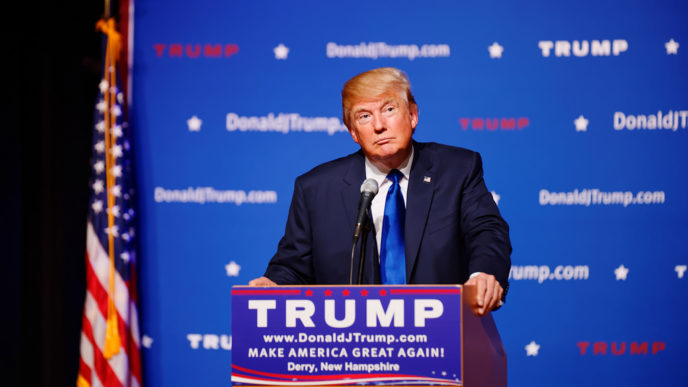
Trump to Follow Reagan Model in Federal Hiring Freeze

President-elect Donald Trump won’t be saying you’re fired, but he will be saying you’re froze as a one means of shrinking the bureaucracy.

Trump has pledged to reduce the federal workforce through attrition, and leaving positions unfilled through a hiring freeze.

It’s part of his first 100-day plan that he first laid out during his Oct. 22 speech in Gettysburg, Pennsylvania. He said the freeze would exempt military, public safety, and public health personnel.

The hiring freeze doesn’t offer many details, but would likely be similar to a hiring freeze by President Ronald Reagan in 1981.

“It’s smart for the Trump administration to do this in the first 100 days to let the bureaucracy know you’re there,” Donald Devine, who served as Reagan’s director of the Office of Personnel Management, told The Daily Signal. “Reagan did it and it lasted for a couple of months.”

Reagan’s first act after he was sworn in was signing a memorandum telling heads of executive departments to enforce a “strict freeze” on civilian federal employees. He reportedly was so eager, that he signed it before leaving the Capitol grounds.

“The purpose under Reagan was to reduce the workforce by 100,000 nondefense employees,” Devine said. “There were some firings, but it was 90 percent through attrition.”

President Jimmy Carter also had three hiring freezes, but were smaller in scale than Reagan’s freeze.

The hiring freeze is part of Trump’s six-point plan to reform Washington that includes initiatives to amend the Constitution to limit congressional terms, curbing regulation, and limiting the influence of lobbyists, all of which Trump said he would propose on his first day in office.

Some of these measures would require congressional action. However, a hiring freeze can be done through executive action.

The Daily Signal reached out to two federal unions, the American Federation of Government Employees and the National Federation of Federal Employees. Neither responded by the time of this posting.

Federal Managers Association President Renee Johnson expressed her opposition to the freeze in a post-election statement congratulating Trump. The organization represents 200,000 supervisors in the federal government.

“As a candidate, President-elect Trump proposed a government-wide hiring freeze on his first day on the job, as well as attrition,” Johnson said. “[Federal Managers Association] has opposed arbitrary attrition policies in the past and notes the severe negative impact that a reduction of resources has had on services at agencies across the federal government.”

A 1982 audit by the Government Accountability Office (then the General Accounting Office) asserted the Carter and Reagan hiring freezes failed to save money.

“Any potential savings produced by these freezes would be partially or completely offset by increasing overtime, contracting with private firms, or using other than full-time permanent employees,” the 1982 GAO report said. “Decreased debt and revenue collections also occurred as a result of hiring freezes.”

The Reagan hiring freeze was successful, as a package with other efforts, in reigning in the federal workforce, contends Robert Moffit, senior fellow for health policy studies at The Heritage Foundation and a former assistant director of congressional relations at OPM during the Reagan administration.

“The hiring freeze was successful under Reagan,” Moffit told The Daily Signal. “If the president’s priority is really to drain the swamp, personnel is the place to start. Inspectors general can be a tremendous asset to a new administration as they were during the Reagan administration.”

He said that after the Obama administration, there should be an investigation into personnel matters at the Department of Veterans Affairs, the Internal Revenue Service, the Justice Department, and the Department of Health and Human Services. He noted that the Reagan administration launched some department probes.

Moffit stressed an effective OPM will be key to reforming Washington.

“He will need a very strong OPM director that will hold civil service bureaucrats accountable, but will also protect the career bureaucrats from political appointees,” Moffit said.

Trump hasn’t announced an OPM director. However, he named Paul T. Conway, who worked in the George W. Bush administrations, to head up his OPM landing team as part of the transition. Conway served as chief of staff for Bush OPM Director Kay Coles James and was chief of staff to Labor Secretary Elaine L. Chao.

Moffit had no predictions or preference for the next OPM director.

“Trump needs to make sure the civil servants obey the new leaders on implementing policy. But there is a big threat to the civil service when the big thick red line is crossed,” Moffit said. “There has to be a clear division between political appointees and civil service employees.” (For more from the author of “Trump to Follow Reagan Model in Federal Hiring Freeze” please click HERE)

Follow Joe Miller on Twitter HERE and Facebook HERE.

Thanksgiving 1943: American Sailors Pull off a Miraculous Naval Victory

As we celebrate Thanksgiving with our families and loved ones, let us remember the American sailors who 73 years ago spent their Thanksgiving fighting a Japanese task force off Cape St. George in the Solomon Islands.

In what could be considered a Thanksgiving miracle, not a single American life was lost — something worth giving thanks for even today.

The Solomon Islands lie to the east of Papua New Guinea and were the site of numerous decisive battles during World War II, including Guadalcanal. On Nov. 1, 1943, the American 3rd Marine Division launched an invasion of Bougainville, some 250 miles southeast of a major Japanese military base at Rabaul, New Britain. The Japanese commanders at Rabaul dispatched a five-ship convoy — part of what was known as the Tokyo Express — with additional army troops to reinforce their air base on Buka Island, just north of Bougainville and evacuate their naval personnel. The convoy consisted of two destroyers and three destroyer-transports.

On the day before Thanksgiving, American Admiral William “Bull” Halsey ordered Captain Arleigh “31-Knot” Burke — who eventually became Admiral Burke, the Chief of Naval Operations — to stop the Japanese reinforcements, using Burke’s five-ship destroyer squadron to intercept the Japanese convoy. Burke had assumed command of 7th Fleet Destroyer Squadron 23 (nicknamed the “Little Beavers”) only a month before. Little Beaver was a reference to the sidekick of Red Ryder, a tough cowboy who was the hero of a very popular Western comic strip that had started in 1938.

When he received Halsey’s order, Burke was hundreds of miles away, taking on fuel at New Georgia Island. The destroyers that made up his small fleet — the Charles Ausburne (Burke’s ship), Claxton, Dyson, Converse, and Spence — had been in almost continuous battles for several months and were badly in need of maintenance.

Because of that, Burke’s ship was capable of only 31 knots, not its maximum speed of 38 knots. That resulted in a message from Admiral Halsey that gave Burke his nickname: “THIRTY-ONE KNOT BURKE GET ATHWART THE BUKA-RABUAL EVACUATION LINE … IF ENEMY CONTACTED YOU KNOW WHAT TO DO.”

Burke and his task force sped north to try to find and destroy the Japanese task force. They found what they were looking for not long after midnight on Thanksgiving Day, Nov. 25, 1943, when they encountered two of the Japanese destroyers, the Makinami and the Onami.

Long after the naval battle, Admiral Burke said that “there may have been blacker nights than Thanksgiving Eve, 1943, in the South Pacific, but none could have been more completely blacked out with regard to information of the enemy.” But Burke also said that it was “an ideal night for a nice, quiet torpedo attack.” Using their relatively new radar technology on the moonless, dark, overcast night, Burke’s squadron fired more than a dozen torpedoes and sank both ships, finishing off one of the Japanese destroyers with surface guns.

The chase was then on to catch the fleeing destroyer-transports. Burke’s task force caught up with the Yuguri, sinking it and damaging the Uzuki, although the Uzuki managed to escape with the last Japanese ship, the Amagiri. It was the Amagiri that had collided with PT-109, the boat skippered by Lt. John F. Kennedy, on August 1, 1943.

Trying to catch the fleeing Uzuki and the Amagiri, Burke went deep into Japanese-held territory — far beyond the reach of American air cover. With the onset of dawn and the possibility of massed attacks by Japanese aircraft, Burke wisely ended the chase and withdrew.

As they headed back to an American navy base in Purvis Bay, another 350 miles southeast of Bougainville, Thanksgiving was on everyone’s mind. Burke sent a message asking that Thanksgiving services be arranged for “all hands on arrival.”

Not a single American sailor was killed. Gunfire from the Japanese destroyers had all missed. A Japanese torpedo that hit one of the American destroyers didn’t explode. A group of torpedoes fired by the Japanese exploded in the wakes of Burke’s destroyers after he had a gut feeling that he should change position. And when Destroyer Squadron 23 withdrew, not a single plane from the four Japanese airbases in the vicinity of Rabaul (58 bombers and 145 fighters) attacked the task force. It was either luck or a series of miracles or a combination of both.

Burke’s strategy and tactics, and the performance of his sailors, led to the Naval War College calling the Battle of Cape St. George “an almost perfect surface action.” Bull Halsey called it the “Trafalgar of the Pacific.” It ended the Tokyo Express, the Japanese naval convoys that were used to supply Japanese land forces and attack Allied military efforts in the Solomon Islands.

Bull Halsey once famously said that “there are no great men; just great challenges that ordinary men, out of necessity, are forced by circumstances to meet.” The Battle of Cape St. George was one of those great challenges that, out of necessity, Captain Arleigh Burke and the hundreds of American sailors who served under him were forced to meet. They did so with the gallantry and can-do attitude that has long been a hallmark of the U.S. Navy. Burke himself told his sailors that they had been successful because of their “courage and valiant determination” and when they got safely to port, his “battle-weary crews [gave] thanks to God for their victory – and for their deliverance.”

So as you sit down to eat that great American bird (which Benjamin Franklin thought should be our national symbol instead of the eagle), with stuffing, mashed potatoes, cranberry relish, and whatever other goodies your family includes, give thanks for those American sailors who nearly eight decades ago spent Thanksgiving risking their lives to protect our nation in a fight with a merciless enemy. We owe them more than we can ever say. (For more from the author of “Thanksgiving 1943: American Sailors Pull off a Miraculous Naval Victory” please click HERE)

Follow Joe Miller on Twitter HERE and Facebook HERE.
Why Democrats Have De Facto Control of the Senate Unless Conservatives Step Up

Conservatives in the Senate are an endangered species. With Jeff Sessions vacating his seat, there will be a huge void in the House of Lords, which has fewer than 15 conservatives — and that is being charitable. After failing to elect a single, new conservative to the Senate this year, it is vital that the grassroots mobilize for 2018 and to fill any vacancies that might arise with cabinet picks.

The Senate is worse than you think. There is far from a 52-48 conservative majority.

Traditionally, it has been Senate Republicans who have sand-bagged every opportunity conservatives created in pursuit of limited government reforms. Senate RINOs, led by Bob Dole, turned the Senate into a graveyard for the Contract with America reforms pushed by Newt Gingrich and House Republicans, as was the case when Republicans controlled the Senate during the Reagan administration. They also dogged President Bush during the time when Republicans controlled all three branches, even on the conservative initiatives he proposed. If conservatives don’t think of a new game plan and prepare to win more primaries, here is what is confronting us in the House of Lords.

A Senate leadership that sides with Democrats on critical issues

As much as conservatives complain about House Republicans, they look like the Founding Fathers compared with their Senate counterparts. For a cursory glance of what our policies will be confronted with in the Senate, take a look at this chart of Senate leaders and likely chairmen of key policymaking committees for the upcoming session.

senate-scorecard

I already analyzed Orrin Hatch, Chuck Grassley, John McCain, and Thad Cochran before the election in my piece on the four fossils that are using the Senate as a retirement home. But take a look at some of the other scores here.

Lamar Alexander will oversee any critical reforms on health care and education, yet he has an astounding 15% Liberty Score®, lower than some Democrats! Lamar has already signaled that he doesn’t want to repeal fully the costly Obamacare coverage mandates that are solely responsible for the skyrocketing premiums.

What about energy? We have Lisa Murkowski as the quarterback on all issues pertaining to energy. She has a 20% Liberty Score® and has bought into the global warming agenda.

What about military and foreign policy? Bob Corker and John McCain will continue to chair the Foreign Relations and Armed Services committees, respectively. They have been a part of the problem in misdirection on foreign policy for years.

Even those with better liberty scores, such as Mike Crapo, are problematic. Despite his slightly better voting record than current banking chair Richard Shelby, Crapo is actually a step down on this issue. While serving as one of the top members on the Senate Banking Committee for years, Crapo has been reluctant to phase out federal involvement in housing policy and is regarded as only a lukewarm opponent of the Dodd-Frank regulations, much less so than Shelby.

What about spending cuts? Good luck getting those past appropriations chairman Cochran, who is indistinguishable from a Democrat in his legacy of federal largesse.

Transportation and infrastructure? This is an issue for which conservatives will have to battle the administration in order to devolve spending to the states instead of expanding it on a federal level. Some might be heartened that James Inhofe, a big proponent of federal control of transportation, is termed out as chairman of the committee. But his likely successor, John Barrasso is just as bad.

Reforming food stamps and farm subsidies? Over the dead body of big-spender, Pat Roberts.

For conservatives looking for change in these critical spheres of policy, wherever they turn they will meet stiff resistance. Each one of these chairmen either fundamentally don’t share our values on the issues within their respective jurisdictions or they value working with the Left more than with conservatives.

The landscape for 2018

The 2018 Senate map is a dream landscape for Republicans. They will defend only eight seats, while Democrats must defend 25. Furthermore, almost all of the GOP incumbents are in solid Republican states — with Dean Heller (RINO-Nev) being the only legitimately vulnerable seat. On the other hand, Democrats have an endless number of potential vulnerabilities.

Seven states should be vulnerable right off the bat either due to Trump carrying those states by a substantial margin or because of the dynamics of state politics: Indiana (Joe Donnelly), North Dakota (Heidi Heitkamp), Missouri (Claire McCaskill), West Virginia (Joe Manchin), Montana (Jon Tester), Ohio (Sherrod Brown), and Florida (Bill Nelson).

Then there are the three traditionally blue-leaning states that Trump was able to narrowly win and are exceedingly more red during mid-term elections: Pennsylvania (Bob Casey), Michigan (Debbie Stabenow), and Wisconsin (Tammy Baldwin). In addition, there are states like Minnesota (Amy Klobuchar) and Maine (Angus King), where Trump lost narrowly but could easily shift in a midterm with lower Democrat base turnout.

In total, Republicans could easily make a run at a 60-seat super-majority in the Senate. But what’s the point of a GOP super-majority if we continue the trajectory of automatically nominating Mitch McConnell yes-men for those races? Republicans could win 70-80 seats in the Senate and it will never be enough because we will continue filling those seats with Democrat-lite politicians. The party establishment is already trying to recruit moderate House candidates to challenge these vulnerable Democrats. Achieving a 60-seat GOP majority with just 15 conservatives in the Senate will get us nowhere.

In addition, it would be a shame for conservatives to allow RINOs such as Jeff Flake, Roger Wicker, Bob Corker, and Orrin Hatch (assuming he breaks his pledge and runs again) to get a free pass in their primaries. Ultimately, I believe we need to push state parties and legislatures to change election law and transform Senate and House primaries into representative conventions to give the grassroots an equal footing against the K Street interests. But until that is accomplished, conservatives must begin recruiting candidates now.

During the Constitutional Convention, in explaining the unique role of the Senate, James Madison predicted that the upper chamber would serve as a “necessary fence” against the “fickleness and passion” of the House of Representatives. That was at a time when they liked the government they had conceived and wanted to prevent demagogues from playing on people’s impetuous impulses to alter the government they created.

After 100 years of post-constitutionalism, however, our government as it was originally adopted is unrecognizable. The Senate, therefore, is now being used as a fence against the requisite passion necessary to restore our republic. We need more men of passion, lest the “Senate saucer” only be used to cool conservative tea and insulate the steaming pile of progressive bile we seek to remove. (For more from the author of “Why Democrats Have De Facto Control of the Senate Unless Conservatives Step Up” please click HERE)

Follow Joe Miller on Twitter HERE and Facebook HERE.

Another Obama DHS Screw Up: 20,000 Green Cards Handed out Like Candy

In the latest instance of the Obama administration’s neglect and indifference toward America’s immigration problem, around 20,000 green cards have been wrongly distributed or contained false information, according to the latest DHS inspector general report.

“[T]he problem was far worse than originally thought,” reads a press release accompanying the 43-page report from the office of the inspector general about the flawed U.S. Customs and Immigrations Services system. The DHS report highlights that at least 19,000 green cards were issued with either incorrect information or sent in duplicate, while the USCIS also received over 200,000 complaints that cards had either been sent to the wrong address or not received at all.

Furthermore, the OIG report found that over 2,400 immigrants who had only been cleared for two-year conditional residence status were inadvertently issued cards that don’t expire for 10 years.

“It appears that thousands of Green Cards have simply gone missing. In the wrong hands, Green Cards may enable terrorists, criminals, and undocumented aliens to remain in the United States,” states Inspector General John Roth in the release. “It is vital that USCIS ensure better tools and procedures are in place to mitigate such risks.”

This comes just a few weeks after the OIG revealed that the DHS had erroneously granted citizenship to at least 1,800 individuals. Almost half of those wrongly permitted to stay indefinitely (858) were from “special interest countries” (countries prone to producing a disproportionate amount of terrorists) and already slated for deportation.

As Daniel Horowitz explained elsewhere at Conservative Review in September:

Remember, many immigrants who would be eligible for citizenship initially came here before the now-defunct Immigration and Naturalization Service was rolled into DHS. They are a part of the 148,000 fingerprint records that were never transferred over into DHS databases, compromising the ability of United States Citizenship and Immigration Services (USCIS) to monitor which aliens were ordered deported when approving applications for citizenship.

So long as those finger print records have not been digitized, I.G. Roth says in a separate report regarding the earlier incident, U.S. Customs and Immigration Services “risks making naturalization decision without complete information and, as a result, naturalizing more individuals who may be ineligible for citizenship or who may be trying to obtain U.S. citizenship fraudulently.”

What both of these incidents point to is how the sovereignty of the American people, expressed in our congressionally passed immigration laws, is being skirted and undermined by a federal government agency that has created a de-facto pathway to citizenship for thousands of people, either by malice or sheer negligence.

Compare that with the Department of Justice’s recent decision to prosecute Sherriff Joe Arpaio of Maricopa County, Ariz., for simply enforcing federal immigration law with too much zeal in violating an injunction that requires the federal government to address state inquiries on an individual’s immigration status.

The nature of the case is unprecedented, according to the Arizona Republic:

Legal experts say the judge and attorneys have little historical guidance moving forward with the case.

“As rare as it is to have a federal judge refer the head of a law-enforcement agency for prosecution, it is even rarer that the Department of Justice would pick up that gauntlet and move forward with the charge,” said Paul Charlton, a former U.S. attorney for the District of Arizona. “It’s unheard of.”

This is the absurdity of the Obama administration and its immigration system, folks. Thanks to one department in the administration, Sheriff Arpaio could face up to six months in jail for following the will of the American people — manifest in federal law — while another federal agency subverts that will via negligence with seemingly no consequence whatsoever.

But there is hope from all of this madness: It’ll all be over in January … hopefully. (For more from the author of “Another Obama DHS Screw Up: 20,000 Green Cards Handed out Like Candy” please click HERE)

Follow Joe Miller on Twitter HERE and Facebook HERE.
Who’s Funding the Rioting Against Trump?

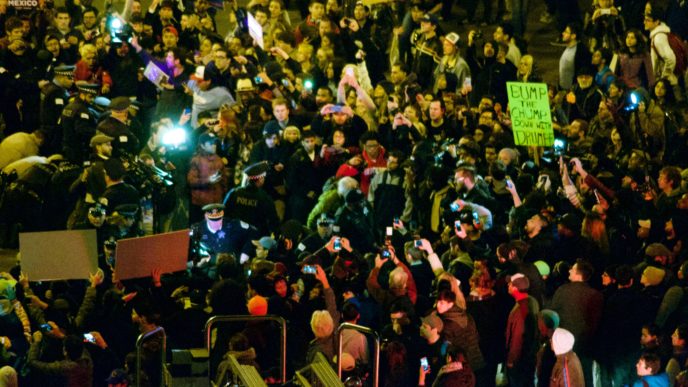
As the violent post-election riots continue, many observers are becoming aware that much of the rioting is the work of paid protesters who have been instructed to use violence. Retired Army Gen. Michael Flynn, Donald Trump’s national security advisor, told a gathering of Young America’s Foundation the demonstrators are “paid anarchists.”

Both Donald Trump and Senator Ben Sasse (R-Neb.) have publicly criticized the paid rioting. As the word is getting out, Twitter hashtags of #paidprotest and #fakeprotest have been started, identifying the operations.

The left has been paying “AstroTurf” activists for years — “astroturf” movements seem to be natural grassroots movements but were actually created and funded by others for propaganda. Project Veritas Action, the organization of conservative undercover videographer James O’Keefe, filmed Democratic operative Scott Foval discussing paying people to engage in violence at Trump campaign events. Several protesters admitted they were paid $16 an hour to demonstrate against Trump.

The Billionaire Funders

Billionaires are funding left-wing groups organizing the protests. A strategy document was uncovered in the hacked and leaked emails of Hillary Clinton’s campaign manager John Podesta. Sent from his think-tank Center for American Progress and shared with MoveOn.org, it asked leftist billionaires George and Jonathan Soros, Peter and Jonathan Lewis, Herb and Marion Sandler, Steve Bing, and John Sperling to fund “grassroots” protest efforts. Jonathan Lewis, who inherited his fortune from his father Peter Lewis, the founder of Progressive Insurance, agreed to fund the protests this year.

The lefty organizations place ads on Craigslist recruiting activists to agitate in large cities. A typical ads says, “STOP TRUMP — up to $1500/week. Hiring immediately! Call Today Start tomorrow! $15-$18 hourly rate + bonus + overtime up to 77 hours per week!”

One of the groups placing the ads is Community Outreach Group, a Planned Parenthood affiliate. Planned Parenthood received $553.7 million dollars in tax dollars last year, so taxpayers may be indirectly funding the protesters. Left-wing billionaire George Soros and his family are top contributors to Planned Parenthood. Soros himself contributed $1.5 million to the organization this election cycle.

Moveon.org placed an ad on Craigslist in New York hiring anti-Trump activists for $18 an hour. The ad said, “We only want protesters under the age of 30. … We prefer minorities.” The organization is not only funding the demonstrators but creating a fake impression of who they are. Moveon.org is also funded by Soros.

Another ad is from the Fund for the Public Interest, the largest fundraiser for progressive causes in the United States. Soros funds many of the umbrella organizations underneath it. The Progressive Unity Fund provides the financial backing for Act Now To Stop War & End Racism (ANSWER) Coalition, which started much of the rioting after the election.

What the Left Wants

The left is trying to cover its tracks. Two leftist “fake news debunking sites” are trying to distract people from investigating the paid protesters by citing a fake article about a paid protester as evidence it’s not happening. In fact, the fake article was written by a man who deliberately tried to fool Republicans into sharing incorrect news in order to help Clinton.

However, the organizations behind the rioting clearly indicate they intend to continue the demonstrations. They are planning to demonstrate at Trump’s inauguration January 20.

It is not clear what the lefty organizations seek to achieve with the protests. Trump won the election fairly and it will be extremely difficult to persuade enough electors to change their votes to Clinton. There are rumors that the left wants to generate dislike for Trump in order to start impeachment proceedings after he enters office, but with a Republican-controlled House and Senate that is equally unlikely.

Their goal must be to artificially create the appearance of a mass dislike for Trump, in order to influence others and generally undermine his administration. With the Republican advantage in the Senate so small, the left has to get only three or four senators to start opposing Trump to change the balance of power in the Senate. They may also be preparing for the mid-term elections, where Democrats hope to regain seats in Congress by capitalizing on what they hope will be Trump’s unpopularity. (For more from the author of “Who’s Funding the Rioting Against Trump?” please click HERE)

Follow Joe Miller on Twitter HERE and Facebook HERE.
Trump Dismisses Notion of Offering Senator a Spot in Cabinet – ‘No Thank You’

New Hampshire Sen. Kelly Ayotte, who has been one of the most outspoken Republicans against President-elect Donald Trump, will not have to worry about serving on Trump’s Cabinet.

When speaking with New York Times reporters Tuesday, Trump made it clear that he’s not interested.

Trump reportedly said Ayotte “would love a job in the administration.”

When asked by reporters if the senator could potentially have a spot in his Cabinet, the president-elect replied, “No thank you.”

Earlier this month, Ayotte lost her re-election bid to New Hampshire Gov. Maggie Hassan, a Democrat.

Ayotte withdrew her support for Trump in October after the release of a 2005 tape in which the New York businessman made lewd comments about women.

“I wanted to be able to support my party’s nominee, chosen by the people, because I feel strongly that we need a change in direction for our country,” she said in a statement. “However, I’m a mom and an American first, and I cannot and will not support a candidate for President who brags about degrading and assaulting women.”

Trump also had harsh words for Rep. Joe Heck, R-Nev., who also withdrew his support for Trump after the tape was released.

“I can no longer look past the pattern of behavior and comments that have been made by Donald Trump. … My wife, my daughters, my mom, my sister and all women deserve better,” Heck said in October.

Like Ayotte, Heck lost his bid for re-election, falling to Democrat Catherine Cortez Masto.

In his time with reporters Tuesday, several of whom were live tweeting highlights of the meeting, Trump said he noticed a shift among some prominent Republicans who had been critical of him before his Nov. 8 victory.

Conservative columnist George Will had suggested Trump choose Ayotte as his attorney general. (For more from the author of “Trump Dismisses Notion of Offering Senator a Spot in Cabinet – ‘No Thank You'” please click HERE)

Follow Joe Miller on Twitter HERE and Facebook HERE.