
Bioethicists Want to Purge Christian Doctors

Two academic bioethicists want to bar Christians and those who hold other traditional religious beliefs from practicing medicine, and even from attending medical school. The pair fear, as the National Post summarizes, doctors might “impose their values on patients.”

Of course, it is impossible — not unlikely: impossible — for doctors not to impose their values on patients. Even using a tongue depressor on a patient presupposes certain moral values. (Presumably the doctor is doing this to aid in his goal of healing the patient, a moral value.) Since morality infuses all actions, the only real question is this: what moral values should doctors hold?

Julian Savulescu and Udo Schuklenk (I will refer to them as “the SS” hereafter), in their paper “Doctors Have No Right to Refuse Medical Assistance in Dying, Abortion or Contraception” in the journal Bioethics, argue that conscientious objectors not be allowed to train for or to practice medicine. “The problem with conscientious objection,” they write, “is that it has been freely accommodated, if not encouraged, for far too long.”

Conscientious Objection

In their definition, conscientious objectors are those medical professionals who refuse to kill or to disperse contraception for traditional religious reasons. Throughout their paper the SS assume, but never argue, it is a moral good that doctors kill patients when patients demand to be killed, or that doctors kill the lives inside would-be mothers when requested.

“Enlightened, progressive secular countries like Sweden, have labour laws in line with our arguments. Sweden provides no legal right of employees to conscientious objection.” To the SS, the more enlightened and progressive a country is, in effect, the farther it is from Christianity.

The SS say anti-conscientious objection laws have “not had a detrimental effect on applications to these countries’ medical schools.” This must be false. If these laws have been applied, then they have prevented faithful Christians and other religious from (openly) entering these schools. If this turning-away hasn’t happened to many, it proves only how quickly Christianity has faded in these countries.

Religion in Medicine

“We don’t know of any evidence that those with religious beliefs make better medical doctors,” say the SS. This is proof the SS aren’t up on medical history. If it weren’t for Christianity, the tradition of hospitals, nursing, and even doctoring would be far different, notably far less prevalent. They say, “We are deeply sceptical that holding religious beliefs makes one better at the practice of medicine.” But the opposite of these religious beliefs lead to killing patients and the lives inside women, as opposed to healing and preventing death. In their scheme, medicine is no longer what is best for the patient or mankind, but what is most expedient.

They assert contraception is a “social good,” “one of the greatest and most valuable of human achievements.” This is false. It is by definition an anti-human achievement. Where contraception has been adopted, birth rates have plummeted, often below replacement levels. And there are many other detrimental effects (many are listed here).

Who Decides Right and Wrong?

The SS continue with their reasoning:

If society thinks contraception, abortion and assistance in dying are important, it should select people prepared to do them, not people whose values preclude them from participating. Equally, people not prepared to participate in such expected courses of action should not join professions tasked by society with the provision of such services.

That “tasked by society” bit comes dangerously close to arguing that morality can be decided by vote. If a society decides it wants a thing, then that thing is “right.” But then the SS also admit this kind of “ethical relativism is practically ethical nihilism. If one accepted ethical relativism, the holocaust was, from the Nazi’s perspective, right. It is just that today we have a different set of values from the Nazis.” This is true. Ethical relativism is ethical nihilism. And since this is so, theirs is a direct admission that we need seek for morals truths which transcend societies and times.

That truth can be found in the natural law. There is a lot more too it of course, but very briefly, the natural law states that that which goes against human nature is wrong. Impeding the results of sexual intercourse, and the direct killing of innocent human lives are antithetical to human nature, and they are therefore immoral.

Rights Don’t Trump Wrongs

It is important to understand that when doctors have a monopoly over a procedure like surgery, it is not a luxury that they can choose to give or withhold on personal grounds. There are criteria around justice, autonomy and interests that determine whether it is provided. When contraception, abortion or euthanasia are made legal and they become part and parcel of medical services over which doctors have monopoly power, patients do acquire a right to them.

It is an absurd argument that because a thing is legal that therefore people have a “right” to it. Driving is legal; do people therefore have a right to free cars?

Excepting contractual agreements and the like, it is just not true that a doctor is, as the SS say, ethically bound to provide any service asked of him.

Of course, potential employers (like hospitals) may choose not to hire doctors who refuse to kill or dispense contraception. If these acts are legal, this is the employers’ right. And given that legality, it does follow that certain medical schools may also bar entrants who do not promise to abide by that school’s ethics.

The SS have much of the law on their side. But that only demonstrates the well known truth that what is legal is not always what is right. So far, conscientious objection is still legal. Yet the SS gleefully look forward to a time when faithful Christians, Jews, Muslims, and other conscientious objectors are barred from practicing medicine. If we aren’t vigilant, they’ll get their wish. (For more from the author of “Bioethicists Want to Purge Christian Doctors” please click HERE)

Follow Joe Miller on Twitter HERE and Facebook HERE.

Threatening Electors Violates Federal Law. So Why Isn’t Loretta Lynch Doing Anything About It?

Before Donald Trump’s stunning victory on November 8, liberals called for acceptance of election results. But since the election didn’t go as they’d planned, some have taken to harassing and intimidating electors in an attempt to change the election results. Some of these threats may violate federal law, yet the Justice Department acts strangely uninterested in investigating.

Following the election, a coalition of liberal activist groups launched #NotMyPresident Alliance, an organization dedicated to fighting the inauguration of President-elect Trump. As part of that effort, #NotMyPresident distributed personal contact information — including telephone numbers and addresses — of electors in states that voted Republican.
According to Buzzfeed, Maddie Deming, a strategist for the group, said they wanted to put electors in the spotlight and “to hold them accountable for their decision.” Whatever the intent, the initiative has produced a deluge of threats.

Electors across the country report receiving not only a flood of emails and phone calls to change their vote to Hillary Clinton but death threats as well. Alex Kim, a Texas Republican elector, reported that he and other electors had “receiv[ed] thousands of emails a day” urging them to vote for Clinton, including threats of harm and death. Arizona’s electors have reported harassment as well.

Michael Banerian, a Michigan GOP elector, received some of the most extreme threats according to The Detroit News. One email, Banerian said, talked about “shoving a gun in my mouth and blowing my brains out.” Another told him to “do society a favor and throw yourself in front of a bus.”

In Georgia and Idaho, the threats have been so extreme that the secretaries of state both released statements calling for the harassment to end. But the federal law enforcement agency that should be acting to stop these threats — the U.S. Department of Justice — has not done a thing.

Section 11b of the Voting Rights Act (52 U.S.C. §10307) makes it a crime for anyone to “intimidate, threaten, or coerce, or attempt to intimidate, threaten, or coerce any person for voting or attempting to vote.” While this has been applied in the past to ordinary, everyday voters in federal elections, the language does not limit it only to such voters. Electors who are casting their votes for president and vice president are also protected by Section 11b since the Electoral College is an essential part of the federal voting process. This is supported by Section 14(c) of the VRA, which says that “voting” includes “all action necessary to make a vote effective in any primary, special, or general election.” Obviously, the votes cast by Americans on Nov. 8 will not be effective if the electors they chose are intimidated from casting their votes in the Electoral College.

Federal law (3 U.S.C. §7) requires electors to cast their votes on the first Monday after the second Wednesday of December, which this year is Dec. 19. These are recorded as “certificates of vote,” signed, sealed, and delivered by December 28 to the president of the Senate and the archivist of the United States (3 U.S.C. §11). Congress is required to meet on Jan. 6, 2017 in joint session to count the Electoral College votes (3 U.S.C. §15).

The Dec. 19 deadline for the electors to cast their votes is less than three weeks away, which makes it essential that the Justice Department act immediately — and very publicly — to deter and stop these threats and this intimidation. Yet the website of the Justice Department’s Office of Public Affairs contains no announcement of an investigation into these threats. Moreover, we can be pretty certain that if investigators had actually contacted any of the threatened electors, it would have been reported in the press by now. The obvious conclusion is that the Justice Department has done nothing to enforce Section 11b against those who have tried to intimidate and who have threatened electors with bodily harm if they vote for Donald Trump.

Unfortunately, that’s not surprising. After nearly eight years of operation, the Obama administration has yet to file a single Section 11b case. Indeed, shortly after Mr. Obama entered the Oval Office, his Justice Department essentially dismissed almost all of a pending, high-profile Section 11b case concerning voter intimidation by the New Black Panther Party in Philadelphia. Under Attorney General Eric Holder, the Civil Rights Division had the open-and-shut case dismissed because its “progressive” new leaders did not believe the Voting Rights Act should be used against black defendants to protect white voters. This radical position ignores the fact that the law is race-neutral and protects all voters.

Seriously, if Hillary Clinton had won and Donald Trump supporters were threatening Clinton electors with bodily injury, does anyone doubt that the Justice Department would have acted immediately to enforce Section 11b?

Making threats and attempting to intimidate electors is as anti-democratic as it gets. The U.S. Justice Department, which is charged with protecting all voters, should act to quash this outrage immediately. Failure to do so will just be further evidence that this Justice Department does not believe in equal protection under the law. (For more from the author of “Threatening Electors Violates Federal Law. So Why Isn’t Loretta Lynch Doing Anything About It?” please click HERE)

Follow Joe Miller on Twitter HERE and Facebook HERE.

6 Interesting Facts About Elaine Chao, Trump’s Pick for Transportation Secretary

President-elect Donald Trump tapped Elaine Chao to head the U.S. Department of Transportation, his transition team announced Tuesday.

“Secretary Chao’s extensive record of strong leadership and her expertise are invaluable assets in our mission to rebuild our infrastructure in a fiscally responsible manner,” Trump said in a statement. “She has an amazing life story and has helped countless Americans in her public service career.”

Chao is an experienced administration official, having served as labor secretary under President George W. Bush and deputy secretary of transportation under President George H.W. Bush.

In the new Trump administration, Chao stands to serve an influential role, as the president-elect made investing in infrastructure and reducing or eliminating “burdensome regulations” a key component in his campaign.

“The President-elect has outlined a clear vision to transform our country’s infrastructure, accelerate economic growth and productivity, and create good paying jobs across the country,” said Chao in a statement. “I am honored to be nominated by the President-elect to serve my beloved country as Transportation Secretary.”

Trump’s ambitious infrastructure policy agenda includes transforming the nation’s roads, bridges, tunnels, airports, railroads, ports, waterways, and pipelines “in the proud tradition of President Dwight D. Eisenhower,” according to his website.

If the Senate confirms Chao, she will succeed Anthony Foxx, who is the second official to serve in the position under President Barack Obama.

Here are six things to know about Trump’s pick for transportation secretary.

1) She comes from a humble background.

In 1961, at just 8 years old, Chao arrived in the United States on a freight ship from Taiwan. Her family was fleeing the communist revolution on mainland China. At the time, she spoke no English.

According to her biography, the experience of transitioning to a new country “motivated her to dedicate most of her professional life to ensuring that all people have the opportunity to build better lives.”

Chao graduated from Mount Holyoke College in Massachusetts before receiving her MBA from the Harvard Business School.

2) She was the first Asian-American woman to be appointed to a president’s Cabinet.

Chao served as secretary of labor under George W. Bush from 2001 to 2009. In this position, she was “the longest tenured secretary of labor since World War II, and the only member of President Bush’s original Cabinet to have served the entire eight years of his administration.”

Before serving under George W. Bush, his father, President George H.W. Bush, tapped Chao to run the Peace Corps. A year later, she headed the nonprofit United Way of America, which faced controversy after its former president was accused of abusing charity funds.

Under the first President Bush, Chao also served as deputy transportation secretary.

According to The New York Times, she became so popular among Chinese-American families for holding these posts that they would “wait to meet her in airports.”

3) She’s worked with a variety of D.C.-based think tanks.

In June, Chao became a distinguished fellow at the Hudson Institute, researching areas of “employment, labor mobility, international trade, and U.S. competitiveness in a worldwide economy.”

Prior to joining Hudson, she served as a distinguished fellow at The Heritage Foundation, which is the parent organization of The Daily Signal, for two stints from 1996-2000 and 2009-2016. At Heritage, she focused on jobs and the economy, trade, and competitiveness issues.

4) She’s been an influential force behind her husband, Senate Majority Leader Mitch McConnell.

Although Chao has never herself run for elected office, she has put in her fair share of campaigning for her husband, Sen. Mitch McConnell, the GOP leader from Kentucky.

During his 2014 re-election bid against the well-funded Alison Lundergan Grimes, “Chao headlined 50 of her own events and attended hundreds more with and on behalf of McConnell,” according to Time.

Her husband isn’t afraid to admit her influence: “The biggest asset I have by far is the only Kentucky woman who served in a president’s Cabinet, my wife, Elaine Chao,” McConnell said at the annual Fancy Farm GOP political picnic in August, according to Time.

5) She backed Donald Trump for president.

Unlike her former boss, Chao joined dozens of former George W. Bush administration officials in September in voicing their support for Republican presidential nominee Donald Trump.

Chao, along with former Treasury Secretary John Snow, former U.S. Attorney General John Ashcroft, and former Health and Human Services Secretary Tommy Thompson—among others—were part of a coalition of Bush alumni supportive of Trump, according to Reuters.

6) She’s the second person to head the departments of Transportation and Labor, and be married to the Senate majority leader.

From Alex Burns of The New York Times:

Former Sen. Elizabeth Dole, wife of former Senate Majority Leader Bob Dole, led the Department of Transportation under President Ronald Reagan and the Department of Labor under the elder Bush. (For more from the author of “6 Interesting Facts About Elaine Chao, Trump’s Pick for Transportation Secretary” please click HERE)

Follow Joe Miller on Twitter HERE and Facebook HERE.

Trump Chooses Conservative Georgia Congressman, a Harsh Critic of Obamacare, to Be Health Secretary

President-elect Donald Trump plans to select House Budget Committee Chairman Tom Price (R-Ga.) to be his Health and Human Services secretary, two people familiar with the decision said late Monday.

In picking Price, Trump tapped an arch-conservative lawmaker and leading critic of the Affordable Care Act to lead his push to roll back President Obama’s signature health law.

Price, a six-term congressman from suburban Atlanta, has never held an executive position comparable to leading the federal Department of Health and Human Services, a behemoth that includes the Food and Drug Administration, the Centers for Disease Control and Prevention, the National Institutes of Health and the agency overseeing Medicare and Medicaid.

Three of the four previous Health and Human Services secretaries were former governors. Price, an orthopedic surgeon, would be the first physician to serve as the department’s secretary since Dr. Louis Sullivan, who held the post from 1989 to 1993 under President George H.W. Bush. (Read more from “Trump Chooses Conservative Georgia Congressman, a Harsh Critic of Obamacare, to Be Health Secretary” HERE)

Follow Joe Miller on Twitter HERE and Facebook HERE.

Report: Federal Government Blows $247 Billion on ‘Wasteful and Inefficient Spending’

The federal government has wasted at least $247 billion in domestic and overseas spending, says a new report. In his second annual “Federal Fumbles” report, Sen. James Lankford (R-OK) highlighted 100 examples of “wasteful and inefficient spending” and the threat of an almost $20 trillion national debt.

The federal government, which announced a deficit of over $500 billion in the 2016 fiscal year, spent $223 billion on interest payments alone in 2015. Even if the nation had a $50 billion budget surplus, “it would still take 460 years to pay off our national debt,” according to Lankford’s report.

In tracking down examples of federal wastefulness, “we are really dealing with four different main areas,” the senator explained in the press conference releasing the report. The areas are “grants that need oversight, regulations and regulators that need oversight, agency bureaucracy and inefficiency, and then a lack of coordination between agencies.”

Federal Misspending

Below are several examples of the report’s highlights of federal misspending:

$180,000 has been spent on an outside group’s effort to tag and count sea ducks.

Nearly $200,000 to hire a historian for three years for the Smithsonian to examine the history of American beer brewing

$18 million to help fund organic farms. Organic farms are part of a $39 billion industry as of 2014.

In 2014, the Federal Bureau of Prisons spent $143 million more providing health care to prisoners than it would have if it had followed the practices of other agencies, by paying contractors the reimbursement rates mandated by Medicare. As the report notes, while taking care of prisoners may be innately more expensive than health care provided by other agencies, the rates charged at some locations, as found by the Government Accountability Office, are much higher than necessary.

The State Department spent one million dollars to bring movie producers and others from Jordan, Turkey and other nations to study American filmmakers and then use their new skills to benefit other countries.

More than $500,000 went to digging up graves and religious sites to study the transition of churches in the late seventh through 12th centuries. In Iceland.

In Afghanistan, a $48.7 million contract from the U.S. Air Force was meant to build a new headquarters for the Afghan Ministry of Defense. Due for completion in 2010, the project ran five years late and $106 million over-budget.

The report also highlighted improvements since the first “Fumbles” report was issued. Among other successes, a tax credit is being phased out, and the Social Security Administration has modified processes that could save millions in the disability fund. (For more from the author of “Report: Federal Government Blows $247 Billion on ‘Wasteful and Inefficient Spending'” please click HERE)

Follow Joe Miller on Twitter HERE and Facebook HERE.

Liberal Media Hacks Say Challenging Election Results Undermines Democracy… Unless You’re Hillary Clinton

Before the election, the media was in hysterics over the possibility that Donald Trump might not concede defeat if Hillary Clinton was declared the winner. Now that the election is over, and Trump won, the media’s reaction to Hillary Clinton actually challenging the results is … tepid? At best?

During the third and final presidential debate, amid concerns that voter fraud would become an issue, Donald Trump said that he would accept the results of the election after taking a look at it “at the time.”

As Trump told moderator Chris Wallace in October:

I will look at it at the time. I’m not looking at anything now. I’ll look at it at the time.

What I’ve seen — what I’ve seen is so bad. First of all, the media is so dishonest and so corrupt, and the pile-on is so amazing. The New York Times actually wrote an article about it, but they don’t even care. It’s so dishonest. And they’ve poisoned the mind of the voters.

But unfortunately for them, I think the voters are seeing through it. I think they’re going to see through it. We’ll find out on November 8th. But I think they’re going to see through it.

Trump was simply reserving his legal right to challenge the election if there was suspicion of voter fraud. Hillary Clinton referred to Trump’s comments as “horrifying.”

And, taking their cue from the Democratic nominee, the media reaction to Trump’s statements was apoplectic.

The New York Times: Donald Trump Won’t Say if He’ll Accept Result of Election

CNN: Donald Trump refuses to say whether he’ll accept election results

Huffington Post: Trump’s Shocking Answer On Respecting Election Results Is The Only Debate Moment That Matters

The Huffington Post was particularly startled. The very day before the election, Julia Craven wrote an article recounting the history of a contested presidential election in 1876, noting that “civil unrest” and “fears of a second Civil War” were among the concerns of the American people during that time.

Forecasting a situation where Trump lost and refused to concede to Hillary Clinton, Craven anticipated 1) The legitimacy of the president would be undermined; 2) violence from Trump supporters would break out; and 3) Trump’s refusing to concede would undermine the integrity of “democracy itself.”

Now, it is important to note two of those things have happened since Trump’s victory. First, the legitimacy of Trump’s presidency is being undermined by large groups of malcontents parading around, flipping off buildings and protesting and tweeting #NotMyPresident. Secondly, there have been incidents of violence after the election … from liberals and Hillary Clinton supporters.

As for the liberal media’s concern over an election challenge “threatening to upend a fundamental pillar of American democracy,” that was then, it seems.

Now that the Clinton campaign is jumping on the Green Party bandwagon to challenge the results after wacko-liberal Jill Stein raised millions of dollars for a recount in Wisconsin, the silence from the editorial pages of America’s major newspapers is deafening.

Check out this reporting, and compare it to the headlines above:

ABC: Hillary Clinton’s Campaign Joins Wisconsin Recount

Washington Post: Clinton campaign will participate in Wisconsin recount, with an eye on ‘outside interference,’ lawyer says

New York Times: Hillary Clinton’s Team to Join Wisconsin Recount Pushed by Jill Stein

CNN: Clinton to join recount that Trump calls ‘scam’

Politico: Trump rages as Clinton helps recount

And then there’s the Huffington Post, who ran this milquetoast headline:

“Hillary Clinton’s Campaign Says It Will Participate In Wisconsin Recount”

Now, let’s be very clear about something: The Clinton campaign is entitled to challenge the results of the election if they believe something is amiss; that is their legal right. (Just as the Trump campaign had the right to reserve concession if they believed incidents of fraud manipulated the results.)

The issue is not with calls for a recount — it is with a biased liberal media disproportionately applying their scorn and hysterics because they’re playing team sports for the Democrats. (For more from the author of “Liberal Media Hacks Say Challenging Election Results Undermines Democracy … Unless You’re Hillary Clinton” please click HERE)

Follow Joe Miller on Twitter HERE and Facebook HERE.
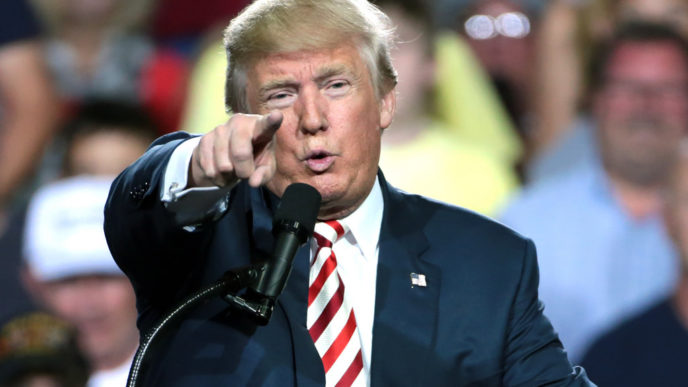
People Voted for a Conservative Court: What Court Will Trump Give Them?

As we react, and overreact, to every report regarding who might serve in the forthcoming Trump administration, let us make sure we keep our eye on the prize. For there is one decision to come soon after the inauguration that I believe could very well be the barometer for his presidency.

That decision will be who Trump nominates to succeed Antonin Scalia on the U.S. Supreme Court.
This is the one decision the Trump presidency cannot get wrong — even slightly. This has to be a hundred percenter. A no doubter. This is no time for a John “Obamacare” Roberts or an Anthony “Rainbow Jihad” Kennedy redux.

This is the replacement for Scalia we’re talking about, so this needs to be someone whose judicial philosophy is embedded like the Rock of Gibraltar in his or her record. No guesswork, just someone with the sort of bedrock originalism Scalia was known for, and young enough to helm the spot for a couple of decades at least.

Nothing less than the ideological balance of the court is at stake in this decision. While I’ve spent much of my career fighting judicial oligarchy masquerading as stare decisis — and I remind everyone reading this that in no way, shape, or form did the Founding Fathers intend for the rule of law to hinge on one SCOTUS appointment — I also can’t live in the land of make-believe.

As the great prophet Bill Belicheck likes to say, “It is what it is.” While the courts shouldn’t (and don’t really) have this much power, we sadly behave as if they do.

Which explains why so many conservatives — who said after 2008 and 2012 they were done plugging their noses for Republican presidential nominees who didn’t seem to be with us — did it once more in droves in 2016. Exit polls showed more than one in five voters said Supreme Court appointments were the most important factor in how they voted for president. And among those voters, Trump bested Hillary by a whopping 17 points.

So now is a time to take a trip to the way-back machine. This is from Nov. 10, 2003:

A battle between two Christian conservative heroes is shaping up in Alabama. On Nov.10, attorney general Bill Pryor (R) asked the Alabama Court of the Judiciary to remove the state’s Chief Justice Roy Moore from office. Moore, long an outspoken advocate for displaying the Ten Commandments on government property, is facing a trial before the court. He was suspended earlier this year by the state’s judicial ethics board after he openly defied a federal court order to remove a massive monument to the Ten Commandments from a state building. At the time Pryor announced his intention to cooperate with federal authorities to remove the monument even though he had earlier defended Moore’ position that the display is Constitutional.

Why do I bring up this story? Because the same Bill Pryor mentioned here is also being prominently mentioned as a potential candidate to replace Scalia.

No, this is not the Scalia replacement you’re looking for.

Anyone willing to use his power as attorney general — under a Republican administration — to undermine the source of our rule of law cannot be trusted to defend the rule of law on the nation’s highest court. We already have enough justices on the court who believe the law evolves according to the whims and desires of mere mortals, thank you very much.

Again, we’re looking for originalists, not legal positivists. The former recognizes “the Laws of Nature and Nature’s God” as the original source for our laws. The latter thinks the law is changed and even originates from every stroke of a judge’s pen. If you wanted that, you would’ve voted for Hillary.

Pryor is not a Scalia for a Scalia. At best he’s a Roberts for a Scalia, and that’s a loss. We have to do better than that. We have to do better than the guy who stabbed Judge Roy Moore in the back for daring to stand up and defend the rule of law. Because what is the original rule of all law in our form of government?

The Ten Commandments.

We need someone who won’t bow to the political winds like Pryor did because President George W. Bush wanted no part of such a vitally important fight. Or like Roberts did concerning Obamacare not once but twice.

Lyndon Johnson was correct when he said, “Power is where power goes.” And those nine black-robed Supreme Court justices have real power. That power must be used accordingly. So repeat after me: there can be no calculated risks in the replacement of Scalia. We need to be as certain of this person’s convictions as we are of gravity.

And when Trump is only assuming the presidency because he won the four states that put him over the top by 1.4 points or less apiece, that means all of you who plugged your noses November 8 for decisions like this are owed bigly. He would not be moving from Trump Tower to 1600 Pennsylvania Avenue without each and every one of you. And if he can settle a few Trump University lawsuits he considered to be frivolous to preserve his presidency, you better believe he must deliver for you here.

If Trump won’t give us a Scalia for a Scalia now, when he’s on a honeymoon with the American people and has ample political capital to spend, what makes you think he’ll fight to replace a Kennedy or Ruth Bader Ginsburg (both of whom are over 80 years-old) with a conservative later on when that fight promises to be much tougher?

This is why this is the most important early decision of the Trump presidency. It will set a tone in telling us whether Trump will keep his most important promises or not. (For more from the author of “People Voted for a Conservative Court: What Court Will Trump Give Them?” please click HERE)

Follow Joe Miller on Twitter HERE and Facebook HERE.
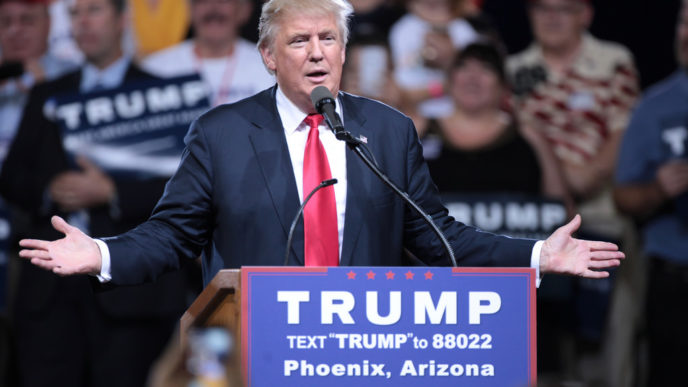
More Than 800,000 Noncitizens May Have Voted in 2016 Election, Expert Says

An election expert projects more than 800,000 noncitizens voted in the 2016 election and overwhelmingly for Democrat Hillary Clinton.

While substantial, that number doesn’t overcome Clinton’s 2.2 million popular vote lead over Republican President-elect Donald Trump, who won a decisive Electoral College triumph of 306 to 232.

On Sunday, the president-elect tweeted he would have won the popular vote had it not been for illegal votes cast. The Trump transition team on Monday cited nonpartisan studies on noncitizens voting and of faulty voter registration across the country. Only citizens 18 or older can legally vote.

“Extrapolating on data from several years ago certainly doesn’t substantiate the claim that Trump is making now,” Jesse Richman, an associate professor of political science at Old Dominion University, told The Daily Signal. “That could change. If there is a recount in Michigan and Trump loses by a few votes, then it’s very plausible that noncitizen voting made a big difference. Hopefully, it doesn’t come to that.”

Richman was the co-author of a 2014 study that looked at noncitizen voting in the 2008 and 2010 elections. In the comparable presidential election year, the Old Dominion study determined 6.4 percent on noncitizens in the United States voted in the 2008 presidential election, and about 81 percent of those voters backed Democrat Barack Obama.

Richman applied those numbers to 2016:

The basic assumptions on which the extrapolation is based are that 6.4 percent of noncitizens voted, and that of the noncitizens who voted, 81.8 percent voted for Clinton and 17.5 percent voted for Trump. … 6.4 percent turnout among the roughly 20.3 million noncitizen adults in the U.S. would add only 834,318 votes to Clinton’s popular vote margin. This is little more than a third of the total margin. … Is it plausible that noncitizen votes added to Clinton’s margin? Yes. Is it plausible that noncitizen votes account for the entire nationwide popular vote margin held by Clinton? Not at all.

A December 2015 study led by Stephen Ansolabehere of Harvard University argued the 2014 Old Dominion study was flawed and that “the likely percent of noncitizen voters in recent U.S. elections is zero.” Richman responded to the criticism and said suggesting zero percent does not hold up.

Trump transition team spokesman Jason Miller cited the Old Dominion study reported on in The Washington Post in 2014, as well as a Pew Research Center study from 2012 about problems with voter registration across the country.

“An issues of concern is that so many have voted that are not legally supposed to,” Miller told reporters in a conference call Monday.

He said this warrants more attention than the “shiny object” Jill Stein and the Green Party are using to push recounts in Wisconsin, Michigan, and Pennsylvania that have no chance of overturning the election.

Beyond the noncitizens voting study from Old Dominion, Miller pointed to the Pew study from 2012 that found 24 million voter registration records in the United States, or about 1 in 8, were “significantly inaccurate or no longer valid.”

The Pew study further found “1.8 million deceased individuals are listed as voters,” that “12 million records contain an incorrect address,” and that “2.75 million people have registrations in more than one state.”

It would take a very high percentage of noncitizens voting to overcome the Clinton popular vote lead, said Steven Camarota, director of research for the Center for Immigration Studies, a think tank that favors strong immigration enforcement.

“If 10 percent of noncitizens voted, it would likely make a popular vote difference,” Camarota told The Daily Signal. “It’s not the Electoral College he’s upset about. It’s the popular vote. I wish he wouldn’t focus on it. Bill Clinton got just 43 percent of the vote in 1992. How many states did he win more than 50 percent of the vote in?”

Trump could be correct about the number of illegal votes, but there is no way to know, said Hans von Spakovsky, senior legal fellow with The Heritage Foundation who focuses on voter integrity issues.

“It’s possible he’s right, but we don’t know because there is no way to quantify, no system in place to identify noncitizens voting,” Spakovsky told The Daily Signal. “The Department of Justice and Department of Homeland Security should obtain state voter registration lists and check against noncitizen database. And the DOJ should start prosecuting noncitizens who are voting.”

Prosecuting voter fraud will have to be a higher priority under the Trump administration than under the Obama administration, said Tom Fitton, president of Judicial Watch, a conservative government watchdog.

“It has got to be a priority I would think based on Mr. Trump’s rhetoric,” Fitton told The Daily Signal. “At least, make sure that only citizens are registered to vote. We need basic reforms to reassure people that elections are free and fair.” (For more from the author of “More Than 800,000 Noncitizens May Have Voted in 2016 Election, Expert Says” please click HERE)

Follow Joe Miller on Twitter HERE and Facebook HERE.

Post Election Survey of Third Party Movement Leaders: Part One

“I believe 2016 was a phenomenal breakthrough for independent candidates and 3rd parties; the fact that independent candidates formed networks to support each other and to push the independent message is a development they cannot be underestimated.”

That’s Lynn Kahn’s overview of this year’s election. Kahn, who ran for President as an independent, was on the ballot in two states and qualified as a write-in in 10 more. To date, she is credited with winning 5,623 votes.

However, author and political activist Darcy Richardson, who was a candidate for the Reform Party nomination, said he is “not too optimistic” about the future of third parties. “Given the widespread disdain for both major parties this year and the fact that the vast majority of Americans believed the country is headed in the wrong direction,” he noted, “then realistically, if it couldn’t happen this year, then I’m not sure if a third-party breakthrough is possible any time soon.”

The final vote tallies are not in yet, but 2016 appears to be the best election for independents and third parties since 1996, when Reform Party nominee Ross Perot received eight percent of the vote. The combined vote for all alternative candidates currently stands at over five percent (1,787 individuals ran for President this year.) In addition, according to Independent Voter News, “the Democrats saw voter turnout drop from approximately 34 percent in 2008, to 31 percent in 2012, to a twenty-year low of 26.5 percent. Republicans saw their turnout drop from 29 percent in 2008, to 28 percent in 2012, to their own twenty-year low of 26 percent in 2016.”

The Libertarian Party nominee Gary Johnson’s share of the national vote is approaching 3.3 percent, better than any other presidential result in the party’s 45-year history. Arvin Vohra, Vice Chair of the Libertarian National Committee, asserted that, “During this election cycle, millions of new people have come to the Libertarian Party. These will be our future activists, state and county chairs, and candidates.” Vohra also stated, “We have seen much wider acceptance of Libertarian ideas, such as ending the War on Drugs, eliminating the income tax, repealing the Patriot Act, and getting the government out of healthcare and education. The increased traction of these ideas is spreading our message and bringing new people into the LP every day.”

When asked if 2016 was a step forward for third parties and independent candidates, Libertarian State Leadership Alliance Political Coordinator George Phillies answered, “No, we had a wonderful opportunity – given the two worst Presidential candidates in recent times – and we did not get much out of it.” He went on to say:

Once again, [the Libertarian Party] ran a pair of recent Republicans. Their campaign did not emphasize major libertarian issues, such as the surveillance state and the warfare state. The Presidential candidate was significantly under-informed, and kept passing issues over to the Vice Presidential nominee … [Governor William Weld] appeared to endorse Clinton for President, and his after-the-fact denials were less than completely helpful.

However, the Libertarian Party’s Vohra emphasized that the election, “was a major step forward for our party specifically, and may have also helped other parties. Just days ago, for example, an LP candidate training program which in the past usually had 7-10 attendees had over 100.”

Darcy Richardson did have praise the Libertarian Party’s progress: “One of their biggest accomplishments was the party’s successful petition drive in Oklahoma – an amazing feat made possible in large part by the personal generosity of ballot access expert Richard Winger and the on-the-ground presence of longtime Libertarian Party activist Paul Frankel, who coordinated much of that effort. I believe he is one of the country’s most experienced signature seekers.”

Richardson also observed, “Impressively, under Frankel’s direction, the party collected 42,182 signatures – where they needed 24,745 – some 30,500 of which were deemed valid. At more than 72 percent, it was a remarkable validity rate.” Of the Oklahoma effort, Richardson also said:

It was the first time in 16 years that the Libertarian Party qualified for the ballot in the Sooner State, thereby giving the party’s presidential ticket a realistic shot at appearing on the ballot in all fifty states and the District of Columbia this year. That was an extraordinary accomplishment.

Libertarian Party Vice Chair Vohra claimed, “Our 2016 success was built largely on the groundwork of countless activists as well as the excellent job done by the Gary Johnson campaign. That includes the exponential increase in state and county level organization, the incredible work of our social media volunteer teams, and the unprecedented outreach done by the Johnson campaign.”

Rocky De La Fuente, the presidential candidate of both the Reform Party and the America Delta Party, and who earned more than 32,000 votes in the election, observed, “2016 was a step forward for third parties and independent candidates. We saw some upward movement among third party candidates that was helped by the historically weak nominees offered by the two major parties. However, the two next-most ‘favored’ parties, the Libertarians and the Greens, enjoyed most of that movement. They offered candidates who brought nothing new to the race. In fact both parties faded from the scene months before the election, but they’re seemingly happy to finish in their traditional third and fourth places.”

De La Fuente, whose name appeared on 20 state ballots and who qualified as a write-in in 16 more, continued, “Had either of these parties offered a stronger candidate with fresh ideas and the tenacity to fight until the end, perhaps they would have won a few states and potentially thrown the election into the House of Representatives. Instead, we only saw modest progress while witnessing what was potentially a ‘perfect storm’ in a political sense.”

Prohibition Party nominee Jim Hedges agrees: “I suspect that 3rd party results this year were partly due to widespread voter disgust, even despair, with the poor quality of major-party candidates.” Hedges, qualified as a write-in candidate in five states and was on the ballot in three more. The Prohibition Party garnered more than 5,500 votes – its best showing since 1988. In June, he ran a strong race in California’s American Independent Party presidential primary, tallying 11 percent of the vote.

Constitution Party Chairman Frank Fluckiger says his 25-year-old party may surpass its all-time high vote as well [in 2008, Rev. Chuck Baldwin captured 199,304, votes.] “It is clear that interest in the party is increasing. In every case each state in which we were on the ballot in both elections [2012 and 2016], the vote totals increased.” Fluckiger also said, “2016 was a very good year for the Constitution Party. Other third parties – the Libertarian Party in particular – seemed to have serious morale problems. Numerous times we were told by members of that party that they intended to vote for the [Darrell] Castle-[Scott] Bradley ticket since they were most unhappy with many of the stands on issued taken by the Libertarian ticket.”

Darrell Castle, the Constitution Party nominee, stated, “2016 was the greatest opportunity for 3rd parties in history. Unfortunately, some were not ready to take advantage of it. Many members decided to openly support the opposition perhaps not realizing the chance to make their party viable for the first time.” Castle also said, “One prominent 3rd party went down the ‘big name’ route instead of picking someone who truly reflected their party’s stated values. This was a misunderstanding of the true depth of dissatisfaction among disaffected people of the two major parties, especially the Republicans.”

American Solidarity Party (ASP) presidential nominee Mike Maturen is upbeat about the impact of 3rd parties on the 2016 election. He said, “We are very proud of the fact that we were able to not only gain access to the Colorado ballot, but were able to be authorized as write-ins on the ballots of 27 other states. Our party was not only able to not only recruit members in all 50 states – and state chapters in 38 states – but we were able to get a great deal of positive press, not only here in the United States, but internationally as well.”

ASP Chairman Matthew Bartko pointed to the passage of Maine’s Ranked Choice Voting Initiative as a measure of success for third parties. The instant-runoff voting initiative establishes ranked-choice voting for federal and statewide candidates excluding President. “This is a great step in the right direction for election reform,” Banko stated, ‘but we know that this is a long game and there is so much work to do. But we are here for the long haul and we are in it to win it.”

Darcy Richardson also commented that, “The Progressive Party of Vermont was clearly a big winner on November 8th, but of the nationally-organized minor parties, my hat is off to the Greens for scratching and clawing their way onto the ballot in 44 states and the District of Columbia – a record for that left-leaning party. Despite heartbreaking setbacks in Nevada and Georgia, it was an incredible achievement. Much of the party’s success, of course, was due to the efforts of longtime Green Party activist Rick Lass of New Mexico, the party’s national ballot access coordinator.”

Libertarian Party Vice Chair Arvin Vohra is optimistic about the third party movement: “I have never before seen this level of enthusiasm, organization, dedication to principle, and passion in any organization, including the Libertarian Party.”

Mike Maturen is confident as well: “I believe the vicious campaign of 2016 contributed more to the growth of third parties than just about anything in the past few decades. People are tired of the divisiveness and hatred. They are looking for a political home where they can discuss ideas and policies without being attacked and vilified.”

Constitution Party presidential candidate Darrell Castle is cautious however: “The Constitution Party and other 3rd parties will have to reexamine their commitment to the cause of liberty if they want to have any meaningful future.” Darcy Richardson reminds third party activists that “the dearth of third-party candidates in this year’s congressional and state legislative races was also disappointing.” And Rocky De La Fuente adds this observation on the future prospects of the third party movement: “It will depend on what the parties do with the opportunity that has been presented. We have the opportunity to exploit the exposure we received.”

Finally, Joe Miller, Libertarian Party nominee for U.S. Senate in Alaska – who received the highest vote as Libertarian in the national party’s history – assesses the situation this way: “Whether 2016 acts as a roadblock or change-point depends almost entirely on whether Trump governs as the anti-Establishment candidate he campaigned as. A Trump failure – especially one caused by the GOP – will create unparalleled opportunities for a viable third party candidate in 2020.” (For more from the author of “Post Election Survey of Third Party Movement Leaders: Part One” please click HERE)

Follow Joe Miller on Twitter HERE and Facebook HERE.
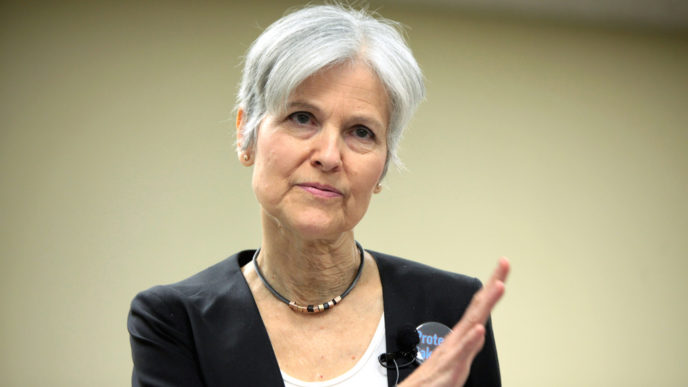
Green Party’s Stein Files for Wisconsin Recount

Green Party presidential candidate Jill Stein officially filed a request to election officials Friday to conduct a recount in the battleground state of Wisconsin.

State Elections Commission Administrator Mike Haas said Stein filed the request around mid-afternoon Friday, about an hour and a half ahead of a 5 p.m. CST deadline.

“The Commission is preparing to move forward with a statewide recount of votes for President of the United States,” Haas said in a press release. “We have assembled an internal team to direct the recount, we have been in close consultation with our county clerk partners, and have arranged for legal representation by the Wisconsin Department of Justice.”

Stein, who earned little more than 1 percent of the national vote, formally requested a Wisconsin recount Friday afternoon, vowing to do the same in the coming days in Michigan and Pennsylvania. There is no evidence of election tampering in the states where Trump scored razor-thin victories, but Green Party spokesman George Martin insisted “the American public needs to have it investigated to make sure our votes count.”

Wisconsin GOP Executive Director Mark Morgan issued a statement calling the recount request “absurd and nothing more than an expensive political stunt that undermines Wisconsin’s election process.” Republican Sen. Devin LeMahieu, who chairs the Senate elections committee, said he would re-examine state law next year to ensure “a candidate who received 1 percent of the vote cannot hold the results of an election hostage.” (Read more from “Green Party’s Stein Files for Wisconsin Recount” HERE)

Follow Joe Miller on Twitter HERE and Facebook HERE.