Trump Phones Rush Limbaugh, Alleges Massive Cover-Up in Obamacare

On Tuesday, [Republican] presidential nominee Donald Trump phoned conservative talk-show host Rush Limbaugh and claimed a massive cover-up in regards to The Affordable Care Act, otherwise known as Obamacare.

Limbaugh cited the trending statistic that the average premium has increased by 25 percent under Obamacare, but Trump asserted that the increase, in truth, is much higher.

“You know, the 25 percent [increase], Rush, is less than half of what the real number is,” Trump said. “The real number in some of these places is 80 percent to 90 percent increases. It’s catastrophic, actually.”

Trump said that he’d predicted the downfall of Obamacare from the beginning, saying it was “no good” from the start.

“And you remember, I called that from before it was approved. I said, ‘This can’t work, because it’s just… The plan is no good. The concept is no good,’ and it turned out to be much worse,” Trump said.

He later added, “They put out the phony number of 25 percent because 25 percent sounds better than 60 or 70 percent.”

Trump pointed to his own experience in small business, and he said that many in that realm are complaining that Obamacare is putting them out of business. He also pointed to Obamacare’s seeming monopoly on the insurance market, due to “over-regulation.”

“I think Obamacare has now taken over almost from regulation, which is ridiculous what’s happening with over-regulation, as the biggest single problem for opening and keeping businesses going,” Trump said.

The recent decision of Aetna and other insurance companies to pull out of Obamacare seems to support Trump’s allegations. In states like California, premiums are expected to rise significantly in 2017, and many argue that the program is a disaster on the verge of collapse.

While Democrats have painted former president George W. Bush as the culprit for many of the country’s current issues, saying that Obamacare will help alleviate problems caused by the Bush administration, Limbaugh countered that sentiment by saying Obamacare is working as designed.

“Well, the problem is, it is working. It is working, by design. The whole point of [Obamacare] was to have it fail like this so that they can then have people panic and ask the government to fix it, and the government will fix it by going single payer with the government totally running the health care system, which gives them so much power over people and their behavior and the way they live their lives, you don’t even want to think about it,” Limbaugh said.

Limbaugh’s opinion is one shared by many conservative pundits, including Daily Wire Editor-In-Chief Ben Shapiro, who said Obamacare was created with “designed obsolescence” and drew a comparison between Obamacare and Samsung’s Galaxy Note phone.

“It’s as though Samsung had designed their phones to melt down so that they could then market the Samsung Galaxy Note 8, Government Edition,” Shapiro said.

Limbaugh defended Trump, pointing out that the Republican nominee has been under siege by the Democratic party. Yet, he said, Trump is still “a winner.”

“It’s frustrating, Mr. Trump, because their fingerprints, as I say, are all over this,” Limbaugh said. “If anybody, in my estimation, is disqualified from having anything further to do with this nation’s economy or healthcare or immigration, it’s the Democrat Party.” (For more from the author of “Trump Phones Rush Limbaugh, Alleges Massive Cover-Up in Obamacare” please click HERE)

Follow Joe Miller on Twitter HERE and Facebook HERE.

This New Regulation Could Deprive the Elderly of Access to Private Courts

A new regulation from the Obama administrating is taking on the freedom to contract for nursing homes, and the operators are not happy. The dispute is over whether or not these facilities can include clauses in their contracts requiring that residents resolve disputes via private arbitrators as opposed to government courts. An arbitration service functions similarly to a court, but with the principal difference being that it is run by the private sector. Regulators claim that seniors are being taken advantage of, since such clauses are generally in the fine print. As a result, bureaucrats say, seniors should have the right to sue in a government court. Nursing home operators dispute this, and claim that the government is exceeding its authority in specifying what can and cannot be included in a contract.

Both sides have a point, but we should always be skeptical of government intervention in private markets.

Let me begin by saying that I have great sympathy for the residents of these facilities, and I don’t doubt that many of them are mistreated, abused, and taken advantage of. According to The Hill, the fine print of nursing home contracts regularly contains clauses forcing residents to use private dispute resolution firms in the case of a grievance, rather than appealing to government courts. It’s likely that many residents don’t know or understand what they are agreeing to, and in that sense, I agree that there is a problem that needs to be addressed.

However, it’s important to avoid falling into the trap of lumping all arbitration firms into the category of hucksters trying to separate old people from their money. Indeed, private dispute resolution has a long and respectable history in this country, and provides a valuable alternative to the government’s monopoly on justice. A contract works both ways, and it may be the case that some residents want to use arbitration firms rather than relying on the state. Disallowing these clauses in the contract could have the side effect of forcing people into arrangements they are not comfortable with, especially when private arbitrators have so many advantages over the courts.

Anyone who has dealt with the legal system knows that bringing suit can be a tremendously lengthy and expensive process. The cost of hiring an attorney alone can be ruinous. Even if you can afford it, you may have to wait months or years to have your case heard and to receive a verdict. The residents of nursing homes do not often have the luxury of time required by the courts.

Private arbitration, on the other hand, can be cheaper and faster.

Although it is not well known, private arbitration is responsible for resolving three times as many disputes as public courts. In addition to the advantage of not clogging up the public system, this method of dispute resolution is more flexible in that it is not restricted to statutory law. Indeed, where the written law fails to account for difficulties that arise in various areas, arbitration can resolve problems in ways that the courts never could. International disputes, for example, often rely on arbitration, due to the mutual incompatibility of various countries’ legal systems. Historically, the merchant class developed their own internal method of dispute resolution, being unable to rely on the state to handle the intricacies of their trade. A modern example involves credit card companies who have agreed to resolve disputes with banks outside of the public legal system, a system that has proved remarkably nimble and efficient.

The American Arbitration Association contains a network of hundreds of independent mediators and arbitrators, and the allied International Centre for Dispute Resolution operates in over 80 countries. One of the main advantages of using such a service is the array of options that customers are given. With a public court, the individuals has little to no control over choosing the judge who will ultimately decide the case. With private dispute resolution, both parties are able to find a mutually acceptable arbitrator to minimize the presence of bias or prejudice. And when both parties agree on how a dispute is to be resolved, they are each more likely to accept the ultimate ruling and view it as legitimate.

With all this in mind, I am reluctant to view the Obama administration’s ruling on nursing homes as being legitimately in the interest of residents. It’s undeniable that the rights of the elderly, who are often the targets of con men and other crooks, need to be protected, and that they should have recourse to pursue justice when they are wronged. But the freedom to contract is as important for residents as it is for business owners. Congress should have no authority to dictate the terms of these arrangements, even when nursing homes are accepting federal dollars in the form of Medicare. Additionally, I can’t help but feel that part of the motivation for this rule is the threat of competition to government courts. Private arbitration has been a steadily growing business for some years now, and there may well come a point where people realize they need not rely so heavily on the government to ensure that justice is carried out. Regulating whether or not businesses can contract to use arbitration could be the first step in reclaiming the dispute resolution from the private sector. (For more from the author of “This New Regulation Could Deprive the Elderly of Access to Private Courts” please click HERE)

Follow Joe Miller on Twitter HERE and Facebook HERE.

How This Red State Is Grappling With Influx of Refugees

Greg Haney is able to capture the change happening in the largest city of this small state better than most.

Haney shoots school photographs for his father’s 39-year-old local company, chronicling increasingly diverse student bodies that span Fargo, North Dakota, and Moorhead, Minnesota, twin cities in bordering states separated only by the Red River.

Haney is a Republican-leaning, Breitbart-reading veteran of the Navy, born and raised in Moorhead, but residing since 2003 in a house he owns in Fargo.

He came to appreciate cultural differences during his tours in the Navy, and he can just as easily translate “how are you” into Arabic as he can exclaim the uniquely folksy word “jeepers” in everyday conversation.

“This area seems to act together as cities and states first, and that goes to both sides of the river,” Haney, 43, tells The Daily Signal in a recent phone interview, adding:

We don’t concern ourselves as much with what the rest of the country is doing. So when I see refugees and immigrants coming to this area, I don’t get caught up in the rhetoric. I think of them as equals because they have the same freedoms I do. You have to live, you have to work, you bear children, and your child will have the same rights as mine.

Haney’s pictures serve as a lens through which to see the diversification happening over time here—and accelerating since the oil boom—in a place that is far from the nation’s borders, but intimately a part of the nationwide debate occurring over immigration—both legal and illegal—and refugees.

From 2010 to 2014, North Dakota’s population of immigrants, including legal and illegal, increased at a larger percentage rate—45 percent—than any other state in the country.

Over the fiscal years 2014 and 2015, no other state took in more refugees per capita than North Dakota, with about 80 percent of those making their home in the state’s largest county, Cass, which includes the state’s most populous city, Fargo.

While the absolute number of immigrants and refugees moving to North Dakota—a state with less than 1 million residents—is far less than bigger, more traditionally diverse states such as California and Texas, the change occurring is significant. And, according to local officials, not by accident.

Though North Dakota has a long history of resettling refugees, the pace of that effort, and of immigration through other means, promises to increase in the coming years, especially in a city like Fargo that’s starving for workers to serve its booming job market.

“In order for our economy to survive in the 21st century, we have to become a multidimensional city,” Fargo Mayor Tim Mahoney says in an interview with The Daily Signal, ticking off job opportunities in health care, hospitality, and technology—including at Fargo’s Microsoft campus, the company’s second-largest hub in the country.

“Millennials who are increasingly working in these jobs like to have a multicultural area that has differences in people,” Mahoney says. “We really need a diverse population to be more like a normal American city.”

Tensions Rise

During its transition to “normal,” Fargo has experienced tensions that have defined the national conversation, especially surrounding the issue of refugee resettlement.

North Dakota Gov. Jack Dalrymple, a Republican, is one of more than half of the nation’s governors who have called for the Obama administration to halt the resettlement of refugees from war-torn Syria until the government improves vetting procedures to their liking.

The state’s at-large member of the House of Representatives, Republican Kevin Cramer, co-sponsored legislation that would give Congress final approval over the number of refugees the executive branch decides to resettle each year.

“To me, this is about good old Midwestern common sense,” Cramer tells The Daily Signal in an interview. “There are two main things we ought to be concerned about. One is the cost, and the fact that regardless of how compassionate states and local communities may be, the local residents don’t get a say in that. And the other concern is public safety.”

The congressman adds:

I am not advocating Fargo, and North Dakota, stop taking refugees. By and large refugee resettlement has been a real success story here. But as the demand grows, we should be more diligent, and someone in government ought to have something to say about the numbers.

Meanwhile, more than 3,000 people have signed on to a Change.org petition asking for a moratorium on refugee resettlement to Fargo. And a Fargo city councilman, Dave Piepkorn, has demanded the city’s leaders reveal the financial cost of resettling refugees.

Piepkorn, in an interview with The Daily Signal, declares himself a supporter of robust immigration and a product of immigrant grandparents from Norway. But he says he’s worried that terrorists will try to infiltrate the nation’s refugee resettlement system.

Piepkorn notes that a 20-year-old Somali man suspected in a September stabbing attack at a mall in St. Cloud, Minnesota, originally settled in Fargo with his family in the mid-1990s before they moved to Minnesota.

He says elected officials—and local taxpayers—like himself should have a say in determining the city’s commitment to resettling refugees.

“We have a shortage of workers, and from that side we love having immigrants come here,” Piepkorn says, adding:

The majority are very productive and help out the city. But as a fiscally conservative commissioner, my job is to make sure the city is spending its money carefully. We want to know how much [refugee resettlement] costs us, and it should be up to us, as elected officials, to determine who is coming. To have us not know what is going on here is unacceptable.

‘Being There for Your Neighbor’

A nonprofit faith group, Lutheran Social Services of North Dakota, is the driver of the state’s rich legacy of helping refugees.

Assisting foreign-born individuals escaping persecution is only a part of the mission of this “social ministry,” which also helps locals find affordable housing and assists in providing services from disaster recovery to therapy.

Yet the refugee component of its work has drawn the most attention, especially because Lutheran Social Services is the only resettlement agency in North Dakota. Working with national volunteer agencies, the ministry determines the capacity of North Dakota and its cities to absorb refugees.

Jessica Thomasson, the CEO of Lutheran Social Services, says her organization’s outreach to refugees is born from generosity, and an understanding that North Dakota, especially Fargo, has the infrastructure—jobs, family ties, and a diverse Muslim population—to accommodate immigrants and be a place where they can thrive.

“Certainty we live in a complicated time, and there’s a lot of information to take in nationally and around the world that is causing a lot of people to self-examine and ask questions,” Thomasson tells The Daily Signal in an interview. “But I really believe helping people in need, and being there for your neighbor, are American values and part of who we are as a country.”

Thomasson says North Dakota’s dedication to assisting refugees is nothing new, and its success in integrating them into wider society is relatively seamless.

She says her nonprofit aims to resettle about 450 refugees annually, but that number has neared 500 in recent years. Since January 2002, a total of 3,677 refugees have come to live in Fargo as of Oct. 6, most of them from Bhutan, a small Buddhist kingdom in South Asia.

Fargo also has resettled large numbers of refugees from Somalia and Iraq, two countries plagued by terrorism. Thomasson says only one Syrian family has found refuge in North Dakota, but she expects more to come from that Middle East country as the war there continues.

About 90 percent of refugees arriving in North Dakota already have family living in the state, Thomasson says, providing a support structure that helps fulfill the ultimate goal of her agency—to facilitate self-sufficiency.

Lutheran Social Services distributes two forms of grant money from the federal government to refugees in North Dakota. Each individual refugee gets a one-time startup grant of $1,125 to fund initial needs such as a deposit for housing, clothing, kitchen supplies, and furniture.

The refugees, for a maximum of eight months, also receive monthly cash assistance—$335 for an individual or $685 per four-person family. Once a refugee finds work and can cover expenses, the monthly payments stop, even if that occurs in less than eight months. Thomasson says most refugees in North Dakota can support themselves after three to four months.

Refugees emigrate to the U.S. with varying skill sets, and North Dakota’s economy caters to both the low- and high-skilled ends of the spectrum. Thomasson says refugees tend to work in the hospitality, restaurant, retail, and manufacturing industries.

A June 2015 study conducted by TIP Strategies and cited by city staff found that the number of new jobs in the Fargo-Moorhead region increased by 24 percent from 2004 to 2014. The region has more than 5,000 job openings, and is projected to have more than 30,000 in the next five years.

Opportunities exist for whoever wants to work hard, city officials say, no matter if they are native- or foreign-born. In fact, international migration to Fargo—and wider North Dakota—pales in comparison to domestic immigration. The trend accelerated in 2008 as part of the oil boom, when people from other states arrived to work in that industry and in supporting jobs in hospitality, homebuilding, and food services.

Kevin Iverson, manager of North Dakota’s Census Office, says 1 in 6 jobs in 2014 were held by people from other states—or countries.

“The reality is people come to North Dakota for work,” Iverson says in an interview with The Daily Signal. “The motivating factors to be here are the right ones.”

A Refugee’s Story

Maryam Mohammed, a recent arrival in Fargo-Moorhead from Iraqi Kurdistan, is eager for her piece of the American dream.

In February, Mohammed, 23, was the first in her immediate family to arrive as a refugee, leaving behind her parents and four younger brothers, who are awaiting action on their own applications.

Though Mohammed was not directly threatened by terrorists of the Islamic State, or ISIS, in the city of Zakho where she lived, she says their destruction wasn’t far away, and she personally knew some of their victims. Home also offered few job opportunities for a young woman like herself.

So Mohammed lives in the Fargo-Moorhead area with an aunt. Her father’s sister moved there with her husband and children as refugees from Iraqi Kurdistan 18 years ago.

Mohammed speaks with The Daily Signal in her native Kurdish language through a translator, her 22-year-old first cousin Fatima Amedi.

Amedi is an American citizen and has known Fargo-Moorhead to be her home since she was 3 years old. She is trying to assist Mohammed in navigating all that is new—helping her cousin to purchase a winter coat for the first time, to appreciate the pop music of Adele, and to apply for jobs.

Mohammed, who graduated high school before leaving Iraq, aspires to be a teacher. For now, while she takes English classes, she figures she can work at Wal-Mart, stocking shelves in the back until she has the skills to interact with customers. She has applied to work there but has not heard back.

“I don’t think refugees should be seen as different than anybody else,” Mohammed says. “They come here to make a better life for themselves. They don’t cheat. They just try to make an honest living like anybody else.”

If Mohammed got the Wal-Mart job, or one similar to it, she would be following the path of Amedi, who worked her way up to become a manager of a grocery store and no longer endures curious comments about the hijab she wears over her hair.

‘We Have the Same Problems’

To adjust to a new culture and city—Mohammed had never heard of Moorhead before she arrived there—she relies on things that make her comfortable, like her Muslim faith.

Mohammed, staying with her aunt, and Amedi, married and residing with her husband, live in Moorhead but spend much of their time across the Minnesota border in Fargo.

There they find the familiar in the region’s only mosque, the Islamic Center of Fargo-Moorhead.

Mohammed is teaching Sunday school there, among many worshipers who came to the region as refugees from different parts of the world.

“It’s nice to know I am not alone,” Mohammed says.

Dr. Mohammed Sanaullah is one of the mosque’s trustees. A physician and American citizen living in Fargo who emigrated to America from India 13 years ago, Sanaullah seeks to help refugees like Mohammed reconcile their dedication to faith with their new culture.

Sanaullah, in an interview with The Daily Signal, says of the 4,000 to 5,000 Muslims who attend his mosque, the majority arrived in the region as refugees. He acknowledges some of the local skepticism about new arrivals from overseas, and says the mosque is hosting more interfaith events, so people of other religions can learn about Islam and interact with refugees.

“We have the same problems like any other church or community would have,” Sanaullah says. “The same problems affect our children, like them getting too much into video games, and we worry about maintaining our family values.” He adds:

What we are telling people who attend the mosque is, city leadership is on our side, the police is on our side, and if you work harder, and do what you are doing better, that will reflect on you and your boss will say, ‘Thank God we took in a refugee.’ People will see you for your value and your work and appreciate you for that. You can live the American dream—even in a small town like Fargo, North Dakota.

(For more from the author of “How This Red State Is Grappling With Influx of Refugees” please click HERE)

Follow Joe Miller on Twitter HERE and Facebook HERE.

What Recent Hacking Attack Reveals About Election Security

A hacking attack last Friday that disrupted major U.S. websites is an example of a new era of cybersecurity vulnerability in today’s interconnected world.

The Oct. 21 cyberattack also furthered anxiety about the integrity of next month’s election, which has already been fraught with controversy over voting rights, and foreign interference.

While the attack alarmed—but did not surprise—cybersecurity observers who have been sounding alarms about the potential for the internet’s infrastructure to be harmed, these experts say the election system is largely secure from the threat of hacking.

“I have heard a few people worry that this is a practice run for Election Day or around Election Day to gum up networks and mess it up, but as far as election equipment being vulnerable, I don’t see that being too big of a deal,” said Joseph Lorenzo Hall of the Center for Democracy & Technology. “Luckily, we do not attach that stuff to the public internet.”

Hall, in an interview with The Daily Signal, said the U.S. election system is unique in a few ways.

The system is decentralized, meaning state, county, and local governments all manage their own voting—so everything isn’t connected.

Many precincts use traditional voting machines, but they are not connected to the internet or with each other.

“An attack against election systems would have to individually target many different systems, which limits the ability to mount large-scale damage,” said Susan Hennessey, a cybersecurity expert at the Brookings Institution, in response to emailed questions from The Daily Signal.

Though hackers will struggle to manipulate actual voting results, Hall warns that bad actors could disrupt Election Day—and throw off voters—by hacking into websites listing the locations and hours of polling places, and changing the listed information.

Many registration databases—serving as a way for voters to register or check their status—are also connected to the internet.

The government has reported that hackers have targeted the voting registration systems of more than 20 states in recent months, including in Arizona and Illinois, but those systems have nothing to do with vote casting or counting.

“If anything, I would worry about disruption or chaos rather than something that actually is affecting votes or attacking the election infrastructure,” Hall said.

Still, during an election season in which the Obama administration has accused Russia of hacking U.S. political organizations, the government is taking extra precautions to secure the voting process.

The Department of Homeland Security has assigned more than 100 specialists around the country to help state and local election officials maintain their voting systems.

According to Bloomberg Politics, 42 states and 29 county or local election agencies have sought cybersecurity assistance from the federal government.

Despite the confidence from the government and cybersecurity experts that Election Day will go on unscathed, observers acknowledge the broader danger of cyberattacks—specifically targeting the internet—is increasingly urgent.

The Oct. 21 attack involved the hacking of a company, Dyn, whose servers monitor and reroute internet traffic.

Companies like Dyn host the core parts of the internet’s infrastructure, so websites that connect to it like Twitter, Netflix, Airbnb, and Reddit were affected by the attack, and saw their websites slowed or inaccessible for periods of time in certain areas.

Because more and more devices, such as security cameras, are connected to the internet, experts say the chance of this type of centralized hacking—known as a distributed denial of service attack—is especially great.

“We’ve known about the possibility of DDoS attacks for a long time, so the episode this weekend was more a question of scale than a new threat,” Hennessey said. “The attack was targeted against a single entity on which many different websites rely, so the centralization amplified the consequences of the threat.”

Hall and Hennessey say it’s important to reassure citizens of the integrity of the U.S. election system.

“My biggest concern is any activity which could cause citizens to doubt the outcome of an election,” Hennessey said. “We know it is highly unlikely that any kind of hacking or attack could alter vote counts or the outcome of an election. But the mere fact of confirmed nation state intrusions have caused a level of anxiety regarding trust in the outcome. That is deeply troubling in a democracy.”

But they say the new threat of internet attacks is real, and will carry impact beyond Election Day.

“This is a brave new world and it’s kind of scary,” Hall said. (For more from the author of “What Recent Hacking Attack Reveals About Election Security” please click HERE)

Follow Joe Miller on Twitter HERE and Facebook HERE.

‘Clear Bias’ Against Hiring Veterans Under Obama Administration, Says Former VA Official

Veterans must be given preference in securing federal jobs, according to long-standing laws, but hiring hasn’t always worked out in their favor. A federal audit found that on numerous occasions, agencies placed Obama administration political appointees into career government jobs with civil service protections—bypassing veterans.

Much of the federal bureaucracy has turned against men and women who served the country in the military, said Darin Selnick, a retired Air Force captain and former official at the Department of Veterans Affairs.

“There is a clear bias against veterans. They think veterans should start at the bottom like everyone else,” Selnick told The Daily Signal in a phone interview.

“The government culture wants everyone to start from the bottom in government. But it’s not as if veterans never worked for the government. They worked for the Department of Defense.”

Selnick, the senior veterans affairs adviser for the advocacy group Concerned Veterans for America, was also the special assistant to the secretary of Veterans Affairs and the director for the Center for Faith-Based and Community Initiatives during the George W. Bush administration, said the preference is most helpful for lower-level jobs.

“The country realizes it has a debt,” Selnick said. “Without the military, we would be in terrible shape. They put their lives on the line and are willing to die.”

Under federal law, veterans who are disabled or served active duty get preference over other applicants on the condition they are qualified for the job. If a veteran scores 70 percent or higher on the civil service exam, the applicant will have an extra five to 10 points added to their rankings for the job.

Some form of veterans’ preference for federal jobs has been in place since the Civil War, according to the Office of Personnel Management. This policy was established to help disabled veterans especially. Congress updated the law with the Veterans’ Preference Act of 1944 in the midst of World War II.

President Franklin Roosevelt, in supporting the law, stated:

I believe that the federal government, functioning in its capacity as an employer, should take the lead in assuring those who are in the armed forces that, when they return, special consideration will be given to them in their efforts to get employment.

The post-Civil War law specified disabled veterans, recognizing that economic damage that could result from injuries in service to the country. After World War I, executive orders expanded preference to all honorably discharged war veterans.

The World War II-era law largely codified existing executive orders.

The Office of Personnel Management website states:

Recognizing their sacrifice, Congress enacted laws to prevent veterans seeking federal employment from being penalized for their time in military service. Veterans’ preference recognizes the economic loss suffered by citizens who have served their country in uniform, restores veterans to a favorable competitive position for government employment, and acknowledges the larger obligation owed to disabled veterans.

The Government Accountability Office reported last month that federal agencies didn’t follow procedures to avoid favoritism in hiring a quarter of President Barack Obama’s political appointees that transitioned into career positions. The report sampled the actions of 30 federal agencies in such “conversions” from Jan. 1, 2010, to Oct. 1, 2015.

In cases with the Federal Deposit Insurance Corporation, the Food and Drug Administration, and the Department of Health and Human Services, this meant bypassing past qualified veterans despite that statutory preference.

Unlike political appointees, federal workers in the civil service system are hired through a merit system, are difficult to fire, and carry over in changes of administrations, Republican or Democrat.

In 1883, Congress passed the Pendleton Civil Service Reform Act to replace a “spoils system” with a merit system of hiring. Under the merit system, employees would be specifically hired based on scores and tests rather than the preference of the political party in power. The new system also made it more difficult for a new administration to fire workers.

Agencies and employees face consequences when procedures are not followed, said Office of Personnel Management spokesman Sandy Day.

“In such cases, [Office of Personnel Management] conducts a post-appointment review,” Day told The Daily Signal. “When we cannot conclude the hiring action was free from political influence, we require the agency to take corrective action and hold the agency accountable for carrying it out.”

If there was a violation, Day said, “The individual would either have to be placed back in his or her political position or, if that was not possible, have his or her employment terminated.”

Veterans’ preference has been scrutinized, even under Senate Armed Service Committee Chairman John McCain, R-Ariz., as the Senate voted to make changes in its version of the 2017 National Defense Authorization Act. Congress has since removed the changes from the bill.

Defense Department officials reportedly pressed for the change in June, concerned that some of the senior positions weren’t going to the most experienced applicants.

The change would have limited veterans’ preference to “single use,” which means, it could only be used to get one job. So, veterans already working in government civilian jobs who are applying for higher positions, would not have preference.

However, McCain scrapped the idea in October, after veteran groups objected. In a letter to the American Legion, McCain said, “Given your and others’ concerns, I will ensure that this provision, which is not included in the House bill, is not included in the NDAA conference report.”

“We appreciate Sen. McCain’s stalwart defense of an important benefit for all veterans who’ve served and sacrificed for their country,” American Legion National Commander Charles E. Schmidt said in a statement. “We look forward to working with the chairman to ensure the final NDAA properly protects this earned benefit.” (For more from the author of “‘Clear Bias’ Against Hiring Veterans Under Obama Administration, Says Former VA Official” please click HERE)

Follow Joe Miller on Twitter HERE and Facebook HERE.

Clinton Accuser Rips CNN as Network Trumpets Another New Poll

As CNN on Monday breathlessly announced yet another poll from media sources bearing good news for Democratic presidential nominee Hillary Clinton, there was one very loud, dissenting voice.

Kathleen Willey, who accused former President Bill Clinton of sexual misconduct while she was a White House aide, started an avalanche of attacks against CNN by delivering a succinct denunciation of the network.

The flareup started innocuously, with CNN’s Jake Tapper tweeting out a preview of coming attractions.

A little while later, Willey pounced.

Tapper’s reaction seemed puzzled.

Willey had one more shot.

Her tweet referred to Charles Ortel, a writer and financial expert who has been critical of the Clinton Foundation.

Willey, who first told her story of being sexually assaulted in 1998 as part of the investigation into Bill Clinton’s affair with Monica Lewinsky, has returned to the national stage this year in support of Republican presidential nominee Donald Trump.

She found support for her position on Twitter.

Trump has also questioned the accuracy of polls, roundly attacking them as an example of media bias.

“What they do is they show these phony polls where they look at Democrats, and it’s heavily weighted with Democrats. And then they’ll put on a poll where we’re not winning, and everybody says, ‘Oh, they’re not winning,’” Trump said Monday in Boynton Beach, Fla. “The truth is, I think we’re winning.”

Trump has indicated he sees media bias and dubious polling as an extension of a larger issue in the campaign.

“There is nothing the political establishment will not do, and no lie they will not tell, to hold on to their prestige and power at your expense. The Washington establishment, and the financial and media corporations that fund it, exists for only one reason: to protect and enrich itself,” he said earlier this month.

“The most powerful weapon deployed by the Clintons is the corporate media,” Trump added. “Let’s be clear on one thing: The corporate media in our country is no longer involved in journalism. They are a political special interest, no different than any lobbyist or other financial entity with an agenda. And their agenda is to elect the Clintons at any cost, at any price, no matter how many lives they destroy. For them, it is a war — and for them, nothing is out of bounds.” (For more from the author of “Clinton Accuser Rips CNN as Network Trumpets Another New Poll” please click HERE)

Follow Joe Miller on Twitter HERE and Facebook HERE.

WSJ: Top Clinton-Allied Group Gave $468,000 for Senior FBI Official’s Wife’s Campaign

The Wall Street Journal (WSJ) reports that groups affiliated with top Hillary Clinton ally Virginia Governor Terry McAuliffe contributed nearly $700,000 to help a State Senate candidate whose husband oversaw the FBI’s investigation of Clinton’s e-mails.

According to WSJ:

The political organization of Virginia Gov. Terry McAuliffe, an influential Democrat with longstanding ties to Bill and Hillary Clinton, gave nearly $500,000 to the election campaign of the wife of an official at the Federal Bureau of Investigation who later helped oversee the investigation into Mrs. Clinton’s email use.

Campaign finance records show Mr. McAuliffe’s political-action committee donated $467,500 to the 2015 state Senate campaign of Dr. Jill McCabe, who is married to Andrew McCabe, now the deputy director of the FBI.

The Virginia Democratic Party, over which Mr. McAuliffe exerts considerable control, donated an additional $207,788 worth of support to Dr. McCabe’s campaign in the form of mailers, according to the records. That adds up to slightly more than $675,000 to her candidacy from entities either directly under Mr. McAuliffe’s control or strongly influenced by him. The figure represents more than a third of all the campaign funds Dr. McCabe raised in the effort.

McAuliffe was one of the people who convinced Dr. McCabe to run for office, according to the Journal. An office spokesperson told the newspaper that McAuliffe “supported Jill McCabe because he believed she would be a good state senator. This is a customary practice for Virginia governors. … Any insinuation that his support was tied to anything other than his desire to elect candidates who would help pass his agenda is ridiculous.”

The FBI likewise said there was nothing untoward about McAuliffe’s support for Dr. McCabe, who was the third-largest recipient of Common Good PAC in 2015.

The FBI said in a statement that during his wife’s campaign Mr. McCabe “played no role, attended no events, and did not participate in fundraising or support of any kind. Months after the completion of her campaign, then-Associate Deputy Director McCabe was promoted to Deputy, where, in that position, he assumed for the first time, an oversight role in the investigation into Secretary Clinton’s emails.”

FBI officials said that after that meeting with the governor in Richmond on March 7, Mr. McCabe sought ethics advice from the bureau and followed it, avoiding involvement with public corruption cases in Virginia, and avoiding any campaign activity or events.

Mr. McCabe’s supervision of the Clinton email case in 2016 wasn’t seen as a conflict or an ethics issue because his wife’s campaign was over by then and Mr. McAuliffe wasn’t part of the email probe, officials said.

However, Mr. McCabe was involved both directly and indirectly in the Clinton investigation from the time it was launched 15 months ago. He initially oversaw the FBI’s D.C. field office, “which provided personnel and resources to the Clinton email probe.” In February 2016, Mr. McCabe was promoted to the FBI’s second-highest post, where he was a senior member of the group overseeing the investigation into Clinton’s e-mail practices.

This is not the first accusation of improper action by McAuliffe. He is under investigation for possibly illegal donations by the same office formerly headed by Mr. McCabe. (For more from the author of “WSJ: Top Clinton-Allied Group Gave $468,000 for Senior FBI Official’s Wife’s Campaign” please click HERE)

Follow Joe Miller on Twitter HERE and Facebook HERE.

A Week in the Life and Lies of Hillary Clinton

Here’s what we know: The news involving Hillary Clinton was flying hard and fast last week. And the mainstream news media is so in-the-tank for Clinton it’s growing barnacles.

So let’s see if we can run down some of last week’s adventures and revelations that the mainstream media won’t put together for you, and find a common denominator among them all.

Clinton’s Campaign Pays to Cause Violence at Trump Rallies

One of the main themes of the general election has been the notion that Trump’s rallies are violence-filled exercises in extremism. What we learned from the first Project Veritas undercover videos is that the violence was instigated by paid operatives of Hillary Clinton. Her people boasted about it. They are also seen on the tape saying knowledge of their dirty works went all the way up to Hillary. This should be no surprise. The tactics used were straight out of Saul Alinksy’s Rules for Radicals, and Hillary Clinton is nothing if not a disciple of Alinksy. But what we lack in surprise we should make up with horror.

Think about it: A major candidate for president of the United States is deliberately instigating violence in the American streets. In Chicago, that instigation led to riots that injured two Chicago policemen, among others. Blue Lives Matter? Black Lives Matter? For Hillary, apparently only the White House matters.

During Wednesday night’s debate, Hillary neither denied nor defended herself against the charge. Instead, she again accused Donald Trump of inspiring violence. Accusing your enemy of what you yourself are doing is just another of Alinky’s Rules.

Exposing National Security Secrets

During the debate, Hillary Clinton managed to share with our enemies America’s response time to a nuclear attack! Military experts immediately worried that she had just spilled an extremely sensitive national security secret. Remember the saying “Loose Lips Sink Ships”? Loose Lips should at least sink a candidacy, especially if it’s a candidate who, according to FBI Director James Comey, was “extremely careless” when handling national secrets. She didn’t need a computer server this time. Just a few seconds of air time.

Speaking of Hillary’s mishandling of classified information, a video emerged of Hillary lecturing State Department staffers in 2010 of the dangers of such carelessness. Either Clinton believes rules don’t apply to her or she is unaware of what she is reading into a camera. Neither bodes well for a potential commander-in-chief.

The “Quid Pro Quo” to Protect Hillary

While we’re on the subject of the FBI and classified emails, notes from the FBI’s criminal investigation of Clinton revealed an appalling effort by Undersecretary of State, and former Clinton underling, Patrick Kennedy to pressure the FBI to change the classification of one of the most highly classified emails found on Hillary’s server.

The FBI had been begging Kennedy for months to allow more FBI agents overseas. Kennedy ignored the requests. Suddenly, Kennedy calls up out of the blue with what the FBI notes specifically call a “quid pro quo” offer. Basically, Kennedy said he’d give them those agents they wanted, if they did him this little-itty-bitty favor: Downgrade the classification on one of two emails found on Hillary’s private server that the FBI had flagged. Downgrading the email would not only keep it from the public, it would give Hillary more cover for her lie that there was no classified email on her server. Not coincidentally, the email had to do with Benghazi.

The State Department and the FBI deny there was any “quid pro quo” because there never was a deal. There never was a deal because when the FBI agent saw that the email involved Benghazi, he told Kennedy to take a flying leap.

“Mr. Fix It” Meets the Possibility of Blackmail

With the mainstream media’s joy at digging up all the abundant dirt on Donald Trump, you’d think a cover story from the people who exposed John Edward’s affair in 2008 would generate at least some attention. Apparently not, if the target is Hillary Rodham Clinton. On Wednesday, the National Enquirer released a detailed story from a self-described Hollywood “Mr. Fix It,” who says that from 1994 to 2008, he covered up a dozen or so lurid incidents involving both Bill and Hillary Clinton, including Bill’s romps with a hooker caught on tape and Hillary’s dalliances with both men and women.

You can read all about it in the grocery line.

“Oh, but that’s just sex. That’s just her personal life,” we’ll hear. (As if somehow her personal life is less relevant than Trump’s.)

Wrong. Far more important is the implication of the story. For six of the years Mr. Fix It says he cleaned up the Clintons’ messes, they were the President and First Lady of the United States. Meaning, if even one of those stories is true, Hillary Clinton behaved in a manner that could have exposed the U.S. government to blackmail.

As did her careless use of a private server.

This gets us to the common denominator linking all these above stories together.

Hillary’s Self-Interest Over the Security of the Nation

The one theme running through just this one week of stories is that time and time again, Hillary Clinton puts her needs and desires over the security and safety of the United States. Her ambition comes before America, her power over “We the People.”

These recent revelations alone spell out how completely Hillary Clinton has betrayed the public trust. However, The Stream ‘s Nancy Flory lays out how this pattern of betraying the public trust goes back to the early 1970s, when she was fired from the Watergate Committee.

We’re Not Done Yet …

Among last week’s other Clinton moments:

1. WikiLeaks revealed that the Clinton Foundation pays women drastically less than it pays men, despite the fact that she has used such disparity statistics for years to paint corporate America as sexist.

2. Pay-to-Play: WikiLeaks also revealed Hillary Clinton agreed to attend a meeting in Morocco if Morocco kicked in $12 million to the Foundation and Clinton Global Initiative. In the email, her aide and BFF Huma Abedin grumbled, “She created this mess and she knows it.” Huma could have said the same about the Clinton campaign bus that illegally dumped fecal matter into a city sewer.

3. Project Veritas also released a second video showing Clinton operatives scheming on ways to commit massive voter fraud. When Donald Trump said in the debate that given such evidence as the video he would have to wait and see before accepting the election results, Clinton expressed shock and horror. Yes, a woman who served in the administration of a man birthed in the Chicago machine, expressing horror over the possibility of voter fraud.

Finally, the notes released by the FBI show that Hillary Clinton was so rude and “contemptuous” of her State Department security detail that senior agents refused to work with her. (They also resented being put in significant danger just for a photo op during a trip to Jakarta.)

If Hillary Clinton has that much contempt for people willing to take a bullet for her, how much more contempt does she have for voters she’s never met? (For more from the author of “A Week in the Life and Lies of Hillary Clinton” please click HERE)

Follow Joe Miller on Twitter HERE and Facebook HERE.

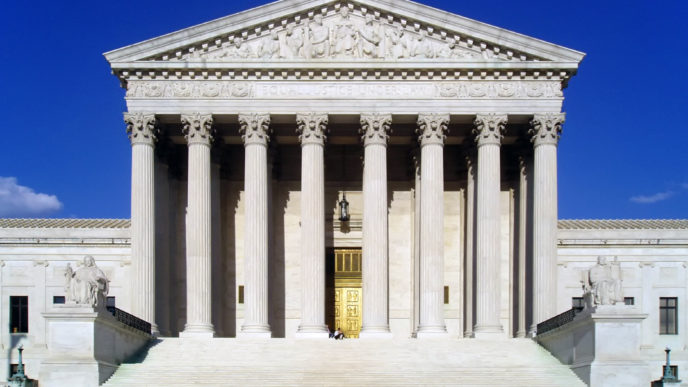
25 Years After Thomas Joins Supreme Court, a Friend Hails an American Originalist

Not every justice on the Supreme Court connects the “magical words” of the Declaration of Independence with the government structure set up in the Constitution to protect natural rights as expressed by Thomas Jefferson.

In fact, the only one to do so with any consistency in recent years is Justice Clarence Thomas, a friend and former White House lawyer said in an interview with The Daily Signal on the occasion of the 25th anniversary of Thomas’s swearing-in.

“What we now have after Thomas has served for 25 years on the court is not just an amazing and inspiring life story, but a remarkable record of jurisprudence,” recalled Mark Paoletta, who was on the White House legal team when President George H.W. Bush nominated Thomas to the high court.

Other judges have produced “originalist” decisions, Paoletta said, but Thomas stands out as the one most willing to challenge prior court decisions that in his view conflict with constitutional rights, some of them lost to history and calling out for restoration:

Thomas is the one justice who is most willing to look back to the Declaration of Independence as the lodestar of our constitutional structure and how this leads into the concept of federalism, the separation of powers, the suspicion of centralized power and how dangerous it can be to liberty, which is why only certain powers are given to the federal government.

Thomas will deliver The Heritage Foundation’s Joseph Story Distinguished Lecture on Wednesday evening.

Thomas was sworn in as the 106th justice of the Supreme Court — and only the second black — in a private ceremony there on Oct. 23, 1991. The quiet dignity of the event belied the firestorm of controversy that surrounded his confirmation hearings before the Senate Judiciary Committee.

The Senate voted 52-48 to confirm Thomas after he endured an onslaught of attacks that included unsubstantiated allegations of sexual harassment. Thomas described the turn taken by his confirmation hearings as a “high-tech lynching for uppity blacks who in any way deign to think for themselves.”

‘Challenging Civil Rights Leadership’

Thomas’s jaundiced view of liberals’ concept of a “living Constitution” that could be molded and reshaped to fit contemporary political agendas antagonized liberal pressure groups that favored abortion rights and racial preferences.

Many of these same groups had worked successfully to convince Democrats to reject President Ronald Reagan’s nomination of Robert Bork to the Supreme Court in 1987. Bork, a former U.S. solicitor general who served on the U.S. Court of Appeals for the District of Columbia, shared many of Thomas’s convictions on the role of the judiciary.

With an eye toward the failed effort to confirm Bork, the political and legal team inside the White House of George H.W. Bush were prepared to mount a vigorous defense of Thomas, Paoletta recalled.

“One of the great achievements of [the elder] George Bush as president was the confirmation of Clarence Thomas to the Supreme Court,” Paoletta told The Daily Signal. “We had a lot of people involved with Bork who recognized what a titanic effort this would be, and they were ready to go on the offensive for Thomas and to provide a rapid-fire response against his critics and to make the case for him.”

While the Bork hearings were “game changing” in terms of how they affected subsequent confirmation processes, Paoletta said, he is convinced that in many respects the left’s attacks on Thomas were more severe and personal:

The Bork hearings showed us all how nasty the left is, and what’s shocking is that as bad as the Bork hearings were, the Thomas hearings were actually worse in terms of now nasty and vicious the left was toward Thomas. I think this had a lot to do with the fact that he was a black conservative who was challenging the civil rights leadership.

While civil rights leaders of the day put their emphasis on group rights that rely upon government solutions such as affirmative action, Thomas emphasized individual rights consistent with natural law as expressed in the Declaration of Independence, Paoletta said.

“I think the black leadership always viewed him as a threat to their business, so they sent out this signal that it was OK to go after him,” Paoletta said. “So you had this toxic combination of the civil rights leadership with all of the other groups that opposed Bork coming together to oppose Thomas.”

Thomas as Natural Law Judge

Since joining the Supreme Court, Thomas has emerged as a staunch proponent of “originalist” jurisprudence and as someone who takes a dim view of longstanding precedents that intrude upon the natural rights of all Americans.

While in some ways the drama of the Thomas confirmation battle never quite subsided, the justice’s contributions to the cause of originalism most intrigue Paoletta.

Thomas’s willingness to uproot “stare decisis”–the doctrine of upholding legal precedents–when it conflicts with the Constitution’s original meaning has placed the justice at odds with jurists and academics from across the political spectrum.

Paoletta points to the 2010 case of McDonald v. City of Chicago, where Thomas separated himself not just from his liberal colleagues but from other justices who might be considered originalists.

Five of the nine justices ruled that the 14th Amendment protects Americans’ individual right to keep and bear arms, and that the states cannot infringe on this right. Four of them based their decision on the doctrine of substantive due process, but not Thomas. Instead, he wrote a concurring opinion seizing upon the 14th Amendment’s “privileges or immunities” clause, which essentially had been discarded by the high court in the 1873 Slaughter-House cases.

Paoletta acknowledges that this commitment to the fixed meaning of the Constitution and the ideals of the American founding period sometimes puts Thomas in conflict with elite opinion, but as far he is concerned it also puts Thomas squarely on the side of “We the People.”

Paoletta, now a partner in the Washington law firm of DLA Piper, played an instrumental role both in the nomination and confirmation of Thomas to the Supreme Court.

Paoletta first reached out on behalf of the White House when Thomas was chairman of the U.S. Equal Employment Opportunity Commission. He asked Thomas to send speeches, articles, and other material in anticipation of his appointment by Bush to the U.S. Court of Appeals for the District of Columbia in 1990.

The following year, Paoletta had a front row seat during the most contentious moments of Thomas’s Supreme Court confirmation hearings. The two men have remained close friends.

‘A Horrible Experience’

Now that Thomas, 68, has served on the court for a quarter of a century, Paoletta, 54, continues to work to correct the record where he sees revisionist history and biased reporting in play.

He set up a website, ConfirmationBiased.com, as a rejoinder to the HBO docudrama “Confirmation,” which aired in April. Paoletta describes the film as a “classic Hollywood hit job” and an “all-out assault on Thomas” that distorts the truth of what transpired during the hearings.

The docudrama is riddled with “glaring omissions and distortions” that can’t be reconciled with key facts, according to ConfirmationBiased.com. That’s in large part because the story Anita Hill presented to the Senate Judiciary Committee in October 1991 was neither believable nor credible, Paoletta argues.

Hill, a law professor who had worked for Thomas at both the Department of Education and Equal Employment Opportunity Commission, testified that he sexually harassed her. But when members of the Judiciary Committee questioned key details of her televised testimony, Paoletta points out, Hill revised and retracted some of her statements.

Paoletta said the docudrama also failed to focus attention on 12 female witnesses who testified on behalf of Thomas. The women had worked with both Thomas and Hill, and said they did not believe Hill’s allegations.

“Even though this was a horrible experience for Thomas, the American people were able to watch those hearings uninterrupted and unfiltered and make their own assessment,” Paoletta told The Daily Signal, adding:

They saw 12 incredibly impressive, strong women who came forward in support of Thomas. But not a single coworker of Hill’s came forward to support her allegations. Usually when you have a case like this, you have many witnesses, not just one. With the case involving Bill Cosby, for example, you have scores of women coming forward. But no one else made the allegations Anita Hill did. Her story was just not plausible.

“Once Thomas was nominated, I spoke with him on a daily basis and the day the Anita Hill allegations broke I stayed close to him,” Paoletta said. “When you go through something like that together, it creates a bond.”

‘Refreshing and Exciting’

By a margin of more than 2 to 1, the American public believed Thomas, and about 26 percent of women believed Hill, according to a New York Times/CBS News poll taken after the hearings in 1991.

“There’s no gender gap there in that poll,” Paoletta said. “Her story just did not add up. The American people took Hill’s full measure and found her wanting.”

Yet organizers of the Smithsonian’s new Museum of African American History and Culture virtually lionize Hill in one exhibit while relegating Thomas to a relative footnote, as both the justice’s admirers and fair-minded historians note.

Five days before the private swearing-in at the Supreme Court 25 years ago Sunday, Thomas was sworn in at the White House with more than 300 family and friends in attendance. (That event can be viewed here.)

Despite ongoing efforts on the left aimed at tarnishing his reputation, some continuing to invoke Hill’s claims, Thomas has made lasting and enduring contributions to the cause of originalism, Paoletta said.

While Thomas is widely viewed as someone who was closely aligned with Justice Antonin Scalia until his death in February, Paoletta says he saw important differences between the two.

“Where Scalia once described himself as a ‘faint-hearted originalist’ who would look to precedent,” Paoletta said, “Thomas is undeterred by precedent when it conflicts with the original meaning of the Constitution.”

(Nearly 25 years later, Scalia, a Reagan appointee, said he “repudiated” those words and instead would call himself an “honest” originalist.)

Paoletta set up a second website, JusticeThomas.com, to detail Thomas’s judicial philosophy and some of the most consequential cases that flesh out the justice’s originalist philosophy.

“What Thomas has done is to go back and dig down deep into every constitutional provision that comes before the court, and to apply the original meaning and to invite litigants to revisit these issues when an earlier decision may have gotten it wrong. That’s refreshing and that’s exciting,” Paoletta said, adding:

When Scalia came along, no one else was really looking at the text or the original meaning, and we are all indebted to Scalia for his remarkable jurisprudence. But it was Thomas who came along and said he would not be cabined in by a judicial process that did not go back and determine what the constitutional text was actually saying. Thomas has taken originalist jurisprudence and made it even stronger because he is unencumbered by precedent.

Beginnings

Paoletta first met Thomas in 1983, when he was an intern for the Republican National Committee and was fortunate enough to hop a ride with Bush, then vice president, on Air Force Two.

It was October, and Bush was flying to Bridgeport, Connecticut, to campaign for Paoletta’s uncle, Leonard S. Paoletta, then the city’s Republican mayor. It turned out Thomas was speaking that same day at Sacred Heart University in Fairfield, Connecticut, and met up with the White House team.

“He made a very big impression on me that day,” Paoletta recalled. “Even back then, I could see how electrifying he was.”

Fast forward to 1989, when Paoletta was working in the White House Office of Personnel. He was assigned the task of reaching out to Thomas about a potential appointment, though it wasn’t clear what exactly it would be. As requested, Thomas sent the White House copies of his writings, speeches, and other materials.

“Even then, I could see from all the material from the 1980s that Thomas was thinking about the Declaration of Independence and the natural law. I could see from his article and speeches that he was taking on certain institutions, and taking on Congress, for example, for passing things on administratively that it should not.”

After the elder Bush appointed Thomas to the D.C. Court of Appeals, the judge offered Paoletta a clerkship with a warning that, unlike the White House, working in that environment would be similar to working in a “monastery.”

When Paoletta informed his White House colleagues of the opportunity, they asked him to serve instead in the Office of White House Counsel. Thomas gave his blessing to the move. (For more from the author of “25 Years After Thomas Joins Supreme Court, a Friend Hails an American Originalist” please click HERE)

Follow Joe Miller on Twitter HERE and Facebook HERE.

Controversial Proposal for Nurses Could Expand Access to Care for Veterans

For years, state and federal policymakers have discussed proposals to expand the role of advanced practice registered nurses, with major physician groups like the American Medical Association squaring off against nurse organizations like the American Nurses Association.

But a proposed rule from the Department of Veterans Affairs to allow nurse practitioners, nurse midwives, and clinical nurse specialists to practice independently of physicians has brought the debate to the national spotlight and sparked an unprecedented response from the public.

“To use advanced practice registered nurses to their full authority, it improves access and enables the delivery of high-quality care, and that’s good for everybody,” Marla Weston, CEO of the American Nurses Association, told The Daily Signal. “It’s good for the health care system, and it’s good for people in all sorts of ways.”

Advanced practice nurses have master’s, post-master’s, or doctoral degrees and have to adhere to scope of practice regulations, which are parameters set by state boards, legislatures, and the government that dictate the services providers can give to which patients and in what settings.

In Arizona, for example, nurse anesthetists cannot provide anesthetics unless they’re “under the direction of and in the presence of a physician or surgeon.”

Groups like the American Nurses Association and the American Association of Nurse Anesthetists have long called on state lawmakers to expand the scope of practice for registered nurses or grant full practice authority.

But up until 2010, states were slow to react.

That year, the Institute of Medicine, after launching a two-year initiative with the Robert Wood Johnson Foundation in 2008, released a report examining the future of the nursing profession. Included in that report was an analysis of the legal barriers in place across many states that make it difficult for advanced practice registered nurses to use the full scope of their training and education.

The report recommended state policymakers lift some of these constraints to expand the scope of practice for advanced registered nurses, which the Institute of Medicine said would improve care for patients.

“Now is the time to eliminate the outdated regulations and organizational and cultural barriers that limit the ability of nurses to practice to the full extent of their education, training, and competence,” the Institute of Medicine concluded.

In the wake of the report, states began to act, with legislators debating laws that would allow advanced practice registered nurses like nurse practitioners and nurse anesthetists to practice independently.

Today, 21 states and the District of Columbia have granted nurse practitioners full practice authority, according to the Robert Wood Johnson Foundation.

Lawmakers in Nebraska and Maryland were to most recent to do so, passing legislation last year that allows nurse practitioners to practice independently of a physician.

And 40 states and the District of Columbia don’t have a physician supervision requirement for nurse anesthetists on the books, according to the American Association of Nurse Anesthetists.

Heading into 2017, lawmakers in Tennessee and Arizona are gearing up to address the scope of practice for advanced practice registered nurses.

A coalition of these nurses in Arizona lobbied the state legislature last year, urging them to expand nurses’ authority and change language requiring nurse anesthetists to provide anesthetics under “the direction of and in the presence of a physician or surgeon.”

But after medical associations worked to stop the original bill, it was ultimately defeated.

Ali Baghai, a nurse anesthetist working in Tempe, Arizona, and the former president of the Arizona Association of Nurse Anesthetists, said advanced practice nurses plan to take a more piecemeal approach to legislation next year.

“APRNs and [nurse anesthetists] provide high quality, safe, and cost effective health care,” Baghai told The Daily Signal. “It’s been proven for decades, and we just want legislation that lets us do our jobs and take care of patients.”

A National Debate

Though advanced practice nurses have seen success at the state level in expanding the scope of practice for nurse practitioners, nurse anesthetists, nurse midwives, and clinical nurse specialists, their efforts have not been met without resistance from medical associations and physician advocates.

And in no place is that split between the nursing community and physicians more evident than at the VA, where a proposed rule to grant full practice authority to advanced practice nurses led to one of the largest responses to a federal regulation, with more than 178,000 comments submitted to the government via the regulations.gov website.

“The best way to honor our commitment to our veterans is to modernize the VA and eliminate unnecessary regulations that only impede our ability to provide them quality care,” Michael Smith, a former clinical specialist in the Army, wrote in a comment to the VA supporting the proposal. “Lifting the restrictions on nurse practitioners is a great place to start.”

Other veterans, meanwhile, opposed the VA’s rule.

“I’m a veteran: I put my life on the line in service to my country, and I believe that I deserve quality health care,” Sean Malin wrote in a separate comment. “I oppose any mandate that would force the best trained physicians out of the operating room.”

The VA announced its proposal in May, and the rule would extend to nurse practitioners, nurse midwives, and clinical nurse specialists while they’re employed by the VA.

A spokeswoman for the VA said officials are hoping to finalize the rule by January.

In its initial notice, the government said that granting advanced practice nurses full practice authority would “increase veterans’ access to VA health care by expanding the pool” of qualified health professionals.

And supporters of the proposal like the American Nurses Association and American Association of Nurse Anesthetists agree.

“One of the things that we know has historically been an issue or been an issue recently is access to care,” Weston said. “One of the things that would happen in an immediate way is that access would increase dramatically. That will be good for the VA and good for our veterans.”

Before the American Nurses Association, Weston worked at the Department of Veterans Affairs in the Veterans Healthcare Administration in both the Office of Nursing Services and the Workforce Management and Consulting Office.

In addition to increasing veterans’ access to care, expanding nurses’ authority would put the VA in line with other government entities that have already done so, supporters said. Currently, advanced practice nurses serving in the armed forces and working with the Indian Health Service can practice independently.

“It doesn’t make sense to say, ‘OK, it’s alright for the military, all branches. It’s alright for the Indian Health Service to do this. But in the VA? No,’” Cheryl Nimmo, president of the American Association of Nurse Anesthetists, told The Daily Signal.

“Does the quality change? No,” she continued. “If a [Certified Registered Nurse Anesthetist] decides they want to retire from active duty military and work in the VA, suddenly they’re not as safe as they were for their first 20 years? It doesn’t make any sense.”

Nimmo, who served in the Army Reserve for 10 years, and the American Association of Nurse Anesthetists are among a long list of organizations like the AARP and the Federal Trade Commission, Republican and Democrat members of Congress, and military groups supporting the Department of Veterans Affairs’ proposal.

Those supporters say that allowing advanced practice nurses to work independently would alleviate the issues plaguing the VA, like shortages of doctors and long wait times for veterans to see physicians.

According to the VA’s data, more than 507,000 veterans were waiting at least 30 days for an appointment, as of Sept. 15.

“This is a sensible, productive, quality way to fix the problem,” Nimmo said.

But on the other side of the proposal are large doctors’ groups lobbying hard against it. Those groups believe the rule is “unprecedented” and say expanding nurses’ authority would impact the standard of care.

“We feel this proposal will significantly undermine the delivery of care within the VA,” Dr. Stephen Permut, board chair of the American Medical Association, said in a statement in May. “With over 10,000 hours of education and training, physicians bring tremendous value to the health care team.”

Like the American Medical Association, the American Society of Anesthesiologists was vocal in opposing the VA’s proposal, calling it “dangerous.”

“Americans understand that it would be wrong to lower the standard of care provided to these men and women who have bravely served our country,” Dr. Daniel Cole, the group’s president, said in July. “We expect the VA will listen to the comments of veterans, their families and the American public who care about the quality of health care in the VA system and abandon this dangerous proposal that runs country to the VA’s own strategy to deliver high-quality, Veteran-centered care.”

Access to Care

Despite the concerns from physicians groups, nurses with advanced training point to their level of education and experience as arguments in favor of proposals to expand their scope of practice.

While physicians and physician groups have said that there is a substantial difference in the levels of education for doctors and advanced practice nurses, both Nimmo and Weston disagreed.

“The standards are very high, and we study the exact same things with the exact same textbooks,” Nimmo said specifically of nurse anesthetists. “Sometimes, they even take the same classes together.”

“If you’re putting the patient first, and if you’re putting the patient at the center of all of this and trying to do the best thing you can for the patient, the pushback is not understandable to me,” she continued, speaking to the opposition from physician groups.

Over the last few years, research has emerged suggesting that expanding the scope of practice for advanced practice nurses can help expand access to underserved populations, especially those living in rural communities.

“The reality is the research is on our side,” Baghai said. “We provide high quality, safe care.”

According to the National Conference of State Legislatures, which tracks scope of practice, 11 percent of the country’s physicians work in rural areas, but 20 percent of the population lives there.

Additionally, no studies suggest that advanced practice nurses deliver care that is of a lesser quality or less safe than that delivered by physicians, according to the Institute of Medicine.

“We are able to provide this much needed service to Americans,” Nimmo said. “It has been historically the norm that advanced practice registered nurses have taken care of patients in rural communities. It increases access for those people.”

“They might not have the time or the wherewithal to get themselves to an urban area for care,” she continued. “This provides the care to them right in their own neighborhood.”

Many groups supportive of expanding the scope of practice point to the floods of Americans—more than 17 million more, according to the National Conference of State Legislatures—that have become newly insured since Obamacare’s implementation as another reason advanced practice registered nurses should be able to work independently of physicians.

While more people are accessing the health care system through primary care providers instead of emergency rooms, there hasn’t been an increase in the number of physicians, the National Conference of State Legislatures found.

Allowing advanced practice registered nurses to work independently of physicians would help serve the growing population of people who are newly insured, Weston said.

“One of the ways the health care system would work the best is to have advanced practice nurses function at full practice authority in all states,” she told The Daily Signal. “It improves access to high quality health care.” (For more from the author of “Controversial Proposal for Nurses Could Expand Access to Care for Veterans” please click HERE)

Follow Joe Miller on Twitter HERE and Facebook HERE.