Commentary: A Libyan Quagmire?

By Roger Aronoff

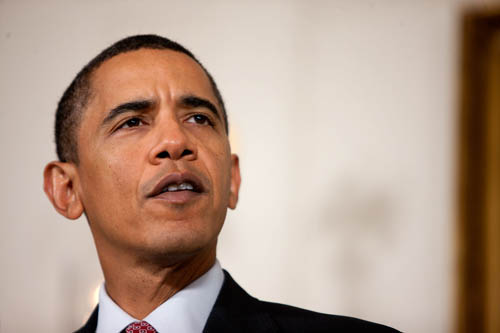
Obama and GaddafiThe botched and confused handling of the conflict in Libya has been a stunning example of President Obama’s leadership style, and of the media’s continued determination to ignore or gloss over anything that makes him look weak, incompetent or indecisive. What started out as a humanitarian mission to protect the civilian population of Benghazi, Libya, soon evolved into a stalemate. The dilemma is that Obama has repeatedly said that the goal is for regime change, but the NATO mission tasked to establish a no-fly zone and to protect the civilians does not provide the means to accomplish that goal.

It wasn’t until events in Egypt unfolded that the world’s attention moved west to Libya. On February 11th, Egypt’s president of 30 years, Hosni Mubarak, stepped down from office after weeks of drama, massive demonstrations, and a sense of inevitability that change was coming to the Middle East. President Obama stepped up to claim credit for his administration’s handling of the situation, but he was immediately faced with a growing crisis in Libya, where the circumstances were quite different from those in Egypt. Mubarak had been allied with the U.S. both militarily and diplomatically for many years. Egypt had kept the peace with Israel, and kept the Iranian-backed Hamas in Gaza from easily acquiring weapons and artillery with which to use against Israel.

Mubarak allowed the media to remain in the country with their cameras running, and chose not to use the kind of ruthless force necessary to shut down the protests against his government. Many analysts expressed concern that the best organized group in the country, other than the military, was the Muslim Brotherhood, which had spawned groups such al Qaeda. The concern was that if the Muslim Brotherhood came to power in the wake of Mubarak’s departure, they were more likely to create an Islamist state governed by Sharia law, rather than a free and democratic state. In fact, there are already ominous signs that another chance at democracy in the Middle East is being hijacked by radical Islamists. One of the new government’s first acts was to allow an Iranian ship to pass through the Suez Canal into the Mediterranean. And less than two weeks after Mubarak stepped down, the radical Sheik Yusuf al-Qaradawi, who had been exiled by Mubarak, addressed a crowd of more than a million Egyptians in Tahrir Square, while Google executive Wael Ghonim, who had become a hero to many for spearheading this revolution when he started up a Facebook page, was denied the right to speak by Qaradawi’s security forces. The outcome of the revolution remains an uncertain concern for the West.

Less than a week after Mubarak stepped down, February 17th became a “day of rage” in Libya, marking the five-year Read More


Reid rejects badly needed $2 Trillion cuts


Harry Reid Rejects CutsReporting from Washington— Battle lines in federal debt talks sharpened markedly Thursday when the Senate’s top Democrat rejected a proposal for $2 trillion in budget cuts as demanded by House Speaker John A. Boehner, saying any cuts must be accompanied by action on closing tax loopholes.

“You can’t do $2 trillion just in cuts,” Senate Majority Leader Harry Reid (D-Nev.) said in an interview in his Capitol office. “There has to be a mix of spending cuts, including defense. There has to be a more fair apportionment of tax policy in this country.”
Republicans have resisted using tax reform to rein in deficits as Congress and the White House try to break a stalemate over raising the nation’s debt limit by Aug. 2 to avoid a first-ever federal default. Boehner’s office reiterated Thursday that tax hikes would not be “on the table” in talks.
Reid said negotiations are likely to drag until the 11th hour, a prospect certain to send shudders through the financial markets and fuel political debate.

Read More: LaTimes.com

From Lisa Mascaro, Washington Bureau of the LaTimes