4 Takeaways From Election 2016 About Millennials (Republicans, Listen Up)

I’ve read all the explanations of how and why Millennials voted the way we did in the recent presidential election. I’ve also spoken with my peers.

Here are four key things about my generation that our newly elected leaders would do well to consider.

1. Millennials Have Compassion

Even though many Millennials are struggling to find a job, they are still active in the causes they care about. As this article from The Washington Post pointed out in 2015, 84 percent of Millennials donated to a charity in 2014, and Millennials are also volunteering for their causes.

Millennials care about people who are mistreated, misunderstood and ignored — often minorities — and want to make the world a better place for them. This compassion is commendable, and this is where I believe Republicans have an opportunity to make inroads with Millennials. Show them how conservative principles reinforce true compassion and care for minority groups.

After all, Millennials are the largest living generation, dominating the workforce and likely to dominate the voting population in the near future. If Republicans want to harness that powerful potential, they need to start now.

2. Millennials Are Suspicious of the Establishment

Data from the Pew Research Center has shown that Millennials are less trusting of others than older generations and are also more detached from institutions than older generations. Seventy-four percent of Millennials “sometimes or never trust the federal government to do the right thing,” The Washington Post reported last year.

Additionally, Millennials place a lot of value in honesty and transparency. As a report from ORC International states, “transparency is vital to establishing trust and loyalty with millennials.” The report discussed the relationship between Millennials and their employers, but I think the same would hold true for Millennials and their president.

So how did that play out this election season? Fifty-five percent of voters age 18-29 voted for Clinton, while 37 percent voted for Trump, according to exit polls. In 2012, 60 percent of Millennials voted for President Obama, Bloomberg reported, adding that Millennial support of third party candidates jumped from 3 percent in 2012 to 8 percent this year.

Millennials rejected Trump as an overall demographic — unsurprising, given his inflammatory rhetoric. But they obviously weren’t huge Clinton fans, coming out instead for Bernie Sanders early on (he got 80 percent of their votes in the Iowa, New Hampshire and Nevada primaries, The Atlantic reported).

Millennials’ low enthusiasm for Clinton (and high enthusiasm for Sanders) underscores Millennial distrust of the establishment and desire for transparency. It is not surprising to me that given the Clinton dynasty’s multiple scandals, repeated dishonesty, rigging of the Democratic primaries and recent FBI investigations, Millennials would reject Clinton or vote for her reluctantly. They saw Sanders as anti-establishment and honest, and placed their trust accordingly. While most Millennials did not favor Trump, some were drawn to him early on for similar reasons.

If Republicans want to gain Millennials’ trust, they should take note of this suspicion toward the establishment and foster an atmosphere of transparency and honesty.

3. Millennials Are (and Desire to be) Connected

For Millennials, camaraderie matters. They are inspired to support causes their peers support, and they want to feel a connection to those causes.

I’ve been encouraged to see my own Millennial friends advocate reaching across the aisle in love in the wake of the election. This is coming from Millennials who voted for Clinton, Trump, a third party or chose not to vote at all. They are seeing the pain, fear and divisiveness, and even those expressing deep disappointment over the results are promoting change through kindness and care, attempting to unify and find connection on matters that everyone can agree upon.

If Republicans in office want to be a part of this, they should publicly promote bipartisan cooperation where it makes sense. Not with faked or meaningless platitudes, but allowing the public to see authentic moments of united effort.

That being said, while many Millennials are calling for peace and unity, many are not.

4. Millennials Can Be Immature

Currently, thousands of Millennials across America are protesting the election of Trump. While I support the protesters’ First Amendment rights, many in my generation need to toughen up.

By toughen up, I don’t mean become calloused or lose compassion. But to be truly effective, Millennials must pair their compassion with mental toughness. This means acknowledging that the world is ugly. People will disagree and even make fun. People can be downright mean and offensive — even some political leaders.

If we want to challenge that ugliness, we have to look it in the eye. Not with tantrums, violence or rage. But with strength of conviction and the kindness we espouse, whether our opponents deserve it or not. That’s how you “go high.”

Maybe I’m overly optimistic, but what can I say — I’m a Millennial and research shows that we are.

What should Republican leaders do with this? Condemn violent acts, always, but address the underlying concerns. If people are protesting what they perceive to be hate, racism, sexism etc. from President-elect Trump, maybe he should attempt to reassure when possible. More of this:

Less of this:

An Opportunity — For Both Millennials and Republicans

As I wrote previously, I believe Millennials have more potential for effecting change in this nation than anybody who sits in the Oval Office. Now that the presidential election is over, that belief is even stronger.

In the midst of an explosive election cycle and after a major disappointment for half of the country, I’ve seen my peers display compassion for others, reject establishment corruption and attempt to connect across racial, economic and political lines. I refuse to focus on the temper tantrums of some Millennials. Rather, I’m focusing on the positive qualities in my generation that I believe can change our culture.

I hope I’m not the only one choosing to focus on the good qualities in my generation and the potential there. I especially hope that our nation’s newly-elected leaders recognize that potential, and seek to work with Millennials for a stronger, more unified nation. (For more from the author of “4 Takeaways From Election 2016 About Millennials (Republicans, Listen Up)” please click HERE)

Follow Joe Miller on Twitter HERE and Facebook HERE.

Have White Evangelicals Joined With the KKK and Nazis?

A gay website announces, “Who’s happy Trump won? The Klan, Nazis and anti-immigrant activists worldwide,” explaining that “racists, homophobes, Islamophobes, haters and anti-semites are genuinely ecstatic over his election.”

A respected NBA coach says, “I’m still sick to my stomach, and not basically because the Republicans won or anything, but the disgusting tenor, tone and all the comments that have been xenophobic, homophobic, racist, misogynistic. And I live in that country where half the people ignored all that to elect someone. That’s the scariest part of [the] whole thing to me.”

Yet it was white evangelicals who played a critical role in getting Donald Trump elected, voting for him at the rate of 81 percent. Accordingly, a headline on USA Today proclaimed, “White evangelicals just elected a thrice-married blasphemer: What that means for the religious right.” And a New York Times op-ed was titled, “The Rage of White, Christian America.”

Are these sentiments exaggerated?

Commenting for Christianity Today, African American pastor Jonathan Brooks said, “Donald Trump is our president and I am speechless. Deep down inside, despite what we have seen over that last few years, I thought we had made progress. I just knew that a blatant racist and accused misogynist could not be the leader of our country. But I was wrong! America proved that we care more about preserving a way of life that privileges a few than protecting the lives of our most marginalized.”

Dominique Gilliard, another African American evangelical leader stated, “While Hillary was undoubtedly a flawed candidate, white evangelicals’ unprecedented supported of Trump — despite his racism, misogyny, and ethnocentrism — is revelatory, and deplorable. Did this bear witness to whiteness rather than the Gospel? What did this communicate to the world about our God?”

As expressed pointedly by Mexican-born Chicago pastor Paco Amador (quoting the words of Sandra Maria Van Opstal), “How long [Lord] must we live in a country that continues in the idolatry of white supremacy and self-preservation?”

But was this election really about “the idolatry of white supremacy and self-preservation”? Did white evangelicals simply ignore Trump’s “racism, misogyny, and ethnocentrism,” indeed, his alleged “blatant” racism? And why did a “slightly larger share of black and Latino voters cast ballots for Trump than supported Mitt Romney in 2012,” as noted in a post-election article on CNN.com?

If a vote for Trump was a vote for “white supremacy and self-preservation,” then why did more black and Latino voters cast votes for Trump than for Romney?

And how many African American and Hispanic evangelicals voted for Hillary Clinton? (Overall, 88 percent of African Americans and 65 percent of Hispanics voted for her.)

While many fine Christians are incredulous that a fellow Christian could vote for Trump, I am equally incredulous that a fellow Christian could vote for Hillary. To me, that is a vote for the shedding of innocent blood in the womb, for radical LGBT activism, for the potential restriction of our religious freedoms, and for an extremely dangerous shifting of the Supreme Court that could have negatively impacted our country for a generation or more.

And, quite candidly, my reluctant vote for Trump had nothing to do with “the idolatry of white supremacy and self-preservation” — of “whiteness rather than the gospel” — nor did I overlook our president-elect’s myriad, glaring faults. And of the many friends I know who voted for Trump, none of them did it glibly, none of them excused his failings, and none of them did it to preserve some kind of white power structure or privilege. (Interestingly, the vast majority of black callers to my radio show voted for Trump.)

How, then, do we bridge this deep, painful gap in our perceptions?

Bridging the Deep, Painful Gap

As a white, male evangelical, I need to listen carefully to my black and Hispanic colleagues, along with others who are appalled at the Trump election (in particular, women of all backgrounds), and I need to understand how threatening and obscene his words sound to them. And as much as I disagree, I need to understand why so many see this as an issue of maintaining white superiority.

More broadly, I need to understand how Trump is perceived by immigrants and minorities in general, especially Mexicans and Muslims. Although the media has certainly inflamed tensions, there is a reason those tensions exist.

On the flip side, those who are appalled that their fellow-believers could vote for Trump need to understand that many of us were primarily voting against Hillary and therefore for the unborn, for a conservative Supreme Court, and for religious liberty. We were also voting against what we felt was the negative direction our country had taken under President Obama, a direction that would have been continued under Hillary Clinton — and to repeat, for us, this had nothing whatsoever to do with “the idolatry of white supremacy and self-preservation.”

And while some of us would question whether Trump is actually racist, let alone blatantly racist, most of us would not dispute that he is the most unlikely candidate ever supported by conservative Christians. Yet we believe that, in God’s sovereign purpose, He could be raising up this unlikely vessel for such a time as this. And the fact that he has so many solid evangelicals so close to him, possibly at a level unprecedented in numerous elections, gives us genuine hope that he has an open ear to our cause and will seek to be the president of all the people of America.

Certainly, some evangelicals have almost granted president-elect Trump the status of savior, even trying to present him as a saint, and I have consistently challenged this mentality. Yet I do not believe that is the case with the vast majority of his conservative Christian voters, many of whom supported other candidates before finally turning to Trump. (Seminary president Dr. Richard Land, who voted for Trump and encouraged others to do so, said on my show that, out of the 17 Republican candidates, Trump was his 18th choice.)

In short, evangelicals who voted for Trump need to understand why their anti-Trump colleagues are so devastated and shocked by the outcome of the election. There are legitimate reasons for their concerns. Conversely, anti-Trump evangelicals need to understand that their colleagues who voted for Trump are not white supremacists who blindly embraced a debased candidate, and we had legitimate, prayerfully calculated reasons for our votes.

In the end, since Donald Trump is the incoming president of the United States, it is imperative that all of us come together and work for the common good, but that can only happen if we do our best to see one another’s perspective.

Can we find a way to join together as one for the good of our hurting nation, even with our deeply mixed views on our president-elect?

We really have no choice. And regardless of our views about president-elect Trump, for whose success as president we pray, we can and must do the work of the church — living godly lives, preaching the gospel, helping the poor and the needy, and standing for justice. (For more from the author of “Have White Evangelicals Joined With the KKK and Nazis?” please click HERE)

Follow Joe Miller on Twitter HERE and Facebook HERE.

Donald Trump Has Laid out His Agenda and Mark Levin Will Hold Him to It

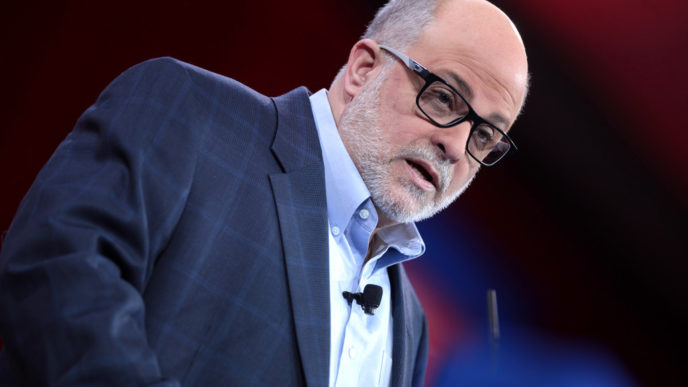
Earlier this week, Conservative Review Editor-in-Chief Mark Levin reviewed the agenda for the first 100 days of Donald Trump’s presidency.

“The first hundred days, the first three or four months are crucial in getting the big things through congress,” Levin said. President-elect Trump laid out his agenda in a speech delivered in Gettysburg shortly before the election, an agenda Levin has called “outstanding.”

Listen:

Among the President-elect’s proposals were a full repeal of Obamacare, tax reform, an end to common core, and—of course—funding for a wall along the southern border and other increased border security measures.

Whatever the first hundred days will hold, be sure that conservatives will hold President-elect Trump’s feet to the fire to ensure he keeps his word. (For more from the author of “Donald Trump Has Laid out His Agenda and Mark Levin Will Hold Him to It” please click HERE)

Follow Joe Miller on Twitter HERE and Facebook HERE.

Hillary Clinton Has Been a Slave to Her Own Ambition. Now She’s Free

Watching Hillary Clinton’s concession speech, I was struck by how serene she appeared to be. There was no bitterness, no veiled barbs at Donald Trump or his deplorables, no insults directed at average Americans, not even any harmless snark. This didn’t seem like the Clinton we’ve all come to know and love loathe. What was going on here?

I had fully expected Hillary’s surprise defeat at the hands of Trump to destroy her. To be denied something she has coveted for so long, in such a surprising way, at the very last minute, must have affected her in ways the rest of us can’t even imagine. I actually thought her health might be in danger. But then it occurred to me: What if she is feeling something completely different? What if this situation is more complex than it seems?

I’m currently rereading “The Lord of the Rings” for, if my count is accurate, the seventh time. With that story in my mind, it’s impossible for me not to draw parallels between the Ring of Power — the One Ring to Rule Them All — and the presidency. What if Hillary has been a slave to her ambition for the last 50 years, just as the creature Gollum became a slave to the ring and the power that came with it? For half a century, she has desperately been pursuing one thing, the presidency. And now, for the first time, it is clear that she will never have it. She is too old to run in four years. Hillary will never be president of the United States.

Gollum’s relationship with the ring was more complicated than mere desire. As Gandalf the wizard said, “He hates and loves the ring, as he hates and loves himself.” Maybe Hillary feels the same way about the presidency. As with all addictions, the object desired creates such disruption in the life of the addict she grows to despise the very thing she lusts after. When that object is destroyed, when all hope of obtaining it is lost, it can be a liberating experience. When the Ring of Power is destroyed in the fires of Mount Doom, all under its spell are set free.

When Hillary lost the primary to Barack Obama in 2008, publically bursting into tears, we all assumed she was feeling the sting of the loss. What if, instead, she was confronting the realization that she would have to do it all over again in eight years? Already in her 60s, she knew then that the next decade of her life would be consumed with campaigning, political maneuvering, and jockeying for position to the exclusion of all else. She had no choice; her uncontrollable ambition demanded it. It must have been exhausting, and you know what? I would have cried too.

Now it’s all over. She never has to campaign again. She can comfortably retire from public life and live out the remainder of her days as a grandmother, if she so chooses. Maybe Hillary’s acceptance that she can never achieve the dream that has haunted her all her life has brought her peace. The curse has been lifted, and she is free to move on.

Well, it’s only a theory, but it would make me happy if it were true. To be doomed to run for president again and again is not something I would wish on my worst enemy, and if Hillary has finally managed to escape that, I wish her peace. (For more from the author of “Hillary Clinton Has Been a Slave to Her Own Ambition. Now She’s Free” please click HERE)

Follow Joe Miller on Twitter HERE and Facebook HERE.

Trump Should Reverse Obama’s Executive Actions. Here Are 7 Areas to Start.

Under the U.S. Constitution, Congress, not the president, creates the laws. Article I of the Constitution grants enumerated legislative powers to Congress. The Constitution assigns the executive the duty to enforce the law, and Article II, Section 3 requires that the president “shall take Care that the Laws be faithfully executed.”

However, throughout the last eight years, we have seen the Obama administration continually abuse the power of the executive branch by issuing unconstitutional, unilateral executive actions to push its agenda. The “old days” of Congress creating our laws have become a distant memory.

President Barack Obama even went so far as to announce his unilateralism, saying, “We’re not just going to be waiting for legislation in order to make sure that we’re providing Americans the kind of help they need. I’ve got a pen and I’ve got a phone.”

Well, it appears that American voters have their own pens, too, and they’ve put them to their ballots now in a stunning and decisive way. On Tuesday, the American people elected Republican outsider Donald J. Trump to serve as the 45th president of the United States.

Now, with control of the presidency, both chambers of Congress, and soon the Supreme Court, conservatives across the country are looking forward to repairing some of the damage Obama has inflicted on our constitutional system.

As long promised, Trump should use the first 100 days of his administration to repeal every illegal executive action the Obama administration has issued while in office.

Here is a list of the seven areas with the most damaging executive actions signed during the Obama administration that must be repealed:

1. Crony Exemptions to Obamacare. While Trump works with Congress to actually repeal Obamacare, he can start by issuing an order to halt some of Obama’s executive actions that created special exemptions to Obamacare for his favored constituencies.

2. Executive Amnesty. The new president must repeal Obama’s unilateral changes to our nation’s immigration laws, which exempted certain categories of illegal aliens from being deported. (This bar on deportations was halted by a court order, but the underlying exemption still remains on the books.)

3. Environmental Protection Agency Overreaches. Trump must repeal Obama’s multiple illegitimate expansions of EPA rules. These new rules have imposed huge costs on society and are crippling the U.S. energy sector.

4. Appeasement of Iran. Trump must repeal the executive order that single-handedly removed U.S. sanctions on Iran. These sanctions provided key leverage to the U.S. in negotiations with Iran, and their removal has cleared Iran’s path in developing a nuclear weapon.

5. Climate Change Bureaucracy. Trump must repeal the executive order that purports to “prepare the United States for the impacts of climate change.” This action from Obama created manifold new justifications for government spending based on inconclusive science.

6. Life and Religious Liberty. Trump should reverse Obamacare’s unprecedented taxpayer funding of abortion. He should also direct the secretary of Health and Human Services to undertake a rulemaking process that will end the mandate for insurance to cover abortion-inducing drugs and contraception, along with “gender transition” therapies and surgeries.

7. “Gender Identity.” Trump should repeal the Obama administration’s Title IX guidance equating “gender identity” with “biological sex.” The Department of Justice and Department of Education have wielded this guidance to punish educational institutions for “discrimination” under Title IX, simply for having separate showers, locker rooms, and bathrooms for men and women.

By making the repeal of these executive actions a priority, the Trump administration will have an easy opportunity to right some of the wrongs of the past administration.

As Henry Ford once said, “Failure is simply the opportunity to begin again, this time more intelligently.” It’s been a while since conservatives have had an opportunity like this one, and it is imperative we take advantage of it. (For more from the author of “Trump Should Reverse Obama’s Executive Actions. Here Are 7 Areas to Start.” please click HERE)

Follow Joe Miller on Twitter HERE and Facebook HERE.

How Left-Wing Billionaire George Soros Manipulated the 2016 Election

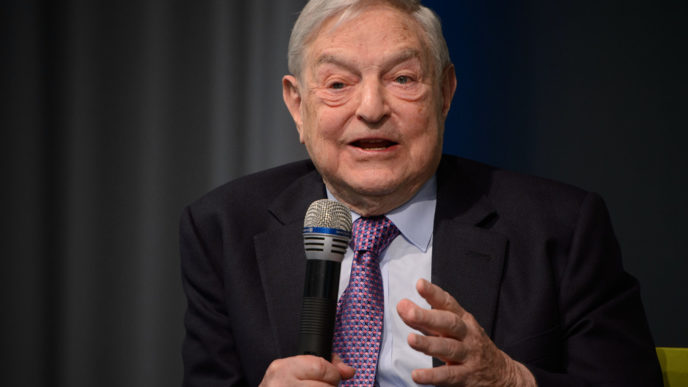
He’s “the puppet master,” Glenn Beck says. He creates what The Washington Times calls an “echo chamber” in the mainstream media. The studies and messages he manufactured were “used verbatim hundreds of times in sources ranging from The New York Times to the Philadelphia Inquirer.”

While left-wing billionaire George Soros wasn’t able to tip the presidential election to Hillary Clinton, he made a significant difference in other ways this election season.

Soros Exposed — Through Hacks

In August, the site DCLeaks released over 2,500 hacked internal documents from Soros’s organizations, primarily his Open Society Foundations. Although the mainstream media has virtually ignored the documents, a handful of conservative sites have been picking through them. J. Christian Adams of PJ Media has put together the biggest exposé.

The leaked documents revealed not just run-of-the-mill leftwing donations, but the type of activism worthy of the title “puppet master.” For instance:

Soros tried to influence European elections in 2014, and is seeking to influence Malaysia’s elections in 2018.

He sought to influence Supreme Court justices on illegal immigration in the case U.S. v. Texas, “primarily via a sophisticated amicus briefs and media strategy.”

The Open Society Foundations funded opposition research on critics of radical Islam.

The Open Society Justice Initiative calls for international regulation of the internet, to determine “what information is taken off the Internet and what may remain.”

He provided $33 million to radical groups like Black Lives Matter to foment unrest in Ferguson, Missouri, and around the country.

Manipulates Media Coverage

Soros has built up a conglomerate of political and media organizations, which he uses to influence public policy and the mainstream media. The leaked documents, Adams observes, “reveal deliberate and successful efforts to manipulate media coverage of election issues in mainstream media outlets like The New York Times.”

For example, he funds organizations like the Brennan Center for Justice that claim there is no voter fraud. The idea of the “voter fraud myth” is then pushed out into the media through his own media operations, including “New America Media,” which caters to ethnic groups, and a “Media Consortium.”

In contrast, Adams notes, “Conservatives and Republicans have no opposing effort or source of funds that represents even a small fraction in opposition to level of the Soros-led manipulation contained in the leaked documents.”

Soros’s organizations include MoveOn.org, ACORN, and numerous pro-amnesty organizations. He has repeatedly referred to himself as a “god,” and wrote in his 1987 book, The Alchemy of Finance, “I admit that I have always harbored an exaggerated view of self-importance — to put it bluntly, I fancied myself as some kind of god or an economic reformer like Keynes or, even better, a scientist like Einstein.”

He amassed his fortune through risky currency trades. He was convicted in 2002 of insider trading by a French appeals court. The Malaysian Prime Minister said in 1997 that Soros’s risky trading was partially responsible for the collapse of several Asian currencies.

Poured Over $25 Million Into the 2016 Election

Soros contributed $8 million to the super PAC associated with Hillary Clinton this past year, and $2 million to American Bridge 21st Century, a PAC that targeted Trump. He donated $3 million to a PAC called Immigrant Voters Win, which seeks to get out Hispanic voters in key swing states. During the primary, he even contributed $488,375 to a PAC supporting Republican presidential candidate John Kasich, in the hopes it would prevent Trump from winning the GOP nomination.

He paid organizations to cause chaos at the Republican National Convention. He gave the left-wing activist race-related organization Color of Change $500,000 to collect signatures for a petition demanding that Coke and other sponsors withdraw their support from the convention. It worked, scaring off several corporate sponsors, and Coke only contributed $65,000, far less than the $660,000 it gave in 2012. Color of Change seeks to defund law enforcement agencies that don’t “defend black lives.”

Soros paid $500,000 to Brave New Films to create a fake petition requesting open carry at the GOP convention. He gave the ACLU $1.7 million for lawsuits that successfully gave protesters more access to Trump events.

As part of his effort to overhaul the U.S. justice system, Soros poured money into several law enforcement races around the country. He contributed a total of $9.6 million to defeat white Republican male DAs in particular, and replace them with minorities who favor a radical transformation of the justice system. He also injected money into Democratic primaries, to ensure the most radical Democrat won. He won all but two of the elections he funded.

He targeted Arizona county Sheriff Joe Arpaio due to Arpaio’s tough approach to combating illegal immigration, contributing a stunning $2.3 million to defeat him. This enabled unknown Democrat challenger Paul Penzone to win, even though he has a history of domestic violence involving his ex-wife. It is extremely rare for a Democrat to get elected to a countywide office in Maricopa County, and would almost certainly not have happened in 2016 but for Soros’ intervention.

Racism, Voting Fraud and Other Meddling

Soros funds organizations that hype up cries of racism, like Black Lives Matter, and others that claim Republicans want to disenfranchise minorities. The fear-mongering seeks to radicalize minorities, and incentivize them to work registering voters and supporting far left candidates.

Soros is the largest contributor to Democratic efforts to block election integrity laws. He committed $5 million to Voting Rights Trust, an organization which fights election integrity laws.

This election cycle, he bankrolled lawsuits challenging these laws in the swing states of Ohio, Wisconsin and North Carolina. The North Carolina law had a “strict photo-ID requirement, shaved a week off of early voting, and cut same-day registration, preregistration and out-of-precinct voting.” He successfully got it put on hold during the election. In Wisconsin, his efforts got a photo ID law reduced in scope.

Soros grants led to Oregon and California moving toward mandatory voter registration, where everyone who is on a government database is automatically put on the list of eligible voters.

At least George Soros is an equal-opportunity manipulator. The U.S. isn’t the only country he wants to change. Russia was so concerned about his influence that it banned the Soros Foundation as a “threat to national security and constitutional order.” (For more from the author of “How Left-Wing Billionaire George Soros Manipulated the 2016 Election” please click HERE)

Follow Joe Miller on Twitter HERE and Facebook HERE.

How Republicans Could Overcome Filibusters by Senate Democrats

As Democrats strategize on how to stop conservative legislation from making its way to Donald Trump’s desk in the White House, Republicans have a little-known rule in their toolbox that would allow them to pass legislation, including a repeal of Obamacare, with a simple majority.

Democrats were able to keep 48 seats in the Senate after Tuesday’s election, giving the party the power to filibuster legislation and effectively prevent conservative policies from being enacted.

But Republicans can turn to a seldom-used Senate rule that would allow them to pass legislation by a simple majority vote—legislation that has a greater chance of earning Trump’s signature after he assumes office Jan. 20.

Called the two-speech rule, the tool limits senators to giving only two speeches in one legislative day on a question before the Senate. A legislative day, which differs from a calendar day, ends when the upper chamber adjourns.

Once a senator gives those two speeches, he or she is not allowed to speak again.

The Senate then would vote on the bill up for debate when there aren’t any more senators who are permitted to speak.

Senators don’t often use the two-speech rule, a December 2014 report from the Congressional Research Service states. However, the report acknowledged that senators may choose to invoke the rule “as a means of attempting to overcome a filibuster.”

Republican senators explored using the two-speech rule earlier this year, when both the House and the Senate were focused on passing 12 individual appropriations bills to fund the government for 2017.

A memo early this year from a Republican Senate aide, James Wallner, urged conservative senators to enforce the two-speech rule to avoid filibusters by Democratic colleagues.

At the time, Wallner was executive director of the Senate Steering Committee, the upper chamber’s conservative caucus. Wallner currently is group vice president for research at The Heritage Foundation.

His Jan. 11 memo says, in part:

The strategy should increase the costs (both physical and political) on individual Democrats for obstructing the Senate’s appropriations work. Doing so forces them to bear the burden of blocking consideration of specific appropriations bills. It also makes the minority’s obstruction tangible to the American people, thereby increasing the public’s awareness of Democrats’ efforts.

Senate Republicans need to secure 60 votes to advance legislation, but will fall short of that threshold in the 115th Congress, when they will hold 52 seats.

Republicans currently occupy 54 Senate seats.

But invoking the two-speech rule would circumvent the chance for a filibuster, as senators instead would voice their opposition or support rather than vote on whether to advance legislation.

Although the Wallner memo focused on how to move appropriations bills forward, the two-speech rule could be applied to future legislation addressing Obamacare—Republican leaders have said they are committed to repealing the health care law—as well as to Supreme Court nominations.

Since Justice Antonin Scalia died in February, one seat has remained vacant on the high court. President Barack Obama nominated Merrick Garland, a D.C. appeals court judge, but Senate Republicans refused to move the nomination and chose instead to wait for a new president to be sworn in.

Since Republicans took control of the Senate in 2014, GOP lawmakers have been stymied in their ability to pass legislation that has any Democratic opposition.

Instead, Democrats have withheld votes on motions to proceed—which advance legislation for final passage—in an effort to “extract concessions” from Republican leaders, the Wallner memo stated.

Democrats’ efforts have been especially noticeable during spending fights in recent years. In response to filibusters from the minority party, Republicans frequently have removed GOP-favored policy riders attached to legislation or raised spending levels once they return to the negotiating table, action that has angered conservative members. (For more from the author of “How Republicans Could Overcome Filibusters by Senate Democrats” please click HERE)

Follow Joe Miller on Twitter HERE and Facebook HERE.

Is the Wall Possible? What Trump Can Do on Immigration

When Donald Trump is inaugurated as president in January, he has the authority to dramatically reshape immigration policy by himself.

While Trump would need Congress to appropriate money to fund his biggest campaign promise — building a wall across the southern border — he can act alone in other areas, just like President Barack Obama has, in deciding how to enforce immigration law.

“The president does have a lot of executive authority and discretion to enforce the law as he wishes,” said David Leopold, an immigration attorney and former president of the American Immigration Lawyers Association. “There is a lot of immigration enforcement discretion.”

How Trump Can Act Alone

In interviews with The Daily Signal, Leopold and other experts described how Trump could act on the many promises he made to overhaul U.S. immigration policy.

Trump can take immediate actions by himself, starting with canceling Obama’s 2012 Deferred Action for Childhood Arrivals program, or DACA, which has provided deportation protection and work permits to about 800,000 immigrants who were brought to the U.S. illegally as children.

The program grants protection for two years, after which beneficiaries can apply again. New applicants can still request DACA protection through the Department of Homeland Security’s U.S. Citizenship and Immigration Services (USCIS).

“One of questions is whether he would cut [DACA] off immediately or let the program sunset so that when people’s protection expires, he does not allow for renewals,” said Faye Hipsman, a policy analyst at the Migration Policy Institute. “USCIS is still receiving first-time DACA applications, so that would occur in a pretty staged and staggered manner.”

Trump could also permanently cancel a broader Obama program that made more people eligible for DACA protection and extended legal status to include the parents of U.S. citizens or legal residents. The Supreme Court has blocked that program.

In addition, Trump, if he wishes, can change the priorities of the Department of Homeland Security on who it seeks to deport.

The Obama administration asked Immigration and Customs Enforcement (ICE), the agency that handles most deportations, to focus its resources on those who are considered threats to public safety, or are have been convicted of crimes, usually a felony.

Other priorities for deportation include individuals who have been convicted of multiple misdemeanors, and recent arrivals who came here illegally after Jan. 1, 2014.

“Right now, the way the Obama administration is treating it, is unless you are a priority, we won’t actively go after you. Trump can flip that,” said Theresa Cardinal Brown, the director of immigration policy at the Bipartisan Policy Center, and a former policy advisor at the Department of Homeland Security.

After calling for mass deportations early on in his campaign, Trump has walked that back to say he would focus enforcement on illegal immigrants with criminal records.

“Right away, border security is one of the top five things he will try to address right out of the starting gate,” said Jessica Vaughan of the Center for Immigration Studies. “That includes taking the handcuffs off the immigration agencies and letting them get back to doing their job according to the law. I don’t want to say there will be immediate drastic change. But there are many things the Trump administration can do on their own right away to restore control to immigration policy.”

Seeking Help From Congress

Trump would need Congress’ cooperation on his signature proposal — finishing the construction of a wall across the southern border.

The border security mechanism that Congress would support would likely not come in the form of a brick-and-mortar wall described by Trump, but as extended fencing.

Immigration experts say the U.S. has spent billions in recent years fencing about one-third of the border.

The next president has the template to finish the job.

In 2006, the Republican-controlled Congress passed the Secure Fence Act, which authorized 700 miles of additional fencing along the border with Mexico. President George W. Bush signed the law. However, his administration later pushed for an amendment to the bill to give the government the discretion to determine what type of fencing was appropriate in the various areas of the border, depending on environmental and land-use restrictions.

As a result of that amendment, the majority of the fencing erected as a result of the law has been vehicle barriers — designed to stop vehicles rather than people, and single-layer pedestrian fencing. The original law called for double-layered fencing. Subsequent Republican attempts to require double fencing have failed.

“Depending on what type of infrastructure he wants, [Trump] probably already has the authorization to do it,” Brown said. “He just needs Congress to appropriate money.”

Similarly, Congress would have to approve the funding for another major Trump proposal: tripling the number of ICE agents who focus on deporting immigrants living in the country illegally.

Brown says personnel costs already make up about 80 to 90 percent of the budgets of ICE and Customs and Border Protection (CBP), the agency that protects the border.

The border patrol, meanwhile, has faced challenges fulfilling hiring goals mandated by Congress.

Republicans in Congress who share Trump’s hardline positions on immigration say they welcome his plans, even though they will certainly cost a lot of money.

“It seems to me the Republican conference sees we just had a seismic, historic election so there is a new mandate to get things right with immigration,” said Rep. Dave Brat, R-Va., in an interview with The Daily Signal. “It was one of [Trump’s] big issues, and one of my big issues that I ran on. So yes, it is worth the money. Look at France and Germany. If you don’t secure borders, you lose the entire country.”

House Speaker Paul Ryan, R-Wis., who met with Trump on Thursday, was asked by Fox News’ Bret Baier if he supports building a wall but committed only to “physical barriers.”

“I’m in favor of securing the border,” Ryan said. “And I do believe you need to have physical barriers on the border. I will defer to the experts on the border as to what is the right way to actually secure the border.”

Senate Majority Leader Mitch McConnell, R-Ky., is less committal on whether he’d support paying for a border wall.

Speaking to reporters Wednesday, McConnell did not directly answer questions about if he supports Trump’s wall proposal.

“I’m not going to go back and relitigate events of the past,” he said. “We have a new president. I would like to see him get off on a positive start. I think we should look forward and not backward and kind of rehash and relitigate the various debates we had internally and with the Democrats over the past year.”

Pressed again, McConnell added: “Border security is important. I think even our Democratic friends realize we haven’t done a very good job of that. Achieving border security is something that I think ought to be high on the list.”

But despite Republican control of the House and Senate, Trump’s border security plans needing congressional approval will likely be opposed by Democrats. In the Senate, Democrats still have the power of the filibuster to block legislation.

“If enforcement is his primary push, Democrats will be opposed to that unless legalization is part of the conversation,” Brown said. “That has been the quid pro quo on immigration for years.”

More Trump Proposals

Along with his more prominent proposals, Trump has also called for punishing so-called sanctuary cities that limit their cooperation with federal immigration authorities.

Trump could withhold federal funding from those cities, but would need support from Congress to do so.

The president-elect has not limited his plans to illegal immigration.

He said he would reduce legal immigration levels, a step requiring the approval of Congress.

And Trump said he would suspend immigration from countries that are “compromised by terrorism,” although he has not clarified what countries he’d consider. (For more from the author of “Is the Wall Possible? What Trump Can Do on Immigration” please click HERE)

Follow Joe Miller on Twitter HERE and Facebook HERE.

A Quick, Heartfelt Thank You Note to My Democrat Colleagues

The headline at Ann Althouse’s place says it all: “The Democrats will now control next to nothing above the municipal level.”

She points to a a despondent Jim Newell at Slate (I read it, so you don’t have to) who offers us a long overdue obituary for the mummified husk of the far left Democrat Party.

THE DEMOCRATIC PARTY ESTABLISHMENT IS FINISHED
The Democrats will now control next to nothing above the municipal level… The Democratic Party establishment has beclowned itself and is finished…

…I think of the lawmakers, the consultants, the operatives, and—yes—the center-left media, and how everything said over the past few years leading up to this night was bullsh**…

…The party establishment made a grievous mistake rallying around Hillary Clinton. It wasn’t just a lack of recent political seasoning. She was a bad candidate, with no message beyond heckling the opposite sideline. She was a total misfit for both the politics of 2016 and the energy of the Democratic Party as currently constituted. She could not escape her baggage, and she must own that failure herself.

Theoretically smart people in the Democratic Party should have known that. And yet they worked giddily to clear the field for her. Every power-hungry young Democrat fresh out of law school, every rising lawmaker, every old friend of the Clintons wanted a piece of the action. This was their ride up the power chain. The whole edifice was hollow, built atop the same unearned sense of inevitability that surrounded Clinton in 2008, and it collapsed, just as it collapsed in 2008, only a little later in the calendar…

…the few Democratic leaders who remain are going to say that it was just a bad note struck here or there, or the lazy Bernie voters who didn’t show up, or Jim Comey, or unfair media coverage of Clinton’s emails, to blame for this loss. I am already seeing Democrats blaming the Electoral College… Don’t listen to any of this. Everything is not OK. This is not OK.

This prompted me to write a quick thank you note to those who may have voted Democrat in 2008 and 2012.

Dear Democrats,

Hillary Clinton was indeed a sucky candidate.

But Barack Obama was exposed as precisely the charlatan we predicted as early as 2007. See, for example, the illustrated tale I wrote entitled “Thirty Degrees Below Zero.”

Now it is clear:

The rise of President Trump is the true legacy of Mr. Obama and his successful campaigns to destroy the health care system, flood the country with illegal aliens, tarnish the sanctity of the vote, upend the rule of law with a thoroughly politicized Department of “Justice”, target his political opponents using the IRS, fuel the rise of a nuclear Iran, seed the Middle East with the most vicious brand of Islamist throwbacks seen in a thousand years, encourage Russian and Chinese aggression against our military, invite Muslim Brotherhood terrorists into the White House, crush the will to work by flooding able-bodied Americans with welfare benefits, initiate a veritable war on cops by cheering racialist terror groups like Black Lives Matter, suppress economic growth with millions of pages of new regulations… all while doubling the national debt!

Congratulations!

Thank you for returning the entire apparatus of government to those who actually care about America.

Sincerely, Doug

I’ll quote America’s most petty president ever on this matter, who — while meeting with the opposition party for the first time after his inauguration — said “elections have consequences” and “I won.”

Mr. Trump is now fully justified in echoing those comments to a Democrat Party that has been repudiated across the land.

As a wise man once said, the greatest pleasure in life is to crush your enemies, to see them driven before you and to hear the lamentation of their women. (For more from the author of “A Quick, Heartfelt Thank You Note to My Democrat Colleagues” please click HERE)

Follow Joe Miller on Twitter HERE and Facebook HERE.

How Trump Closed the Deal With Evangelicals

“Weeping may endure for the night, but joy comes in the morning.” Those words from the Psalmist, King David, rang especially true for many Americans on November 9th when they awoke to the news that the nation had rejected the continuation of the anti-family, anti-faith policies of Barack Obama by electing Donald Trump in perhaps the most stunning political upset of the modern age. In a year of surprises, the ultimate outsider delivered the biggest, tapping into the frustration that pollsters didn’t detect and liberal elites never took seriously.

“The forgotten men and women of our country will be forgotten no longer,” vowed the president-elect, who not only overcame the opposition of the Democratic Party, but his own — soaring to victory in spite of a biased media, his own personal baggage, lopsided polls and a bevy of Hollywood stars. In disbelief, pundits watched as the electoral map turned a sea of red, colored by almost a decade of disillusionment with the president’s extremist agenda. Fueled by massive turnout, the highest in U.S. history, voters delivered a stinging repudiation — not just of Hillary Clinton — but her party’s ultra-liberal agenda and arguably the entire Obama era.

But the night wasn’t just a vindication of Donald Trump. It was also a validation once again of the evangelical movement, which once again overcame the media’s narrative of division to deliver one of the most significant political messages this country has ever seen. In nearly every election cycle for the last 40 years, the Left has tried to bury a movement they wish had never been born. And on the night of November 8th, they learned just how impossible that prospect will be. Evangelicals, many of whom (myself included) backed other candidates during the primary, quietly assessed the perilous state of the nation and unified behind Trump in greater number than they had behind the last three GOP nominees. To the astonishment of everyone, Trump outperformed John McCain, Mitt Romney and even George W. Bush — winning an overwhelming 81 percent of the evangelical vote.

If the media had questions about the influence of the religious right, they were answered early Wednesday morning by the greatest coalescence around a Republican nominee in two decades. It turns out the press had about as much success writing the obituary of the evangelical movement as it had predicting this election. Anyone who traveled the country these last few months saw how values voters were drawn to Donald Trump, not because of shared values, but because of shared concerns over the damage a Clinton Supreme Court would do to our freedoms. Recognizing that national security hung in the balance, they saw this as an opportunity, after eight years of President Obama’s repressive policies, to make freedom mean something again.

They also had the opportunity to hear, along with the rest of America, one of the best arguments against partial-birth abortion the country has ever heard in a presidential debate, in which Trump described — in detail — the barbaric procedure that rips a child out of the womb moments before birth. It may have been the most significant moment — not just of Trump’s campaign, but in the history of modern presidential politics. In four short sentences, the GOP nominee closed the deal with millions of pro-life voters, solidifying their support as the best chance to end America’s nearly 44 years of Court imposed abortion on demand. According to pollster George Barna, politically engaged evangelicals rank abortion as their top issue (30 percent) and Supreme Court nominations a close second (28 percent), the final debate delivered exactly the clarity they were hoping for.

In the end, though, what we witnessed wasn’t just the revenge of the deplorables, but the collapse of the Obama legacy. After the spectacular failures of Obamacare, the demoralization of our military, the explosion of lawlessness, tolerance of corruption and obsession with social engineering, Americans finally have the opportunity to rebuild the country they once knew. But the election is just the starting gun. Donald Trump may open the door to America’s solutions, but he was never meant to be the solution. The true transformation of a society starts in the hearts and minds of men. And under an administration with no interest in continuing the eight-year war on the First Amendment, we may finally see what the Church is capable of. In the meantime, one thing about this historic uprising is clear: Americans are looking for leaders of conviction. And as the results of the race for president show, they will accept no substitutes. (For more from the author of “How Trump Closed the Deal With Evangelicals” please click HERE)

Follow Joe Miller on Twitter HERE and Facebook HERE.