As Catholic Scandal Unfolds, Pope Francis Looks Increasingly Blameworthy

The recent publication of a devastating report on Pope Francis in the German news magazine Der Spiegel marks a new phase in the continuing crisis in the Catholic Church. The report (as yet unavailable in English) is entitled: “Thou shalt not lie: The silence of the shepherds.”

Contradicting the widespread image of Pope Francis as a “reformer” concerned to expose clerical sexual abuses within his church and punish the offenders, the report reveals a pope who for years has been indifferent to the complaints of abuse survivors, and has surrounded himself with an inner circle of close advisors, several of whom have been accused of cover-ups. . .

The report is the carefully documented result of hard journalistic work, some of it in Argentina, where Francis, then Jorge Bergoglio, had been cardinal archbishop before his elevation to the papacy in 2013. It also gives voice to ordinary lay Catholics whose complaints about clerical sex abuse Francis has studiously rejected or ignored. These charges do not come from Vatican insiders who want a grudge match with Francis over doctrinal differences.

For example: An Argentine woman, Julieta Añazco, says that a priest sexually abused her when she was six years old. She and 13 other survivors wrote to the pope shortly after his election. They have had no reply. A defender of Argentine abuse survivors, Juan Pablo Gallego, says that in Argentina, Francis is suspected of having protected rapists and child abusers “for years.” This witness points to a certain Fr. Grassi, now in prison for raping teenage boys. Francis ordered a legal report to defend Grassi. . .

Der Spiegel is a major European news outlet with a left-leaning bias. No one could seriously suspect it of wanting to do a hatchet job on Francis because of ideological differences. In fact, early in Francis’ Papacy, Der Spiegel published an adulatory article on him, describing him as a pope who would “clean up the Catholic Church and improve its image.” (Read more from “As Catholic Scandal Unfolds, Pope Francis Looks Increasingly Blameworthy” HERE)

Follow Joe Miller on Twitter HERE and Facebook HERE.

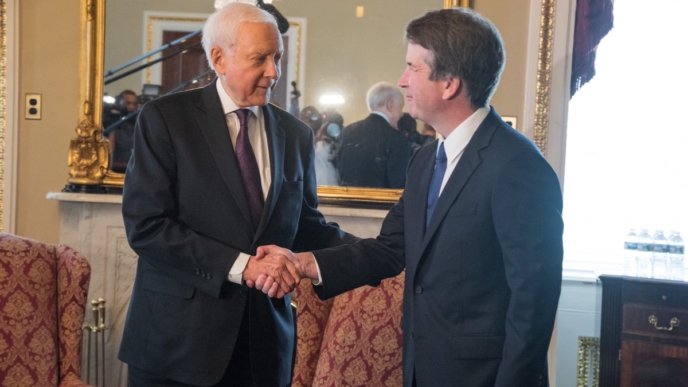
I’m an Immigrant, Minority Woman Going Republican Over Democrats’ Treatment of Kavanaugh

I have become a unicorn. My metamorphosis didn’t require a magic spell or potion, or even a trip to a well-reviewed plastic surgeon to add a horn to my head. All it took was Democrats’ treatment of Brett Kavanaugh over the last few weeks to turn me into that elusive creature: a minority, immigrant woman who supports Republicans.

I moved to the United States from Trinidad and Tobago eight years ago when I married my husband, Christopher, former U.S. Supreme Court justice Antonin Scalia’s eighth (and, in my opinion, most lovable) child. Some people might read that and think, “Well, that’s no surprise then; Justice Scalia’s daughter-in-law is hardly likely to be anything but Republican!”

But they would be wrong. I’ve always considered myself politically moderate: I am unapologetically pro-life, but my views on affirmative action, Black Lives Matter, and gun control made me sympathize strongly with Democratic perspectives and occasionally led to arguments with my husband and father-in-law. . .

Fast-forward to 2018, and Kavanaugh’s nomination to the Supreme Court. Protests and vows to block him by any means, “using every available tool,” followed almost immediately. Anybody paying attention knew that things were about to get interesting. Unfortunately, things got less interesting than ugly and convinced me that Democrats are not who they claim to be.

The party that established itself as a champion for the voiceless, powerless, and wrongfully accused, betrayed its values and launched a vicious attack on Kavanaugh that left him voiceless, powerless, and completely incapable of defending himself. Against all logic and good faith, they released uncorroborated allegations of sexual misconduct to the public, counting on the backdrop of the Me Too movement to make them that much harder to criticize or ignore. I still cannot reconcile these actions with the social and criminal justice reform platforms that Democrats campaign on. (Read more from “I’m an Immigrant, Minority Woman Going Republican Over Democrats’ Treatment of Kavanaugh” HERE)

Follow Joe Miller on Twitter HERE and Facebook HERE.

Did Lisa Murkowski Cheat on Her Fifth Attempt to Pass the Alaska Bar Exam?

In October 2010, McClatchy News Service reported that Senator Lisa Murkowski failed the Alaska Bar Exam four times, and only passed on her fifth try after receiving help from PMBR, a company that offers courses on how to pass the bar.

The story went on to report how Lisa Murkowski subsequently went to work for PMBR, helping other students struggling with the bar exam.

What the press failed to report is that the very company Lisa Murkowski received assistance from, and later worked for, was slapped with an $11.9 million judgement against them for “copyright infringement” and “unfair business practices.” In other words, they cheated.

The judge found that questions on the Multistate Bar Examination were illegally obtained and used by PMBR in direct violation of copyright law. This illegally obtained information was then used to assist clients to pass the exam. The National Conference of Bar Examiners filed the suit against PMBR creator and CEO Robert Feinberg and Dona Zimmerman for a 2003 incident in Anchorage, Alaska, after Feinberg and employee Dorothy Benson were caught carrying notes on the Alaska Bar Exam out of the testing room. This initiated a broader investigation by the NCBE, resulting in legal action.

As the founder and CEO of PMBR, Robert Feinberg’s direct involvement in this scam raises disturbing questions relating to Lisa Murkowski’s involvement with her former boss, and whether she ever legitimately passed the Alaska Bar.

After failing the bar exam on four previous occasions, did Lisa Murkowski cheat on the fifth try? And more disturbing, did she then spend the next several years assisting others to cheat?

In some cases, PMBR reported success rates as high as 90% compared with the average success rate of 53%. Clearly, those using this fraudulent company were advantaged in an unfair way.

Alaskans deserve to know whether their United States Senator writing laws in Washington has the basic competency required to practice law in her home state, and whether she unethically used and knowingly assisted in a fraudulent pay-to-play scheme that degraded her profession. It’s time for Lisa Murkowski to come clean.

Follow Joe Miller on Twitter HERE and Facebook HERE.

Complacent Conservatives Should Learn the Murkowski Lesson

If we are so busy “owning the libs” that we ignore the libs festering within our own ranks to the point where “our party” agrees with 90 percent of what the libs want, isn’t it time we focused on cleaning our own house?

The biggest news of the day outside the Kavanaugh cloture vote in the Senate is that one Republican, Lisa Murkowski from the solid red state of Alaska, voted against him. Suddenly, conservative commentators, writers, fund-raisers, and noisemakers are appalled by her behavior and reminiscing about the 2010 primary, when Joe Miller successfully wrestled the GOP nomination away from Murkowski, only to lose to her in a write-in bid for the general election. Some have focused on GOP establishment figures helping Murkowski behind the scenes to win in the general election. But what everyone seems to miss is that there was another challenge in 2016, after six more years of betrayals from Murkowski, including voting for almost all of Obama’s judicial nominees. The fact that so many of these “professional” activists don’t even recall that election is itself problematic.

A healthy conservative movement would have ensured that McConnell and party leaders denied Murkowski support for the GOP nomination in 2016 after she left the party in 2010, was pro-abortion, and failed to exhibit a modicum of support for anything in the party’s platform. Yet our side, always lacking the ability to walk and chew gum at the same time, was so fixated on Trump and the liberal reaction to Trump – and the reaction to the reaction – that it missed the trend of nominating more liberals than ever to the House and Senate. We all are painfully aware of how we paid for complacency in 2016. That complacency continued into this year, when all we cared about was the Democrats and the media and we allowed many seats to fall into the hands of RINOs. This is why almost all the victories we’ve had were that things Trump was able to do without Congress.

Joe Miller managed to secure the Libertarian Party nomination to challenge Murkowski in a four-person race in the general election of 2016. As I noted in my endorsement of Miller, he had a terrific shot at winning, given the dynamics. Indeed, Murkowski only got 44 percent of the vote. Miller had a strong showing at 30 percent, but had not a penny to his name because no conservative organization, much less the party establishment, focused on him.

Don’t give me the excuse of party labels. Everyone knew that Miller was really a conservative Republican using the other party for ballot access and that he would be a solid vote for all Trump’s nominees. Everyone knew where Murkowski was on judicial nominees, and indeed, Miller warned about this very outcome on my podcast during the 2016 election.

But we were all complacent, as we have been in almost every single primary the past two cycles. We allow one RINO after another in the reddest of states and districts to continue winning, and many of them even get Trump’s support.

Primaries matter. Nominating Republicans who will fight on the budget, immigration, and health care matters.

Look around the map and name me a handful of House and Senate candidates you are inspired by. No, we don’t need a Dave Brat or Jim Jordan from every state, although that would be nice. Is it too much to ask that we strive for a Marsha Blackburn from every red state? At least she is promoting our messaging on immigration and other issues. Many of the other candidates that we so badly hope will win have Liberty Scores in the 30s, support amnesty, and are running on the core elements of Obamacare.

Where is our strategy for the day after November 7 to work state by state and district by district for 2020 to select the best Republicans and to pressure Trump to lend his support to the right candidates? Where is our strategy to ensure that we don’t continue codifying Democrat priorities on almost every domestic policy issue?

There is still one outstanding race left this year. The primary for the open seat left by Thad Cochran in Mississippi is being held on general election day. Mitch McConnell ensured that the governor appointed a know-nothing big-government Republican who was a Democrat her entire life. Will Cindy Hyde-Smith be as bad as Murkowski and sink GOP judicial nominees? No. But is this the best we can do from a state this red with a guy like Chris McDaniel running against her? He is just five points behind, yet because conservatives have been asleep, Trump was given a free pass to endorse the Swamp against a man who arguably catalyzed the Trump movement and won the Republican vote against Thad Cochran in 2014.

So, what are we going to do after November? Just focus on the presidential election? We will never change the outcome of most domestic policy with the same congressional leaders and rank-and-file, especially when Trump signals support for Kevin McCarthy as GOP leader. The outcome will not be any better than it was this term. We need a strategy to elect better Republicans early on and pressure a ready and willing President Trump to get on the right side of this. He can’t drain the Swamp by refilling it.

Without Trump’s support, it is nearly impossible to win a primary against the party apparatus. Conservative candidates are all torn to shreds by endless smears, some of which are almost as bad as the ones against Kavanaugh. Except, unlike Kavanaugh, who is revered by the establishment, for these candidates, most D.C. conservative media figures join the pile-on or completely ignore the attacks.

We have a blueprint to electing more conservatives by ensuring grassroots candidates that if they toss their hats in the ring, we will help secure a Trump endorsement, which is worth more than $1 million in donations. That in itself will help attract better grassroots candidates if they know they will have his backing, which will protect them from the inevitable smear machine.

Ultimately, there is a third option between voting Republican or Democrat in November. It’s engaging in all the primaries before November and also staying engaged and using our platforms in this industry to inform our core base of the key legislative fights and make the members feel the pressure and the pain.

It’s lazy and intellectually dishonest to ignore almost every meaningful policy fight and primary opportunity within a two-year interval, only to focus on voting Republican at all costs on the first Tuesday in every November. I could respect the “we can’t let Democrats win” crowd a lot more if they actually joined us and methodically ensured long before November that we are not indeed nominating Democrats under our own banner.

It’s time to learn from our mistakes and get to work. (For more from the author of “Complacent Conservatives Should Learn the Murkowski Lesson” please click HERE)

Follow Joe Miller on Twitter HERE and Facebook HERE.

No, Anthony Kennedy, It Is You Who Destroyed Democracy

The country is racked with strife and acrimony over the filling of a single Supreme Court seat. Nobody is supposedly more dismayed over the rancorous political debate than the man who vacated the seat himself. But if Anthony Kennedy would actually look in the mirror, he’d understand that he is the cause of the problem we have with idolatry of the Supreme Court.

Speaking to a group of high school students in his hometown of Sacramento, California, the former justice lamented the loss of civil discourse and the decline of democracy. “Perhaps we didn’t do too good a job teaching the importance of preserving democracy by an enlightened civic discourse,” said Kennedy in response to concerned questions from the audience last Friday. “In the first part of this century, we’re seeing the death and decline of democracy.”

Leaving aside the fact that we are a republic and not a democracy, Kennedy should look at himself to discover the number-one source of the breakdown of our democracy or republic. When you believe that all the power over our culture and society and even our borders resides in the hands of unelected judges, most pivotally the “Kennedy swing vote” on the Supreme Court, then nothing else matters but who will fill that seat. Our Founders didn’t envision this much uncivil discourse over a single Supreme Court seat because they understood that we have three branches of government, with the judiciary as the weakest, and 50 individual state governments. But according to Kennedy, a Supreme Court justice can single-handedly redefine the building block of all civilization from the bench.

In the infamous same-sex marriage case of 2015, Justice Anthony Kennedy didn’t just redefine marriage from the bench. He remade our Constitution and our entire system of governance. After asserting that the framers of the Fourteenth Amendment couldn’t possibly know “the extent of freedom and all its dimensions,” Kennedy penned twenty-three words that will forever endanger our sovereignty unless the courts are stripped down to size: “and so they entrusted to future generations a charter protecting the right of all persons to enjoy liberty as we learn its meaning.”

The “we” is, of course, referring to the courts. Kennedy believes that the courts are the final say even over natural law and that they can rediscover new insights into the Constitution as they see fit.

This is more power than King George held at the time of the Revolution. As such, it doesn’t take a genius to figure out why such a fabricated position of power will bring out the worst in America every time there is a vacancy.

A polarized and diverse country of this size will always reflect sharp political and societal disagreements. But at least when those decisions are made through the political process, there is always recourse for the losing side to force compromises, concessions, and conditions on those changes, or they can live to fight again another day, reverse course through the electoral process, and see their vision of society actualized through the new representatives.

As Justice Scalia used to say, “Persuade your fellow citizens it’s a good idea and pass a law. That’s what democracy is all about. It’s not about nine superannuated judges who have been there too long, imposing these demands on society.”

None of this can occur when the consequential societal issues of our time are decided by the unelected branch of government, as Anthony Kennedy would have it.

What’s worse, now any district judge, deliberately shopped by a plaintiff, can create new rights. Just last night, Judge Edward Chen of the Northern District of California said that Trump must continue Temporary Protected Status for primarily illegal aliens from Sudan, El Salvador, Haiti, and Nicaragua. As we noted in a similar lawsuit, the statute explicitly strips jurisdiction over this issue from courts, the president has full authority to discontinue the status, and the statute requires that the program only be temporary. Yet judges are now creating a right to make a temporary humanitarian program a permanent amnesty for illegals.

At the same time, the Ninth Circuit is now asserting that ICE can’t detain Central American teenagers suspected of being MS-13 members. The court said these individuals are entitled to litigate their designation as a gang member, even though they have no right to be in this country in the first place.

Remember, we already won a Supreme Court case over whether a plaintiff can assert that Trump is banned from enforcing immigration law as written because he is a supposed racist, and the high court tossed it out. Yet it’s meaningless. With the system Kennedy and others created, it’s heads the Left wins, tails the Left wins. It’s a perfect one-directional ratchet that Kennedy and his ilk in the corrupted legal profession have created.

Once we agree that a judge sets the terms for life, marriage, and borders, there’s nothing left in our political system but to tear each other apart over judicial picks.

During a speech he delivered at Harvard in 2015, Kennedy was asked by a law student whether state officials are always bound by the “new insights” of Kennedy and his colleagues and whether they are forbidden to “act according to the old understanding of life and the Constitution.”

Kennedy replied by extolling the virtues of those who resign when their faith comes into conflict with what he views as the law. He even gave the bizarre analogy of judges resigning in Nazi Germany, and then noted the following:

Great respect, it seems to me, has to be given to people who resign rather than do something they view as morally wrong, in order to make a point. However, the rule of law is that, as a public official, in performing your legal duties, you are bound to enforce the law.

So, Kennedy himself believes that his branch of government alone has the power to unilaterally alter the Constitution and force others to resign or break the real moral law, reminiscent of a dark time he himself references.

Indeed, there is nothing more antithetical to democracy than the system Kennedy has built for his entire life. If we would undo his judicial tyranny, we would go a long way toward restoring our democratic republic and defuse some of the polarization through federalism.

In one of his final dissents, in Montgomery v. Louisiana, Justice Scalia warned of the dangers of Kennedy’s penchant for inventing new rights. In that case, Kennedy discovered that a sentence of life imprisonment without parole for a juvenile murderer essentially violated the Constitution, even though this practice had been in place since our Founding. He called Kennedy’s opinion an “embarrassment” and an extortion of states in “Godfather fashion.” Scalia observed that Kennedy was also the author of an opinion a decade earlier that essentially gutted the death penalty for juvenile murderers on the basis that life in prison without parole was a severe enough punishment. Yet, a decade later, Kennedy was able to discover a new right for juveniles against even that punishment, much as he discovered gay marriage in the Constitution just two years after he said that states get to decide the issue. “As we learn its meaning,” indeed!

Kennedy made the court powerful enough that everyone in the country feels that their survival depends upon it, so of course they will act out during a nomination fight … as if their survival depends upon it! As Scalia warned in Obergefell, “With each decision of ours that takes from the People a question properly left to them—with each decision that is unabashedly based not on law, but on the ‘reasoned judgment’ of a bare majority of this Court—we move one step closer to being reminded of our impotence.”

Indeed, Anthony Kennedy has nobody to blame but himself. (For more from the author of “No, Anthony Kennedy, It Is You Who Destroyed Democracy” please click HERE)

Follow Joe Miller on Twitter HERE and Facebook HERE.

Creating a Suspect Society: The Scary Side of the Technological Police State

It’s a given that Big Brother is always watching us.

Unfortunately, thanks to the government’s ongoing efforts to build massive databases using emerging surveillance, DNA and biometrics technologies, Big Brother (and his corporate partners in crime) is getting even creepier and more invasive, intrusive and stalker-like.

Indeed, every dystopian sci-fi film (and horror film, for that matter) we’ve ever seen is suddenly converging into this present moment in a dangerous trifecta between science and technology, Big Business, and a government that wants to be all-seeing, all-knowing and all-powerful—but not without help from the citizenry.

On a daily basis, Americans are relinquishing (in many cases, voluntarily) the most intimate details of who we are—our biological makeup, our genetic blueprints, and our biometrics (facial characteristics and structure, fingerprints, iris scans, etc.)—in order to navigate an increasingly technologically-enabled world.

As journalist Anna Myers notes, “Fingerprint readers, eye scans, and voice recognition are no longer just the security methods of high-tech spy movies. Millions of mobile phone, bank, and investment customers now have these technologies at their fingertips. Schwab uses voice recognition, Apple uses fingerprints, Wells Fargo scans eyes, and other companies are developing heartbeat or grip technology to verify user identity. Whether biometric technology will thrive or meet its demise depends not only on the security of the technology, but also whether the U.S. legal system will adapt to provide the privacy protections necessary for consumers to use it and for companies to invest in its development. Currently there is no federal law and only one state with a law protecting biometric information.”

Translation: thus far, the courts have done little to preserve our rights in the face of technologies and government programs that have little respect for privacy or freedom.

Consider all the ways we continue to be tracked, hunted, hounded, and stalked by the government and its dubious agents:

By tapping into your phone lines and cell phone communications, the government knows what you say.

By uploading all of your emails, opening your mail, and reading your Facebook posts and text messages, the government knows what you write.

By monitoring your movements with the use of license plate readers, surveillance cameras and other tracking devices, the government knows where you go.

By churning through all of the detritus of your life—what you read, where you go, what you say—the government can predict what you will do.

By mapping the synapses in your brain, scientists—and in turn, the government—will soon know what you remember.

By mapping your biometrics—your “face-print”—and storing the information in a massive, shared government database available to bureaucratic agencies, police and the military, the government’s goal is to use facial recognition software to identify you (and every other person in the country) and track your movements, wherever you go.

And by accessing your DNA, the government will soon know everything else about you that they don’t already know: your family chart, your ancestry, what you look like, your health history, your inclination to follow orders or chart your own course, etc.

Of course, none of these technologies are foolproof.

Nor are they immune from tampering, hacking or user bias.

Nevertheless, they have become a convenient tool in the hands of government agents to render null and void the Constitution’s requirements of privacy and its prohibitions against unreasonable searches and seizures.

Consequently, no longer are we “innocent until proven guilty” in the face of DNA evidence that places us at the scene of a crime, behavior sensing technology that interprets our body temperature and facial tics as suspicious, and government surveillance devices that cross-check our biometrics, license plates and DNA against a growing database of unsolved crimes and potential criminals.

Increasingly, we are all guilty until proven innocent as the government’s questionable acquisition and use of biometrics and DNA to identify individuals and “solve” crimes makes clear.

Indeed, for years now, the FBI and Justice Department have conspired to acquire near-limitless power and control over biometric information collected on law-abiding individuals, millions of whom have never been accused of a crime.

Going far beyond the scope of those with criminal backgrounds, the FBI’s Next Generation Identification database (NGID), a billion dollar boondoggle that is aimed at dramatically expanding the government’s ID database from a fingerprint system to a vast data storehouse of iris scans, photos searchable with face recognition technology, palm prints, and measures of gait and voice recordings alongside records of fingerprints, scars, and tattoos.

Launched in 2008, the NGID is a massive biometric database that contains more than 100 million fingerprints and 45 million facial photos gathered from a variety of sources ranging from criminal suspects and convicts to daycare workers and visa applicants, including millions of people who have never committed or even been accused of a crime.

In other words, innocent American citizens are now automatically placed in a suspect database.

For a long time, the government was required to at least observe some basic restrictions on when, where and how it could access someone’s biometrics and DNA and use it against them.

That is no longer the case.

The information is being amassed through a variety of routine procedures, with the police leading the way as prime collectors of biometrics for something as non-threatening as a simple moving violation. The nation’s courts are also doing their part to “build” the database, requiring biometric information as a precursor to more lenient sentences. And of course Corporate America has made it so easy to use one’s biometrics to access everything from bank accounts to cell phones.

We’ve made it so easy for the government to target, identify and track us—dead or alive.

It’s like shooting fish in a barrel.

For instance, in March 2018, Florida police showed up at a funeral home, asked to see the corpse of 30-year-old Linus F. Phillip, and attempted to use the dead man’s finger to unlock his cell phone using his biometric fingerprint. (It turns out, cops unlocking cell phones with dead people’s fingerprints is now relatively common.)

In 2016, the Department of Justice secured a warrant allowing police to enter a California residence and “force anyone inside to use their biometric information to open their mobile devices.”

Two years earlier, in 2014, a Virginia court “declared it legal to use criminal suspects’ fingerprints to open up smartphones.”

This doesn’t even touch on the many ways in which the government is using our DNA against us, the Constitution be damned.

In 2015, the U.S. Supreme Court let stand the Maryland Court of Appeals’ ruling in Raynor v. Maryland, which essentially determined that individuals do not have a right to privacy when it comes to their DNA.

Although Glenn Raynor, a suspected rapist, willingly agreed to be questioned by police, he refused to provide them with a DNA sample.

No problem: Police simply swabbed the chair in which Raynor had been sitting and took what he refused to voluntarily provide. Raynor’s DNA was a match, and the suspect became a convict. In refusing to hear the case, the U.S. Supreme Court gave its tacit approval for government agents to collect shed DNA, likening it to a person’s fingerprints or the color of their hair, eyes or skin.

Whereas fingerprint technology created a watershed moment for police in their ability to “crack” a case, DNA technology is now being hailed by law enforcement agencies as the magic bullet in crime solving.

It’s what police like to refer to as a “modern fingerprint.”

However, unlike a fingerprint, a DNA print reveals everything about “who we are, where we come from, and who we will be.”

With such a powerful tool at their disposal, it was inevitable that the government’s collection of DNA would become a slippery slope toward government intrusion.

Certainly, it was difficult enough trying to protect our privacy in the wake of a 2013 Supreme Court ruling in Maryland v. King that likened DNA collection to photographing and fingerprinting suspects when they are booked, thereby allowing the government to take DNA samples from people merely “arrested” in connection with “serious” crimes.

At that time, Justice Antonin Scalia warned that as a result of the Court’s ruling, “your DNA can be taken and entered into a national database if you are ever arrested, rightly or wrongly, and for whatever reason.”

Now, Americans are vulnerable to the government accessing, analyzing and storing their DNA without their knowledge or permission.

As the dissenting opinion in Raynor for the Maryland Court of Appeals rightly warned, “a person desiring to keep her DNA profile private, must conduct her public affairs in a hermetically sealed hazmat suit…. The Majority’s holding means that a person can no longer vote, participate in a jury, or obtain a driver’s license, without opening up his genetic material for state collection and codification.”

All 50 states now maintain their own DNA databases, although the protocols for collection differ from state to state. That DNA is also being collected in the FBI’s massive national DNA database, code-named CODIS (Combined DNA Index System), which was established as a way to identify and track convicted felons and has since become a de facto way to identify and track the American people from birth to death.

Indeed, hospitals have gotten in on the game by taking and storing newborn babies’ DNA, often without their parents’ knowledge or consent. It’s part of the government’s mandatory genetic screening of newborns. However, in many states, the DNA is stored indefinitely.

What this means for those being born today is inclusion in a government database that contains intimate information about who they are, their ancestry, and what awaits them in the future, including their inclinations to be followers, leaders or troublemakers.

For the rest of us, it’s just a matter of time before the government gets hold of our DNA, either through mandatory programs carried out in connection with law enforcement and corporate America, or through the collection of our “shed” or “touch” DNA.

While much of the public debate, legislative efforts and legal challenges in recent years have focused on the protocols surrounding when police can legally collect a suspect’s DNA (with or without a search warrant and whether upon arrest or conviction), the question of how to handle “shed” or “touch” DNA has largely slipped through without much debate or opposition.

Yet as scientist Leslie A. Pray notes:

We all shed DNA, leaving traces of our identity practically everywhere we go. Forensic scientists use DNA left behind on cigarette butts, phones, handles, keyboards, cups, and numerous other objects, not to mention the genetic content found in drops of bodily fluid, like blood and semen. In fact, the garbage you leave for curbside pickup is a potential gold mine of this sort of material. All of this shed or so-called abandoned DNA is free for the taking by local police investigators hoping to crack unsolvable cases. Or, if the future scenario depicted at the beginning of this article is any indication, shed DNA is also free for inclusion in a secret universal DNA databank.

What this means is that if you have the misfortune to leave your DNA traces anywhere a crime has been committed, you’ve already got a file somewhere in some state or federal database, albeit it may be a file without a name.

In other words, you’re a suspect to be watched.

As Forensic magazine reports, “As officers have become more aware of touch DNA’s potential, they are using it more and more. Unfortunately, some [police] have not been selective enough when they process crime scenes. Instead, they have processed anything and everything at the scene, submitting 150 or more samples for analysis.”

Even old samples taken from crime scenes and “cold” cases are being unearthed and mined for their DNA profiles.

Today, helped along by robotics and automation, DNA processing, analysis and reporting takes far less time and can bring forth all manner of information, right down to a person’s eye color and relatives. Incredibly, one company specializes in creating “mug shots” for police based on DNA samples from unknown “suspects” which are then compared to individuals with similar genetic profiles.

If you haven’t yet connected the dots, let me point the way.

Having already used surveillance technology to render the entire American populace potential suspects, DNA technology in the hands of government will complete our transition to a suspect society in which we are all merely waiting to be matched up with a crime.

No longer can we consider ourselves innocent until proven guilty. Now we are all suspects in a DNA lineup until circumstances and science say otherwise.

Of course, there will be those who point to DNA’s positive uses in criminal justice, such as in those instances where it is used to absolve someone on death row of a crime he didn’t commit, and there is no denying its beneficial purposes at times.

However, as is the case with body camera footage and every other so-called technology that is hailed as a “check” on government abuses, in order for the average person—especially one convicted of a crime—to request and get access to DNA testing, they first have to embark on a costly, uphill legal battle through red tape and, even then, they are opposed at every turn by a government bureaucracy run by prosecutors, legislatures and law enforcement.

What this amounts to is a scenario in which we have little to no defense of against charges of wrongdoing, especially when “convicted” by technology, and even less protection against the government sweeping up our DNA in much the same way it sweeps up our phone calls, emails and text messages.

Yet if there are no limits to government officials being able to access your DNA and all that it says about you, then where do you draw the line?

As technology makes it ever easier for the government to tap into our thoughts, our memories, our dreams, suddenly the landscape becomes that much more dystopian.

With the entire governmental system shifting into a pre-crime mode aimed at detecting and pursuing those who “might” commit a crime before they have an inkling, let alone an opportunity, to do so, it’s not so far-fetched to imagine a scenario in which government agents (FBI, local police, etc.) target potential criminals based on their genetic disposition to be a “troublemaker” or their relationship to past dissenters.

Equally disconcerting: if scientists can, using DNA, track salmon across hundreds of square miles of streams and rivers, how easy will it be for government agents to not only know everywhere we’ve been and how long we were at each place but collect our easily shed DNA and add it to the government’s already burgeoning database?

It’s not just yourself you have to worry about, either.

It’s also anyone related to you who can be connected by DNA.

These genetic fingerprints, as they’re called, do more than just single out a person. They also show who you’re related to and how. As the Associated Press reports, “DNA samples that can help solve robberies and murders could also, in theory, be used to track down our relatives, scan us for susceptibility to disease, or monitor our movements.”

Capitalizing on this, police in California, Colorado, Virginia and Texas use DNA found at crime scenes to identify and target family members for possible clues to a suspect’s whereabouts.

Who will protect your family from being singled out for “special treatment” simply because they’re related to you? As biomedical researcher Yaniv Erlich warns, “If it’s not regulated and the police can do whatever they want … they can use your DNA to infer things about your health, your ancestry, whether your kids are your kids.”

For that matter, how do you protect yourself against having your DNA extracted, your biometrics scanned and the most intimate details of who you are—your biological footprint—uploaded into a government database?

What recourse do you have when that information, taken against your will, is shared, stolen, sold or compromised, as it inevitably will be in this age of hackers? We know that databases can be compromised. We’ve seen it happen to databases kept by health care companies, motor vehicle agencies, financial institutions, retailers and intelligence agencies such as the NSA.

And what about those cases in which the technology proved to be wrong, either through human error or tampering?

It happens more often than we are told.

For example, David Butler spent eight months in prison for a murder he didn’t commit after his DNA was allegedly found on the murder victim and surveillance camera footage placed him in the general area the murder took place. Conveniently, Butler’s DNA was on file after he had voluntarily submitted it during an investigation years earlier into a robbery at his mother’s home.

The case seemed cut and dried to everyone but Butler who proclaimed his innocence.

Except that the DNA evidence and surveillance footage was wrong: Butler was innocent.

That Butler’s DNA was supposedly found on the victim’s nails was attributed to three things: one, Butler was a taxi driver “and so it was possible for his DNA to be transferred from his taxi via money or another person, onto the murder victim”; two, Butler had a rare skin condition causing him to shed flakes of skin—i.e., more DNA to spread around, much more so than the average person; and three, police wanted him to be the killer, despite the fact that “the DNA sample was only a partial match, of poor quality, and experts at the time said they could neither say that he was guilty nor rule him out.”

Unfortunately, we now find ourselves in the unenviable position of being monitored, managed, convicted and controlled by our technology, which answers not to us but to our government and corporate rulers.

This is the fact-is-stranger-than-fiction lesson that is being pounded into us on a daily basis.

While the Fourth Amendment was created to prevent government officials from searching an individual’s person or property without a warrant and probable cause—evidence that some kind of criminal activity was afoot—the founders could scarcely have imagined a world in which we needed protection against widespread government breaches of our privacy on a cellular level.

Yet that’s exactly what we are lacking.

Once again, technology has outdistanced both our understanding of it and our ability to adequately manage the consequences of unleashing it on an unsuspecting populace.

In the end, as I make clear in my book Battlefield America: The War on the American People, what all of this amounts to is a carefully crafted campaign designed to give the government access to and control over what it really wants: you.

_________________________________________________

Constitutional attorney and author John W. Whitehead is founder and president of The Rutherford Institute. His books Battlefield America: The War on the American People and A Government of Wolves: The Emerging American Police State are available online at www.amazon.com. He can be contacted at [email protected]. Click here to read more of John Whitehead’s commentaries.

Follow Joe Miller on Twitter HERE and Facebook HERE.

Is it Time for President Trump to Give Kavanaugh the Boot?

Like many patriots, I was not terribly excited about President Trump’s nomination of Brett Kavanaugh several months ago. Unlike Amy Barrett, Judge Kavanaugh was lackluster on his commitment to life, seemed to be in bed with the Bushes, and had real problems following the dictates of the Fourth Amendment. But given my support for the President, I was willing to give his nominee – and his better understanding of the difficult Senate confirmation battle – the benefit of the doubt.

Well before Christine Blasey Ford’s questionable allegations against Kavanaugh, I started hearing rumblings in liberty circles about Kavanaugh’s work with Establishment-pawn Kenneth Starr during the Vince Foster investigation in the mid-nineties. It took little time to determine that young Brett Kavanaugh was instrumental in the takedown of an important whistle-blower – Patrick Knowlton – an innocent bystander sucked into the whirlwind of the Vince Foster investigation because of what he saw on the day Foster’s body was discovered in Fort Marcy Park. Contradicting the official narrative, Knowlton claimed Foster’s car wasn’t at Marcy Park when he stopped to relieve himself, about seventy minutes after Foster supposedly drove himself there to commit suicide.

A British journalist assigned to Washington, Ambrose Evans-Pritchard, tracked down Knowlton and discovered that no one on Starr’s team had interviewed him, even though he was the first known person at the Foster crime scene. Pritchard, now the international business editor of the Daily Telegraph, published a story forcing the FBI to follow up. Knowlton’s life would never be the same.

According to Knowlton, the FBI’s efforts weren’t to get to the truth but to get him to change his story. The agency’s first witness statement attributed to him was completely made up. According to journalist Pritchard, the FBI’s statement

contradicted [Knowlton’s] express assertions. He said the FBI had tried repeatedly to badger him into changing his story on key facts. Each time he refused. Now it appeared they had written in what they wanted to hear. He agreed to go public and accused the FBI of falsifying his witness statement. This was to court trouble.

After the falsified FBI witness statement, Knowlton was then called before the DC grand jury to face none other than Starr’s deputy, Brett Kavanaugh. In an article published just yesterday, Pritchard claims

What happened first was an eye-opener. Before testifying, he suffered two days of what appeared to be systematic intimidation by a large surveillance team. This was observed by two other witnesses, including Chris Ruddy, now the powerful chief executive of NewsMax.

Mr. Ruddy called me in shock from Dupont Circle to recount what he saw. A deeply-shaken Mr. Knowlton contacted me from his home several times, until his phone was cut off.

Veteran intelligence agents might recognize a method. It had the hallmarks of a boilerplate softening-up operation. In my view – unprovable – the objective was to frighten him before his grand jury appearance. It smacked of police state behavior on the streets of Washington DC.

I informed Mr. Starr’s office that their grand jury witness was being intimidated. So did Mr. Knowlton’s lawyer, who asked for witness protection. Nothing was done. Mr. Kavanaugh brushed it off, saying the Telegraph was behind all this mischief in order to “sell newspapers”.

When Mr. Knowlton appeared at the grand jury – thinking he was doing his civic duty – he says he was subjected to two and a half hours of character assassination by Mr. Kavanaugh. There was little attempt to find out what he knew about the Foster death scene.

Knowlton blames Brett Kavanaugh personally for what happened to him during this process.

According to Pritchard, Kavanaugh went on to write the Starr report himself, rejecting the observations of not just Knowlton, but also the concerns of his colleague, federal prosecutor Miquel Rodriguez, who was forced out of the investigation because of his concerns about the cover-up.

Even though there were other major problems with the official narrative surrounding Foster’s supposed suicide, no bigwigs in the beltway would touch it with a ten foot pole. Now, twenty-three years later, most “respectable” politicos still run for cover when even a whisper of any type of Foster cover-up conspiracy is heard. No surprise then that even our few congressional allies are staying mum to Kavanaugh’s fixer past.

But this past is relevant, far more so than what we heard in last week’s hearings. As is the fact that globalist George Bush personally went to bat repeatedly for Kavanaugh over the past several weeks. If confirmed, Kavanaugh will just be another stooge on the bench, tossing patriots a bone here and there, but ultimately moving the high Court closer to the globalist oligarchs, and further away from our Founders’ intent.

Levin Does Not Hold Back on ‘Liar’ and ‘Narcissist’ Jeff Flake

LevinTV host Mark Levin began his Monday evening radio show by looking at whether the claims against Judge Brett Kavanaugh are credible.

He offered praise to Rachel Mitchell, the Arizona prosecutor who was hired by Republicans to interview Christine Blasey Ford and Kavanaugh.

“Dr. Ford is not credible in the least when it comes to Brett Kavanaugh. Zero! Zero! Zero!” Levin continued. “Brett Kavanaugh … by every standard he’s an innocent man. And the disgusting media never disappoints. One slob after another.”

He tore into outgoing Sen. Jeff Flake for his constant capitulation.

“And this guy, Flake. See how he’s being celebrated now by the libs?” Levin asked. “This guy is a liar, he’s a narcissist, and I’m going to prove it to you later in the program. Stick with me.”

Listen:

(For more from the author of “Levin Does Not Hold Back on ‘Liar’ and ‘Narcissist’ Jeff Flake” please click HERE)

Follow Joe Miller on Twitter HERE and Facebook HERE.

The Question Conservatives Should Ask After the Unifying Kavanaugh Moment

Friday was a surreal day for everyone who considers themselves conservative or Republican.

On the one hand, the Senate Judiciary Committee voted to advance Kavanaugh in a shocking and unusual display of intrepidness from Republican members. On the other hand, at high noon, President Trump signed into law the worst budget and policy betrayal of any majority party against its voters in recent memory.

So where do things stand?

Putting the hard-core RINOs like Jeff Flake, Lisa Murkowski, and Susan Collins aside, have Republicans like Mitch McConnell, Lindsey Graham, and Chuck Grassley really learned their lesson of holding the line on principle and recognizing they can’t negotiate in good faith with opponents who will use their goodwill to cut their hearts out? Will they finally look across the aisle – not just in the context of Supreme Court nominees – and view the other side the way Democrats incorrigibly view them?

It has been observed that last Thursday’s crescendo of emotional testimony before the Senate Judiciary Committee, in conjunction with the culmination of the truly evil behavior from Democrats, was a galvanizing and unifying moment for the disparate and conflicting elements of the barely coherent Republican Party. But there is no evidence to support the assumption that Republicans have learned their lesson on any other issue in dealing with Democrats.

We must not trust and hope that Republicans will begin fighting for us; we must demand it and verify it. They hold the line, or try to, on SCOTUS nominees because of what’s at stake for them if they don’t, and no amount of angry rhetoric on the Kavanaugh situation indicates that they will change this mode of operation.

Put simply, Republicans need to hold the line on the Supreme Court because it is their cover for elections and for governance. They fight emphatically on nominees and even held open a seat under Obama because it covers up their capitulations on 99 percent of the other issues. Thus, they can’t afford to cave on the Supreme Court. Plus, by exalting the role of the court to that of the supreme body of government, they excuse themselves from actually promoting tough reforms and taking power back from the courts. They outsource governing to the unelected courts and promise to make the courts better simply by “appointing better judges.” It’s the perfect scam to keep their culture of capitulation intact while still forcing conservatives to remain on their plantation every other November.

Thus, their strong position on “appointing and confirming better judges” really comes from their bad view of the role of the courts and their preference for distracting conservatives from all their other failures and betrayals on spending, abortion, traditional values, health care, immigration, and free markets.

But on this one issue of SCOTUS justices, where mainstream leadership members want to hold the line, they can’t even move the ball past the goal line because of the three or four RINOs at the fringe of the conference who are now obstructing confirmation. Some might sympathize with the leadership types – McConnell, Cornyn, and Grassley – because they would have confirmed Kavanaugh already if not for the wayward RINOs. Perhaps we just need to “elect more Republicans.” But the reason we have these RINOs is because of the failed leadership.

Every time conservatives push to nominate candidates who actually support the party’s platform, McConnell and crew burn down our candidates with the same vigor the Left is employing against Kavanaugh. They are personally destroyed. We could easily gotten Joe Miller in Alaska last time instead of Lisa Murkowski, but the establishment has no standards.

It’s not like Republicans are attempting to improve their roster, either. They have all backed Mitt Romney, against all competition, to win a Senate seat in ruby-red Utah. Now, Mitt Romney, who will likely become the new John McCain, is extolling Democrat demands on Kavanaugh. We have him to look forward to as the light at the end of this election. Even Marco Rubio is wavering on the issue. It’s no surprise, given that he and Tim Scott have already teamed up to sink a solid Ninth Circuit nominee, which likely taught Democrats that using identity politics and sensationalism can pick the Republican lock on even on the sacred issue of judicial nominees. The number of potential RINOs on any given issue is infinite because the party has no core beliefs and no process through which to vet candidates like Democrats do. Democrats run a right ship. Even Democratic members who hail from solid red states stick with the party and are voting against Kavanaugh. They don’t have a “DINO” problem because their party exudes core convictions on a daily basis.

Which brings us to the post-Kavanagh dynamic. Have these Republicans learned anything? Will Lindsey Graham suddenly serve as a bulwark against Democrats immorality, motivated by the same power-hungry truculence, on other issues such as border security and health care?

During last Friday’s vote on Kavanaugh, John Cornyn, the number two ranking Republican, referred to Democrat members of the committee as “cruel, reckless, and having no sense of decency.” I think he genuinely meant what he said and was sincerely pained by their behavior. But now that he recognizes that these people have no sense of decency, why is it that they he and others sit down with them and either fully or partially agree with their plans for crime, immigration, health care, budget, or any other issue? Don’t they see that everything about Democrats is motivated by power and that they will be cruel, reckless, and lack decency in pursuit of all those policy goals, particularly when they are designed to cement their political power, as is evident on issues like health care and immigration?

What few people outside Washington realize is that 90 percent of the work in Congress is remarkably bipartisan – and all in one direction. That is not the direction of conservatism. There is no evidence that what is happening to Kavanaugh will serve as a watershed moment for these people to change the way they do business with Democrats. Indeed, they just passed a budget supported by every cruel, reckless, and indecent Democrat member of that committee, including Kamala Harris, Mazie Hirono, and Cory “Spartacus” Booker.

Conservatives would be making a grave mistake to trust an unverified change in the behavior of GOP leadership. We have a lot more work to do than simply “voting Republican” for five minutes behind a booth on a Tuesday every other November. (For more from the author of “The Question Conservatives Should Ask After the Unifying Kavanaugh Moment” please click HERE)

Follow Joe Miller on Twitter HERE and Facebook HERE.
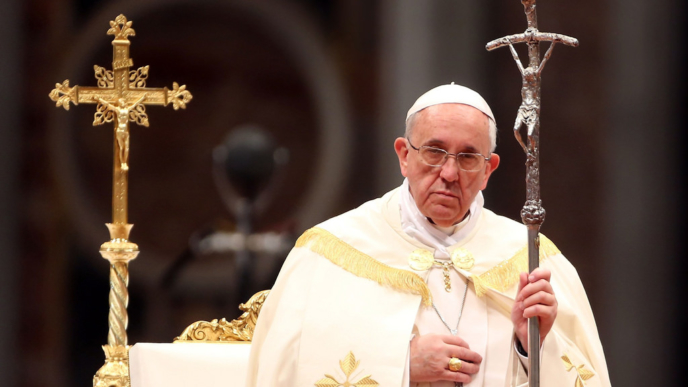
Opinion: Pedophilia Isn’t the Main Problem With Catholic Priests, Homosexuality Is

The editorial board of the New York Times declared it had identified the source of “The Catholic Church’s Unholy Stain.” It names pedophilia and asks: “How have so many pedophiles been allowed into the priesthood?”

The question was purely rhetorical because the board had an answer ready. It cited the usual grounds: “the all-male priesthood and the celibacy imposed on Catholic priests; the elitism, careerism and clericalism of the church hierarchy; the lack of transparency or accountability among bishops.” Most damning is “the power a man of God has over a child.”

Every parent knows instinctively that sexual abuse of the young and vulnerable is an evil that cries out for punishment, swift and severe. Anything less mocks the harm done by abusive priests. Equally inadequate—and blameworthy—are expressions of sympathy for the abused that disguise the elephant in the rectory. The first responsibility is to call things by their right name. . .

To casual readers, duly angered, the Times’ charge sounds about right. More thoughtful ones, however, will hesitate over the word pedophilia. With few exceptions, sexual abuse by priests has been visited overwhelmingly upon pubescent boys, and young men, most often teenagers. This is pederasty, not pedophilia. And pederasty is endemic to gay culture. . .

Without intending to, the Times’ studied determination to ignore homosexual predation as the culprit parallels the Catholic Church’s dilemma. How is the hierarchy to work at “restoring trust, instituting accountability, and eradicating the cancer of sexual abuse” without acknowledging a subject inoculated from judgment by reigning opinion? (Read more from “Opinion: Pedophilia Isn’t the Main Problem With Catholic Priests, Homosexuality Is” HERE)

Follow Joe Miller on Twitter HERE and Facebook HERE.