Posts

Americans Scoff at Obama’s Plan to Visit Dallas in Wake of Tragedy

President Barack Obama’s decision to cut short his European trip to visit Dallas, where five police officers were killed Thursday night, failed to provide the positive reaction for which the president might have hoped.

“He’ll just continue to divide on racial grounds,” John S. Roberts wrote on Young Conservatives.

Many voices on Twitter agreed that Obama’s visit was too little too late.

Although Obama condemned the deadly Dallas ambush, more than one commentator said Obama is part of the problem, not the solution.

“I don’t believe there’s any sincerity behind the president’s words,” Milwaukee County Sheriff David Clarke said Friday. “Just yesterday he was popping off at the mouth again — exploiting the situations in Louisiana and Minnesota — exploiting it on the basis of race. He has no foundation for that. There’s no data or research that suggests or proves anything he thinks in terms of disparity.”

“The spread of misinformation and constant instigation by prominent leaders, including our president, have contributed to the modern day hostility we are witnessing between the police and those they serve. As a result, today we are seeing one of the noblest professions condemned by those who could benefit the most,” said Rep. Roger Williams, R-Texas. (For more from the author of “Americans Scoff at Obama’s Plan to Visit Dallas in Wake of Tragedy” please click HERE)

Follow Joe Miller on Twitter HERE and Facebook HERE.
What the Media Won’t Say About the Gun Used in Dallas Shooting

In the wake of the tragic Dallas shooting that killed five police officers, President Obama seemed to indicate that “powerful weapons” were part of the problem and “in the days ahead we’re going to have to consider those realities.”

During early reporting of the attack, many news outlets claimed the perpetrator was using a sniper rifle or assault rifle. However, that couldn’t have been further from the truth.

The weapon that was actually used is more than 70 years old. CBS News revealed the gun used was an SKS rifle and drastically different when compared to semi-automatics like the AR-15.

Certain states have specific classifications as to what can be designated an assault rifle: grips, magazine type, and other cosmetic features, to name just a few. The SKS does not meet any of those qualifications; even updating the weapon with modern-day parts would reduce reliability.

After all, it was made during World War II.

What the Obama administration seemed to ignore was that the motive of the killer was plainly stated: to kill “white officers.” Micah Xavier Johnson, the gunman, was angered by the recent situations involving police shootings against African-Americans.

Johnson was also carrying a pistol with him, which he used to take down a cop in a close quarters firefight. Johnson was eventually killed by a robot carrying a bomb — the only way police believed was possible to take out the shooter without risking more lives.

Police Chief David Brown had some sobering and heartfelt words for reporters after the incident. “We don’t feel much support most days,” he said. “Let’s not make today most days. Please, we need your support to be able to protect you from men like these who carried out this tragic, tragic event.” (For more from the author of “What the Media Won’t Say About the Gun Used in Dallas Shooting” please click HERE)

Follow Joe Miller on Twitter HERE and Facebook HERE.

#DALLAS: 6 Alinsky Rules That Explain Obama’s Words and Deeds

In spite of the media’s conspicuous silence on the matter, it is no secret that Saul Alinsky’s manual for “community organizers”—Rules for Radicals—exerted an immeasurable influence over the world’s most well recognized community organizer, President Barack Obama. Thus, to understand why Obama does what he does, we need to be familiar with the vision that Alinsky delineated in his book.

Below are six ideas, six “rules,” that the Godfather of community organizing packs between the covers of Rules, ideas that Obama’s imbibed hook, line, and sinker.

(1). Politics is all about power relations, but to advance one’s power, one must couch one’s positions in the language of morality.

Community organizers are “political realists” who “see the world as it is: an arena of power politics moved primarily by perceived immediate self-interests, where morality is rhetorical rationale for expedient action and self-interest” (12).

(2). There are only three kinds of people in the world: rich and powerful oppressors, the poor and disenfranchised oppressed, and the middle-class whose apathy perpetuates the status quo.

“The world as it is” is a rather simple world. From this perspective, the world consists of but three kinds of people: “the Haves, the Have-Nots, and the Have-a-Little, Want Mores.” The Haves, possessing, as they do, all of “the power, money, food, security, and luxury,” resist the “change” necessary to relieve the Have-Nots of the “poverty, rotten housing, disease, ignorance, political impotence, and despair” from which they suffer (18).

The Have-a-Little, Want Mores comprise what we call “the middle class.” While Alinsky believes that this group “is the genesis of creativity,” (19) he also claims that it supplies the world with its “Do-Nothings.” The Do-Nothings are those who “profess a commitment to social change for ideals of justice, equality, and opportunity, and then abstain from and discourage all effective action for change [.]” Alinsky remarks that in spite of their reputable appearances, the Do-Nothings are actually “invidious” (20).

This being so, they are as resistant to change as are the Haves.

(3). Change is brought about through relentless agitation and “trouble making” of a kind that radically disrupts society as it is.

Since both the middle and upper classes have none of the organizer’s passion for radical change, he must do his best to “stir up dissatisfaction and discontent [.]” He must “agitate to the point of conflict.” The organizer “dramatizes…injustices” and engages in “‘trouble making’ by stirring up” just those “angers, frustrations, and resentments” (117) that will eventuate in the “disorganization of the old and organization of the new” (116 emphasis original). He is determined to give rise to as much “confusion” and “fear” as possible (127).

(4). There can be no conversation between the organizer and his opponents. The latter must be depicted as being evil.

If his compulsion to “agitate” makes it sound as if the organizer is disinclined to converse with those with whom he disagrees, that is because, well, he is. Alinsky is blunt on this point: “You don’t communicate with anyone purely on the rational facts or ethics of an issue” (89). It is true that “moral rationalization is indispensable,” (43) that the organizer must “clothe” one’s goals and strategies with “moral arguments” (36). But there can be no conversation with one’s opponents, for to converse with them is to humanize them.

The organizer’s objective is to demonize those who stand in the way of his designs for change.

The reason for this is simple: “Men will act when they are convinced that their cause is 100 per cent on the side of the angels and that the opposition [is] 100 per cent on the side of the devil.” The organizer “knows that there can be no action until issues are polarized to this degree” (78).

Elaborating on this theme, Alinsky asserts that in “charging that so-and-so is a racist bastard and then diluting” this “with qualifying remarks such as ‘He is a good churchgoing man, generous to charity, and a good husband,’” one convicts oneself of “political idiocy” (134). The winning strategy is to “pick the target, freeze it, personalize it, and polarize it” (130 emphases original).

(5). The organizer can never focus on just a single issue. He must move inexhaustibly from one issue to the next.

The organizer “must develop multiple issues,” (76) for “multiple issues mean constant action and life” (78). Alinsky explains: “A single issue is a fatal strait jacket that…drastically limits” the organizer’s “appeal,” but “multiple issues…draw in…many potential members essential to the building of a broad, mass-based organization” (120). The only “way to keep the action going” is by “constantly cutting new issues as the action continues, so that by the time the enthusiasm and the emotions for one issue have started to de-escalate, a new issue” has emerged “with a consequent revival” (161).

(6). Taunt one’s opponents to the point that they label you a “dangerous enemy” of “the establishment.”

Finally, in order “to put the organizer on the side of the people, to identify him with the Have-Nots,” it is imperative that he “maneuver and bait the establishment so that it will publicly attack him as a ‘dangerous enemy’” (100).

Just because Barack Obama has left behind the low-income Chicago communities in which he once agitated doesn’t mean that he left behind the skills as a community agitator that he learned from Saul Alinsky. Rather, he now regards the country as his community to organize as he sees fit.

Obama not infrequently invokes American ideals, even while he conspires to “fundamentally transform” America.

In spite of what he says, Obama does not want national unity. There can be no unity with a people who one wants to fundamentally transform.

The President regularly speaks and acts as if there is perpetual class warfare being waged by “the Haves” on “the Have Nots.” Indeed, this is what he wants for Americans to believe. It is this desire on his part that accounts for why he spares no occasion to demonize both “the richest one percent” who he accuses of refusing to pay “their fair share,” as well as those Republicans who threaten to impede his plans to raise taxes.

Again, Obama does not want unity. He wants division.

Obama constantly moves from one divisive issue to the next, from Obamacare to gun-control, from amnesty for illegal immigrants to support for “same-sex marriage.” We see now why this is so.

Obama does not want unity. He wants to keep the country as polarized and disoriented as possible.

To know why Obama speaks and acts as he does, we need to know about Saul Alinsky’s Rules for Radicals. (For more from the author of “#DALLAS: 6 Alinsky Rules That Explain Obama’s Words and Deeds” please click HERE)

Follow Joe Miller on Twitter HERE and Facebook HERE.
Experts Doubt Obama’s Final Troop Cut in Afghanistan Helps His Successor

President Barack Obama said he won’t withdraw nearly half the remaining U.S. troops in Afghanistan, much less completely withdraw as he originally intended, so the next president will have a stronger hand in a country where American forces have battled the Taliban and al-Qaeda for nearly 15 years.

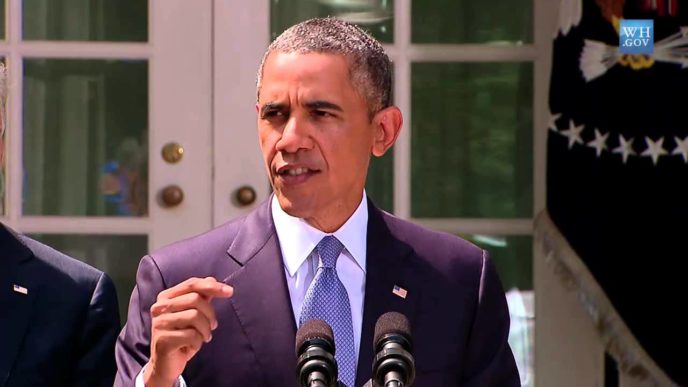
“Today’s decision best positions my successor to make future decisions about our presence in Afghanistan,” Obama said Wednesday at the White House, announcing he will withdraw 1,400 troops rather than 4,300 troops.

In January, the next U.S. president will assume the most solemn responsibility of the commander-in-chief, the security of the United States, and the safety of the American people. The decision I’m making today ensures that my successor has a solid foundation for continued progress in Afghanistan as well as the flexibility to address the threat of terrorism as it evolves.

Obama announced that at the end of his presidency, on Jan. 20, the U.S. will have 8,400 troops in Afghanistan, down from the current 9,800.

He previously planned to cut troop levels to 5,500 before leaving office. And earlier, he said he would withdraw nearly all U.S. troops.

In June, four former U.S. ambassadors asked Obama in a letter to leave the count at 9,800 troops, arguing 5,500 was insufficient.

The Heritage Foundation previously called for Obama to maintain the troop levels and announce those plans before the NATO Summit, to be held this weekend in Warsaw, as a way to encourage allied countries to maintain a presence.

Obama’s decision could have been worse, but this reduction doesn’t exactly strengthen the next president, James Carafano, vice president for foreign and defense policy studies at The Heritage Foundation, said.

“There are already too few forces to defend the ones they have, but I’m more comfortable with 8,000 [troops] than I am 5,000. We need 10,000 to 15,000,” Carafano told The Daily Signal in a phone interview. “This will at least provide room for the next president to make decisions on Afghanistan. This is not a strategy, but it allows him to leave office without another complete and utter failure.”

Afghanistan is still a mess, said Bill Roggio, a senior fellow at the Foundation for Defense of Democracies and editor of The Long War Journal.

“If the next president is interested in improving the situation, this could put more options on the table, but nothing in Afghanistan is sufficient at this point,” Roggio told The Daily Signal in a phone interview. He said:

The Taliban is still going toe-to-toe with Afghan forces. So, for the next president, this prolongs an Afghan policy that is already on life support. But 5,000 [troops] would have left the next president with almost no options.

What the Obama administration calls major combat operations in Afghanistan ended in 2014, but the U.S.-led coalition has remained to train and advise Afghan forces to combat the Taliban and al-Qaeda. Obama noted the 15th anniversary of the 9/11 terrorist attack is approaching, and that 2,200 Americans soldiers have died in Afghanistan.

“As president and commander-in-chief, I’ve made it clear that I will not allow Afghanistan to be used as safe haven for terrorists,” Obama said during his remarks.

Obama initially proposed to withdraw nearly all troops from Afghanistan by the end of his second term. However, last September, Taliban forces captured Kunduz, the first time the terror group had captured a major city since 2001.

After Kunduz, Obama decided to keep 5,500 U.S. troops in the country when he departs office. But, Obama said Wednesday, after consulting with generals and Defense Secretary Ash Carter, he instead will maintain a larger military presence.

The decision makes little sense and might have been guided by politics, said Thomas Donnelly, resident fellow in security studies at the American Enterprise Institute.

“To go from 9,800 to 8,400 is a cut that makes no sense politically, strategically, or militarily,” Donnelly told The Daily Signal in a phone interview. “He may be trying to split the difference between those in his [political] base who want us out entirely and those saying we don’t have enough.”

Donnelly said he doesn’t believe Obama did any favors for the next president.

“It is better than it might have been otherwise, but even 9,800 is barely adequate,” Donnelly said. “This is still a mess for the next president, but it could have been a bigger mess otherwise.” (For more from the author of “Experts Doubt Obama’s Final Troop Cut in Afghanistan Helps His Successor” please click HERE)

Follow Joe Miller on Twitter HERE and Facebook HERE.
Despite Gun Control Rhetoric, Obama Arms Federal Civilian Agencies More Than Ever

The U.S. Agriculture Department’s Animal and Plant Health Inspection Service doesn’t seem like a Wild West sort of federal agency since its biologists mostly check on the human health impact of animal and plant species.

But it reported buying $4.7 million in high-powered weapons, ammunition and military gear during the last decade, including shotguns, night vision goggles, and propane cannons, according to federal purchasing records reviewed by the nonpartisan government spending watchdog openthebooks.com.

About $1.7 million of that spending occurred in 2014 alone.

The agency says it needs the equipment to protect its workers in the wild from feral swine, more commonly known as wild hogs. But spending critics like openthebooks.com see such purchases as part of a much larger trend toward militarizing federal civilian agencies and local police at taxpayer expense.

And the irony is such purchases have massively expanded over the last decade, even as President Obama has repeatedly pushed to limit access to high-powered gun and weapons in America, most recently after the Orlando terror attack last month. (Read more from “Despite Gun Control Rhetoric, Obama Arms Federal Civilian Agencies More Than Ever” HERE)

Follow Joe Miller on Twitter HERE and Facebook HERE.
OBAMA’S PARTNERS IN PEACE: We Have 100,000 Missiles in Lebanon; “Opportunity to Destroy Israel Is Now Better Than Ever”

It is now clear to even the most obtuse observers that Barack Obama misled the American people, treated the feckless Republican Congressional leaders like the fools they are, and basically behaved like a Bond villain in ensuring that the Iranian terror state could secure nuclear weapons.

Iran’s leaders continue to celebrate the deal, most recently issuing public statements during an iftar meal to break the Ramadan fast. Each of Iran’s leaders took turns calling for the destruction of the United States, Israel, and the West.

President Hassan Rouhani said the last year’s nuclear deal “was the cheapest way to achieve Iran’s goals and interests…”

…The country’s supreme leader Ayatollah Ali Khamenei on Saturday called for student associations to establish a “unified anti-US and anti-Zionist front” among the Muslim world’s students, Tasnim News Agency reported…

…On a similar note, the deputy commander of the Revolutionary Guards, Brig.-Gen. Hossein Salami, said on Friday “more than 100,000 missiles are ready to fly from Lebanon,” according to Tasnim…

…“Today, the grounds for the annihilation and collapse of the Zionist regime are [present] more than ever,” he declared, saying there are “tens of thousands of destructive long-range missiles” from Islamic territories aiming at all of “occupied” Israel… “[and] the opportunity to destroy Israel is now better than ever.”

When war breaks out between Iran and its neighbors — and it will — you can thank Barack Obama and Hillary Clinton.

Their legacy will be apocalypse and their names will be synonymous with death and calamity. (For more from the author of “OBAMA’S PARTNERS IN PEACE: We Have 100,000 Missiles in Lebanon; “Opportunity to Destroy Israel Is Now Better Than Ever” please click HERE)

Follow Joe Miller on Twitter HERE and Facebook HERE.

After Obama Speaks in Canada, Chant Erupts That Many Will Find Chilling

Wrapping up his final months in office, President Obama made a trip to Canada’s Parliament Wednesday where he delivered a warm speech and praised the close relations between the U.S. and Canada.

The president also had kind words for Canadian Prime Minister Justin Trudeau, saying his fellow liberal has brought “new energy and hope” to relationships between the two nations.

“My time in office may be nearing an end, but I know that Canada and the world will benefit from your leadership in the years to come,” he said of Trudeau.

Trudeau had earlier introduced Obama by claiming the two had an ongoing “bromance,” remarking, “This House gets to see a bromance up close.”

Obama touched on some more serious matters as well, calling on Canada to carry its own weight internationally and especially in regards to NATO.

“As your NATO ally and your friend, let me say, we’ll be more secure when every NATO member, including Canada, contributes its full share to our common security,” Obama told Parliament. “Because the Canadian Armed Forces are really good. And if I can borrow a phrase, the world needs more Canada. NATO needs more Canada. We need you.”

According to Obama, the world order has become “increasingly strained” due to instability and inequality. He said he expects that “people will push back out of anger; out of fear,” but Obama expressed optimism for the future of market-based liberal economies.

At the conclusion of his speech, Obama was met with thunderous applause and chants of “four more years.”

His visit to Canada marks the first time since 1995 a sitting U.S. leader has visited the government body. Liberal and Conservative lawmakers returned from their summer break to witness Obama’s speech. (For more from the author of “After Obama Speaks in Canada, Chant Erupts That Many Will Find Chilling” please click HERE)

Follow Joe Miller on Twitter HERE and Facebook HERE.
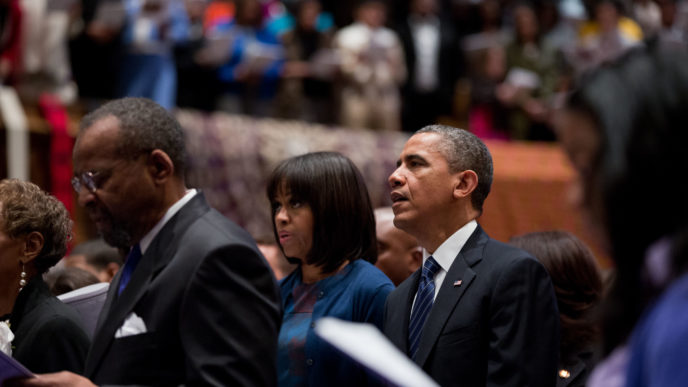
If Mr. Obama Secretly Planned to Give Iran Nuclear Weapons, Exactly What Would He Be Doing Differently?

The Obama administration is encouraging companies to do business with Iran in order to make last year’s nuclear deal irreversible, The Wall Street Journal reported (Google link) Thursday.

Administration officials told the Journal that they were encouraging businesses to make agreements with Iran in order to make it harder for future administrations to unravel the deal, since that would then threaten American jobs. The push for opening up Iran to American business has been led by Secretary of State John Kerry, which has put him at odds with the Treasury Department, which enforces sanctions on Iran.

“We’re not going to stand in the way of permissible business activity with Iran,” a senior administration official told the Journal. “As long as Iran is meeting the terms of the deal, then we’re going to uphold our end of the bargain, and that is going to result in some additional business activity with Iran.”

The administration is also trying to improve Iran’s standing with the Financial Action Task Force (FATF), a watchdog organization that works to prevent illicit financial transactions. The FATF temporarily suspended countermeasures placed on Iran due to its its money laundering and terror financing on Friday after securing commitments from Iranian officials to clean up its practices. Treasury Secretary Jack Lew met with the governor of Iran’s central bank in April to discuss improving Iran’s standing with the FATF, senior administration officials told the Journal. The efforts to improve Iran’s standing with FATF, and thereby ease Iran’s path towards rejoining the global financial system, came despite the fact that, as a Treasury official noted in letters to Sens. Marco Rubio (R-Fla.) and Mark Kirk (R-Ill.) that were leaked to the Washington Free Beacon earlier this week, “Iran is a high-risk financial jurisdiction and has been designated as such by [FATF…and] is a Jurisdiction of Primary Money Laundering Concern….The concerns remain regarding Iran’s economy, such as transparency issues, corruption, and regulatory obstacles, have given businesses and banks pause when considering whether to engage with Iran.” The Treasury’s desire for Iran’s FATF rehabilitation, despite its statements to lawmakers (shortly before FATF suspended its countermeasures) that Iran remains a money-laundering concern, may raise suspicions that the government lobbied FATF to support Iran’s efforts in the same way that it has done for other international bodies.

The United States is also caught between opposing groups of allies regarding Iran’s desire to join the World Trade Organization (WTO). European allies have been pushing for Iran to join the WTO, while Gulf states, led by Saudi Arabia, oppose the membership bid. “The WTO accession process is based on consensus, and as of now, there are a number of countries that oppose appointing a chair to Iran’s working party on accession,” a State Department official told the Journal.

“Business diplomacy has been a core part of Mr. Obama’s foreign policy approach in engaging U.S. adversaries,” the Journal explained. “Mr. Obama sees the expansion of business transactions with the West in countries such as Iran and Cuba as the most promising means for solidifying the president’s policies there, his aides have said.” The controversial $25 billion sale of Boeing planes to Iran’s national carrier, Iran Air, is seen as “a boost” to these efforts.

Despite these efforts, Iranian Supreme Leader Ayatollah Ali Khamenei tweeted a complaint earlier this month that they didn’t go far enough: “US didn’t fulfill key part of commitments; oil money isn’t paid to us, while we’ve done our part, 20% enrichment, Fordow & Arak are stopped.”

Sen. Chris Coons (D – Del.), criticized the administration earlier this week for its efforts to boost business with Iran, saying, “I don’t think it’s our job to act as the chamber of commerce for Tehran.” (For more from the author of “If Mr. Obama Secretly Planned to Give Iran Nuclear Weapons, Exactly What Would He Be Doing Differently?” please click HERE)

Follow Joe Miller on Twitter HERE and Facebook HERE.
Obama Changes His Stance on US-UK Relationship After Brexit Vote

After telling the people of Britain in April that everything might change if Britain left the European Union, President Barack Obama said Friday that the United Kingdom’s vote to leave the EU will not impact the “special relationship” between the United States and Britain.

“The people of the United Kingdom have spoken, and we respect their decision,” Obama said in a statement. “The special relationship between the United States and the United Kingdom is enduring, and the United Kingdom’s membership in NATO remains a vital cornerstone of U.S. foreign, security and economic policy.”

Friday’s conciliatory words were a far cry from those Obama delivered in April during a visit to Britain he urged voters there to remain in the EU.

“I think it’s fair to say that maybe some point down the line there might be a U.K.-U.S. trade agreement, but it’s not going to happen any time soon because our focus is in negotiating with a big bloc, the European Union, to get a trade agreement done,” Obama said then.

“The UK is going to be in the back of the queue,” he said.

On Friday, Republican presidential candidate Donald Trump suggested that Obama’s support of the EU might have contributed to the voters’ decision to leave the EU. Democratic president candidate Hillary Clinton had also supported Britain remaining in the EU.

On Friday, Obama said that the United States will maintain good working relationships with Britain and the EU.

“The United Kingdom and the European Union will remain indispensable partners of the United States even as they begin negotiating their ongoing relationship to ensure continued stability, security and prosperity for Europe, Great Britain and Northern Ireland, and the world,” he said. (For more from the author of “Obama Changes His Stance on US-UK Relationship After Brexit Vote” please click HERE)

Follow Joe Miller on Twitter HERE and Facebook HERE.
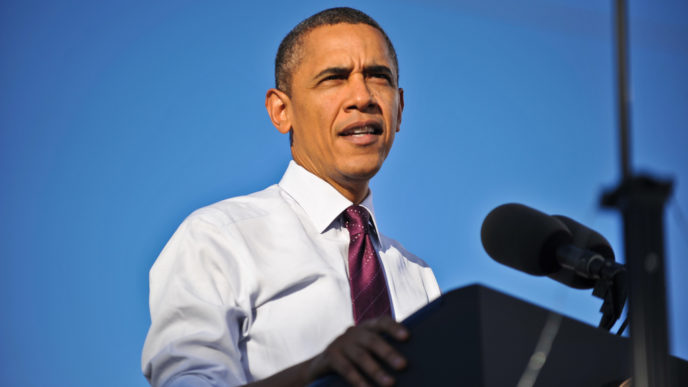
Obama Releases Bin Laden’s Bodyguard From Gitmo

The Obama administration released Guantanamo Bay detainee Abdel Malik Ahmed Abdel Wahab despite a review board’s recommendation that he remain in United States custody.

Wahab was reportedly a bodyguard to Al Qaida leader Usama bin Laden and had a relationship with the former head of Al Qaida’s global operations, Nasir al Wuhayshi. The review board feared Wahab would return to the battlefield after spending his time in Afghanistan with bin Laden, “fighting on the frontlines, [his] possible selection for a hijacking plot, and significant training.”

U.S. authorities concluded that he continued lying to his interrogators as late as 2008, insisting he traveled to Afghanistan to “teach the Koran.” A leaked U.S. military report assessed all of Wahab’s statements “to be false” and found he was employing evasion strategies used by other trained terrorists.

The report further noted Wahab’s “ties to a relative who is a possible extremist, raises concerns about his susceptibility to re-engagement.” While Wahab is being released to Montenegro his future incarceration is no longer at the discretion of the United States government. Guantanamo Bay detainees have returned to the battlefield in the past, setting a troubling precedent.

In 2007 the U.S. released Taliban commander Abdul Qayyum Zakir from Guantanamo Bay to the government of Afghanistan. Zakir was subsequently released from Afghan prison for no apparent reason whatsoever and returned to the Afghan battlefield as a senior commander.

Zakir has since spent his time in Afghanistan masterminding plots to kill US soldiers in southern Helmand province, and reportedly makes millions of dollars in the illicit opium trade. Zakir is currently spearheading the successful Taliban advance against the Afghan National Security Forces in Helmand province, pacified by U.S. troops as late as 2012.

Despite significant ties to known high profile terrorists Wahab will be granted asylum in Montenegro for “re-socialization” and “a return to his family.” When Montenegro accepted another Yemeni detainee in January 2016 it specified the detainee would not required to remain in the country but would “eventually be free to choose the country they want to live in.” (For more from the author of “Obama Releases Bin Laden’s Bodyguard From Gitmo” please click HERE)

Follow Joe Miller on Twitter HERE and Facebook HERE.