Posts

‘Cancer Vaccine’ Eliminates Tumors in Mice

By Stanford Medicine News Center. Activating T cells in tumors eliminated even distant metastases in mice, Stanford researchers found. Lymphoma patients are being recruited to test the technique in a clinical trial.

Injecting minute amounts of two immune-stimulating agents directly into solid tumors in mice can eliminate all traces of cancer in the animals, including distant, untreated metastases, according to a study by researchers at the Stanford University School of Medicine.

The approach works for many different types of cancers, including those that arise spontaneously, the study found.

The researchers believe the local application of very small amounts of the agents could serve as a rapid and relatively inexpensive cancer therapy that is unlikely to cause the adverse side effects often seen with bodywide immune stimulation.

“When we use these two agents together, we see the elimination of tumors all over the body,” said Ronald Levy, MD, professor of oncology. “This approach bypasses the need to identify tumor-specific immune targets and doesn’t require wholesale activation of the immune system or customization of a patient’s immune cells.” (Read more from “Cancer Vaccine Eliminates Tumors in Mice” HERE)

_____________________________________

Injection Helps the Immune System Obliterate Tumors, at Least in Mice

By Mitch Leslie. Our immune cells can destroy tumors, but sometimes they need a kick in the pants to do the job. A study in mice describes a new way to incite these attacks by injecting an immune-stimulating mixture directly into tumors. The shots trigger the animals’ immune system to eliminate not only the injected tumors, but also other tumors in their bodies.

“This is a very important study,” says immunologist Keith Knutson of the Mayo Clinic in Jacksonville, Florida, who wasn’t connected to the research. “It provides a good pretext for going into humans.”

To bring the wrath of the immune system down on tumors, researchers have tried shooting them up with a variety of molecules and viruses. So far, however, almost every candidate they’ve tested hasn’t worked in people . . .

The big question is whether the approach works in people, as most rodent cancer therapies don’t translate to humans. Levy and his colleagues are about to find out. They are launching a clinical trial to evaluate the safety of their approach and gauge its effectiveness in patients with lymphoma, a cancer of the lymphatic system. (Read more from “Injection Helps the Immune System Obliterate Tumors, at Least in Mice” HERE)

Follow Joe Miller on Twitter HERE and Facebook HERE.

High School Sweetheart Grants Boyfriend His Dying Wish After Terminal Diagnosis

A Florida teenager diagnosed with terminal cancer will be granted his dying wish this weekend: to marry his high school sweetheart.

At 19-years old, Dustin Snyder will marry Sierra Siverio on Sunday at the Big Red Barn, which is being donated as a wedding space.

“I could never even think about leaving his side,” Siverio said in an interview with “The Now,” ABC News reported.

Snyder was healthy growing up, playing both football and baseball. He and Siverio also attended two proms together.

He was diagnosed with synovial sarcoma when he was 18, and endured six months of chemotherapy before being declared cancer free.

At the beginning of this year, though, things took a turn for the worst.

“Three weeks ago he was losing lots of weight and he was in a lot of pain,” Cassandra Fondahn, Snyder’s mother, said. “And we took him to the hospital and his stomach and his pelvic areas were infested with the cancer.”

After his terminal diagnosis, just three days ago, he said that his final wish was to marry his high school sweetheart, Siverio.

“She means the world to me,” he said in the interview, though his words are now barely audible.

Snyder’s older sister, Brittany Hails, set up a GoFundMe page to help raise money for the wedding.

“He is currently on hospice and has a pain pump connected to his heart,” the page read. “We are trying to make his wishes come true by providing him and his long-term girlfriend with a wedding 28th Jan 2018 (Sunday).”

So far, the community has helped raise money for wedding rings, a dress and a tuxedo for the young couple. LifePath Hospice is donating flowers and bridesmaid dresses.

“Please lets help Dustin enjoy the rest of his life with his soulmate,” the fundraising page concluded.

Synovial sarcoma is a rare form of soft tissue sarcoma, “which is a type of cancer that arises from soft tissues near the joints but can sometimes develop in the kidney and lung,” according to St. Jude Children’s Research Hospital.

It is common in people younger than 30, but it is still a very rare tumor. It only occurs in 1 to 3 people per million. “About 800 new cases of synovial sarcoma are diagnosed in the U.S. each year,” the hospital reported. It is also more common in males.

Signs and symptoms of synovial sarcoma include “problems using one or both legs, feet, arms or hands” as well as “pain near the affected area.”

No matter how little time is left, the young couple’s upcoming nuptials, and the whirlwind of planning a wedding in a week, is their happy ending. (For more from the author of “High School Sweetheart Grants Boyfriend His Dying Wish After Terminal Diagnosis” please click HERE)

Follow Joe Miller on Twitter HERE and Facebook HERE.
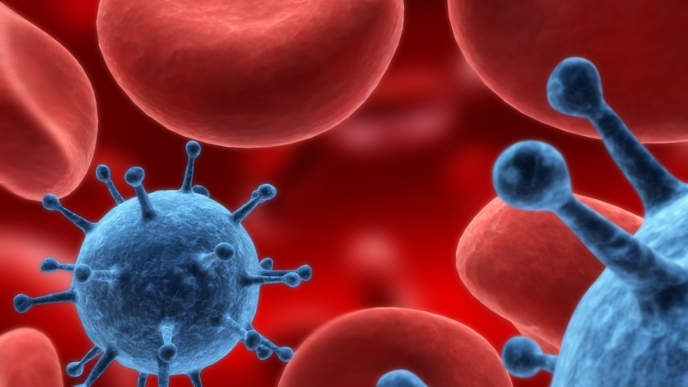
Nearly Half of US Cancer Deaths Blamed on Unhealthy Behavior

A new look at cancer in the U.S. finds that nearly half of cancer deaths are caused by smoking, poor diet and other unhealthy behaviors.

That’s less than commonly-cited estimates from more than 35 years ago, a result of new research methods and changes in American society. Smoking rates have plummeted, for example, while obesity rates have risen dramatically.

The study found that 45 percent of cancer deaths and 42 percent of diagnosed cancer cases could be attributed to what the authors call “modifiable” risk factors. These are risks that are not inherited, and mostly the result of behavior that can be changed, like exposure to sun, not eating enough fruits and vegetables, drinking alcohol and, most importantly, smoking.

A British study conducted in 1981 attributed more than two-thirds of cancer deaths to these factors.

The study used 2014 data and was conducted by the American Cancer Society. It was published online Tuesday in CA: A Cancer Journal for Clinicians. (Read more from “Nearly Half of US Cancer Deaths Blamed on Unhealthy Behavior” HERE)

Follow Joe Miller on Twitter HERE and Facebook HERE.

How a Woman With Cancer Put Assisted Suicide Advocates to Shame

Two months into college, Esther’s life was turned upside down. When her back unexpectedly gave out, a biopsy near her fractured vertebra proved malignant. She was diagnosed with Stage 4 Alveolar Rhabdomyosarcoma, a deadly soft tissue cancer . . .

For the next two years, Esther became the Rock of Gibraltar. It is astounding how one woman’s faith can unite and sustain an entire family — even an entire community. When Esther faced the gravest diagnosis known to man, she calmly thanked her doctors. When her boyfriend broke up with her, she never lost faith in Jesus. When she lost her hair to chemotherapy, she never blamed God.

Sure, she asked, “Why?” And there were plenty of tears. Esther was not a stranger to anxiety or fear, either. But by having lost it all, she somehow gained something. Something priceless . . .

Oregon legalized assisted suicide in 1997, and if anybody qualified, it was Esther. But instead of killing herself, even when in great pain, Esther sang.

One of her favorite hymns to sing was “What a Friend We Have in Jesus,” and she didn’t care if others heard her. Hospital staff described her as the most joyful person in the room. (Read more from “How a Woman With Cancer Put Assisted Suicide Advocates to Shame” HERE)

Follow Joe Miller on Twitter HERE and Facebook HERE.

New Handheld ‘Pen’ Allows Surgeons to Detect Cancer in 10 SECONDS

. . .The device gives medics a better chance of removing “every last trace” of the disease.

Researchers at the University of Texas say the device is capable of identifying cancerous cells more than 150 times faster than existing technology.

The MasSpec Pen can give surgeons precise information about which tissue to cut or preserve, helping to improve treatment and reduce the chances of cancer reoccurring, they said.

Tests conducted by the team found the tool took just 10 seconds to provide a diagnosis for cancer and was more than 96 per cent accurate.

Livia Schiavinato Eberlin, an assistant professor of chemistry who designed the study, said: “If you talk to cancer patients after surgery, one of the first things many will say is ‘I hope the surgeon got all the cancer out’. (Read more from “New Handheld ‘Pen’ Allows Surgeons to Detect Cancer in 10 SECONDS” HERE)

Follow Joe Miller on Twitter HERE and Facebook HERE.

New Study Reveals Terrifying Possible Effects of Chemotherapy

Chemotherapy could allow cancer to spread, and trigger more aggressive tumours, a new study suggests.

Researchers in the US studied the impact of drugs on patients with breast cancer and found medication increases the chance of cancer cells migrating to other parts of the body, where they are almost always lethal . . .

Many are given chemotherapy before surgery, but the new research suggests that, although it shrinks tumours in the short term, it could trigger the spread of cancer cells around the body.

It is thought the toxic medication switches on a repair mechanism in the body which ultimately allows tumours to grow back stronger. It also increases the number of ‘doorways’ on blood vessels which allow cancer to spread throughout the body.

Dr George Karagiannis, of the Albert Einstein College of Medicine of Yeshiva University, New York, found the number of doorways was increased in 20 patients receiving two common chemotherapy drugs. (Read more from “New Study Reveals Terrifying Possible Effects of Chemotherapy” HERE)

Follow Joe Miller on Twitter HERE and Facebook HERE.

Teen Cancer Survivor Banned From Prom

A brave teenager who overcame long-term cancer has been banned from attending her high-school ball after being told she has had too much time off school.

English teen Alex Dallas has battled cancer since she was 4 and after a 12-hour operation to remove a deadly tumour she was hoping to make her dream of attending the ball come true.

The 16-year-old bought a $680 custom-made dress as well as spending hundreds of dollars on hair and make up.

However, the Year 11 student was told she wouldn’t be able to join her fellow classmates at the ball. (Read more from “Teen Cancer Survivor Banned From Prom” HERE)

Follow Joe Miller on Twitter HERE and Facebook HERE.

New Frontier in Cancer Care: Turning Blood Into Living Drugs

Ken Shefveland’s body was swollen with cancer, treatment after treatment failing until doctors gambled on a radical approach: They removed some of his immune cells, engineered them into cancer assassins and unleashed them into his bloodstream.

Immune therapy is the hottest trend in cancer care and this is its next frontier — creating “living drugs” that grow inside the body into an army that seeks and destroys tumors.

Looking in the mirror, Shefveland saw “the cancer was just melting away.” A month later doctors at the Fred Hutchinson Cancer Research Center couldn’t find any signs of lymphoma in the Vancouver, Washington, man’s body. (Read more from “New Frontier in Cancer Care: Turning Blood Into Living Drugs” HERE)

Follow Joe Miller on Twitter HERE and Facebook HERE.

AI System as Good as Experts at Recognising Skin Cancers, Say Researchers

Computers can classify skin cancers as successfully as human experts, according to the latest research attempting to apply artificial intelligence to health.

The US-based researchers say the new system, which is based on image recognition, could be developed for smartphones, increasing access to screening and providing a low-cost way to check whether skin lesions are cause for concern.

“We hope that this is a first step towards early detection,” said Andre Esteva, an electrical engineering PhD student from Stanford University and co-author of the research.

According to the World Health Organisation, skin cancer accounts for one in every three cancers diagnosed worldwide, with global incidence on the rise.

In the UK alone, 131,772 cases of non-melanoma skin cancer were recorded in 2014. In the same year there were 15,419 new cases of the deadliest skin cancer, melanoma, making it the fifth most common cancer, according to Cancer Research UK. (Read more from “AI System as Good as Experts at Recognising Skin Cancers, Say Researchers” HERE)

Follow Joe Miller on Twitter HERE and Facebook HERE.

FDA Fast-Tracks Treatment That Uses Polio Virus to Fight Brain Cancer

The Food and Drug Administration has given so-called “breakthrough” status to a treatment that uses the once-feared polio virus to target aggressive forms of brain cancer, in the hope of speeding it to market.

The therapy, developed at Duke University, hopes to use the virus’ debilitating properties to help fight cancer instead of harming its host, CBS News reported Thursday.

The experimental treatment was the brainchild of molecular biologist Matthias Gromeier. By removing a certain genetic sequence and replacing it with material from the common cold virus, the polio would not be able to cause the incapacitating symptoms that once afflicted President Franklin D. Roosevelt and numerous others because it would be unable to reproduce in normal cells.

However, the altered version of polio could still reproduce in cancer cells—therefore making the cancer susceptible to Lipscomb’s and other patients’ immune systems.

“All human cancers … develop a shield of protective measures that make them invisible to this immune system,” Gromeier told CBS. “By infecting the tumor, we are actually removing this protective shield and enabling the immune system to attack.” (Read more from “FDA Fast-Tracks Treatment That Uses Polio Virus to Fight Brain Cancer” HERE)

Follow Joe Miller on Twitter HERE and Facebook HERE.