Posts

China Supposedly Meddling in 2018 Elections

By AP. Taking center stage at the United Nations, President Donald Trump on Wednesday accused China of trying to interfere in the upcoming U.S. congressional elections because it opposes his tough trade policies. The White House provided scant evidence of anything akin to the level of Russia’s meddling in the 2016 presidential election.

“They do not want me or us to win because I am the first president ever to challenge China on trade,” Trump said as he chaired the U.N. Security Council for the first time. He made his accusation against the backdrop of the special counsel’s investigation into Russian interference in the last election to help him and amid concerns that this November’s elections also could be vulnerable.

Asked later what evidence he had, Trump said there was “plenty” but didn’t immediately provide details, suggesting that some of the material was classified. Instead, he zeroed in on China’s propaganda efforts to flood the heartland with ads and statements against Trump’s billions of dollars in punishing tariffs. (Read more from “China Supposedly Meddling in 2018 Elections” HERE)

_________________________________________________

Trade Turmoil Between China and the U.S. Spills Into Military Relations

By CNBC. As the world’s two largest economies exchange tit-for-tat tariffs, there are growing suggestions that the trade turmoil has spilled over into military relations.

China has canceled friendly engagements with the U.S. Navy, possibly due to the trade dispute.

In an interview with CNBC’s Morgan Brennan, Navy Secretary Richard Spencer, the branch’s top civilian, explained the intricate relationship between the two naval forces.

“When we look at China, it’s a very complex situation to say the least because they are also a great trading power,” Spencer said. “We have a major trading power as a competitor,” he added, noting Beijing’s ambitious military buildup.

Spencer’s comments come on the heels of reports that China’s top naval commander canceled a planned visit this week to meet with his American counterpart and that the U.S. was denied a port visit in Hong Kong for its USS Wasp amphibious ship. (Read more from “Trade Turmoil Between China and the U.S. Spills Into Military Relations” HERE)

Follow Joe Miller on Twitter HERE and Facebook HERE.

Google Turns Evil in Willingness to Collude With China’s Repression

By The Federalist. Google, a company with an annual revenue exceeding $100 billion and tens of thousands of employees, has brought about ground-breaking innovations through its horizontal search engine, self-driving vehicles, and electronic messaging systems, improving the lives of millions of individuals and businesses in the process.

However, recent reports of the Silicon Valley behemoth’s cooperation with China paint a picture less of an ethical business giant, and more of an adversary blatantly subverting American interests and basic human rights on the world stage.

In early August, The Intercept reported that Google is planning to implement a censored version of its search engine in China, dubbed “Project Dragonfly,” which will block searches related to free speech, human rights, and democracy, among other content Beijing deems objectionable.

Worse, the search engine will reportedly link any searches entered by a user directly to his or her phone number, allowing Chinese authorities to easily track citizens seeking out blacklisted information, and placing political dissidents at risk of human rights violations such as interrogation or detention. . .

By yielding to Beijing’s assault on freedom in return for access to new markets, Google has succumbed to the darker impulses of human nature, in a stark reversal of previous anti-censorship stances. In 2010, for instance, Google refused to censor search results in China, writing in a blog post, “We want as many people in the world as possible to have access to our services.” (Read more from “Google Turns Evil in Willingness to Collude With China’s Repression” HERE)

______________________________________________

Google’s Nest Reportedly Went to Great Lengths to Hide Its Health Ambitions When It Acquired a Seattle Start-Up Last Summer

By CNBC. Google-owned Nest went to great lengths to conceal its acquisition of Seattle health monitoring start-up Senosis in order to keep its interest in digital health a secret, new records obtained by GeekWire show.

While GeekWire had previously reported that Google had bought the start-up in the summer of 2017, the records confirm that it was actually Alphabet’s home automation business Nest that wished to integrate Senosis’s technology. However, the company told those involved in the deal that they couldn’t mention Nest or publicize the sale.

“It turns out Nest is much more secretive than the rest of Google or Alphabet,” Senosis co-founder Shwetak Patel wrote to the vice president of University of Washington’s innovation hub in June 2017. “They seem to be particularly sensitive in this situation since they don’t want people to know they are getting into a whole new line of business, digital health, until they are ready to publicly announce.”

Senosis Health spun out of the University of Washington, which enabled GeekWire to make public records requests related to its sale.

Emails also show that Google’s corporate counsel instructed the team to use “Google” instead of “Nest” on outside forms and in internal discussions to prevent speculation around a Nest health product. (Read more from “Google’s Nest Reportedly Went to Great Lengths to Hide Its Health Ambitions When It Acquired a Seattle Start-Up Last Summer” HERE)

Follow Joe Miller on Twitter HERE and Facebook HERE.

China Still Has Plenty of Ammunition to Fight Back in Trump’s Trade War

China still has several tools in its kit to mitigate the negative effects of President Trump’s trade war on its economy. With a top-down economic structure and a huge domestic market, China may be able to absorb some impact of the latest round of tariffs by turning goods destined for export around for internal consumption.

While pushing back on U.S. demands, China continues expanding to new markets. President Xi’s “One Belt and One Road” initiative to build infrastructure projects from Europe to Africa has already provided a big market and consistent demand for Chinese exports, especially those running into overcapacity issues, such as steel and cement. Many countries along the initiative routes are resource-rich. They will provide a steady supply of raw material and energy to support China’s long-term economic growth.

China can also increase its investment in Africa. In early September, Xi announced a $60 billion package of aid, investment, and loan money for Africa. Since Africa is already becoming overloaded with Chinese debt, the majority of this aid package is expected to be investments that will provide an outlet for Chinese goods and services.

Beijing has also started a charm offensive with U.S. businesses. Xi’s top economic advisor recently promised a delegation of U.S. multinationals that U.S. businesses operating in China “won’t be targeted in Beijing’s trade counterattacks.” China’s government-run tabloid, the Global Times, tried to appeal to U.S. businesses by stating, “The Chinese market can help them make money, but the White House can’t.”

Most importantly, Xi became president for life in March of this year. Time is on his side. He doesn’t face much political pressure to reach a trade deal with the United States. As a matter of fact, China’s hardliners may grumble if they perceive any trade deal has sold out China’s interests. So Xi has strong incentives to act like the tough guy who won’t yield to U.S. demands. This probably explains why China already warned the United States that it would back out of the latest round of trade talks if Trump goes ahead with his latest tariff announcement. (Read more from “China Still Has Plenty of Ammunition to Fight Back in Trump’s Trade War” HERE)

Follow Joe Miller on Twitter HERE and Facebook HERE.

Sen. Dianne Feinstein’s Ties to China Go Way Deeper Than an Alleged Office Spy

. . .The story involves China and the senior U.S. senator from California, and former chair of the Senate Select Committee on Intelligence, Democrat Dianne Feinstein. It was buried eight paragraphs into a recent Politico exposé on foreign efforts to infiltrate Silicon Valley, as a passing example of political espionage:

Former intelligence officials…[said] Chinese intelligence once recruited a staff member at a California office of U.S. Senator Dianne Feinstein, and the source reported back to China about local politics. (A spokesperson for Feinstein said the office doesn’t comment on personnel matters or investigations, but noted that no Feinstein staffer in California has ever had a security clearance.)

Later comes additional detail:

According to four former intelligence officials, in the 2000s, a staffer in Senator Dianne Feinstein’s San Francisco field office was reporting back to the MSS [China’s Ministry of State Security, its intelligence and security apparatus]. While this person, who was a liaison to the local Chinese community, was fired, charges were never filed against him. (One former official reasoned this was because the staffer was providing political intelligence and not classified information—making prosecution far more difficult.) The suspected informant was ‘run’ by officials based at China’s San Francisco Consulate, said another former intelligence official. The spy’s handler ‘probably got an award back in China’ for his work, noted this former official, dryly.

This anecdote provides significantly more questions than answers. For starters: Who was the spy? For how long was the spy under surveillance? What information about “local politics” was the spy passing back to China? Just how close was the spy to the senator? Did law enforcement officials sweep vehicles and other areas for listening devices? Was there an investigation into whether others in the senator’s circle may have been coordinating with Beijing? (Read more from “Sen. Dianne Feinstein’s Ties to China Go Way Deeper Than an Alleged Office Spy” HERE)

Follow Joe Miller on Twitter HERE and Facebook HERE.

U.S. Senator’s Personal Driver for 20 Years Was a Chinese Spy

Sen. Dianne Feinstein’s office was infiltrated by a Chinese spy who worked as her driver and attended official functions on her behalf for 20 years, according to new reports from Politico and The San Francisco Chronicle.

Feinstein reportedly had no idea that her office was being infiltrated by a man who was feeding information to an individual linked to China’s Ministry of State Security. She was “mortified” when the FBI showed up at her Washington DC office five years ago to warn her about the mole.

Feinstein, who was serving as chairwoman of the Senate Intelligence Committee at the time, had access to classified intelligence that would be extremely valuable to the Chinese government. She forced her driver to resign shortly thereafter and did not tell her staff about the incident, according to an unnamed source cited in the Chronicle.

In her capacity as a ranking member on the Senate Intelligence Committee, Feinstein unilaterally released testimony from Fusion GPS founder Glenn Simpson to the public earlier this year, violating committee precedent. When she released these records, she failed to disclose that one of her former staffers, Daniel Jones, had hired Fusion GPS and ex-British spy Christopher Steele to dig up dirt on Donald Trump after the 2016 election. (Read more from “U.S. Senator’s Personal Driver for 20 Years Was a Chinese Spy” HERE)

Follow Joe Miller on Twitter HERE and Facebook HERE.

China’s Serious and Breaking Vaccine Scandal: Are Your Vaccines Made in China?

Please consider this a “public service announcement,” if you will, because the mainstream, lamestream media probably will not report on the growing Chinese vaccine scandal and huge protests against vaccines made and administered in China.

However, as a personal caveat, I feel I must offer this: I’m leery about anything made in China, especially after doing the research for Chapter 13 The China Trade Debacle: Toxic and “Made in China” for my 2009 book, Our Chemical Lives And The Hijacking Of Our DNA, A Probe Into What’s Probably Making Us Sick.

As an illustration of that leeriness, just the other day I purchased a food plastic wrap with the words, no BPA or other toxins. However, when I got it home and read the fine print, I found “Made in China.” Well, I returned it to the store for a refund, as the research indicates much of Chinese-made consumables – whether non-edibles like wallboard or food like farm-raised fish and seafood – are contaminated with toxic chemicals, as I discuss at great length in Chapter 13 of the above book.

However, the above being said explains why I feel I must warn about Chinese-made vaccines. Here’s something that ought to tweak your interests too:

“…China’s Food and Drug Administration (CFDA) announced it has ordered all production stopped at the vaccine maker and launched an investigation.”

“Changchun Changsheng Biotechnology is China’s second largest maker of the rabies vaccine and a subsidiary of a large publicly-traded vaccine maker.”

“The company said in a stock exchange filing Sunday that it had already halted production of another vaccine — for diphtheria, tetanus and pertussis — which regulators found last year to be sub-standard and which had also become the focus of public attention.”

The question all administering physicians, healthcare workers who administer vaccines, parents and intended vaccinees should be asking before submitting to receiving a Diphtheria, Tetanus and Pertussis vaccine is: “Was the DTP vaccine made in China, and may I please see the vaccine package insert describing the vaccine?”

Chinese citizens have been protesting the above DTP vaccine while Chinese health officials have been sanitizing the web of any information about the problems with Chinese vaccines.

A Chinese newspaper,

the People’s Daily said on Sunday that local regulators must “rapidly take action, do a complete investigation and announce authoritative information in a timely manner to pacify public anxiety”.

Chinese citizens have taken to protesting the vaccines on their social media “WeChat,” which readers can try to access here.

Chinese parents are more than anxious about China’s ‘safety’ standards, especially since in 2008 some 300,000 children fell ill from drinking melamine-contaminated milk powder. Six children died!

What U.S. healthcare consumers and parents may not surmise is that many vaccines administered in the USA possibly could be made in China. Back in 2016, this was reported:

U.S. and European vaccine makers such as Merck & Co., GlaxoSmithKline plc, and Sanofi Pasteur SA maintain vaccine manufacturing operations in China, that this activity is on the rise, and that Western vaccine makers are also establishing joint venture partnerships with Chinese vaccine companies. [CJF emphasis]

Furthermore, back in 2017, batches of DPT vaccines made by Changchun Changsheng were recalled!

The current vaccine scandal is over rabies vaccines for humans!

Even though the U.S. CDC and others claim no Chinese-made vaccines are administered in the USA, if I were a person inclined to receive a vaccine, I’d still ask that all important question, “Is it made in China?”, because we have found in our research you cannot trust the CDC and FDA when it comes to vaccines and the information both put out about vaccines as ‘safe’. (For more from the author of “China’s Serious and Breaking Vaccine Scandal: Are Your Vaccines Made in China?” please click HERE)

Follow Joe Miller on Twitter HERE and Facebook HERE.

Trump Threatens Major Escalation in Trade War With China

Amid continued controversy over his administration’s protectionist trade policies, President Donald Trump this week signaled that he is prepared to significantly expand the existing tariffs on products imported from China.

According to Reuters, he suggested that he is “ready” to impose duty on all of the Chinese goods sold in America.

“We’re down a tremendous amount,” Trump said in a CNBC interview on Friday.

He has frequently cited trade imbalances, particularly with China, as a reason for announcing tariffs.

In his latest remarks, the president said he is “ready to go to 500” with China, an apparent reference to the more than $500 billion in imported goods the U.S. received from that nation last year.

America’s trade deficit with China in 2017 was $376 billion, a trend that has continued into 2018. During the first five months of this year, the U.S. imported more than $200 billion for a trade imbalance of $152 billion.

Though many critics on both sides of the aisle have argued for freer trade policies, Trump has continued to dig in with the position he has endorsed since the campaign.

In addition to creating higher prices for American consumers, many economists have panned the tariffs because of historical evidence that such trade policies have contributed directly to economic catastrophes including the Great Depression.

White House economic adviser Larry Kudlow said the tariffs and associated rhetoric against China are not likely to end any time soon.

He said Trump is “not going to let go” of his belief that China is taking advantage of the U.S. through trade.

According to Kudlow, Chinese leader Xi Jinping bears the responsibility for leading America to take these steps.

“The problem here is Xi,” he said. “He doesn’t want to move, and they’ve offered the U.S. absolutely … no options regarding the issue of (intellectual property) theft and forced technology transfer.”

After an initial round of tariffs on $34 billion in imports, China retaliated by imposing dollar-for-dollar tariffs on American exports.

In the recent interview, Trump said he is not concerned about possible repercussions including a drop in the stock market.

“If it does, it does,” the president said. “I’m not doing this for politics, I’m doing this to do the right thing for our country.”

Repeating a longstanding refrain, Trump went on to assert that American has “been ripped off by China for a long time.”

He echoed Kudlow’s assessment that China’s president is responsible for inequitable trade between the two nations.

“I don’t want them to be scared,” he said. “I want them to do well. I really like President Xi a lot, but it was very unfair.” (For more from the author of “Trump Threatens Major Escalation in Trade War With China” please click HERE)

Follow Joe Miller on Twitter HERE and Facebook HERE.

China ‘Shocked’ by U.S. Actions in Trade Dispute

By BBC. China said it is “shocked” after the US announced plans for fresh tariffs, escalating a trade war between the two countries.

The US listed $200bn (£150bn) worth of additional products it intends to place tariffs on as soon as September.

The move comes just days after the two countries imposed tit-for-tat tariffs of $34bn on each other’s goods.

Beijing described Washington’s latest threat as “totally unacceptable,” saying it would harm the world.

“The behaviour of the US is hurting China, hurting the world and hurting itself,” a spokesperson for China’s commerce ministry said in a statement. (Read more from “China ‘Shocked’ by U.S. Actions in Trade Dispute” HERE)

_______________________________________________

Markets Rattled as Trump Escalates China Trade War With Tariffs on $200bn of Imports

By The Guardian. . .Overnight, Donald Trump began the process of slapping 10% tariffs on a further $200bn of imports from China, on top of the $34bn (soon to be $50bn) imposed last week.

The move is a significant escalation of the trade war between Washington and Beijing, further raising the dangers of a major economic shock.

US trade representative Robert Lighthizer announced that the US was acting because China had not heeded previous warnings.

For more than a year, the Trump administration has patiently urged China to stop its unfair practices, open its market, and engage in true market competition.

We have been very clear and detailed regarding the specific changes China should undertake. Unfortunately, China has not changed its behaviour — behaviour that puts the future of the US economy at risk.”

(Read more from “Markets Rattled as Trump Escalates China Trade War With Tariffs on $200bn of Imports” HERE)

Follow Joe Miller on Twitter HERE and Facebook HERE.

China Says the U.S. Has Started ‘the Biggest Trade War’ in History

By CNN Money. China on Friday accused the United States of starting “the biggest trade war in economic history” as US tariffs took effect on Chinese goods worth $34 billion.

“China is forced to strike back to safeguard core national interests and the interests of its people,” the country’s Commerce Ministry said in a statement after US tariffs kicked in just after midnight ET, which is noon in Beijing. . .

Even before Friday, the trade dispute between the world’s top two economies had rattled markets and prompted warnings from companies of damage to their bottom lines and higher prices for consumers.

The United States is also set to impose 25% tariffs on another $16 billion in Chinese exports later in the summer, and China has vowed to retaliate against US goods worth a similar amount. (Read more from “China Says the U.S. Has Started ‘the Biggest Trade War’ in History” HERE)

_______________________________________________

U.S. and China Fire First Shots in $34bn Trade War

By BBC. US tariffs on $34bn (£25.7bn) of Chinese goods have come into effect, signalling the start of a trade war between the world’s two largest economies.

The 25% levy came into effect at midnight Washington time.

China has retaliated by imposing a similar 25% tariff on 545 items US imports worth a total of $34bn.

Beijing accused the US of starting the “largest trade war in economic history”.

“The Chinese side, having vowed not to fire the first shot, is forced to stage counter-attacks to protect the … interests of its people,” the Chinese Commerce Ministry said. (Read more from “U.S. and China Fire First Shots in $34bn Trade War” HERE)

Follow Joe Miller on Twitter HERE and Facebook HERE.

Shanghai Summit May Prove More Important Than the Trump-Kim Meeting

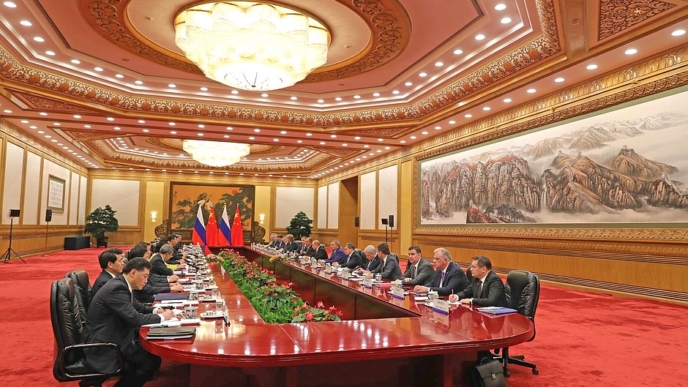
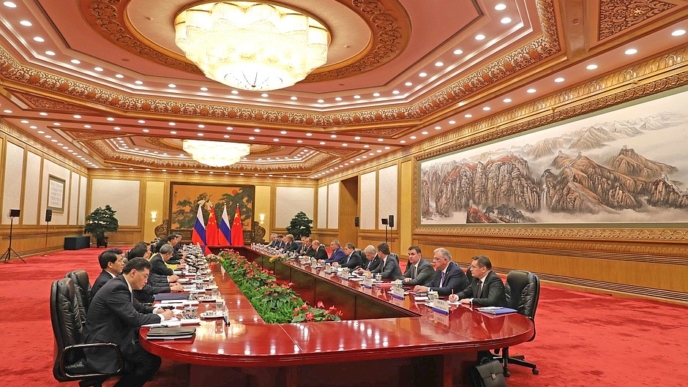
Overshadowed in the U.S. media by the Singapore meeting between President Donald Trump and North Korean leader Kim Jong Un, the 2018 Shanghai Cooperation Organization (SCO) Summit, held in Qingdoa, China on June 9–10, may have far greater strategic significance.

Established in 2001, the SCO is a Eurasian political, economic, and security organization, which now has eight member states; China, Kazakhstan, Kyrgyzstan, Russia, Tajikistan, Uzbekistan, Pakistan and India. Aspiring member states include; Afghanistan, Belarus, Iran, Mongolia, Armenia, Azerbaijan, Cambodia, Nepal, Sri Lanka and Turkey.

In his opening remarks, chairman of the meeting, Chinese President Xi Jinping offered several specific proposals reflecting China’s strategic objectives.

First, President Xi recommended that Eurasian countries focus on China’s Belt and Road Initiative (BRI) “to build a powerful engine to achieve common development and prosperity.” It is understandable why he would do so.

BRI is China’s blueprint for global dominance is a development plan: a program of infrastructure projects and a network of commercial agreements designed to link the world directly to the Chinese economy through inter-connected land-based and maritime routes. The area initially targeted by Beijing, Eurasia, represents two-thirds of the world’s population and one-half of the worldwide Gross Domestic Product (GDP).

BRI is soft power projection with an underlying hard power component: a comprehensive China-centered economic, financial and geopolitical web with far-reaching, cascading consequences affecting American national interests. It is not just resource acquisition or utilization of China’s industrial over-capacity, but its projects are specifically designed to ensure economic and, eventually, military dominance.

The linchpin of BRI is the China-Pakistan Economic Corridor (CPEC), the backbone of which is a transportation route that connects China to the Pakistani ports of Gwadar and Karachi on the Arabian Sea. It is why China’s “all-weather ally”, Pakistan, has been dutifully working to hasten U.S. exit from Afghanistan through its support of the Taliban and the Haqqani network, as well as maintaining Pakistan’s stranglehold on the supply of our troops to landlocked Afghanistan.

Second, in order to “facilitate peace and reconstruction in Afghanistan,” President Xi said, “we need to give full play to the role of the SCO-Afghanistan Contact Group,” which recently held a meeting in Beijing including Russia, India, Kazakhstan, Kyrgyzstan, China, Pakistan, Tajikistan, Uzbekistan and Afghanistan. The SCO-Afghanistan Contact Group will likely become the vehicle to remove the U.S. from Afghanistan.

Third, President Xi emphasized the need “to expand partnership networks of international cooperation,” particularly “by engaging in dialogue with the International Monetary Fund (IMF), the World Bank and other international financial institutions.“

Not only was the IMF present at this year’s SCO Summit, but it was the first time the World Bank was seated with the inner circle of SCO members. In addition, China offered to extend its “debt trap” practice by announcing an additional $4.7 billion in potential loans through the SCO Inter-bank Consortium. No doubt additional cash will be needed by BRI countries like Pakistan, which devalued its currency for the third time since December and could explain the presence of the IMF and the World Bank at the SCO Summit. International financial institutions may provide supplementary monetary resources to support China’s global ambitions.

In contrast, it would be surprising if anything comparably significant arose from the Trump-Kim meeting in Singapore. Since before the Korean War, North Korea has had the same two objectives: survival of the regime and reunification of the Korean peninsula under North Korean rule. It is difficult to imagine any major U.S. proposal not ultimately contributing to the extinction of North Korea and the Kim dynasty.

Only time will tell, but the U.S. may again become the victim of North Korean subterfuge, while its mentor, China, quietly orchestrates a major strategic shift. (For more from the author of “Shanghai Summit May Prove More Important Than the Trump-Kim Meeting” please click HERE)

Lawrence Sellin, Ph.D., is a retired U.S. Army Reserve colonel, an IT command and control subject matter expert, and a veteran of Afghanistan, northern Iraq and a humanitarian mission to West Africa. He receives email at [email protected].

Follow Joe Miller on Twitter HERE and Facebook HERE.