
Posts

U.S. Embassy in China Warns Americans About Potential Sonic Attacks Abroad

The U.S. Embassy in China on Friday sent out an alert to Americans traveling abroad that they needed to seek medical attention immediately if they start to experience similar symptoms shared by U.S. staffers in China and Cuba.

The State Department is taking the most recent reports in China very seriously and alerted staff in the country after consulate staffers fell ill in the city of Guangzhou in May, according to Politico. At least two diplomats have recently been evacuated from China after having heard strange noises, and the number impacted may be on the rise.

State Department spokeswoman Heather Nauert also said at the time that the Chinese government assured the State Department that it is investigating the symptoms felt by the U.S. government employee.

. . .

The FBI launched an investigation that lasted a year following attacks in Havana, but they were unable to determine what caused the phenomena. The incident rattled U.S.-Cuba relations, but the occurrence of similar symptoms in China has raised suspicions about whether China, Russia, or another country might be to blame. The FBI and medical experts still do not have a lot of answers when it comes to what has caused the mysterious illness. (Read more from “U.S. Embassy in China Warns Americans About Potential Sonic Attacks Abroad” HERE)

Follow Joe Miller on Twitter HERE and Facebook HERE.

Nessie Found? New Hunt for Loch Ness Monster’s DNA

. . .Researchers in Scotland have been secretly sweeping the lake for DNA traces, suggesting that if the elusive “Nessie” is real, it will have DNA that has spread throughout the storied body of water.

Scientists can use this genetic material, known as eDNA, to track elusive beasts. And now researchers are turning that powerful method on Loch Ness to create the most comprehensive biodiversity catalog of its residents yet. . .

Researchers have used to the technique to help determine the presence of invasive bullfrogs in France and the movements of invasive Asian Carp in the Great Lakes. It’s even been used to monitor fish migrations around New York.

The Loch Ness researchers hope to create a similar catalogue while surveying the lake’s DNA. The researchers have been collecting samples since April, Michael Greshko writes for National Geographic and they’ll start extracting the DNA this month. But the team doesn’t expect to release its findings until January.

Meanwhile, video of what appears to be a similar “plesiosaur-type” creature in the deep, dark waters of Kanas Lake in China. See the eerie images of the 30-foot-long beast in Xinjiang province and decide for yourself. (Read more from “New Hunt for Loch Ness Monster’s DNA” HERE)

Follow Joe Miller on Twitter HERE and Facebook HERE.
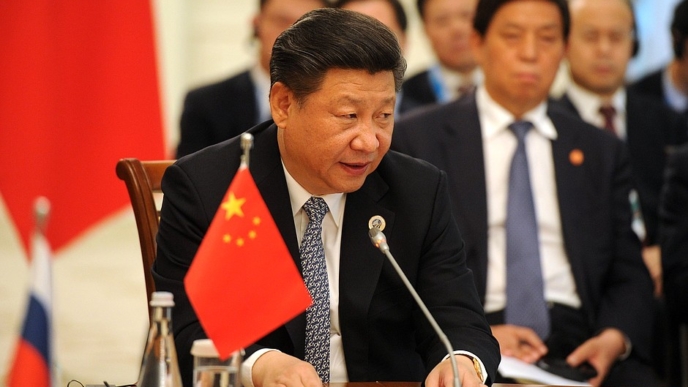
U.S. Government Employee in China Experiences ‘Sensations of Sound and Pressure,’ Similar to ‘Sonic Attacks’ on Diplomats in Cuba

On Wednesday, the State Department’s “travel” Twitter account uploaded a story followed by a warning for personnel in China:

Speaking before the House Foreign Affairs Committee on Wednesday, Secretary of State Mike Pompeo said:

The medical indications are very similar, and entirely consistent with, the medical indications that were taking place to Americans working in Cuba. One incident – we announced it to the workforce while we slept here last night. We have medical teams that are moving to be on the ground there. We are working to figure out what took place both in Havana, and [now] in China as well. We’ve asked the Chinese for their assistance in doing that, and they have committed to honoring their commitments under the Vienna Convention to keep American foreign service officers safe.

In 2016 and 2017, U.S. diplomats in Havana, Cuba reported feeling as though they had been prey to “auditory and sensory phenomena in their homes or hotel room,” according to a study published in March 2018.

The 21 individuals who were evaluated in the study had allegedly developed “cognitive, vestibular, and oculomotor dysfunction, along with auditory symptoms, sleep abnormalities, and headache.” The study adds that the individuals “appeared to have sustained injury to widespread brain networks without an associated history of head trauma.” (Read more from “U.S. Government Employee in China Experiences ‘Sensations of Sound and Pressure,’ Similar to ‘Sonic Attacks’ on Diplomats in Cuba” HERE)

Follow Joe Miller on Twitter HERE and Facebook HERE.

Thanks Trump? China Pledges to Buy More American Products, Reduce Trade Deficit

By The Daily Wire. President Donald Trump drew major heat for announcing, months ago, that he would boost tariffs on goods coming into the United States from China, in an effort to re-balance what he considered an economically fatal trade deficit.

But after months of negotiations, it seems the President’s commitment ot the “art of the deal” has changed our relationship with China without many major changes on the part of the U.S., and though nothing is yet official, China says it will buy more American products to “even out” our trade partnership.

According to CNN, China has pledged to “significantly increase” “purchase of goods and services” from American companies, in order to “reduce the trade imbalance.” The news comes at the tail end of weeks of trade talks between American and Chinese officials that both parties have called “productive.” (Read more from “Thanks Trump? China Pledges to Buy More American Products, Reduce Trade Deficit” HERE)

______________________________________________

U.S. and China Call a Ceasefire in Trade Dispute

By CNN. After weeks of tensions, China and the United States have reached a ceasefire.

Both sides this weekend said they had agreed to not impose new tariffs on one another while talks continue, after reaching an initial agreement on trade.

In a joint statement on Saturday, the countries said China would “significantly increase” purchases of US goods and services to reduce their trade imbalance. This was a top demand of the Trump administration during two days of trade talks in Washington with Chinese officials.

“We’re putting the trade war on hold,” US Treasury Secretary Steven Mnuchin told “Fox News Sunday. “We have agreed to put the tariffs on hold while we try to execute the framework.” (Read more from “U.S. and China Call a Ceasefire in Trade Dispute” HERE)

Follow Joe Miller on Twitter HERE and Facebook HERE.
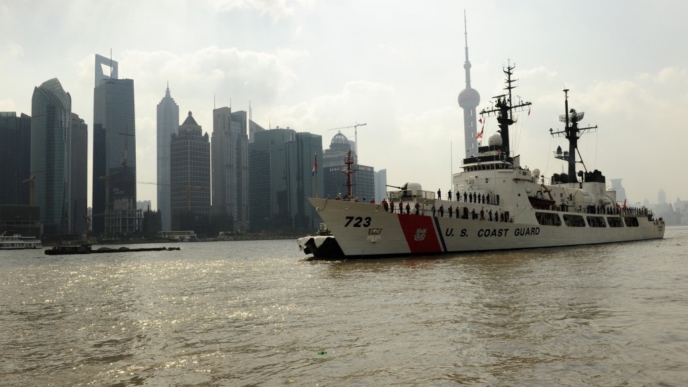
China Moves to Neuter King Dollar in International Trade

Last Monday, the Shanghai International Energy Exchange launched the first futures contract for crude oil priced in Chinese yuan. It’s a major step forward in the process of international de-dollarization. Now Chinese and other international traders can buy and sell the world’s most important commodity in a liquid market without using U.S. dollars.

The “petro dollar” now faces the prospect of being rendered unnecessary as China – the world’s biggest oil importer – attempts to establish a “petro yuan.”

China is launching a pilot program to purchase oil from Russia and Angola (two of its top suppliers) using yuan. Russia and China share a common interest in trying to break the dollar’s dominance in global commodity trading.

The two powers have been among the world’s top gold accumulators in recent years, with some reports suggesting Russia is now also loading up on silver for the possible launch of a silver ruble. Russia and other emerging commodity supplier markets stand to be among the big beneficiaries of a weaker dollar, as does China.

That’s a view echoed by Frank Holmes, CEO and Chief Investment Officer at U.S. Global Investors.

Holmes told listeners of the latest Money Metals podcast,

When we went back over 20 years of data analysis, the emerging markets always do well with a weaker dollar. So, I think that bodes well for rising GDP per capita. And rising GDP per capita in China and India is very important for the love trade, which is 60 percent of all demand for gold, and also good for silver. So, I think from that end we could probably see this continuous buying like we’ve been seeing out of China.

The ability to sell oil for yuan, then trade yuan for gold in Shanghai, Hong Kong, or other regional exchanges bodes well for demand. Foreign sellers of oil to the Chinese don’t necessarily want to hold yuan per se, especially as China still imposes currency controls that prevent the yuan from being freely traded on international markets.

But an oil-to-yuan-to-gold pipeline could be good for everyone – that is, everyone except King Dollar. (For more from the author of “China Moves to Neuter King Dollar in International Trade” please click HERE)

Follow Joe Miller on Twitter HERE and Facebook HERE.

China Responds to Tariffs by Targeting These 128 U.S. Products

By The Daily Wire. Early Friday morning, China responded to the Trump administration’s tariffs by revealing that they are proposing tariffs on 128 U.S. products that had an import value of $3 billion in 2017.

The proposed tariffs come in response to Trump signing “an executive memorandum on Thursday that would impose retaliatory tariffs on up to $60 billion in Chinese imports,” CNBC reported . . .

In a memo from the White House on Thursday, Trump revealed that he had directed “the United States Trade Representative to determine whether to investigate China’s laws, policies, practices, or actions that may be unreasonable or discriminatory and that may be harming American intellectual property rights, innovation, or technology development.”

According to the statement, the Trade Representative advised Trump that the investigation supports the following findings:

First, China uses foreign ownership restrictions, including joint venture requirements, equity limitations, and other investment restrictions, to require or pressure technology transfer from U.S. companies to Chinese entities. China also uses administrative review and licensing procedures to require or pressure technology transfer, which, inter alia, undermines the value of U.S. investments and technology and weakens the global competitiveness of U.S. firms.

(Read more from “China Responds to Tariffs by Targeting These 128 U.S. Products” HERE)

___________________________________________

China Responds to Trump Tariffs With Proposed List of 128 US Products to Target

By CNBC. . . .China’s commerce ministry proposed a list of 128 U.S. products as potential retaliation targets, according to a statement on its website posted Friday morning.

The U.S. goods, which had an import value of $3 billion in 2017, include wine, fresh fruit, dried fruit and nuts, steel pipes, modified ethanol, and ginseng, the ministry said. Those products could see a 15 percent duty, while a 25 percent tariff could be imposed on U.S. pork and recycled aluminium goods, according to the statement.

The statement did not go into greater detail. U.S. agricultural products, particularly soybeans, have been flagged as the biggest area of potential retaliation by Chinese President Xi Jinping’s administration.

Beijing will take measures against the 128 U.S. goods in two stages if it cannot reach an agreement with Washington, the ministry said, adding that it could take legal action under World Trade Organization rules. (Read more from “China Responds to Trump Tariffs With Proposed List of 128 US Products to Target” HERE)

Follow Joe Miller on Twitter HERE and Facebook HERE.

China Ready for War

President Xi Jinping delivered a blistering nationalist speech Tuesday, warning against any attempts to split China and touting the country’s readiness to fight “the bloody battle” to regain its rightful place in the world.

Mr Xi’s address capped an annual session of the National People’s Congress that paved the way for him to rule for life, as China’s most powerful leader since Mao Zedong pushes through his vision of guiding the country through a “new era” of unrivalled global military and economic supremacy.

Days after President Donald Trump signed new rules allowing top-level US officials to travel to Taiwan, Mr Xi warned that Beijing would defend its “one China principle”, which sees the self-ruling island as its territory awaiting reunification.

“All acts and tricks to separate the country are doomed to fail and will be condemned by the people and punished by history,” Mr Xi told nearly 3,000 delegates assembled at the imposing Great Hall of the People facing Tiananmen Square . . .

The Chinese leader’s plan to build a “world-class” military by mid-century has also raised concerns about how it plans to use its increasingly modern forces amid regional frictions over China’s territorial claims in the South China Sea. (Read more from “China Ready for War” HERE)

Follow Joe Miller on Twitter HERE and Facebook HERE.

China Launches New Campaign Against Christianity

Amid an ongoing surge in Christianity that developed as communism created a spiritual vacuum in people’s lives, China has launched a new crackdown, including rules introduced last month that further restrict the activities of unregistered house churches, according to a new report.

Christians in China have been repressed ever since the People’s Republic was created in 1949, with the government’s control of churches and imposition of the Communist Party’s atheistic values.

The state’s oppressive control prompted the rise of an underground house-church movement that, combined with the growth of registered churches, will make China’s Christian population the world’s largest by 2030, according to the new report by the Council on Foreign Relations.

“Tens of millions of Chinese now identify as Christians and the number has grown rapidly, posing challenges for a government that is officially atheist and wary of threats to its power,” the report says.

The growth in Christianity became noticeable shortly after the long-repressive nation was reopened to the outside world amid the reforms instituted by Deng Xiaoping after Mao Zedong’s death in 1976. (Read more from “China Launches New Campaign Against Christianity” HERE)

Follow Joe Miller on Twitter HERE and Facebook HERE.
CHANGE IS COMING: China Is Accelerating Its Plan For A Military Base In Pakistan

On January 1, 2018, The Daily Caller published information — later confirmed in two separate reports, here and here — about a plan for a Chinese military base on the Jiwani peninsula in Pakistan, near Gwadar, a sea port critical to the success of the China-Pakistan Economic Corridor (CPEC).

According to noted national security correspondent Bill Gertz:

“Plans for the base were advanced during a visit to Jiwani on Dec. 18 by a group of 16 Chinese People’s Liberation Army officers who met with about 10 Pakistani military officers.”

“The Chinese also asked the Pakistanis to undertake a major upgrade of Jiwani airport so the facility will be able to handle large Chinese military aircraft. Work on the airport improvements is expected to begin in July.”

Sources now say the plan has been accelerated. Upgrade of the Jiwani airport is already underway. In addition, procedures are being formulated for the relocation of the local population to make way for Chinese military and other support personnel. The sensitivity and importance of this issue to China and Pakistan cannot be overstated. After the disclosures and the expected denials from both Islamabad and Beijing, Pakistani officials, as early as January 5, 2018, launched a leak investigation and it was jointly decided to advance the schedule for the Jiwani base.

Strategically, China’s Belt and Road Initiative (BRI) is their roadmap to geopolitical dominance. It is soft power with an underlying hard power, military component, the so-called “String of Pearls” bases and facilities.

A Chinese military base on the Jiwani peninsula will complement the Chinese base in Djibouti, which became operational in 2017. Both are located at strategic choke points. The Djibouti base is near the entrance to the Red Sea and the Suez Canal, while the Jiwani base will be within easy reach of the Strait of Hormuz, a combination, not only capable of dominating vital sea lanes in the Arabian Sea, but boxing-in U.S bases in the Persian Gulf and outflanking the U.S. naval facility on Diego Garcia.

There is concern that the Chinese will transform its 99-year lease of the Sri Lankan port of Hambantota into another naval base, the exact “debt-trap” method the Chinese used in Djibouti and after its acquisition of a 40-year lease of the Pakistani port of Gwadar. There are also continuing Chinese diplomatic efforts to gain access to the Maldives.

All of the above represent elements of China’s “String of Pearls” bases to secure military dominance of the maritime component of BRI.

In addition to explicit economic and military moves, China is planning a fiber optic network to control the flow of information and is mapping the northern Indian Ocean seabed, potentially for a SOSUS-like system to monitor maritime traffic and control a fleet of subsurface drones.

While the United States is tinkering with counterinsurgency policy and nation building in Afghanistan, there are seismic strategic changes taking place in South Asia and the Indian Ocean region.

It is senseless to continue an unsuccessful, costly and exhaustive approach in Afghanistan, which not only places our forces at an equivalent tactical level to the Taliban, but allows Pakistan to regulate the operational tempo and the supply of our troops.

Instead, the U.S. should be moving toward a policy that shifts the burden of Afghanistan stability to the regional players who have thwarted our efforts there and adopt a strategy that exploits our technological advantages to counter growing Chinese sophistication and ambition through augmented U.S. naval and air power projection and the selective use of covert, special operations and cyber warfare operations.

The foremost regional problem is to have a workable plan to secure Pakistan’s nuclear arsenal, which is growing more dangerous because of its expanding tactical nuclear weapons program.

The United States is not without strategic options to disrupt Chinese hegemony. The linchpin of BRI is CPEC. Pakistan’s main vulnerability remains ethnic separatism, which was largely the reason Pakistan adopted a program of Islamization in the late 1970s. Pakistan is the Yugoslavia of South Asia with the Pakistani province of Punjab as the equivalent of Serbia, when that country pursued an expansionist policy in the 1990s.

For example, BRI cannot succeed without CPEC and CPEC cannot succeed without a subservient Balochistan, a province with a festering insurgency that was once independent and secular before it was forcibly incorporated into Pakistan. Balochistan is also where Pakistan maintains a significant Taliban infrastructure and provides safe haven to its Quetta Shura leaders.

There clearly needs to be a sense of urgency applied to this challenge because current U.S. policy in Afghanistan is about to be overtaken by events.

An American withdrawal from Afghanistan will only be a humiliating defeat if the United States is forced into strategic retreat because we do not have a plan in place to address the changing regional conditions. (For more from the author of “CHANGE IS COMING: China Is Accelerating Its Plan for a Military Base in Pakistan” please click HERE)

Lawrence Sellin, Ph.D. is a retired US Army Reserve colonel, an IT command and control subject matter expert, trained in Arabic and Kurdish, and a veteran of Afghanistan, northern Iraq and a humanitarian mission to West Africa. He receives email at [email protected].

Follow Joe Miller on Twitter HERE and Facebook HERE.

This Is What China Is Banning From the Internet in Censorship Crackdown

The Chinese government is in the middle of an unprecedented internet crackdown in an effort to stall or silence criticism of Chinese President Xi Jinping’s decision to extend his termed presidency into a lifetime appointment.

China already has a stranglehold on how much information Chinese citizens are allowed to glean from the World Wide Web. Most social media sites don’t operate inside the Communist nation — China has its own versions of Twitter and Amazon — and the government controls most, if not all, of the news media . . .

As a result, George Orwell’s “Animal Farm” has been wiped off the web, and Chinese citizens can no longer access the single most biting critique of Communist government ever published. They’ve also banned a specific “Winnie the Pooh” cartoon that shows the lovable Disney bear clutching a pot of honey, near the words, “Find the thing you love and stick with it” (an apparent reference to Xi Jinping’s self-granted lifelong appointment), and references that connect Xi Jinping to Mao Zedong.

The government also, inexplicably (and temporarily), banned the letter “N,” making it next to impossible to access much of the internet for several days. Experts on Chinese policy told the UK’s Evening Standard that it’s possible Chinese dissidents were using a lone letter “N” as a code to find each other on the internet, or that certain dissident literature had been marked with the letter, though it’s not clear how the Chinese would be able to strain every use of “N,” especially if it appeared in photos or in PDF files. (Read more from “This Is What China Is Banning From the Internet in Censorship Crackdown” HERE)

Follow Joe Miller on Twitter HERE and Facebook HERE.