Posts

Your Morning Coffee Mess Could Help Detect Deadly Diseases in Minutes

Have you ever noticed how a spilled cup of coffee leaves behind a telltale brown ring?

While those stains might be annoying, the science behind them, known as the coffee ring effect, has sparked innovations in health technology.

UC Berkeley researchers recently turned this everyday phenomenon into a breakthrough medical test, making rapid and reliable disease detection as easy as brewing your morning coffee. Curious how a simple coffee stain could inspire cutting-edge diagnostics and revolutionize at-home testing? Let’s look at how a forgotten mug on your desk might just save lives. . .

Ever wondered why spilled coffee, wine or tea dries in a ring rather than evenly? This common pattern is known as the “coffee ring effect.” The phenomenon occurs because of the liquid’s surface tension. As the drop begins to dry, water at the edges evaporates more quickly since that area is thinner. To keep up, liquid from the center flows outward, carrying tiny particles with it. Once the drop is completely dry, these particles settle along the edge, creating the signature ring stain you see on tables and countertops every day.

Surprisingly, that annoying coffee ring on your table has inspired a major breakthrough in medical technology. Researchers at UC Berkeley transformed this everyday nuisance into a powerful new at-home diagnostic test. This innovative test can identify diseases like COVID-19, prostate cancer and sepsis with remarkable accuracy. In fact, it is up to 100 times more sensitive than many current rapid tests. Even better, it delivers results in just twelve minutes, depending on the test. (Read more from “Your Morning Coffee Mess Could Help Detect Deadly Diseases in Minutes” HERE)

Photo credit: Flickr
Mysterious Alaskapox Virus That Jumps From Animals to Humans Has Resurfaced

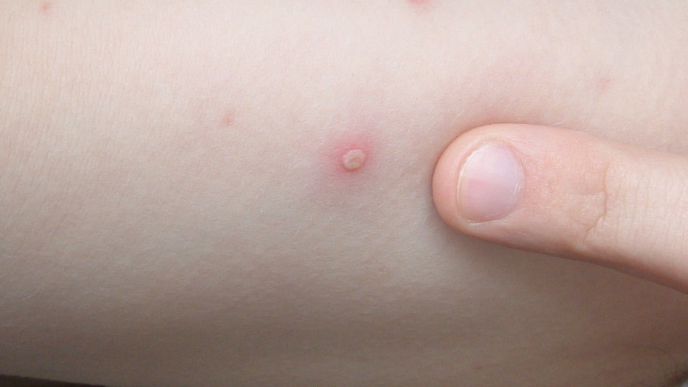
The mysterious Alaskapox virus has resurfaced in Fairbanks, Alaska, this summer with two new cases. The earlier two cases, in 2015 and 2020, were also reported in the same area.

According to the Alaska Department of Health and Social Services, the infected Alaskans have since recovered after contracting the disease with non-severe symptoms, Alaska Public Media reported.

Experts suspect that small animals are carriers of the virus, with a testing and trapping project having found evidence of Alaskapox virus in squirrels, voles, and shrews, KTOO reported.

Dr. Eric Mooring, an epidemiologist with the Centers for Disease Control and Prevention (CDC), explained that all four of the Fairbanks Alaskapox cases experienced single, small skin lesions that “varied a bit in color, but reddish-whitish and then sometimes even went on to become a darker sort of a brownish shade.” (Read more from “Mysterious Alaskapox Virus That Jumps From Animals to Humans Has Resurfaced” HERE)

Delete Facebook, Delete Twitter, Follow Restoring Liberty and Joe Miller at gab HERE.

China Reports First Death From Rare Monkey B Virus

The Chinese Center for Disease Control and Prevention (CCDC) reported this past weekend that a man had died from the rare Monkey B virus (BV).

The virus, which is also referred to as “Macacine alphaherpesvirus 1” by the International Committee on Taxonomy of Viruses, comes from monkeys of the genus Macaca and is generally transmitted through direct contact and bodily fluids. It was first isolated in 1932.

According to the CCDC’s statement, the patient who contracted the virus was a 53-year-old male veterinary surgeon who worked at a Beijing institute that specialized in “nonhuman primate breeding and experimental research.” He had dissected two monkeys on March 4 and 6 of this year and began experiencing nausea, vomiting and fever about a month after.

He died on March 27 after visiting several different hospitals. This is believed to be the first fatal case of BV to be recorded in China. (Read more from “China Reports First Death From Rare Monkey B Virus” HERE)

Delete Facebook, Delete Twitter, Follow Restoring Liberty and Joe Miller at gab HERE.

Alaska Officials Warn of Common Animal Spreading Deadly Disease to People, Pets

. . .In a news release late last month, the Alaska Department of Fish and Game announced it had received calls about an “abundance” of hares — some of which were dead — in the Fairbanks area.

The dead hares could have possibly contracted an infectious disease known as tularemia. The disease, which is caused by the Francisella tularensis bacteria, “is most often diagnosed in hares and pets in the Interior between Memorial Day and Labor Day because it is spread by hare and vole ticks which are active during the summer. The tick species known to carry the bacteria prefer hares and rodents, but will occasionally bite dogs, cats, or people,” the wildlife agency said.

Additionally, the agency noted, two species of dog ticks “have become established around urban areas in Alaska and are capable of spreading the bacteria.”

Pets can also contract the disease from “mouthing or catching” hares that have tularemia. If a pet is infected, people, too, can contract tularemia via their pet’s saliva or by handling infected hares. And, according to the Alaska Department of Fish and Game, people can become infected “even before the pet exhibits signs of illness.”

There are multiple types of tularemia, per the Mayo Clinic. But in the most common form of the disease — ulceroglandular tularemia — signs in humans typically include fever, chills, exhaustion, a skin ulcer at the infection site and swollen and painful lymph glands. Infected pets, too, can show similar signs, such as lethargy, high fever and swollen lymph nodes, according to the wildlife department. (Read more from “Alaska Officials Warn of Common Animal Spreading Deadly Disease to People, Pets” HERE)

Follow Joe Miller on Twitter HERE and Facebook HERE

Doctors Warn About Potentially Lethal ‘Kissing Bug’ That May Already Have Infected 300,000 Americans

The name “kissing bug” doesn’t quite communicate the danger of the infection that insects with that moniker can spread.

These bloodsucking bugs, called triatomine bugs, spread a parasitic illness called Chagas disease. Left untreated, Chagas causes serious cardiac or intestinal complications in about 30% of patients, according to the Centers for Disease Control and Prevention. These complications can lead to heart failure and sudden death. . .

Chagas has typically been found in Central America and South America, but the disease is becoming more common in the US, Canada, Europe, Australia, and Japan, according to a recent statement from the American Heart Association and the Inter-American Society of Cardiology. The groups warn that doctors outside Latin America must become more aware of the disease so they can recognize, treat, and control it.

The AHA estimates that about 300,000 people are infected with Chagas in the US right now and that about 6 million people are infected around the world. . .

During the night, certain species of triatomine bugs crawl on people, dogs, or other mammals to feed. They often bite on the face, especially near the eyes or mouth — hence the “kissing bugs” name. (Read more from “Doctors Warn About Potentially Lethal ‘Kissing Bug’ That May Already Have Infected 300,000 Americans” HERE)

Follow Joe Miller on Twitter HERE and Facebook HERE.

Scientists Make Major Breakthrough in Fight Against Alzheimer’s Disease

Scientists at the the Cleveland Clinic Lerner Research Institute have successfully reversed Alzheimer’s disease in mice, a major breakthrough researchers are hopeful will translate into treatment for humans in the near future.

“To our knowledge, this is the first observation of such a dramatic reversal of amyloid deposition in any study of Alzheimer’s disease mouse models,” said researcher Riqiang Yan in a news release concerning the study . . .

Researchers found that the deletion of BACE1 in adult mice reversed amyloid deposition and improved cognitive functions.

“One of the earliest events in Alzheimer’s disease is an abnormal buildup of beta-amyloid peptide, which can form large, amyloid plaques in the brain and disrupt the function of neuronal synapses. Also known as beta-secretase, BACE1 helps produce beta-amyloid peptide by cleaving amyloid precursor protein (APP),” explains the Rockefeller University Press release.

The scientists successfully “generated mice that gradually lose this enzyme as they grow older. These mice developed normally and appeared to remain perfectly healthy over time,” notes the release. (Read more from “Scientists Make Major Breakthrough in Fight Against Alzheimer’s Disease” HERE)

Follow Joe Miller on Twitter HERE and Facebook HERE.

Alaska Just Made Number 1 on a Horrible List

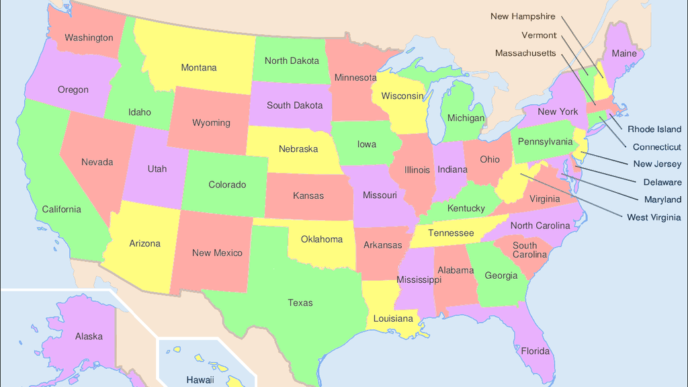
Sexually transmitted diseases are getting worse in the United States, increasing for the third year, with 2016 reaching an all-time high.

By PJ Media. According to the Centers for Disease Control and data analysis by Backgroundchecks.org, here are the ten most sexually diseased states in America:

1. Alaska
2. Mississippi
3. Louisiana
4. Georgia
5. New Mexico
6. North Carolina
7. South Carolina
8. Arkansas
9. Delaware
10. Oklahoma

(Read more from “Alaska Just Made Number 1 on a Horrible List” HERE)
___________________________________________

Alaska at the Top of Another Horrible List: This One for Violent Crime

By Sheiresa Ngo. Alaska wins the No. 1 spot as the most dangerous state. WalletHub researchers found this state has the most assaults per capita. In addition, FBI crime statistics revealed among cities with 100,000 people or more, Anchorage, Alaska, has some of the highest reported crime, with 1,692 violent crimes, nine murders, 326 robberies, 6,853 property crimes, and 1,055 aggravated assault cases in 2016. (Read More from this story about the top violent crime states HERE)

Follow Joe Miller on Twitter HERE and Facebook HERE.

Black Death Warnings as Plague Spreads

Health experts are warning there is “something different” about a new Black Death outbreak spreading across the world.

Some 1,300 cases of the pneumonic plague, which is transmitted by air, have now been confirmed.

An estimated 50 million lives were lost as a result of the Black Death epidemic of the 1300s.

And now the deadly disease has spread into more African countries after taking root in Madagascar.

Countries affected include South Africa, Mozambique, Tanzania, Kenya, Ethiopia, Comoros, the Seychelles, Mauritius and Reunion. (Read more from “Black Death Warnings as Plague Spreads” HERE)

Follow Joe Miller on Twitter HERE and Facebook HERE.

A Mysterious Polio-Like Illness That Paralyzes People May Be Surging This Year

Through July, 32 new cases of AFM [acute flaccid myelitis] have been confirmed across the United States this year by the Centers for Disease Control and Prevention, a sharp rise compared with last year, when just seven cases had been confirmed by that month. The numbers have risen steadily since April. In past years, most cases have occurred between August and December, with a peak in October.

Among the many unanswered questions about the condition are what causes it, how best to treat it and how long the paralysis lasts. Although most cases occur in children, AFM occasionally affects adults.

The CDC official who leads the surveillance efforts said that confirmed numbers for August will not be available until the end of this month, but the number of reports she is receiving from doctors around the country continues to rise.

“CDC is looking at these trends very carefully,” Manisha Patel said. “We have sent out several health alerts to states to let them know we are seeing an increase in reporting and to encourage them to communicate with doctors to report these cases in a timely fashion.” (Read more from “A Mysterious Polio-Like Illness That Paralyzes People May Be Surging This Year” HERE)

Follow Joe Miller on Twitter HERE and Facebook HERE.

Doctors Fear Scarring Bug Disease Brought to Europe by Migrants

Cutaneous leishmaniasis, a disease caused by bites from sandflies, has spread from thousands infected in Syria to neighboring countries.

Experts warn it has made its way to Europe with the millions of Syrians that have migrated over the last year. Cutaneous leishmaniasis often leads to severe scarring on the face if it goes undiagnosed and untreated.

The disease has been contained to Islamic State-controlled regions in Syria, particularly Raqqa, Deir al-Zour and Hasakah. As the civil war destroyed much of Syria’s medical facilities, it often goes untreated and spreads rapidly.

The estimated number of patients rose from six in 2012, to several thousand a year later, according to World Health Organization statistics.

Cases have already been detected in Turkey, Lebanon and Jordan.

Waleed Al-Salem, a doctor at the Liverpool School of Tropical Medicine, calls the current situation “very bad.”

“It’s a very bad situation. The disease has spread dramatically in Syria, but also into countries like Iraq, Lebanon, Turkey and even into southern Europe with refugees coming in,” Al-Salem told The MailOnline Saturday. ‘There are thousands of cases in the region but it is still underestimated because no one can count the exact number of people affected.” (For more from the author of “Doctors Fear Scarring Bug Disease Brought to Europe by Migrants” please click HERE)

Follow Joe Miller on Twitter HERE and Facebook HERE.