Posts

The Left’s Post-Trump Win Campaign of Terror

A few months back, I wondered aloud here why campus leftists would invite fellow students to bite the heads off fetus cookies. Or what purpose was served by hanging a Jesus dartboard in a dorm. The answer I found was simple. And alarming.

The left in America is engaged in what Catholic philosopher Thomas Molnar called “cultural terrorism.” As someone who survived both a Nazi concentration camp and post-war Stalinist Hungary, Molnar knew whereof he spoke. And the post-election actions of America’s left, from the streets of major cities to the halls of Congress itself, come straight from the radical playbook of Saul Alinsky and his disciples (which included both Barack Obama and Hillary Clinton).

Cultural terrorism is designed to work much like the bombs-and-bullets variety, using words and symbols instead. Its objectives, laid out in Molnar’s classic, The Counter-Revolution, are

To shatter the sense of normalcy, peace, and civic order that make it possible to live a middle-class existence in a free society.

To profane the sacred spaces and shatter the pious conventions that hold citizens together by wholesome inertia.

To introduce division, fear, distrust, and ethnic groupthink — whatever it takes to detach people from their natural deference to legitimate, elected authority.

To produce a sense of crisis, in which radical ideologies and rash actions seem no longer off the table, but somehow proportionate and maybe even necessary.

The Worse Things Get, the Better it is!

The Italian Communists used to cooperate with neo-Fascist terrorists planting bombs in the 1970s, under the slogan, “The worse things get, the better it is!” Their theory was that social chaos and widespread killing would lead to a crackdown by the government, which would speed up the coming of a Communist revolution. On a lesser scale (so far) that is where we are today.

I doubt that the average outraged campus snowflake or needlessly frightened black or Latino protestor has any idea of how he is being used, but the leaders behind the unrest across America are self-aware, and politically ruthless — as were the organizers of the Occupy movement. That fact was documented in Occupy Unmasked, which Trump strategist Stephen Bannon helped to make.

When radical activists encourage thousands of ghetto residents to block public roads, and cossetted students to mock and defy police, they are attacking the sense of predictable public order. When protestors gather outside the Trump International Hotel in our nation’s capital holding a sign that says “Rape Melania,” they are asking for a street fight with Trump supporters — or really, any passerby possessed of a sense of decency. The leaders who organize these outrages are hoping that something gets violent and ugly — that an outraged (white) motorist runs somebody down, or a stressed-out cop (of any color) starts shooting civilians. All that would feed into and verify their manufactured emergency, give millions more citizens the false impression that we are approaching martial law.

Never Let a Crisis Go to Waste

If that sounds outrageous and implausible to you, keep in mind the Clintonite mantra “Never let a crisis go to waste.” Remember that Wikileaks revealed the fact that a senior Clinton campaign staffer hoped that mass shooters would turn out to be white Christians. Recall that the riots in 1968 that handed vast cultural power to the radical left in West Germany were started when a policeman shot a student. Decades later, it turned out that the policeman was in fact an East German spy, who probably acted on orders to light the spark for revolution.

What does it mean when the losers in an election announce that the winner is “Not My President”? When reporters give millions of dollars in free publicity to a contemptible fringe figure like white nationalist Richard Spencer, who played no role whatsoever in the election of Donald Trump? (The Communist Party, USA endorsed Hillary Clinton. Had she won, would the media have featured its leader in alarmist photo spreads?) What does it signify when Trump’s newly-elected Vice President cannot even attend a Broadway show without being challenged and humiliated? When the next president’s appointees (such as Steve Bannon and Sen. Jeff Sessions) are subject to a non-stop campaign of lies and vilification as racists and extremists, outside the bounds of decent society and therefore ineligible for office?

Recall that before the election, Hillary Clinton herself discounted half of Trump’s supporters as “deplorables” motivated by hatred. Outraged, out-of-touch elitists cannot accept the fact that their fellow citizens rejected their grab at power — which remember, was supposed to pack the Supreme Court with far-left mandarins who would have taken critical issues, from abortion and gun rights to free campaign speech and religious liberty, out of the hands of the grubby, untrustworthy masses. These privileged “progressives” came so close to attaining that final liquidation of democracy that they could taste it. And now they’re not willing to let it go.

They will go on and on and on, promoting civil disorder and stoking the flames of division, in the hope that something goes horribly, bloodily wrong in some American city. Then they can send out their experts in “healing” and “reconciliation” across the media, and demand that the Trump administration back off on its central policies — which will clearly have proved to be too “radical” and “provocative.” To ease the crisis which they provoked, they will work up bipartisan measures with bland, defeatist establishment Republicans, so both parties can work together to annul the effects of Trump’s historic victory.

For our part, we must stay calm. We must insist in firm but measured tones on the legitimacy of our country’s last democratic election. We must frustrate attempts at character assassination on decent men whom President-elect Trump appoints to office, and wait out this national paroxysm of elitist rage and envy. We must pray that Trump’s supporters, and policemen across America, have the patience and long-suffering to let these arsonists’ fires simply burn themselves out. Then normalcy will return. We must stand firm by principles, insist on justice and order, and turn the other cheek. Do anything else, and the cultural terrorists win. (For more from the author of “The Left’s Post-Trump Win Campaign of Terror” please click HERE)

Follow Joe Miller on Twitter HERE and Facebook HERE.

Trump Should Let the Senate Kill Obama’s Climate Treaty

When is a treaty not a treaty? According to the Obama administration, whenever the president says so. This claim is especially dubious with respect to the Paris agreement on global warming, which as Marlo Lewis of the Competitive Enterprise Institute has shown, is more ambitious than predecessor agreements that were universally accepted to be treaties.

Surely if President Obama possesses an asserted authority to declare an agreement identical in form and more ambitious in substance than previous treaties to be a non-treaty then President Trump will have the authority to reach the opposite, more plausible conclusion.

There is little doubt that the Trump administration will reject the Paris agreement, but the option of properly recognizing it as a treaty and allowing the Senate to formally reject it has several advantages.

First, it prevents the dangerous precedent of a president binding the country and his successor to international commitments without the broad support that the Constitution requires through the advice and consent process. Secondly, it sidesteps the question of whether the withdrawal provision of the Paris treaty itself forces us to wait four years before withdrawal is effective. Finally, it exposes as false the talking point that skepticism of the Paris agreement is outside the political mainstream.

John Kerry, who infamously declared global warming a greater threat to the United States than terrorism, gave his final speech on the subject this week to the UN functionaries in Marrakech, Morocco. He offered a soothing fantasy.

“No one should doubt the overwhelming majority of the citizens of the United States who know climate change is happening and who are determined to keep our commitments that were made in Paris,” Kerry said to applause.

Last week’s election emphatically showed the opposite. The Midwest delivered the White House to Trump, who dominated among the working class voters who care far more about how much they are paying to fill up the gas tank and keep their lights on than they do about what United Nations computer models predict about the climate in decades or centuries — the results of which show minimal change anyway. Appalachian voters in particular preferred Trump in a stunning 469 of 490 counties.

The Paris treaty is a magnificent example of the bad deals made for America that ultimately paved Donald Trump’s path to the White House.

Specifically, the Paris treaty effectively bans coal-fired power plants in the United States while China has 368 coal plants under construction and over 800 in the planning stage. India’s coal production under the deal is projected to double by 2020. Even Europe is allowed to build coal plants. It forces Americans to endure painful cuts while the rest of the world continues with business as usual.

Even worse, American taxpayers will be forced to cough up $100 billion in climate-related foreign aid by 2020, with the promise of much more to follow.

Which brings us to the Senate.

Trump can submit the Paris treaty in full confidence that it will not pass with the required 67 votes in a body that has just 48 Democrats. The interesting question: how low can the vote total for this rotten deal go?

With ten Senate Democrats sitting in states Trump carried, many senators will be forced to choose between their green billionaire donors out in San Francisco and the voters they need to survive in 2018. And when the Senate votes the Paris treaty down, it will send an emphatic message to the world that — despite what John Kerry told his friends in Marrakech — the American people are with Trump on this, not Obama. (For more from the author of “Trump Should Let the Senate Kill Obama’s Climate Treaty” please click HERE)

Follow Joe Miller on Twitter HERE and Facebook HERE.

Central America Should Not Worry About Trump’s Election

Recently, the governments of El Salvador, Guatemala, and Honduras agreed as a bloc to seek support from Mexico in response to the election of President-elect Donald Trump.

This move comes in response to the president-elect’s comments during a “60 Minutes” interview, where he vowed to deport unlawful immigrants with criminal records back to their country of origin.

But such knee-jerk reactions are quite shortsighted.

Rather than viewing Trump’s election as a challenge, these countries should capitalize on this unique opportunity to set the region on a proper course. The new administration’s strong focus on immigration and U.S. national security could potentially benefit them long-term.

Located directly south of Mexico, the Northern Triangle countries of El Salvador, Guatemala, and Honduras are caught in the crosshairs of a dire economic and security crisis.

For many years, Honduras and El Salvador have jostled for the top spot among nations with the highest homicide rates. Violent local and transnational gangs operate with virtual impunity. Drug trafficking runs rampant and has corrupted state institutions that are already fragile.

Guatemala’s 600-mile border with Mexico is a porous haven for drug and human trafficking. High-level corruption within the government, particularly the law enforcement and military, make it virtually impossible to begin addressing these problems.

On the American side, monetary aid to the region has been politicized under the Obama administration. Much like its foreign policy writ large, the administration’s strategy toward Central America has reflected the narrow interests of progressive constituents.

Rather than addressing these countries’ basic security and development challenges, the administration has focused on softer projects like gender issues and climate change.

All the while, security conditions in the region have continued to deteriorate while unlawful migration to the U.S. keeps surging. Mexicans no longer make up the majority of unlawful migrants—these now primarily come from the Northern Triangle countries.

And here again, the Obama administration’s misguided policies have aided the immigration surge.

Consider its response to Honduras’ constitutional crisis in 2009. Instead of supporting the democratic ambitions of a regional partner, the administration declared the lawful deposing of its president to be a “military coup” and responded by suspending critical aid.

Counternarcotic assistance was particularly hit hard, resulting in a further reduction of the country’s already insufficient capacity to combat drug trafficking. Shortly thereafter, a State Department study found that “87 percent of all cocaine smuggling flights departing South America first land in Honduras.”

In addition to America’s porous border and weak immigration laws, these destabilizing factors in Central America play a direct role in incentivizing unlawful migration to the U.S.

As evidenced by various indicators, like the continued flow of unlawful migrants and high homicide rates, the Obama administration’s foreign policy toward Central America has been ineffective.

The doomsday prophecies pushed by the media about the coming Trump administration are baseless. Instead of buying into the hype, the Northern Triangle countries should embrace an administration that is so keenly focused on restoring security to the region. (For more from the author of “Central America Should Not Worry About Trump’s Election” please click HERE)

Follow Joe Miller on Twitter HERE and Facebook HERE.

Trump Agrees to Pay $25 Million to Settle Trump University Lawsuit

President-elect Donald Trump has agreed to settle lawsuits against him regarding the now-defunct Trump University for $25 million.

The lawsuits were filed in California and New York.

New York Attorney General Eric Schneiderman issued a statement Friday afternoon indicating that 6,000 former students will receive restitution for their tuition payments and the State of New York will receive up to $1 million in penalties.

The president-elect won’t admit to any wrongdoing under the agreement.

The deal eliminates a litigation headache for Trump two months before his inauguration.

Trump had indicated during the campaign earlier this year that he wanted the cases to go to trial and would not settle them.

Trump posted a lengthy statement about the litigation in California after indicating the federal judge in the case, Gonzalo Curiel — an Obama appointee with Mexican heritage — was not making fair preliminary rulings in the case.

The businessman indicated that 98 percent of the students who participated in the real estate seminars gave the coursework positive ratings.

“Normally, legal issues in a civil case would be heard in a neutral environment. However, given my unique circumstances as nominee of the Republican Party and the core issues of my campaign that focus on illegal immigration, jobs and unfair trade, I have concerns as to my ability to receive a fair trial,” he wrote.

“While this lawsuit should have been dismissed, it is now scheduled for trial in November,” he added.

The trial was slated to begin at the end of the month and the president-elect faced the prospect of being compelled to testify in court either just as he is preparing to take office or shortly afterwards. (For more from the author of “Trump Agrees to Pay $25 Million to Settle Trump University Lawsuit” please click HERE)

Follow Joe Miller on Twitter HERE and Facebook HERE.
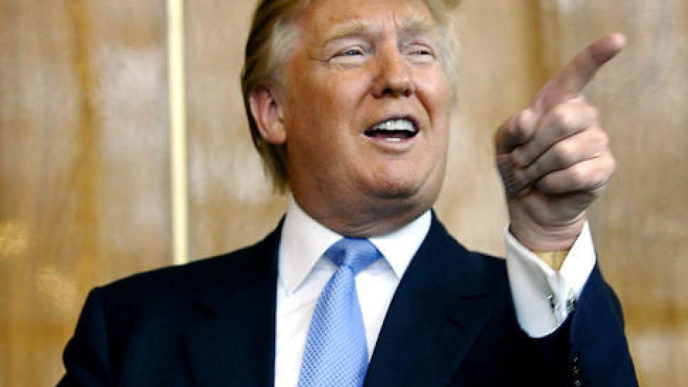
Serve America: Donald Trump Wants YOU!

Want to help make America great again? YOU could be a part of President-elect Donald Trump’s new administration!

That’s right! For a limited time only (4 to 8 years), the next Mr. President is looking for the finest men and women from across the country to serve in his Administration. No prior political experience required!

Have you longed to hold the title of civil servant? Now is the time to apply! The President-elect is filling positions across multiple departments and agencies. From the Presidential Transition Team to the National Endowment for the Arts, there’s a place for you!

Other positions include Finance and Budgetary, Human Capital and HR, Information Technology, Legal and Legislative Affairs, Management, Policy, Public Affairs and Communications. Just go to GreatAgain.gov and Serve America!

Whether you’re fresh out of college or a seasoned professional, there’s never been a better time to serve your country.

CLICK HERE to apply now! (Please allow 4 to 6 seconds for the page to load.)

Applicants may be subject to rigorous processing such as full FBI background checks, consideration for possible conflicts of interest and periods of restricted dealings with the United States federal government. Workloads are demanding, fast-paced and require significant time commitments. Serious considerations will be asked about possible conflicts of interest deriving from your sources of income; all aspects of your personal and professional life, including organizations to which you belong or once belonged; speeches you may have given and books, articles and editorials you may have written; legal, administrative and regulatory proceedings to which you may have been a party; in short, anything that might embarrass the President or you if he should choose you for a position in his administration. One should assume that all information provided during this process is ultimately subject to public disclosure, if requested under the Freedom of Information Act.

(For more from the author of “Serve America: Donald Trump Wants YOU!” please click HERE)

Follow Joe Miller on Twitter HERE and Facebook HERE.
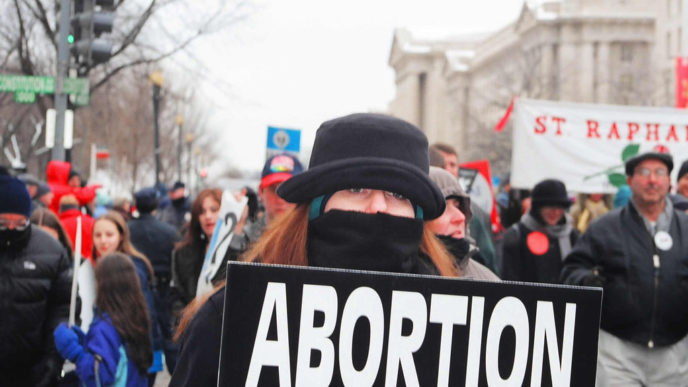
Obamacare ‘Insurer Bailouts’ Become Less Likely Under President Trump

Insurance companies hoping for relief in the form of changes to two Obamacare programs may end up disappointed now that President-elect Donald Trump is preparing to take the White House.

Obamacare’s risk corridor and reinsurance programs sunset at the end of the year, but conservative groups are worried that Congress would attempt to give insurers more money through the programs during the lame-duck session.

Insurance companies spent millions lobbying lawmakers on the two programs, which distributed money to insurers that lost money and enrolled populations that were sicker and more costly. But the election of Trump to the presidency makes it less likely that Congress will alter the two programs—referred to as “bailouts” by conservatives—to benefit those insurers.

“The lessons that we’ve learned from the election is people clearly don’t like [Obamacare] and are harmed by the law. They want it repealed,” Nathan Nascimento, a senior policy adviser at Freedom Partners, told The Daily Signal.

“I think President-elect Trump is looking at a bunch of different scenarios, and if he were smart, which I think he is, and he’s trying to be the voice of the people, then he should heed their call and make sure the taxpayers are made whole before giving preferential treatment to insurers,” he continued.

The risk corridor and reinsurance programs were intended to help mitigate insurers’ risks during the first few years of Obamacare’s implementation. The programs haven’t been as successful for insurers, which caused some small companies to close their doors and others to leave Obamacare’s exchanges.

In response to action from Republicans in 2014 and 2015, which left insurers with less money in risk corridor payments than anticipated, more than a dozen insurers sued the Obama administration over the program.

Conservative groups like Freedom Partners and Republican lawmakers have cautioned that the Justice Department could attempt to settle with insurance companies and tap into the Judgment Fund, an indefinite appropriation created by Congress and administered by the Treasury Department, to pay out those settlements.

In an effort to prevent that from happening, Republican Sens. John Barrasso of Wyoming, Mike Lee of Utah, Marco Rubio of Florida, and Ben Sasse of Nebraska introduced legislation Friday prohibiting the government from using the Judgment Fund or other federal funds to pay settlements related to the risk corridor program.

“We are going to repeal and replace Obamacare, but in the meantime, the last thing Americans need is for the Obama administration to sneak in one last bailout on its way out the door,” Sasse said in a statement Friday.

With Trump in the White House next year, health policy experts say it is doubtful the president-elect will settle with insurers.

I would imagine once the Trump administration takes office, settlement would be very unlikely,” Timothy Jost, a law professor at Washington and Lee University School of Law and a supporter of the Affordable Care Act, told The Daily Signal.

Still, Trump won’t be inaugurated until Jan. 20, so there remains a possibility that the Obama administration would attempt to settle with insurers before leaving office.

“It’s still a legitimate threat,” Nascimento said. “There are lawsuits that are pending, and the concern is whether or not the Obama administration will still move forward with trying to settle out of court claims.”

Like the risk corridor program, Obamacare’s reinsurance program transferred money from insurers that enrolled sicker populations to those that enrolled healthier populations.

Over the last few months, insurance companies and related organizations have pushed lawmakers to extend the reinsurance program beyond 2016, which would provide insurance companies with costly customers with an infusion of cash.

Under the reinsurance program, the Obama administration was supposed to prioritize payments to the Treasury over the insurance companies. But GOP lawmakers have accused the White House of diverting $5 billion intended for the Treasury to those insurers.

A September legal decision from the Government Accountability Office found the Department of Health and Human Services broke the law in giving this money to insurers before the Treasury.

Republicans in the House and Senate, led by Sasse and Rep. Mark Walker of North Carolina, are urging the government to repay the $5 billion to the Treasury, and a bill from Sasse and Walker would cut the Department of Health and Human Services’ budget if the money isn’t recouped.

Insurers, though, are lobbying Congress to oppose the bill, and America’s Health Insurance Plans, a trade group, said changes need to be made to both the reinsurance and risk corridor programs.

With Republicans maintaining control of the House and the Senate, Nascimento said Congress should attempt to recover the $5 billion in 2017.

“That’s where Trump really should throw down a marker,” he said, “and say, ‘Look, we’re not bailing out insurance companies. We’re not doing the sue-and-settle, and these dollars need to go back into the Treasury, and we’re going to make sure it goes back there.’”

“Those dollars need to go back into the Treasury. They were illegal given, and the Treasury needs to be made whole,” Nascimento continued.

Insurance companies haven’t received their reinsurance payments for 2016—they will be disbursed in 2017—and if Congress or the Trump administration forced the Department of Health and Human Services to repay the $5 billion to the Treasury, insurers would lose out, Jost said.

“The effect is going to vary from insurer to insurers,” he said. “It’s possible some will go insolvent and for most, it’ll be a big loss. For some, it might make it less likely they’ll continue to participate in the program for 2018, which is a decision they’ll have to make.” (For more from the author of “Obamacare ‘Insurer Bailouts’ Become Less Likely Under President Trump” please click HERE)

Follow Joe Miller on Twitter HERE and Facebook HERE.

Trump Considers Two Former Generals for Defense Secretary

Two former generals are in contention for defense secretary in President-elect Donald Trump’s administration: James Mattis and Jack Keane, who served as an informal adviser to Hillary Clinton, according to a person involved in the transition.

Trump is seeking to build out his national security team, having offered the job of national security adviser to retired Lieutenant General Michael Flynn, the former head of the Defense Intelligence Agency and a key military surrogate throughout his campaign, according to the person.

Former New York Mayor Rudy Giuliani remains the leading contender for secretary of state but Trump is considering others, including South Carolina Governor Nikki Haley and 2012 Republican presidential nominee Mitt Romney, the person said on Tuesday.

Former Texas Governor Rick Perry is being considered for a range of positions, including agriculture secretary, energy secretary and secretary of veterans affairs, the person said.

Trump’s top strategists are trying to recruit leaders from across the Republican Party who represent a range of perspectives, including some who made negative remarks about Trump before he was elected. Trump’s deliberations will continue this weekend as he holds back-to-back meetings with potential candidates for posts in his administration at his home on his private golf course in Bedminster, New Jersey, the person said. (Read more from “Trump Considers Two Former Generals for Defense Secretary” HERE)

Follow Joe Miller on Twitter HERE and Facebook HERE.
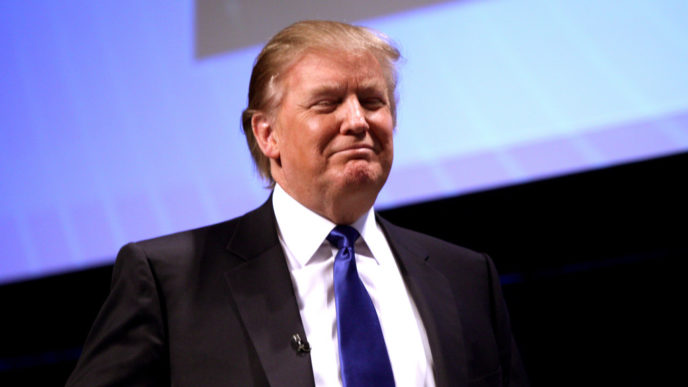
Media Hand-Wringing Over Trump’s Lack of Appointments Lacks Credibility

For days, the press has been expressing serious concern about the difficulties of the Trump transition team. The transition was “stalled,” according to The Hill, there’s “turmoil” and “splintering” reported by NBC, “infighting” reported by CNN and “discord” from The New York Times. CNBC highlighted the “settling” of an alleged “score” by President-elect Donald Trump’s son-in-law against New Jersey governor Chris Christie.

Yet for all of the hand-wringing over alleged delays in naming Cabinet members and other positions, a look at history makes it clear that the media is simply continuing its anti-Trump narrative into the post-election season . . .

Bret Baier notes that it took President-elect Barack Obama nearly three weeks to name his first Cabinet member. Every President-elect going back to Jimmy Carter has taken longer, with the exception of George H.W. Bush. Yet nine days after Trump’s election, the press is trying to say that we must be really worried because he hasn’t appointed anyone yet!

A few other outlets haven’t fully fallen into the trap. A Hollywood Reporter journalist told CNN’s Brian Stelter that the Times’ story was wrong. CBS has an article comparing different transition teams (though a video report at the same link says the transition isn’t smooth), and Politico has a succinct comparison to the Obama transition efforts.

But even Politico is going along with the narrative. An article published Thursday says Vice President-elect and Indiana Governor Mike Pence fulfilled a ban on lobbyists. According to Politico, the ban has “hobbled” the transition team. (On December 4, 2009, Politico published an article highlighting the “5 best jobs” left in the then-upcoming administration, though it has been one of the top media groups reporting on lobbyist ban violations and loopholes by the Obama administration.)

It may be that Trump’s team is in shambles, and that the reports are accurate. But without evidence of such, this reporting simply makes the mainstream press look desperately out of touch with what Americans care about, as well as full of self-indulgent naval-gazing. (For more from the author of “Media Hand-Wringing Over Trump’s Lack of Appointments Lacks Credibility” please click HERE)

Follow Joe Miller on Twitter HERE and Facebook HERE.

Have Evangelicals Lost Their Credibility by Voting for Trump?

I find it ironic that the same people who have mocked us for years as hypocrites, bigots, haters, homophobes, transphobes, and worse now tell us that we have lost our moral credibility by voting for Trump.

It is true that there are Christian leaders in other nations who feel that we (meaning, in particular, white evangelicals) have compromised our moral witness by voting for Trump in such overwhelming numbers (81 percent of white evangelicals voted for him). And it is true that it is difficult to reconcile our historic mantra of “character matters” with a vote for Trump, unless we are counting on his imminent moral transformation, which is certainly a risky way to vote.

Considering, then, that Trump would have been the last person on a list of candidates that evangelicals would have drawn up — actually, he would not have made the list at all — it’s easy to see how the world could think that we have sold our souls to the devil in some kind of desperate effort to regain power.

But for people to chastise us and say that we have forfeited our moral credibility in the eyes of our critics is to forget that, in the eyes of those critics, we had no moral credibility to lose.

Some of this, no doubt, was our own fault, since much of the evangelical church has, indeed, been hypocritical, with rampant no-fault divorce in our midst, with a plague of pornography in our pews, and with more leadership scandals (both financial and sexual) than we can count. Why should the world take our moral witness seriously?

But that is not the only reason we have been despised. To the contrary, a major reason that the world hates us is because of our moral stands and our refusal to capitulate to the culture, as a result of which we are likened to Hitler and the Nazis, to ISIS and the Taliban, to the KKK and other hate groups. This is all because we refuse to celebrate the redefinition of marriage or affirm the latest gender identity fad. (And should I mention what pro-abortion feminists think of evangelicals, especially male evangelicals?)

So, when I hear our critics call us hypocrites for voting for Trump (and again, I speak here primarily of white evangelicals), I have to laugh and say, “I thought we already were hypocrites!”

And I can only wonder what these same critics would have said if we had elected Ted Cruz, a staunch, once-married, Bible-quoting evangelical, as our candidate? They would probably be accusing us of setting up secret internment camps for all non-church attending Americans as we stealthily planned to take over the society. Can you even imagine what their accusations would be?

Some Did Lose Credibility

All that being said, as I have stated before, I do believe that some of us did lose credibility by the way in which we backed Trump, giving him a free pass for the very infractions for which we were ready to condemn Bill Clinton, overlooking his ugly attacks on others, and forgetting that the president and first lady are, in many ways, exemplars for the population.

Writing in 1998, Bill Bennett explained the danger of embracing the pro-Bill Clinton arguments that his private conduct was of no concern to the nation:

These arguments define us down; they assume a lower common denominator of behavior and leadership than we Americans ought to accept. And if we do accept it, we will have committed an unthinking act of moral and intellectual disarmament. In the realm of American ideals and the great tradition of public debate, the high ground will have been lost. And when we need to rely again on this high ground — as surely we will need to — we will find it drained of its compelling moral power. In that sense, then, the arguments invoked by Bill Clinton and his defenders represent an assault on American ideals, even if you assume the president did nothing improper. So the arguments need to be challenged. (The Death of Outrage: Bill Clinton and the Assault on American Ideals)

Character, then, does matter, and if we evangelicals did sacrifice character on the altar of political expediency, then we have further damaged our witness in the eyes of a watching world, some of which still expects moral goodness from the church.

That being said, it is clear that a large number of evangelicals who voted for Donald Trump did so for highly moral reasons, including protecting the unborn and standing up for religious freedoms. Are these not moral, Christian causes?

The High Moral Reasons for a Trump Vote

As explained by Jonathan Van Maren, “Many of my non-Christian and liberal friends find it bewildering that both evangelicals and Catholics voted overwhelmingly for Donald Trump, a thrice-married casino operator infamous for his vulgar trash talk. I want to take a moment to explain to them directly why most Christians voted for him anyways. It’s simple, really: Christians voted for Donald Trump because they felt that the threat a de facto third Obama term posed to Christian communities was an existential one.”

He continued, “The attacks on Christians from the highest levels of government have been relentless now for nearly a decade. Obama wants to force Christian churches and schools to accept the most radical and most recent version of gender ideology, and he is willing to issue executive decrees on the issue to force the less enlightened to get in line. Christian concerns are dismissed out of hand as ‘transphobia.’” And note that Van Maren had not yet mentioned Hillary Clinton, of whom he had much to say.

Where then do we stand today? With regard to our most hostile critics, as long as we uphold our biblical values, we will be reviled and condemned. That it is to expected. With regard to those outside the church who still think that Christians should live moral lives and care for the needy, let us step higher and demonstrate the life-changing power of the gospel.

With regard to our relationship with the president, we must conduct ourselves with integrity and honor, serving as a moral compass to our president rather than his tool. In that way, we will serve both God and the society. (For more from the author of “Have Evangelicals Lost Their Credibility by Voting for Trump?” please click HERE)

Follow Joe Miller on Twitter HERE and Facebook HERE.
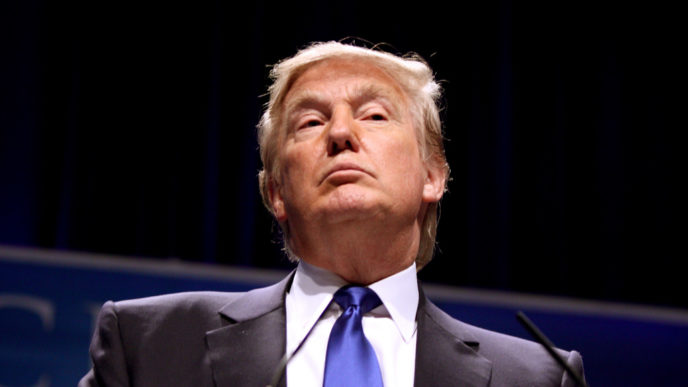
Trump Cabinet Timing in Line With Past Presidents

An article in Time called President-elect Donald Trump’s transition “chaotic,” while The New York Times asserted that Trump’s transition team is plagued by “discord” and “disarray.”

Politico quoted an anonymous insider saying the transition team was having a “knife fight” when it comes to filling Cabinet posts.

If very recent history is a guide, it might be too early to tell whether the Trump transition is any more or less organized than that of other president-elects, since nearly all recent presidents going back to at least Jimmy Carter made Cabinet announcements in December, with a handful of exceptions.

During a conference call with reporters Thursday, Trump transition team spokesman Jason Miller said the incoming administration isn’t rushing the Cabinet decisions.

“The president-elect will be announcing specific Cabinet positions, as well as key administration staff, when those decisions are made,” Miller said. “The focus of the administration is putting together the best team. It is not an arbitrary time table. It is about getting it right.”

In response to some of the media coverage, Trump tweeted the transition was a “Very organized process taking place as I decide on Cabinet and many other positions. I am the only one who knows who the finalists are!”

The Associated Press reported late Thursday that Trump had offered retired Lt. Gen. Michael Flynn the job of national security adviser. The position is not a cabinet post, but has traditionally been one of the highest ranking jobs in any administration.

Among names to being considered for the Cabinet are either former New York Mayor Rudy Giuliani, a Trump loyalist, and Trump critic former Massachusetts Gov. Mitt Romney are being considered for secretary of state, while Texas Sen. Ted Cruz, Trump’s chief GOP primary opponent, is reportedly under consideration for attorney general.

Sen. Jeff Sessions, a former Alabama state attorney general and U.S. attorney, met with Trump on Thursday, and a transition team press release said Trump is “unbelievably impressed” with his record.

Richard Nixon was the last president to name his entire Cabinet during the first six weeks after being elected, according to Fox News.

Winning an election amid a financial crisis in 2008, President-elect Barack Obama made his first cabinet announcement, Timothy Geithner for secretary of treasury, on Nov. 24.

Aside from that, Obama’s earliest announcements came on Dec. 1, with Hillary Clinton as secretary of state pick, Janet Napolitano as his selection secretary of homeland security, and Eric Holder as his choice for attorney general. Obama also announced that same day he would keep Bush Defense Secretary Robert Gates on board.

Obama abandoned later December announcements, such as plans to name Tom Daschle to lead the Department of Health and Human Services, and making Bill Richardson commerce secretary. Announcements for those jobs came in early 2009 after controversies—demonstrating a less than smooth transition.

Former Obama adviser David Axelrod tweeted, “Lots of reasons to be concerned about @realDonaldTrump transition but the pace of announcements isn’t one of them. That’s not fair.” After some reaction, Axelrod later tweeted Thursday, “We hadn’t made any major appointments at this point in 2008. I don’t remember being criticized for it.”

December announcements for president-elects have been the general rule for Cabinet announcements for all recent presidents going back to at least Carter, according to the U.S. Senate.

There were other rare exceptions.

President-elect George H.W. Bush, having been vice president for eight years, announced Nov. 9, 1988, that his longtime confidante James Baker would be secretary of state.

Later that month, Bush also announced that Ronald Reagan’s Attorney General Richard Thornburgh, Reagan Treasury Secretary Nicholas Brady, and Reagan Education Secretary Lauro Cavazos Jr. would remain in their posts. This made for an easier transition than most.

“All changes and all transitions are in disarray,” Craig Shirley, a presidential historian and bestselling author, told The Daily Signal in a phone interview. “This is a big job to change governments. Ronald Reagan had a rocky transition. Bill Clinton had a very rough transition. John F. Kennedy’s transition was very controversial after he announced his brother would be attorney general.”

Nevertheless, CBS News noted, “The White House is still waiting to receive a list of relevant names from Mr. Trump’s transition office so that individuals can begin interfacing with relevant agencies between now and January 20.”

While another New York Times piece remarked, “He may not yet have nominated a single Cabinet member, or sent emissaries to the federal agencies, or held a news conference as president-elect, but Mr. Trump does have a presidential inaugural committee lined up.”

The Trump campaign planned less before the election than 2012 Republican nominee Mitt Romney, whose preemptively transition plotting didn’t work out, Rep. Raúl Labrador, R-Idaho, told reporters Wednesday.

During a Conversation With Conservatives gathering sponsored by The Heritage Foundation, Labrador said:

Donald Trump wanted to win the election rather than spend all his time talking about the transition. In fact, I was with him when one of his team members started talking about the transition and he said, ‘I don’t want to talk about this, I don’t want to jinx this. I want to move forward and talk about how we’re going to win this election.’ I appreciate that. It does mean it delays the transition by a little bit. But it does make me laugh at all the stories you guys are writing about, ‘Oh, the transition team is in disarray. Blah, blah, blah.’ It’s a difficult job to transition from a campaign to being the chief executive of the United States. Let’s give him an opportunity to be successful.

President George W. Bush announced his first Cabinet secretary nominations on Dec. 16, 2000, somewhat later than previous presidents because of the prolonged post-election that year, with the news that Colin Powell was his choice for secretary of state.

On Dec. 20, 2000, Bush made four more announcements, including Paul O’Neil as his pick to be treasury secretary, and others before the end of the year. Bush finished with three more announcements on Jan. 2, 2001.

President-elect Bill Clinton announced his first Cabinet pick, Lloyd Bentsen as treasury secretary, on Dec. 10, 1992. A day later, he announced Donna Shalala as his pick to lead the Department of Health and Human Services and Robert Reich to be labor secretary.

On Dec. 11, 1980, Reagan announced his choices of William French Smith to be attorney general, Caspar Weinberger as defense secretary, Richard Schweiker as secretary of health and human services, Malcolm Baldridge to be commerce secretary, Andrew Lewis as transportation secretary, and Donald Regan as treasury secretary.

On the same day, Reagan also announced his choice of William Casey to lead the CIA and David Stockman to be the director of the Office of Management and Budget.

Carter announced that Cyrus Vance was his choice for secretary of state on Dec. 3, 1976, and made subsequent announcements later in the month. (For more from the author of “Trump Cabinet Timing in Line With Past Presidents” please click HERE)

Follow Joe Miller on Twitter HERE and Facebook HERE.