Posts

Who’s Who in Trump’s Cabinet and Leadership Possibilities

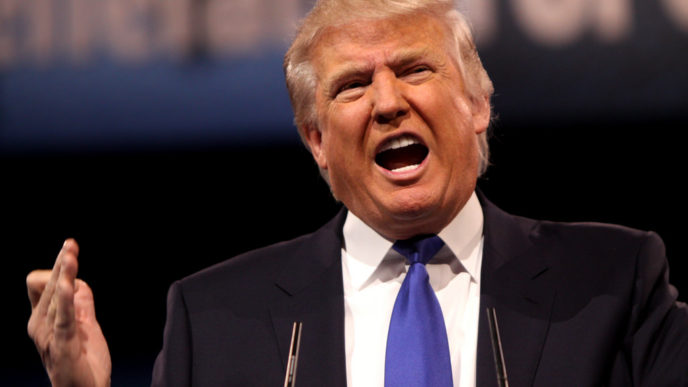
As expected, many of the people being considered for top positions in the Trump administration are Republicans who supported him in the presidential campaign. The list excludes many of the big-name Republicans who shunned him, while it includes some of the smaller players — particularly Christian conservatives — who stuck with Trump. (For a description of the transition team helping Trump make the appointments, see the end of the article.)

Trump has already made some controversial choices, though they’re controversial to different groups. He selected Republican National Committee chair Reince Priebus, part of the transition team, as his White House chief of staff. He also chose Steve Bannon, former editor of Breitbart who became Trump’s campaign CEO, as his chief strategist and senior adviser.

As RNC chairman, Priebus is part of the Republican establishment many Trump supporters want kept away from influence. However, he avoided any behind the scenes maneuvers at the Republican National Convention in order to keep Trump from winning. Bannon has been accused of being “alt right” and particularly of being racist and anti-Semitic, but one prominent Jewish writer has laid out the case that he isn’t. Neither position requires Senate confirmation.

Secretary of State

Former NYC Mayor Rudy Giuliani is considered the top choice for this position. Another strong contender is former Speaker of the House Newt Gingrich. The hawkish John Bolton, former U.S. ambassador to the United Nations, is also in the running. Senator Rand Paul (R-Ky.), a member of the Senate foreign relations committee which would vote first on the nominee, said he will do everything he can to block Bolton from getting the position, and also strongly opposed Guiliani.

Trump is also considering two Republican Clinton supporters: Richard Armitage, a former Republican State Department official and Henry Paulson, former Treasury Secretary under George W. Bush. Sen. Bob Corker (R-Tenn.), who has a lifetime score of 80 from the American Conservative Union, is one more possibility.

Secretary of Defense

Stephen Hadley, who served as a former national security adviser under both Bush administrations, is considered a leading contender for this position. Unlike several of his former defense colleagues from those administrations, he did not cross parties and endorse Hillary Clinton for president.

Lt. Gen. Michael Flynn, former head of the Defense Intelligence Agency, is also in the running for this and the National Security Advisor position. Famous for saying Hillary Clinton should be put in prison, Flynn would need a waiver from Congress to serve, since due to his military service he is ineligible to serve in such an office for five more years. Former Rep. Mike Rogers (R-Mich.), who was chairman of the House Intelligence Committee and has an ACU lifetime rating of 78, is said to be considered for the position, as well as for CIA chief. He was removed from his position as national security senior adviser to the transition team.

Sen. Jeff Sessions (R-Ala.), a senior member of the Senate Armed Services Committee, is also considered a front-runner, though he’s also being considered for National Security Advisor. He has a 95 percent rating from the ACU, in contrast to Rogers’ 78. Rep. Kelly Ayotte (R-NH), who lost her re-election bid this year, is also on the short list. She has a lifetime rating from the ACU of 68. Former Arizona Senator Jon Kyl, whose lifetime ACU rating is 96, is another possibility, as is Rep. Duncan Hunter Jr. (R-Calif.), a Marine combat veteran with an ACU lifetime score of 92.

National Security Adviser

Both Sen. Sessions and retired Lt. Gen. Flynn are top contenders for this post.

Attorney General

Senator Ted Cruz (R-Texas) — one of 3 senators with a lifetime ACU rating of 100 — is reportedly being considered for Attorney General. Florida Attorney General Pam Bondi is a good friend of Trump’s and may be offered the position, as is Sen. Sessions. Kansas Secretary of State Kris Kobach, who is serving as an immigration adviser to Trump’s transition team, is another possibility. He has a strong conservative record, particularly on immigration, and once served as a Baptist missionary to Uganda.

White House Press Secretary

It is rumored that Kellyanne Conway is being considered for this position, since she performed so well representing the campaign. Another top contender is conservative radio talk show host Laura Ingraham, who vocally supported Trump.

Homeland Security Secretary

Two conservative sheriffs are being looked at for this post, Milwaukee County Sheriff David Clarke and Maricopa County Sheriff Joe Arpaio, who just lost re-election. Rep. Sessions is being considered for this position, due to his tough position on illegal immigration. New Jersey Governor Chris Christie and Former Sen. Jim Talent (R-Mo.), whose lifetime ACU rating is 92, are also possibilities. House Homeland Security Committee Chairman Rep. Mike McCaul, R-Texas, who has an 89 rating from the ACU, is another contender.

Treasury Secretary

Steven Mnuchin of Goldman Sachs is considered the top choice, recommended by the transition team. He served as the campaign’s national finance chairman. The transition team is also reportedly considering investor Wilbur Ross Jr., Rep. Jeb Hensarling of Texas, and JPMorgan Chase & Co. Chief Executive Officer Jamie Dimon. Hensarling, whose ACU lifetime score is 97, proposed a bill to overhaul the Dodd-Frank financial reform law.

Health and Human Services Secretary

Rep. Tom Price (R-Ga.) is considered a top pick for Secretary of Health and Human Services. He has an excellent record in Congress, with a lifetime score of 96 from the ACU. Former Speaker of the House Newt Gingrich and former Louisiana Gov. Bobby Jindal are also under consideration. Florida Gov. Rick Scott is another possibility.

Former presidential contender Ben Carson, who had strongly supported Trump after he dropped out of the race, turned down an offer to serve in the administration as Secretary of Health and Human Services or other agency head, saying he did not have the background qualifications.

Housing and Urban Development Secretary

Pamela Patenaude’s name is being circulated for this position. She was an assistant HUD secretary under George W. Bush.

Army Secretary

Van D. Hipp, Jr., a former deputy assistant Army secretary for the elder Bush, is considered a strong contender for Army Secretary.

Education Secretary

Eva Moskowitz, known for championing charter schools, is under consideration, as well as former Washington D.C. public schools chancellor Michelle Rhee, who advocates school vouchers and charter schools. Betsy DeVos, a billionaire GOP donor who actively promotes school choice has also been named. She originally supported Common Core but changed her mind once it was federalized. William Evers, who worked at the younger Bush’s Education Department, is also in the running.

Labor Secretary

Victoria Lipnic, who worked at the Labor Department under George W. Bush, is being vetted for this position.

Secretary of the Interior

Two former governors are under consideration for Secretary of the Interior, Sarah Palin of Alaska and Jan Brewer of Arizona. Governor Mary Fallin of Oklahoma is as well. Cynthia Lummis, who is ending her term as Wyoming representative with a 94 lifetime rating from the ACU, is on the short list. Robert Grady, who served the elder Bush, is also being considered.

Environmental Protection Agency Secretary

Carol Comer, the commissioner of Indiana’s Department of Environmental Management and appointed by Pence, is under consideration for this position. She is an attorney who defended clients against EPA enforcement actions. Leslie Rutledge, the attorney general of Arkansas, is also being looked at. As AG, she took on the EPA’s Clean Power Plan and rules on emissions.

Commerce Secretary

Trump’s first choice for Commerce Secretary is 78-year-old billionaire investor Wilbur Ross. Linda McMahon, a former World Wresting Entertainment executive and friend of the Trump family, is high on the list for this position.

U.S. Ambassador to the United Nations

Richard Grenell previously served as U.S. spokesman at the U.N. under President George W. Bush. He would be the first openly gay person to fill a Cabinet-level foreign policy post.

Other Positions

Several other names are being considered for less controversial foreign policy, defense and nuclear related positions. There will also be people appointed to head Energy and the Office of Management and Budget.

RNC Chair

While not technically a position in the administration, Trump has significant say over who becomes the next RNC chair. Michigan GOP chairwoman Ronna Romney McDaniel, niece of Mitt Romney, is considered the front-runner.

The Transition Team

The transition team helping Trump make the appointments is headed by vice-president-elect Mike Pence. It includes what the Wall Street Journal calls “a mix of GOP traditionalists and outsiders … members of Trump’s family (all on the executive committee), Republican politicians, conservative thinkers and activists, and major Republican donors.” His campaign manager Kellyanne Conway, who served as his campaign manager, is a senior adviser. It originally included several lobbyists, though there are now reports that Mike Pence has removed them.

Among the politicians, Rep. Marsha Blackburn (R-Tenn.) has a lifetime score of 96 from the American Conservative Union, but the other members of Congress on the team have moderate records. The donors include Paypal co-founder and venture capitalist Peter Thiel, who spoke at the party’s convention; GOP mega-donor Rebekah Mercer, a large donor to Ted Cruz’s primary campaign; and Dune Capital Management CEO Steven Mnuchin, who had been the campaign’s national finance chairman. Among the thinkers are many from the conservative Heritage Foundation, including its founder, Ed Feulner, and former Reagan attorney general Edwin Meese.

Many of the GOP “bicoastal elite” — including financial elites and social liberals — who might have dominated the transition either bowed out ahead of time or have been removed. One, New Jersey governor Chris Christie, was demoted from chairman to vice chairman.

Part of the transition team is an Agency Action Team assisting with the process of filling positions in the administration. Ken Blackwell is in charge of Domestic Issues. He is a leading Christian conservative, and Stream contributor, who has served in multiple elected positions in Ohio.

Others from the Heritage Foundation besides Feulner and Meese are Paul Winfree, who is overseeing issues related to the Office of Management and Budget. Kay Coles James, a Heritage trustee, is overseeing management and budget issues along with Meese, who served as president of the conservative Council for National Policy. William L. Walton, a Heritage trustee affiliated with CNP, has been tasked with overseeing Economic Issues. James Carafano, vice president for foreign and defense policy studies at the Heritage Foundation, is heading up oversight of the State Department. (For more from the author of “Who’s Who in Trump’s Cabinet and Leadership Possibilities” please click HERE)

Follow Joe Miller on Twitter HERE and Facebook HERE.

Everyone, Take a Chill Pill: Trump Is Neither Satan or the Savior

As the reality of President-elect Trump sets in, emotions continue to run high. Riots are rocking big cities such as Portland, Seattle, and San Jose. Hillary supporters are screaming “Not my president!” on Twitter. And the calls for “healing” and “togetherness” from Barack Obama and Clinton herself are being roundly rejected.

I have gay friends who believe that Trump is gunning for them and say they don’t feel safe. They worry that he will roll back gay marriage and anti-discrimination laws and think that he has a personal vendetta against them. Meanwhile, I have friends on the Right who are gleefully gloating that Trump will change everything, that he’s overthrown the political establishment, and that things like illegal immigration and Obamacare might as well be history.

Let’s all take a step back and remind ourselves that we still have a government of more than one person, with legislative and judicial processes that have to be followed.

Yes, it’s true that Republicans will control both the House and Senate as well as the presidency. United government can be a scary thing, especially if you want the government to do as little as possible, as I do. But Republicans hold only a narrow majority in the Senate — either 51 or 52 seats, depending on how Louisiana goes. This is well short of the 60-vote majority that is needed to stop a Democratic filibuster. And while it is possible that Mitch McConnell, R-Ky. (F, 40%) will employ the so-called “nuclear option” to pass legislation with a simple majority, we have to remember that there are still plenty of moderate Republican senators. It’s not going to be easy for McConnell to muster even a simple majority to pass anything as controversial as Social Security reform or even a repeal of Obamacare.

I spent years working with an advocacy organization trying to get Republican legislators to stand up to Obama and push back against the Democratic agenda. I think most people in America would be surprised to learn how difficult that task was. It’s easy to think of lawmakers as being motivated by ideology: If they have the chance to do something, they will.

In my experience, this is true only for a very small minority. Much more pressing is the fear of losing re-election. The next election is always only two years away, and this is a fact that is never far from the mind of most lawmakers. They will avoid taking big risks, resorting to the age-old adage “Now is not the time.”

And speaking of the nuclear option, I can only assume that the people who think Trump will bring about the nuclear holocaust just don’t understand how government works. The president can’t just launch a nuclear missile whenever he feels like it. There are other people involved in that decision, people with enough foreign policy experience and common sense to know that mutually assured destruction is not a desirable outcome.

The main thing Trump might — and could — do on his own initiative would be slow down and roll back some executive branch regulations, from the EPA, Health and Human Services, and other agencies. That would be great, but don’t expect Obamacare to get repealed in its entirety tomorrow, Trump fans. It’s something we should push for, to be sure, but we have to remember that the political optics of “taking away people’s health insurance” has given Republicans cold feet before, and it will do so again.

It’s worth remembering that there is a difference between campaign rhetoric and actually governing. Since the election, Trump has already walked back his campaign promises to prosecute Hillary Clinton and overturn the gay marriage decision. He has even started to waver on his famous border wall, rolling out an immigration plan that doesn’t look too dissimilar from Barack Obama’s. It’s foolish to believe anything a politician says on the campaign trail, much less to believe it so strongly that you’re willing to riot over it.

The president is not a dictator. Not yet, anyway. A Trump presidency will see some changes in the country, but not so much as to make it unrecognizable. We will not wake up the day after inauguration to either a right-wing capitalist utopia or a pre-enlightenment land of death camps and intolerance. Trump will govern as other presidents have governed, fighting some good fights, exceeding his authority in some places, and generally accomplishing less than anyone hoped or feared. I don’t begrudge anyone their celebrations; I don’t begrudge anyone their mourning. But a little dose of reality never hurt anyone. (For more from the author of “Everyone, Take a Chill Pill: Trump Is Neither Satan or the Savior” please click HERE)

Follow Joe Miller on Twitter HERE and Facebook HERE.
Donald Trump, Same-Sex ‘Marriage’ and the Church

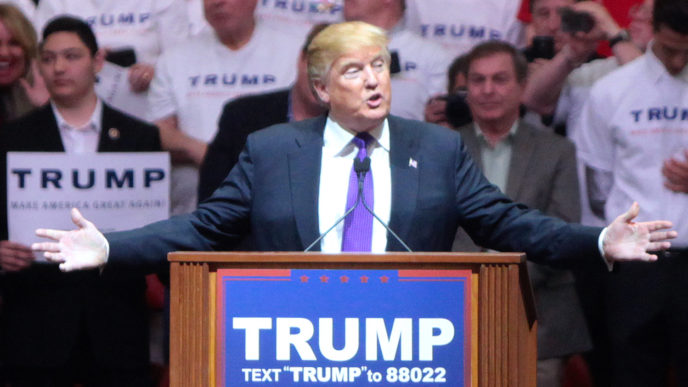
If President Trump does not nominate pro-life justices to the Supreme Court, I will be surprised and disappointed, although not shocked, since I do not put my absolute trust in people, especially political leaders. If President Trump does not oppose same-sex “marriage,” I will be disappointed but not surprised.

That’s why his recent comments on 60 Minutes were disappointing but not surprising.

After all, he had his good friend Peter Thiel speak at the Republican National Convention, and Thiel was warmly received as he proudly proclaimed his gayness. Thiel is also part of the president-elect’s transition team, with the potential of a high-level position within his administration. And Trump (along with Pence) has not made a major point of saying that he wanted to overturn the Obergefell decision, instead putting his emphasis on overturning Roe v. Wade, sending abortion-related decisions back to the states.

Trump has also spoken of a test for immigrants regarding their attitudes towards LGBTs, so he clearly cares about their safety and well-being.

It is true, of course, that at various times in the campaign he spoke of his opposition to same-sex “marriage,” even saying at least once that he would “strongly consider” appointing justices who would overturn it. But less than one week later, he assured a lesbian reporter that under his administration, there would be great progress for LGBT Americans

In short, opposition to same-sex “marriage” has never been his mantra, nor did he emphasize this in debates, nor has he ever attempted to offer a clearly articulated answer in terms of what to do when perceived gay rights conflict with perceived religious rights.

I was not surprised, then, when he said to Lesley Stahl on 60 Minutes, “I’m pro-life. The judges will be pro-life.” And I was not surprised when, in reply to Stahl’s questioning on same-sex “marriage,” he said, “You have these cases that have already gone to the Supreme Court. They’ve been settled, and I’m fine with that.”

Of course, I was disappointed with his answer, and I was not alone in wondering, “Why is Roe v. Wade not settled but Obergefell v. Hodges is settled? Why should the court overturn the one and not the other?”

At the same time, there’s an excellent chance that the pro-life justices President-elect Trump has promised to appoint would also stand for religious liberty and against the court’s redefinition of marriage. Consequently, in the coming years, as cases reach the Supreme Court on these volatile issues, the conservative, pro-life-leaning majority would likely side against many of the goals of LGBT activism.

The Three Key Takeaways from Trump’s 60 Minutes Interview

For me, though, there are three key takeaways from the 60 Minutes interview. (I’m speaking specifically in terms of the culture wars, not in terms of the interview as a whole.)

First, as bold, strong-willed, and anti-establishment as Trump may be, he is still a human being, and the temptation to “get along with everybody” in Washington is still there. We must strongly encourage him, then, not to compromise his pro-life promises for a single moment of his presidency.

He has made a sacred commitment, and it’s one major reason that many Christian conservatives voted for him.

Second, Christian conservatives who voted for him should not suddenly turn on him in light of his same-sex “marriage” comments. Again, we had no reason to expect him to take a strong stand here – although that is certainly something to pray for and work for – and since he knows he owes his election to conservative evangelicals, it would be foolish for us to burn our bridges now.

His door is still open to us, and we need to do our best to walk through that open door.

Third, the president-elect’s comments remind us that it is the church’s job to change society, not the president’s.

As I have said repeatedly in recent months, Jesus never said that the White House was the salt of the earth and the light of the world but that rather that we, His devoted followers, were.

Of course, the president has a tremendous bully pulpit, and his comments on divisive issues influence many, just as President Obama’s “evolving” views on same-sex “marriage” influenced many. But did any of us who voted for Donald Trump really think to ourselves, “We’re voting for him because we believe he will change the moral climate of the culture and speak out against LGBT activism”? Was this even on our radar? I think not.

Either way, I didn’t vote for Trump expecting him to spark a moral and cultural revolution in America.

I voted for him with the hope that he would not do what Hillary Clinton was expected to do and with the prayer that he would keep his word regarding Supreme Court justices and make some healthy decisions for the nation as a whole.

As for transforming the culture, that is the role of the church through the many facets of the gospel. Are we up to it? (For more from the author of “Donald Trump, Same-Sex ‘Marriage’ and the Church” please click HERE)

Follow Joe Miller on Twitter HERE and Facebook HERE.
Anti-Trump Demonstrators Attack Unaccompanied Woman, Shatter Her Windshield

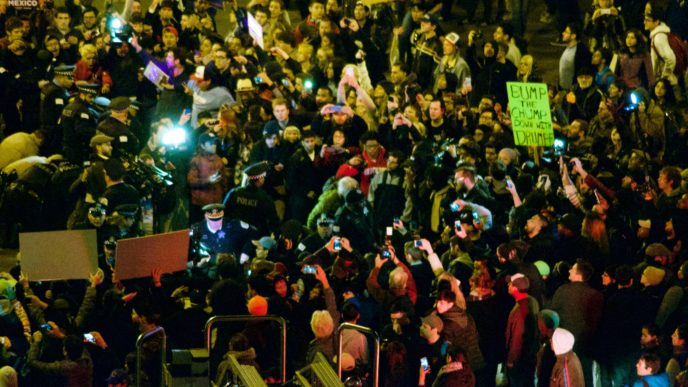
Anti-Trump protesters in Portland, Ore. attacked a vehicle driven by a young woman who claimed she was attempting to pass on a road blocked by demonstrators due to a personal emergency.

Local press covering the protest filmed the confrontation.

Protesters claim the altercation began when a motorist attempted to circumvent a Trump protest due to a personal emergency. The Daily Caller News Foundation is not able to confirm the nature of the alleged emergency. Demonstrators then claimed she attempted to run over one of the protesters with her car.

“I can’t agree with them,” the reporter covering the protests said. “I was out here, and someone jumped in front of her car while she was slowly trying to drive away.”

A bystander then attempted to intervene so the vehicle could pass. He in turn was pushed and shoved by protesters. At one point during the dispute, a demonstrator slammed and shattered the woman’s windshield. Though the reporter could not identify which specific protester was responsible, one individual immediately proximate to the vehicle throughout the encounter was brandishing a baseball bat.

“This woman is by herself, surrounded by protesters — hundreds of them,” the reporter said, as a camera crew filed the ongoing encounter. The woman sat alone inside the car and cried, her neck and shoulders tensed in a frightened posture.

The reporter indicated it was the second such confrontation between demonstrators and a motorist that evening. He also reported that police were not on the scene.

“I haven’t seen a police officer — I’m trying to think– all night.” he said. (For more from the author of “Anti-Trump Demonstrators Attack Unaccompanied Woman, Shatter Her Windshield” please click HERE)

Follow Joe Miller on Twitter HERE and Facebook HERE.

Is Donald Trump’s Fed Criticism Just Bluster, or Will We See Reform?

President-elect Donald Trump has drawn criticism for launching a series of undisguised attacks on the Federal Reserve Bank of America, and its chairman, Janet Yellen. It’s unbecoming, critics say, for a politician to drag a stately, independent institution down in the mud, especially when it was designed to rise above the everyday considerations of politics. Trump has been critical of Yellen for failing to raise interest rates more quickly, and has accused her of using her post to try to aid Hillary Clinton in the election, a strategy which, if true, obviously failed to work.

The Fed is important, because it is responsible for controlling the money supply which, among other things, affects interest rates and inflation across the whole country. It has been argued by some, myself included, that the Fed’s overly loose monetary policy has prolonged the effects of the Great Recession, by distorting the monetary signals on which investors make their decisions. Trump’s attack is a little more blunt than that kind of analysis, but he is not wrong to go after the Fed. In fact, he should probably be doing more.

Of course, the idea that the Fed has ever really been independent of politics is a ridiculous fiction, designed to insulate the Board of Governors from accountability for their decisions. The president gets to appoint the Fed chairman, and that decision will always be motivated by political as well as policy concerns. Furthermore, it’s ridiculous to assume that the members of Board are somehow immune to their own political biases. Just as the Supreme Court, an institution supposedly isolated from politics, takes into account which way the political winds are blowing, so do the decision makers at the Fed. Donald Trump recognizes that. Although the precise nature of his attacks may be overblown and hyperbolic, there is no doubt that the Federal Reserve plays a key role in what the nation’s economy looks like, and that has an effect on electoral politics.

Where Trump would do better, however, is to focus his attacks on monetary policy itself. While I don’t expect him to be the heir of Ron Paul, whose trenchant criticisms of the Federal Reserve brought monetary policy to the forefront of the national debate in a way unseen since the days of bimetallism, Trump is right that keeping interest rates artificially low is bad policy, and should be stopped. He may lack the theoretical rigor of the Austrian school to explain how low interest rates create faulty investments, setting up a monetary bubble that must sooner or later burst, or how quantitative easing devalues the currency and hits all Americans with the hidden tax of inflation, but he has business acumen at least to know that we can’t solve our problems by printing more money, forever and ever without limit.

Janet Yellen should be worried. Donald Trump is not going to end the Fed, as Ron Paul promised to do, but with any luck, he will oust her and replace her with someone less committed to monetary expansionism. It’s true that the chairman doesn’t unilaterally make policy decisions, but a strong voice calling for a more responsible approach could at the very least be influential in setting the tone for the bank. And who knows? We may even get that full Federal Reserve audit that Rand Paul introduces every year.

It may fly in the face of tradition for a president-elect to so vocally go after a “independent” agency, but if so it’s a tradition that badly needs rethinking. Monetary policy is too important to be left to bankers, much less ones who are unaccountable to the public. (For more from the author of “Is Donald Trump’s Fed Criticism Just Bluster, or Will We See Reform?” please click HERE)

Follow Joe Miller on Twitter HERE and Facebook HERE.

Sanctuary Cities Defy Trump’s Pledge to Defund Them. How He Can Fight Back.

Leaders of sanctuary cities that protect illegal immigrants from deportation are responding defiantly to threats by President-elect Donald Trump to withhold federal funding from them.

Local governments from cities including the District of Columbia, Los Angeles, New York City, Chicago, and Boston over the past few days have said that despite the financial cost they could face in a Trump administration, they will not change policies that limit their cooperation with immigration-related requests from the federal government.

“To all those who are, after Tuesday’s election, very nervous and filled with anxiety as we’ve spoken to, you are safe in Chicago, you are secure in Chicago, and you are supported in Chicago,” Chicago Mayor Rahm Emanuel, a Democrat, said Monday. “Chicago will always be a sanctuary city.”

Though Trump has not specified how he would fulfill his promise to combat sanctuary cities since winning the presidency, allies of his say he has broad tools to encourage localities to play a more proactive role in immigration enforcement.

“These mayors, what they aren’t saying, is they receive tons of dollars in federal grants and president-elect Trump has made clear that sanctuary cities may see some of that money dry up if they are continuing to defy federal law,” said Kris Kobach, Trump’s immigration adviser and the Kansas secretary of state, in an interview Tuesday on “Fox & Friends.”

Blocking Funding

Previous efforts in Congress to withhold federal funding from sanctuary cities have failed recently, including legislation sponsored by Sen. David Vitter, R-La., last year that focused on law enforcement grant programs and Community Development Block Grants for affordable housing, anti-poverty programs, and infrastructure development.

With 48 Democrats in the new Senate class, the minority party still has the power to filibuster legislation it doesn’t like.

But proponents of stronger immigration enforcement said legislation specific to one form of grants—funding from the Department of Justice—could be easier to implement.

That’s because the Department of Justice is currently undertaking a review on whether to withhold federal law enforcement money from 10 sanctuary cities, including New York, Chicago, and Philadelphia.

The Obama administration began this project last year, and it has sent letters to those jurisdictions asking them to certify that they’re complying with a federal law that requires local governments to share certain information about illegal immigrants with federal officials.

“If these sanctuaries want to cling to their policies, the federal government ought to sue them for obstruction,” said Jessica Vaughan, director of policy studies for the Center for Immigration Studies, in an interview with The Daily Signal.

Expanding Enforcement

Vaughan, and other immigration experts, say they also expect Trump to bring back a controversial local enforcement program, called Secure Communities.

Under Secure Communities, federal immigration agents asked law enforcement agencies to hold in custody illegal immigrants who they came into contact with for an extra 48 hours from when they would normally be released so they could be picked up and deported. These requests were known as detainers.

Critics of the program said it violated immigrants’ civil rights, and did not differentiate between low-level and serious offenses. Many local jurisdictions stopped complying with the program, fearing they would be sued by immigrant rights groups.

In November 2014, the Obama administration got rid of the program and replaced it with a less demanding version, the Priority Enforcement Program (PEP).

With the new program, local authorities, in most cases, are asked to only notify federal immigration officials when they plan to release someone from jail whom the government seeks to deport.

“I think he [Trump] will bring back Secure Communities,” said Alex Nowrasteh, an immigration policy analyst at the Cato Institute. “That is super easy to do and the legislative and regulatory machinery is already there. If he did that, there would be much more uniform detection of illegal immigrants in local and state jails and they would be much more likely to be released into ICE [Immigration and Customs Enforcement] custody.”

In his first post-election interview, Trump said he will focus on deporting illegal immigrants with criminal records and not everyone living in the United States illegally. He put the number he would target at 2 million or 3 million people.

The Obama administration already prioritizes deporting convicted criminals. It has expelled 530,000 convicted criminals from the U.S. since 2013.

But its definition of criminal is narrower than the approach that Trump may take.

Currently, federal immigration officers are told to first target illegal immigrants considered to be threats to national security and public safety, who have likely been convicted of a felony. Other priorities for deportation include individuals who have been convicted of multiple misdemeanors, and recent arrivals who came here illegally after Jan. 1, 2014

Nowrasteh and Vaughan say reverting back to Secure Communities could allow Trump to widen that net so it includes illegal immigrants who have been charged but not convicted, and people charged with immigration violations like illegal re-entry and overstaying visas.

“I could see him widening [immigration enforcement] dramatically to what was going on under Secure Communities where he would target any unlawful immigrant who was arrested for any reason,” Nowrasteh said.

State and City Pushback

If Trump were to do that, Nowrasteh said, he will get pushback from states and localities.

Some states and cities already have in place laws that limit their cooperation with federal immigration authorities.

For example, in California, it’s harder to apprehend illegal immigrants because of a state law, known as the Trust Act, that strictly limits the situations in which local agencies will help ICE take custody of those it seeks to deport.

The mayor of Somerville, Massachusetts, meanwhile, has issued an executive order, also called the Trust Act, which shields immigrants with minor or no criminal records from possible deportation.

“I could see a case where a state like California will take the federal government to court saying it’s unconstitutional for the feds to force them to participate in this type of program,” Nowrasteh said. “I have no doubt there are many administrative ways these cities and police departments can obstruct [federal] immigration enforcement.”

Indeed, a 2014 federal appeals court ruling declared that complying with detainer requests is optional, and local jurisdictions are legally free to enact their own policies.

Also, a 1997 Supreme Court ruling in the case Printz v. the United States confirmed that Congress cannot force states to enact or enforce a federal regulatory program, such as ICE’s detainer requests.

If localities continue to oppose helping the federal government, Vaughan said she expects Trump to make it hard for them to resist.

According to the Los Angeles Times, Trump’s advisors are drafting plans to resume workplace raids and to ramp up pressure on local police and jails to identify illegal immigrants.

“The foundation for more robust enforcement is already there,” Vaughan said. “The idea is not, and has not ever been, to go door to door and round up every illegal immigrant who can be found. It’s to have a credible enforcement system that works on a routine basis, that focuses the most on threats, but does not necessarily exempt people caught in worksite operations or other ways that can come to the attention of ICE.” (For more from the author of “Sanctuary Cities Defy Trump’s Pledge to Defund Them. How He Can Fight Back.” please click HERE)

Follow Joe Miller on Twitter HERE and Facebook HERE.
Protecting President Trump Won’t Be Easy. A Former Secret Service Agent Explains Why

The most difficult task I ever grappled with was learning how to effectively secure the life of the president of the United States as a Secret Service agent in the Presidential Protective Division.

Mastering presidential security is a herculean task which requires seasoned, presidential lead advance agents to master logistics, security, diplomacy, and constantly evolving technology. It takes a typical Secret Service agent approximately seven to ten years of investigative field work before they are even eligible for consideration for appointment to the Presidential Protective Division, and very few agents are selected. In many children’s sport leagues, and on many of our college campuses, everyone gets a trophy for participating. But, not in the Secret Service, where only the best of the best are selected to protect the president. A Secret Service agent friend of mine once described the journey from an agent’s hiring to the Presidential Protective Division as “the world’s longest job interview,” and he was correct.

With the inauguration right around the corner, President-elect Trump’s Secret Service detail will have to grapple with the following obstacles:

1. The inauguration

I was one of the advance agents from the Presidential Protective Division tasked with designing and implementing the security planning for Barack Obama’s January, 2009 inauguration. I was also assigned to the 2005 inauguration of George W. Bush in a support capacity. Sadly, both the 2001 and 2005 Bush inaugurals were marred by protests, egg throwing, arrests, and a number of attempts to disrupt the inaugural motorcade route. And, although these protestors clearly had the right to protest, they did not have the right to throw objects and disrupt the security plan. It’s not a partisan talking-point but a harsh reality that many on the far-left have embraced the politics of destruction and violence as a strategic political weapon. The Barack Obama 2009 inauguration saw almost none of this type of activity with only isolated misconduct incidents and infamous logistics failures such as the “Purple Tunnel of Doom” disaster. I derive absolutely no pleasure in telling you that the far-left presents more challenges to the security planners at a Republican event than the Right does at a Democrat event but, history doesn’t tell tall tales.

Protesting is, thankfully, a constitutionally protected activity, but it does suck up security assets like a manpower vacuum because the threat of any protest turning violent requires that the protests be monitored and, as recent history has unquestionably shown us, many Trump protestors are only a hair trigger away from turning violent at a rally. The Secret Service is going to have to deal with this reality and build their security plan around what will assuredlybe significant protest activity on Inauguration Day.

2. Social media threats

President-elect Trump wasn’t the first political candidate to use social media as a force multiplier, but he was the first to do so by adding a personal touch to such an enormous and attentive social media audience. The media made Donald Trump’s tweets the focus of legions of news stories and drew a corresponding amount of attention to Trump’s account, amplifying his audience and, paradoxically, enabling him to use those social media platforms to get his message out and bypass traditional media gatekeepers. I don’t know what President-elect Trump’s future plans are with regard to social media but I would be surprised if he abandoned his signature communication vehicle.

If he continues to tweet, albeit with the understanding that the tweets now carry the weight of presidential communications, they will likely elicit some furious feedback from his political enemies. Unfortunately, many of the responses to his social media posts will be threats. All of these threats will have to be “run out” (investigated) as we used to say in the Secret Service. This is going to cause an unprecedented drain on the Secret Service’s very limited protective intelligence assets (the agents who investigate threats to Secret Service protectees). Although I am now, and will always be, a vocal supporter of limited government, there is simply no way to squeeze twenty pounds of presidential threat investigations into a five pound investigative bag. The agents needed to investigate this potential tidal wave of threats will have to be taken away from criminal investigative assignments. It may be a good time to have a bigger conversation about scrapping some of the Secret Service’s current tasks and re-prioritizing protection, major events, and protective intelligence.

3. Technology and weapons

The Secret Service culture is heavily resistant to change, especially regarding new technology. Another former agent friend of mine summed it up with the quip “the Secret Service: Yesterday’s technology-tomorrow.” The Secret Service is still using decades-old manpower hour management programs and it still requires its agents to waste hours of precious time each month on unnecessary paperwork and bureaucratic hoop-jumping. Applying an outsider’s business perspective, in the model of a President-elect Trump, to this process could clean this mess up quickly and free up Secret Service agents to do their jobs, not making multiple photocopies of a time and attendance report.

Secondly, the Secret Service MUST update its weapons capabilities to reflect the evolving threat of a small arms tactical assault from a terror group. Rank-and-file agents have been complaining about the Secret Service’s insufficient weapons capabilities for years, and the transition to 5.56 from the 9mm sub-machinegun took way too long. Every Secret Service agent assigned to a protective mission — from those temporarily assigned as post-standers, to the agents permanently assigned to the president — should be equipped with the necessary weapons and training to be able to defend themselves and the president from this evolving terror threat. And while the Secret Service’s main mission is to evacuate the president, not to engage in wild-west-type gun fights, they must have the ability to stave off a prolonged tactical assault by a small group of well-armed and suicidal terrorists who will only be stopped by applying an equal amount of force.

Donald Trump ran a different kind of campaign, with a different kind of political strategy. This is going to require a different kind of approach to keeping him safe. God bless those involved in the effort. (For more from the author of “Protecting President Trump Won’t Be Easy. A Former Secret Service Agent Explains Why” please click HERE)

Follow Joe Miller on Twitter HERE and Facebook HERE.

YES, PRESIDENT TRUMP WILL BUILD A WALL: ‘I’m Very Good at This, It’s Called Construction’

So relays Louis Nelson at a very butthurt Politico:

“What we are going to do is get the people that are criminal and have criminal records, gang members, drug dealers, where a lot of these people, probably 2 million, it could be even 3 million, we are getting them out of our country or we are going to incarcerate,” he said in the interview, to air on “60 Minutes … But we’re getting them out of our country; they’re here illegally.”

Only then, Trump said, will he figure out a plan to deal with the “terrific people” who are in the U.S. illegally but have otherwise clean criminal histories. Securing the border, he said, is a prerequisite for any other action on immigration…

…One unchanged part of his immigration platform has been his plan for the construction of a wall along America’s southern border with Mexico, something he said he would force the Mexican government to pay for by threatening to cut off the flow of money from immigrants to their families south of the border. Trump said Sunday that while an actual wall will be necessary along some portions of the border, a mere fence will suffice in others.

“I’m very good at this; it’s called construction,” he said.

If I were President-Elect Trump, I’d have added the word “dumbass” to my response, but that’s — perhaps — the reason I’m not the President-Elect. (For more from the author of “YES, PRESIDENT TRUMP WILL BUILD A WALL: ‘I’m Very Good at This, It’s Called Construction'” please click HERE)

Follow Joe Miller on Twitter HERE and Facebook HERE.

A LEFTIST’S GUIDE TO ANTI-TRUMP PROTESTS: Chapter 12 — How to Wear Your Protest Safety Pin

Now that the Soros-funded radicals are using safety pins to signify their disrespect for the Constitution, our summer intern @BiffSpackle offers these helpful fashion tips:

161114-safety-pin-protest

(For more from the author of “A LEFTIST’S GUIDE TO ANTI-TRUMP PROTESTS: Chapter 12 — How to Wear Your Protest Safety Pin” please click HERE)

Follow Joe Miller on Twitter HERE and Facebook HERE.
Trump Says He’ll ‘Phase out’ Political System That Empowers Lobbyists

President-elect Donald Trump told “60 Minutes” reporter Lesley Stahl that the prominence of lobbyists in his presidential transition was due to the need for qualified people who know the system, not a violation of his campaign vow to “drain the swamp” in Washington.

Stahl continued to press Trump on the point, pointing out that his transition team is “filled, with lobbyists,” including lobbyists from Verizon and the oil, gas, and food industries. Trump responded, “Everybody’s a lobbyist down there. … I’m saying that they know the system right now, but we’re going to phase that out. You have to phase it out.”

One of Trump’s talking points throughout his presidential campaign was a promise to “drain the swamp” in D.C. of insiders and lobbyists. Spokesperson Kellyanne Conway said on Sunday that Trump would retain quality people with D.C. experience; later in the day, Trump named Republican National Committee Chairman Reince Priebus as his Chief of Staff. Trump has promised lobbyist reforms would take place within his first 100 days as president.

Trump, who has admitted to earning the favor of politicians by sending them money during his time as a businessman, told “60 Minutes” that

Everything, everything down there — there are no people — there are all people that work — that’s the problem with the system, the system. Right now, we’re going to clean it up. We’re having restrictions on foreign money coming in, we’re going to put on term limits, which a lot of people aren’t happy about, but we’re putting on term limits. We’re doing a lot of things to clean up the system. But everybody that works for government, they then leave government and they become a lobbyist, essentially. I mean, the whole place is one big lobbyist.

Trump’s words somewhat echo those of another President-elect who vowed to change Washington: then-Senator Barack Obama (D-IL). The president declared in his 2010 State of the Union address that “we have excluded lobbyists from policymaking jobs,” while his aide David Axelrod said the next year that the administration”has ended the revolving door between industry and government.”

Last year, however, Politico noted that “seven years into Obama’s presidency, the revolving door shuttling officials out of his administration is spinning at a rapid clip.” In 2013, a scholarly study estimated that Obama had used various loopholes and technicalities to hire more than 100 former lobbyists at the White House. (For more from the author of “Trump Says He’ll ‘Phase out’ Political System That Empowers Lobbyists” please click HERE)

Follow Joe Miller on Twitter HERE and Facebook HERE.