Posts

‘MASSIVE, DIRECT ACTIONS’ Inauguration Security to Be Tight, Amid Protest Threats to ‘Paralyze’ DC

The stage is set for President-elect Donald Trump’s inauguration – not just the traditional swearing-in platform on Capitol Hill, but a massive security presence amid protest plans to “shut down” the nation’s capital.

Most crowd estimates for the Jan. 20 festivities are far short of the record-setting 1.8 million visitors for President Obama’s historic 2009 inauguration. But the throngs of spectators and protesters alike are enough to create transit, security and hospitality challenges.

“Security is my greatest concern,” Missouri GOP Sen. Roy Blunt, chairman of the Joint Congressional Committee on Inaugural Ceremonies, recently said. “No question that on inaugural day, this would be the most appealing target in the world.”

He suggested the city could have as many as 750,000 demonstrators alone.

More than three-dozen law enforcement agencies are working together on security and safety plans in anticipation, including the Capitol Police, FBI, Secret Service and National Guard. (Read more from “‘MASSIVE, DIRECT ACTIONS’ Inauguration Security to Be Tight, Amid Protest Threats to ‘Paralyze’ DC” HERE)

Follow Joe Miller on Twitter HERE and Facebook HERE.

Newt Gingrich Explains Why the Media Can’t Comprehend Trump

President-elect Donald Trump’s successful candidacy is the result of an unequivocal disconnect between elite media and average Americans, says former House Speaker Newt Gingrich.

Speaking Tuesday at The Heritage Foundation at the first of a six-part series on Trumpism, Gingrich explained how the media’s disdain for the American people ultimately led to Trump’s victory in November.

“Because the media had such contempt for the average American, they simply could not see what was happening,” Gingrich said.

Following his Heritage speech, Gingrich spoke to The Daily Signal about the divide that exists between the American people and the news media.

“There’s a huge gap between the world as reported by the news media and the world as it really exists,” Gingrich said.

Gingrich pointed to Hollywood’s display of hatred toward Trump at the Golden Globes as an example of the gap between Americans and Hollywood elites.

“Trump is anti-political correctness and that’s the heart of their self-delusion,” he said. “They think they’re wonderful humanitarians and they think they care about the whole planet. They don’t care about you, but they care about the whole planet. They cling together like a large collection of gerbils who all reinforce each other and the loudest gerbil the other night was Meryl Streep.”

According to Gingrich, Trump disrupts the left’s core identity of safe spaces, political correctness, and their vision of the appropriate behavior.

“It just was inconceivable to members of the establishment that someone this randomly noisy, running a campaign that was so radically different, articulating issues that were clearly politically taboo and at times engaging in behavior and language that was unthinkable to the establishment definition of appropriate leadership, that such a person could become president of the United States until it became a fact,” he said.

Gingrich said the biggest disconnect came from the media’s failure to cover the issues that resonated most with Americans, while instead scrutinizing the way in which Trump delivered his message.

“Because Trump’s substance was so out of the mainstream, it was defined by the establishment media as lacking substance,” Gingrich said. “The attacks at him were about his style not the substance. Voters were responding to the substance, while reporters and opponents were responding to how he said what he said.”

“The media kept saying this guy is noisy, he uses inappropriate language, he’s not clear and the average person would go yeah, but I get what he’s talking about,” he said.

Gingrich will return to Heritage on Thursday for part two of the Trumpism series. The speech takes place at 11 p.m. EST. (For more from the author of “Newt Gingrich Explains Why the Media Can’t Comprehend Trump” please click HERE)

Follow Joe Miller on Twitter HERE and Facebook HERE.

Meryl Streep Slams Trump’s Deplorables: ‘Let Them Eat Wrestling’

Last night at the Golden Globes in her speech denouncing Donald Trump and his voters, Meryl Streep reminded millions of Americans why we rejected Hillary Clinton, her party, and the media elites that tried to stuff Clinton down our throat. It’s also why Hollywood keeps making expensive politicized failures that choke at the box office, like the sordid anti-gun potboiler Miss Sloane.

We’ve suffered through eight long years of Obama’s preening, class-president speeches and empty, “virtuous” gestures. We have seen him and his designated successor fawned on by tame (debate-question-leaking) Ivy-schooled reporters and gorgeous, empty-headed celebrities. We know perfectly well that America’s media and political elites consider us the great unwashed, which is why they’ve been fire-hosing us for decades with toxic solvents like anti-male feminism, anti-Western multiculturalism, and anti-family hedonism.

And we’ve learned a thing or two. We’ve learned that pretty people who are talented at acting are pretty good at saying things which they know aren’t true — and doing so convincingly. After all, that’s their chosen craft. We’ve also learned how to recognize and dismantle the Elitist Lie 2.0.

That’s a whirring little time-bomb that lefties like to plant in every “narrative” they get their hands on, from Islamic terror attacks (they blame the truck, the bomb, or the gun — whose motives it is “too soon to determine”) to the kidnapping and torture of a handicapped Trump supporter (just kids being kids, where are their parents?).

Streep reached into her goodie bag and produced her own Elitist Lie 2.0, which she tossed out to America like a trinket we should treasure. This device has three active components:

1. A Phony Claim of Victimhood to Seize the Moral High Ground

In Streep’s speech she managed to cast as persecuted victims a roomful of fantastically overpaid actors, and the coddled film critics of Hollywood’s foreign press, who today are still picking through the goodie-bags they got from billion-dollar movie studios. She took up for these hapless victims as “the most vilified segments in American society right now…. Hollywood, foreigners, and the press.” From Streep’s account, you would think that cross-burning Klansmen were attacking movie theaters for showing films where interracial couples kiss, while Inquisitors burned piles of Vanity Fair and The New Yorker in public squares across America. What really happened? The Democrats lost an election. But that’s not supposed to happen.

Did Donald Trump threaten to end all immigration? No, he promised to enforce our democratically enacted laws that regulate the process. Did he campaign against “foreigners”? No, he warned of those criminal aliens who’ve evaded our laws, with the help of “sanctuary” cities and others who help aliens to flout the law. Has he threatened to infringe on the First Amendment, to silence the media which he considers biased? No, he has gone on Twitter to dispute things he disagrees with. Has Trump spoken of jailing those who criticize his position on immigration? Never — unlike Germany’s Angela Merkel, whose government has jailed those who oppose her influx of Islamists.

2. An Unearned Claim of Moral or Intellectual Superiority

Streep listed a number of actors from working class origins or foreign countries, and presented them as moral exemplars because of their “compassionate” performances which taught Americans how to “enter the lives of those who are different from us.”

Let’s try to unpack that. Apart from those who play themselves in cameos, every actor is paid to portray someone “different” from himself. And every movie we watch (apart from home movies) is about people “different” from us. That’s why it’s entertaining. All that Streep has done here is to describe what happens in drama — while trying to spin it as a form of heroic altruism. So the actors in 50 Shades of Grey were improving America’s moral tone by teaching millions of theater-goers about sexual activities that are “different” from what they’re used to — and those who made that movie should not just be highly paid, but considered part of a virtuous elite that is improving America’s ethics. Got it? We actors, by our very profession, are better than the rest of you helots.

Then she went on to peddle the false claim that President-Elect Trump mocked a reporter’s disability. That media myth is debunked in detail here. So Streep uses a false account of what a real politician said in his own defense while fighting for his political life in response to a reporter at America’s top newspaper, to cast Trump as a bully and moral monster, compared to those heroes of empathy (actors) who read the lines they’ve been given in the dozens of crass, trashy, manipulative movies that Hollywood dumps on the public every year.

3. An Implicit or Explicit Threat of Punishment

Standing atop the papier-mâché moral high ground which she claimed, Streep included a nasty, elitist little warning to the rest of America: “Hollywood is crawling with outsiders and foreigners and if we kick ‘em all out, you’ll have nothing to watch but football and mixed martial arts, which are not the arts.” Now, of course this is a jibe at the ignorant rubes which Streep imagines lowing and grazing in vast, lumbering herds between the Hudson River and Hollywood, staring slack-jawed at wrestling matches.

It’s also a threat: You common people need us, and if you keep voting the wrong way, we might just go on strike. We will turn up our noses at the million-dollar paychecks we collect for reading back the words that writers put there for us, and starve America of “the arts.” So watch your step, or we will walk. Seriously, that red carpet leads all the way to Canada. We mean it this time. …

These are people who voted, campaigned, and fund-raised for Hillary Clinton, confident that she could pack the Supreme Court with justices who would pluck every critical issue out of the grubby hands of voters. Meanwhile, our Meryl Streeps would offer cinematic carrots, and our Byerleys wield the stick, until every American learned to be worthy of his masters, or starved in rural obscurity.

Gotta love those Golden Globes! (For more from the author of “Meryl Streep Slams Trump’s Deplorables: ‘Let Them Eat Wrestling'” please click HERE)

Follow Joe Miller on Twitter HERE and Facebook HERE.

The Senate’s Role in Confirming Trump’s Cabinet, Explained

Donald Trump won’t be inaugurated as president until Jan. 20, but his Cabinet choices begin to face confirmation hearings in the Senate this week.

First up for a committee hearing Tuesday is Sen. Jeff Sessions, R-Ala., Trump’s choice for attorney general.

Those scheduled to follow in rapid succession include retired Marine Gen. John Kelly for secretary of homeland security, philanthropist Betsy DeVos for secretary of education, former Labor Secretary Elaine Chao to head the Transportation Department, retired Marine Gen. James Mattis for defense secretary, retired neurosurgeon Ben Carson for secretary of housing and urban development, and businessman-investor Wilbur Ross for commerce secretary.

The process for Senate confirmation of top presidential appointees is outlined briefly in Article II, Section 2 of the Constitution, which guides lawmakers’ examination and approval or rejection of a president’s nominees.

This section of the Constitution famously requires that a president obtain “the Advice and Consent of the Senate” in making top government appointments. U.S. law and Senate rules also apply to the process.

Here are some general questions and answers about the process, based largely on multiple detailed reports (especially in 2012 and 2015) by the Congressional Research Service, which provides exclusive policy and legal analysis to Congress.

Who begins the confirmation process?

The president—or in this case, the president-elect—chooses individuals to fill Cabinet positions and other top posts in the executive branch.

Besides the vice president, an elected official who requires no confirmation, the White House identifies Cabinet members as the attorney general, who heads the Justice Department, and the heads of 14 other executive departments: Agriculture, Commerce, Defense, Education, Energy, Health and Human Services, Homeland Security, Housing and Urban Development, Interior, Labor, State, Transportation, Treasury, and Veterans Affairs.

The heads of other agencies also enjoy Cabinet rank and must be confirmed by the Senate along with hundreds of other top executive branch officials (detailed here). They include the ambassador to the United Nations and the U.S. trade representative, as well as the heads of the Environmental Protection Agency, the Office of Management and Budget, the Council of Economic Advisers, and the Small Business Administration.

Members of the House and Senate may suggest possible candidates for the president or president-elect’s consideration, but such recommendations generally have no official weight.

Who screens candidates for these top positions?

In preliminary screening of potential nominees, a sitting president benefits from White House offices such as Presidential Personnel and Counsel to the President.

However, an executive branch agency, the Office of Government Ethics, offers an array of services and publications to assist a presidential transition team such as Trump’s—as well as individual nominees.

The FBI and the Internal Revenue Service also review a potential or formal candidate’s personal, political, and financial backgrounds.

The FBI typically does a background investigation and submits a report. The Office of Government Ethics, along with an ethics official from the relevant agency, reviews financial disclosures. If they find conflicts of interest, they may work with the candidate to “mitigate” the conflicts.

What happens in the Senate?

The Senate’s executive clerk refers the president or president-elect’s formal choice to the appropriate committee (sometimes committees) overseeing the executive branch department in question, such as State or Defense.

In the Congressional Research Service’s 2012 report, author Maeve Carey characterizes this as a crucial step:

The decision by a committee to report a nomination is critical: To be considered on the Senate floor, the nomination must have been reported from the committee of jurisdiction or all senators must agree to its consideration.

Committee members and staff review the various forms sent along with the candidate’s name and gather more in-depth information as they choose.

Opponents and supporters of the nominee often submit letters summarizing their views to the committee. The committee chairman schedules a hearing, during which each member of the panel may ask questions or make points.

For a committee to vote on reporting the nominee to the full Senate for a confirmation vote, a majority of members must be “physically present.”

A committee may decline to act on a nomination at several points—after receiving it, after investigating the nominee, or after holding one or more hearings.

The committee has three options in voting to send a nomination to the full Senate: Report it favorably, unfavorably, or without recommendation.

Once a nominee clears a committee, with or without a recommendation, the Senate majority leader may schedule a confirmation vote on the chamber’s executive calendar.

If a committee declines to report a nomination, it is still possible in certain cases for the Senate to bring the nomination to the floor for a vote.

How many votes does it take to confirm?

“Most presidential appointees are confirmed routinely by the Senate, without public debate,” Carey and Henry Hogue write in the 2015 report from the Congressional Research Service, adding:

Other appointees receive more attention from Congress and the media through hearings, investigations, and floor debate. Historically, the Senate has shown particular interest in the nominee’s views and how they are likely to affect public policy.

Opposition from one or more senators may prevent a floor vote on a nomination that has come out of committee, because the rules require “unanimous consent” to consider and confirm a nomination.

If a nominee faces substantial opposition, the Senate majority leader may wish to end debate through a procedure called cloture. Under it, a simple majority of senators voting—normally 51—is able to limit debate to 30 hours and advance the nominee to a floor vote.

After the Nov. 8 elections, when they lost two seats, Republicans now have 52 seats in the Senate to the Democrats’ 46 (two Independents caucus with the Democrats).

It used to require 60 votes, not 51, to proceed to a floor vote until Senate Democrats changed the rules in 2013, except in cases of nominations to the Supreme Court.

A simple majority vote also is required to confirm, or approve, the nomination.

The confirmation process is fluid and open to adjustments, the Congressional Research Service notes. For a change to be adopted, however, a senator must propose it and the chamber must unanimously agree. (For more from the author of “The Senate’s Role in Confirming Trump’s Cabinet, Explained” please click HERE)

Follow Joe Miller on Twitter HERE and Facebook HERE.

How Trump Can Make Intellectual Property Great Again

On the path to making America great again, President-elect Donald Trump will have a tremendous opportunity to reverse the steady slide away from a property rights-oriented American patent system.

There are good reasons to believe a Trump administration will readily grasp this critical problem and work to revitalize the American patent regime.

First, someone like Trump who has succeeded so well on the world’s biggest stages in real estate development will readily understand the fundamental need for sound, secure, enforceable property rights. After all, you face huge risks and problems developing real estate if you haven’t first secured the rights to that property.

The same holds true for developing and commercializing an invention if you don’t first gain the rights to its intellectual property. It would be foolish to start down the path of commercializing a new wireless telecommunications technology, a cutting-edge implantable medical device, or a new biopharmaceutical therapy without first securing the proper patent rights.

It is vital to secure the freedom of innovators to operate by securing for them the relevant patents, or by licensing that intellectual property from the patent owner. Otherwise, innovators will be vulnerable to intellectual property infringement, which is akin to trespassing on or even stealing someone else’s real property.

Second, the restoration of strong, secure patent rights fits in with the Trump-Pence vision for making America great again: tax reform, regulatory reform, reinvigorating U.S. manufacturing, and rebuilding our military might.

While making corporations like Carrier and Ford Motor Co. curb their outsourcing strategies may do some good, it isn’t sufficient.

Revitalizing our system of patent property rights will incentivize massive private investment into the discovery, research, and development stages of innovation. These risky stages may take years to lead to commercialization, but they are essential for clearing the way for new inventions.

Only confidence in an enforceable right to your own inventions translates into the kinds of research and development that result in new manufacturing plants, good-paying jobs, and continued innovation.

Likewise, to strengthen national security, we must ensure that we create and produce in America the components and parts to our military and national security material and sensitive equipment.

Allowing China and other foreign countries the easy opportunity to steal American intellectual property or to install malware into computers that run our energy grids or warplanes, for instance, creates tremendous national security and cybersecurity vulnerabilities. Trump gets this.

Similarly, the Trump administration could stand up for U.S. intellectual property rights abroad by threatening real consequences when foreign governments deny U.S. businesses due process, use questionable antitrust claims to devalue or to appropriate their intellectual property, or otherwise advantage their own domestic companies and harm American firms.

Third, Donald Trump Jr. has experienced the anti-intellectual property behavior of the anti-patent side. MacroSolve, a mobile technology firm that the president-elect’s son was involved with, found its patents being infringed by incumbent companies.

When the small company tried to defend its patents, the big companies invoked the “patent troll” smear and kept right on infringing—economically benefiting from the unauthorized use of the stolen technology in the marketplace while refusing to pay to license MacroSolve’s patents.

The younger Trump explained the problem in a 2012 op-ed in The Daily Caller:

Not every company that brings suit for software patent infringement is an exploiter. Some are genuine tech innovators with a real historical and financial investment in their ideas. To conflate these two situations, as many opponents of software patent litigation do routinely, unfairly maligns companies that deserve to reap the fruits of their labor.

The same can be said for legitimate inventors in garages, university labs, and corporate research and development people who are inventing the next immunotherapy, semiconductor, advanced material, or robotic device. Just as Trump Jr. learned, all these creators deserve the exclusive right to their inventions.

Fourth, when it comes to presidential administrations, personnel is policy—and several Trump picks bode well for restoring patent rights.

Certainly, Vice President-elect Mike Pence grasps the economic importance of Indiana’s inventive life sciences sector and other manufacturing. He values Indiana’s academic assets of invention and tech transfer such as Purdue University. Explaining the importance of the Bayh-Dole Act and the Hatch-Waxman Act—two landmark patent laws from recent decades—should resonate with Pence.

Wilbur Ross, Trump’s commerce secretary nominee, considers intellectual property an asset on which a business or entrepreneur can raise capital. He also backs strong enforcement of intellectual property rights, and he understands the close link between manufacturing and invention.

Intellectual property expert Peter Harter recently catalogued Ross’ pro-intellectual property record in IPWatchdog, citing Ross’ “zero tolerance for [intellectual property] theft.”

Josh Wright, a former commissioner for the Federal Trade Commission, currently heads the Trump transition’s antitrust efforts.

Unlike antitrust leadership in the Obama administration, Wright has opposed using antitrust laws to devalue patents out of fear of an unproven theory known as patent holdup, which says the patent system threatens the rate of innovation in the U.S. economy. This theory lacks empirical evidence, and it should not hold sway in the Trump administration.

Thus, the incoming administration could well integrate strong patent rights for inventors—individual, corporate, and academic alike—into its overarching economic strategy. Returning our intellectual property regime and patent property rights to their roots would take us far toward making America great again. (For more from the author of “How Trump Can Make Intellectual Property Great Again” please click HERE)

Follow Joe Miller on Twitter HERE and Facebook HERE.
How Trump Can Rally Three Factions in Congress for a Historic First Year

Even those repulsed by the recent campaign will focus on Congress and the new President as “gridlock” gives way to — what? The political-science notion of “unified control by one Party” doesn’t begin to explain it.

If the U.S. had a parliamentary system, President Donald Trump’s coalition in Congress would consist of three distinct parties: (1) Economic Nationalists fed up with porous borders and sweeping trade pacts; (2) Conservatives and Christians who favor limited government, military strength, and religious freedom; and (3) Corporate-oriented Republicans ready to compromise on social issues and immigration.

Since all three wear a Republican label, we’ll call them factions. To win legislatively, the Trump Administration will need very strong support from at least two of those three — and no serious resistance from the one whose priorities are being diluted, delayed or denied.

Start with where all three factions are in-sync. Big changes in health insurance. Conservative judicial nominees and support for the police. Energy independence via more fracking and new pipelines. And major business tax relief including repatriation of profits from Fortune 500 subsidiaries. If Trump and the GOP-led Congress concentrated on these four zones, 2017 would be a historic year and the economy would rally.

Beyond that, critical differences take hold. Let’s move beyond “favor versus oppose.” The more enlightening question is: Which faction is excited about delivering on what issues and themes?

1. What drove the Trump Army? Evict the violent illegals, induce a lot of others to depart, and keep out undocumented saboteurs; along with “Buy American and Hire Americans,” all the better with hefty infrastructure spending. Top Republican legislators are not keen on any of that.

2. Conservatives remain solid: Reduce or contain spending on everything while also replenishing a hollowed-out military. Restore local control of K-12 governance while promoting school choice and religious freedoms. On tax changes, remember that families and small businesses have claims at least as strong as those of Silicon Valley, Boeing, and agribusinesses seeking cheap labor.

3. And the Establishment Republicans? For this faction, “excitement” is the wrong term. They measure success by moderating whatever can’t be avoided. Not just the lifestyle and moral issues, but pushing China on trade and currency issues, new spending commitments, and restricting the global autonomy of large U.S. companies. Especially in the Senate, key conservative as well as Trumpian priorities have senior Republican legislators jittery.

Social Decay — and How to Smoke Out the Federal Enablers

Readers of The Stream might also wonder: What about the underlying deterioration not addressed by the measures being talked about?

Since the Crash of 2008, 14 million Americans have left the labor force. That’s mostly aging Boomers, according to Mr. Obama’s Labor Department. Others know that the costs of a job — for the hirers as well as the hirees — are up against government transfer payments, quotas, mandates, and very liberal “disability” rules.

With traditional marriage under assault, America is turning into a tribal society, where millions of kids are everyone’s responsibility even as they have no respected source of authority to turn to. Meanwhile heroin-smuggling, addiction to pain-deadening medications, and the so-called recreational use of marijuana are at levels not seen in 40 to 50 years.

It’s true: Permissive policies and relativistic attitudes are sapping America’s vitals in ways that more pipelines and lower corporate taxes can’t touch.

But there’s one strategy that, using minimal resources, can thwart one of the most insidious threats to family cohesion and social resilience.

Describing belligerents in battle, Carl von Clausewitz wrote that “a certain center of gravity develops, the hub of all power and movement, on which everything depends. That is the point against which all our energies should be directed.” Well, not “all” — 2017 is too top-heavy for that — but enough.

Where does “politics meet culture” in ways that inflame moral as well as economic ills? It’s the Administrative State — law made by lawyers and bureaucrats never elected and relieved to be hidden. These folks are animated by secular materialism and sustained by social polarization. All of us got to sample their daily thinking in the Wikileaks e-mail mound.

Congress won’t eliminate the Energy or Education Departments. But tough GOP legislators can partner with the Trump White House and its Departmental heads to identify and defund economic and moral nihilism in federal departments and agencies.

To block the pollution of children’s minds? Identify the parts of the Dept. of Education that manipulate local content and block objective and effective teacher evaluations. Defund them.

To bolster family autonomy, rights and responsibilities? Haul up the lawyer-bureaucrats from HHS and the Justice Department; make them explain each and every regulation or locally-targeted lawsuit; and then defund the enforcement strategy and the offices from which it sprang.

Though energy is not a family issue as such, the same “search and defund” method will work for Secretary Rick Perry and his hardier congressional allies.

A governing majority of three distinct factions and agendas can deliver on some great things this year. But they’ll need to be evocative and compelling in their public case-making — and highly explicit behind closed doors. “Who does what when? Who’ll need to wait until 2018? And how do we not play games that could blow it up for all of us? After all, we’ve just seen what the other side can do with power. …”

Oh yes, the Democrats! Why did we say so little about them? Mainly because no one expects them to govern. They won’t be able to issue executive orders or set the House and Senate schedule.

Yet the Democratic Party, much better than their GOP rivals, understands Clausewitz’s point about “the hub of all power and movement.” They have a knack for applying force in ways that preserves ground — or blows up the train tracks — regardless of what public opinion favors. They’ll also be trying to make their own deals — with the new Republican President. The Republicans in Congress should remember that. (For more from the author of “How Trump Can Rally Three Factions in Congress for a Historic First Year” please click HERE)

Follow Joe Miller on Twitter HERE and Facebook HERE.

4 Key Things to Know About Building Trump’s Border Wall

President-elect Donald Trump has legal authorization to move forward on his core campaign promise of building a border wall; he just needs the money to do it.

Trump said he still intends to require Mexico to pay for the wall, but needs congressional appropriation to expedite the process.

Here are four things to know about the border wall.

1. Legal Authorization

The Secure Fence Act of 2006 authorized a 700-mile, double-layered border fence along the U.S.-Mexican border to keep illegal immigrants from entering the United States.

The measure had broad bipartisan support and passed the House by a vote of 283 to 183 in September of that year. It then passed the Senate a couple of weeks later with a vote of 80-19. President George W. Bush signed the bill on Oct. 26.

A fence might seem short of Trump’s promise of a “big, beautiful, powerful wall.” However, Ira Mehlman, spokesman for the Federation of Americans for Immigration Reform, a pro-border enforcement group, said he believes it is essentially in line with Trump’s pledge.

“Fence or wall or barrier, he called for securing the border,” Mehlman told The Daily Signal. “His campaign was about fulfilling the promise of the 2006 law.”

2. How Much of the Wall Is Already Built?

The first layer of the planned double-layered wall is a little over half finished, as is much of the fence to stop vehicles, but the second layer still has a long way to go.

In May 2011, President Barack Obama asserted the border fence is “now basically complete” because the primary and vehicle fencing has been built. PolitiFact said this was “mostly false,” because the secondary fencing was such a key aspect of the fence. When finished, the complete wall is supposed to be wide enough to drive a truck between the two layers.

The Department of Homeland Security has completed 353 miles of primary pedestrian fencing, which runs directly along the border and is intended to prevent crossings on foot. The department also completed another 300 miles of vehicle fencing, which prevents motorized vehicles from crossing.

However, just 36 miles of secondary fencing is finished. This fencing runs behind the primary fencing, usually separated by a patrol road that allows the Border Patrol to monitor the area between fences. Another 14 miles of tertiary pedestrian fencing, which runs behind the secondary fencing, is intended to prevent attempts to cross the border on foot.

Mehlman said these May 2015 numbers on the wall are the most recent, and are about the same as the 2012 numbers regarding miles complete.

The cost of building that much of the existing fence was $2.3 billion, according to the Department of Homeland Security.

3. How Will Congress Pay for It?

Since Congress doesn’t have to pass a stand-alone bill for the wall, the Republican majority reportedly intends to make it part of an appropriations bill that must pass by the end of April. Most media reports are not putting a finite figure on the cost other than in the billions.

The most ambitious estimate was $11 billion, said Jessica Vaughan, director of policy studies at the Center for Immigration Studies, a pro-border enforcement think tank.

She told The Daily Signal she expected it would be less, adding that number is small compared to the estimated $50 billion taxpayers spend each year on illegal immigration costs, from crime to welfare benefits.

Since so many Democrats, including Senate Democratic Minority Leader Charles Schumer of New York, voted for the Secure Fence Act, Republicans reportedly believe they will have a political advantage in pushing the appropriation through. Further, Democrats won’t likely want to shut down the government over stopping the wall, according to Vaughan.

“I don’t think it will be politically difficult for Schumer or others to change their position on border security because so many have already done a total reversal on border security,” Vaughan said. “But shutting down the government, that is something they were severely critical of the Republicans for doing and this would be a popular bill.”

4. Could Mexico Really Pay?

For now, the Trump transition team is not getting into specifics as to when the Mexican government would cover the cost of the wall.

“There will be ongoing discussions with Congress on how to fund and organize [the wall],” Trump transition team spokesman Sean Spicer told reporters Friday during a conference call.

The notion of getting some form of reimbursement from Mexico shouldn’t be outright dismissed, Vaughan said.

“It’s hard for me to see the Mexican government agreeing to write a check for the U.S. wall, but the Trump administration could find ways to extract revenue by withholding remittance, by seizing the assets of Mexican crime syndicates, or reducing foreign aid,” Vaughan said. “It’s not only Mexico. It could be other countries in Central America.” (For more from the author of “4 Key Things to Know About Building Trump’s Border Wall” please click HERE)

Follow Joe Miller on Twitter HERE and Facebook HERE.
How Trump’s Presidency Could Retool the Auto Industry

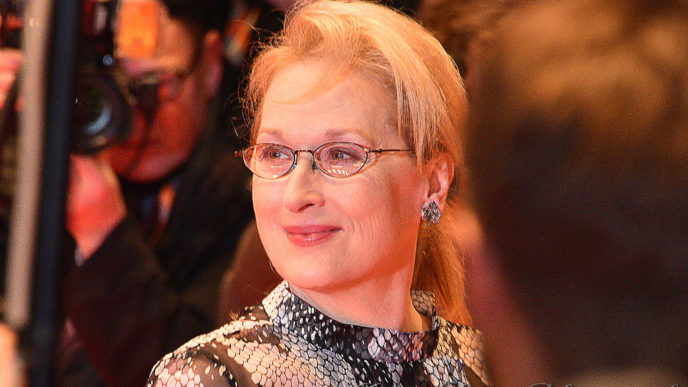
President-elect Donald Trump’s public campaign to push U.S. companies to make their products in America is already having an impact, especially on one of his favorite targets: the auto industry.

On Tuesday, Ford Motor Co., the nation’s second-largest automaker, said it will cancel a plan to build a small-car assembly plant in Mexico that Trump has criticized, and instead expand a Michigan plant, creating 700 local jobs.

A few hours earlier, Trump had threatened to impose tariffs on cars built by General Motors Co. in Mexico, writing on Twitter: “Make in the U.S.A. or pay big border tax!”

In response to Trump’s attack against GM for selling Chevrolet Cruzes assembled in Mexico to U.S. car dealers, America’s largest automaker quickly defended itself. GM noted that almost all of the 190,000 Cruzes sold here last year actually were made at a factory in Lordstown, Ohio.

Experts say these actions, even if not directly attributable to Trump, showcase potential changes ahead for the auto industry, a sector that is ascendant after selling a record 17.55 million new cars in the U.S. last year.

“It’s bullying, and I don’t think it’s a sustainable way to do business, but Trump’s approach is being reinforced,” Dan Ikenson, who researches international trade and investment policy at the Cato Institute, told The Daily Signal in an interview. “He hasn’t taken the oath of office yet, and he has affected hundreds of millions — if not billions — of dollars in investment decisions, and thousands of jobs.”

Observers of the auto industry contend that investment decisions made by companies such as Ford reflect long-term business goals more than influence from the incoming administration.

Ford Chief Executive Mark Fields said “the primary reason” his company scrapped a $1.6 billion factory slated for San Luis Potosi, shifting production to an existing plant in Mexico, “is just [that] demand has gone down for small cars.”

The new jobs in the Michigan plant, meanwhile, mostly will support Ford’s production of self-driving and electric cars, which the company expects to be popular in the future.

“The U.S. auto industry is clearly at the top of the best cycle we’ve ever had, and even before the presidential election, the industry is acting differently in response to that,” Bernard Swiecki, an analyst at the Center for Automotive Research in Ann Arbor, Michigan, told The Daily Signal in an interview. “We are now plateauing, meaning the building boom in Mexico will slow because the boom was designed to fill the need for capacity.”

Swiecki added:

I don’t think in any of these decisions Trump’s advocacy will be the main driver. The real driver will always be the business case. In the Ford decision, the business case lined up this way, and if at the same time you can curry some political favor with the president, you will take that.

No matter the motive, Swiecki and other experts say, the increasingly globalized auto industry is paying attention and taking the president-elect’s statements seriously.

Trump has vowed repeatedly to impose tariffs on vehicles imported into the United States from Mexico.

Trade experts agree that presidents have wide latitude to impose penalties on imports, at least temporarily, including restricting imports if they pose a national security risk under the International Emergency Economic Powers Act of 1977.

Edward Alden, who studies trade policy at the Council on Foreign Relations, argues that targeting a single company with a tariff would be more controversial, and unprecedented.

“There is nothing that prevents the president from claiming that Ford’s investing in Mexico constitutes a national industrial emergency and to move forward with sanctions,” Alden told The Daily Signal in an interview. “It would be a gross distortion of emergency power, but Trump has indicated he is not terribly constrained by norms and expectations.”

Trump also has frequently criticized and promised to renegotiate the North American Free Trade Agreement (NAFTA), a deal that went into force in 1994 under which the United States does not impose tariffs on products imported from Mexico and Canada.

Alden said that since the mid-1960s, the auto industry has been integrated across North American borders, starting with the Auto Pact of 1965, a trade agreement between the U.S. and Canada that allowed for tariff-free imports and exports.

“If you really try to create a build-it-in-America auto industry, you have to undo more than 50 years of history,” Alden said, adding:

The auto supply chain operates on a continental basis. If Trump blows that up by increasing the price of an imported vehicle with tariffs, it could reduce overall vehicle sales and cause manufacturers’ costs to increase substantially. This would force a massive restructuring of the industry.

Imported vehicles have become central to the American market, equaling more than 40 percent of annual volume.

Since the U.S. recession, automakers have committed big investments to new plants in Mexico to take advantage of cheap labor.

According to the Center for Automotive Research, of the 11 assembly plants announced to be built in North America since 2009, nine were planned for Mexico.

The nonprofit, independent research center reported that from 2013 to late 2016, carmakers invested $68.5 billion in North America, a total that includes new plants as well as expansions and updates to existing facilities.

Seventy-two percent, or $49.4 billion, of that investment went to the U.S.

While American car companies say they have moved jobs to Mexico to remain competitive, they also invested in the U.S., creating jobs in design and engineering or in plants making parts for Mexican factories.

“The idea that something is made in the U.S. or made in Mexico is an outdated notion,” Bryan Riley, a trade policy analyst at The Heritage Foundation, told The Daily Signal. “With cars, whether final assembly is in the U.S., Mexico, or somewhere else, you have components from all over the world.”

Riley added:

That is something that benefits Americans. You don’t want to go on a path that we are better off if we make everything in the U.S. We are much better off to say Americans have the freedom to spend and invest money where they want, and no one in Washington, D.C., should be interfering with those decisions.

(For more from the author of “How Trump’s Presidency Could Retool the Auto Industry” please click HERE)

Follow Joe Miller on Twitter HERE and Facebook HERE.

Was the Video Torture of a Handicapped “Trump Supporter” Really a Love Crime?

Chicago police just couldn’t decide whether the kidnapping and video-livestreamed torture of a learning disabled white man constituted a hate crime or just kids being “stupid.” As Fox 32 reported:

The footage shows the suspects kicking, hitting and cutting the hair of the victim while he was gagged. Shouts of “F*** Trump!” and “F*** white people!” can be heard in the background.

At one point, the victim is held at knife point and told to curse President-elect Donald Trump. The group also forces the victim to drink water from a toilet.

The victim was held hostage for at least 24 hours and as long as 48 hours.

The American Mirror commented: “To listen to the initial reaction of Chicago Police Superintendent Eddie Johnson, the filmed shock attack on a white special needs resident … was just kids being kids.” It quoted Johnson:

Some of it is just stupidity. People just ranting about something they think might make a headline. … At this point we don’t have anything concrete to point to to suspect it’s a hate crime, but we’ll keep investigating and let the facts guide us on how this concludes.

Now, there is good reason to question the whole idea of a “hate crime.” Why should it matter from a legal point of view precisely why a criminal attacks someone and violates his right to life, liberty, or property? Was the record-setting murder spree that engulfed Democrat-run Chicago in 2016 — which largely saw non-whites killing non-whites — a wave of “love crimes,” since those murders weren’t racially motivated?

But granting that the legal category of hate crime does exist, why was there the slightest reluctance to label what these four vicious young people did a hate crime? They used racial epithets (check), targeted a member of another race (check), and forced him at knife point to denounce a white politician (check). It sounds like it fits the bill.

What would have happened if four white kids from Donald Trump’s native Queens had reacted to Barack Obama’s election in 2008 by kidnapping a handicapped black teen and forcing him to damn Obama at knife point? The entire racial grievance industry, the mainstream media, and the federal government would have swung into action to address a “national crisis” of white-on-black political violence.

What Matters Isn’t the Victim, but the “Narrative”

The media reactions to this crime were different, to say the least. The iconic Washington Post let columnist Callum Borchers blow right past the horror inflicted on a helpless, imprisoned American, to focus on the dangerous “pro-Trump” “narrative” which this attack could be used to bolster — the idea that just as white people can target black people for crimes, it can also work the other way around. We see here the mind of an ideologue, trapped in its little Habitrail, scurrying left and right to avoid the plain and ugly facts and obtain its little pellet of “social justice.”

Why did it take many long hours for Chicago police to classify this obvious hate crime as a hate crime, and charge the attackers accordingly? Indeed, they might not have done so without the explosion of public comment, admirably led by Paul Joseph Watson, a gadfly at Alex Jones’ InfoWars:

Only Whites Can Be Racist, Got It?

Why is there a double standard on hate crimes? For the same reason that leftists deny that black hatred for whites (or Asians or Jews) can constitute racism:

Because whites have all the institutional power in society, and “racism” is defined as an act that perpetuates institutional power. So when black rioters targeted Korean grocers during the Los Angeles riots, beat them bloody, called them “gooks” and burned their businesses, what they were doing wasn’t “racist.” You have to call it something else.

I had this principle of cultural Marxism carefully explained to me at an official gathering called by the Catholic Diocese of Baton Rouge, which priests and church employees were forced to attend, back in the early 90s. Clearly someone in the church had taken his Saul Alinsky training and put it to use.

It’s a gross oversimplification to lump together all people of the same ethnic group as having the same power or “privilege.” White coal-miners in Appalachia who have been put out of jobs by Obama administration regulations clearly have less institutional power than my black classmates from Yale enjoy. To lump people together in broad racial categories and grant them different treatment under law… that in fact sounds more like the classical definition of racism. (For more from the author of “Was the Video Torture of a Handicapped “Trump Supporter” Really a Love Crime?” please click HERE)

Follow Joe Miller on Twitter HERE and Facebook HERE.
Trump and Congress Want to Audit the Fed. Let’s Do It Already!

Back when Ron Paul was in Congress, you could always count on him to do one thing: introduce the same bill every year, heedless of futility or Sisyphean labor, to conduct a comprehensive audit of the United Stated Federal Reserve Bank.

It never went anywhere. But undaunted, the elder Paul continued the tradition right up until his retirement, at which point he passed the mantle to his son, Sen. Rand Paul, R-Ky. (A, 92%).

Rand continues to introduce the bill every year, with increasing probability of action, receiving a rare vote in the Senate in 2016. This year, the warriors of monetary policy may have their best shot yet at success, as a new version of the bill is being sponsored by Rand and Rep. Thomas Massie, R-Ky. (A, 94%) with vocal support from the incoming Trump administration.

The Federal Reserve is a nominally independent agency that regulates the nation’s money supply, controls interest rates, and occasionally intervenes in markets more directly, as when it purchased toxic mortgages during the 2008 housing crisis. The Fed generally operates behind the scenes in comparative secrecy, with the general public having only a vague conception of what the agency actually does.

What few people realize is that when the Fed alters the money supply and changes interest rates, it is sowing the seeds of future economic disaster by introducing distorted signals into money markets. Not only does dramatically expanding the money supply (as the agency has done for the last decade) create inflation that causes consumer prices to rise, but it also leads investors into making bad decisions that harm the economy as a whole.

The Fed is adamant that it is already subject to audits by the inspector general, and that it is already fully transparent. The agency is also adamant in its opposition to the Audit the Fed bill. Can you spot the inconsistency? If the agency is already transparent, then the bill would do nothing, so why oppose it?

The truth is that, while the Fed is subject to periodic audits, these are only partial reviews of the agency’s activities that leave out many of the most important aspects of what the Fed does: Transactions with foreign governments, internal communications, and the open market operations that constitute most of what the Fed does are currently exempt from scrutiny. If people knew exactly what goes on behind the agency’s closed doors, they would be shocked at how much power it has to screw things up for the rest of us.

We would also discover that the Fed is not nearly as independent as most people believe. The Fed chairman is appointed by the president, which imparts an inherently partisan slant to anything the agency does. I suspect an audit of internal communications would reveal far more consideration for political concerns than the Board of Governors lets on.

Make no mistake: Auditing the Fed will not be a panacea that will immediately change anything, but it is a necessary first step toward exposing the agency’s actions to the public and convincing ordinary citizens of the need to end the agency’s charter. (For more from the author of “Trump and Congress Want to Audit the Fed. Let’s Do It Already!” please click HERE)

Follow Joe Miller on Twitter HERE and Facebook HERE.