Posts

US Meat Ranchers Warn Major Companies Are ‘Investing’ In Bugs, Calls Low Beef Production ‘Crisis’

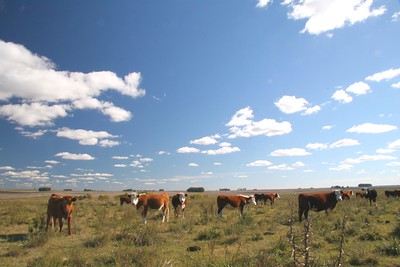
Two cattle ranchers called low beef production a “crisis” for Americans and warned on Fox News that major meat-packing companies are now beginning to invest in bugs.

National Black Farmers Association Founder John Boyd Jr. and cattle rancher Shad Sullivan appeared on “The Ingraham Angle” to discuss the decline within the cattle industry in the United States. Fox host Laura Ingraham began by questioning Boyd Jr. on how “bad” the issue could get for the average American who consumes beef. Boyd said that not only are herds significantly “depleting” for cattle ranchers, but called out the funding the U.S. has given to Ukraine and not its farmers.

“Well, you know, farmers are going out of business every day,” Boyd said. “What happening is America’s beef cattle producers are depleting their herds, so they’re not having more calves so they can multiply. We are producing 1 billion pounds less of American beef than we were last year this time. So, this is a crisis that is going to affect every American at the local grocery stores.”

“But here’s what’s problematic for me,” Boyd continued. “We have all of these other foreign countries – $100 billion to Ukraine and help Ukraine farmers, but we won’t help America’s farmers right here at home. We have Americans facing farm foreclosure and USDA will not stop farm foreclosures in this country for direct loans, guaranteed loans, and other agricultural lenders….We’re down to 40,000 Black farmers in this country and guess what? We are facing extinction. These policies aren’t helping cattlemen, like myself, stay on the farm. We have the highest input costs that you are seeing in decades. Diesel fuel prices going through. And this is why farmers can’t stay on the farm. We need good policies that can help us stay on the farm.” (Read more from “US Meat Ranchers Warn Major Companies Are ‘Investing’ In Bugs, Calls Low Beef Production ‘Crisis'” HERE)

Photo credit: Flickr

Farmers Promise to ‘Escalate’ Protests Against Government Shutdown Orders

Farmers in the Netherlands reduced nitrogen pollution by nearly 70% through a voluntary system. But the government says that is not enough and is demanding that they cut pollution by another 50% by 2030.

By the Dutch government’s own estimates, 11,200 farms out of the roughly 35,000 dedicated to dairy and livestock would have to close under its policies; 17,600 farmers would have to reduce livestock; and total livestock would need to be reduced by one-half to one-third. The Dutch government has demanded that animal farming stop entirely in many places. Of the over $25.7 billion the government has set aside to reduce pollution, just $1 billion is for technological innovation, with most of the rest for buying out farmers.

This effort has sparked a fierce backlash among Dutch farmers, who argue that the government seems more interested in reducing animal agriculture than in finding solutions that protect the food supply and their livelihoods.

“Why would you buy out farmers or reduce livestock when you have the possibility to invest in innovation?” asked Caroline van der Plas, the founder and sole Member of Parliament for the Farmer-Citizen Movement party, or BBB in Dutch. “The car industry innovated for the past 40 years. There aren’t fewer cars and the cars we have are cleaner. We even have electrical cars. That’s what I think is so crazy. Why don’t we treat the farmers just like the car industry? Give them time to develop solutions or innovate? We can produce food in a much more efficient and cleaner way if we do that. And it’s much cheaper also then by buying out farmers.”

Farmer protests in the Netherlands come at a time of heightened global food insecurity created by Russia’s invasion of Ukraine, a major wheat exporter. (Read more from “Farmers Promise to ‘Escalate’ Protests Against Government Shutdown Orders” HERE)

Photo credit: Flickr

Delete Facebook, Delete Twitter, Follow Restoring Liberty and Joe Miller at gab HERE.

Black Americans Sue U.S. Farms for Replacing Them with Foreign Workers

Black Americans who spent most of their lives working on Mississippi farms are suing their former employer after they were replaced by foreign workers on the H-2A visa program.

The lawsuit, filed in the United States District Court for the Northern District of Mississippi, accuses Pitts Farms of laying off a number of black Americans, only to replace them with foreign visa workers from South Africa. . .

In interviews with the New York Times, black Americans said they had spent most of their lives earning a living as farm workers at Pitts Farms. The work is part of a long history wherein black Americans along the Mississippi Delta have spent grueling hours on farms doing intense physical labor.

One of the black Americans suing Pitts Farms, 50-year-old Richard Strong, told the Times that he has worked on farms for more than 25 years. His father and grandfather did so as well, as well as his enslaved ancestors.

Strong said about 10 years ago is when he noticed farms along the Mississippi Delta began importing foreign visa workers, almost entirely from South Africa. When the first groups arrived, Strong said he helped train them. Now, more than 100 U.S. farms along the Delta employ foreign visa workers from South Africa over Americans. (Read more from “Black Americans Sue U.S. Farms for Replacing Them With Foreign Workers” HERE)

Delete Facebook, Delete Twitter, Follow Restoring Liberty and Joe Miller at gab HERE.

Coronavirus Forces Farmers to Scrap Food They Can’t Sell

A tractor with a 35-foot blade mowed down one million pounds of green beans ready to be picked at R.C. Hatton’s Pahokee fields.

Those crops should have been going to South Florida’s restaurants, cruise ships, school cafeterias, airlines and even theme parks. . .

The total shutdown of the hospitality industry, to stem the spread of the coronavirus, means farmers who grew crops intended for everyone from small, independent restaurants to busy hotels are stuck with millions of pounds of produce that will soon be left to die on the vine.

And even food banks, soup kitchens and rescue missions, which have seen a surge of unemployed workers making hours-long lines for boxes of donated fresh fruits and vegetables, are saturated with farm donations.

“It’s catastrophic,” said Tony DiMare, vice president of the third-generation-owned DiMare tomato company. “It’s a dire situation, and there’s no relief in sight.” (Read more from “Coronavirus Forces Farmers to Scrap Food They Can’t Sell” HERE)

Follow Joe Miller on Twitter HERE and Facebook HERE

The Next Real Estate Bubble: Farmland

Photo Credit: American.com

Eeyore should have been a farmer. It’s almost impossible to find a farmer happy about his situation. The weather’s too hot, cold, wet, or dry, and prices are too low or too high, depending on whether we’re buying or selling. We can’t, at least in front of our peers, admit to prosperity or even the chance of prosperity. Although we’d never admit it at the local coffee shop, the last few years have been good, at least for Midwestern grain farmers. Prices have been strong — strong enough to make up for much of the production lost to last year’s drought. That’s terrible news for livestock producers, who’ve been faced with drought-damaged pastures and high feed costs, but for farmers producing corn and soybeans, it has been a profitable few years.

Farmers have cash, and nowhere to invest it but farmland. Farmers largely ignore equities, as they tend to balance the inherent risk in farming by investing in what they perceive as less risky places. We aren’t dumb, however, and have figured out that it’s a losing game to invest in bonds or CDs at rates less than inflation while we’re in tax brackets we never even knew existed.

So, farmland prices are booming. Land prices in the heart of the Corn Belt have increased at a double-digit rate in six of the last seven years. According to Federal Reserve studies, farmland prices were up 15 percent last year in the most productive part of the Corn Belt, and 26 percent in the western Corn Belt and high plains. Closer to home, a neighbor planning his estate had an appraisal done in 2010 and again in late 2012. In that two-year period, the value of his farm had doubled. According to Iowa State economist Mike Duffy, Iowa land selling for $2,275 per acre a decade ago is now at $8,700 per acre. A farm recently sold in Iowa for $21,900 per acre.

Although much of the increase in land prices has been driven by well-financed farmers and outside investors (many paying a large portion of the purchase price in cash), there are disturbing trends occurring on farm balance sheets. The Kansas Farm Management Association reports that debt-to-equity ratios are highest in large farms, which have over a million dollars in sales. Although the debt-to-asset ratio is low even in the largest farms in Kansas, it’s higher than it was in 1979, shortly before the farmland crash of the eighties. As former home owners in Las Vegas and Southern California can attest, equity can melt away in a hurry. A debt-to-asset ratio of 30 percent can enter dangerous territory with a land price drop of 50 percent, which sounds like a lot, until you remember that is a price level last seen only 24 months ago in much of the Midwest.

Read more from this story HERE.

Cash-Strapped Farmers Feeding Candy to Cows

Cattle farmers struggling with record corn prices are feeding their cows candy instead.

That’s right, candy. Cows are being fed chocolate bars, gummy worms, ice cream sprinkles, marshmallows, bits of hard candy and even powdered hot chocolate mix, according to cattle farmers, bovine nutritionists and commodities dealers.

“It has been a practice going on for decades and is a very good way to for producers to reduce feed cost, and to provide less expensive food for consumers,” said Ki Fanning, a livestock nutritionist with Great Plains Livestock Consulting, Inc. in Eagle, Neb.

Feeding candy to cows has become a more popular practice in tandem with the rising price of corn, which has doubled since 2009, fueled by government-subsidized demand for ethanol and this year’s drought. Thrifty and resourceful farmers are tapping into the obscure market for cast-off food ingredients. Cut-rate byproducts of dubious value for human consumption seem to make fine fodder for cows. While corn goes for about $315 a ton, ice-cream sprinkles can be had for as little as $160 a ton.

“As the price of corn has climbed, farmers either sold off their pigs and cattle, or they found alternative feeds,” said Mike Yoder, a dairy farmer in Middlebury, Ind. He feeds his 400 cows bits of candy, hot chocolate mix, crumbled cookies, breakfast cereal, trail mix, dried cranberries, orange peelings and ice cream sprinkles, which are blended into more traditional forms of feed, like hay.

Read more from the story HERE.

Video: I’m Farming and I grow it

A funny to tribute to our nation’s farmers. This video has received over 3 million hits in just a few days. From my birth state of Kansas.

Photo Credit: Warren Long