Posts

Clinton Critics Voice Disappointment After Trump Vows to Drop Investigation

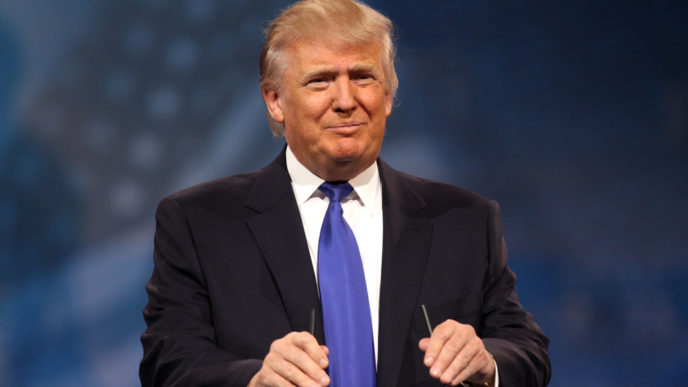
President-elect Donald Trump asserted Tuesday his administration would not further investigate his vanquished opponent Hillary Clinton.

“I don’t want to hurt the Clintons,” Trump said in a wide-ranging interview with The New York Times.

The news came after a rough campaign where Clinton faced an FBI investigation into classified information sent and received on her private email server.

FBI Director James Comey announced in July he was not recommending a prosecution. However, 11 days before the election, he announced he was reopening the probe, only to close it two days before Election Day.

The FBI is reportedly also investigating potential ties between donors to the Clinton Foundation and actions taken by Clinton when she was the secretary of state.

“It was a premature decision [not to continue investigating Clinton] because we don’t know what evidence on the email server or Clinton Foundation will emerge,” said Peter Flaherty, president of the National Legal and Policy Center, a conservative watchdog group, told The Daily Signal.

“It shouldn’t be the call of the White House anyway, but should be left up to the new attorney general—and IRS commissioner—whether to investigate,” Flaherty continued, noting the IRS should look into the nonprofit status of the Clinton Foundation. “Prosecuting Hillary might seem like piling on from a political sense, but if she broke the law, this is a decision that should be left to law enforcement.”

Trump’s comments to The New York Times followed an interview earlier Tuesday with Trump campaign manager Kellyanne Conway in which she expressed a similar view. Trump said his administration would not pursue further investigation into the email server or the Clinton Foundation.

Trump further told the Times, “we’ll have people that do things,” which the newspaper said could mean the FBI, but Trump was clear he would not push the investigation.

Following her defeat, The Daily Signal reported that Clinton faced at least four legal probes. Regardless of Trump’s decision, she could still face scrutiny from Republican-controlled committees in the House and Senate, as well as a Federal Election Commission investigation of her presidential campaign.

During the second presidential debate, Trump told Clinton, “If I win, I am going to instruct my attorney general to get a special prosecutor to look into your situation.”

Judicial Watch President Tom Fitton expressed disappointment in Trump’s decision.

“Donald Trump must commit his administration to a serious, independent investigation of the very serious Clinton national security, email, and pay-to-play scandals,” Fitton said in a statement.

“If Mr. Trump’s appointees continue the Obama administration’s politicized spiking of a criminal investigation of Hillary Clinton, it would be a betrayal of his promise to the American people to ‘drain the swamp’ of out-of-control corruption in Washington, D.C.,” Fitton continued. “President-elect Trump should focus on healing the broken justice system, affirm the rule of law, and appoint a special prosecutor to investigate the Clinton scandals.”

The matter muddies the waters beyond what the FBI might already be investigating about Clinton, said Ilya Shapiro, senior fellow of constitutional studies at the Cato Institute, a libertarian think tank.

“It’s a little disturbing for a president to say, ‘I’m showing mercy and the fate of my political opponent is in my power,’” Shapiro told The Daily Signal. “It’s not his place to decide which political enemies to go after or not go after. The FBI and the Department of Justice should go forward without political interference.”

Shapiro added this could be politically costly.

“I think more of his supporters voted against Clinton than for him, so it would have been better to stay silent rather than act like a benevolent leader who holds the fate of his opponent at his whim,” Shapiro added.

Conway, Trump’s campaign manager and current adviser in the transition, presented the case for turning the page during an interview on MSNBC’s “Morning Joe” on Tuesday.

“I think Hillary Clinton still has to face the fact that a majority of Americans don’t find her to be honest or trustworthy,” Conway said. “If Donald Trump can help her heal, then perhaps that’s a good thing to do.”

Conway added, “I think he’s thinking of many different things as he prepares to become the president of the United States, and things that sound like the campaign are not among them.”

Trump foreshadowed that he might not pursue a special prosecutor during an interview with CBS News’ “60 Minutes” after the election.

From a political standpoint, Trump’s decision could be mixed, said Gary Rose, chairman of the political science department at Sacred Heart University.

“This does make him more statesmanlike because it probably is for the good of the country to move on, even if his base will not be all that happy,” Rose told The Daily Signal. “It does seem to turn the page and provide a way to say ‘I’m a statesman.’ But, if a crime was committed, perhaps that wasn’t his call. A line might have been crossed.” (For more from the author of “Clinton Critics Voice Disappointment After Trump Vows to Drop Investigation” please click HERE)

Follow Joe Miller on Twitter HERE and Facebook HERE.

“DUMPED ON PROM NIGHT”: Reports Coming in of Hillary’s Stunning Election Night Meltdown

Hillary Clinton’s night on the 9th of November went from a celebration to an absolute meltdown once the election unexpectedly turned on her, leaving Trump as the victor. Some of the remnants of Hillary Clinton’s rampage in the private VIP area were discovered by the hotel custodial staff the day following the election.

Hillary Clinton’s post-election celebration plans included hundreds of thousands of dollars worth of fireworks, live performances by various celebrities, such as Cher, who came believing that Hillary was going to win the election, a five-hundred-thousand-dollar special effect glass ceiling that she would break through in a dramatic display once she walked out on stage at her H.Q., among millions of dollars worth of other celebratory preparations, all paid for by the Clinton Foundation in full.

The most notable damage was located deep in the VIP room of the Clinton camp. A custom 150 inch ultra HD TV, a gift from the Saudi Arabian government, was found with a broken screen. The damage was caused by a $950,000 bottle of champagne that was believed to have been thrown at the screen by the former presidential candidate some time during the election.

Early in the morning, the custodial staff were greeted by flipped-over tables as the floors were covered with expensive food, drinks, and appetizers. Broken champagne flutes and gilded silverware were also seen scattered around the would-be party room.

The most telling sign of a massive meltdown was the cake. The pastry that had once proudly displayed the presidential seal, was violently flung against the walls in chunks. A broken topper from the cake in the shape of the white house was discovered lodged firmly into the drywall near the dessert table. (Read more from “”DUMPED ON PROM NIGHT”: Reports Coming in of Hillary’s Stunning Election Night Meltdown” HERE)

Follow Joe Miller on Twitter HERE and Facebook HERE.

Clinton: ‘All I Wanted to Do Was Just to Curl up’ This Past Week

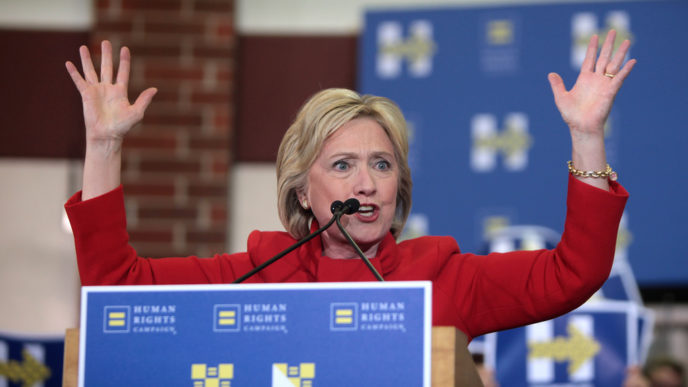
Hillary Clinton said Wednesday that in the week since her stunning loss in the presidential election, there have been times when she’s wanted to hole up at home and “never leave the house again.”

But she urged her supporters to stay engaged and fight for the values that propelled her campaign.

“I will admit, coming here tonight wasn’t the easiest thing for me,” she said to the audience at a gala for the Children’s Defense Fund. “There have been a few times this past week where all I wanted to do was just to curl up with a good book or our dogs and never leave the house again.”

But Clinton struck a positive note, saying that her presidential campaign was about the “country we love.”

“And about building an America that is hopeful, inclusive and big-hearted,” she said during the ceremony, where she was being honored for her child advocacy work. (Read more from “Clinton: ‘All I Wanted to Do Was Just to Curl up’ This Past Week” HERE)

Follow Joe Miller on Twitter HERE and Facebook HERE.

Dear Dejected Hillary Supporters, Stop Trying to Make the Electoral College About Slavery!

Adding to the ever-growing list of scapegoats for Hillary Clinton’s presidential election loss to Donald Trump, mainstream and leftist voices have now turned their harangues and calumnies toward the Electoral College.

Now that the mewls of “Hillary won the popular vote” have been exhausted, her apologists are going after the institution of the Electoral College (and, by association, the Constitution), with more and more tying its historic heritage to slavery. These attacks on the function of the college are not only inaccurate, they ignore the complexity, nuance, and statesmanship necessary to even have a constitution in the first place.

In the days following Clinton’s loss, Vox was one of the first notable outlets to scapegoat the Electoral College, due to the fact that slavery existed during the birth of the U.S. Constitution. In an interview with Professor Akhil Reed Amar of Yale, they hammer the point that the college simply existed to protect the institution of slavery.

PBS Newshour cites another professor at a Canadian university, who says most would be “disgusted” at the true origins and relationship between the Electoral College and the institution of slavery. All the while, he cites a speech that James Madison gave at the Constitutional Convention in which Madison called the disparity of suffrage between states a “serious problem.” (It is also worth noting that an editor’s note indicates that the article’s author initially got the winner of the 1800 election wrong.)

Elsewhere, Slate — in typical fashion — simply asserts that the institution is an “instrument of white supremacy” akin to “mass incarceration.”

Finally, news broke Tuesday that Sen. Barbara Boxer, D-Calif. (F, 4%) has introduced a bill to abolish the Electoral College, calling the process “an outdated, undemocratic system,” that unfairly robbed Hillary Clinton of the presidency.

This is a shocking response to the fact that the Electoral College does and did exactly what it was supposed to do. As CR’s Rob Eno recently explained, the electoral vote guards against the tyranny of the dense population centers over the rest of the country (as it did Nov. 8). When numbers from Boxer’s home state of California alone are removed from the total tallies, Trump not only wins the Electoral College, but a sizeable chunk of the popular vote as well. Put simply, we live in a federal republic, not Mob-rule-istan.

In a recent column at The Wall Street Journal, Hillsdale College President Dr. Larry Arnn explains flawlessly:

The Constitution is paradoxical most of all about power, which it grants and withholds, bestows and limits, aggregates and divides, liberates and restrains. Elections are staggered, so as to distribute them across time. The founding document also divides power across space; the people grant a share of their natural authority to the federal government, but another share to the states where they live.

We forget that it is a historical rarity to have an executive strong enough to do the job but still responsible to the people he governs. The laws in the U.S. have worked that miracle for longer than anywhere else. Remember that the Electoral College helps establish the ground upon which the American people must talk with each other, while ensuring that they are not ruled as colonies from a bunch of blue capitals, nor from a bunch of red ones.

But this is only half the problem with progressives’ recent detractions from the document. The rest lies with trying to slander the Electoral College because of an historical relationship with slavery.

Probably the best explanation of this complexity came from a professor who told me that the founders and the framers were incapable of freeing the slaves at that time because they were barely capable of freeing themselves.

Yes, thanks to the complex nature of slavery and the early republic and the impossibility of creating a document that would be unanimously ratified in Virginia, South Carolina, New York Massachusetts, and Maine, (for a better understanding of these, I recommend a viewing of the movie “1776”; it takes just under 2.5 hours and there’s singing. Easy day.) it is impossible to say that it is not connected. But to slander the college on this connection alone is fallacious and reductionist, ignoring the manifold concerns that were addressed in the Constitutional Convention in Philadelphia.

Simply because the college coexisted in a document with slavery does not mean that it was specifically designed to preserve and protect the institution. What about the concerns of smaller, non-slaveholding states like Connecticut and others — which also feared that large town centers would eventually overshadow their representation in the Union? What of the urban/rural divides that decided the election this cycle?

In other words, if you’re going to slander and throw out the Electoral College simply because of its proximity to those compromises, you may as well dismantle our entire federal order and bulldoze every monument to every person present at the Constitutional Convention. History, especially in these contexts, is far more complex than you want it be.

Slavery was indeed our country’s original sin — one in atonement for which we fought a long and bloody Civil War that nearly destroyed our Union. Its relationship to our founding documents is as shameful as it is complex. But rather than throwing babies out with the bathwater, it would do us well as a people to recognize these complexities rather than reducing them to the fallacy of the day.

In other words, those upset by 2016’s results would do better to just admit that they want to change the game that their candidate lost, rather than reaching for justifications to slander the rulebook. (For more from the author of “Dear Dejected Hillary Supporters, Stop Trying to Make the Electoral College About Slavery!” please click HERE)

Follow Joe Miller on Twitter HERE and Facebook HERE.

GOP Didn’t Need to Suppress Democratic Voters. A Lot of Them Deserted Hillary Clinton

The left, mainstream media, pundits and almost every poll were certain Hillary Clinton was going to win the election. Ultimately, a “Chinese monkey king” ended up doing a better job predicting the election results than the experts. What did they miss, and why did they miss it? Why did so many voters desert Clinton and vote for Trump?

Many on the left cling to the idea that Clinton lost due to voter suppression of minority voters — despite the millions George Soros funneled into organizations to combat this allegation from occurring. A writer for Salon wrote a lengthy piece rambling on and on about how the GOP kept minorities from voting, but without any direct evidence that this had happened. The logic in this article and others is: The Democrat should get the most minority votes; Clinton got fewer votes from minorities than she should have gotten; therefore someone must be keeping minorities from voting for Clinton.

But that isn’t the reason.

Why Trump? Why Not Clinton?

First, the mainstream assumed that Trump was a racist and that he would draw an even lower percent of black and Latino voters than Republicans usually get. In fact, a larger share of blacks, Latinos and Asian-Americans voted for Trump than had voted for Romney. The only Republican candidate to do better with those three groups was George W. Bush in his first election in 2000 and his reelection in 2004.

Revealingly, Trump received about the same share of the white vote than Romney did four years ago, yet it now appears he received about the same or slightly fewer votes than Romney did then.

Second, exit polls reveal that key Democratic constituencies failed to show up to vote for Clinton. She received fewer votes from blacks, Latinos, Asians, Millennials and lower income voters than nearly every observer expected. Younger blacks didn’t think Clinton indicated enough support for Black Lives Matter or criminal justice reforms. Additionally, she didn’t have the star power Obama had as the first black president.

For example, Clinton lost some of the traditional support for Democratic candidates from lower middle class and working class voters. Only 52 percent of voters making $50,000 or less annually voted for her, down from 60 percent for Obama. Rep. Debbie Dingell (D-Mich.) recognized during the race that Clinton was in trouble in Michigan. She observed that middle class voters were discouraged that their economic situation had gotten worse, not better, under Obama.

Similarly, millennials were disgruntled by Clinton’s lack of ethics, especially the way her campaign created the caricature of “Bernie Bros” as racist and sexist. They had favored Bernie Sanders in the Democratic primary and disliked her ties to Wall Street and her interventionist foreign policy.

Some Millennials voted instead for third-party candidates, bolstering Libertarian Gary Johnson to 3 percent of the vote, an increase from his 1 percent in 2012. Johnson and the other third-party candidate, Green Party’s Jill Stein, took enough of the vote away from Clinton in four swing states to tip the race to Trump. Ironically, Clinton’s husband may have the won election as president in 1992 due to third-party candidate Ross Perot taking away votes from George H.W. Bush.

The Conclusion

The evidence suggests that a lot of minority voters accepted Trump’s message and broke away from the Democratic party. Enough voters in groups the Democrats expected to hold voted Republican to give the election — and the crucial battleground states — to Trump.

Ironically, part of Clinton’s problem is the narrative she and the left created about white racism. Clinton seems to have lost some of the black vote because she didn’t embrace the radical Black Lives Matter agenda enough. The left has manufactured such absurd levels of racist accusations that it’s backfiring on them, hurting Democrats who don’t breathlessly push the spin.

As long as the left ignores the real reasons Clinton lost, they can expect another loss in 2020. (For more from the author of “GOP Didn’t Need to Suppress Democratic Voters. A Lot of Them Deserted Hillary Clinton” please click HERE)

Follow Joe Miller on Twitter HERE and Facebook HERE.

What Happened on Hillary’s Plane Right Before She Lost Election Revealed, It Speaks Volumes…

Hillary Clinton on Saturday cast blame for her surprise election loss on the announcement by the F.B.I. director, James B. Comey, days before the election that he had revived the inquiry into her use of a private email server.

In her most extensive remarks since she conceded the race to Donald J. Trump early Wednesday, Mrs. Clinton told donors on a 30-minute conference call that Mr. Comey’s decision to send a letter to Congress about the inquiry 11 days before Election Day had thrust the controversy back into the news and had prevented her from ending the campaign with an optimistic closing argument.

“There are lots of reasons why an election like this is not successful,” Mrs. Clinton said, according to a donor who relayed the remarks. But, she added, “our analysis is that Comey’s letter raising doubts that were groundless, baseless, proven to be, stopped our momentum.”

Mrs. Clinton said a second letter from Mr. Comey, clearing her once again, which came two days before Election Day, had been even more damaging. In that letter, Mr. Comey said an examination of a new trove of emails, which had been found on the computer of Anthony D. Weiner, the estranged husband of one of her top aides, had not caused him to change his earlier conclusion that Mrs. Clinton should face no charges over her handling of classified information.

Her campaign said the seemingly positive outcome had only hurt it with voters who did not trust Mrs. Clinton and were receptive to Mr. Trump’s claims of a “rigged system.” In particular, white suburban women who had been on the fence were reminded of the email imbroglio and broke decidedly in Mr. Trump’s favor, aides said.

Mrs. Clinton’s campaign was so confident in her victory that her aides popped open Champagne on the campaign plane early Tuesday. But that conviction, aides would later learn, was based largely on erroneous data showing that young, black and Latino voters and suburban women who had been turned off by Mr. Trump’s comments but viewed Mrs. Clinton unfavorably would turn out for her in higher numbers than they ultimately did. (For more from the author of “Hillary Clinton Blames F.B.I. Director for Election Loss” please click HERE)

Follow Joe Miller on Twitter HERE and Facebook HERE.

Hillary Clinton Has Been a Slave to Her Own Ambition. Now She’s Free

Watching Hillary Clinton’s concession speech, I was struck by how serene she appeared to be. There was no bitterness, no veiled barbs at Donald Trump or his deplorables, no insults directed at average Americans, not even any harmless snark. This didn’t seem like the Clinton we’ve all come to know and love loathe. What was going on here?

I had fully expected Hillary’s surprise defeat at the hands of Trump to destroy her. To be denied something she has coveted for so long, in such a surprising way, at the very last minute, must have affected her in ways the rest of us can’t even imagine. I actually thought her health might be in danger. But then it occurred to me: What if she is feeling something completely different? What if this situation is more complex than it seems?

I’m currently rereading “The Lord of the Rings” for, if my count is accurate, the seventh time. With that story in my mind, it’s impossible for me not to draw parallels between the Ring of Power — the One Ring to Rule Them All — and the presidency. What if Hillary has been a slave to her ambition for the last 50 years, just as the creature Gollum became a slave to the ring and the power that came with it? For half a century, she has desperately been pursuing one thing, the presidency. And now, for the first time, it is clear that she will never have it. She is too old to run in four years. Hillary will never be president of the United States.

Gollum’s relationship with the ring was more complicated than mere desire. As Gandalf the wizard said, “He hates and loves the ring, as he hates and loves himself.” Maybe Hillary feels the same way about the presidency. As with all addictions, the object desired creates such disruption in the life of the addict she grows to despise the very thing she lusts after. When that object is destroyed, when all hope of obtaining it is lost, it can be a liberating experience. When the Ring of Power is destroyed in the fires of Mount Doom, all under its spell are set free.

When Hillary lost the primary to Barack Obama in 2008, publically bursting into tears, we all assumed she was feeling the sting of the loss. What if, instead, she was confronting the realization that she would have to do it all over again in eight years? Already in her 60s, she knew then that the next decade of her life would be consumed with campaigning, political maneuvering, and jockeying for position to the exclusion of all else. She had no choice; her uncontrollable ambition demanded it. It must have been exhausting, and you know what? I would have cried too.

Now it’s all over. She never has to campaign again. She can comfortably retire from public life and live out the remainder of her days as a grandmother, if she so chooses. Maybe Hillary’s acceptance that she can never achieve the dream that has haunted her all her life has brought her peace. The curse has been lifted, and she is free to move on.

Well, it’s only a theory, but it would make me happy if it were true. To be doomed to run for president again and again is not something I would wish on my worst enemy, and if Hillary has finally managed to escape that, I wish her peace. (For more from the author of “Hillary Clinton Has Been a Slave to Her Own Ambition. Now She’s Free” please click HERE)

Follow Joe Miller on Twitter HERE and Facebook HERE.

‘Not Over’: 4 Legal Probes Hillary Clinton Still Faces

Hillary Clinton would have been a bigger target for investigators if the presidential election had gone differently, but that doesn’t mean the Democratic nominee and former secretary of state can put such legal questions behind her.

The FBI is conducting an ongoing investigation into potential “pay to play” at the Clinton Foundation, although it appears to have closed its investigation of Clinton’s official email.

During the presidential campaign, Republican nominee Donald Trump vowed to name a special prosecutor to continue the investigation into Clinton for her use of a private email server while conducting government business as secretary of state.

Immediately after his stunning victory over Clinton, the president-elect had only praise for Clinton’s campaign and public service.

In response to questions about prosecuting Clinton in the next administration, two Trump campaign surrogates rumored to be under consideration to be the next attorney general seemed to suggest turning the page on the matter in TV interviews Thursday.

Former New York Mayor Rudy Giuliani, also a former U.S. attorney, told CNN:

It’s been a tradition in our politics to put things behind us. On the other hand, you have to look at how bad was it? Because suppose somebody comes along a year from now and is alleged to have stolen $50,000 from a charity—and [Clinton] was never investigated for hundreds of millions.

New Jersey Gov. Chris Christie, another former U.S. attorney, said of Trump and Clinton on NBC:

I will tell you they had an enormously gracious conversation with each other Tuesday night. Again, politics are over now, people have spoken, time to move on.

While FBI Director James Comey opted against recommending charges against Clinton in July, he said she acted recklessly in sending and receiving classified information on the nonsecure system.

Congress also will continue inquiries it began into the Clinton Foundation, the email matter, and questions about potential political interference in the FBI’s investigation of the private server.

“The House Judiciary Committee will continue to press for answers to questions about whether the investigation was thorough and whether there was special treatment given to the political elite,” a House Republican Judiciary Committee aide told The Daily Signal on Thursday.

One poll taken just before the election found that just more than one-third of Americans saw Clinton as honest, while another poll found an overwhelming majority believed she did something illegal or unethical with her private email server.

Such findings could make it difficult to rationalize dropping the investigations.

Judicial Watch, a leading conservative watchdog group, plans to continue its own investigations into Clinton through the use of Freedom of Information Act lawsuits. That’s because it isn’t relying on the Trump administration’s Justice Department or Congress to hold anyone accountable.

“The Trump administration and new Congress must focus on restoring the rule of law and accountability after the eight years of a lawless Obama administration,” Tom Fitton, president of Judicial Watch, said in a statement, adding:

Corruption in government is an overwhelming problem. We expect, but won’t rely on, D.C. politicians to do the right thing. Judicial Watch will continue its independent investigations and lawsuits in order to hold politicians of both political parties accountable to the rule of law.

After Judicial Watch asked a D.C. court to compel the State Department to answer more questions about Clinton emails, Fitton tweeted Wednesday: “No, it’s not over.”

Here’s an overview of investigations likely to continue even as Clinton moves out of the political arena.

Email Investigation

Comey told congressional leaders just 11 days before Election Day that the FBI would reopen its probe into the private email server Clinton maintained while secretary of state. Then, two days before the election, he said the FBI concluded nothing would change the original decision not to recommend charges.

This won’t deter Congress.

“Because Secretary Clinton was not forthcoming about her use of a private email server to send and receive classified information, a number of questions still remain and have not been answered by the Obama administration,” the same House Judiciary Committee aide told The Daily Signal ahead of the election. “The House Judiciary Committee will continue to seek answers about Secretary Clinton’s unauthorized use of a private email server.”

Based on the FBI’s initial findings, House Judiciary Chairman Robert Goodlatte, R-Va., and House Oversight and Government Reform Chairman Jason Chaffetz, R-Utah, said in August that Clinton may have lied under oath to the House Select Committee on Benghazi in October 2015. They asked the Justice Department to investigate.

The Clinton Foundation

Reports surfaced days before the election that the FBI had made the Clinton Foundation a “very high priority” investigation, one that it has conducted for more than a year.

Throughout the course of Clinton’s campaign, she dealt with “pay to play” charges based on what some alleged was direct State Department action after larger foreign donations to her family foundation.

In May, 52 House members asked IRS Commissioner John Koskinen to investigate the Clinton Foundation to determine if it was abiding by the rules of a legitimate tax-exempt charity. In July, 64 House members asked the IRS, FBI, and Federal Trade Commission to look into the foundation. The FTC has some regulatory authority over nonprofits.

WikiLeaks exposed numerous emails related to the Clinton Foundation, including one from 2015 in which Clinton staffers were debating whether it would look proper for her to go to Morocco to collect a $12 million donation for the foundation.

Among the most noteworthy cases, Uranium One Chairman Ian Telfer gave $2.35 million to the foundation. Clinton’s husband, former President Bill Clinton, collected $500,000 to give a speech in Moscow at an event promoting Uranium One stock. As secretary of state, Hillary Clinton was among U.S. officials who approved the Uranium One sale to Russian investors.

Members of Congress also noted that Bill Clinton accepted $16.5 million to serve as the honorary chancellor of Laureate International Universities, a company founded by businessman Douglas Becker that gave between $1 million and $5 million to the Clinton Foundation.

The U.S. Agency for International Development, an appendage of the State Department, reportedly gave $55 million to Becker’s International Youth Foundation. Laureate denied any quid pro quo, noting the International Youth Foundation is a separate entity that has received State Department funding since 1999.

Investigating a Cover-Up?

Beyond the underlying matters, the committees could seek to find out more about how the Justice Department, the FBI, and the State Department reacted in the course of the investigation into Clinton’s use of a private email server to conduct official business.

“We’ve seen the politicization of federal agencies and possible felonies by government officials in the course of the FBI investigation, with possible obstruction, destruction of evidence, and perjury,” Peter Flaherty, president of the National Legal and Policy Center, a government watchdog group, told The Daily Signal in a phone interview.

“The DOJ itself should be investigated,” Flaherty said of the Justice Department.

Multiple congressional committee chairmen wrote Attorney General Loretta Lynch to ask about the unusual restrictions placed on the FBI during the initial probe of Clinton’s use of email, such as orders to destroy laptops after the investigation concludes.

Fox News, citing House Judiciary Committee sources, reported that Clinton aides with immunity deals had a side arrangement with the FBI to destroy their laptops after a review.

Chaffetz, Goodlatte, Senate Judiciary Chairman Charles Grassley, R-Iowa, and House Intelligence Chairman Devin Nunes, R-Calif., signed the letter to Lynch.

Goodlatte also asked the Justice Department to investigate emails from Undersecretary of State Patrick Kennedy, who in one message appeared to offer to place FBI agents in additional overseas locations if the bureau would agree to declassify some documents related to the terrorist attacks on the U.S. consulate in Benghazi, Libya, on Sept. 11, 2012, that left four Americans dead.

While members of Congress made these inquiries before the election, Justice Department officials generally are obligated to respond to their questions.

Further, news accounts raised questions about FBI Deputy Director Andrew McCabe and his connection to longtime Clinton fundraiser and campaign adviser Terry McAuliffe, now the Democratic governor of Virginia.

Before he became deputy director of the FBI, McCabe’s wife, Jill McCabe, ran for the Virginia state Senate in 2015. During her campaign, McAuliffe’s political action committee, Common Good VA, gave $467,000 to her campaign.

Chaffetz sent an article to committee members about McAuliffe’s campaign donation to the wife of someone who would go on to become a top FBI official, The Washington Post reported.

“It seems like an obscene amount of money for a losing race,” Chaffetz told the newspaper. “The ties between the governor and the Clintons are well known. He raises money for a lot of people, but why so much for this one person?”

Campaign Dirty Tricks

Aside from the Justice Department and Congress, the Federal Election Commission could investigate Clinton’s campaign. The agency delves into credible allegations of campaign finance violations regardless of whether the campaign was victorious.

Investigative filmmaker James O’Keefe made the FEC complaint against the Clinton campaign and the Democratic National Committee.

O’Keefe’s Project Veritas Action Fund released videos that appeared to show evidence of coordination among the Clinton campaign, the Democratic National Committee, and three super PACs. In one video, an Americans United for Change director is seen saying the organization paid mentally ill people to disrupt Trump rallies. Direct coordination between a campaign and independent groups is not permitted by law.

Rep. Tim Murphy, R-Pa., chairman of the oversight and investigations subcommittee of the House Energy and Commerce Committee, said in an October tweet that he was “stunned” by O’Keefe’s recent undercover videos.

(For more from the author of “‘Not Over’: 4 Legal Probes Hillary Clinton Still Faces” please click HERE)

Follow Joe Miller on Twitter HERE and Facebook HERE.

What Can We Do to Indict Hillary Clinton, One of the Most Corrupt Politicians in History?

There is little doubt in the minds of the American public that Hillary Clinton probably broke a law. After all, she seems to have little reason to abide by it. In fact, she may be the first presidential candidate to be interviewed by the FBI as often as she is by the media.

More recently, the FBI has reopened the investigation into wrongdoing by Hillary and her aides after the FBI stumbled upon thousands of additional State Department emails that may have been improperly shared after investigating a separate incident involving disgraced former congressman (and estranged husband of Hillary’s closest aide, Huma Abedin) Anthony Weiner and his involvement with underage women.

Although the FBI has determined (perhaps politically) no wrongdoing by Clinton there either, it’s unlikely the illegal activity surrounding Hillary’s emails — and the fraudulent nature of the Clinton Foundation — will keep her off the radar of law enforcement.

Yet, if Hillary is elected as some polls suggest, the bigger question on the minds of so many Americans is what happens if Hillary did break the law? Can she be indicted? Can she go to jail? Can she pardon herself? To get answers, I sat down with one of the most informed individuals on such matters, Bruce Fein, constitutional scholar and former associate deputy attorney general under President Reagan.

Q & A with Bruce Fein

JG: Could “President Hillary Clinton” be indicted if law enforcement concludes she broke the law?

BF: This question was litigated during the Nixon/Watergate era. The courts concluded that a sitting president, unlike a member of Congress or a judge, could not be indicted. Since the president is the executive of an entire branch of the government, it would effectively shut that branch down. It would be in direct conflict with the Constitution.

However, like they did with President Nixon, Congress has the ability to impeach a president, and if they do so successfully, then the president can then be indicted.

That being said, it would be nearly impossible for the Justice Department to indict a president. Since the president has the authority to fire any individual in the executive branch without cause, any U.S. attorney willing to indict a President Hillary Clinton would immediately be fired. The case would never make it to a grand jury. A grand jury can’t indict an individual unless it is signed by the U.S. attorney. Even today, the secretive grand jury process is often ignored by the U.S. attorney’s office for much lesser political reasons. That is one reason the first action by any new president is to fire most of the U.S. attorneys and replace them with their own. When I was with Reagan, we fired most of the U.S. attorneys under President Carter.

JG: If President Clinton were indicted before the election, could she pardon herself as president?

BF: President Obama would never allow Clinton to be indicted. He wouldn’t risk destroying the Democratic Party over an indictment. Even then, Clinton’s indictment would simply be dismissed by the U.S. attorney’s office as soon as she became president.

JG: What are the steps to creating a special prosecutor?

BF: There are two ways:

One, is by congressional enactment, or an independent counsel statute — which Congress allowed to expire in 2000. That statute provided for three judges on the U.S. Court of Appeals here to appoint an independent counsel that runs their own criminal investigation using the FBI and traditional resources that don’t report to the attorney general in cases of clear conflict of interest where the target of the investigation is the president, the upper echelon of his cabinet, or head honchos within a party.

The independent counsels have the right to stay and investigate as long as they wish. Kenneth Star [who investigated President Bill Clinton] was an independent counsel, Congress appropriates money for them; they are the ones who decide to challenge executive privilege and that sort.

The other way to do this, assuming Clinton became president, is by regulation. This was done during Watergate. At that time, there was a vacancy at the attorney general’s office, so the Senate Judiciary Committee told the new nominee, Elliot Richardson, that he was not to be confirmed unless he agreed to various regulations. Those regulations required Richardson to establish a special prosecutor; it had to be Archibald Cox, and he had to have a special jurisdiction. Otherwise, you’re not going to be confirmed. So, he said ok.

That process could happen under a Clinton presidency, too.

JG: So, in Clinton’s case, it would really be up to Congress to establish a special prosecutor?

BF: Yes. Congress can establish a special prosecutor that can hold grand juries, report to the judicial branch, and even, be called before Congress to testify. They are just like the U.S. attorney’s office except they can’t be fired by the president.

JG: The special prosecutor can go after anyone around the president, but not presidents themselves since they are immune from indictment?

BF: No, the special prosecutor can certainly go after the president. Except, instead of indictment, any facts established in the investigation of the president can be used by the House of Representatives in an impeachment proceeding.

JG: Given your knowledge of impeachments, what do you think might happen to Clinton?

BF: Well, unless there is an independent counsel or special prosecutor, nothing is going to happen. It’s possible that some of the aides around Clinton get indicted. If there is a special prosecutor, I would imagine that would make its way to being considered by the House of Representatives.

Now, there is another argument some make about impeachment. Clinton could say that she broke the law as the secretary of State, but impeachable offenses are only actions undertaken while being president.

That argument would have to be voted on by the House, but I don’t think it’s a persuasive argument. Impeachment is like a preventive measure — it’s simply a statement that we just don’t trust this person with the reins of government, showing past behavior.

JG: Given your experience working on the impeachment proceedings against President Nixon, do you think Clinton’s actions warrant investigation by a special prosecutor if she becomes president?

BF: I don’t think the level and pervasiveness of wrongdoing that we expect of Clinton was on the level of Nixon. In part, she was secretary of State, but presidents can do everything, and President Nixon was doing everything. He was ordering the IRS to do stuff, breaking into offices, threatening the TV and radio licenses of media organizations if they were critical of him.

However, the most disturbing things about Clinton are that she placed herself above the law, very recklessly. She was secretary of State, and she had information that belonged to the government. The public confidence in the administration of justice is at its zenith at these highest levels. Moreover, we’re speaking about someone who was in the White House for eight years, has been through impeachment once with her husband, she was in the Senate for eight years, so she knows better. Yet she treated the whole thing with disdain.

When Alexander Hamilton was explaining what the nature of an impeachable offense was in Federalist Paper 65, he said it wasn’t necessarily a crime, but a crime against the Constitution — a crime against society because you shake confidence in justice and fairness. That is what Hillary Clinton has done.

JG: If you were to advise Congress on how to handle potential crimes committed by Hillary Clinton, if she became president, what would you tell them?

BF: I would suggest Congress immediately start having hearings on a proposed Article of Impeachment. It should be Congress that conducts the investigation. It’s their responsibility. The reason why Watergate worked is because Congress did their own investigation, and it was on TV, and the American people could see it.

All the grand jury stuff is secret. And one of the reasons why, in my judgement, the Bill Clinton impeachment failed is because all the really serious parts of the investigation were all secret. All the American people heard was Kenneth Star sitting and reading a piece of paper.

The House of Representatives has all the investigatory tools that the U.S. attorneys have: They can issue subpoenas, issue depositions; they can investigate it all in secret (via Executive Session) if they choose, they can issue immunity grants through the courts — and do all this investigation on their own that would allow them to come to their own conclusion whether to impeach Clinton or not.

JG: Do you think Clinton’s actions warrant Congress to take these steps?

BF: I’m not in favor of impeachment for the sake of impeachment. I’m in favor of impeachment in order to maintain the integrity of the principle of law. What persuades me to this conclusion isn’t to downplay the magnitude of the wrong. It’s that we do not give conclusive weight — but very strong presumptive weight — to the majority vote.

If she wins the election, we’ll need to have a very high threshold of wrongdoing to effectively overturn a popularly elected president — especially since these were acts committed before the American people voted, and when most of us knew what was going on but still elected her. (For more from the author of “What Can We Do to Indict Hillary Clinton, One of the Most Corrupt Politicians in History?” please click HERE)

Follow Joe Miller on Twitter HERE and Facebook HERE.

Was It a Sin to Vote for Lisa Murkowski?

I consider the killing of more than 50 million innocent children via abortion to be the moral crisis of this age.

It is a scourge on our supposedly enlightened society. It is a blight on our humanity. It has corrupted the soul of our nation. It has proven how little regard we have for our own legacy as a people, when we’re willing to so cavalierly dispose of our only renewable resources — our own children.

For these reasons I won’t vote for a candidate that isn’t pro-life — regardless of party or who their opponent is—- for dog catcher let alone a more meaningful office. For where someone stands on the life issue isn’t just a litmus test but a window to the soul. If someone is willing to compromise or worse on something as sacred as life, then they can’t be counted on to be stewards of our less sacred resources, either.

What then, if you believe as I do that abortion is the murder of an innocent child and an abominable violation against the designs of heaven, should you do when you walk into your polling place on Tuesday?

Randall Terry is the original founder of Operation Rescue, which is one of the pioneer organizations in the pro-life movement. And he doesn’t pull any punches. In fact, he has been driving a bus around the southeast to various campaign events for the last two weeks with this main message emblazoned across the side:

It is a sin to vote for Hillary.

Large pictures of aborted babies also cover the side of the bus, as does the command to “not play the whore with your vote. If you vote for Hillary, you share in the guilt of her sins. Do not raise the anger of God by helping Hillary shed innocent blood.”

I recently interviewed Terry, and he said that message is intended for the 55 percent of Catholics and 33 percent of evangelicals who “betrayed Jesus Christ” in the last election by voting for the pro-killing Barack Obama. Not only is that unacceptable, he says, but a preposterous moral equivocation that ultimately leads to a spiritual death sentence for the one making such a wicked compromise.

It doesn’t matter what else you think Hillary will accomplish as president if she promises to accelerate the baby killing. Imagine, as Terry says, that somebody asks you to give them a ride so that they can run some errands. First they ask you to go to the grocery store, then to the pharmacy, and last to the bank. And oh, by the way, the stop at the bank will include a hold up complete with an execution style murder.

That’s what you are an accomplice to, says Terry, if you vote for Hillary. The relative innocence of the other stops along the way, or the other political issues du jour, are non-sequiturs by comparison.

“There are some sins that are higher than others,” Terry said. “There is a hierarchy of evil. And Christians who keep voting in support of abortion have the brazen face of a harlot. They are committed to their path of sin. There is a motive skewing their ethical compass.”

So if one accepts the fundamentals of such a moral economy, then the question becomes what to do next. In Terry’s case, he is supporting Donald Trump, saying that “he says he will make it a crime to kill an unborn baby. He’s the only one (in the GOP primary) who has said that and I believe him, and I know that I believe Hillary is proven to be a maniacal supporter of abortion.”

Note that Trump almost immediately took back his claim that abortion should be considered a criminal offense, like he is prone to do on almost every position he’s taken throughout this campaign. But just as Hillary’s sins don’t absolve Trump from his, neither do his absolve hers. Hillary does little to hide her zeal for baby-killing, nor her admiration for macabre Planned Parenthood founder Margaret Sanger.

A pro-life leader I admire, Dr. Laurence White in Houston, has long said this about the infanticide holocaust we have permitted to occur on our watch:

The killing won’t stop until the church makes it stop, and not a moment sooner.

In his own, provocative way, Terry seems to be channeling a similar sentiment. “It is necessary for us to speak as harshly as God sometimes does in order to wake people up,” he adds.

This is on us when we affirmatively vote for those who enable and/or champion this rampage, which is why Terry believes it is a sin to vote for Hillary Clinton.

Whether or not you agree, I know this for sure. No matter who we vote for, if we have decided that Planned Parenthood’s freezer bags full of dismembered baby parts for sale are not really our concern, then we are doing it all wrong. (For more from the author of “Is It a Sin to Vote for Hillary Clinton?” please click HERE)

Follow Joe Miller on Twitter HERE and Facebook HERE.