Posts

Living on $100K? Not Enough in These 15 Cities Considered ‘Lower Middle Class,’ Study Finds

Earning $100,000 annually may seem substantial, but for residents in 15 major cities across the United States, it falls short of elevating them beyond the lower middle class, according to a recent study by GOBankingRates.

Arlington, Virginia, emerged as the city with the highest income threshold to escape the lower middle class, requiring individuals to earn between $91,591 and $152,652. San Francisco and San Jose in California secured the second and third spots, with income caps for the lower middle class set at $151,877 and $151,122, respectively.

Financial advisers highlight the impact of high living costs in these cities, attributing the challenge to factors such as housing, transportation, healthcare, education, and overall lifestyle. Northwestern Mutual financial adviser Rodney Griffin noted that while $150,000 may be considered a comfortable salary in certain areas, increased demand and competition can drive up the cost of living.

Jersey City, New Jersey, emerged as the U.S. city where a $100,000 annual income would come closest to lifting individuals out of the lower middle class, requiring $101,279. Chesapeake, Virginia, followed closely behind with a lower middle class cap at $103,003.

Other cities where a $100,000 income would not surpass the lower middle class include Irvine, San Diego, and Oakland in California, Seattle in Washington state, Gilbert, Chandler, and Scottsdale in Arizona, Plano in Texas, Washington, D.C., and Anchorage, Arkansas. Notably, six of these major cities are in California, while two are in Virginia.

The study sheds light on the financial challenges faced by residents in these metropolitan areas, where the cost of living continues to outpace income levels. As economic factors, such as increasing mortgage rates, impact housing affordability, individuals in these cities find themselves grappling with the constraints of the lower middle class despite earning a six-figure income.

Study: More Americans Celebrate Thanksgiving with Fast Food

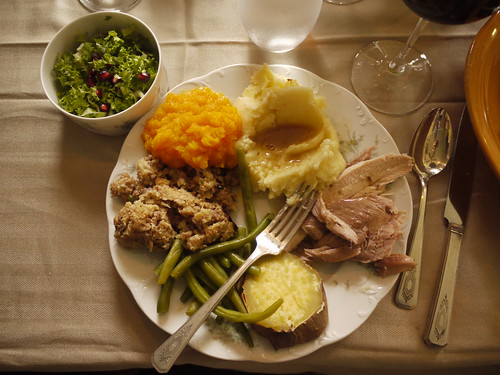
A new study shows that more Americans will be celebrating Thanksgiving with fast food as opposed to a traditional feast, with inflation being one of the chief causes.

“Amid ongoing inflation, it’s no surprise that finances are a factor in the rise of a fast food Thanksgiving,” noted the New York Post, which cited a Casino.org survey showing that “16 percent of respondents admitted that saving money was the primary motivator for ditching the traditional turkey in favor of a meal at McDonald’s or somewhere similar.”

The survey was based on Google Trends research, which shows a high spike in fast food searches on Thanksgiving.

A recent report from the American Farm Bureau Federation said that headlines about a decline in Thanksgiving prices have been overblown, given that they are just a slight bit lower than 2022’s “historically high prices.”

“A classic Thanksgiving feast for ten, costing $61.17 total, rings in at about $6.12 less per person, the organization reported,” noted the Post. “That’s still 25 percent higher than the cost of the same meal in 2019 — an increase many Americans simply won’t be able to absorb long term.” (Read more from “Study: More Americans Celebrate Thanksgiving With Fast Food” HERE)

Photo credit: Flickr

Delete Facebook, Delete Twitter, Follow Restoring Liberty and Joe Miller at gab HERE.

How Much Credit Card Debt Do Americans Hold?

Americans’ total credit card balance rose $45 billion in the second quarter, reaching $1 trillion for the first time ever in 2023, according to Q2 data from the New York Federal Reserve.

This made the yearly average U.S. household $7,951 in credit card debt.

Two major factors contributed to this — one being inflation, which drove up consumer credit card debt by the billions, with a 9.1% peak in 2022. The second was the steady climb in interest rates, increasing already high debts.

Bombarded with tempting offers on a daily basis, even those with high credit scores are at risk. Credit card interest rates are at an all-time high from 16% to 20% according to Bankrate. When the Federal Reserve raised interest rates, credit companies followed. With inflation making the cost of living a struggle, most Americans resorted to credit cards to cover expenses. (Read more from “How Much Credit Card Debt Do Americans Hold?” HERE)

Delete Facebook, Delete Twitter, Follow Restoring Liberty and Joe Miller at gab HERE.

Did Bidenomics Kill the American Dream? Homes and Cars Are Becoming Increasingly Unaffordable for the Middle Class

Average Americans are finding homes and cars increasingly unaffordable as inflation from high government spending raises prices and degrades purchasing power.

Half of consumers are being priced out of the car market as the cost of a monthly car loan payment is far exceeding what an average American can afford, while the home affordability index has fallen from a 169.9 point average in 2020 to 87.8 points as of July, according to the National Association of Realtors. One key driver of the rising expenses is inflation, which peaked at 9.1% in June 2022 and is linked to high government spending under the Biden administration, according to experts who spoke to the Daily Caller News Foundation.

“Both housing and automobiles have become increasingly less affordable to American households as a direct result of the Fed having to raise interest rates to curb inflation,” Desmond Lachman, a senior fellow at the American Enterprise Institute, told the DCNF. “Most people finance their home and auto purchases by taking out loans and those loans have become much more expensive.”

The Biden administration has introduced a number of high-spending bills that have contributed to the national debt, including the $1.9 trillion American Rescue Plan signed in March 2021 that aimed to relieve the economic effects of the COVID-19 pandemic. The president also signed the Inflation Reduction Act in August 2022, which equates to around $750 billion in new spending, with nearly $370 billion of that going towards green initiatives. (Read more from “Did Bidenomics Kill the American Dream? Homes and Cars Are Becoming Increasingly Unaffordable for the Middle Class” HERE)

Photo credit: Flickr

Delete Facebook, Delete Twitter, Follow Restoring Liberty and Joe Miller at gab HERE.

Biden Makes Unexpected, Incredible Admission About His Inflation Reduction Act

President Biden admitted Thursday that Democrats’ signature Inflation Reduction Act wasn’t as much about actually reducing the then-record-high inflation facing the nation as he originally touted to the American people.

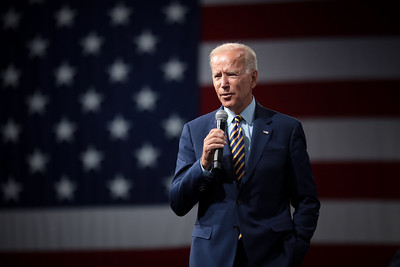
“I wish I hadn’t called it that. It has less to do with reducing inflation than it does providing for alternatives that generate economic growth,” Biden said during an appearance at a campaign fundraiser in Park City, Utah according to the press pool report.

“And so, we’re now in a situation where if you take a look at what we’re doing in the Inflation Reduction Act, we’re literally reducing the cost of people being able to make their — meet their basic needs,” Biden said.

“Even when there is inflation there is a way to provide breathing room,” he added, citing negotiating medical prices as one example.

Biden’s comments are a sharp turn from what he said in July 2022 ahead of the Inflation Reduction Act’s passage through Congress on a party line vote. (Read more from “Biden Makes Unexpected, Incredible Admission About His Inflation Reduction Act” HERE)

Photo credit: Gage Skidmore via Flickr

Delete Facebook, Delete Twitter, Follow Restoring Liberty and Joe Miller at gab HERE.

Another Year of Bidenflation Means More Record-Breaking Independence Day Cookout Costs

Backyard barbecue buffs all across the nation will pay more for several grilling goodies in 2023 after enduring yet another year of the Biden administration’s damaging economic policies.

A new report from the American Farm Bureau Federation (AFBF) found that the total cost for a 10-person Independence Day gathering featuring hamburgers, chicken, pork chops, chips, lemonade, ice cream, and other goodies will cost $67.73.

AFBF framed this year’s estimation as “Down Slightly From 10-Year High,” after last year’s total of $69.68. But that framing doesn’t provide the whole story, especially considering that Americans will pay 17 percent more for hamburger buns, 5 percent more for potato salad, 4 percent more for ground beef, and 3 percent more for strawberries and ice cream than they did in 2022.

AFBF’s Chief Economist Roger Cryan noted that this year’s overall calculated cost is “still 14 percent higher than it was two years ago.” Data also shows this is “the second highest” priced cookout recorded since the survey’s conception in 2013.

Two years have passed since President Joe Biden’s White House bragged about saving Americans money on their backyard barbecues in 2021. In reality, the prices of barbecue basics were only pennies lower than in 2020, when prices were marred by government-mandated lockdowns and a supply-chain crisis. At the time, Americans were also struggling to keep up with record-high gas prices and a 5 percent increase in the cost of consumer goods.

(Read more from “Another Year of Bidenflation Means More Record-Breaking Independence Day Cookout Costs” HERE)

Photo credit: Flickr

Delete Facebook, Delete Twitter, Follow Restoring Liberty and Joe Miller at gab HERE.

Eggs-Tortion? Profits for Largest U.S. Egg Producer Soar 718%

Remember when the price of eggs soared, and providers said it was inflation and higher transportation costs and a sudden drop in production and some kind of avian flu?

Pepperidge Farm remembers.

But it turns out that Cal-Maine Foods, the largest U.S. producer, more than doubled its revenue last quarter to nearly a billion dollars because of sharply higher egg prices — and profits surged 718%. And production wasn’t down. Cal-Maine, which controls about 20% of the domestic egg market, said the total number of eggs it sold rose by 1%, CNN reported.

The company said the average selling price for a dozen eggs in the quarter ending February 25 was $3.30. That’s more than twice what a dozen cost a year earlier, when its average price was $1.61, Cal-Maine said. Thus, net income soared to $323.2 million from just $39.5 million a year ago, CNN reported.

In January, the cost of a dozen eggs surpassed the price of a pound of beef, marking the first time that’s happened since the U.S. Bureau of Labor Statistics (BLS) began keeping data in 1980. The average price of a dozen large Grade A eggs ran at $4.82 in January 2023, while a pound of ground beef was $4.64, the BLS said. In January 2022, eggs were $1.93, and beef was $4.77, but egg prices have soared by 70% in the last year alone, according to the bureau. (Read more from “Eggs-Tortion? Profits for Largest U.S. Egg Producer Soar 718%” HERE)

Delete Facebook, Delete Twitter, Follow Restoring Liberty and Joe Miller at gab HERE.

Half of Americans Say They Are Worse Off, Highest Since Great Recession

Half of Americans say they are worse off financially than they were a year ago, the highest level of reported decline since the financial crisis, a Gallup poll released Wednesday showed.

The results are unusually grim.

“Since Gallup first asked this question in 1976, it has been rare for half or more of Americans to say they are worse off. The only other times this occurred was during the Great Recession era in 2008 and 2009,” Gallup News said.

The results of the survey, taken between January 2nd and the 22nd, suggest the high toll of inflation on the financial situation of many Americans. Average hourly and weekly wages declined for the second consecutive year in 2022, as pay increases were swamped by higher prices. Gallup said higher interest rates and the decline in the stock market also weighed on people’s view of their financial situation. (Read more from “Half of Americans Say They Are Worse Off, Highest Since Great Recession” HERE)

Delete Facebook, Delete Twitter, Follow Restoring Liberty and Joe Miller at gab HERE.

Americans Could Be in a ‘World of Hurt’ if Biden Doesn’t Act, Ex Walmart CEO Warns (VIDEO)

Mass layoffs are plaguing more than just the Big Tech industry.

On Sunday, former Walmart CEO Bill Simon joined “Fox & Friends Weekend” to warn Americans of the detrimental impact that corporate layoffs could have on the U.S.’s feeble economy.

“It’s crazy right now. We’re stuck in this loop of wage inflation, product inflation and cost inflation. And it’s just that cycle keeps going. And I think, unfortunately, an inevitable byproduct of some of the Fed’s moves and as the necessary medicine we have to take to kind of cool things down and get the inflation back under control on some of these layoffs that are coming,” Simon told co-host Will Cain.

Although the labor market remains healthy and one of the few bright spots in the economy, there are signs that it is beginning to soften. In addition to a number of high-profile tech layoffs over the past month, the economy added 223,000 jobs in December, the smallest gain in two years.

Federal Reserve officials have said they expect unemployment to climb as a result of their aggressive interest rate hike campaign. Updated projections from the central bank’s December meeting show that officials expect unemployment to rise to 4.6% by the end of this year, up from the current rate of 3.5%. (Read more from “Americans Could Be in a ‘World of Hurt’ if Biden Doesn’t Act, Ex Walmart CEO Warns” HERE)

Delete Facebook, Delete Twitter, Follow Restoring Liberty and Joe Miller at gab HERE.

The Pain Isn’t Goin’ Away: Inflation Cost Households an Extra $10K

Inflation is over, the administration crows, even as Congress works to pass another massive spending bill — this time, $1.7 trillion.

But struggling families know not to pop the cork yet.

The consumer price index rose just 0.1% last month, bringing the 12-month rate to 7.1% — still higher than any year since the disco days of 1981. Politicians have downplayed inflation ever since President Biden ignored economist warnings in early 2021 that it would be economic malpractice to throw a $1.9 trillion stimulus bill at a supply-constrained economy. Then we were told that inflation was “transitory,” a relic of corporate price gouging and “Putin’s price hike.” . . .

Since President Biden took office, the cumulative 13.8% inflation is roughly 10% higher than the baseline rate. This has cost the typical household approximately $10,000 over two years.

Those household costs will continue rising even if the inflation rate normalizes. That is because this recent extra 10% inflation will remain embedded in prices moving forward. Inflation rates may return to 2% or 3%, but they will be applied to a permanently elevated price level. And with wage growth notably slower than price growth over the past two years — producing the steepest decline in real wages in decades — most families will remain behind. (Read more from “The Pain Isn’t Goin’ Away: Inflation Cost Households an Extra $10K” HERE)

Delete Facebook, Delete Twitter, Follow Restoring Liberty and Joe Miller at gab HERE.