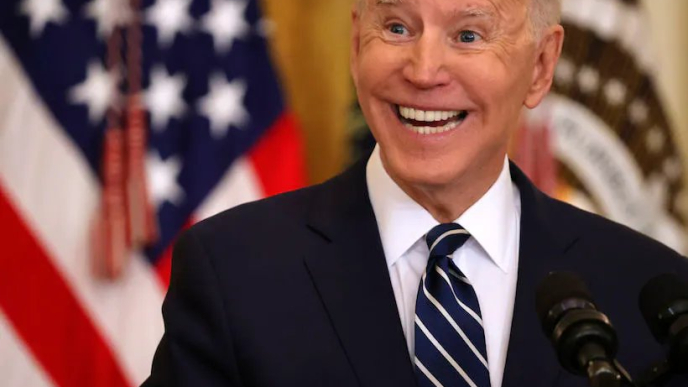
Posts

Biden’s Energy Depression Is Nigh

What will skyrocketing energy prices mean for U.S. consumers this winter? Seniors, the poor, those living paycheck to paycheck will suffer most. But all will suffer.

The effect of these increases — the lack of trickle-down economics — seems pretty obvious. Unless someone powerful gets this administration to sweep the deck of climate radicals, people will needlessly die. All will suffer.

On his first day in office, President Biden shut down the Keystone XL pipeline, closed Alaska’s reserves (ANWR), canceled offshore leases, and imposed massive new regulatory burdens on firms that distribute clean natural gas and petroleum products that contribute to every aspect of American life.

When gas prices skyrocketed earlier this year, the administration began draining the Strategic Petroleum Reserve to historically (and dangerously) low levels. This has temporarily kept prices in check, but only because of the midterm elections. After the midterms, if the radicalized EPA isn’t reined in, we should prepare for $8 gas, minimum. If Democrats retain power, we are in for a succession of long, dark winters.

If left unchecked, this “progressive” administration will touch off — needlessly — a second Great Depression.

(For more from the author of “Biden’s Energy Depression Is Nigh” please click HERE)

Photo credit: Flickr

Delete Facebook, Delete Twitter, Follow Restoring Liberty and Joe Miller at gab HERE.

Stacey Abrams Elicits Fierce Backlash After Suggesting Abortion a Fix for Inflation Struggles

Georgia Democrat Stacey Abrams, who is running for governor, said during a television appearance Wednesday that more abortion access was a solution to combatting the nation’s crippling inflation rate, a remark that prompted widespread backlash from Republicans.

Abrams was asked on MSNBC’s Morning Joe:

While abortion is an issue, it nowhere reaches the level of interest of voters in terms of the cost of gas, food, bread, milk, things like that. What can a governor, what could you do as governor to alleviate the concerns of Georgia voters about those livability, daily, hourly issues they’re confronted with?

Abrams replied:

Let’s be clear. Having children is why you’re worried about your price for gas. It’s why you’re concerned about how much food costs. For women this is not a reductive issue. You can’t divorce being forced to carry an unwanted pregnancy from the economic realities of having a child.

(Read more from “Stacey Abrams Elicits Fierce Backlash After Suggesting Abortion a Fix for Inflation Struggles” HERE)

Photo credit: Gage Skidmore via Flickr

Delete Facebook, Delete Twitter, Follow Restoring Liberty and Joe Miller at gab HERE.

‘The American People Won’: Biden Celebrates ‘Inflation Reduction Act’ as Market Plummets Over August Inflation News

President Joe Biden celebrated the passage of the “Inflation Reduction Act” by hosting an event at the White House Tuesday, the same day the Bureau of Labor Statistics released a report showing inflation had continued to rise in August, causing markets to plummet.

“This bill cut costs for families. Helped reduce inflation at the kitchen table, because that’s what [people] look at — how much of their monthly bills they have to pay out for their necessities,” Biden said in a speech delivered outside the White House, thanking West Virginia Senator Joe Manchin for voting for the bill.

“This bill alone is going to lower the deficit by $300 billion over the next decades” by lowering the cost of prescription drugs subsidized by the government, he added, saying the “American people won.”

The Bureau of Labor Statistics report, released Tuesday, showed that the Consumer Price Index (CPI), a key measure of inflation, increased by 8.3 percent in August when compared to the same month last year and increased 0.1 percent from July. (Read more from “‘The American People Won’: Biden Celebrates ‘Inflation Reduction Act’ as Market Plummets Over August Inflation News” HERE)

Delete Facebook, Delete Twitter, Follow Restoring Liberty and Joe Miller at gab HERE.

Fed Raises Interest Rates Again — Here’s How It Affects Your Wallet

The Federal Open Market Committee (FOMC) announced Wednesday that it is raising the federal funds rate by 75 basis points, bringing the target range to 2.25% to 2.5%. This marks the fourth rate hike of this year.

The Federal Reserve previously raised interest rates by 75 basis points in June, marking the largest rate hike since 1994. It also raised interest rates by 50 basis points in May and by 25 basis points in March. And more rate hikes from the central bank are likely on the horizon.

“Recent indicators of spending and production have softened,” the Federal Reserve said in its statement. “Nonetheless, job gains have been robust in recent months, and the unemployment rate has remained low. Inflation remains elevated, reflecting supply and demand imbalances related to the pandemic, higher food and energy prices, and broader price pressures.”

If you want to take advantage of interest rates before they rise further, you could consider taking out a personal loan to help pay down high-interest debt. Visit Credible to find your personalized interest rate without affecting your credit score. . .

Inflation surged in June to a new 40-year high, marking the fifth time it’s broken that record this year. Because inflation remains high, the Federal Reserve will likely continue raising rates in an attempt to bring it back down. (Read more from “Fed Raises Interest Rates Again — Here’s How It Affects Your Wallet” HERE)

Delete Facebook, Delete Twitter, Follow Restoring Liberty and Joe Miller at gab HERE.

Report: Raising a Child Costs Over $300,000 Due to Soaring Inflation

Skyrocketing inflation is increasing the burden on American parents to raise children, according to the Brookings Institution.

The Wall Street Journal published the left-wing institutions’ analysis that found it can cost up to over $310,605 to raise a child in today’s economy, which works out to an average of $18,271 per year to raise a child born after 2015.

Per the Journal:

The multiyear total is up $26,011, or more than 9%, from a calculation based on the inflation rate two years ago, before rapid price increases hit the economy, the Brookings Institution said.

Contributing to the high cost of raising a child is soaring food prices, the analysis noted. (Read more from “Report: Raising a Child Costs Over $300,000 Due to Soaring Inflation” HERE)

Photo credit: Flickr

Delete Facebook, Delete Twitter, Follow Restoring Liberty and Joe Miller at gab HERE.
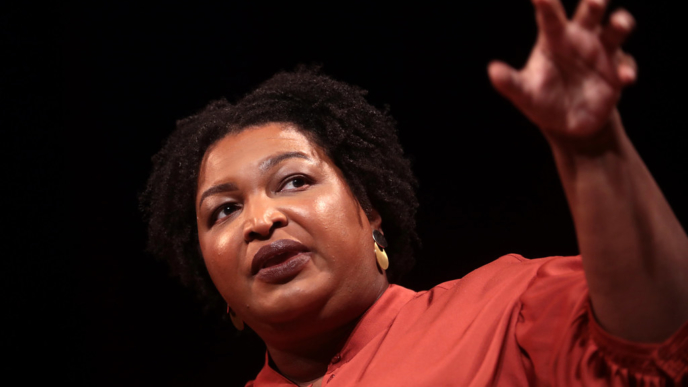
‘Isn’t It Almost Orwellian?’ White House Fumbles Trying to Explain Misleading Inflation Bill (VIDEO)

White House press secretary Karine Jean-Pierre fumbled Sunday when asked about the “Orwellian” nature of the Inflation Reduction Act by “This Week” host Jon Karl.

An ABC News/Ipsos poll from early August found only 37% of Americans approve of President Joe Biden’s handling of the economy, Karl explained to Jean-Pierre, and asked her why, if things are getting better with inflation, so many Americans disapprove of the president. Jean-Pierre argued that the White House is aware of what the American people are feeling. She then gave examples of how the president has “partly” helped in attempting to improve inflation issues, noting the introduction of the Inflation Reduction Act.

“Let me ask you. It’s called the ‘Inflation Reduction Act,’ but the Congressional Budget Office [CBO], which is nonpartisan, said there would be a negligible impact on inflation this year and barely impact inflation at all next year,” Karl responded, “Isn’t it almost Orwellian? How can you call it the ‘Inflation Reduction Act’ when nonpartisan experts say its not gonna —”

(Read more from “‘Isn’t It Almost Orwellian?’ White House Fumbles Trying to Explain Misleading Inflation Bill (VIDEO)” HERE)

Delete Facebook, Delete Twitter, Follow Restoring Liberty and Joe Miller at gab HERE.
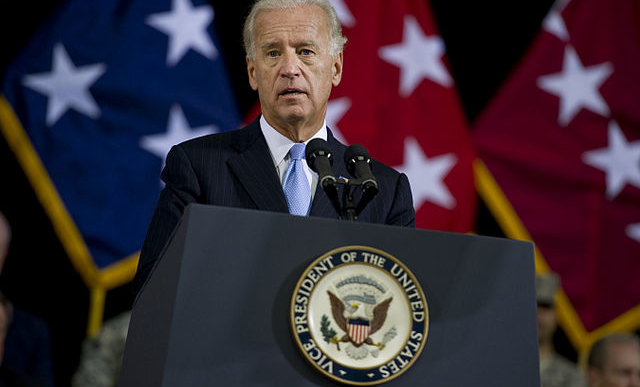
Has Inflation Peaked? Maybe, but It Could Be ‘Painfully Slow’ to Fall

The cooler-than-expected July inflation data fueled hopes that consumer prices peaked earlier this summer after a year of relentless increases that crushed Americans, created a political firestorm for President Biden and forced the Federal Reserve to hike interest rates at the fastest pace in decades.

The consumer price index climbed 8.5% in July from the previous year, a bigger drop from the 9.1% recorded in June than economists projected. On a monthly basis, the index did not move at all as decreases in the cost of oil, gasoline and airfares offset increases in food and rent.

When excluding more volatile measurements of food and gasoline, prices jumped 5.9% in July, matching the previous month.

While the slowdown is likely a welcome respite for the Fed as it tries to wrestle inflation under control, experts cautioned that inflation remains painfully high and could be slow to return to pre-pandemic levels around 2%. (Read more from “Has Inflation Peaked? Maybe, but It Could Be ‘Painfully Slow’ to Fall” HERE)

Delete Facebook, Delete Twitter, Follow Restoring Liberty and Joe Miller at gab HERE.
Biden Says ‘Inflation’ Bill Funds Healthcare, ‘God Knows What Else’ in Bizarre Speech

President Biden seemed unfamiliar Monday with the specifics of the massive spending bill dubbed the Inflation Reduction Act that Senate Democrats passed Sunday, saying it funds healthcare “and God knows what else.”

Moments earlier, Biden misstated the size of last year’s $1.2 trillion bipartisan infrastructure law while touring flood damage in the Kentucky hamlet of Lost Creek.

“We’ve never done this before, but because of a number of things we got done on a bipartisan basis — like a billion, 200 million-dollar infrastructure project — like what we’re doing today, we passed yesterday, helping take care of everything from health care to God knows what else,” Biden said.

“What we’re going to do is — we’re going to see, for example, they got to put a new water line in in the community,” the president went on, speaking without a prepared script.

“There’s no reason why they can’t at the same time be digging a line that puts in a whole new modern line for Internet connections. Why? Why can’t we do that? So it’s going to be different. We’re going to come back better than before.” (Read more from “Biden Says ‘Inflation’ Bill Funds Healthcare, ‘God Knows What Else’ in Bizarre Speech” HERE)

Delete Facebook, Delete Twitter, Follow Restoring Liberty and Joe Miller at gab HERE.

Dems Aren’t Fooling Americans With Their So-Called ‘Inflation Reduction Act’

As Senate Democrats are making their way out of pulling an all-nighter from voting on amendments pertaining to their so-called “Inflation Reduction Act,” Americans aren’t buying what the left is trying to sell.

A poll published by the Economist/YouGov, found that 36 percent of respondents believe the bill actually will increase Bidenflation, contrary to what the name of the legislative says.

23 percent of Americans think the bill will not affect inflation either way, while just 12 percent believe the Democrats plan will help with lowering costs.

Additionally, a study from Penn Wharton Budget Model, predicts the bill will have very little impact on the U.S. economy, believing that inflation will continue to rise for another two years before it falls. (Read more from “Dems Aren’t Fooling Americans With Their So-Called ‘Inflation Reduction Act'” HERE)

Delete Facebook, Delete Twitter, Follow Restoring Liberty and Joe Miller at gab HERE.

The Hidden Consequence of Inflation: Higher Taxes

It’s easy enough to see the consequences of inflation at the checkout counter. But the hidden cost of inflation — one that few see and just about nobody talks about — is the increased tax burden that flows directly from rising prices. For example, Minnesota is currently sitting on a $9.25 billion budget surplus. To be clear, this is state and federal taxpayers’ money, collected and disbursed over and above the budget needs of the state.

How could this happen at a time when businesses across Minnesota and the nation were shuttered and most employees were ordered to stay home? It happened because trillions of additional spending power was put directly into the hands of Americans and, not surprisingly, they spent it.

Don’t forget that sales taxes are based on the cost of goods and services purchased. When the costs go up, sales-tax revenues go up. In Minnesota, for example, general sales-tax revenue was projected to be $6.169 billion during 2020-2021. When all the chips were counted, total sales-tax revenue actually collected was $13.611 billion — and that’s without a tax hike.

At the federal level, this phenomenon is even harder to spot and perhaps even more financially debilitating. It comes in the form of capital-gains taxes on the sale of appreciated assets. The tax is calculated based on the difference between the purchase price of an asset (its “basis”) and the sales price. The difference is the gain or loss.

To illustrate, suppose I buy XYZ, Inc. stock in 2010 for $5 per share. I sell the stock in 2020 for $10 per share. I realize a profit of $5 per share. The profit, and resulting tax liability, do not take into account the question of how much of the $5 per share increase is attributable to inflation.

The calculation of basis in capital assets (stocks, bonds, savings accounts, real estate) is not indexed to inflation. The only thing that is measured is the nominal gain or loss. As far as the IRS is concerned, if you sell an asset for more than you paid for it, you have a taxable gain, period. And this is true regardless of the fact that all gains may be purely attributable to inflation over the holding period.

There are dozens of provisions of the tax code that are indexed to inflation, including the income-tax brackets themselves. The idea is that one’s income-tax rate should not necessarily increase simply because inflation pushed his income up. But capital gains do not benefit from the same treatment.

In 2019, Senator Ted Cruz and about 20 other senators pushed then-Treasury secretary Steven Mnuchin to use the Treasury’s regulatory authority to redefine the term “gain” by taking inflation into account for exactly the reasons I express above. In his letter to Mnuchin, Cruz used the following example to illustrate how non-indexed capital gains result in taxes on phantom income:

Imagine, for example, a taxpayer who purchased one share of Coca-Cola in 1998 for $32.28. If they sold the stock earlier this year [2019] at $48.13, they would have a nominal gain of $15.76 and be taxed $3.75. The inflation-adjusted basis [stock cost] in today’s dollars, however, would be $50.50. That means the taxpayer would have to pay $3.75 in taxes on a $2.39 loss.

Cruz’s example takes into account inflation during a period in which the rates were relatively low and stable. We are now in a period when inflation rates are high and are likely to be so for the foreseeable future. This clearly leads to the unjust enrichment of the Treasury, just as we see with the coffers of Minnesota.

The current era of inflation promises to slam more than just phantom gains in securities.

Consider what’s now happening with real-estate markets. Home prices are at all-time highs and are experiencing year-over-year double-digit growth. This growth makes the idea of selling a home quite attractive (if we forget about the cost of replacing it) to those who have owned a home for decades. But without careful tax planning, seniors may wake up to find that inflation eviscerates much of their apparent gains, the last thing they need either in or approaching retirement.

Current law exempts from taxation the first $250,000 of capital gains ($500,000 for married filing jointly) from the sale of one’s main home under certain circumstances. For example, a single person owns a home with a basis of $100,000. She sells it for $300,000. Her profit, $200,000, is under the limit and not taxed. But this exclusion is not indexed for inflation. It was fixed in 1997, and has not been changed since.

If, for the sake of argument, inflation alone has pushed the home’s value to, say, $450,000, now the nominal profit is $350,000. The seller is taxed on her gain of $100,000 over the exclusion. This tax applies regardless of the fact that all the gain is (in this case) purely attributable to the failing dollar. Adding insult to injury, if she wishes to buy a similar home in another town because, say, she has a new job, she will have to pay the inflated price for that, but will have fewer dollars with which she can do so. Other than the inherent unfairness of this, it’s not hard to see how this might discourage job mobility. It is also not hard to see that this phenomenon will cause many to opt not to sell their appreciated homes, thus locking in the capital, making it unavailable for other uses.

The income-tax system generally and the capital-gains tax in particular punish savings, investment, and productivity. But these are the very things needed to generate a stable, growing economy. Now more than ever we need to get the boot off the neck of economic productivity because that will go a long way to cure the inflation pandemic that’s infected America. (For more from the author of “The Hidden Consequence of Inflation: Higher Taxes” please click HERE)

Photo credit: Flickr

Delete Facebook, Delete Twitter, Follow Restoring Liberty and Joe Miller at gab HERE.