Posts

Poll: One-Third of Americans Making $250K ‘Live Paycheck-To-Paycheck’

More than 33 percent of Americans who earn $250,000 a year report living paycheck to paycheck, “underscoring how inflation is taking a bigger bite out of Americans’ budgets at all ends of the pay spectrum,” Bloomberg reported on Wednesday.

Industry publication Pymnts.com and LendingClub Corp. conducted a survey from April 6-13 with about 4,000 US consumers, finding that roughly 36 percent of households bringing in $250,000-plus annually spend most of their income on household expenses.

“It’s particularly true among millennials, who are now in their mid-20s to early 40s: More than half of top earners in that generation report having little left at the end of the month,” according to the report.

The survey revealed that 55.4 percent of Millennials who earn $250,000-plus a year reported living paycheck to paycheck compared to 21.8 percent of Boomer generation respondents in the same earnings category. (Read more from “Poll: One-Third of Americans Making $250K ‘Live Paycheck-To-Paycheck’” HERE)

Photo credit: Flickr

Delete Facebook, Delete Twitter, Follow Restoring Liberty and Joe Miller at gab HERE.

US Savings Rate Hits Lowest Levels Since 2008

As inflation spirals out of control and pandemic-related stimulus runs dry, Americans are increasingly finding it hard to save money.

This past April, the U.S. personal savings rate fell to 4.4%. According to data from the U.S. Commerce Department, this is the lowest this metric has been since September 2008, Yahoo Finance reported.

“In a typical cycle, a sharp drop in the savings rate would be a warning sign about the sustainability of spending,” Wells Fargo economists, led by Tim Quinlan, wrote in a public note this past week.

The note continued, “Because balance sheets are in such better shape, we see less cause for concern for today. In fact, it is actually our baseline forecast for the saving rate to fall below its prior-cycle average of 7.2% through the end of 2023.”

The personal savings rate is a data series that is one of the most inversely impacted by the government’s efforts to bolster the economy through the COVID-19 pandemic. A steep decline in the amount of money Americans have been able to save has been expected for some time. (Read more from “US Savings Rate Hits Lowest Levels Since 2008” HERE)

Delete Facebook, Delete Twitter, Follow Restoring Liberty and Joe Miller at gab HERE.

Americans Care More About Depp v. Heard Trial Than War, Abortion, Inflation

Americans are grappling with soaring inflation, the ongoing pandemic and the likely overturn of Roe v. Wade — but they are interested in one issue above all else.

The blockbuster defamation trial between Johnny Depp and Amber Heard is currently generating more social media engagement than any other topic, according to data from media monitoring platform NewsWhip.

The data firm claims that the captivating courtroom drama has garnered an average of 508 social media interactions — i.e. likes, comments and shares — for each published article over the past month.

That is almost five times as much engagement as articles pertaining to abortion (141 social media interactions) and more than 10 times as much engagement as articles about COVID-19 (44 social media interactions).

“Hands down it’s a record-setter for us,” Rachel Stockman, president of Law & Crime network, told Axios of the trial on Wednesday. (Read more from “Americans Care More About Depp v. Heard Trial Than War, Abortion, Inflation” HERE)

Delete Facebook, Delete Twitter, Follow Restoring Liberty and Joe Miller at gab HERE.

Bidenflation: Trade Deficit Soars Over $100 Billion for the First Time Ever

The U.S. trade deficit rose an astonishing 22 percent in March to $109.8 billion as prices of oil and imported products rose due to soaring inflation, according to data released Friday by the Census Bureau and the Bureau of Economic Analysis.

The trade gap for February was revised up to $89.8 billion, making it the previous record high. January’s figure was $89.23, which was then a record high.

Economists had been expecting the deficit to hit $106.5 billion, according to Econoday.

Imports jumped 10.3 percent in March to a record $351.5 billion. The figures are not adjusted for inflation so much of the gain is likely due to higher prices and not solely caused by an increase in imports. Oil prices surged in March, contributing to the surge in nominal imports. (Read more from “Bidenflation: Trade Deficit Soars Over $100 Billion for the First Time Ever” HERE)

Delete Facebook, Delete Twitter, Follow Restoring Liberty and Joe Miller at gab HERE.

94 Percent of Americans Concerned About Inflation, Overwhelmingly Trust Republicans to Handle It: Poll

More than 9 in 10 American are concerned about inflation, according to a new poll.

According to the poll of more than 1,000 adults conducted by The Washington Post and ABC News between April 24-28, fully 94% of Americans were either “upset” or “concerned” about the impact of skyrocketing inflation.

The poll asked respondents: “Thinking about the current rate of inflation, meaning rising prices – is this something you are upset about, concerned about but not upset, or not concerned about?” Some 44% of adults said they were “upset” about inflation. Another 50% said they were “concerned but not upset,” and just 6% said they were not concerned.

The poll also asked respondents their opinion of how President Joe Biden was handling his job as president. Biden’s overall approval was underwater by 10 points: 42% of voters approved of Biden’s job, while 52% disapproved. Broken down by intensity, Americans had much stronger negative feelings about Biden than positive. Respondents who approved of Biden were evenly split: 21% strongly approved of Biden’s job, while 21% somewhat approved. Respondents who disapproved were much more intense: 42% of respondents strongly disapproved, while just 10% somewhat disapproved. (Read more from “94 Percent of Americans Concerned About Inflation, Overwhelmingly Trust Republicans to Handle It: Poll” HERE)

Delete Facebook, Delete Twitter, Follow Restoring Liberty and Joe Miller at gab HERE.

The Inflation Draining Your Wallet, Grocery Cart, And Gas Tank Is Far Steeper Than 8 Percent

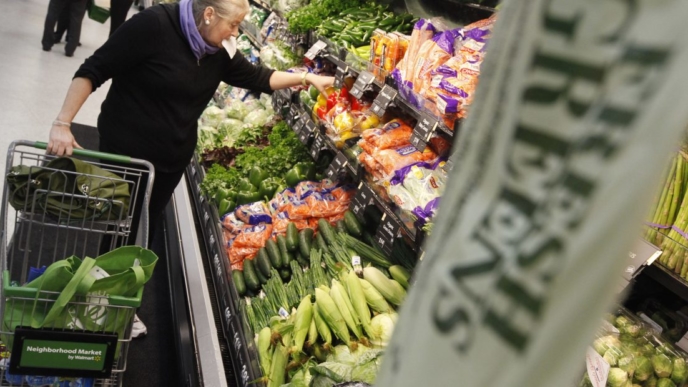
The Labor Department’s March inflation numbers released this month skyrocketed past February’s, hitting a 12-month increase of 8.5 percent and the steepest annual increase since 1981. That’s no small figure, but most Americans know the inflation they encounter at the grocery store checkout, the gas pump, the car lot, and the leasing office is far higher than that.

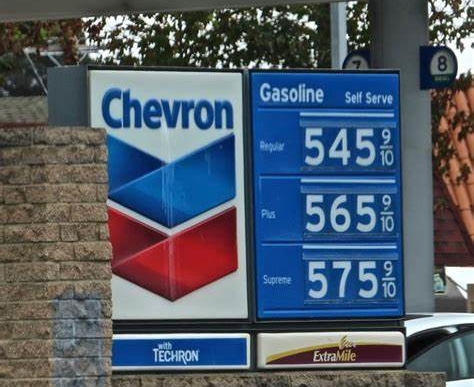
Just look at basic items like groceries and gas, and you’ll see how much higher those necessities are climbing than the generic inflation figures slapped across headlines.

According to the Bureau of Labor Statistics (BLS), in the average U.S. city, ground beef is up 14.9 percent since last March, boneless stew beef is up 24.3 percent, bacon is up 23.1 percent, boneless chicken breasts are up 17.6 percent, eggs are up 25.9 percent, milk is up 17 percent, frozen orange juice concentrate is up 18 percent, and ground coffee is up 15.8 percent. Meanwhile, fuel oil has jumped a whopping 71.5 percent, and utility gas is up 23.3 percent.

Many of these urban numbers don’t even capture how steeply prices have risen for middle America, however. In the Midwest, ground beef has risen 24.5 percent, almost 10 percentage points more than the urban average.

While BLS breaks down beef products into ground beef, steaks, stew beef, etc., its “all other uncooked beef” category shows a drastic 38.2 percent jump in the Midwest, compared to a still-high rise of 25.4 percent in cities. The inflation of the price of bacon in the Midwest is 3 percentage points higher than in cities, while for boneless ham it’s more than 15 percentage points higher. The price of boneless chicken breasts in the Midwest jumped by 31.2 percent, compared to 17.6 in U.S. cities. (Read more from “The Inflation Draining Your Wallet, Grocery Cart, and Gas Tank Is Far Steeper Than 8 Percent” HERE)

Delete Facebook, Delete Twitter, Follow Restoring Liberty and Joe Miller at gab HERE.

White House Tries to Pass the Buck to Putin as It Warns Inflation Is Getting Even Worse; The Government Could Stop Inflation Within a Year

By New York Post. White House press secretary Jen Psaki admitted Monday that fresh monthly inflation data will be “extraordinarily elevated” when it’s released Tuesday — after inflation hit a 40-year high of 7.9 percent last month.

“We expect March CPI headline inflation to be extraordinarily elevated due to [Russian President Vladimir] Putin’s price hike, and we expect a large difference between core and headline inflation reflecting the global disruptions in energy and food markets,” Psaki said at her regular press briefing.

NPR reporter Asma Khalid pressed Psaki on the White House’s attempt to blame Putin’s invasion of Ukraine, saying she had just returned from a reporting trip to Michigan, where many people told her “they feel that inflation has predated this war.”

“We’ve talked about inflation long before there was an invasion,” Psaki said. “But we also know that factually, if you look at the data, the average gas prices are up 80 cents to $1. It’s about a 25% — we’ve seen — increase in gas prices since the start of this invasion. And we know energy prices is a big driver of the inflation data.”

Inflation is a major liability for Democrats, who control both chambers of Congress and the White House, headed into this year’s midterm elections. (Read more from “White House Tries to Pass the Buck to Putin as It Warns Inflation Is Getting Even Worse” HERE)

__________________________________________________

The Government Could Stop Inflation Within a Year. Instead, Expect Things to Get Worse

By The Federalist. Know-nothing pundits and politicians have been communicating to Americans that inflation is, like the weather, a mystery they can’t control. That’s simply not true, write three economic commentators in a soon-published book, “Inflation: What It Is, Why It’s Bad, And How to Fix It.” On the contrary: inflation is a direct result of governments cheating their people, and solving it is pretty simple, if politically difficult.

In the book, businessman Steve Forbes, economist Nathan Lewis, and business journalist Elizabeth Ames give laypeople a concise, readable introduction to monetary policy. They also lay out easy-to-understand policy and personal prescriptions for responding to an inflationary economy such as today’s. The book is short and immensely useful for those of us who are not economic experts or finance minds and just want politicians to stop stealing our hard-earned money and endangering our nation’s security.

It would also be useful to members of Congress and other government officials with the authority to address what especially for the poorest Americans is a frightful economic situation. The authors lay out a one-year plan for stopping inflation in its tracks based on historical and international experience.

In the course of explaining what inflation is and how it works, the authors make the important point that it’s not just about money. Inflation is deeply connected to societal flourishing in general. Societies in which inflation is rampant are often unstable, chaotic, and violent.

“Markets are people,” the authors write. “When money is no longer a reliable unit of value, not only trade but social relationships ultimately unravel. Nations afflicted by extreme inflation end up experiencing higher levels of crime, corruption, and social unrest. As we have seen throughout history, the end result can be a tragic turn to strongmen and dictators.”

(Read more from “The Government Could Stop Inflation Within a Year. Instead, Expect Things to Get Worse” HERE)

Photo credit: Flickr

Delete Facebook, Delete Twitter, Follow Restoring Liberty and Joe Miller at gab HERE.

Here’s Why We’re Having Massive Inflation

Money, as most people understand it, is the bits of metal and paper issued by the country where you live. For Europeans, it is the colorful stuff issued by the European Union, rather than your home government. Even so, no one thinks much about money beyond what it can do for you. It is the cool stuff you can buy, how much you earn, and how much you have to spend for the things you need to live.

The West is suffering from inflation at the moment, so people are noticing that their money buys less than it did in the recent past. In most Western countries, fuel prices are 50 percent higher than a year ago. Food prices have doubled for some items, and the price hikes have only just started to bite. Britain is warning that they are facing the biggest drop in the standard of living ever recorded.

It has been over forty years since the West has seen this sort of inflation. That assumes the official numbers are accurate, which is unlikely. In the United States, official inflation is 7 percent, but that is using the new math. If we were using the same math we did in the 1970s, then the real number would be close to double. That is on top of the shrinking-container phenomenon called shrinkflation. Not only are prices going up, but the containers are getting smaller.

Experts are torn on how to blame this on someone other than the people who are responsible for it. Some say it is due to the supply chain disruptions caused by the Covid lockdowns. Of course, no one asks why the people who imposed the shutdowns did not think of this at the time. Others blame the price hikes on the sudden expansion of demand after the Covid panic subsided. Some, of course, blame Russia.

The main reason is that the Federal Reserve and the European Central Bank created trillions of dollars and euros out of thin air during the Covid panic. Throwing everyone out of work would result in food riots, so they showered the public with free money as a form of riot insurance. The trouble is the money did not magically go away, so we have the classic problem of too much money chasing too few goods.

Then there are the systemic troubles created by a generation of outsourcing and the general incompetence of the ruling class. They allowed the supply chains to become fragile by letting business chase the cheapest labor rates. This means everyone is now dependent on the least organized countries. Ukraine, for example, is where half the world’s neon used in making computer chips is produced.

That is only part of the problem. Since the invention of the petrodollar, America has been able to print as much money as it needs. The dollar is the default currency of the world, so those extra dollars always had a place to go. They would be spent on trade and then get reinvested by foreigners, usually foreign governments, back into U.S. Treasuries, which props up the massive spending by Washington.

The Global American Empire has been supported for the past half century by a novel form of seigniorage. This is the difference between the value of money and the cost to produce and distribute it. In the old days, the king would make a profit from the minting of coins used in his kingdom. This was usually a tax added to the total cost of a coin on top of the cost of production. This was the king’s profit from coinage.

Since the Louvre accords in the 1980s, Washington has been able to swap securities for newly printed banknotes by the Federal Reserve. This would normally impose an inflation tax on the public, but the dollar being the reserve currency of the world spread this tax over the global economy. Inflation rates in the United States remained low, as long as global growth remained high and the world was willing to tolerate this system. (Read more from “Here’s Why We’re Having Massive Inflation” HERE)

Delete Facebook, Delete Twitter, Follow Restoring Liberty and Joe Miller at gab HERE.

Here’s How Much ‘Bidenflation’ Is Really Taking Out of Your Bank Account

Our era is known for deluging consumers in more information than they can thoughtfully intake, and the Biden White House is counting on you to glance past the record-breaking bad inflation numbers that keep revealing the dangers of Congress’s high-dollar spending. You might give only a cursory look to a list of percentages from the Labor Department, but apply those numbers to your own paycheck, savings, and expenses, and the numbers start to sound a lot bigger and more painful.

The average annual wage earned by American workers was $53,383 for the year 2020, according to the Social Security Administration. Take 7.9 percent of that — the year-over-year inflation rate for February — and you have $4,217. So, for that average American salary to maintain the same value it had a year ago, it would have to increase by just over $4,200; if it hasn’t, inflation has cost you roughly $4,200 in depreciation of your salary’s value.

To compare, the average annual pay raise employees are expected to receive in 2022 is 3.4 percent — less than half of the past year’s inflation rate. Using the previous average wage, even if you got a 3.4 percent raise (adding $1,815 to your yearly income), you’d still be down more than $2,400. And that’s with an average raise that’s already higher than pay bumps in previous years; in 2021, the average employer gave out 2.8 percent raises.

Not only does inflation mean you’re effectively getting paid less, it also means that in many sectors, you have to spend even more of those dollars to purchase the same amount and quality of goods. Some goods, like the cost of food, have a comparable rate of inflation to the overall rate of 7.9 percent, but other commodities have jumped far more drastically. (Read more from “Here’s How Much ‘Bidenflation’ Is Really Taking Out of Your Bank Account” HERE)

Delete Facebook, Delete Twitter, Follow Restoring Liberty and Joe Miller at gab HERE.

Fertilizer Shortages Indicate an Even Bigger Crisis Is Looming

As inflation wholesale prices soar past 10 percent and gas prices continue to surge, economists and farmers across the country are warning about another looming crisis.

Farmers are seeing a fertilizer shortage. Combined with high water and fuel prices, costs are set to soar as food becomes less available.

From Market Watch:

Fertilizer prices were already running red hot this year before a European energy crisis fanned the flames, potentially adding to a pinch on farmers in the U.S. and around the world and stoking worries about food inflation.

“It’s almost like a perfect storm of different reasons that probably has a lot of upside in price for different macronutrients,” said Samuel Taylor, Cleveland-based executive director of research at Rabobank, in a phone interview.

Natural gas is a key ingredient in the process used to make nitrogen-based fertilizers used on a range of crops, including corn and wheat. Natural gas accounts for 75% to 90% of operating costs in the production of nitrogen, Taylor noted.

(Read more from “Fertilizer Shortages Indicate an Even Bigger Crisis Is Looming” HERE)

Delete Facebook, Delete Twitter, Follow Restoring Liberty and Joe Miller at gab HERE.