Posts

Iran-Oman Deal on Strait of Hormuz ‘Doesn’t Matter’ as Trump Controls Blockade, US Official Says

A purported deal between Iran and Oman to control the Strait of Hormuz and share revenue from fees is “not even close to done” and would be meaningless so long as President Trump’s blockade of Iran remains in effect, a US official told The Post.

A spokesman for Iran’s Islamic Revolutionary Guard Corps (IRGC) claimed Wednesday that the two nations had agreed to terms to control the shipping bottleneck — but The Post’s source said that ill-defined terms are still believed to lack full approval from Iran’s leadership.

“The deals don’t mean anything unless we approve it. It doesn’t matter what the two of them — Iran and Oman — do. There is no deal without Trump pulling the blockade,” the official said.

A deal is “not even close to done [and] we know for a fact that this is still subject to approval within Iran,” he added.

“The last time we heard something was subject to approval… we all know what happened to it. It died.” (Read more from “Iran-Oman Deal on Strait of Hormuz ‘Doesn’t Matter’ as Trump Controls Blockade, US Official Says” HERE)

Iran Faces Massive New Triple-Threat as Hormuz Begins to Open, Cash Gets Tight and Pols Call to End the War

Iran’s supreme leader is under mounting pressure over the war — as the regime’s grip on the Strait of Hormuz weakens, cash finally starts to get tight and top political leaders publicly urge the Islamists in charge to find a way out of the conflict.

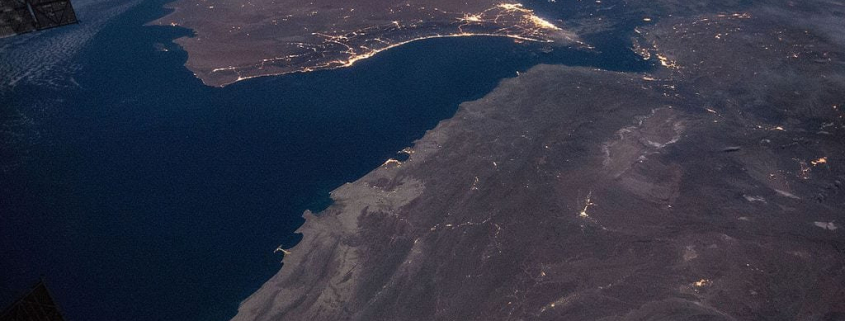
The latest phase of the conflict has seen more and more ships quietly slipping through Hormuz, with nearly 200 vessel sailing through the strait last week, according to data from the UK Maritime Trade Operations Center.

The flow represents a 400% spike in the last two weeks, with maritime analysts Kpler noting that the traffic finding safe passage — aided by US Navy escorts — effectively means Iran has lost partial control of the strait.

And while more ships and oil are getting out, Iran’s own oil exports have dropped to near zero, under the renewed American blockade on its ports and President Trump’s “economic D-Day” measures.

There has been little to no activity seen at Iran’s Kharg Island oil hub, according to recent satellite images, leaving Iran with few options to offset its already ailing economy hit by historically high inflation and unemployment. (Read more from “Iran Faces Massive New Triple-Threat as Hormuz Begins to Open, Cash Gets Tight and Pols Call to End the War” HERE)

Iran Vows ‘Devastating’ Response as US Threatens Crushing Sanctions Designed to ‘Collapse’ Regime

Iran threatened “devastating” consequences if the US moves ahead with imposing crippling sanctions against the regime — after the Trump administration pledged to hit the Islamic Republic with the toughest financial penalties in history.

“With preparedness across land, sea, air, air defense and cyberspace, Iran’s armed forces will respond to the enemy’s new threats with crushing, punishing and devastating responses,” Major General Ali Abdollahi, chief of staff of Iran’s Armed Forces, said on Iranian media.

The US and Iran cobbled together two cease-fire deals, one in April and the other in June, with the goal of restoring the normal flow of maritime traffic through the Strait of Hormuz and ending the nearly six-month-old war — but both were short-lived.

Treasury Secretary Scott Bessent said on CNBC Friday that the US would “collapse the regime,” likening the naval blockade reimposed on Iran in July and the impending “toughest sanctions in history” as a “one-two punch.”

President Trump warned any country providing “any type of lifeline to Iran” would face economic consequences, and Bessent said he would “talk about exactly what we’re going to do” at a press conference on Monday. (Read more from “Iran Vows ‘Devastating’ Response as US Threatens Crushing Sanctions Designed to ‘Collapse’ Regime” HERE)

Marjorie Taylor Greene Claims White House Is “Discussing” Nuclear Weapons Use On Iran

Marjorie Taylor Greene has made fresh claims alleging that the White House is discussing the possible use of nuclear weapons against Iran as part of strategy meetings.

In a post on X, the former Congresswoman wrote that “They are discussing using nuclear weapons on Iran in strategy meetings,” adding that she was not speculating and characterizing the alleged plan as “pure evil.”

Greene further said that U.S. intelligence indicated Iran was “no where near creating a nuclear weapon,” and she also referenced what she described as a repeated Israeli assessment that Iran was only weeks away from producing a nuclear weapon. She argued that after bombing, Iran gained greater leverage in the region, including through what she described as its role related to the Strait of Hormuz.

The remarks also tie into Greene’s criticisms of Donald Trump’s approach to Iran. She highlighted Trump’s statements claiming Iran had been “very badly defeated,” and she pointed to his comments on Truth Social describing the U.S. as capable of controlling whether anything reaches Iran unless a deal—or what he called “Total Surrender”—is achieved.

Greene said Trump has repeatedly maintained that Iran must surrender its enriched uranium stockpiles, which she described in the context of his language about nuclear threats. In her post, she argued that despite Trump’s assurances about avoiding further foreign wars, his administration could be linked to decisions she called a potential “nuclear holocaust,” which she said would likely increase the risk of wider conflict and major humanitarian and economic harm.

Iran Denies Report of ‘Backchannel’ Negotiations with U.S.

Iran’s Foreign Ministry on Monday dismissed “fabricated” reports in American media of secret “backchannel” negotiations between the U.S. government and Iran’s Islamic Revolutionary Guard Corps (IRGC).

The report on backchannel communications, published by Axios on Sunday, said that former Director of National Intelligence (DNI) Tulsi Gabbard set up the line of communications in May, using the president of Iraqi Kurdistan, Nechirvan Barzani, as a go-between.

According to the report, Barzani used his ties with the IRGC to get in touch with its leader, Gen. Ahmad Vahidi. Vahidi said he supported the work of Iran’s negotiators, including Foreign Minister Abbas Araghchi and Parliament Speaker Mohammad Bagher Ghalibaf.

Barzani relayed the message back to Gabbard, providing important information at a time when many observers thought the IRGC was working to sabotage negotiations. It was also unclear at the time whether Aragchi, or any other representative of Iran’s secular government, had any real power to make an agreement with the United States.

The report said the Trump administration wanted to open this channel of communication wider, developing Barzani into an intermediary, and possibly even arranging direct talks between American and Iranian representatives in Erbil, the capital of Iraqi Kurdistan. The Iranians allegedly balked at this proposal, in part because they feared Israel might try to assassinate any representatives they sent to Erbil. (Read more from “Iran Denies Report of ‘Backchannel’ Negotiations with U.S.” HERE)

Trump instructs Pentagon to Reduce Military Exercises with South Korea

President Donald Trump said on Sunday he had instructed the Pentagon to substantially reduce joint military exercises with South Korea in a social media post that also mentions Seoul’s refusal to take part in actions against Iran.

Trump said in a post on his Truth Social site that, although it was too late to cancel the exercises entirely, he was “not happy” that the United States had previously agreed to participate.

The president also cited his “very good relationship” with North Korean leader Kim Jong Un.

“These exercises are not only costly… but send a signal that is totally inappropriate and hostile, to a Country that, as long as Donald J. Trump has been President, has been unthreatening and respectful,” he wrote.

Trump also pointed to South Korea’s stance on the US-Israeli conflict with Iran.

U.S. President Donald Trump has instructed the Pentagon to substantially reduce joint military exercises with South Korea, he said on Sunday in a social media post that also mentioned Seoul’s refusal to take part in actions against Iran. (Read more from “Trump instructs Pentagon to Reduce Military Exercises with South Korea” HERE)

Iran Army Chief Offers $30,000 Bounty for Killing or Capturing U.S. Soldiers

Iran’s army chief announced a $30,000 bounty Sunday for anyone who kills or captures an American service member, as Tehran’s armed forces escalated threats against U.S. personnel and separately vowed to continue confronting the United States until its enemies are “completely” defeated and forced to “surrender.”

“Anyone who kills or captures and hands over an invading American military personnel will receive a reward equivalent to $30,000 or 5 billion tomans from the Islamic Republic of Iran’s Army,” Maj. Gen. Amir Hatami said at a ceremony honoring journalists.

“Courageous Iranian women who carry out such an action will receive double the reward,” he added.

Hatami said the initiative was created following a “large number of requests” from Iranians seeking to financially support attacks against American forces. Under the plan, he said, the weapon used to kill an American would also be purchased at twice its value, replaced with a new weapon, and preserved in a museum.

The army chief did not specify where or under what circumstances Americans were expected to be targeted. No U.S. ground forces are known to be deployed inside Iran, outside of combat search-and-rescue operations in April after an American F-15E Strike Eagle was shot down over Iranian territory. (Read more from “Iran Army Chief Offers $30,000 Bounty for Killing or Capturing U.S. Soldiers” HERE)

Data Shows Iran War Reignited Inflation, Wrecked Economy For Working Americans

Wednesday’s inflation data showed that the rate of price increases slowed slightly in July, but the damage remained for working-class Americans due to the Iran War.

America’s working class continues to be squeezed when it comes to affording necessities as paychecks fail to keep pace with inflation, forcing households to draw down savings and lean more heavily on credit to maintain their standard of living. Military escalation in Iran sent shockwaves through energy and commodity markets, contributing to a sharp rise in consumer prices with the annual Consumer Price Index rising 3.4% in July, and the monthly rate increasing 0.1%, according to the Bureau of Labor Statistics (BLS).

At the center of this squeeze is a widening divergence in the American economy. Prices for everyday necessities have remained elevated following the energy shock unleashed by the conflict, while wage growth slowed to 3.2% over the past year, according to BLS. With inflation running faster than wage growth, workers are seeing their purchasing power eroded even as the headline inflation rate begins to moderate.

According to the Federal Reserve Bank consumer finance tracking, this trend has forced working families to deplete savings and rely increasingly on high-interest credit cards just to maintain basic consumption levels.

Following the outbreak of military operations against Iran, energy prices surged—including a 10.9% single-month jump in March—leaving annual energy costs up 14.7%, according to BLS reporting. (Read more from “Data Shows Iran War Reignited Inflation, Wrecked Economy For Working Americans” HERE)

Iran Shuffles Military Leaders, Prepares for ‘Prolonged Confrontation’

Iran’s elusive Supreme Leader Mojtaba Khamenei appointed six new military commanders on Monday, most notably replacing Supreme National Security Council (SNSC) secretary Mohammad Baqer Zolqard with Mohsen Rezaei, a veteran commander of the terrorist Islamic Revolutionary Guard Corps (IRGC).

Radio Free Europe (RFE) noted on Monday that Iranian media had speculated for several days about the fate of Zolqard, who was rumored to have tendered his resignation to the chief executive of the secular wing of the Iranian regime, President Masoud Pezeshkian.

“The president formally chairs the SNSC, but in practice it’s the secretary who wields the greater operational influence, shaping the council’s actions more than the president himself. Even so, neither holds final say since every SNSC decision only becomes binding once the supreme leader signs off,” RFE explained.

Pezeshkian was evasive when asked about the rumors of Zolqard’s resignation, saying on Friday, “there are some differences that we are trying to resolve.”

According to Iranian media reports, Pezeshkian refused to accept Zolqard’s resignation, but the SNSC chief was nevertheless replaced on Monday. His final public act on Sunday was a belligerent declaration that Iran will not negotiate with the United States, or reopen the Strait of Hormuz to international traffic, unless the U.S. met a long list of Iranian demands, including an end to sanctions and paying war reparations. (Read more from “Iran Shuffles Military Leaders, Prepares for ‘Prolonged Confrontation’” HERE)

Trump Rejects Iran’s Six-Point Ultimatum, Says He Is ‘Now Demanding Compensation’ in ‘All Future Negotiations’

President Donald Trump rejected Iran’s sweeping demands for fully reopening the Strait of Hormuz on Monday, turning Tehran’s call for war reparations back on the regime by declaring that the United States is “now demanding compensation” from Iran in all future negotiations.

“I see that Representatives of the Islamic Republic of Iran are asking for compensation for the damage done to them during the last five month Military Conflict (started because, THEY WILL NOT HAVE A NUCLEAR WEAPON), even though it was never mentioned in any of our negotiations or meetings!” Trump wrote on Truth Social.

“But it is an interesting idea because now I am likewise demanding compensation from Iran, for all of the people that they have killed and gravely wounded with their roadside bombs and many conflicts, for which they are famous, as led initially by General Soleimani,” he continued.

Trump cited the families of those killed in the 2000 terrorist bombing of the USS Cole and “thousands of others killed in combat,” while also demanding compensation for the families of Iranians brutally killed by the regime.

“Additionally, compensation should be paid to the families of the hundreds of thousands of innocent protestors that Iran has killed over the last 50 years, not to mention the 52,000 that have been killed in the last five months,” Trump wrote.

(Read more from “Trump Rejects Iran’s Six-Point Ultimatum, Says He Is ‘Now Demanding Compensation’ in ‘All Future Negotiations’” HERE)