Posts

Rand Paul Welcomes Iran Deal: ‘This War Must End’

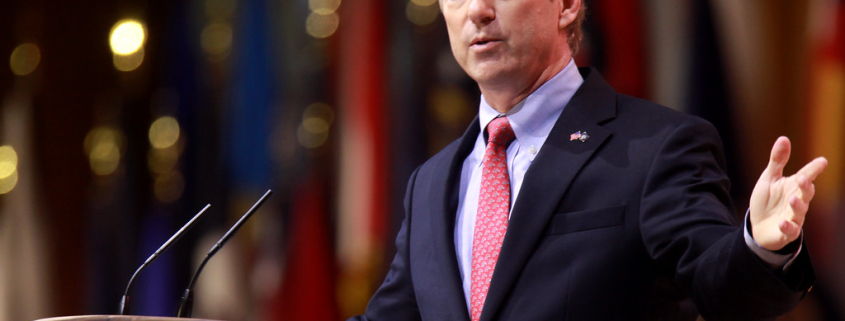
Sen. Rand Paul (R-KY) welcomed the Iran deal that President Donald Trump signed on Wednesday, calling for the war’s end.

The senator shared his thoughts on the deal in an X post on Wednesday.

“I’ve spent my career warning against regime change wars, nation-building, and endless military entanglements. The same voices now attacking Trump’s Iran deal are the architects of every failed intervention of my lifetime. This war must end. I stand with President Trump on peace,” he wrote.

(Read more from “Rand Paul Welcomes Iran Deal: ‘This War Must End’” HERE)

Photo credit: Gage Skidmore via Flickr

Complete 14-Point US-Iran Peace Deal Finally Revealed — Kicking off 60-day Clock to do the Hardest Work Yet

Iran has 60 days to prove it is willing to make peace and change its ways after signing the deal with the US on Friday — and both sides have to hammer out the biggest problems at stake, including whether the Strait of Hormuz remains free for ship traffic, the $300 billion fund to rebuilt Iran and what it will take to permanently list sanctions on the Islamic regime.

The 14-point US-Iran memorandum of understanding — which was finally released in full Wedensday — lays the groundwork for two months of negotiations between Washington and Tehran on the de-proliferation efforts.

President Trump warned the Islamic republic to abide by the agreement or face a resumption of war and destruction. . .

The Iran deal text reads as follows:

1. The United States of America and the Islamic Republic of Iran and their allies in the current war, by signing this MOU, declare the immediate and permanent termination of military operations on all fronts, including in Lebanon, and undertake from now on not to initiate any war or any military operation against each other, and to refrain from the threat or use of force against each other, and ensuring the territorial integrity and sovereignty of Lebanon. The final deal will confirm the permanent termination of the war on all fronts, including in Lebanon, and other provisions of this paragraph.

2. The United States of America and the Islamic Republic of Iran undertake to respect each other’s sovereignty and territorial integrity and to refrain from interfering in each other’s internal affairs.

3. The United States of America and the Islamic Republic of Iran commit to negotiating and achieving the final deal in maximum 60 days extendable with mutual consent.

4. Immediately upon the signing of this MOU, the United States of America will begin the removal of its naval blockade and any disturbances or impediments against the Islamic Republic of Iran, and will fully end the naval blockade within 30 days. During this period, the traffic of vessels will be in proportion to the numbers of pre-war traffic being restored by the Islamic Republic of Iran. The United States of America further undertakes to remove its forces from the proximity of the Islamic Republic of Iran within 30 days after the final deal.

5. Upon the signing of this MOU, Islamic Republic of Iran will make arrangements using its best efforts for the safe passage of commercial vessels with no charge for 60 days only from the Persian Gulf to the Sea of Oman, and vice versa. The traffic of commercial vessels will immediately start, and considering the need for removing the technical and military obstacles and demining by the Islamic Republic of Iran will be instated within 30 days. The Islamic Republic of Iran will conduct dialog with the Sultanate of Oman to define the future administration and maritime services in the Strait of Hormuz in discussion with other Persian Gulf or littoral states in line with the applicable international law and the sovereign rights of coastal states of the Strait of Hormuz.

6. United States of America undertakes with regional partners to develop a definitive, mutually agreed plan with at least USD $300 billion for the reconstruction and economic development of the Islamic Republic of Iran. The mechanism for the implementation of this plan will be finalized as part of a final deal within 60 days. All required licenses, waivers, and permissions needed for the relevant financial transactions will be granted by the United States of America.

7. The United States of America undertakes to terminate all types of sanctions against the Islamic Republic of Iran, including the United Nations Security Council resolutions, i.e. a Board of Governors resolutions, and all unilateral US sanctions, primary and secondary, in an agreed-upon schedule as part of the final deal. The Islamic Republic of Iran and the United States of America acknowledge the critical importance of the sanctions termination issue above mentioned, and expressed their intentions to immediately address these issues in the negotiations in order to achieve mutual agreement on them.

8. The Islamic Republic of Iran reaffirms that it shall not procure or develop nuclear weapons. United States of America and Islamic Republic of Iran have agreed to resolve the disposition of stockpile enriched material pursuant to a mechanism that will be mutually agreed upon in accordance with the schedule mentioned in paragraph seven, with the minimum methodology to be down blending on site under the supervision of the IAEA. The two parties also agreed to discuss the issue of enrichment and other mutually agreed matters related to the Islamic Republic of Iran’s nuclear needs, based on a satisfactory framework being agreed upon in the final deal. The final deal will confirm the provisions of this paragraph. The United States of America and the Islamic Republic of Iran acknowledge the critical importance of the nuclear issues above mentioned and express their intention to immediately address these issues in the negotiations in order to achieve mutual agreement on them.

9. Pending the final deal, the United States of America and Islamic Republic of Iran agree to maintain the status quo. The Islamic Republic of Iran will maintain the current status quo of its nuclear program and the United States of America will not impose any new sanctions and will not deploy additional forces in the region.

10. The United States of America undertakes that immediately upon the signing of MOU until the termination of sanctions, US Department of Treasury will issue waivers for the export of Iranian crude oil, petroleum products, and derivatives, and all associated services, including banking transactions, insurances, transportation, etc.

11. The United States of America undertakes to make fully available for use the frozen or restricted funds and assets of the Islamic Republic of Iran. Upon the implementation of this MOU, the United States of America and the Islamic Republic of Iran will mutually agree on the procedures related to the release of these funds during the negotiations. Such funds, whether retained in the original account or transferred, shall be made fully usable for payment to any ultimate beneficiary designed by the Central Bank of the Islamic Republic of Iran. The United States of America undertakes to issue all necessary licenses and authorizations accordingly.

12. The United States of America and the Islamic Republic of Iran agree that an executive mechanism will be established to monitor the successful implementation of this MOU and the future compliance of the final deal.

13. After signing this MOU, and subject to the beginning of the implementation of paragraphs 1, 4, 5, 10, and 11 of the MOU, and the continuing implementation of these measures, the United States of America and the Islamic Republic of Iran will start negotiations regarding the final deal exclusively on the other paragraphs.

14. The final deal will be endorsed by a binding UNSC resolution.

(Read more from “Complete 14-Point US-Iran Peace Deal Finally Revealed — Kicking off 60-day Clock to do the Hardest Work Yet” HERE)

Trump Confirms Peace Deal with Iran Is ‘Complete’, to Be Signed in Switzerland

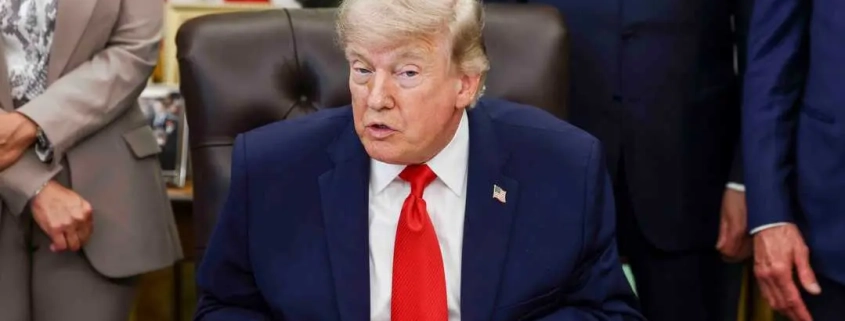
President Donald Trump confirmed that a peace deal with Iran was “complete,” and added that the Strait of Hormuz was re-opening, and that the U.S. Navy’s blockade of the strait would come to an end.

“The Deal with the Islamic Republic of Iran is now complete,” Trump wrote in Truth Social post. “Congratulations to all! I hereby authorize the toll free opening of the Strait of Hormuz, and, simultaneously herewith, authorize the immediate removal of the United States Naval blockade. Ships of the World, start your engines. Let the oil flow!”

Pakistani Prime Minister Shehbaz Sharif shared in a post on X that after “intensive talks” both the United States and Iran had reached a peace deal. Sharif added that the “official signing ceremony” for the peace deal would take place on Friday, June 19 in Switzerland.

“Following intensive talks, we are pleased to announce that the Peace Deal between the United States of America and Islamic Republic of Iran has been REACHED,” Sharif said. “Both sides have declared the immediate and permanent termination of military operations on all fronts, including in Lebanon.”

“The official signing ceremony will be on Friday, 19 June in Switzerland,” Sharif added.

(Read more from “Trump Confirms Peace Deal with Iran Is ‘Complete’, to Be Signed in Switzerland” HERE)

Iran Could ‘Access’ $300B for Rebuilding Under US Deal — Funded by Gulf States Attacked by Tehran

Iran is poised to attract up to $300 billion in investments from the very Gulf states it targeted with drones and missiles throughout the more than three-month-old war — if it can get its act together, Vice President JD Vance said Monday.

“That’s the sort of thing they could have access to, funded by the Gulf Coast Coalition, so long as they honor their end of the obligation,” Vance told CBS News on Monday, when asked whether the US-Iran memorandum of understanding electronically signed Sunday allowed for a “$300 billion reconstruction fund.”

While the vice president made clear that the funds — meant for Iran’s reconstruction — will only be paid upon Iran meeting certain requirements, critics are skeptical, as the MOU’s text has yet to be released and Iran has not acknowledged the conditions attached to the funds.

“We absolutely are open to the Gulf Coast countries investing in the reconstruction of Iran, but only if Iran ends their nuclear program, ends their enriched stockpile of material, and is really open to an inspections and enforcement regime that gives the American people confidence they’re never going to have a nuclear weapon,” Vance said.

The veep also stressed to Fox News’ Sean Hannity that the “Iranians don’t get a dime unless they behave and change their behavior” and will “never get a dime of American taxpayer money. Ever. Full stop. Not even close.” (Read more from “Iran Could ‘Access’ $300B for Rebuilding Under US Deal — Funded by Gulf States Attacked by Tehran” HERE)

Oil Prices Sink to Lowest Levels in Months after Trump Touts Iran Deal to Reopen Strait of Hormuz — Here’s When Gas Prices Could Drop

Crude oil prices sank to their lowest levels since at least March, and gasoline prices are expected to start dipping within a week or two, following President Trump’s announcement of an agreement with Iran to reopen the Strait of Hormuz.

Brent crude oil prices dropped 4.8% Monday to settle at $83.17 a barrel, while West Texas Intermediate crude plunged nearly 5% to $80.75 a barrel. US oil had briefly dropped below the $80 mark for the first time since March in early trading.

Though still higher than pre-war prices, the crude benchmarks fell to three-month lows after earlier hitting as high as $126 a barrel during the Middle East conflict.

Currently, prices at the gas pump are hovering around $4.06 per gallon, according to the latest data from the American Automobile Association.”If the peace holds, expect gas prices to begin dropping over the next one to two weeks in response to the decrease in crude oil prices,” Matthew Reisener, a senior national security analyst at the Center for Maritime Strategy, told The Post.

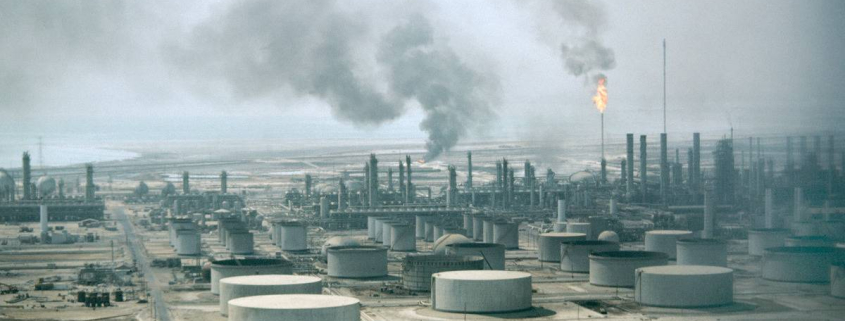
“However, it will likely take several months for gas prices to reach their pre-war levels,” Reisener added. “The uptick in oil tankers transiting the Strait in the coming weeks will increase the global crude oil supply and lower prices, but it will take some time for maritime traffic to fully resume, and many Gulf states suffered significant damage to their oil and gas infrastructure during the war, which will take time to repair.” (Read more from “Oil Prices Sink to Lowest Levels in Months after Trump Touts Iran Deal to Reopen Strait of Hormuz — Here’s When Gas Prices Could Drop” HERE)

Trump Can Counter Media’s Iran Coverage By Being Honest About The War

Fox News hosted President Trump on Thursday to talk about the progress of the war in Iran, and he did the usual, which is to say he declared the war effectively complete, while at the same time acknowledging that it’s actually still ongoing. And then he dumped all over the admittedly fallacious news media for its war reporting, saying that for Iran, “The only thing they have is fake news,” which he accused of doing Tehran’s “publicity.”

Here’s the problem with that: A lot of us who are rooting for a successful end to this conflict aren’t so upset with the media. We know how they operate. What’s frustrating us to the point of furious tears are the wildly inconsistent, contradictory and otherwise obviously untrue statements Trump is making about the war on a near-daily basis.

Literally since the start of the war, the president has said it’s over; that it’s still going; that we’re close to a deal with Iran; that Iran isn’t really trying to make a deal; that Iran really wants a deal; that Iran needs to open the Hormuz Strait; that the Hormuz Strait would be open in short order; that we control the strait; that the U.S. wants help from other allies; that the U.S. doesn’t need help from any allies; that Iran must unconditionally surrender; that a deal might not include unconditional surrender; that regime change is a requirement to end the war; that the war might very well end with the existing regime.

Here are just a few of Trump’s real-life, whiplashing inducing declarations on the war since early March, in reverse chronological order:

“[I] have, as President of the United States of America, cancelled the scheduled strikes and bombings against Iran this evening.”— June 11

(Read more from “Trump Can Counter Media’s Iran Coverage By Being Honest About The War” HERE)

Photo credit: Gage Skidmore via Flickr

U.S. Hits Iran Again After Trump Said Tehran Has Been ‘Tapping Us Along’ in Talks

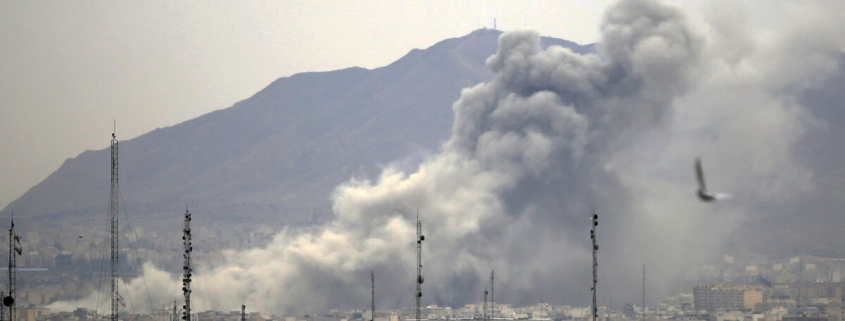
The U.S. military launched a fresh wave of strikes against multiple targets in Iran on Wednesday evening after President Donald Trump warned Tehran would “pay the price” for dragging out negotiations aimed at ending the conflict.

“U.S. Central Command forces began launching additional self-defense strikes today at 5:15 p.m. ET against multiple targets in Iran at the Commander in Chief’s direction,” CENTCOM announced in a statement. “The strikes are in response to Iran’s unwarranted and continued aggression.”

The operation followed a day of increasingly sharp warnings from Trump, who accused Tehran of stalling negotiations and warned the regime would face consequences for delaying a response to Washington’s latest proposal.

In a Truth Social post on Wednesday, Trump declared that Iran had been “completely defeated,” describing the regime as “all talk and no action.”

“The Bully of the Middle East is DEAD!!!” Trump wrote. “They’ve taken too long to negotiate a deal that would have been great for them. Now they will have to pay the price!”

(Read more from “U.S. Hits Iran Again After Trump Said Tehran Has Been ‘Tapping Us Along’ in Talks” HERE)

Trump’s Art of the Deal Meets Iran’s Long Memory of Foreign Exploitation

As the government’s standing plummets to an all-time low due to a reckless disregard for the welfare of its people, mass protests sweep across major Iran’s cities, including Shiraz, Tabriz and Tehran. Driven by a threat to their economic survival, the merchant class, or bazaaris, are leading the demonstrations.

This is not a news report from December 2025. This is the spring of 1891, the opening salvos of the Persian Tobacco Protest. Recognizing that unfettered concessions to foreigners pose a threat to both national sovereignty and their own economic interests, the powerful Shia clergy joined the merchants in an open revolt. It was Iran’s first bitter lesson in what happens when a ruler sells out the nation to ensure his own political survival. It wouldn’t be the last.

Iranians know their history well, especially when it comes to confronting foreign aggressors. Amid whispers of diplomatic backchannels and leaks about potential deals, Iranian officials have taken to the social media platform X to send cryptic, and at times humorous, references to past triumphs. Most notably, foreign ministry spokesperson Esmaeil Baqaei invoked the Sasanian Empire’s victory over Roman Emperor Philip the Arab, when Rome was forced to accept peace on Persian terms in the 3rd century.

But make no mistake: these posts are not cautionary tales directed at the United States and Israel alone. They can also be read as stern warnings to Tehran’s own negotiators. Any concessions, or capitulations, made by the Islamic Republic can trigger severe domestic backlash because in the Iranian historical imagination, yielding an inch inevitably leads to Western exploitation and destabilizing protests. For Iran’s hardliners, a deal is tantamount to surrender.

This mindset can be traced to what Hamid Dabashi, professor of Iranian studies and comparative literature at Columbia University, describes as a “long historical memory which is very much alive and resonant in their contemporary politics.”

Photo credit: Gage Skidmore via Flickr

Trump Scolds Netanyahu in Testy Phone Call: ‘You could be left alone against Iran very soon’

President Trump warned Israeli Prime Minister Benjamin Netanyahu that restarting a full-fledged war with Tehran could risk losing US support.

“I told Bibi, ‘you better be very careful what you do, because you could be left alone against Iran very soon,’” Trump told Israel’s Channel 12 on Monday.

Trump’s harsh words came over a phone call with Netanyahu after a volley of missiles between Iran and Israel that marked the 100th day of the war.

Trump said Iran offered a cease-fire with Israel, provided the president could stop Netanyahu from continuing attacks.

He then dialed the prime minister, emphasizing he was close to a deal with Iran and that he wouldn’t let Israel ruin it by returning to war.

An administration official told The Post on Monday the White House did not believe Iran was intending to return to war with the strikes on Israel. (Read more from “Trump Scolds Netanyahu in Testy Phone Call: ‘You could be left alone against Iran very soon’” HERE)

Photo credit: Flickr

Trump Must ‘Accept the Reality’ there is no Iran Deal on the Horizon, Ex-General Declares

Retired four-star Gen. Jack Keane said enough with the diplomatic charade — Iran is stalling for time and the best solution is to resume full-scale war.

The chairman of the Institute for the Study of War and former Army vice chief of staff on Friday blasted eight weeks of fruitless talks as a waste while the mullahs play games.

“We have to accept the reality that’s just not going to happen,” Keane said on Fox News. “They have one motive: Stretch out negotiations as much as possible, get as close to the political situation in terms of midterm elections, and there will be less likelihood that President Trump would ever pull the trigger and go back to military operations. I believe that is their unstated strategy.”

Even if a deal somehow was inked, Keane warned it would be worthless — and dangerously so.

“We can’t throw them a financial lifeline … because then they’ll systematically reverse everything,” he said. “They’ve always cheated in the past, and they’ll cheat in the future.”

Still, he championed Trump’s decision to launch the war on Feb. 28 — but said the job isn’t over yet. (Read more from “Trump Must ‘Accept the Reality’ there is no Iran Deal on the Horizon, Ex-General Declares” HERE)