As Iran’s government claimed that the Islamic Revolutionary Guard Corps (IRGC) is widely known to be fighting terrorism in neighboring countries, a newly-emerged video clip purportedly shows an IRGC strategist threatening to unleash terror cells in the U.S., targeting nuclear missile launch facilities, among other things.
At a time when the Trump administration is considering listing the IRGC as a foreign terrorist organization, Iranian Foreign Minister Javad Zarif said at the weekend U.S. efforts to sanction the organization have never benefited the U.S.
Zarif said the world at large agrees that the IRGC has extended the utmost support for neighboring countries in their fight against terrorism.
Iran is supporting Shi’a militias fighting alongside the Iraqi military against Islamic State of Iraq and Syria (ISIS/ISIL) jihadists. The IRGC is also heavily involved, in conjunction with Tehran’s Hezbollah allies and other Shi’a fighters, in supporting the Assad regime in the Syrian civil war, where combatants include Sunni nationalists, Kurds, Salafists, and ISIS and al-Qaeda affiliated jihadists.
The exiled Iranian opposition group National Council of Resistance of Iran (NCRI) called Zarif’s claim that the IRGC fights terrorism “ridiculous.” (Read more from “Video Clip Shows IRGC Support for Terror in America” HERE)
https://joemiller.us/wp-content/uploads/download.png224224Joe Millerhttps://joemiller.us/wp-content/uploads/logotext.pngJoe Miller2017-02-28 18:14:062017-02-28 18:14:06Video Clip Shows IRGC Support for Terror in America
A full-length animated film depicting an armed confrontation between Iran’s Revolutionary Guards and the U.S. Navy is soon to open in Iranian cinemas, amid rising tensions over President Donald Trump’s hardening rhetoric against Tehran.
The director of the “Battle of Persian Gulf II”, Farhad Azima, said that it was a remarkable coincidence that the release of the film – four years in the making – coincided with a “warmongering” president sitting in the White House.
“I hope that the film shows Trump how American soldiers will face a humiliating defeat if they attack Iran,” Azima told Reuters in a telephone interview from the city of Mashhad in eastern Iran.
The 88-minute animation opens with the U.S. Army attacking an Iranian nuclear reactor, and the U.S. Navy in the Gulf hitting strategic locations across the county.
The Islamic Revolutionary Guard Corps (IRGC), a powerful branch of the Iranian military, retaliates with full force, raining ballistic missiles on the U.S. warships. (Read more from “Iran Defeats U.S. Navy in Defiant Animated Film” HERE)
https://joemiller.us/wp-content/uploads/1280px-USN_Amphibious_assault_ships.jpg9141280Joe Millerhttps://joemiller.us/wp-content/uploads/logotext.pngJoe Miller2017-02-15 20:26:302017-02-15 20:26:30Iran Defeats U.S. Navy in Defiant Animated Film
President Donald Trump’s administration is mulling designating the Iranian Revolutionary Guard Corps a terrorist organization, Reuters reports.
The IRGC is one military force of the Islamic Republic of Iran which reports directly to the supreme leader, Ayatollah Khamenei. The IRGC is charged with training and arming terrorist organizations like Hezbollah, and deploying troops to places like Syria or Iraq.
Trump’s order would not immediately designate the IRGC a terrorist organization, but would instead instruct the Department of State to review current policy. The Department of the Treasury in 2007 sanctioned elements of the IRGC “entities and individuals engaged in or supporting proliferation and terrorism.”
Trump’s order would likely rile Iran’s current ruling elite, further increasing tensions between the U.S. and Iran. Increased sanctions on Iran could even lead to Iran pulling out of the 2015 nuclear deal.
Trump also sanctioned Iran Friday for conducting missile tests in violation of United Nations sanctions in late January. Trump has repeatedly blamed the Obama administration for failing to curb Iran’s increasingly aggressive ballistic missile tests and nefarious activity after the signing of the 2015 nuclear deal. IRGC terrorist designation would also fit with National Security Advisor Mike Flynn’s warning that Iran is “on notice.” (Read more from “New Terror Sanctions Would Strike at the Heart of Iran’s War Machine” HERE)
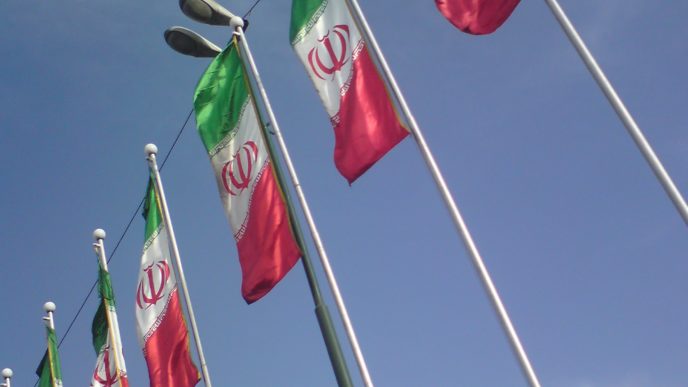
https://joemiller.us/wp-content/uploads/Islamic-Republic-of-Iran-Flag-in-row.jpg25921944Joe Millerhttps://joemiller.us/wp-content/uploads/logotext.pngJoe Miller2017-02-09 20:16:062017-02-09 20:16:06New Terror Sanctions Would Strike at the Heart of Iran’s War Machine
The Trump administration followed through on Friday with a new round of sanctions on Iran, two days after National Security Advisor Michael Flynn announced that it was “officially putting Iran on notice” for a missile test and its hostile regional policies.
The sanctions were targeted at 13 individuals and 12 entities for their support for Iran’s ballistic missile program or for the Islamic Revolutionary Guard Corps Quds Force, which has been designated under an executive order for providing material support to various terrorist groups, including Hezbollah and Hamas.
Those targeted under the sanctions cannot access the U.S. financial system or deal with U.S. companies. They also are subject to secondary sanctions, which would prohibit foreign companies and individuals from dealing with them or risk being blacklisted by the United States.
An anonymous senior U.S. official said Friday’s sanctions were an “initial step” in responding to Iran’s provocative behavior and would be followed by more steps if Iran continues on that path.
Iran’s Jan. 29 missile launch, which reportedly was tracked by at least one U.S. satellite, ended in an explosion after the missile travelled 630 miles, an apparent failure.
Some reports cited U.S. officials suggesting it was a Khoramshahr missile, which has yet to be displayed in public.
The German newspaper Die Welt cited intelligence sources who claimed that Iran also tested a nuclear-capable Sumar cruise missile that same day.
U.S. officials also charge that Iran has armed and assisted the Houthi rebel movement in Yemen, which reportedly launched a Jan. 30 attack by suicide bombers on a small boat that killed at least two sailors on a Saudi warship patrolling the Red Sea off Yemen’s coast.
Last October, a U.S. Navy destroyer, the USS Mason, was unsuccessfully targeted by two anti-shipping missiles launched from Yemen, which prompted the U.S. Navy to launch cruise missiles to destroy Houthi missile launch sites along the coast.
Friday’s sanctions announcement is the first concrete response by the Trump administration, pushing back against Iran’s latest provocations.
The Obama administration preferred to ignore Iranian missile tests and its malign regional activities because it sought to preserve the flawed nuclear agreement, which it considered a positive legacy. This only emboldened Iran.
President Donald Trump warned in a tweet on Friday:
Iran is playing with fire – they don't appreciate how "kind" President Obama was to them. Not me!
Javad Zarif, Iran’s foreign minister, responded on twitter that Tehran is “unmoved by threats” and will not stop its missile program.
Iran and the United States appear to be on a collision course, with more sanctions and perhaps military clashes on the horizon. (For more from the author of “Trump Administration Slaps Sanctions on Iran for Missile Test and Other Provocations” please click HERE)
https://joemiller.us/wp-content/uploads/Donald_Trump_2016_RNC_speech_4_cropped.jpg528751Joe Millerhttps://joemiller.us/wp-content/uploads/logotext.pngJoe Miller2017-02-05 20:54:562017-02-05 20:54:56Trump Administration Slaps Sanctions on Iran for Missile Test and Other Provocations
An influential Iranian leader has threatened to unleash thousands of “martyrdom” operations by loyal allies of the Tehran regime already inside the United States. The move comes as President Donald Trump has put Iran “on notice” for its illegal ballistic missile tests and escalating anti-American activities.
Hassan Abbasi, an Iranian political theorist who has been dubbed “the [Henry] Kissinger of Islam,” made the remarks Thursday, claiming that Iran doesn’t need a nuclear bomb because of such loyalists ready for suicide operations, according to author, and Gatestone Institute chairman, Amir Taheri.
Abbasi is a high-ranking officer in Iran’s Islamic Revolutionary Guards Corps (IRGC), which is tasked with exporting Iran’s Caliphatist revolutionary ideology worldwide. He is also the head of a premier Iranian think tank affiliated with the IRGC called the Center for Borderless Security Doctrinal Analysis.
Additionally, National Review has described Hassan Abbasi as a “theoretician” for Iranian dictator and Grand Ayatollah Ali Khamenei. In the past, he has designated America as part of an alliance of “sworn enemies of God and Muslims.”
Iran’s escalating rhetoric follows the White House administration change — and its corresponding change in tone on Iran.
Pres. Trump warned the Tehran regime Thursday morning: “Iran has been formally PUT ON NOTICE for firing a ballistic missile. Should have been thankful for the terrible deal the U.S. made with them!”
Iran has been formally PUT ON NOTICE for firing a ballistic missile.Should have been thankful for the terrible deal the U.S. made with them!
He added in another Tweet: “Iran was on its last legs and ready to collapse until the U.S. came along and gave it a life-line in the form of the Iran Deal: $150 billion.”
Iran was on its last legs and ready to collapse until the U.S. came along and gave it a life-line in the form of the Iran Deal: $150 billion
Additionally, National Security Advisor Michael Flynn put Iran “on notice” on Wednesday, condemning the regime’s ballistic missile test and sponsorship of terrorism.
Flynn said in a statement:
“Recent Iranian actions, including a provocative ballistic missile launch and an attack against a Saudi naval vessel conducted by Iran-supported Houthi militants, underscore what should have been clear to the international community all along about Iran’s destabilizing behavior across the Middle East.”
The Iran-backed Houthis committed a deadly strike on a Saudi warship in the Red Sea earlier this week, utilizing “suicide boats” to hit their target. The Iran-backed militants have been accused of targeting U.S. vessels as well.
“As of today, we are officially putting Iran on notice,” Flynn concluded his statement.
Iran has described its offensive ballistic missile program as an “inalienable and absolute” right of the country, and claims its tests do not violate sanctions or the nuclear deal signed with the Obama administration and world powers. (For more from the author of “Warmongering Iran Threatens to Unleash ‘Martyrdom’ Operations on America” please click HERE)
https://joemiller.us/wp-content/uploads/iran-1151139_960_720.jpg548960Joe Millerhttps://joemiller.us/wp-content/uploads/logotext.pngJoe Miller2017-02-02 21:12:252017-02-02 21:12:25Warmongering Iran Threatens to Unleash ‘Martyrdom’ Operations on America
Iran will not renegotiate its nuclear agreement with world powers, even if it faces new U.S. sanctions after Donald Trump becomes president, Deputy Foreign Minister Abbas Araqchi said on Sunday.
Trump, who will take office on Friday, has threatened to either scrap the agreement, which curbs Iran’s nuclear program and lifts sanctions against it, or seek a better deal.
“There will be no renegotiation and the (agreement) will not be reopened,” said Araqchi, Iran’s top nuclear negotiator at the talks that led to the agreement in 2015, quoted by the state news agency IRNA.
“We and many analysts believe that the (agreement) is consolidated. The new U.S. administration will not be able to abandon it,” Araqchi told a news conference in Tehran, held a year after the deal took effect.
“Nuclear talks with America are over and we have nothing else to discuss,” he added. (Read more from “Iran Says It Will Not Renegotiate Nuclear Deal” HERE)
https://joemiller.us/wp-content/uploads/Flag_of_Iran.svg_.png11432000Joe Millerhttps://joemiller.us/wp-content/uploads/logotext.pngJoe Miller2017-01-15 20:58:002017-01-15 20:58:00Iran Says It Will Not Renegotiate Nuclear Deal
Right now, before he takes office, President-elect Trump can do more than Barack Obama accomplished in eight years, and send a message to radical Islamists around the world that “America is back.” Here’s how:
The Republic of Sudan has been dominated by a brutal, autocratic regime since 1989. The ruling National Congress Party (NCP), which was formally called the “National Islamic Front,” is led by President Omar al Bashir, the only sitting president under indictment by the ICC for war crimes and crimes against humanity.
The Unpunished Author of Anti-Christian Genocide
Bashir’s human rights track record is abysmal. Not only is he the main culprit in the 23-year genocidal war against South Sudan, which killed more than 2 million indigenous Christian and animists and displaced another 5 million from their homes. Bashir is also the architect of the infamous Darfur Genocide. More recently in 2011, Bashir has taken his brutal tactics to the contested Nuba mountain and Blue Nile regions where a total blockade, combined with an aerial terror campaign which targets civilians, is threatening 2 million more lives.
Bashir’s government is on the verge of bankruptcy, with a suffocating debt of more than $60 billion which it cannot repay. Sudan’s currency has collapsed, there are shortages everywhere, and recent “austerity measures” have led to thousands of Sudanese taking to the streets in protest. More than a half-dozen opposition political parties have called for Bashir to step aside and allow for multi-party elections.
America Can Stop Sudan’s Islamists without Firing a Shot
For Bashir to avoid a total collapse of his government, he desperately needs to “normalize” relations with the U.S. (and consequently with the international community). The U.S. has economically kept Bashir’s government at arm’s length.
In 1997, the Clinton Administration slapped Sudan with economic sanctions, which were later expanded under President George W. Bush. Following 9/11, the Bush administration played a key role in helping to facilitate the end of conflict in what is now South Sudan, and the Nuba mountains region in the north. The genocide in Darfur was largely neglected, but a young Senator from Illinois pledged to address it by ratcheting up sanctions, and putting a robust UN force on the ground to stop the killing.
That young senator was later elected president, and proceeded to do next to nothing.
Obama Abandoned Sudan’s Helpless Civilians
President Obama’s Sudan policy has been one of moral abdication and abandonment. Sudan expert Eric Reeves summed it up by saying that Obama “has offered Sudan nothing but hypocrisy and bad faith. His shame will far outlive his presidency.”
Due to America’s abdication of its critical role in pressuring Bashir to stop targeting and persecuting ethnic and religious minorities, Sudan has continued its cycle of endless internal wars, massive humanitarian crises, and destabilization of the whole region.
In the contested areas of the Nuba mountains and the Blue Nile, Bashir’s government has doubled down on its policy to Islamicize all of Sudan. Since 2011, it has blockaded Christian regions. Journalists are prohibited. The Nuba, which is home to Sudan’s largest Christian community, has especially been hit hard by ground attacks and aerial terror, which targets market places, schools, hospitals, and churches.
The brazen war crimes Bashir continues to commit have brought new charges by Amnesty International of the use of chemical weapons against civilians.
Sudan’s capital, Khartoum, sees almost daily routine abuses such as seizing newspaper runs, shutting down broadcasting networks, arbitrary arrests, tortures, detentions, mysterious disappearances and deaths.
Obama Played Footsie with Islamists
Yet the U.S. State Department continues to flirt with the NCP, softening sanctions, and publicly praising the regime for its cooperation in “sharing intelligence” to fight the war on terror. But there is very little evidence to show that Sudan has provided much more than useless “faux intelligence,” even as it continues to harbor and host many of the allies and assets of ISIS and Al Qaeda in Khartoum!
Philosophically and practically, the NCP elite is comprised of the same stripe of extreme Islamist radicals we are up against in Syria and Iraq. Sudan’s recent decision to break with Iran and pursue closer engagement with Saudi Arabia was motivated primarily by finances, netting Bashir $5 billion in military aid and another $10 billion in direct investment.
Sudan has been a hot-house, incubating extremism since its independence in 1955. The only real difference between ISIS and Bashir’s NCP regime is that Sudan has a seat at the UN. Religious persecution and the aerial terror campaign against Darfur, plus the Nuba and Blue Nile regions, were among the stated reasons for President Bush’s decision to continue sanctions against Sudan.
Christians Rotting in Sudan’s Jails
Right now, four Christians are languishing in a Sudan prison under false charges of espionage, intelligence gathering, war against the state, and several other manufactured “crimes.” At least five of the charges carry the death penalty or life imprisonment. Two of the men are Nuba pastors. One is a Darfur convert. The last is a European missionary and aid worker.
Petr Jasek has been separated from his family for one year. He was arrested a full year ago, on December 9th, 2015, while on a trip to visit with Sudanese Christians to offer medical and other humanitarian assistance. The other prisoners were apparently detained and jailed for meeting and speaking freely with Mr. Jasek about the oppression and persecutions they had experienced at the hands of their own government. Jasek spent eight months in prison before he was even brought to court, in clear violation of Sudanese law.
Another reason Sudan is targeting Jasek is for his work as a humanitarian and past affiliation with two American charities which have been active in providing humanitarian assistance to the Nuba people: Voice of the Martyrs and Persecution Project Foundation.
American Volunteers are Making a Difference
U.S. organizations and citizens have played a major role in thwarting Bashir’s effort to (in his words) “take out the garbage” in the Nuba region. The main doctor at the primary referral hospital in the Nuba is celebrated American missionary Tom Catena. The primary embedded news source in the Nuba was founded by American missionary and former Samaritan’s Purse field director Ryan Boyette, who led the effort to rebuild more than 200 Nuba churches destroyed by Bashir’s forced Islamization and Arabization policies.
All of these organizations are collectively supported by millions of Americans. While the Obama Administration has been playing diplomatic footsie with Islamists in Sudan and around the world, millions of private Americans have been confronting extremism through compassion towards its victims.
Trump Can Face Down Extremists and be a Hero
President-elect Trump has a real opportunity to bring American policy towards Islamists in line with the actions and desires of the American people, and his campaign promises to take on the forces of radical Islam.
And this worries President Bashir. Consequently, he’s turned on the charm and tried to flatter President Trump:
[W]e can deal with double-faced people, but here we have a person with a clear line … I am convinced that it will be much easier to deal with Trump than with others because he is a straightforward person.
Bashir is right that President-elect Trump is a straightforward person. And America has endured eight years of morally confused, counter-productive, and indecisive weakness in dealing with radical Islam. We desperately need a leader who can tell the good guys from the villains.
Lets hope that under a bold new Trump Administration, America will take the lead again in standing against terrorism and suppression of religious freedom and basic human rights.
America must no longer deal with Islamist bullies as the moral equivalent of normal, democratic leaders. President-elect Trump should send a firm message to President Bashir: “Thanks for the compliments. You’re right: I will draw the line. And you are on the wrong side of it. America is an ally of all those who struggle for the same basic freedoms of worship, association and expression that every American enjoys. Our friendship is with the victims of oppression, and not the perpetrators of war crimes and genocide.”
Trump should not entertain talk of “normalized relations” while Sudan continues to be led by a step-child of the Muslim Brotherhood, a man who is one of the oldest allies of international terror — who wages terror against his own people, and colludes with those who practice it abroad.
A strong message to the Sudanese government even before Trump takes office could set many prisoners free, including Mr. Jasek, and put Islamists around the world on notice that America is back.
This is Mr. Trump’s “Iran Hostage Moment” and he should seize it. (For more from the author of “Sudan: Trump’s Iran Hostage Moment” please click HERE)
The Islamic Republic of Iran is experiencing a revival of faith in a big way, said Rahman Salehsafari, a house church pastor who ministers there as well as worldwide via Skype, in a CBN News interview. The Holy Spirit’s work in Iran is evident in the large numbers of people accepting Jesus, he said.
“Right now you can see the results of the Holy Spirit. [In] 1994, there were about 100,000 believers,” he explained. “Right now, there are 3 million. You can see what the Holy Spirit is doing with the people.”
For some, the experience that drew them to Christ was nothing short of miraculous. “I had a dream a long time back and every time that Jesus was with me,” said a young man named Reza. “In all of my life He was helping me and I didn’t know who is this person. Suddenly, Jesus Christ was over there and He said, ‘Come to Me.’ Then I came to that side and He accepted me.”
Becoming a Christian was not something they took lightly — they knew they would have difficulty living out their new-found faith in their homeland.
Many of the new Christians had to flee Iran because of religious persecution and ended up in Turkey. They noticed a marked difference in the freedom to practice their faith. Afshin, an Iranian who lives in Turkey now, said the contrast is extreme. “[It’s] totally different from Iran,” he explained. “I can privilege [speak about] God’s Word to other guys. I can freely praise the Lord. I can easily go to church. It’s really completely different.”
Afshin, who attended Pastor Saeed Abedini’s church before Abedini’s 2012 arrest, said he fled Iran because it was getting progressively difficult each day to live as a Christian and he felt it was too much of a risk. Afshin said he had to leave his home because he believed the intelligence service would recognize it as a home church. Others fled in fear for their lives.
A young woman named Raizal, along with her brother Reza, fled Iran for fear they would be killed. “Even if I say ‘Jesus Christ,’ they may kill me,” she said. “They tried to kill me,” said Reza, who also had problems with his health and at his job because he was a Christian. “Then I start (sic) to run away.”
Many of the Iranian believers in Turkey hope to one day achieve refugee status and immigrate to other countries.
Even with the persecution, the threats on their lives, the uprooting and fleeing to another country and the unstable residency status, these Christians maintain their joyfulness and love of Christ. They clap and cheer as new brothers and sisters in Christ are baptized. They worship the Lord with praise songs and laughter.
Their desire now is that their brothers and sisters around the world would pray for Iran and the Church there. “I’m just begging really from other believers, from the other sisters and brothers from all over the world to pray for Iran,” said Afshin. “To all the people of Iran, to be familiar with God, with Jesus Christ.”
See the full interview here:
(For more from the author of “Revival in Iran: ‘You Can See What the Holy Spirit Is Doing'” please click HERE)
https://joemiller.us/wp-content/uploads/cross-671379_960_720-3.jpg720960Joe Millerhttps://joemiller.us/wp-content/uploads/logotext.pngJoe Miller2016-11-29 23:45:142016-11-29 23:45:14Revival in Iran: ‘You Can See What the Holy Spirit Is Doing’
House Republicans voted Thursday to block the sale of aircraft to Iran, a move GOP lawmakers and some Democrats said would protect taxpayer dollars from being used to finance the export of airplanes to Tehran.
The House voted 243 to 174 to pass legislation sponsored by Rep. Bill Huizenga, R-Mich., prohibiting the secretary of the Treasury from authorizing a transaction from a U.S. bank or financial institution related to the export of aircraft to Iran.
The White House said it would veto the bill, as it could be viewed as a violation of the Iran nuclear deal.
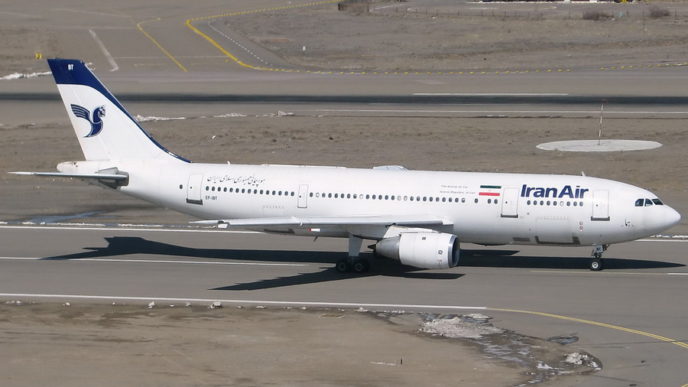
In September, the Treasury issued licenses to aviation giants Airbus and Boeing that permitted the sale of planes to Iran Air, the country’s state-owned airline. The agency also allowed U.S. banks to finance the sale of those aircraft to Tehran.
“This bill would keep Americans’ deposits away from a country that the president’s own State Department calls ‘the foremost state sponsor of terrorism,’ and which Treasury has designed as a ‘jurisdiction of primary money laundering concern,’” Huizenga said today on the House floor.
The legislation also prohibits the Export-Import Bank, or Ex-Im, from providing any assistance either directly or indirectly to Iran and associated entities, including its state-run airline.
Ex-Im provides taxpayer-backed loans and loan guarantees to foreign countries and companies for the purchase of U.S. products.
“We need to make sure that the American financial system is not complicit in this [Iran nuclear] deal,” Rep. Peter Roskam, R-Ill., said on the House floor Thursday. “We need to make sure American taxpayers are not subsidizing this deal.”
Over the last year, Roskam has been an ardent opponent of the Iran deal and has pushed to prohibit Iran and its state-run entities from benefiting from U.S.-backed financing.
Though Ex-Im’s charter prohibits the agency from extending taxpayer-backed financing to Iran, Roskam and GOP lawmakers cautioned a loophole could allow Tehran to purchase U.S. products or services from third-party intermediaries that received funding from the 82-year-old bank.
It’s now possible for U.S. corporations to do business with Iran following the Obama administration’s historic nuclear deal with the Islamic regime. The pact, which the U.S. and five other world powers secured last year, was designed to ensure Iran doesn’t obtain a nuclear weapon in the near future.
Nearly a year after negotiations with Iran concluded, lawmakers learned that Boeing, one of Ex-Im’s biggest beneficiaries, had been engaging in ongoing discussions with government-run entities in Iran over the possible sale of aircraft to the country.
In May, Roskam and fellow Illinois Republican Reps. Robert Dold and Randy Hultgren sent the Chicago-based aerospace giant a letter urging it not to do business with Iran.
One month later, Boeing confirmed it signed a deal to sell $25 billion worth of planes to Iran Air. According to initial reports, Boeing planned to sell approximately 80 commercial airliners to Iran Air and secure the sale of another 29 planes to a third party, which would then lease the aircraft to Tehran.
The company’s deal marked the first time since the Islamic Revolution in 1979 that American aircraft were sold to Tehran.
The Obama administration previously sanctioned Iran Air after the airline used passenger and cargo planes to fly rockets and missiles to Syria and other nations. The weapons were sometimes disguised as medicine or spare parts, according to past reports.
Under the Iran nuclear deal, the Obama administration dropped economic sanctions against Tehran.
“We now have American companies who are saying, ‘You know what? Let’s do business with a terrorist regime. How’s that? Let’s just go make a buck,’” Roskam said of Boeing during his floor speech Thursday. “That’s the scandal of this. The scandal is there are American companies, international companies, Boeing, Airbus, that are now making their own names linked with terror forevermore.”
In addition to Boeing, Airbus also signed an agreement with Iran to sell the regime aircraft.
Though Boeing didn’t previously disclose whether it would seek Ex-Im financing to help fund the sale of the jets to the third party, lawmakers worried the company would attempt to secure taxpayer-backed loans and loans guarantees for the transaction.
Ex-Im, however, can’t currently approve transactions of more than $10 million because of vacant seats on its board of directors.
The five-member panel currently lacks a quorum of three members, and all transactions topping $10 million, which primarily benefit Ex-Im’s biggest beneficiaries like Boeing, have been stalled. (For more from the author of “House Passes Bill Blocking Sale of Aircraft to Iran” please click HERE)
https://joemiller.us/wp-content/uploads/Iran_Air_A300B2_in_Tabriz.jpg600900Joe Millerhttps://joemiller.us/wp-content/uploads/logotext.pngJoe Miller2016-11-17 22:48:092016-11-17 22:48:09House Passes Bill Blocking Sale of Aircraft to Iran
Papa B relays this tale, which is Twitter-verified and absolutely true, as far as you know:
Iran’s Ayatollah Khamenei calls President-Elect Trump and tells him, “Donald, stay out of office. because last night I had a wonderful dream. I could see America, the whole beautiful country, and on each house I saw a banner.”
“What did it say on the banners?” Trump asks.
Khamenei replies, “United States of Iran.”
Trump says, “You know, I am really happy you called, because believe it or not, last night I had a similar dream. I could see all of Iran…”
“…and it was more beautiful than ever, and on each house flew an enormous banner.”
“What did it say on the banners?” Khamenei asks.
Trump replies, “I don’t know. I can’t read Hebrew.”
(For more from the author of “Khamenei Calls Trump” please click HERE)