Posts

Biden, Accountant Hit With IRS Whistleblower Claim That Prez Owes at Least $127K

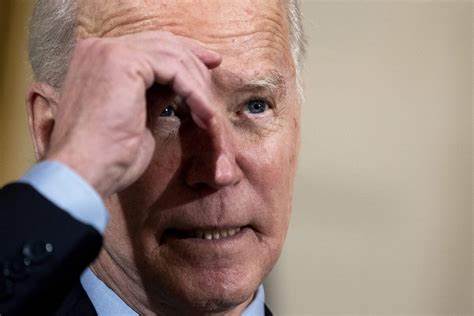
President Biden and his accountant are facing new IRS whistleblower complaints alleging that Biden owes at least $127,000 in back taxes.

The complaints were filed by Chris Jacobs, a former Republican aide on Capitol Hill, to coincide with Monday’s federal tax filing deadline.

“Federal agencies must implement laws on a non-partisan basis,” Jacobs told The Post. “The fact that the IRS did not audit Joe Biden’s 2017 through 2019 returns, despite several articles publicly raising questions about the propriety of his actions, raises questions about how the IRS administers our nation’s tax laws, and whether political considerations played a role in the IRS’ decisions.”

Biden and his wife, Jill, avoided paying Medicare taxes on book income and speaking fees in 2017 and 2018 by routing $13.3 million through “S corporations” and counting a small amount as eligible for the federal health care tax.

The strategy is commonly used by wealthy people to dodge the 3.8% Medicare levy on large amounts of income and experts say the IRS lacks the resources to aggressively pursue cases of underpayment. (Read more from “Biden, Accountant Hit With IRS Whistleblower Claim That Prez Owes at Least $127K” HERE)

Delete Facebook, Delete Twitter, Follow Restoring Liberty and Joe Miller at gab HERE.
Is the IRS Collapsing?

There is little doubt that the Internal Revenue Service is groaning under the burden of administering the tax code, which now exceeds more than 4 million words (up from 1.4 million, in 2000). The question is whether the agency will collapse under the growing weight of its concomitant processing and administrative problems.

Let’s consider a few sobering examples of what the IRS is up against, as identified by the National Taxpayer Advocate, Erin Collins, in her 2021 Annual Report to Congress.

1. Phone calls to the agency. In 2020 and 2021, Congress passed several significant tax law changes ostensibly to help Americans cope with the Covid-19 pandemic. It seems those changes thoroughly confused taxpayers.

In both 2019 and 2020, the IRS received about 100 million phone calls from taxpayers seeking help for various reasons. That volume of calls was standard over the past decade. But 2021 was quite a different story. That year, incoming call volume exploded to nearly 282 million — nearly tripling the load. There are no signs that things are getting better either, as more people than ever are thoroughly confused and are reaching out to the agency for help because of ongoing law changes.

2. Level of Service (LOS) for incoming calls. Phoning the IRS looking for help and actually getting help are two different things. It should come as no surprise that as call volume increased, the IRS’s capacity to answer the phone dropped. In other words, while 282 million people called the IRS, 282 million people did not get the help they were looking for.

The IRS refers to its ability answer the phone and render assistance as the “level of service” it provides. During 2019 and 2020, the IRS answered just 28.7 percent and 24.1 percent of citizens’ incoming calls, respectively. In 2021, that number plummeted to just 11.4 percent. Just over one in every nine people calling the IRS was able to talk with a person. In March 2021, the LOS dropped to below 4 percent — the worst it’s ever been.

The NTA reports that those who did get their calls answered did so after waiting on hold for an average of 23 minutes. But I can tell you, as anybody who’s phoned the IRS during the last 18 months can, a 23-minute wait time is extremely short. Most people wait for much longer, sometimes hours. The published hold time is misleading because most calls are simply cut off — or the caller just gives up — long before the call is answered.

Now, keep in mind that people calling the IRS are taking the initiative to file their tax returns correctly and on time. They are seeking clarity regarding IRS notices and letters so they can comply. A great number of calls are from people trying to make arrangements to pay their taxes. What kind of message does it send to the public when those trying to comply cannot get the help they need to do so?

One of the arguments used to support the push for $80 billion in additional funding under President Biden’s failed Build Back Better plan was the alleged need to equip the IRS to better assist citizens via telephone. But I have a hard time believing that any amount of money would be sufficient to build the infrastructure and staff necessary to handle 282 million calls annually.

3. Processing tax returns and correspondence. The core function of the IRS is to collect taxes, and the key to collecting taxes is to process tax returns. In 2021, the IRS received just over 160 million individual income tax returns. Businesses filed another 104 million returns.

By the end of the 2021 filing season, the IRS had a backlog of over 35 million unprocessed returns. As late as December 2021, the IRS still had:

*2 million unprocessed personal tax returns,

*8 million unprocessed business tax returns,

*9 million unprocessed amended personal and business returns, and

*Approximately 4.75 million unprocessed pieces of general taxpayer correspondence.

There was even an inventory of unprocessed returns from the 2020 filing season. And here we are in the midst of a new filing season in which another 260-plus million returns will be filed.

The logjam of unprocessed returns has meant that citizens have experienced long delays in getting refunds and in meeting the filing demands of the IRS’s various compliance functions. That’s to say nothing of the need to prove one has filed his return for non-tax purposes, such as buying a home, getting refinanced, or obtaining student or business loans. The logjam has also subjected citizens to serious hardship in their private lives. Millions of Americans rely on tax refunds to pay their bills. Delayed refunds mean that many likely couldn’t pay necessary living expenses.

Long processing delays in turn led to yet another overloaded system: the IRS’s website. The number of visits to the IRS’s website went from 651 million in 2019, to over 2 billion in 2021. The visits to its “Where’s My Refund” page nearly doubled, from 369 million 2019 to over 632 million in 2021.

The problem with Where’s My Refund, as explained by the NTA, “is that it was non-functional” for tens of millions of people because “it does not explain any status delays, the reason for the delay, where the return is in the process, or what needed to be done.” This lack of clarity meant that millions “went many months without any status updates, and some are still waiting for their refunds.”

What do you suppose is in store for taxpayers this filing season? The same, or worse.

It is now clear that our current tax system is collapsing, and $80 billion in more revenue will not fix the problem. The system is now far too vast in both scope and complexity, and is only getting worse as Congress stirs the pot with ongoing law changes. Tax reform must focus principally on simplicity, efficiency, and neutrality. This will greatly lighten the compliance load for the vast majority of citizens who are overburdened with tax-law compliance. Failure to do so only drives up the already staggering compliance costs and provides incentive for some people to simply not comply with the law.

______________________________________________________

For over four decades, Dan Pilla has been the nation’s leader in taxpayers’ rights defense and IRS abuse prevention and cure. Regarded as one of the country’s premiere experts in IRS procedures and general financial problems resolution techniques, he has helped hundreds of thousands of citizens solve personal and business tax and financial problems they thought might never be solved. As the author of 14 books, dozens of research reports and hundreds of articles, Dan’s work is regularly featured on radio and television as well as in major newspapers, leading magazines and trade publications nation-wide. Dan is a frequent guest on numerous talk radio programs where he is heard by millions of people each year. His fast-paced interviews provide hard-hitting answers to even the toughest questions. His many media appearances include CBN, CBS, Fox News, C-SPAN, the CBS Radio Network, the USA Radio Network and many others. His books have been recommended by prominent magazines and financial publications such as the New York Times, Wall Street Journal, Money, Family Circle, Investor’s Business Daily and more. Dan has written or contributed to major articles for Reader’s Digest, National Review, Reason, USA Today Magazine and others. The Associated Press once commented that “Dan Pilla probably knows more about the IRS than the commissioner.” The Wall Street Journal ranked his book, The IRS Problem Solver, as the number one tax book in America.

Dan was a consultant to the National Commission on Restructuring the IRS. He works with numerous public policy research institutes and presented testimony to Congress on several occasions. His testimony to the Senate Finance Committee blew the lid off IRS abuse and led to many new taxpayers’ rights and protections. He was a member of the Editorial Board of the Road Map to Tax Reform Project, which drove the Bush Administration’s tax reform agenda. Dan is admitted to practice before the United States Tax Court and is enrolled to practice before the IRS. Dan is also the Executive Director of the Tax Freedom Institute, Inc., a national association of tax professionals.

Delete Facebook, Delete Twitter, Follow Restoring Liberty and Joe Miller at gab HERE.

The IRS Wants to Scan Your Face

The next time you try to log in to the Internal Revenue Service’s website you’ll be urged to use facial-recognition software to verify you are who you say you are.

The verification process includes taking a picture of a photo ID, like a driver’s license or passport, and then taking a video selfie with a smartphone or computer so software can compare the two. It’s part of a partnership the IRS has with ID.me, a fast-growing company that uses facial recognition software as part of its identity-verification process.

For now, this process is optional if you already have an IRS username and password. But if you don’t, and you want to use online tools to request an online tax transcript or see information regarding your tax payments or economic impact payments, you’ll need to sign up with ID.me. And starting this summer, those old IRS usernames and passwords will no longer work.

As CNN reported last year, ID.me already verifies identities for more than half of all states’ unemployment agencies as well as a growing number of US federal agencies. In addition to the IRS, ID.me works the Department of Veterans Affairs, Social Security Administration and the US Patent and Trademark Office. The company says it has 70 million users and adds 145,000 new users each day. (Read more from “The IRS Wants to Scan Your Face” HERE)

Delete Facebook, Delete Twitter, Follow Restoring Liberty and Joe Miller at gab HERE.

WATCH: WH Defends Invasive Dem Proposal for IRS to Spy on Bank Accounts

Speaking to reporters at the White House Monday, Press Secretary Jen Psaki defended the Democrat proposal, tucked into President Joe Biden’s $3.5 trillion Build Back Better spending plan, that would allow the IRS to monitor all bank transactions of $600 or more. She also claimed the “loudest” opposition to more IRS funding for snooping is from big banks, not small business owners or individuals worried about taxpayer rights.

Last week, House Speaker Nancy Pelosi confirmed the proposal is still on the table and that Democrats plan to keep it in Biden’s monstrous spending plan.

Republicans have been pushing back on the proposal and reminding the IRS that banks don’t work for them. (Read more from “WH Defends Invasive Dem Proposal for IRS to Spy on Bank Accounts” HERE)

Photo credit: https://www.flickr.com/photos/prachatai/11229802554

Follow Joe Miller on Twitter HERE and Facebook HERE

Under Biden Administration Plan, Poor Would Be Three Times More Likely To Get IRS Audit Than 1 Percenters

Under a new Biden administration proposal, the Internal Revenue Service is three times more likely to audit a citizen making less than $25,000 rather than someone in the top 1 percent of wealth.

The new proposal, which would require financial institutions to annually report customers’ account deposits and withdrawals at $600 or more, gives the IRS more leverage over those making less than $25,000, because they are more likely to have irregular income. Over the next decade, the reporting on more than 140 million bank accounts would raise an estimated $700 billion in tax revenue — which would cover social spending in the Reconciliation Bill.

Discussion of raising the threshold to $10,000 has not eased any tension. More than 40 banks urged lawmakers to vote against such a proposal in a letter addressed to House Speaker Nancy Pelosi and Minority Leader Kevin McCarthy. The banks warned against the mandatory collection of most Americans’ financial information “without proper explanation of how the IRS will store, protect, and use this enormous trove of personal financial information” could result a “tremendous liability” (Read more from “Under Biden Administration Plan, Poor Would Be Three Times More Likely To Get IRS Audit Than 1 Percenters” HERE)

Follow Joe Miller on Twitter HERE and Facebook HERE

IRS Launching ‘Bizarre’ New Punishment for Small Businesses

Most IRS guidance documents make for poor pleasure reading. Then again, most IRS guidance doesn’t effectively impose a retroactive tax on small business owners merely for having a family. IRS Notice 2021-49, issued on August 4, includes a bizarre interpretation of the law that will effectively raise taxes for business owners with close relatives, even if their family members have no involvement in the company.

A core goal of the Coronavirus Aid, Relief, and Economic Security (CARES) Act passed early on in the pandemic was to assist businesses in keeping employees on their payroll even as they dealt with the economic effects of lockdowns. Part of the plan was the Employee Retention Tax Credit (ERTC), which provides a tax credit against employer payroll tax liabilities.

By the time the ERTC is set to expire at the end of 2021 (though the bipartisan infrastructure bill would end eligibility earlier, at the end of September), the Joint Committee on Taxation estimates that employers will have claimed just under $36 billion as a result of it. But if the IRS gets its way, business owners, especially those owning smaller businesses, will owe a lot of that back.

That’s because the IRS somehow managed to conclude, through ridiculous mental gymnastics, that wages paid to business owners are ineligible for ERTC if that owner has a sibling, parents, or children. No, not immediate family members who are involved in the business in any way — simply the existence of familial bonds at all is sufficient to disqualify business owners from claiming the ERTC on their own wages. Keep in mind that, under Notice 2021-49, business owners are still perfectly free to claim the ERTC on wages paid to themselves so long as they lack these familial ties.

Here’s how the IRS arrived where it did. The CARES Act used legal eligibility requirements laid out in the Work Opportunity Tax Credit (WOTC), which disallows the credit for wages paid to close relatives and to any individual controlling more than 50 percent of the business in question. Business ownership shares are determined by Section 267 of the Internal Revenue Code, which counts shares owned by close relatives of the majority owner as being owned by the majority owner themselves, in order to prevent abuse by shifting shares to close relatives. (Read more from “IRS Launching ‘Bizarre’ New Punishment for Small Businesses” HERE)

Delete Facebook, Delete Twitter, Follow Restoring Liberty and Joe Miller at gab HERE.

Apparent IRS Leak Reveals ‘Thousands’ of Wealthy Americans’ Confidential Tax Data

As the Biden administration works to double the size of the IRS and institute new income reporting requirements, an apparent internal leak revealed the confidential tax data of some of the wealthiest Americans.

The data—published Tuesday by ProPublica—covers more than 15 years of tax returns filed by “thousands of the nation’s wealthiest people.” According to the nonprofit news organization, the private information came from an “anonymous source” who provided “large amounts of information on the ultrawealthy,” including taxes, income, and stock trades. Under federal law, government employees who “willfully” disclose “any return or return information” without authorization are subject to federal charges.

The leak comes as the Biden administration pushes to hire nearly 87,000 new IRS staffers through an $80 billion budget increase. The proposal also includes additional income and transaction reporting requirements, which Sen. Mike Crapo (R., Idaho) said “is of great concern … in light of the ProPublica report we saw today.” (Read more from “Apparent IRS Leak Reveals ‘Thousands’ of Wealthy Americans’ Confidential Tax Data” HERE)

Delete Facebook, Delete Twitter, Follow Restoring Liberty and Joe Miller at gab HERE.
Top Dem Operative Accused of Illegally Profiting From His Political Empire by Conservative Group

A conservative group has filed complaints with the IRS accusing leading liberal activist David Brock of illegally profiting from the vast network of groups he has built within the Democratic Party’s infrastructure.

The complaints, which were filed by the Patriots Foundation, a right-leaning nonprofit, and reviewed by The Daily Beast, detail a series of transactions that, the group says, show the injection of money from a tax-exempt group Brock founded into a private, for-profit news business that he owns.

“These complaints we filed provide damning indictment of serious allegations about how his organizations have circumvented rules and exploited the tax-exempt status of the organizations for personal benefit and partisan political purposes, and potentially siphoning millions for improper purposes,” Patriots Foundation co-founder Craig Robinson told The Daily Beast in a statement.

The nonprofit at issue is the American Bridge 21st Century Foundation, and it’s part of a constellation of entities that Brock has seeded over the years and which he tasked in early 2017 to, in his words, “kick Donald Trump’s ass.” The foundation is the “dark money” affiliate of AB PAC, a super PAC that is pouring millions of dollars into an effort to defeat Trump in November. (Read more from “Top Dem Operative Accused of Illegally Profiting From His Political Empire by Conservative Group” HERE)

Follow Joe Miller on Twitter HERE and Facebook HERE

Atheist Group Asks IRS to Investigate Church for Hosting Trump Rally

The infamous atheist group Freedom From Religion Foundation has written a letter to the Internal Revenue Service urging an investigation into a Miami area church’s tax exempt status after the church agreed to host a Friday rally for President Donald Trump.

The church, King Jesus International Ministry in West Kendall, is pastored by Guillermo Maldonado. The church was chosen to host a gathering of 70 Christian pastors for the “‘Evangelicals for Trump’ Coalition Launch,” according to Fox News. The event is scheduled for Friday at 5:00pm ET.

The selection of the site already caused some controversy locally, as local Hispanic leaders criticized the predominantly Spanish-speaking congregation for hosting the president, and some expressing concern that any parishioners who are illegal immigrants might be deported if they attended.

Maldonado, for his part, dismissed these criticisms as ridiculous, saying, “I ask you: Do you think I would do something where I would endanger my people? I’m not that dumb… I don’t think the president would do such a thing. Don’t put your race or your nationality over being a Christian. Be mature … If you want to come, do it for your pastor. That’s a way of supporting me.” (Read more from “Atheist Group Asks IRS to Investigate Church for Hosting Trump Rally” HERE)

Follow Joe Miller on Twitter HERE and Facebook HERE

Report: Another ‘Whistleblower’ Takes Aim at Trump — This Time From IRS

An Internal Revenue Service (IRS) bureaucrat has filed a so-called “whistleblower” complaint claiming he received information that at least one Treasury Department political appointee moved to “improperly interfere” with the annual audit of President Donald Trump or Vice President Mike Pence’s tax returns, according to the Washington Post.

The Post, citing multiple anonymous sources, cannot provide key details of the complaint due to privacy laws that prohibit the disclosure of details concerning tax return filings. The complaint’s existence was revealed in court filings earlier, though it failed to garner much public attention. Two Trump administration officials downplayed the complaint due to the fact that it is based on “hearsay” and suggested it could have been prompted by political bias.

Rep. Richard E. Neal (D-MA), who chairs the House Ways and Means Committee, received the complaint in July and claims it includes evidence of “potential ‘inappropriate efforts to influence’ the audit program.” . . .

Treasury Secretary Steven Mnuchin has disclosed to Neal that his office transmitted the complaint to the inspector general.

In June, the House Ways and Means Committee filed a lawsuit against the Treasury Department and the IRS in an effort to obtain President Trump’s tax returns. At the time, Neal said his panel doesn’t need to justify why lawmakers seek the president’s tax return information. The panel stated that the administration defied a subpoena for the records “in order to shield President Trump’s tax return information from Congressional scrutiny.” (Read more from “Report: Another ‘Whistleblower’ Takes Aim at Trump — This Time From IRS” HERE)

Follow Joe Miller on Twitter HERE and Facebook HERE