Posts

Trump and Netanyahu Discussed Iran in Second Phone Call

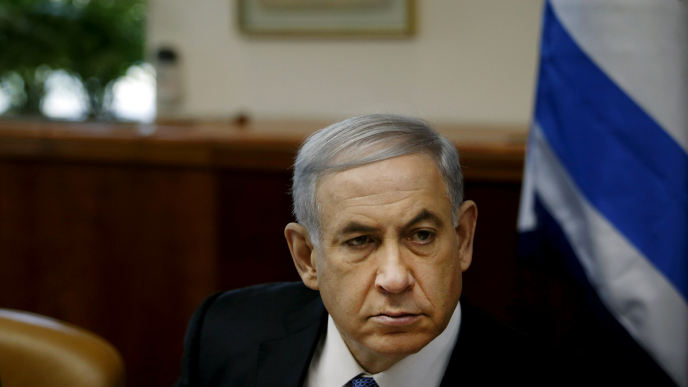
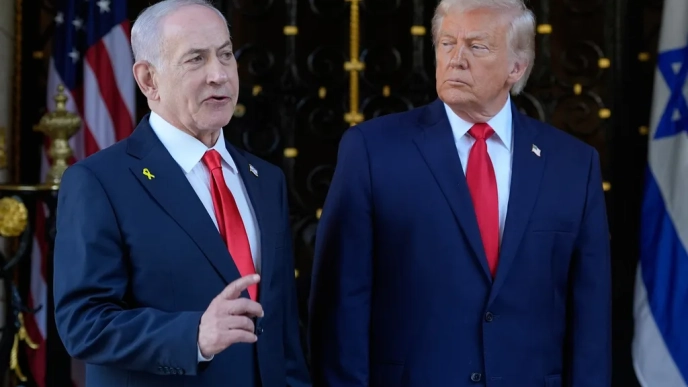
President Trump spoke with Israeli Prime Minister Benjamin Netanyahu by phone Thursday evening to discuss the situation in Iran, according to two sources with knowledge of the call.

Why it matters: It’s their second call in two days as Trump reviews his options for a possible military strike or diplomatic negotiations with an Iranian regime rocked by widespread protest and upheaval.

The White House and the prime minister’s office declined to comment.

Driving the news: During their first call on Wednesday, Netanyahu asked Trump to hold off on military action against Iran to give Israel more time to prepare for potential Iranian retaliation.

It was one of the reasons Trump decided to delay orders for the U.S. military to move forward with a strike against Iran. (Read more from “Trump and Netanyahu Discussed Iran in Second Phone Call” HERE)

Photo credit: Flickr

Hamas Admits Top Leaders’ Deaths, Vows To ‘Fight With Their Fingernails’

Hamas confirmed Monday that Israeli forces have killed five senior leaders of its military wing, including longtime spokesperson Abu Obeida and the brother of October 7 mastermind Yahya Sinwar.

The terror group’s new spokesman delivered the announcement in his first public address, The Jerusalem Post reported. He revealed that he “inherited” the “Abu Obeida” pseudonym, meaning “father of the worshipers,” from his predecessor.

The previous spokesperson’s true name was Huthayfa Samir Abdallah al-Kahlout, according to the outlet. An Israeli Defense Forces (IDF) strike on Gaza City took him out on Aug. 31, 2025.

The Israeli military and Shin Bet security agency confirmed the kill at the time, but Hamas refused to acknowledge the death until now.

The organization also admitted that Mohammad Sinwar, Hakham Muhammad Issa al-Issa, Mohammed Shabana and Ra’ad Sa’ad were killed by Israeli forces. (Read more from “Hamas Admits Top Leaders’ Deaths, Vows To ‘Fight With Their Fingernails’” HERE)

Tensions Rise as U.S. Pressures Israel to Change Course in Syria

According to Israeli officials, the raid was one of many preemptive missions designed to disrupt jihadist groups before they could entrench themselves in southern Syria — an increasingly volatile region following the collapse of the Assad regime last year.

But what unfolded afterward — an ambush on Israeli forces and a wave of retaliatory airstrikes — quickly transformed an isolated counterterrorism action into an international crisis stretching from Damascus to Washington.

The clash took place on the first anniversary of the Assad regime’s fall, a day that began with orchestrated pro-government celebrations. Those demonstrations rapidly spiraled into protests, fueled by outrage over Israeli military activity on Syrian soil. What Israelis framed as an essential strike against terrorism was denounced by Syrians as a blatant violation of sovereignty and an early test of whether their new leadership could defend national dignity.

Seeking to contain the escalation, U.S. Special Envoy to Syria Tom Barrack traveled to Damascus on Monday for talks with President Ahmed al-Sharaa. The United States has been working to stabilize Syria’s fragile transition and probe the possibility of future security cooperation between Jerusalem and Damascus.

But the White House’s reaction suggested frustration. Shortly after Barrack’s meeting, President Donald Trump posted a pointed message on Truth Social praising Syria’s new leader for his “hard work and determination” and urging Israel to maintain a “strong and true dialogue” with Damascus so as not to hinder Syria’s evolution into a “prosperous State.”

The timing — and the tone — made Washington’s message clear: Israel’s escalating operations are seen as complicating a diplomatic opening the Trump administration considers historic.

Senior U.S. officials have signaled growing impatience with Prime Minister Benjamin Netanyahu’s posture. One administration source quoted in Axios said Netanyahu was “seeing ghosts everywhere,” warning that Israeli strikes risk weakening Sharaa at the exact moment Washington believes he may be willing to engage Israel on regional security.

The fallout comes at a pivotal moment for Trump’s Middle East agenda. The president has championed a security pact between Israel and Syria as a cornerstone of what he envisions as a wider regional peace — complementing a fragile ceasefire in Gaza and the expansion of diplomatic normalization initiatives.

The administration has already lifted sanctions on Syria and welcomed Sharaa to the White House, betting that reintegration into the global community will steer Damascus toward cooperation against ISIS and a more stable regional order.

In a statement after Trump’s public warning to Israel, Netanyahu’s office confirmed that the two leaders had spoken and discussed “expanding” peace agreements, and that Trump had invited the prime minister to Washington once again — part of an ongoing pattern of close, high-level coordination between the longtime allies.

Photo credit: Gage Skidmore via Flickr

Traitor Who Sold American Secrets to Israel Hammers Trump as “Madman”

According to a report from the New York Times, [convicted spy Jonathan] Pollard met with Huckabee at the U.S. Embassy in Jerusalem in July for a discussion that was “kept off Mr. Huckabee’s official schedule,” and revealed for the first time on Thursday.

. . .In his interview with the Times, Pollard also attacked President Trump, calling him a “madman who has literally sold us down the drain, for Saudi gold.”

Pollard, a former U.S. intelligence analyst, was sentenced to life in prison in 1987 after it was discovered that he had been selling American secrets to Israel, including the names of thousands of U.S. intelligence agency sources.

Pollard was released from prison in 2015 and moved to Israel in 2020 – flying on a private jet owned by top Trump donor Sheldon Adelson to Tel Aviv, where he was given a hero’s welcome by Israeli Prime Minister Benjamin Netanyahu.

In 2021, Trump pardoned Aviem Sella, the Israeli handler who recruited Pollard to spy on the United States. (Read more from “Traitor Who Sold American Secrets to Israel Hammers Trump as “Madman” HERE)

Photo credit: Flickr

Mike Huckabee Held ‘Friendly’ Embassy Meeting With Convicted Israeli Spy

U.S. Ambassador to Israel Mike Huckabee reportedly held a quiet, off-the-books meeting in July with convicted Israeli spy Jonathan Pollard at the American Embassy in Jerusalem.

The off-the-books meeting startled officials in Washington and inside the U.S. intelligence community, who viewed the encounter as an extraordinary breach of long-standing boundaries, The New York Times reported. According to three U.S. officials familiar with the matter, the CIA station chief in Israel raised alarm after learning Huckabee and his senior adviser David Milstein brought Pollard into a secure American facility for what Pollard described as a “friendly” conversation.

Pollard told the NYT it was the first time in 10 years that any U.S. official had hosted him inside an American government office. He confirmed the meeting only after the newspaper approached him.

“It was a friendly meeting,” Pollard told the NYT in a phone interview Wednesday.

The White House was not notified in advance, according to one senior official and two people briefed on the meeting. Those officials said West Wing aides reacted with shock when they learned Huckabee invited one of the most infamous spies of the Cold War into the embassy. The State Department did not say whether anyone approved the meeting. (Read more from “Mike Huckabee Held ‘Friendly’ Embassy Meeting With Convicted Israeli Spy” HERE)

Trump Says Saudi Arabia to Get F-35 Jets Under Arrangement Similar to Israel

By CNA. US President Donald Trump said on Tuesday (Nov 18) that the United States would sell advanced F-35 stealth fighter jets to Saudi Arabia, signalling that Riyadh would receive the same top-tier defence equipment long reserved for Israel.

“As far as I’m concerned, I think they are both at a level where they should get top-of-the-line F-35s,” Trump told reporters at the White House, calling Saudi Arabia and Israel “great allies”.

The comments came as Trump hosted Saudi Crown Prince Mohammed bin Salman for talks aimed at deepening defence cooperation and expanding a growing US–Saudi security partnership.

Trump said Washington and Riyadh had reached a “defence agreement”, though he offered no details. Saudi Arabia is seeking stronger security guarantees from the US amid heightened regional tensions and has been pushing for access to advanced military hardware.

The crown prince, making his first White House visit in more than seven years, said security cooperation was a core priority of the trip. He also announced that Saudi Arabia would increase its planned investments in the United States to nearly US$1 trillion, up from a US$600 billion pledge made during Trump’s visit to Riyadh in May. (Read more from “Trump Says Saudi Arabia to Get F-35 Jets Under Arrangement Similar to Israel” HERE)

___________________________________________________

Israel’s ICC appeal is not about Karim Khan, but Trump – analysis

By The Jerusalem Post. Israel’s appeal to the International Criminal Court’s highest chamber to cancel the arrest warrants outstanding against Prime Minister Benjamin Netanyahu and former defense minister Yoav Gallant on the basis of disqualifying ICC’s chief prosecutor Karim Khan has much more to do with US President Donald Trump than with Khan.

If the only questions were: “Can Israel get Khan disqualified, and can this lead to the arrest warrants being tossed?” the answer would surely be that the arrest warrants won’t be nixed, even if Khan is.

But there are broader issues at stake here, and, though unlikely, the ICC could choose to use disqualifying Khan as a way out from its nearly year-long conflict with the Trump administration.

Since Trump returned to power in January and gave the ICC a brief ultimatum to withdraw the arrest warrants against Israel, the US government has escalated sanctions against ICC officials, one move after another.

Cumulatively, the ICC has lost employees, funding, and general flexibility in operations due to its stance on maintaining the arrest warrants. (Read more from “Israel’s ICC appeal is not about Karim Khan, but Trump – analysis” HERE)

Photo credit: Flickr

Report: US To Build $500 Million Military Base in Israel on the Gaza Border

The US is planning to build a large military base in Israel on the Gaza border, according to a joint report from the Israeli investigative outlet Shomrim and the Israeli newspaper Yedioth Ahronoth.

The report said that the construction of the base would cost about $500 million and would be designed to house thousands of US and international troops tasked with maintaining the Gaza ceasefire deal.

The US has already established a military outpost in southern Israel to oversee the ceasefire, known as the Civil-Military Coordination Center (CMCC), but the construction of such a large base would mark a significant escalation of the US military presence. It would also increase the US involvement in Gaza, where Israel is regularly carrying out attacks and killing Palestinians despite the truce deal. . .

The US has already deployed 200 troops to the CMCC, which has replaced Israel as the “overseer” of humanitarian aid deliveries into Gaza, according to a report from The Washington Post. Israel has continued to restrict aid deliveries to Gaza in violation of the ceasefire deal.

Bloomberg later reported that the US military was exploring the possibility of building a “temporary” base capable of housing 10,000 people near Gaza. The report cited a Request for Information document dated October 31 that said the US Navy was seeking a cost estimate for “a temporary, self-sustaining military base of operations capable of supporting 10,000 personnel and providing 10,000 square feet of office space for a period of 12 months.” (Read more from “Report: US To Build $500 Million Military Base in Israel on the Gaza Border” HERE)

Jeffrey Epstein Alleged to Broker Secret Back-Channel Between Ehud Barak and Vladimir Putin

Leaked emails allegedly reveal that Jeffrey Epstein, the disgraced financier and convicted sex offender, served as a behind-the‐scenes “fixer” arranging diplomatic contacts between former Israeli Prime Minister Ehud Barak and Russia during the height of the Syrian Civil War (2013-2016).

According to the hacking group known as the Handala Hacking Team, and published by Distributed Denial of Secrets via Drop Site News, the emails between Barak and Epstein show the following:

Epstein arranged a private meeting between Barak and Putin in the summer of 2013, to explore a Russia-led solution for removing Syrian President Bashar al‑Assad, with Israel’s interests at stake.

On February 21, 2014, Epstein wrote to Barak:

“with civil unrest exploding in ukraine, syria, somolia [sic], libya, and the desperation of those in power, isn’t this perfect for you.”

Barak responded:

“You’re right [in] a way. But not simple to transform it into a cash flow. A subject for Saturday.”

Epstein’s line frames multiple global hotspots (Ukraine, Syria, Somalia, Libya) in a single sweeping sentence—“the desperation of those in power” being ripe for opportunity. This suggests he was positioning Barak to exploit geopolitical unrest not purely for statesmanship but for something like strategic positioning or business advantage.

Epstein allegedly offered tactical advice on how to pressure the Barack Obama administration into military action against Iran after Syria, writing:

“I would use the opportunity to compare it with iran… the solutions become more compelx with time not less… hopefully someone suggests getting authorization now for Iran. the congress woudl do it.”

The communications also show Epstein advising Barak on business ventures—for example, coordinating with Russian-Israeli oligarch Viktor Vekselberg and the Renova Group for consultancy roles in Russia, again with Epstein’s help.

In short: the hacked emails portray Jeffrey Epstein not just as a financier and criminal, but as a clandestine intermediary in international diplomacy — working with Ehud Barak to engage Russia during a critical phase of the Syrian war. If substantiated, these revelations could reshape how we understand both Epstein’s global network and the murky corridors of back-channel diplomacy in the 2010s.

Country Defends Banning Athletes From Israel After Olympic Committee Urged Boycott

Indonesia defended its decision to block Israeli gymnasts from a world championship event Thursday, saying the move maintains public order despite pushback from the International Olympic Committee (IOC).

Sports Minister Erick Thohir said Jakarta understands the consequences of preventing Israeli athletes from participating in the gymnastics world championship held in the capital, according to Times of Israel.

“We at the Ministry of Youth and Sports, as representatives of the Indonesian Government, adhere to the principle of maintaining security, public order, and public interest in every international event organized,” Thohir said on his social media account, according to a translation.

He added that the principle is part of Indonesia’s constitution and is motivated by an obligation to “uphold world order.”

Thohir responded to an IOC statement urging all international sporting federations not to host sporting events in Indonesia. The committee also cut off all discussions about any possible Olympic bid by Indonesia, which had expressed interest in hosting the 2036 summer games.

(Read more from “Country Defends Banning Athletes From Israel After Olympic Committee Urged Boycott” HERE)

Photo credit: Flickr

Last Christian Village in the West Bank Faces Growing Attacks From Israeli Settlers

In the hills of the occupied West Bank, the ancient village of Taybeh stands as the last entirely Christian community in the territory. Once known as Ephraim in the Bible, Taybeh has long been a symbol of coexistence and faith — but today, its 1,200 residents face mounting threats from expanding Israeli settlements and escalating violence.

Each Sunday, church bells ring across Taybeh’s three parishes — Roman Catholic, Greek Melkite, and Greek Orthodox — calling the faithful to worship. But beyond the church doors, fear hangs heavy. Residents say Jewish settler attacks have grown more brazen, while Israeli checkpoints restrict movement, cut off trade, and make daily life increasingly unbearable.

“The situation in the West Bank needs another agreement — to move away and expel the settlers from our lands,” said Rev. Bashar Fawadleh, parish priest of Christ the Redeemer Catholic Church. “We are so tired of this life.”

The tiny Christian population in the West Bank — now estimated at just 1% of its 3 million residents — is shrinking fast. Taybeh’s villagers say they are struggling to hold on as families flee for safety and opportunity abroad. Clergy report that at least a dozen families have already left, while others are considering it amid worsening security and economic decline.

Settler violence, residents say, has reached their olive groves and cemeteries. Longtime parishioner Suheil Nazzal, who leads music at Mass, said settlers have blocked villagers from harvesting olives and even set fires near Taybeh’s historic fifth-century church.

“We’re struggling too much. We don’t see the light,” said Rev. David Khoury of St. George Greek Orthodox Church. “We feel like we are in a big prison.”
Families like Victor Barakat and Nadeen Khoury, who moved from Massachusetts to raise their children in Taybeh, say the violence feels worse than during the Second Intifada. “Everyone is unsafe,” Barakat said. “You never know who’s going to stop you.”

Though Israel’s government insists it protects religious freedom, Christian leaders across the region have warned of rising hostility. Church officials in Jerusalem report more frequent acts of vandalism and harassment by Jewish extremists, including attacks on clergy.

Cardinal Pierbattista Pizzaballa, the Latin Patriarch of Jerusalem, has called attention to the worsening situation: “Settler attacks, lack of jobs, and restrictions on movement are driving more Christians to leave.”

For the Franciscan Custodian of the Holy Land, Rev. Francesco Ielpo, the mission is to persevere: “We can’t stop the hemorrhage, but we will continue to be here and stand alongside everyone.”

Despite the hardships, Taybeh’s Christians remain rooted in faith — determined to keep alive their ancient presence in the land where their religion began. “I love my country because I love my Christ,” Father Fawadleh said. “My Christ is Ibn Al-Balad — the son of this land.”