
Posts

Trump Not Moving Our Embassy to Jerusalem — Yet

I’m not the least bit surprised that President Trump signed the waiver to delay moving our embassy in Israel to Jerusalem, as each of our presidents has done since 1995. I’m disappointed, because he made such a point of this during the campaign, assuring us that he would be the man to make this momentous move. But I’m not surprised.

We’ve had indications that he was waffling on this for several weeks now. Plus, a move like this is easier said than done.

Still, there’s reason for hope in the midst of the disappointment.

Trump is Committed to Israel’s Well-Being

First, as a White House official emphasized, “It’s a question of when, not if.”

Yes, “President Trump made this decision to maximize the chances of successfully negotiating a deal between Israel and the Palestinians, fulfilling his solemn obligation to defend America’s national security interests. But, as he has repeatedly stated his intention to move the embassy, the question is not if that move happens, but only when.”

This is positive. I don’t recall past presidents making this point so emphatically. We will move the embassy, just not yet.

Second, sources indicate that Trump actually yelled at Palestinian President Abbas when they met during the president’s Middle East trip. This led to several minutes of stunned silence on the Palestinian side. “You tricked me in D.C.!”, Trump is reported to have said. “You talked there about your commitment to peace, but the Israelis showed me your involvement in incitement [against Israel].”

This too would indicate that President Trump is striking a very different tone than his predecessors.

Third, there was no indication that the president put heavy pressure on Prime Minister Netanyahu when they met, telling him he would have to make major sacrifices, or else. Certainly, there was talk of making concessions for peace. But again, we have no indication that Trump tried to force Netanyahu’s hand on any major issues.

That could explain why Israel’s official response to the announcement that relocating the embassy had been postponed was muted: “Though Israel is disappointed that the embassy will not move at this time, we appreciate today’s expression of President Trump’s friendship to Israel and his commitment to moving the embassy in the future.”

Of course, Israel reiterated that “the American embassy, like the embassies of all countries with whom we have diplomatic relations, should be in Jerusalem, our eternal capital.” But the statement itself expresses only mild disappointment, given Trump’s clear commitment to Israel’s well-being.

Will There Ever be a Good Time to Move the Embassy?

The real problem, however, is this. A White House official explained that, “In timing such a move, [the president] will seek to maximize the chances of successfully negotiating a deal between Israel and the Palestinians.”

Unfortunately, moving the embassy to Jerusalem will always be a point of contention with the Palestinians and the larger Muslim world. As noted in Israel’s statement, “Maintaining embassies outside the capital drives peace further away by helping keep alive the Palestinian fantasy that the Jewish people and the Jewish state have no connection to Jerusalem.”

Why keep this fantasy alive? The Palestinians are totally dependent on America to help broker peace negotiations. And at some point, they will have to accept that our embassy will be in Jerusalem. Why not make the move now, while also affirming to the Palestinians our commitment to work for their best interests as well?

As I (along with others) suggested previously, nothing is stopping us from moving the embassy to West Jerusalem. Even Russia recognizes this as Israel’s capital (while claiming that East Jerusalem should be the capital of a Palestinian state). We can make this move without making a final determination about a Palestinian capital in East Jerusalem. (Obviously, I don’t believe there is any historic Palestinian claim to East Jerusalem. But again, that can be a subject for later talks.)

The Camp David Accords are almost 40 years old (signed in September, 1978). The Oslo Accords are nearly 25 years old (signed September, 1993). Does President Trump really think that by not moving our embassy to Jerusalem now, we will be able to move the peace process forward? And can he really imagine that there will be some magic, opportune time to make the move in the future?

I’m thankful that President Trump is showing himself to be a true friend of Israel. He is holding the Palestinians’ feet to the fire over terrorism and he has reaffirmed his commitment to stand with the Jewish State. I would just urge him once again to do what no other president has done.

Mr. Trump, be the man who made the move.

As I wrote last month, I’ll write again: History will smile on you for it. (For more from the author of “Trump Not Moving Our Embassy to Jerusalem — Yet” please click HERE)

Follow Joe Miller on Twitter HERE and Facebook HERE.

Trump Signals a Reset Between Israel and US

It’s time to patch up America’s second “special relationship” after eight years of frayed feelings between the United States and Israel.

That’s the message President Donald Trump is sending in his early-presidency trip to Israel and unprecedented visit to the Western Wall in Jerusalem.

Trump said of his Monday visit to the Western Wall, a first for sitting American presidents, that the visit was potentially a path to a “deeper” friendship with Israel.

Conflicts over policy and philosophy strained the relations between former President Barack Obama and Israeli Prime Minister Bibi Netanyahu and led to distrust between the two countries.

By going out of his way to entreat with Israel, Trump is at least signaling that a reset is in store.

Israel plays an essential role in American foreign policy—and not only in the Middle East. The war against radical Islamists has global implications in which the two countries have overlapping interests.

America’s Other ‘Special Relationship’

It is almost taken for granted today that Israel has been such a reliable foreign policy partner. This was only due to the careful diplomacy and alignment of key national and cultural interests between the two countries.

The nature of this partnership in many ways mirrors the so-called “special relationship” between Great Britain and the United States.

However, it is important to remember that before World War II, the U.S. and U.K. spent a century as mortal enemies and had deep reasons to distrust one another.

World War I pushed the U.S. and U.K. closer together after a century of suspicion and hostility. The fires of World War II and the Herculean efforts of British Prime Minister Winston Churchill sealed a the long-term collaboration between the countries—an example of the importance of wise statesmanship from American and British leaders.

It is important for American leaders to recognize and cultivate just such a relationship with Israel.

While the United States has always been supportive of Israel’s nationhood since 1948, the two countries were not always so intertwined. The complex nature of the Cold War in the Middle East occasionally put the U.S. and Israel at odds.

U.S.-Israel ties grew closer after Israel defeated a coalition of Arab states backed by the Soviet Union in the Yom Kippur War and the country proved itself to be a valuable Cold War ally.

The wisdom of this cooperation is even more apparent after the rise of radical Islamist sentiment that became a cornerstone aspect of American foreign policy after the terrorist attack on 9/11.

Israel was in a prime position to help combat this pernicious ideology, which has strong ties in the Middle East.

Countering Iran and Syria

Trump addressed a few major issues of immediate concern to the U.S. during his visit to Israel.

Of course, the thorn of the Islamic State, also known as ISIS, and other radical, subnational Islamist groups in the region remain high on the U.S. agenda, and Israel is a key partner in destroying these factions.

But the national threats of Syria and Iran, which have acted recalcitrantly toward the West and are well-known funders of terrorist groups, are of particular concern and also require close cooperation with Israel.

Trump has already shown that he is willing to make limited strikes in Syria to enforce the red line on chemical weapons. This action was strongly supported by Israel, and was seen as a rebuke to both Bashar Assad’s regime in Syria and also Iran.

On Monday, Trump sent a strong message to Iran that its terror funding and nuclear ambitions would not be tolerated.

As Middle East expert Jim Phillips argued in a recent Heritage Foundation report, “Iran remains the chief long-term regional threat to the U.S. and Israel.”

Trump has not yet followed through on his promise to tear up the Obama administration’s 2015 nuclear deal with Iran, pending a formal policy review of whether the nuclear deal advances vital American national interests.

Nevertheless, Trump said in a speech that Iran was guilty of “deadly funding, training, and equipping of terrorists and militias,” and that it acted inappropriately after the deal took place.

As Phillips noted, it is vitally important to either change the terms of this treaty or step away from it entirely to stem Iran’s “continued support for terrorism, expanding ballistic missile program, and deepening military intervention in Syria.”

Israel is among the most important counterweights to this hostile regime in the Middle East, especially in upholding economic sanctions and controlling arms flowing to and from Iran.

The ‘Ultimate Deal’

Trump made numerous commitments regarding Israel during the campaign.

Currently, his promise to officially recognize Jerusalem as Israel’s capital and move an American embassy there has failed to materialize. This remains a thorny issue for the Palestinians in particular. It would also create a challenge for Trump’s desire to broker the “ultimate deal” between Israel and the Palestinians.

Trump has expressed a desire to create some kind of lasting solution for the Israeli-Palestinian conflict, an issue that has become a white whale for American presidents from Jimmy Carter to Obama.

All of these attempts have failed to achieve any kind of lasting peace, and some have exacerbated the conflict.

A more realistic approach would be to seek an interim agreement to make incremental progress on addressing Israeli security concerns and facilitating Palestinian economic development, which would help restore mutual trust and create a more supportive environment for later addressing touchy final status issues.

Sticking points like the “right of return” for Palestinians, the status of Jerusalem, the future of Israeli settlements, and the redrawing of borders are unlikely to be resolved anytime soon, given the glaring lack of trust and wide gaps in the negotiating positions of Israel and the Palestinian Authority. (For more from the author of “Trump Signals a Reset Between Israel and US” please click HERE)

Follow Joe Miller on Twitter HERE and Facebook HERE.

Trump Heads to Wary Israel in Search of the ‘Ultimate Deal’

President Donald Trump will arrive in Israel Monday for the second leg of his inaugural foreign trip as chief executive facing several obstacles as he strives for an Israeli-Palestinian peace deal that has eluded so many of his predecessors.

Trump’s two-day visit will include meetings with Israeli Prime Minister Benjamin Netanyahu and Palestinian Authority President Mahmoud Abbas, as well as visits to the Holocaust memorial Yad Vashem and the Western Wall, an important Jewish holy site.

On the eve of Trump’s visit, Netanyahu’s Security Cabinet approved several confidence-building measures, including construction permits for Palestinians near their cities in parts of the West Bank that had previously been off limits, a senior official told the Associated Press. Under interim agreements, 60 percent of the West Bank, known as Area C, site of Israel’s settlements, is under Israeli control and Palestinian development there has mostly been forbidden by Israel.

Speaking on condition of anonymity in line with protocol, the official said the package also includes economic concessions and opening the border crossing between the West Bank and Jordan. (Read more from “Trump Heads to Wary Israel in Search of the ‘Ultimate Deal'” HERE)

Follow Joe Miller on Twitter HERE and Facebook HERE.

Netanyahu: Abbas Lied to President Trump

Israeli Prime Minister Benjamin Netanyahu called out Palestinian Authority chairman Mahmoud Abbas for lying to President Donald Trump during their meeting Wednesday.

The leader of the anti-Semitic Palestinian Authority came to the United States as President Trump seeks a peace agreement between Israel and Palestine.

“I want to see peace with Israel and the Palestinians,” Trump told Reuters last week. “There is no reason there’s not peace between Israel and the Palestinians — none whatsoever.”

During a joint press conference with the president, Abbas expressed a desire for peace and claimed that Palestinian children are brought up in a “culture of peace.”

“Mr. President, I affirm to you that we are raising our youth, our children, our grandchildren on a culture of peace,” Abbas told Trump. “And we are endeavoring to bring about security, freedom and peace for our children to live like the other children in the world, along with the Israeli children in peace, freedom and security.”

Prime Minister Netanyahu called out Abbas’ egregious lie.

“I heard President Abbas yesterday say that they teach, Palestinians teach their children peace. That’s unfortunately not true,” Netanyahu said Thursday. “They name their schools after mass murderers of Israelis and they pay terrorists.”

President Trump is mistaken if he believes Abbas is genuinely interested in finding peace. The Palestinian leader has a series of ties to terrorist organizations and has previously motivated his people to commit acts of violence against the Israeli people.

Despite Abbas’ history as a bad actor, PM Netanyahu reserves hope that peace can be achieved.

“But I hope that it’s possible to achieve a change and to pursue a genuine peace. This is something Israel is always ready for. I’m always ready for genuine peace,” Netanyahu said.

President Trump has previously criticized the Palestinian authority for teaching their children hate “from a very young age.”

(For more from the author of “Netanyahu: Abbas Lied to President Trump” please click HERE)

Follow Joe Miller on Twitter HERE and Facebook HERE.

What’s at Stake in Trump Meeting With Palestinian Leader

President Donald Trump will meet with the leader of the Palestinian Authority this week, ahead of his first trip to Israel expected later this month.

Palestinian Authority President Mahmoud Abbas will visit the White House Wednesday, with a U.S. president that seems decidedly pro-Israel, while also genuinely interested in a Middle East peace deal.

“The president’s ultimate goal is to establish peace in the region and so I think that’s obviously the goal and the discussion he’s going to have with the head of the Palestinian Authority,” White House press secretary Sean Spicer told The Daily Signal during the White House press briefing on Monday.

“That’s going to be a relationship he’s going to continue to work on and build with the ultimate goal that there is peace in that region between Israel and the Palestinian Authority,” Spicer added.

Still, considering the political problems Abbas is facing among his own people, experts have a mixed view on whether the visit will have any significance.

As a candidate, Trump pledged to relocate the Israeli Embassy from Tel Aviv to Jerusalem, a move that could spark rage among Palestinians.

The Daily Signal asked Monday if Trump will talk about moving the embassy during his Wednesday meeting with Abbas.

“That is still being discussed by staff,” Spicer told The Daily Signal.

In an interview last week, Trump told Reuters, “ask me in a month on that,” about moving the embassy to Jerusalem.

“I want to see peace with Israel and the Palestinians,” the president added. “There is no reason there’s not peace between Israel and the Palestinians—none whatsoever.”

The meeting presents a major opportunity for Abbas, said Robert Danin, a senior fellow for Middle East studies at the Council on Foreign Relations.

“President Trump is not interested in peace process or in negotiations for negotiations’ sake. He is interested in a deal,” Danin told The Daily Signal in a phone interview. “There are a lot of questions about Abbas and his political standing. He has to convince the president that he can close the deal. It’s a big challenge, but it’s also a tremendous opportunity.”

Trump met with Israeli Prime Minister Benjamin Netanyahu in February. During a joint press conference with the two leaders, Trump predicted a “bigger and better” Middle East peace deal than anyone expects. He asked Israel to hold back on settlements, and said he is open to a two-state solution or one-state solution, whichever is more likely to bring peace.

Trump has said that his son-in-law and senior adviser, Jared Kushner, would be in charge of reaching a peace deal.

Danin added that Trump could be in a stronger position than previous presidents, and could even put pressure on Israel that President Barack Obama couldn’t.

“The people of Israel believe Trump is on their side,” Danin said. “President Trump doesn’t believe settlements and settlers are bad guys. He believes the settlements are part of the answer, but he hasn’t demonized the settlers as President Obama did. They believe he wants to move the embassy to Jerusalem, no matter what he does.”

At this stage, Abbas has little influence as a leader, said Jim Phillips, a senior research fellow for Middle Eastern affairs with The Heritage Foundation.

“I think the Abbas visit will yield little results. Abbas is unwilling and unable to reach a comprehensive peace agreement with Israel on acceptable terms,” Phillips told The Daily Signal.

Abbas, 82, is facing a tough political climate at home. Though his term was supposed to expire in 2009, he remained in power without an election nor designated successor. His party, Fatah, is also divided.

“He has no control over Hamas, which is virulently opposed to Israel’s existence, let alone negotiations, and it would torpedo any final accord he would sign,” Phillips said. “Even many of his own supporters within Fatah have abandoned him. He is yesterday’s man and is increasingly irrelevant to what happens tomorrow.”

Trump did the right thing in reaching out to Abbas for a meeting, said Clare Lopez, vice president for research and analysis at the Center for Security Policy, a conservative foreign policy think tank in the District of Columbia. However, she said no one should expect a breakthrough on a peace deal.

“I’m not exactly sure why the U.S. keeps trying. Every time, the Palestinians were offered a deal, a good deal, under President [Bill] Clinton, under President [George W.] Bush, they walked away,” Lopez told The Daily Signal. “Whether it’s Hamas in Gaza or Fatah in the West Bank, this is Islam, it’s not political.”

Lopez said that any Palestinian leader who wanted to recognize Israel’s right to exist would be marginalized, accused of apostasy, and likely to face threats to his life. (For more from the author of “What’s at Stake in Trump Meeting With Palestinian Leader” please click HERE)

Follow Joe Miller on Twitter HERE and Facebook HERE.

No Refuge on Good Friday: Palestinian Stabs Young Christian Woman to Death in Israel

A 23-year-old Christian tourist was stabbed to death by a Palestinian man as Christians gathered to celebrate Good Friday, ABC News reports. The attack comes as Christians around the world commemorate the day Jesus Christ was crucified and died, rising from the dead three days later on Easter — the highest Christian holy day.

The attack took place on a tram close to the Old City, where tourists from around the world have come to commemorate Easter and Passover. The woman died shortly after she was brought to a medical facility, despite efforts to save her. The 57-year old Palestinian attacker was apprehended by police.

Local media quoted witnesses as saying the man stabbed the woman multiple times. Reports said a pregnant woman was injured when the light rail came to a sudden stop. The attacker was apprehended by officers at the scene, police said.

Reports indicate two others were injured as well.

According to ABC News, Palestinians have killed 42 Israelis and two visiting Americans since September 2015. The Palestinian Authority regularly incites violence and acts of terror against Christians and Jews in Israel.

Governments around the world are taking steps to prevent attacks by radical Islamic terrorists over the Easter holiday. Authorities in Kosovo claim they have already intercepted plans for such an attack. (For more from the author of “No Refuge on Good Friday: Palestinian Stabs Young Christian Woman to Death in Israel” please click HERE)

Follow Joe Miller on Twitter HERE and Facebook HERE.

GOP-Led Congress Looks to Protect Israel and Check Iranian Power

Aiming to prove their commitment to Israel, senior U.S. lawmakers are backing bipartisan legislation that would slap Iran with new sanctions while maintaining rigorous enforcement of the landmark nuclear deal.

The measures, unveiled at the opening of the annual American Israel Public Affairs Committee conference, seek to build consensus among Republicans and Democrats who are so often bitterly at odds on domestic issues. The AIPAC meeting continues Tuesday with appearances by Senate Majority Leader Mitch McConnell and Senate Minority Leader Chuck Schumer.

During Monday’s session, House Speaker Paul Ryan declared the U.S. commitment to Israel “sacrosanct.” Ryan also derided the nuclear deal an “unmitigated disaster” that gives Iran “a patient pathway to a nuclear weapons capability.” (Read more from “GOP-Led Congress Looks to Protect Israel and Check Iranian Power” HERE)

Follow Joe Miller on Twitter HERE and Facebook HERE.
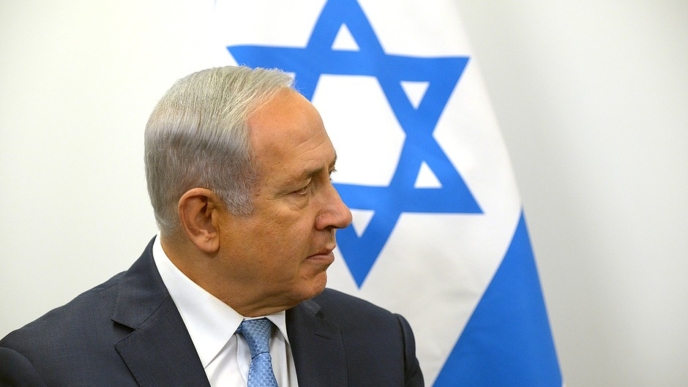
US-Israel Partnership Just Added Something Revolutionary

The defense partnership between the United States and Israel is set to reap the benefits of perhaps its greatest combined innovation to date.

Israel will soon add a revolutionary new missile defense system to its defense arsenal, a senior Israeli Air Force official said Monday. Known as “David’s Sling,” or “Magic Wand,” the joint U.S.-Israel creation will become fully operational at the beginning of April.

David’s Sling will protect Israel from medium-range missiles, as part of its three-tier defense system that also guards the country’s citizens from smaller short-range rockets and long-range ballistic threats.

Iron Dome, which achieved incredible success (with a 90 percent interception rate) in Israel’s latest flare-up with the Hamas terrorist group in 2014, guards the country against short-range threats. Multiple Iron Dome batteries are often activated amid conflict so Israel can deter threats aiming to overwhelm the systems.

Its Arrow-2 and Arrow-3 systems protect against long-range ballistic threats. The newly deployed Arrow was used for the first time on Friday to intercept a 440-pound missile fired from Syria. According to the Associated Press, the Syrian missile targeted Israeli jets returning from a strike on a Hezbollah weapons convoy.

David’s Sling, Iron Dome and Arrow have all been developed jointly by Israel and the United States, highlighting the successes and innovation produced by the defense partnership.

“In the next two weeks we will declare operational the David’s Sling and at that time we will have completed our multi-tier (defence capability),” an Israeli official said. “I’m sure that together with the Iron Dome and the Arrow-2 and Arrow-3 it will enhance our ability to deal with threats.”

David’s Sling has been jointly developed by Israel’s Rafael Advanced Defense Systems and the American defense company Raytheon. It is promoted as a more advanced version of the U.S.-made Patriot surface-to-air missile.

Much of the $3.1 billion in annual aid Israel receives from the United States goes toward bolstering the aforementioned missile defense projects. The defense shield can fire upon and target both enemy aircraft and incoming cruise missiles. David’s Sling has a range three times that of the Iron Dome, and the integrated system can undergo constant upgrades.

Israel faces a variety of threats from several local terrorist groups and enemy states, which include Syria, Iran, Hezbollah, Hamas, and ISIS, to name a handful. (For more from the author of “US-Israel Partnership Just Added Something Revolutionary” please click HERE)

Follow Joe Miller on Twitter HERE and Facebook HERE.

Anti-Israel Hate Is a Symptom of the UN Human Rights Council’s Cancerous Corruption

The U.N. Human Rights Council (UNHRC) is corrupt to its core, and its lashing out at Israel is a manifestation of the group’s immoral, corrupt structure. Tasked a decade ago with promoting and defending human rights around the world, the UNHRC has failed to carry out its founding mission.

The U.S. delegation to the council, led by Erin Barclay, threatened America’s departure from the prominent U.N. subdivision Wednesday, claiming the international organization’s unhealthy “obsession” with the state of Israel threatens the group’s credibility and “makes a mockery of this council.”

In Geneva, Barclay, the U.S. deputy assistant secretary of state, stated: “The U.S. also remains deeply troubled by the council’s consistent, unfair and unbalanced focus on one democratic country, Israel.”

“For this council to have any credibility, let alone success, it must move away from its unbalanced and unproductive positions,” she said. “As we consider our future engagements, my government will be considering the council’s actions with an eye to reform, to more fully achieve the council’s missions to protect and promote human rights.”

The UNHRC has long been a group that has overlooked worldwide atrocities in favor of singling out Israel with rhetorical aggression and condemnation.

But the UNHRC not only has an Israel problem — the institution’s membership roster itself shows why it could never truly promote human rights. After all, how can an organization have any credibility on human rights when its members are a who’s who of the world’s foremost violators of universal ideals?

Ruthless authoritarian countries such as Saudi Arabia, Qatar, China, Cuba, Venezuela, and many others are tasked with upholding the UNHRC’s core mission to promote and protect human rights.

In 2015, the council chose Saudi Arabia’s ambassador Faisal bin Hassan Trad to chair the UNHRC panel on selecting human rights experts. In the ambassador’s country, women are treated as second-class citizens. They cannot go out in public without a male companion, and need to wear clothing that covers them head-to-toe, with only their eyes and hands permitted to be uncovered. In Saudi Arabia, Islam is the only recognized religion, and the country follows an extremely harsh penal code to punish violations of Shariah law.

The U.N. Human Rights Council has long abandoned the promotion of actual human rights and has dedicated the last decade to delegitimizing Israel – the only free country in the Middle East.

From 2006 to 2016, the UNHRC adopted 135 resolutions condemning countries. An incredibe 68 (over half) of those resolutions singled out the Jewish state for criticism.

However, Israel is only a symptom of the cancer that is the UNHRC. If the United States wants the UNHRC to foster an environment that campaigns for true human rights, the U.N. body needs to purge the forces of evil from within it. (For more from the author of “Anti-Israel Hate Is a Symptom of the UN Human Rights Council’s Cancerous Corruption” please click HERE)

Follow Joe Miller on Twitter HERE and Facebook HERE.
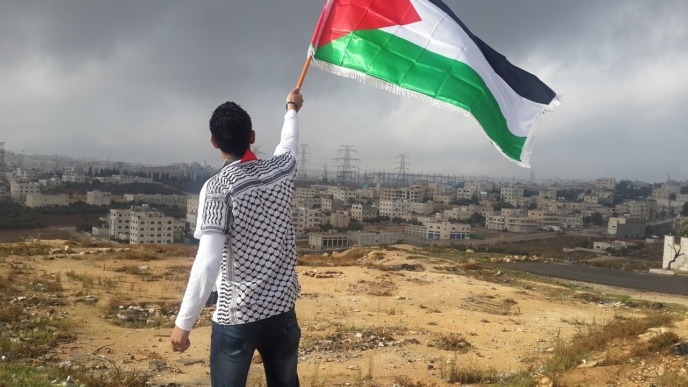
Christian Group: Israel Is Key to Christian Presence in Middle East

In the past decade, millions of Christians have fought to escape persecution and violence in the Middle East. Many have died, while others have traveled to Europe, the U.S., and elsewhere in search of safety.

According to Robert Nicholson, Executive Director of The Philos Project, two of the keys to a continued Christian presence in The Holy Land include a continued U.S. military presence in Iraq and a thriving Israel.

“It is imperative that the United States continue to support the existence of the State of Israel,” Nicholson told The Stream at the 2017 Conservative Political Action Conference (CPAC). “It is imperative that we not withdraw from Iraq after its liberation, as that will create a power vacuum which will be filled by another insurgency.”

The U.S. has led a coalition of nations against terrorist actors and others in Iraq for nearly 15 years. Some say the terrorist group ISIS, which in recent years has been the focus of U.S. anti-terrorism efforts, arose because former President Barack Obama drew down the U.S. presence in the nation. Others say ISIS wouldn’t exist if former President George W. Bush had not launched the invasion in the first place in 2003.

Christians make up between five and 10 percent of the Syrian population, but just one-half of one percent of the refugees accepted from Syria in the 2016 fiscal year. Nicholson told The Stream that U.S. policy on the Middle East should aid both Christians who want to come to America and those who wish to stay in their homelands.

I support the prioritization of Christian and other minority refugees whose lives have been destroyed by the Islamic state. After being forced from their homes, they are often the victims of further discrimination in neighboring Arab countries who have been aiding in the refugee crisis. It is imperative, however, that by favoring certain minorities, U.S. policy does not inadvertently drain the region of Christianity. At-risk minority communities in Iraq and Syria must be preserved.

“I see a deep need to protect minority interests on the ground in Iraq and Syria,” Nicholson continued. “Christianity and Judaism is quickly disappearing from the Arab world – the cradle of both those religions. The Philos Project seeks to reinvigorate thoughtful discussion on sustainable solutions to preserve minority heritage in the region.”

The Philos Project hosted a panel at CPAC is entitled, “Why Disengagement Isn’t an Option in the Middle East.” Nicholson said his group is aiming “to inform and educate Christian leaders and future leaders to have a holistic understanding of the complex situations in the Middle East.”

“We recognize that many leaders who care about Israel and Christianity in the Middle East come to the CPAC conference,” concluded Nicholson, who said the CPAC panel “will explore strategies for sustainable U.S. policy in the region.” (For more from the author of “Christian Group: Israel Is Key to Christian Presence in Middle East” please click HERE)

Follow Joe Miller on Twitter HERE and Facebook HERE.