Posts

Legal Experts Weigh in on Trump’s Right to Be Riled at Sessions, DOJ

Jeff Sessions will likely continue to lead the Department of Justice, despite the public clash between President Donald Trump and his choice for attorney general.

But Trump’s frustration with the direction of the Russian probe and the special prosecutor are understandable, said Tom Fitton, president of Judicial Watch, a government watchdog group.

“Sessions should un-recuse himself and get rid of [special counsel Robert] Mueller,” Fitton told The Daily Signal. “This is a political effort to jail the president and his family because people don’t like him.”

Trump told The New York Times that he regrets tapping Sessions for attorney general since Sessions recused himself from the investigation into Russian interference into the 2016 presidential campaign. Trump called Sessions’ decision to recuse himself from the case “unfair to the president.”

It was the recusal that eventually led to the Justice Department appointment of Mueller, who has reportedly expanded the investigation beyond Russia’s role in the 2016 presidential campaign and into Trump’s past business dealings. Furthermore, Mueller has staffed up with Democratic donors.

“To be fair to Sessions, I think he believed he was recusing himself from a very limited set of circumstances,” Fitton said. “He was a bit naïve because that is not the way to approach it. You can’t have an attorney general that is unable to manage the largest case known to the public that is going on in the Justice Department. Now they have moved beyond Russia and are investigating everything.”

Trump, in an interview with the Times, said:

Jeff Sessions takes the job, gets into the job, recuses himself, which frankly I think is very unfair to the president … How do you take a job and then recuse yourself? If he would have recused himself before the job, I would have said, ‘Thanks, Jeff, but I’m not going to take you.’ It’s extremely unfair—and that’s a mild word—to the president.

During a press conference Thursday where Sessions wanted to talk cybersecurity, the only questions were about Trump’s comment. The attorney general responded, “I plan to continue to do so as long as that is appropriate.”

White House deputy press secretary Sarah Huckabee Sanders told reporters Thursday the president doesn’t plan on pushing Sessions out.

“As the president said yesterday, he was disappointed in Attorney General Sessions’ decision to recuse himself. But clearly he has confidence in him or he would not be attorney general.”

Pressed further if Trump wants Sessions to resign, Sanders responded, “I think you know this president well enough to know that if he wanted somebody to take an action, he would make that quite clear.”

Sessions had little choice but to recuse himself in the matter, argued Matthew Whitaker, a former U.S. attorney for the Southern District of Iowa.

“My understanding of the DOJ policy is that he needed to recuse himself from the investigation because he was part of the campaign,” Whitaker told The Daily Signal.

Whitaker, president of the Foundation for Accountability and Civic Trust, a government watchdog group, said Trump’s comments shouldn’t interfere with the Russian investigation.

“This just confirms rumors we’ve been hearing for the last several months,” he said. “The president just had a forum and a venue to share his feelings. It’s unfortunate, but it won’t have any bearing on the important work of the DOJ. The remarks will pass.”

During his March announcement, Sessions said:

During the course of the last several weeks, I have met with the relevant senior career department officials to discuss whether I should recuse myself from any matters arising from the campaigns for president of the United States. Having concluded those meetings today, I have decided to recuse myself from any existing or future investigations of any matters related in any way to the campaigns for president of the United States.

However, in lieu of a finite charge, Sessions could have delayed recusal and would be on solid legal ground, contends Ken Boehm, chairman of the National Legal and Policy Center, a government watchdog group.

“Jeff Sessions could have said to Trump, ‘If asked, I would recuse myself,” Boehm told The Daily Signal. “I think the world of Jeff Sessions. I think he’s a good man. But, if you look at every other incident, people in positions at Justice in the past administration wouldn’t do it because they would fear a fishing expedition. Before Sessions recused himself, he should have called for an actual crime, a statute. He would have been on firm legal ground.” (For more from the author of “Legal Experts Weigh in on Trump’s Right to Be Riled at Sessions, DOJ” please click HERE)

Follow Joe Miller on Twitter HERE and Facebook HERE.

Trump Says He Wouldn’t Have Picked Sessions If He Knew He’d Recuse Himself

President Trump said he never would have picked Attorney General Jeff Sessions if he’d known he would recuse himself in the Justice Department’s investigation into Russian meddling.

In a wide-ranging interview with the New York Times Wednesday, Mr. Trump also accused fired FBI Director James Comey of trying to use a dossier of compromising information as leverage to keep his job. The interview is likely to only add fuel to the Russia story, even as the White House attempts to downplay it and focus on things like health care and jobs.

“Jeff Sessions takes the job, gets into the job, recuses himself, which frankly I think is very unfair to the president,” the president said in the 50-minute interview. “How do you take a job and then recuse yourself? If he would have recused himself before the job, I would have said, ‘Thanks, Jeff, but I’m not going to take you.’ It’s extremely unfair — and that’s a mild word — to the president.”

Sessions declined to comment on the story.

Mr. Trump also said he believes Comey told him about the dossier to make it clear he had leverage over the president. Mr. Trump fired Comey in May, and the White House offered conflicting explanation for his removal. (Read more from “Trump Says He Wouldn’t Have Picked Sessions If He Knew He’d Recuse Himself” HERE)

Follow Joe Miller on Twitter HERE and Facebook HERE.

Sessions Reveals in Closed-Door Speech New Protections for Religious Liberty on the Way

At a closed-door event Tuesday evening, Attorney General Jeff Sessions revealed that new federal guidance to protect “religious liberty” is on the way “soon.”

Tuesday’s speech to the Alliance Defending Freedom was not open to the press and the Justice Department declined requests to provide Sessions’ prepared remarks to the media, but later published the speech on The Federalist Thursday.

President Donald Trump signed an executive order in May entitled, “Promoting Free Speech and Religious Liberty,” which directed Sessions to “issue guidance interpreting religious liberty protections in federal law,” but nothing — at least publicly — has come of the executive order to date. (Read more from “Sessions Reveals in Closed-Door Speech New Protections for Religious Liberty on the Way” HERE)

Follow Joe Miller on Twitter HERE and Facebook HERE.

Sessions’ Testimony: Zero Evidence of Trump Campaign Colluding With Russians

As part of their effort to prove the Trump campaign colluded with the Russians to influence the presidential election, Democrats in Congress are calling officials and former officials to testify before the Senate Intelligence Committee.

Last week, senators questioned former FBI Director James Comey. He disappointed the Democrats, since he affirmed Trump’s version of events. This week, they called Attorney General Jeff Sessions and Acting Attorney General Rod Rosenstein. The pair had recommended Trump fire Comey for the way he handled the probe into Hillary Clinton’s private email server.

Sessions’ testimony equally disappointed Democrats. He said repeatedly that he saw no evidence of collusion. He called the accusation that he personally colluded with the Russians to influence the election “a detestable lie.” At one point, he stormed, “The suggestion that I participated in any collusion or that I was aware of any collusion with the Russian government to hurt this country, which I have served with honor for over 35 years, or to undermine the integrity of our democratic process, is an appalling and detestable lie.”

He clarified that when he said during his confirmation hearing that he hadn’t spoken with Russians, he meant that no “surrogates had been meeting with Russians on a regular basis.” In fact, he said, he did not recall any of Trump’s campaign staff meeting with the Russians. He probably had two meetings with Russian ambassador Sergey Kislyak during the campaign. This is perfectly normal for presidential campaign officials.

Spy Fiction?

Sen. Tom Cotton (R-Ark.) engaged in the most dramatic exchange with Sessions. “Do you like spy fiction?” he asked. “Have you ever, ever in any of these fantastical situations heard of a plot line so ridiculous that a sitting United States senator and an ambassador of a foreign government colluded at an open setting with hundreds of other people to pull off the greatest caper in the history of espionage?”

He was referring to Trump’s first foreign policy speech at the Mayflower Hotel in April 2016. Both he and the Russian ambassador attended. Sessions does not recall talking to him.

Sessions laughed for the first time during the questioning. “Thank you for saying that, Senator Cotton. It’s just like through the looking glass,” he responded. “I mean, what is this? … I didn’t meet with them.”

Nothing Wrong With Trump Meeting Privately One-on-One With Comey

During Comey’s testimony last week, he said he felt awkward meeting with Trump one-on-one. He said he spoke with Sessions about it later, but he blew it off. Sessions said there was nothing “problematic” about the president privately meeting with Comey. “[Comey] did not tell me at that time any details about anything that was said that was improper.”

He saw “nothing wrong” with the president talking to the FBI director. “It didn’t seem to be a major problem. I knew that Director Comey, long-time experienced individual of the Department of Justice, could handle himself well.” Comey had said he spoke six or more times with President Obama and Trump.

Sessions denied he stayed silent when Comey urged him never to leave him alone again with Trump. He urged the FBI and Justice Department officials to follow proper protocol in their communications with the White House, he said. “[Comey] didn’t recall this, but I responded to his comment by agreeing.”

Sessions Protects Trump

Sessions declined to discuss Trump’s reasons for firing Comey. He said it was privileged information. Democrats accused him of stonewalling. Sessions denied doing so, saying he was just following the DOJ’s historic practices. He said he was protecting the president’s ability to invoke executive privilege. Democrats hammered him over this, saying he couldn’t invoke the privilege for Trump.

Sen. Lankford said he was amazed at the senators who thought Sessions was obliged to repeat private conversations with the president. He noted Democrats didn’t object when Obama’s AG Eric Holder withheld documents and private talks from Congress.

Referring to the rumor that Trump might fire Special prosecutor Robert Mueller, Sessions said that “the latest unnamed sourced story of the day” is “grabbing all the attention.” Mueller was appointed to look into the claims of collusion. Rosenstein had said in his testimony earlier in the day that only he as Acting AG has the authority to fire Mueller.

Sessions repeated what he told the president about firing Comey. “When Mr. Comey declined the Clinton prosecution, that was really a usurpation of the authority of the federal prosecutors in the Department of Justice.” Later on, he referred to it as a “Pretty breathtaking usurpation of the responsibility of the attorney general.” Comey’s public statement about the Clinton probe in July violated DOJ rules.

Since he had recused himself from the Russian probe, he said, his decision to fire Comey was not based on Comey’s actions there. He and Rosenstein had discussed replacing Comey before they were confirmed. “We both found that we shared common view that a fresh start would be appropriate.”

Sessions’ Recusal From the Russian Probe

Sessions explained he recused himself from the Russian probe because he had advised the campaign. He cited part of the federal code covering disqualification arising from personal or political relationship.

One senator asked him why Comey said his recusal was “problematic.” He responded irritatedly, “This is a secret innuendo being leaked out there about me, and I don’t appreciate it.”

As a result of recusing himself, he is not aware of any evidence that Russia hacked the election. “I never received any detailed briefing on how the hacking occurred,” he told the committee. The committee has found no evidence of collusion, Sen. James Risch (R-Idaho) told him.

Sessions defended the president from charges he’d interfered with law enforcement.“The President never asked me to do anything unethical or illegal.” (For more from the author of “Sessions’ Testimony: Zero Evidence of Trump Campaign Colluding With Russians” please click HERE)

Follow Joe Miller on Twitter HERE and Facebook HERE.

Sessions to Testify as Republicans Push for Tapes

Attorney General Jeff Sessions is preparing to face former Senate colleagues over his role in the controversy around ties between the Trump campaign and Russia, part of an escalating investigation into possible Russian meddling in the 2016 elections.

Sessions is scheduled to testify Tuesday before the Senate Intelligence committee and is due for sharp questioning. It is not yet known whether the hearing will be public or closed. . .

Fellow Republicans, meanwhile, pressed President Donald Trump to come clean about whether he has tapes of private conversations with fired FBI Director James Comey and provide them to Congress if he does — or possibly face a subpoena. It was the latest fallout from riveting testimony from Comey last week of undue pressure from Trump, which drew an angry response from the president on Friday that Comey was lying. (Read more from “Sessions to Testify as Republicans Push for Tapes” HERE)

Follow Joe Miller on Twitter HERE and Facebook HERE.
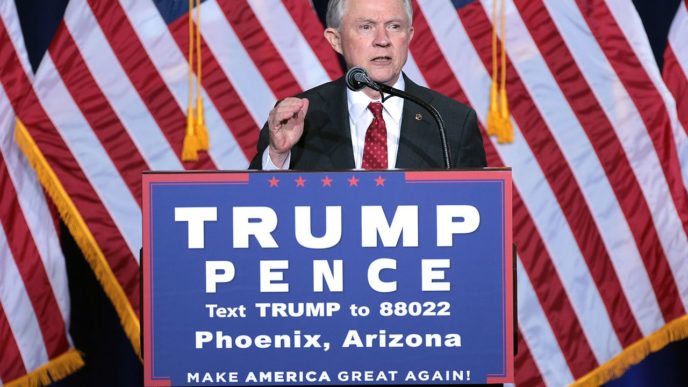
Sessions Is Said to Have Offered to Resign

Attorney General Jeff Sessions offered to resign in recent weeks as he told President Trump he needed the freedom to do his job, according to two people who were briefed on the discussion.

The president turned down the offer, but on Tuesday, the White House declined to say whether Mr. Trump still had confidence in his attorney general . . .

Mr. Spicer’s remarks came after The New York Times reported that Mr. Trump had vented intermittently about Mr. Sessions since the attorney general recused himself from any Russia-related investigations conducted by the Justice Department. Mr. Trump has fumed to allies and advisers ever since, suggesting that Mr. Sessions’s decision was needless. (Read more from “Sessions Is Said to Have Offered to Resign” HERE)

Follow Joe Miller on Twitter HERE and Facebook HERE.
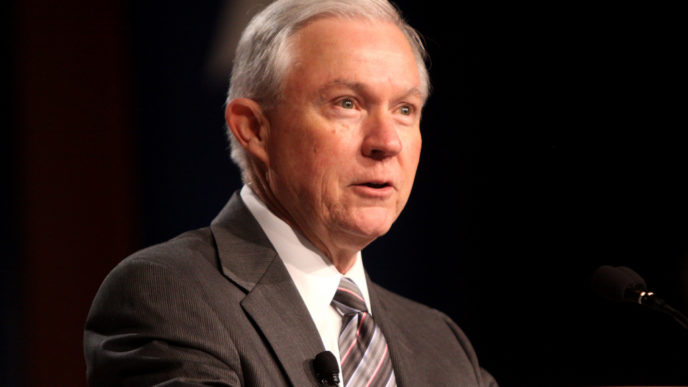
How Jeff Sessions Is Getting Tough on Drug Crime

Being a drug dealer in the United States just got more risky.

Last Friday, Attorney General Jeff Sessions issued a memorandum directing all federal prosecutors to “charge and pursue the most serious, readily provable offense.”

This means that absent extenuating circumstances, prosecutors must pursue offenses that carry the highest penalties under federal guidelines, including mandatory minimum sentences.

Mandatory minimum sentences provide that if someone is convicted of selling over a certain quantity of a particular drug, a judge must sentence the offender to a certain minimum sentence, which can, depending on the offense, range from five years up to life imprisonment.

For example, if someone sells 1 gram of LSD, 5 grams of pure methamphetamine, 28 grams of crack cocaine, or 100 grams of heroin, that triggers a mandatory minimum of five years for a first offense and 10 years for a second offense.

If someone sells 10 times that amount, that triggers a mandatory minimum sentence of 10 years for a first offense and 20 years for a second offense.

This policy, which will most assuredly have its greatest impact in the area of drug enforcement, is not groundbreaking. It has roots going back to a 1989 memorandum by Attorney General Richard Thornburgh.

That memorandum had been relaxed by Attorney General Janet Reno during the Clinton administration.

Then, during the George W. Bush administration, Attorney General John Ashcroft reinstated the policy—only for it to be relaxed again by the Obama administration through a memorandum issued by Attorney General Eric Holder.

Now, President Donald Trump’s attorney general, Sessions—who has long-touted the virtues of mandatory minimum sentences to deter major drug trafficking organizations—has effectively rescinded the Holder memo and reinstated the Ashcroft memo.

Predictably, Holder criticized this shift in policy as being “dumb on crime.”

Sessions announced this significant policy change after receiving honorary membership in the New York City-based Sergeants Benevolent Association, where he reiterated that mandatory minimum sentences are reserved only for those who traffic in large quantities of drugs.

He stated:

We’re seeing an increase in violent crime in our cities—in Baltimore, Chicago, Memphis, Milwaukee, St. Louis, and many others. The murder rate has surged 10 percent nationwide—the largest increase since 1968. And we know that drugs and crime go hand-in-hand.

Drug trafficking is an inherently violent business. If you want to collect a drug debt, you can’t file a lawsuit in court. You collect it by the barrel of a gun.

Sessions continued:

In 2015, more than 52,000 Americans died from a drug overdose. According to a report by the New England Journal of Medicine, the price of heroin is down, the availability is up, and the purity is up.

We intend to reverse that trend. So we are returning to the enforcement of the law as passed by Congress—plain and simple.

If you are a drug trafficker, we will not look the other way. We will not be willfully blind to your conduct. We are talking about a kilogram of heroin—that is 10,000 doses, 5 kilograms of cocaine and 1,000 kilograms of marijuana.

These are not low-level offenders. These are drug dealers. And you’re going to prison.

Cartel leaders, drug kingpins, and gang leaders who run drug rings should be taken off the streets for long periods of time. Doing so protects public safety and sends a signal to would-be drug dealers that they can expect a similar fate if they engage in such activity.

It is undeniable that drug dealing, which is often carried out by gangs, and almost invariably involves the actual or threatened use of violence and the inherent risk of overdose, is a dangerous and harmful activity.

To many, the phrase “nonviolent drug offender” is an oxymoron.

When properly deployed against drug kingpins and organizers and leaders of large-scale drug conspiracies, mandatory minimum sentencing can be an effective deterrent and an efficient use of scarce federal resources.

The trick will be making sure that the new policy is indeed targeted to such individuals and not against minor players who are only peripherally involved in large-scale drug conspiracies.

Mandatory minimum charges and penalties are usually determined by the type and quantity of the drug involved, not the criminal record of the person involved in their sale.

Moreover, if a minor street dealer or courier (who may be engaging in such activities to support a personal drug habit or at the behest of an abusive boyfriend) is charged as part of a conspiracy, that individual may be held responsible not only for the drugs she sold, but also for the drugs sold by any and all of her co-conspirators—even if she had no idea who those co-conspirators were or what they were selling.

In a speech at Georgetown Law School in 2014, Patti Saris, chief judge of the United States District Court for the District of Massachusetts and then-chair of the United States Sentencing Commission, stated:

[M]andatory minimum penalties sweep more broadly than Congress likely intended. Many in Congress emphasized the importance of these penalties for targeting kingpins and high-level members of drug organizations.

Yet the commission found that 23 percent of federal drug offenders were low-level couriers who transported drugs, and nearly half of these were charged with offenses carrying mandatory minimum penalties. The category of offenders most often subject to mandatory minimum penalties were street-level dealers—many levels down from kingpins and organizers.

Under existing federal law, there are two ways that an offender who has been convicted of a mandatory minimum offense can escape receiving a mandatory sentence: He can provide “substantial assistance” to government officials, enabling them to prosecute others who are engaging in serious criminal conduct, or he can qualify under the “safety valve” designed to provide relief to those who are bit players with only a modest prior criminal record.

One problem, however, is that the current safety valve is quite narrow, affording relief to very few individuals. Bit players are rarely in a position to render substantial assistance to the government because they are too low on the totem pole to have any useful information.

Moreover, under existing law, if the individual was convicted of any crime and received a sentence of 60 days or more, he no longer qualifies for the safety valve.

In essence, mandatory minimum penalties are a blunt instrument that can be very effective if utilized against the right category of offenders.

Let’s hope that the Sessions Department of Justice implements this revised policy to target those who truly pose the greatest threat to public safety, and not against minor players who simply made poor life choices and do not deserve such harsh sentences.

If not, Congress may need to explore at least a modest expansion of the scope of the existing safety valve in order to ensure that mandatory minimum penalties are reserved for leaders and organizers of the gangs who spread misery and peddle poison on the streets of this country. (For more from the author of “How Jeff Sessions Is Getting Tough on Drug Crime” please click HERE)

Follow Joe Miller on Twitter HERE and Facebook HERE.

Sessions: We Will Seek to Put Leakers in Jail

Asked on Thursday if arresting WikiLeaks founder Julian Assange is a Justice Department priority, Attorney General Jeff Sessions indicated the answer is yes.

“We are going to step up our effort — and already are stepping up our efforts — on all leaks,” Sessions told a news conference in El Paso, Texas.

“This is a matter that’s gone beyond anything I’m aware of. We have professionals in the security business of the United States for many years that are shocked by the number of leaks, and some of them are quite serious,” Sessions said.

“So, yes, it is a priority. We already have begun to step up our efforts, and whenever a case can be made, we will seek to put some people in jail,” he added.

CIA Director Mike Pompeo last week described WikiLeaks as a “hostile non-state intelligence agency.” He accused Assange of making “common cause with dictators,” by giving repressive regimes a free pass, while exploiting “the legitimate secrets of democratic governments.” (Read more from “Sessions: We Will Seek to Put Leakers in Jail” HERE)

Follow Joe Miller on Twitter HERE and Facebook HERE.

5 Takeaways From Jeff Sessions’ Border Enforcement Trip

“We hear you and we have your back.”

That is the message Attorney General Jeff Sessions shared with Customs and Border Protection personnel in Nogales, Arizona, on the U.S. southern border Tuesday.

In a speech Tuesday, Sessions announced five changes to immigration prosecution and enforcement:

1. A crackdown on individuals who transport and harbor illegal immigrants. Sessions said, according to his prepared remarks, “We are going to shut down and jail those who have been profiting off this lawlessness—people smuggling gang members across the border, helping convicted criminals re-enter this country, and preying on those who don’t know how dangerous the journey can be.”

2. Aggressive punishments for individuals crossing the border. Sessions said, “Where an alien has unlawfully entered the country, which is a misdemeanor, that alien will now be charged with a felony if they unlawfully enter or attempt [to] enter a second time and certain aggravating circumstances are present.”

3. Serial border crossers will face harsher charges. Sessions said, “Aliens that illegally re-enter the country after prior removal will be referred for felony prosecution,” with a priority given to those who show “indicators of gang affiliation, a risk to public safety, or criminal history.”

4. An inclusion of fraud and identity theft charges. Sessions said, “Where possible, prosecutors are directed to charge criminal aliens with document fraud and aggravated identity theft—the latter carrying a two-year mandatory minimum sentence.”

5. Law enforcement officers will be protected. Sessions said, “I have directed that all 94 U.S. attorneys’ offices make the prosecution of assault on a federal law enforcement officer—that’s all of you—a top priority.”

In addition to these prosecution adjustments, Sessions announced several other changes to the Department of Justice and its nationwide offices.

Sessions said that “each U.S. attorney’s office, whether on the border or interior, will designate an assistant United States attorney as the border security coordinator for their district.”

In an effort to reduce the backlog of illegal immigration cases, Sessions said, “We will put 50 more immigration judges on the bench this year and 75 next year.”

Praising President Donald Trump’s efforts to make immigration enforcement a priority, Sessions cited that in March of this year “we saw a 72 percent drop [in illegal crossings] compared to the month before the president was inaugurated.” He added, “That’s the lowest monthly figure for at least 17 years.”

Sessions made it very clear that these policies will be strictly enforced, saying, “For those that continue to seek improper and illegal entry into this country, be forewarned: This is a new era. This is the Trump era.” (For more from the author of “5 Takeaways From Jeff Sessions’ Border Enforcement Trip” please click HERE)

Follow Joe Miller on Twitter HERE and Facebook HERE.

How Jeff Sessions Plans to Fight Back Against Sanctuary Cities

The Justice Department will start enforcing federal immigration laws by discontinuing the funding of sanctuary cities, Attorney General Jeff Sessions said on Monday while speaking at the White House.

If carried out, this new policy will result in the loss of federal money for cities that permit residents to be illegal immigrants, as Sessions stated that the Justice Department will avoid using its $4.1 billion in grant money to fund sanctuary cities. The attorney general added that the DOJ will even “claw back” funds from jurisdictions that refuse to comply with federal immigration laws.

“The Department of Justice will require that jurisdictions seeking or applying for DOJ grants to certify compliance with [U.S. Code 1373] as a condition of receiving those awards,” Sessions said.

U.S. Code 1373 is a law stating that localities cannot prevent the federal government from enforcing the nation’s laws on immigration. The law also regulates communications between local agencies and Immigration and Customs Enforcement.

“Countless Americans would be alive today … if these policies of sanctuary cities were ended,” Sessions said.

Sessions said following this policy was simply enforcing policies put in place by the Obama White House a year ago, as the previous administration made similar threats to sanctuary cities but did not act on the threats in the way Sessions is proposing.

“I strongly urge our nation’s states and cities and counties to consider carefully the harm they are doing to our citizens by refusing to enforce our immigration laws, and to rethink these policies,” Sessions said. “When cities and states refuse to enforce immigration laws, our nation is less safe.”

“We have simply got to end this policy,” Sessions said.

The DOJ’s targeting of sanctuary cities follows a January executive order from President Donald Trump aimed at improving border security and enforcing immigration laws.

Hans von Spakovsky, an immigration law expert at The Heritage Foundation, views this sanctuary city policy as a step in the right direction.

“This is a long-needed move by the Justice Department. The federal government’s chief law enforcement agency should not be giving any funds to cities or states that are obstructing federal enforcement of our immigration laws through sanctuary policies,” von Spakovsky said. (For more from the author of “How Jeff Sessions Plans to Fight Back Against Sanctuary Cities” please click HERE)

Follow Joe Miller on Twitter HERE and Facebook HERE.