Posts

Trump’s Pick for Attorney General Prosecuted These Civil Rights Cases

Sen. Jeff Sessions, R-Ala., spent a considerable amount of his time as U.S. attorney for the Southern District of Alabama pressing civil rights lawsuits. He also assisted local prosecutors in a case that helped wipe out the Ku Klux Klan in the state.

Yet accusations about the Alabama senator’s past on racial issues have become a focal point for those opposing his confirmation to be the next attorney general after President-elect Donald Trump takes office.

NAACP President Cornell Brooks, in a written statement, accused Sessions of having “disdain for our nation’s civil rights laws.” Brooks said:

Senator Sessions’ record suggests that he will carry on an old, ugly legacy in this country’s history when civil rights for African-Americans, women, and minorities were not regarded as core American values. While Lady Justice may be said to be blind, we need an attorney general with 20/20 vision in seeing racial injustice. Whether Senator Sessions, with decades of failing grades on the NAACP’s report card, possesses a racial vision and commitment to justice is in serious question.

A letter to Senate leaders from member organizations of the Leadership Conference, a coalition of civil rights groups, asserted: “Sessions has a 30-year record of racial insensitivity, bias against immigrants, disregard for the rule of law, and hostility to the protection of civil rights that makes him unfit to serve as the attorney general of the United States.”

But the same letter goes on to say:

Senator Sessions’ record does include some positive actions. For example, the Southern Poverty Law Center … acknowledged that he was helpful in the center’s successful effort to sue and bankrupt the Ku Klux Klan following its role in the 1981 lynching death of Michael Donald.

The Senate Judiciary Committee plans to hold a confirmation hearing for Sessions in the new year even before Trump, who picked him to run the Justice Department, is sworn in as president Jan. 20.

The old accusations against Sessions played a key role in stopping his 1986 nomination to serve as U.S. district judge for the Southern District of Alabama.

Sessions is no racist and such attacks are a means of personalizing policy differences, said Horace Cooper, co-chairman of Project 21, a black conservative group, and adjunct fellow with the National Center for Public Policy Research.

“All I’ve seen from Jeff Sessions is that he has followed the law as the Supreme Court has defined it and has not attempted to make law,” Cooper told The Daily Signal. “It’s proper for a U.S. attorney general or a state attorney general to make decisions based on the law, whether the law is popular or not.”

Responding to a question from the Judiciary Committee asking him to describe the 10 most significant cases he litigated, Sessions wrote that five regarded racial matters, such as voting rights, desegregation, and prosecution of a Klan-motivated murder. He also explained his role in a fraud case against a civil rights activist, who was acquitted.

Paul A. Hancock, a former Civil Rights Division lawyer now in private practice in Miami, said in an interview with The Daily Signal that Sessions worked with the division and never against it. Still, Hancock delivered negative testimony to the Judiciary Committee about Sessions in 1986.

“Civil rights cases are mostly handled out of D.C. but the U.S. attorney’s views are sought,” Hancock told The Daily Signal. “It’s not unheard of for the U.S. attorney to take credit for a lawsuit, just as it’s not unheard of for an attorney general to take credit. But we never had any difficulty with him as a U.S. attorney.”

In decades past, federal prosecutors in Southern states resisted Justice’s Civil Rights Division, a Trump transition source said, adding that Sessions never claimed to have prepared the cases or taken the lead. Instead, he was the public face of the cases when DOJ lawyers returned to Washington.

‘First Voter Suppression Lawsuit’: US v. Conecuh County

Sessions said in response to the Judiciary Committee’s questionnaire that he understood a case out of Conecuh County “was the first voter suppression lawsuit ever instituted by the United States Department of Justice.”

He added: “I am honored to have been part of it.”

Sessions worked with Justice’s Civil Rights Division in a suit first brought in October 1983 against Conecuh County, after allegations the county hired only white poll workers.

Some of those poll workers made racist comments to turn away black voters, allowed white voters to cast ballots when their names were not on the rolls at a polling place, and put limits on how many blacks could vote, according to the suit.

In March 1984, Sessions and the voting section of the Civil Rights Division filed a pleading. Sessions was also part of discovery motions.

In June 1984, the case was resolved with a consent decree that ensured election workers would stop harassing and intimidating black voters. The decree encouraged political parties to recruit black poll workers.

Voting Rights: US v. Dallas County Commission

In July 1982, Sessions co-filed an 80-page brief with the voting section of the Civil Rights Division that was a “finding of fact” stating that at-large districts used to elect county commissioners and school board members denied blacks full participation in the voting process.

The case dragged on until 1988, when a court ordered the county to have five districts for electing board members, with three containing majority black populations.

“Along with the [American Civil Liberties Union], my office continued to support extensive litigation,” Sessions wrote in reply to the questionnaire.

Prosecuting an Activist: US v. Turner

This is the case Sessions’ critics eagerly point to, largely because it involved bringing charges against Albert Turner, a former adviser to the Rev. Martin Luther King Jr., and mostly because Turner was acquitted.

The matter began in 1982, when Perry County District Attorney Roy Johnson urged a federal investigation after concluding the matter was too large for his office.

An Alabama grand jury, which was majority black and led by a black foreman, issued a report saying they were convinced “a fair election is being denied the citizens of Perry County, both black and white.”

The grand jury report asked the Justice Department for “vigorous prosecutions” and a federal monitor for elections.

However, the Civil Rights Division declined to investigate, and so did Sessions.

“We expected the local investigation would have caused all campaigners to re-evaluate their activities and conform to the law,” Sessions wrote in the Judiciary Committee questionnaire.

In 1984, when nearly every candidate for Perry County public office was black, several black candidates told Johnson, the district attorney, that they thought the election was being stolen.

Johnson, Sessions wrote, told him “extremely large numbers of absentee ballots were being taken to a central headquarters where the ballots were being altered to ensure that they were being marked by candidates endorsed by Turner.”

Sessions said he didn’t want to be involved, but reluctantly asked an FBI special agent to observe the post office where the activity allegedly was occurring.

Sessions said the FBI saw Turner and his wife Evelyn drop off more than 300 ballots for mailing at the post office, and also saw Turner associate Spencer Hogue Jr. deposit another 170 ballots on the same night. These ballots made up the majority of the 729 absentee ballots cast in the county.

The FBI’s investigation determined that at least 75 of the 729 ballots had erasures or alterations, and 25 individuals said they hadn’t authorized changes that the Turners and Hogue allegedly made.

Sessions’ office charged the Turners and Hogue with 29 counts, including mail and election fraud. The defense argued that the practice was legal and voters gave permission to make changes. A jury acquitted all three on all charges.

Taking Down the Klan: Hays v. Alabama

Henry F. Hays was the son of Ku Klux Klan leader Bennie Jack Hays. In 1981, the younger Hays and an accomplice slit the throat of Michael Donald, a 19-year-old black man, and hanged his body from a tree.

Sessions said his office worked with state prosecutors to bring the case and to ensure a death sentence.

“Because the federal government did not have an effective death penalty, I insisted Hays be prosecuted by the local district attorney, Chris Galanos,” Sessions wrote.

After Hays’ conviction, in an unusual move, the state judge overrode the jury’s life sentence and sentenced Hays to death.

Later, while Sessions served as Alabama’s state attorney general, his office defended the verdict when it was appealed to the federal 11th Circuit Court of Appeals.

Donald’s family won a $7 million civil judgment against the Klan, which essentially bankrupted the organization in the state.

Sessions worked on the case with Assistant U.S. Attorney Thomas Figures. In 1986, Figures, who is black, told the Senate Judiciary Committee that Sessions had said the Ku Klux Klan was “OK until I found out they smoked pot.”

This allegation was part of what sunk the Sessions’ nomination for the judgeship.

Sessions, before asking that his 1986 nomination be withdrawn, said the comment was meant as a joke to ridicule the Klan. He added, “I detest the Klan.”

Desegregation in Mobile County

In a case that began in 1963, parents filed a class action lawsuit against the Mobile County Commission, asserting that it continued to unconstitutionally segregate public schools. After numerous court rulings, the parties entered a consent decree.

“More than a decade after the district court approved the consent decree on behalf of the United States, and with the support of the NAACP Legal Defense Fund, papers were filed with the court contesting the legally binding effect of the consent decree and alleging the school district had yet to fully integrate,” Sessions wrote.

The objections came after the county continued to allow several single-race schools.

As U.S. attorney, Sessions co-filed briefs in 1981, 1983, and 1985 with the Justice Department’s Civil Rights Division contending the school system was not fully integrated and challenging the validity of some of the consent decree.

The federal district court rejected part of the argument by Sessions and the agency, but still found the schools were not properly integrated.

Other Voting Rights Enforcement

In addition to cases Sessions highlighted in the Judiciary Committee questionnaire, Trump’s presidential transition team notes other cases.

In the case of the United States v. Marengo County Commission, a group of citizens in 1977 brought a class action lawsuit regarding the county’s at-large system of electing members to the county commission and board of education.

After Sessions became U.S. attorney in 1981, his office worked on setting up a redistricting plan. After the 11th Circuit Court of Appeals ruled in 1987 that the system diluted the impact of blacks’ votes, the county adopted a district plan.

In 1974, Alabama’s Hale County changed its district system to at-large races, which prompted federal litigation in 1976 that dragged over into Sessions’ time as U.S. attorney. Playing only a limited role, in October 1981, Sessions and the Civil Rights Division co-filed a response to the county’s district selection plan, and the court adopted the final alternative that December.

Another case, United States v. City of Demopolis, was similar in that Sessions worked with the Civil Rights Division to press a lawsuit against the city’s at-large system for electing members of the city council.

In March 1986, the case was settled after less than two months when the city agreed to enact racially fair, single-member districts. (For more from the author of “Trump’s Pick for Attorney General Prosecuted These Civil Rights Cases” please click HERE)

Follow Joe Miller on Twitter HERE and Facebook HERE.
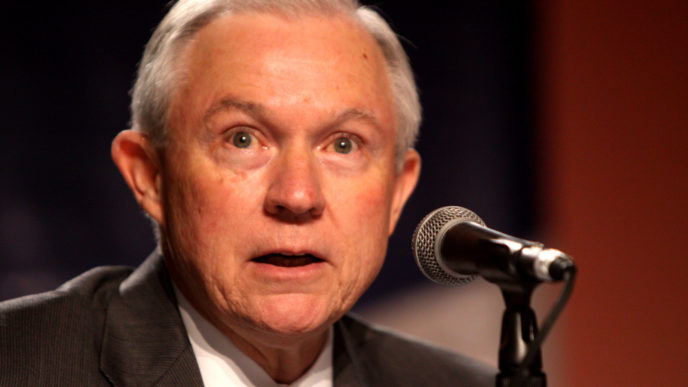
Leading Critic of Trump’s Attorney General Pick Withdrew Accusation in 1986

A vocal opponent of confirming Sen. Jeff Sessions, R-Ala., as U.S. attorney general recanted part of his critical testimony 30 years ago against Sessions being confirmed as a federal judge.

J. Gerald Hebert, a former Justice Department lawyer, made racially charged allegations against Sessions before the Senate Judiciary Committee, which was considering his nomination as a district judge in Alabama.

More recently, Hebert said Sessions would be “frightening” as attorney general.

Immediately after President-elect Donald Trump announced he would nominate Sessions to be attorney general, Hebert—despite having corrected part of his testimony in 1986—issued a public statement opposing Sessions.

A few days later, The Washington Post published an op-ed by Hebert explaining why Sessions shouldn’t be attorney general.

Hebert testified March 13, 1986, in opposition to President Ronald Reagan’s nomination of Sessions to be a U.S. District Court judge for the Southern District of Alabama.

Part of Hebert’s testimony to the Judiciary Committee included allegations that Sessions, while serving as U.S. attorney for the Southern District of Alabama, attempted to block an FBI investigation into a voting rights case in an Alabama county.

Hebert said Sessions bypassed proper procedure by not first informing the Justice Department’s Civil Rights Division.

Three days later, however, on March 16, Hebert and another lawyer in the Civil Rights Division, Paul A. Hancock, filed affidavits asserting it was a different U.S. attorney, Sessions’ predecessor, who tried to stop the FBI probe.

The matter is significant in exposing unfair attacks on Sessions when Reagan nominated him for a judgeship, now that Trump plans to nominate Sessions for attorney general, said Hans von Spakovsky, senior legal fellow for The Heritage Foundation.

Von Spakovsky said the affidavits “destroy Hebert’s credibility on anything connected with Sessions.”

“These affidavits correcting the record, which got almost no media attention, are another sign that the claims made against Jeff Sessions 30 years ago were baseless and entirely manufactured,” von Spakovsky told The Daily Signal.

Hancock had made his assertion against Sessions before the Judiciary Committee on March 12, one day before Hebert did.

“I answered that my own recollection of that matter was consistent with Mr. Hancock’s,” Hebert said in his affidavit, referring to his testimony three days earlier. “When I rendered that testimony, it was true to the best of my knowledge, recollection, and belief.”

The one-page affidavit continued:

My recollection on this matter has now been refreshed. I have no knowledge that Mr. Sessions ever interfered with any voting investigation in the Southern District of Alabama. … I apologize for any inconvenience caused Mr. Sessions or this committee by my prior testimony.

Because of the allegations, Reagan’s nomination of Sessions for the judgeship failed to clear a Republican-controlled Senate; Sessions eventually withdrew and continued serving as a U.S. attorney, a role he held from 1981 to 1993. He was elected to the Senate in 1994.

Hebert did not correct other parts of his testimony to the Senate Judiciary Committee.

In that testimony, he recalled telling Sessions about a rumor that a federal judge referred to one lawyer as a “traitor to his race.” To this rumored comment, Hebert claimed Sessions responded: “Well, maybe he [the lawyer] is.”

Hebert also told the committee that Sessions referred to the NAACP and the American Civil Liberties Union as “un-American” and “communist-inspired.”

Sessions denied some of the charges made against him in the 1986 confirmation hearing, but regarding Hebert’s other allegations, he reportedly testified: “I’m often loose with my tongue. I may have said something about the NAACP being un-American or communist, but I meant no harm by it.”

Sessions denied accusations by Thomas Figures, a former assistant U.S. attorney who is black, who said Sessions called him “boy” and told him to watch himself around “white folks.”

Today, Hebert is the director of a voting rights and redistricting program for the Campaign Legal Center, which advocates campaign finance reform and restrictions on money in politics.

Hebert did not respond specifically to The Daily Signal. A spokesman for the Campaign Legal Center referred to a November statement in which Hebert said:

Jeff Sessions has not demonstrated a commitment to fairness and equality under the law, a commitment that should be a minimum qualification for the position of attorney general. To the contrary, he has repeatedly demonstrated racial insensitivity to black citizens of Alabama and this country through both his words and actions. He has never apologized for his racially charged comments during his last tenure at the Department of Justice. I believe that Sessions represents a threat to voting rights for all minorities. It is frightening to think that Sessions will run the U.S. Department of Justice and have the opportunity to roll back voting rights through voter suppression in communities that have long struggled for equality.

Hancock, the other civil rights lawyer at the Justice Department who filed a corrective affidavit after testifying to the Judiciary Committee, said the mistake was corrected almost immediately and likely didn’t affect the judicial confirmation process in 1986.

He added that the matter should not affect Trump’s intended nomination of Sessions for attorney general.

“I regret that it happened with me,” Hancock told The Daily Signal, referring to the inaccurate testimony that Sessions sought to block an FBI investigation. “Nobody asked me to correct it. Nobody pressured me to correct it.”

While a lawyer in Justice’s Civil Rights Division, Hancock said, he worked with Sessions because there were many civil rights cases in Alabama and he “never had any difficulty.”

That was not the case with Sessions’ predecessor as U.S. attorney, William Kimbrough Jr., who was in the position from 1977 through 1981.

It was Kimbrough, not Sessions, who tried to stop the FBI investigation of the voting rights case, Hancock explained in his affidavit.

Further, the locale in question was Clarke County, Alabama, not Conecuh County, Alabama, as both Hancock and Hebert originally told the Judiciary Committee.

Hancock’s affidavit corrected his testimony on March 12, 1986, a day before Hebert testified. The affidavit was three pages long, with three supporting attachments regarding the Clarke County case from May 1980.

Kimbrough gave his approval for the investigation to resume and apologized for not notifying Justice’s Civil Rights Division before asking the FBI to discontinue it, according to an attached memo.

Heritage’s von Spakovsky compared the incident to the Democrats going after and denying confirmation to Robert Bork, Reagan’s nominee for the Supreme Court in 1987.

“The Borking of Sessions then was shameful and dishonest, and the same misbehavior should not be allowed to occur now,” he said. (For more from the author of “Leading Critic of Trump’s Attorney General Pick Withdrew Accusation in 1986” please click HERE)

Follow Joe Miller on Twitter HERE and Facebook HERE.
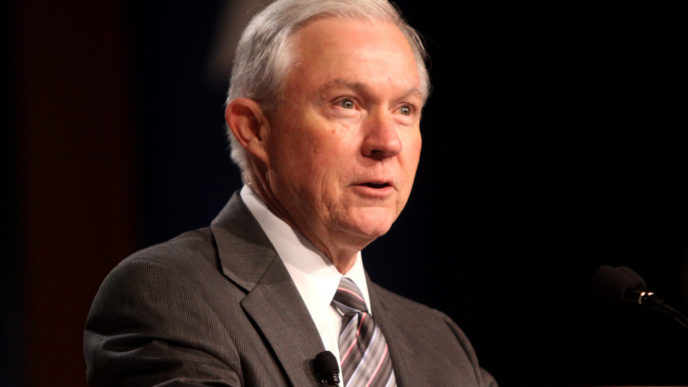
7 Things Sessions Can Do Immediately to Restore the Law of Justice

Talk about change we can believe in! Sen. Jeff Sessions, R-Ala. (C, 78%) as attorney general would be nothing short of a game changer for the rule of law, sovereignty, and our security.

There is no part of the federal government that is more vital to our system of government, yet more damaged by the Obama years, than the Department of Justice. Whether it’s immigration law, domestic crime, jailbreak, crushing the states with lawsuits, or religious liberty concerns, the Justice Department stands at the nexus of the most important issues of our time. If there was ever an agency that must be cleaned out from top to bottom, it’s the DOJ. And no man is better suited for that job than Senator Jeff Sessions. He will promote equal justice under the statutes passed by Congress. Moreover, he can serve as a watchdog to ensure that other areas of the federal government are following the letter of the laws passed by Congress.

While some systemic reforms will have to come from Congress, there are some immediate steps that Sessions can take on day one to implement triage on the rule of law.

1. Clamp down on voter fraud

There is nothing more critical to the rule of law and our democracy than having free and fair elections. Federal judges, acting on lawsuits promoted by Obama’s DOJ, have been misinterpreting statutes in order to prevent states from cleaning their rolls of dead, fraudulent, and non-citizen voters. We are seeing those consequences play out now in the North Carolina governor’s election. While some of the statutes need updating from Congress, Sessions can act on day one to clean up the mess, according to J. Christian Adams, President of the Public Interest Legal Foundation:

Sessions can begin to enforce federal election laws the Obama administration deliberately stopped enforcing. Motor Voter requires voter rolls to be free of foreigners, the dead and ineligible voters. Obama’s Civil Rights Division lawyers stopped enforcing that law because they disagree with the law. Sessions already understands the problems in the Civil Rights Division so I am overjoyed by his nomination.

2. Terminate all of Obama’s lawsuits and appeals

On the first day of his tenure, Sessions should call in all unit heads and have them suspend every onerous lawsuit against states who enforce immigration law, election integrity, or implement laws pushing back against the transgender agenda, such as North Carolina’s HB2. He should also suspend the racially-charged lawsuits against local police departments. Sessions must reverse the growing trend of federal involvement in local law enforcement that does not relate to federal law.

3. Allow states to enforce immigration law and punish sanctuary cities

As AG, Sessions can interpret the immigration statutes as properly written to allow states to help enforce immigration law. At the same time, they could cut off law enforcement grants (Byrne JAG, COPS, and SCAAP funds) to localities that designate themselves as sanctuary cities and refuse to cooperate with the Secure Communities program, which helps ICE identify illegal aliens housed in local jails and state prisons.

4. Defang the U.S. Sentencing Commission

While some on the Right disagree over the scope and jurisdiction of some federal criminal statutes, it is clear that this determination must be left in the hands of Congress. Sentencing for federal crimes should be determined by federal judges, as dictated by guidance pursuant to congressional statutes. Yet, in recent years, the unelected U.S. Sentencing Commission, housed within the Department of Justice, has essentially operated autonomously to commute the sentences of 46,000 criminals. As attorney general in charge of the personnel within the department, Sessions can prevent the Sentencing Commission from executing its massive jailbreak agenda beyond its statutory mandate.

5. Replace immigration judges

Why do we have so much amnesty even though the congressional statutes call for illegal aliens to be deported? The immigration judges within the Executive Office for Immigration Review (EIOR) have granted de facto amnesty by overturning deportations and letting criminal aliens roam free. The administrate judges within the Board of Immigration Appeals (BIA), which serves as the appellate body of EOIR, have the ability to overturn a deportation order from a lower administrative judge and can review all enforcement actions taken by ICE and the border patrol. As Ian Smith of the Immigration Reform Law Institute warned, many of these administrative judges were former lawyers for illegal immigrants or organizations funded by George Soros. Given that they all work for the DOJ, Jeff Sessions can clean out the agency of Soros-affiliated immigration judges so that the foxes are not guarding the hen house and countermanding the intent of immigration statutes.

6. Immediately seek deportation for all illegal re-entrants

Deportations have become encumbered in a myriad of civil proceedings. There is definitely a long-term need to tighten up some enforcement statutes. But one low-hanging piece of fruit is for the DOJ to immediately seek expedited deportation for those who have re-entered illegally for a second time. Illegal re-entry is automatically a criminal prosecution, not a civil case. Moreover, many of the re-entrants are criminal aliens and should be immediately deported anyway.

7. Properly interpret the Constitution to protect states from liberal judges

There are three separate branches of the federal government. The judiciary does not have a monopoly on interpreting the Constitution. Even John Marshall’s controversial concept of judicial review only meant that the Supreme Court also has the right to interpret the Constitution for its own purposes in the cases and controversies that come before it as a co-equal branch of government. But the notion that the other two branches can’t push back on precedent and make a good faith attempt to interpret the Constitution for their own functions, is an ignorant misnomer among the political elites. As I noted in my piece on judicial reform, Congress has many tools it can use to fight back against the judiciary. But the executive branch also has the right to use its own interpretation when exercising its proper scope of power. That prerogative rests with the attorney general, under the orders of the president.

Therefore, in cases where lower courts force states to infringe upon religious liberty rights of private business owners or force schools to place boys in female dressing rooms, Sessions can make it clear that his version of the Constitution mandates no such right on the states. Although he can’t overturn a particular case, he can make it clear that the executive branch will not send out the marshalls to enforce a flagrantly unconstitutional order of the court. This is exactly why the Founders vested the judiciary with no enforcement mechanism — because they are not the sole and final arbiter of the Constitution. It is then up to Congress to either push back, affirm support, or ignore such a determination by the attorney general.

Whether one agrees with Jeff Sessions on policy or not is irrelevant to his appointment as attorney general. The job of a president, most profoundly manifest through his attorney general, is to “take Care that the Laws be faithfully executed,” as stated in Art. II Sec. 3 of the Constitution. If liberals are upset about our statutes or our Constitution as adopted there are legitimate ways of changing them. As it stands now, they must be regarded as the supreme law of the land. Liberals will whine and moan about the politics of Jeff Sessions, but if they truly understood his commitment to the law, they’d seek to change the laws themselves — not the personnel faithfully executing them. (For more from the author of “7 Things Sessions Can Do Immediately to Restore the Law of Justice” please click HERE)

Follow Joe Miller on Twitter HERE and Facebook HERE.
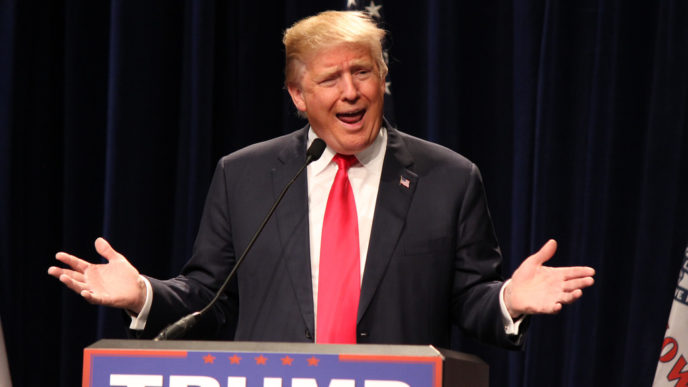
Why Trump Picking Jeff Sessions for Attorney General Shows He’s Serious About Law and Order

President-elect Donald Trump intends to appoint Sen. Jeff Sessions, R-Al. (C, 78%) as United States attorney general, according to reports Friday morning.

The 69-year-old Sessions has served as U.S. Senator for Alabama for four terms, and has earned a reputation as an unwavering social conservative, stalwart opponent of immigration amnesty, a budget hawk, and an old-school, law-and-order mentality.

The attorney general position is a good fit in this latest Trump-cabinet appointment.

Jeff Sessions was appointed by President Reagan as the U.S. Attorney for the Southern District of Alabama in 1981. After holding this position for 12 years, Reagan nominated Sessions for a lifetime-tenured federal judgeship, but controversial racial remarks prevented his confirmation by the Senate. So he ran a successful campaign for Alabama’ A.G. in 1994, and served for two years before being elected to the U.S. Senate in 1996. He was reelected by substantial majorities in 2002, 2008, and in 2014.

Sen. Sessions currently serves in a number of capacities on Senate committees and subcommittees.

In Congress, Sessions has been a champion for tougher laws targeting criminal illegal aliens. A noteworthy bill introduced by Sen. Sessions in 2015 broadened the definition of criminal aliens for several legal purposes and would have, as Conservative Review’s Daniel Horowitz explained:

Overturned the Zadvydas v. Davis Supreme Court case that Obama is using as an excuse to release criminal aliens after six months of detention

Explicitly deputized the states to enforce federal immigration law

Eliminated sanctuary cities by cutting off DHS and DOJ law enforcement grants

Expedited deportation of gang members

Applied the ramifications of treating illegal aliens as criminal aliens to those convicted of drunk driving

Clamped down on loopholes that allow legal immigrants who commit crimes to continue on the path to citizenship instead of getting deported (this would address cases like the legal immigrant who murdered the family in the Washington, D.C. “mansion murders”)

It is very likely that in his new capacity — should Sessions accept the appointment and be confirmed by the Senate — the Alabama senator will likely lead a 180-degree turn of the Department of Justice, reversing the Obama administration’s policy of enabling sanctuary cities.

As a member on the Senate Judiciary committee, Sen. Jeff Sessions has been an outspoken opponent of several of President Obama’s appointees to the federal bench due to their positions involving the death penalty, immigration, and/or abortion. His leadership on these issues has, at times, led to the withdrawal of Obama’s nominee altogether.

Throughout his career, Sessions has come down on the conservative side of the immigration, abortion, and judicial issues. His appointment to the position of United States attorney general signals that a Donald Trump administration is indeed committed to law and order. (For more from the author of “Why Trump Picking Jeff Sessions for Attorney General Shows He’s Serious About Law and Order” please click HERE)

Follow Joe Miller on Twitter HERE and Facebook HERE.

Is Anyone NOT Racist? Twitter Spirals out of Control Following Jeff Sessions AG Announcement

After Senator Jeff Sessions’, R-Al (C, 78%) nomination to the position of Attorney General was announced Friday, the nomination was immediately met with cries of “RACIST!” on social media.

Self-described Republican strategist Ana Navarro (who voted for Hillary Clinton) had a small meltdown on Twitter over Sessions’ appointment.

Now, let’s be honest here, those throwing “-ist” terms around are lacking in the imagination department calling yet another Republican a “racist” for the zillionth time.

While turning a blind eye to the Left’s own controversial figures.

(For more from the author of “Is Anyone NOT Racist? Twitter Spirals out of Control Following Jeff Sessions AG Announcement” please click HERE)

Follow Joe Miller on Twitter HERE and Facebook HERE.

Why Jeff Sessions, ‘an Advocate for the Constitution,’ Has Conservatives So Excited

As attorney general, Jeff Sessions could go a long way toward reversing the politicization of the Justice Department that occurred under the Obama administration, Republican senators and conservative activists said Friday, after President-elect Donald Trump announced he is nominating the Alabama Republican senator for the nation’s top law enforcement job.

“Sen. Sessions’ solid understanding of the Constitution and firm commitment to the rule of law is exactly what the Justice Department needs,” Sen. Mike Lee, R-Utah, a member of the Senate Judiciary Committee, said in a statement. “I have worked closely with Sen. Sessions on the Judiciary Committee over these past six years and I have every confidence that he will make a great attorney general for all Americans.”

Sen. John Cornyn, R-Texas, commended the Sessions nomination and excoriated the Justice Department under the controversial leadership of Attorneys General Eric Holder and Loretta Lynch.

“A principled and good man, he will restore honor to a department that, under President [Barack] Obama, perpetually pushed a political agenda while neglecting to enforce the law,” Cornyn said in a statement.

“For nearly eight years the Justice Department has twisted the Constitution and the laws passed by Congress to further the president’s liberal agenda, eroding our liberty in the process,” said Cornyn, also a Judiciary member. “It has put politics ahead of national security, and demonized those who protect us. It’s time to end the politicization of the Justice Department and start defending the rule of law, and I’m confident that as our top law enforcement official Senator Sessions will do that.”

During the Obama administration, Holder fended off an investigation into the Operation Fast and Furious gunwalking program, and was found in contempt of Congress for refusing to provide thousands of documents to congressional investigators.

Holder and Lynch also launched controversial investigations into police departments across the country. More recently, Republicans questioned potential Justice Department interference into the investigation of former Secretary of State Hillary Clinton’s private email server.

Bumpy Confirmation Ahead?

In the 1980s, Sessions was a U.S. attorney and was nominated but not confirmed to a federal judgeship. So, this will be the third time Sessions will face a Senate confirmation.

Senate Judiciary Chairman Chuck Grassley, R-Iowa, is “confident he would be reported favorably out of the committee” because of his legal background.

“Sen. Sessions is a respected member and former ranking member of the Judiciary Committee who has worked across the aisle on major legislation,” Grassley said. “He knows the Justice Department as a former U.S. attorney, which would serve him very well in this position.”

However, this time it still might not be easy.

Among the liberal groups opposing the nomination is the Leadership Conference on Civil and Human Rights.

“This nomination is deeply troubling to Americans who care about equal protection under the law,” the organization’s president Wade Henderson said in a statement. “Throughout his tenure in the Senate, Sen. Sessions has been one of the chamber’s leading antagonists of immigrants and the LGBT community, continuing his long record of obstructing civil rights that began in his tenure as U.S. attorney for the Southern District of Alabama.”

The confirmation hearing will be missing one Republican on the Judiciary panel—Sessions.

The committee’s top Democrat, Sen. Patrick Leahy, D-Vt., said the hearing is of particular importance because Trump “has proposed religious tests, a return to torture, and a deportation force that threatens to remove millions of immigrants.”

“Sen. Sessions and I have had significant disagreements over the years, particularly on civil rights, voting rights, immigration, and criminal justice issues,” Leahy said. “But unlike Republicans’ practice of unprecedented obstruction of President Obama’s nominees, I believe nominees deserve a full and fair process before the Senate. The American people deserve to learn about Sen. Sessions’ record at the public Senate Judiciary Committee hearing.”

The confirmation should be swift, said Senate Majority Leader Mitch McConnell, R-Ky., who asserted he strongly supports Trump’s nomination, and noted Sessions’ record of working with Democrats such as Illinois Sen. Dick Durbin, and the late Massachusetts Sen. Ted Kennedy on major legislation.

Sen. Ted Cruz, R-Texas, was rumored to be under consideration for the attorney general’s job. However, Trump’s leading Republican presidential primary opponent expressed strong support for Sessions.

“Sen. Jeff Sessions’ nomination as attorney general is great news for all of us who revere the Constitution and the rule of law,” Cruz, a Judiciary member, said in a statement. “I have been honored to work with Sen. Sessions on many of our nation’s most important issues over the last four years. Sen. Sessions has had an extraordinary career in government and law enforcement. He has been an exemplary senator for the state of Alabama, and I am confident that he will be an exceptional United States attorney general.”

Conservative Activists Excited

A former Sessions colleague, Jim DeMint, now president of The Heritage Foundation, said Sessions will defend the freedom and safety of Americans as attorney general.

“No one will work harder than Jeff Sessions to defend the freedoms and safety of all Americans as attorney general. He is not intimidated by the liberal media or the Washington establishment,” DeMint said in a statement. “He has the courage and the proven record to take on special interests. He is passionate about defending the Constitution and the rule of law to protect the rights of everyone. Jeff has been such a great friend to me and many others, becoming one of the most respected leaders in the Senate and should easily be confirmed.”

Conservative activists, such as Tea Party Patriots co-founder Jenny Beth Martin, were also excited by the news, noting the DOJ’s leftward shift under the Obama administration.

“For eight years under President Obama, the Justice Department prioritized politics over the rule of law,” Martin said. “Under Sen. Sessions, we know the rule of law will finally be paramount again with our nation’s highest-ranking law enforcement officer. We look forward to supporting Sen. Sessions during his confirmation process and working with him once he takes the oath of office as our next attorney general.”

Sessions’ record as U.S. attorney, Alabama attorney general, and in the Senate makes him a strong nominee, said Penny Nance, president of Concerned Women for America. She added the nomination speaks well to Trump’s commitment to conservative principles.

“The thousands of members of Concerned Women for America around the country will urge senators to move quickly in the new year to confirm Sen. Sessions as the next attorney general, so that we may start rectifying many of the asphyxiating policies pursued by Attorney General Eric Holder and Loretta Lynch,” Nance said in a statement. “The attacks on religious freedom and freedom of conscience in general, for example, must be atop of the list.”

Sessions has been a strong conservative advocate and is an indicator potential future appointments, said Frank Cannon, president at American Principles Project.

“On life, education, religious freedom, sound money—really, across the board—Sen. Jeff Sessions has proven himself to be an advocate for the Constitution and for the hardworking people of this great nation. We expect he will do an excellent job as attorney general,” Cannon said. (For more from the author of “Why Jeff Sessions, ‘an Advocate for the Constitution,’ Has Conservatives So Excited” please click HERE)

Follow Joe Miller on Twitter HERE and Facebook HERE.

Sessions: Choose Carefully America, 2016 Is ‘the LAST CHANCE’

By Paul Bedard. Alabama Sen. Jeff Sessions, a leading voice on trade, immigration and executive powers, is urging Americans to choose their next president carefully because 2016 “is the last chance for the American people to take back control of their government.”

In a sober interview with Secrets, the Republican warned that liberal special interests, Wall Street moguls, and international media conglomerates are fast turning the United States into just another member of the European Union and that the effort is being led by a Democratic president eager to go his own way with executive orders.

“This election is different because we have pall-mall erosion of law, the constitutional order, where President Obama has pushed an agenda that eviscerates the immigration legal system, and pushed this trade agreement that will commence decades of transferring American economic power to an ever-expanding international commission. It’s just not going to stop” unless voters take action, he warned . . .

Highlighting immigration and trade, Sessions urged voters to choose a candidate who will commit to killing the Trans-Pacific Partnership trade deal with nearly a dozen Asian nations which is slated to cost 448,000 U.S. jobs, and finally make good on 30 years of promises to put an end to illegal immigration, which is costing the nation billions in welfare and undermining U.S. wages. (Read more from “Sessions: Choose Carefully America, 2016 Is ‘the LAST CHANCE'” HERE)

_____________________________

America 2016: We’re Mad as Hell and Not Going to Take It Anymore

By Lesley Clark, Anita Kumar and Maria Recio. Craig Ziemke has voted for Democrats all his life, including twice for President Barack Obama. Not this year.

“The whole country is going to hell,” the 66-year-old retired factory worker said, standing against the bleachers at a high school gymnasium while waiting for Republican presidential candidate Donald Trump to arrive. Ziemke’s fury is deep: Roads and bridges in the U.S. are falling apart, jobs are scarce and the U.S. border is wide open, he says.

“We’re letting all these people into the country. No one even knows who the hell they are,” he said. “We don’t need any more Arabs. The United States, anymore, is just a dumping ground for everyone.”

Ziemke plans to caucus for a Republican on Monday – and likely for Trump, “the only one with brains,” he said.

If Obama’s 2008 campaign in Iowa and beyond defined the election as one of “hope and change,” this year may well be described as the politics of rage. (Read more from “America 2016: We’re Mad as Hell and Not Going to Take It Anymore” HERE)

Follow Joe Miller on Twitter HERE and Facebook HERE.

Sessions, Cruz Demand Immigration History of Homegrown Terrorists

ted_cruz2At Conservative Review, we’ve focused a lot this year on the nexus between politically correct immigration policies and risks to our national security. That, in fact, clamping down on immigration from volatile parts of the world is more important, prudent, and constitutional than engaging in nation building oversees or expanding the surveillance state.

With the FBI warning that the homegrown terror problem is growing out of control, especially among the ranks of families who emigrated from the Middle East, two conservative senators want answers on the danger of our immigration policies and the role it has played in homegrown terror. Sens. Jeff Sessions (R-AL) and Ted Cruz (R-TX) have sent a letter to Attorney General Loretta Lynch, Secretary of Homeland Security Jeh Johnson, and Secretary of State John Kerry demanding answers regarding the immigration status of the growing list of individuals caught planning terror attacks, executing terror attacks, or flying abroad to fight for Islamic terror groups. In the letter, they state, in part:

Based on publicly available information, we have identified at least 72 individuals in the United States who, over the last year: have engaged in or attempted to engage in acts of terrorism; conspired or attempted to conspire to provide material support to a terrorist organization; engaged in criminal conduct inspired by terrorist ideology; or who have been sentenced for any of the foregoing. We would like to understand more about these individuals, and others similarly situated in recent history, and the nexus between terrorism and our immigration system.

Sessions and Cruz are exactly right. Five American servicemen were murdered on American soil by an Islamic terrorist whose family immigrated here from Kuwait. There are so many unanswered questions about his immigration history and neither the political class nor the media seem interested in asking the relevant questions.

Instead of relying on the administration to supply half-baked information, the senators cleverly created a chart with specific permutations of immigration questions for the 72 cases and are requesting that the relevant departments coordinate to fill them out. In addition, they have requested a list of all immigrants who have engaged in terror activities since 1993. That was the year two CIA agents were shot and killed outside of the Langley headquarters and the World Trade Center was bombed by Muslim immigrants from the Middle East. The Heritage Foundation counts 69 known terror plots since 9/11, most of which were committed by Muslim immigrants to the U.S. or those from families that emigrated from the Middle East.

The senators want to know why more isn’t being done to deter the growing trend of individuals living here who attempt to join terror groups. Cruz’s office pointed to the bill he introduced earlier this year, which would strip citizenship and passports from those who join terrorist organizations. “The Senator plans to continue to push for the Judiciary Committee to take up the Expatriate Terrorist Act. This letter is part of the effort to make the case that ETA is needed as a tool to prevent acts of terror by naturalized citizens.”

What is so offensive about this growing phenomenon is that it is so avoidable. Our government can’t stop all domestic crime nor can they solve the world’s problems, but it is their responsibility and within their power to prevent security risks from coming here to begin with. However, there is so little data collected on the immigration history of domestic terrorists because it flies in the face of the left-wing agenda. And that is the goal of this letter, according to Cruz’s office. “The Senator has grave concerns about how well the government is vetting foreign nationals whom it allows into the country and whom, in some cases, it allows to become US citizens,” said a Cruz aid. “The letter is part of an effort to gain a better understanding of the problem so that we can address it.”

It was disappointing to watch the incoherence of the presidential candidates on this issue during both debates last Thursday. When the question of homegrown Islamic terror was posed to the candidates, they spoke at length about fighting overseas (with too much focus solely on ISIS) and debated the NSA surveillance program, but none of them brought up the 800-pound gorilla in the room – suicidal immigration policies. Have none of them read the bipartisan 9/11 Commission Report?

America represents 4% of the world’s population, yet it already has 20% of the world’s migrants. Gallup finds that 138 million people worldwide would like to immigrate to the U.S. There is no lack of supply for new immigrants; we can choose the best and brightest. So why are our politicians continuing the failed policies that bring in security risks, violent criminals, and even fiscal liabilities? Immigration is an elective policy and should be used to benefit the country, not dismantle it. It’s about time our representatives get to the bottom of our insecure immigration system. The Sessions/Cruz effort is a good start. (Re-posted with permission from the author, “Sessions, Cruz Demand Immigration History of Homegrown Terrorists”, originally appeared HERE)

Watch a recent interview with the author below:

Follow Joe Miller on Twitter HERE and Facebook HERE.

Cruz Flips Against TPA/ Fast Track; Sessions Hammers ObamaTrade [+video]

Citing corruption, “backroom deal-making,” and leaks that show the Obama administration is violating its assurances not to include immigration in its trade agreements, Senator Ted Cruz (R-Texas; shown on left) reversed his earlier support for Trade Promotion Authority (TPA) and voted Tuesday against the cloture measure to end debate on Fast Track authority for the president. Even with Cruz’s defection, however, President Obama and his Republican allies in the Senate succeeded in getting the 60-vote super-majority they needed to cut off debate. The 60-37 vote sets up a vote on TPA itself, which is scheduled for Wednesday. If it passes then, it will go to President Obama’s desk to be signed into law. Although most commentators are viewing TPA passage now as a done deal, it is still possible that it could be derailed again, as recent history has shown the battles over these pseudo-“free trade” pacts are full of surprises.

In an op-ed published on Brietbart.com today, Senator Cruz explained why he has switched from pro to anti on TPA. “The American people do not trust President Obama. And they do not trust Republican leadership in Congress,” Cruz wrote. “And the reason is simple: for far too long, politicians in Washington have not told the truth.”

As a general matter, Cruz said, he supports free trade. “But TPA in this Congress has become enmeshed in corrupt Washington backroom deal-making, along with serious concerns that it would open up the potential for sweeping changes in our laws that trade agreements typically do not include,” the Texas senator noted.

Since his earlier pro-TPA vote on May 22, Cruz says, two troubling material changes have come to light. The first was the revelation by WikiLeaks regarding the secret Trade in Services Agreement, or TiSA, which President Obama is attempting to use to open the immigration floodgates.

Another straw that broke the camel’s back for Cruz was the deal-making by Senate Majority Leader Mitch McConnell (R-Ky.), promising a corporate welfare plum to Democrats and Republicans alike, in the form of billions of dollars for the U.S. Export-Import Bank. (Read more from “Cruz Flips Against TPA/ Fast Track; Sessions Hammers ObamaTrade” HERE)

Follow Joe Miller on Twitter HERE and Facebook HERE.

Senator Sessions: Slow Fast-Track Now, Before It’s Too Late

Fast-Track, or Trade Promotion Authority, will receive a final cloture vote in the Senate on Tuesday morning. This is the bill that passed the House. If cloture is invoked, the bill will pass the Senate and go to the President’s desk.

More than four weeks have passed since the Senate first voted on whether to grant the Executive six years of fast-track authority. In that time, an enormous amount has been discovered about how the President plans to use this authority – information that was either not known or understood when the vote was held. This includes the Administration’s pledge to use the agreement to impose “environmental governance.”

It has become increasingly clear that the President’s Trans-Pacific Partnership (TPP) is far more than a trade deal. It forms an enduring, self-governing political entity with vast regulatory power. Yet fast-track – which has led without fail to the adoption of every covered agreement since its inception – would rush it through with less legislative scrutiny than a Post Office reform bill.

Second chances do not come often. We now have new information and a new vote. Which means the Senate has a second chance to slow down and demand answers about the President’s plans before agreeing to fast-track their adoption.

The President has refused to answer the most simple but crucial questions about how he plans to use fast-track powers. He will not even answer whether he believes his plan will increase or reduce the trade deficit, increase or reduce manufacturing jobs, or increase or reduce wages. Concerns raised about how this new Pacific Union will impact our sovereignty have been met with only a continued unwillingness to reply to any questions about the limits of its reach and power. (Read more from “Senator Sessions: Slow Fast-Track Now, Before It’s Too Late” HERE)

Follow Joe Miller on Twitter HERE and Facebook HERE.